However, Nokia’s share of the stock market’s market capitalization was at its highest, around 75%, around the turn of the millennium.
10 Likes
That nagging is unnecessary in my opinion. Apple, Microsoft, Nvidia, Tesla etc. etc. Should we start picking these out too and calculate index returns? Strange methods.
Nokia pulled others up in its time. IT stocks at least.
Fair game in my opinion. Let’s just calculate the index and not start removing or adding anything. Helsinki (Stadi) has gone completely wrong.
5 Likes
In fact, it’s quite good to look at stock market development in the US outside the magnificent seven, as well as sector by sector.
But none of those companies are anywhere near as dominant as Nokia was for the Finnish stock exchange. It took us many years for one company to practically define the direction in which the index developed.
6 Likes
And not just the index, but how Finland developed in general. With the same specs, money has then been poured here and there, even though the payer (Nokia) has been missing for quite some time. It threatens to slip into politics, so I’ll leave the keyboard alone or switch threads.
28 Likes
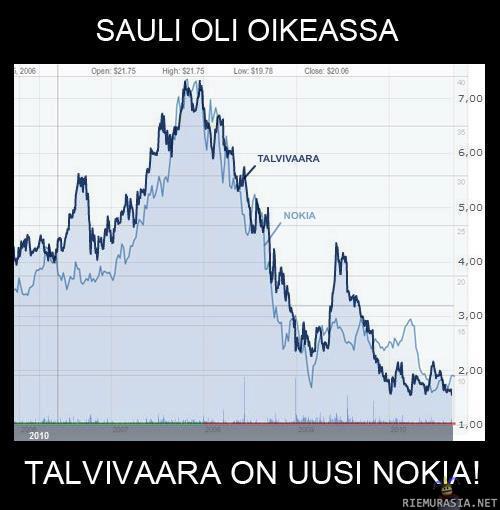
46 Likes
Would there be the same statistics ending in the present, not 2019?
2 Likes
Indeed. And of course, it’s worth considering the starting point of the comparison period. It hasn’t been that long since foreign ownership was restricted, Finland was a closed economy, and in the eyes of many, the country was part of the Eastern Bloc. When such time periods are included in the comparison, it’s no wonder the stock market has rocketed since then.
1 Like
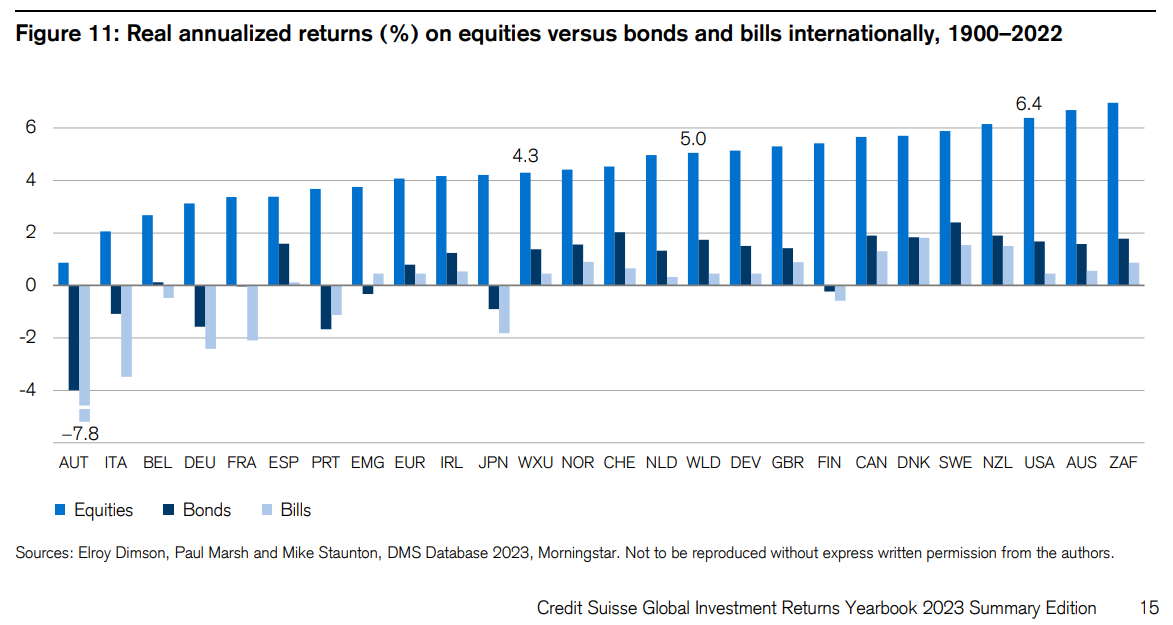
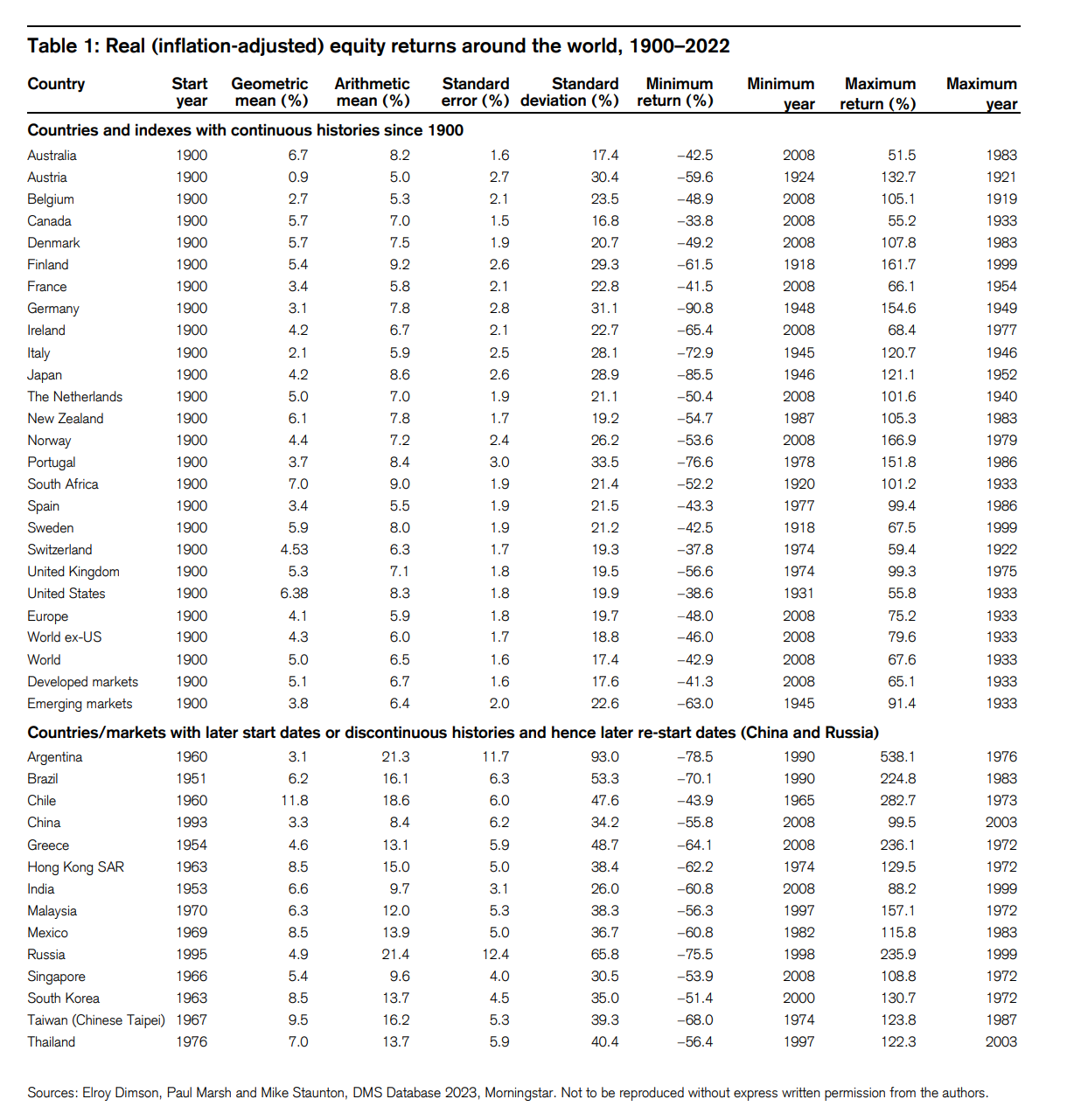
I couldn’t find anything further than that, but the review period is so long that it’s unlikely the Helsinki market has dramatically collapsed in less than two years. The comparison does not include all countries, but rather just over twenty that have sufficient stock market history.
https://www.credit-suisse.com/media/assets/corporate/docs/about-us/research/publications/credit-suisse-global-investment-returns-yearbook-2023-summary-edition.pdf
7 Likes
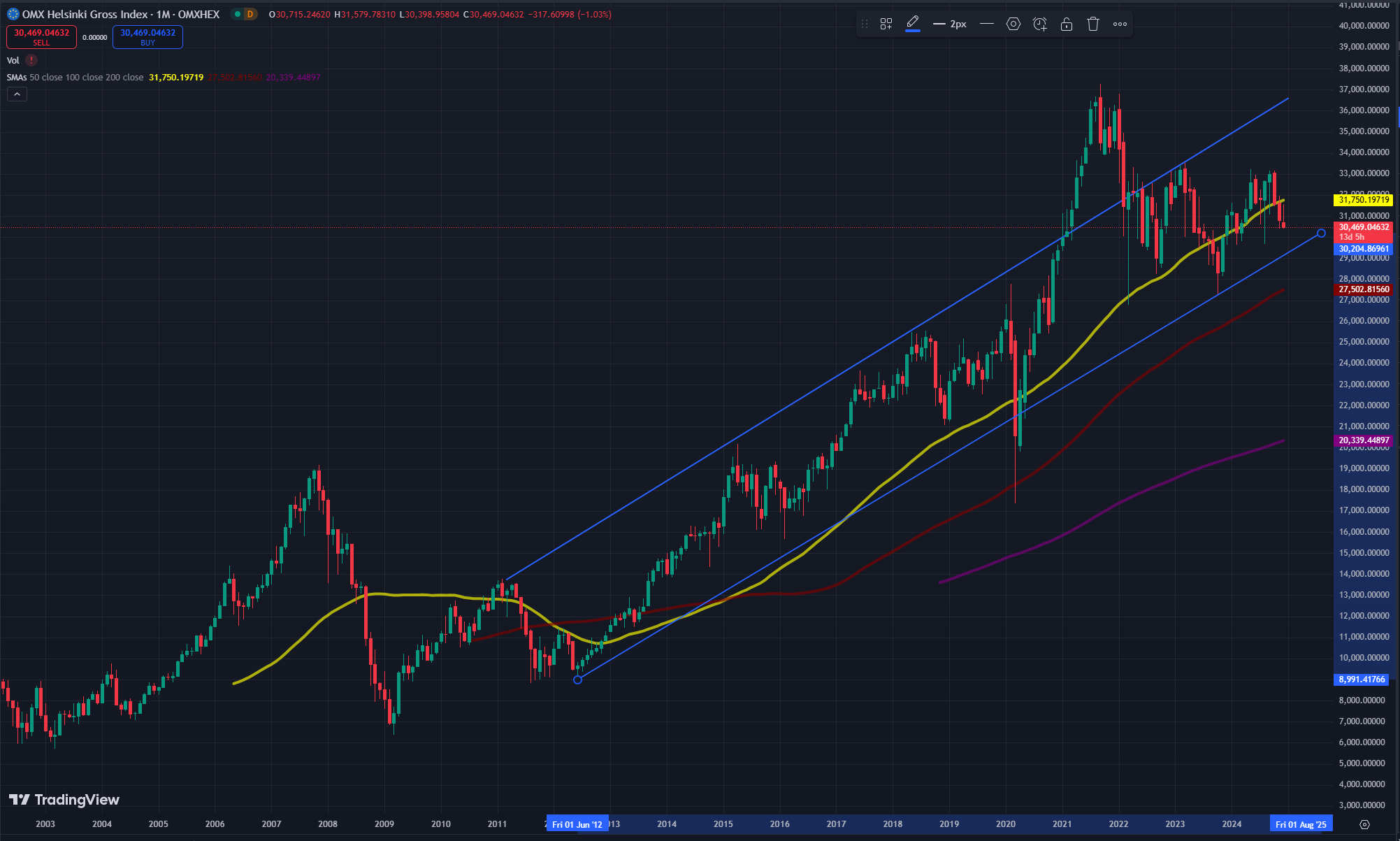
I drew this amusing trend channel for OMXHGI in TradingView, starting from the euro crisis. It has only been broken downwards during the corona crash and upwards during the 2021 bubble. This is not a timing tool, but it would probably be a good time to invest in Hesuli (Helsinki Stock Exchange). Of course, the same has been repeated for a couple of years now.
The effect of the ECB’s interest rate cuts will also start to show with a delay, but I believe that in '25 we will start to see nice earnings growth in Hesuli companies and economic recovery  Of course, I’m so bad at predicting that this will surely go wrong too

25 Likes
This fits here. In my opinion, there’s still value in the fact that even in this picture, Hesuli is bravely different, a traveler of its own paths. No need to follow the crowd like a lemming!
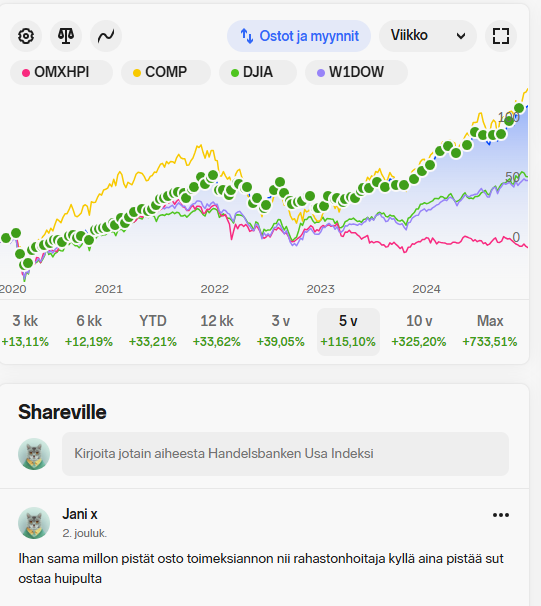
However, I primarily snapped the picture because that comment was so apt from a monthly saver’s perspective…
8 Likes
It’s nothing, a Lapplander would say to this. Everything’s gone, and it wasn’t enough, a Karelian would say. I don’t know what a Savonian would say..
Nothing is lost when nothing has been sold. Period.
1 Like
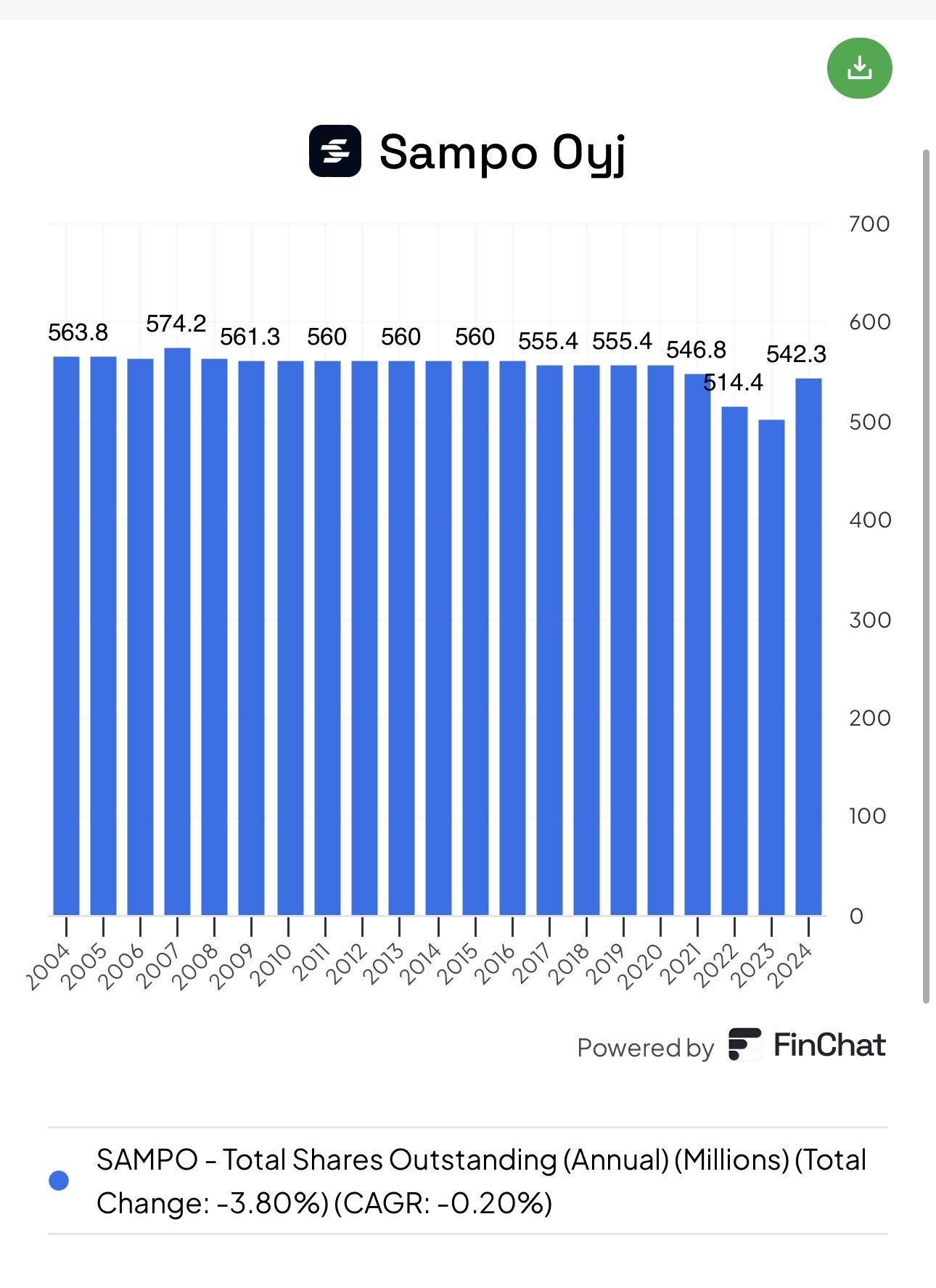
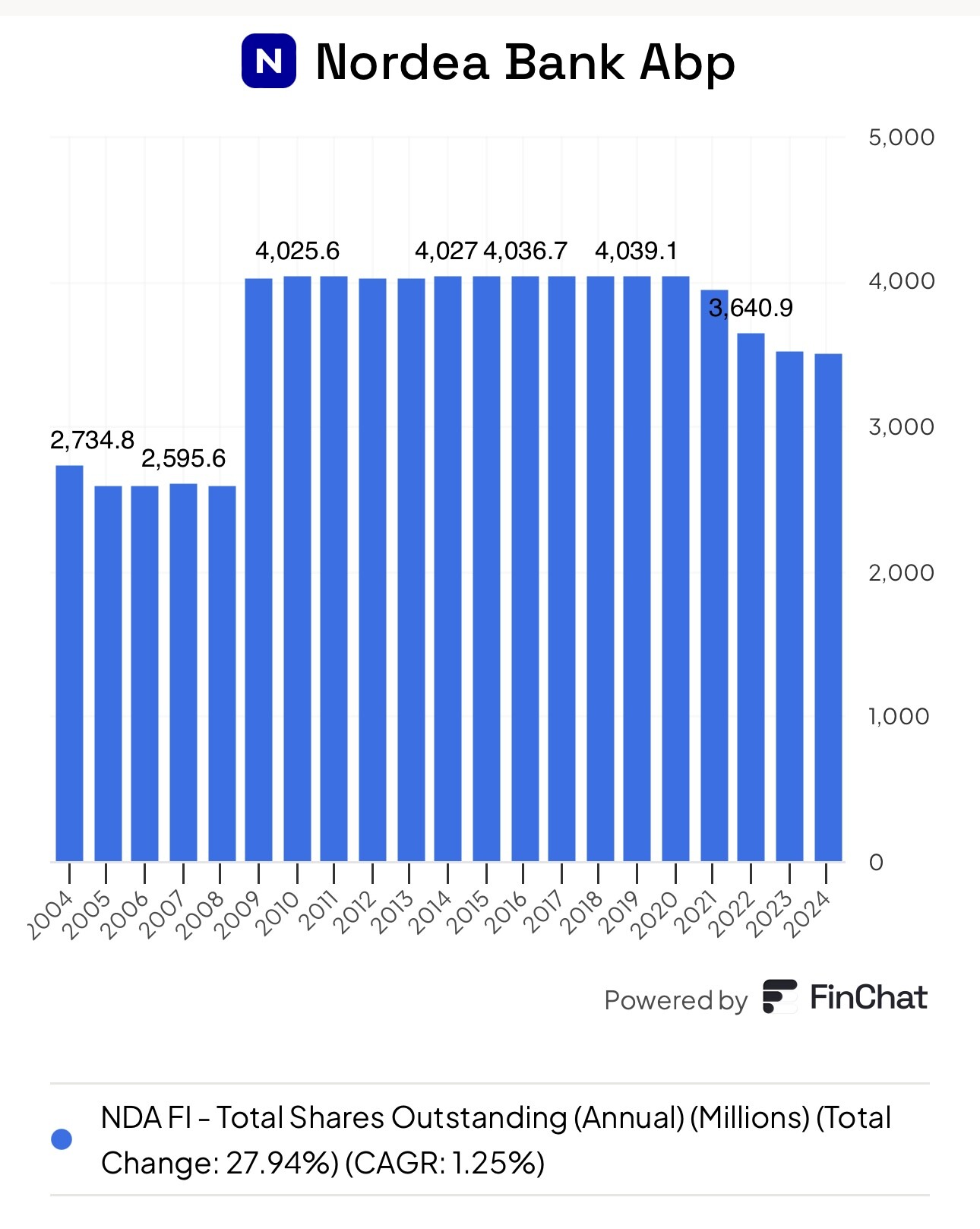
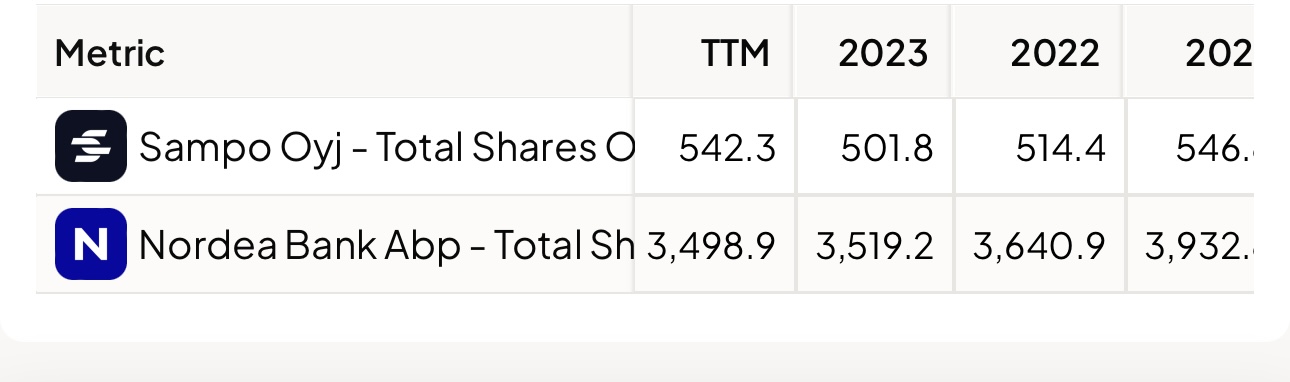
The decline has continued for a long time, but when would companies themselves think that now, by the way, our company’s share price is so low, and even mispriced, that it would be worth utilizing this for value creation by buying back their own shares Half off the prices still, then what? Or is no company’s result on a sustainable basis in their own opinion, so it’s not worth it? Or does every single one naturally have better investment opportunities elsewhere?
33 Likes
The stock market probably only matters to boomer-minded people anymore. I’m not an index investor; from the Helsinki list, I only vaguely know Neste and Revenio. Their problem is obvious: boring companies that try to solve real problems and create added value for their owners. Complete crap then, there’s no story and no constant speculation around them.
5 Likes
But there are, though only a few, who have bought their own shares. Sampo and Nordea are the first that come to mind.
2 Likes
-
There were quite a few comments in the financial news flow recently that, industry-adjusted, the Helsinki Stock Exchange is not in bad shape compared to its peers. Is this still the case?
-
I’m wondering if being in Finland (at least for me) feels safe as a NATO member country. And in our opinion, would the country/geopolitical risk be settled with that? Perhaps the situation looks different when viewed from afar? What is the impact of this?
Signed “Finnish weight in portfolio 22.4% in OMXH25-ETF”
6 Likes
Now the sentiment is just right.

56 Likes
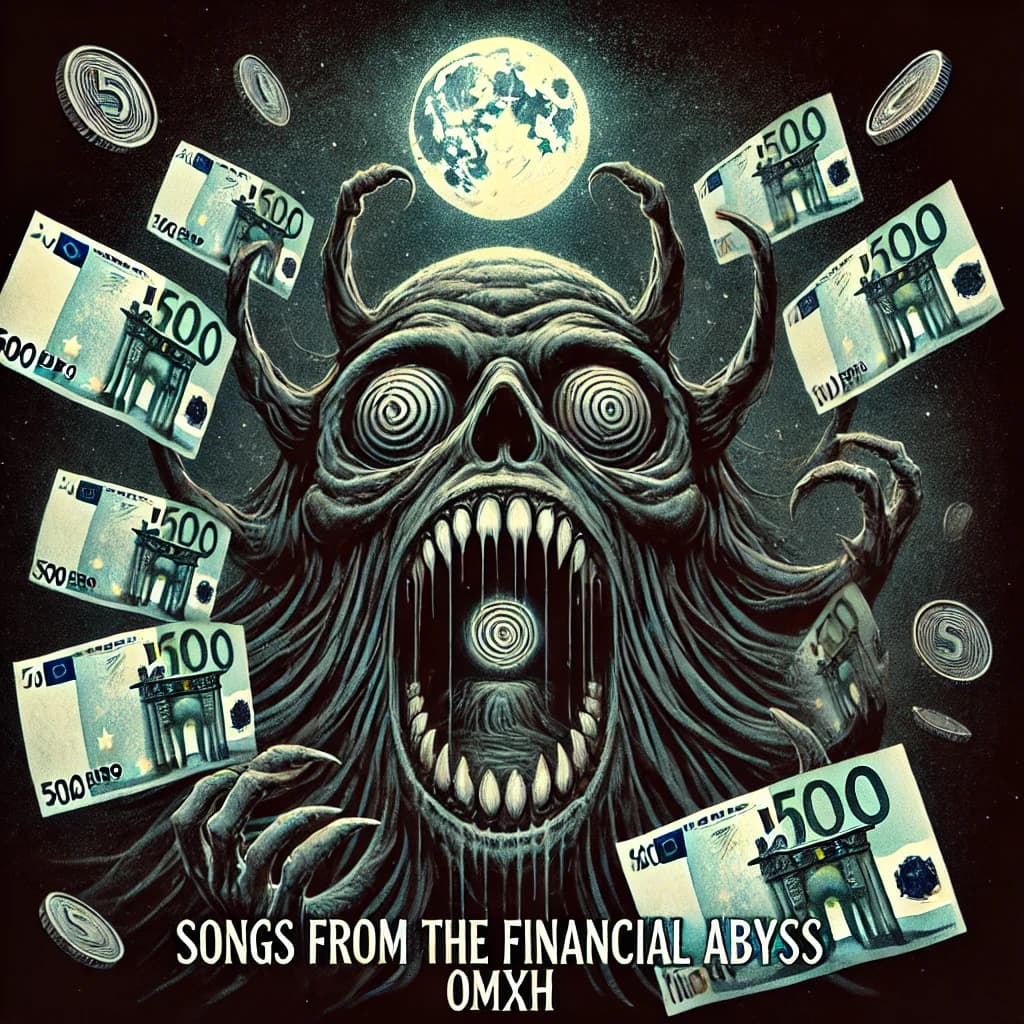
Good thread! We’re already swimming in such deep waters that it’s the same as diving. On the wheels of a Lovecraftian Christmas rally, we could even form a pre-Christmas party band that fits the mood, where we just growl into a shoe and chew on electrical wires. Then we’ll play with old Nokia phones back to the 90s and remember how as children we at least sometimes had a sandy mitten in our mouths, when nowadays you can’t even get snow to drink.
I asked AI to create an album cover for the band that reflects this eternal darkness. From this bear’s cave of Tuonela, we shall not rise again!
23 Likes
Scratch cards should be given the same tax deduction right as those investing in Helsinki.
18 Likes
When the companies in the index are banks, insurance companies, an elevator manufacturer, wood processing companies, and energy companies, then this is what it’s like. The price of pulp explains the sluggishness this time. These companies are not wrongly priced. The index just doesn’t have story stocks and manipulation like Pitko’s. One would think that the index yields about 10%.
Practically not at all, it goes for another purpose or is very marginal
11 Likes