About 2 months of the estimated/stated duration (9 months) of the pharma negotiations has passed. Herantis’ board has certainly been meeting intensively, and a decision regarding the future will likely soon be ready for a stock exchange release.
Only the stock market’s “neighbor envy” keeps this in a grip, but for how long.
Actually, no negative press releases or actions have been seen in this company’s operations or development work for many years.
The Michael J. Fox Foundation has an ambitious Strategic Research Agenda to guide the field over the coming years.
The plan aligns with our goals to identify and move forward the research closest or most critical to patient relevance, avoid duplication of efforts and leverage donor dollars to go as far as possible. In short, find the research with the best odds and then go all in.
The Foundation’s Strategic Research Agenda has four interrelated pillars:
More updates on recent developments in Parkinson’s disease trials. Cerevance’s solengepras has achieved good results in Phase III trials: https://www.fiercebiotech.com/biotech/cerevance-rescues-its-parkinsons-drug-phase-3-win. It is a GPR6 inverse agonist, meaning a symptomatic treatment. So, not a direct competitor to HER-096, which aims to stop disease progression. At the end of the article, there is also a list of other recent events related to Parkinson’s disease drug development.
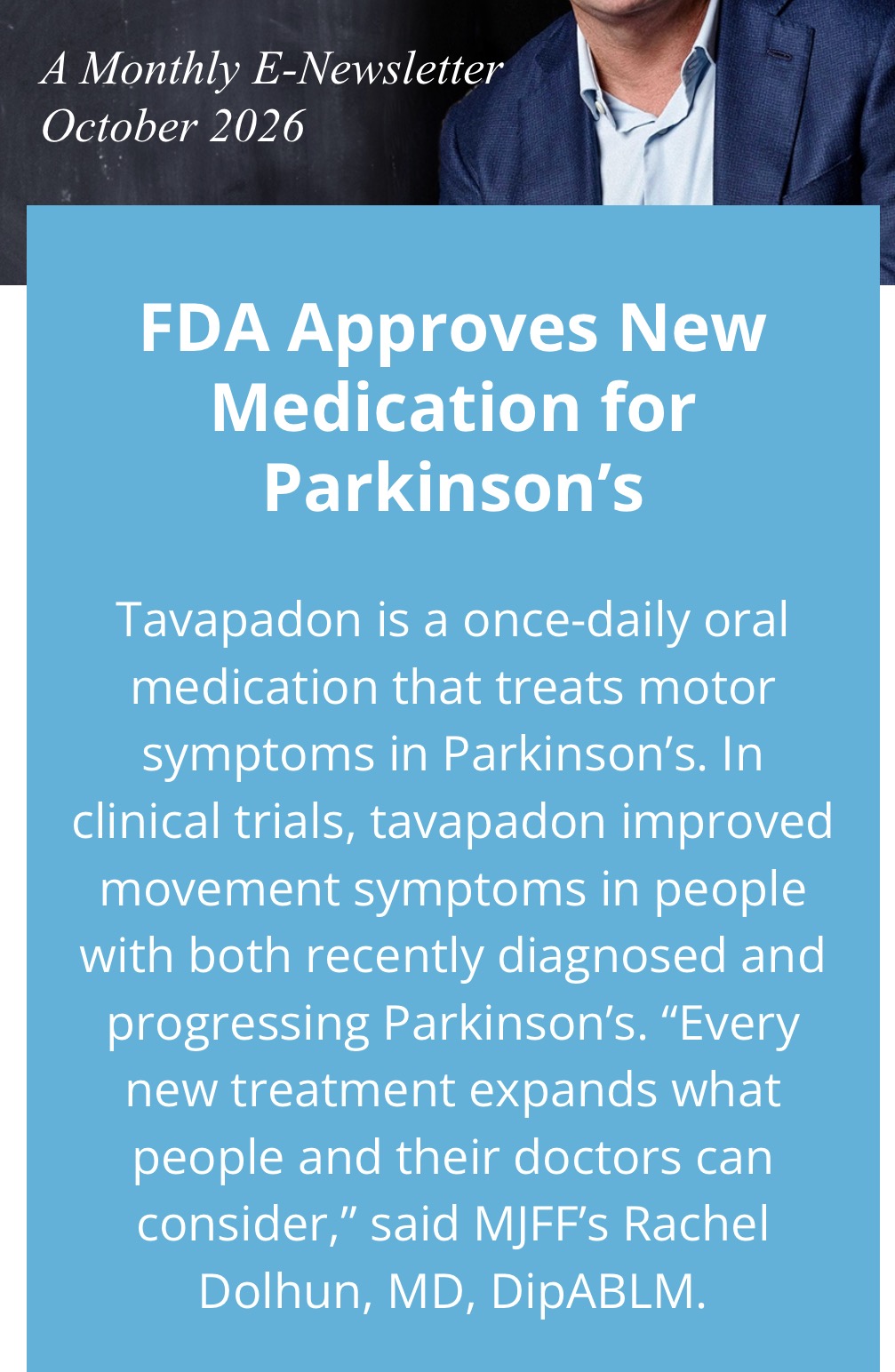
“Parkinson’s has proved a vibrant area of research and deal-making in recent weeks. On Monday, Roche’s Genentech paid Alector $100 million for its enzyme replacement therapy, while last month saw AbbVie secure FDA approval for its $8.7 billion bet on Cerevel Therapeutics’ tavapadon in adults with Parkinson’s. Meanwhile, San Diego-based Aspen Neuroscience is planning for a phase 3 study push for autologous stem cells aimed at restoring neurons in the brain, while BioVie has struggled to persuade investors of the promise of its phase 2 asset bezisterim.”
Out of those listed, the Alector deal in particular is very relevant from Herantis’ perspective. It is a glucocerebrosidase enzyme replacement therapy, AL050, in which patients are administered blood-brain barrier-penetrating glucocerebrosidase. The goal of this therapy is to modify disease progression, just like HER-096. What’s notable about that deal is that AL050 is still in the preclinical stage, and Roche has already paid $100M upfront + up to $1.17B in potential milestone payments: https://www.reuters.com/legal/litigation/alector-soars-roche-licenses-parkinsons-therapy-up-127-billion-2026-10-05/.
Now let’s hope a proper bidding war breaks out among potential partners for Parkinson’s disease drug candidates and brings a major financing deal for Herantis
I wonder how much politics has entered into these deals, and what IF Herantis were a US company—how much would be paid, or would it have already been paid?
And of course, when big money is involved, there’s probably plenty of sabotage going on behind the scenes between different companies. Material for a book or a movie, perhaps…
Hopefully there really is fierce competition going on for HER-096!
US business is truly the kind where they trip up the competition by any means possible. It’s all about making sure their own product sells, while a competitor’s superior one might never even reach the market. That’s why Herantis needs to stay sharp with that partner, because if some party there wants to buy out the entire business, it could also mean that the development is buried and the product never hits the market. Sure, a payday for the owners, but not good for humanity.
Acquiring competitors to kill off the development of their drug candidates is, to my understanding, a fairly well-known practice (killer acquisitions). These are often competing patents acquired to protect one’s own market share and whose development is subsequently discontinued. However, in this situation, there is not yet a single drug on the market that competes in terms of mechanism or intended use—that is, a disease-modifying drug slowing the progression of Parkinson’s disease—so I would see the risk of development being shut down as lower. Rather, one might hope that pharma companies would start looking for me-too drug candidates to protect against neurodegenerative diseases. In this case, the mechanism wouldn’t necessarily have to be identical—i.e., not just different versions of the same molecule—but rather sharing the same underlying principle of slowing neurodegeneration.
Big pharma often plays copycat in these situations. In this sense, Roche’s opening move could very well serve as a catalyst for other deals too . Lately, for instance, there has been a lot of this kind of me-too M&A activity around in vivo CAR-T cells, with big pharma giants racing to snap up smaller players. I posted some news related to this CAR-T topic in the pharma industry thread earlier this year.
Roche is unlikely to be a partner for Herantis, as they just acquired a similar type of candidate, but could HER-096 fit into Bayer’s portfolio alongside BlueRock’s cell therapy, for example? Herantis is likely already well known to all the key potential partners, as the development of rhCDNF has been ongoing for years, and discussions have probably taken place in the past as well . That being said, my current expectation is still that another share offering will come next to get Phase II off the ground, but hopefully we’ll get some clarity on this sometime soon.
Due to political factors and the points mentioned in the couple of posts above, partnering with a pharmaceutical company would be paramount at this point. Going the share issue / dilutive funding route, yes, value appreciation could happen if the Phase 2 results are positive for Her-096. BUT then the company has failed in its multi-year objective—namely partnering—which has surely, or well, at least hopefully, been based on knowledge of when it makes sense for a single-asset company like this to partner up.
It’s a big minus from me at least if the money doesn’t come from an industry player that already has a pathway all the way to commercial sales revenue for Her-096.
If a share offering is on the way, the timing has definitely failed.
In my opinion, we are quite late with it.
In practice, the number of shares would roughly double with the offering at this groveling share price level…
So true, the entire current year has been one continuous downhill slide, aside from a few strange bounces. Then again, if you look back another year from there, we’re basically at the same level now. Still, you’d think funding could be found when needed elsewhere than from a share issue, which should be the absolute last resort.
Now we really are at the share price levels of a couple of years ago (November 2024)… I cut my position in half myself at the end of last month when it was stated in the early June interview that funding for phase 2 would be sorted out in the coming months, so I decided to halve my risk since a rights issue would probably cut the share price in half and an ATL (all-time low) would be close then. If HP were forced to resort to a rights issue, I would sell the rest of my portfolio’s stake; after all, I’ve been hanging on here for a good while already and it looks like this will end up just like my other bio-stocks, shoveling heavy losses onto the deck… I still fondly remember Kakkonen hyping it up on Karo’s Grill when he talked about a potential ten- and hundred-bagger… of course, that’s still possible, but the returns are slipping far away if we don’t start hearing some sweet news soon. Ugh!
Here are Antti’s comments on, among other things, how Herantis published an update regarding the plans and preparations for the upcoming Phase II study of its HER-096 drug candidate
Preparations for the study are progressing according to previous plans and schedules. Recent progress includes, among other things, production scaling and the development of an improved drug formulation. A new study was recently published on the smartphone-based digital motor score (DMS) measurement used by Herantis, confirming prior data on the method’s efficacy in measuring Parkinson’s disease symptoms. The method was already part of Herantis’s plan and improves the probability of detecting a potential treatment response in the upcoming study. This is also supported by a blinded, controlled follow-up period that is slightly longer than originally planned. In the big picture, the study’s schedule and financing needs remain unchanged according to the company. Preparations are also progressing as planned, so the press release causes no changes to our view. Upcoming near-term milestones include submitting the clinical trial application by the end of the year, recruiting the first patient during H1’27, and securing the remaining financing needs for the study.
 \n\n
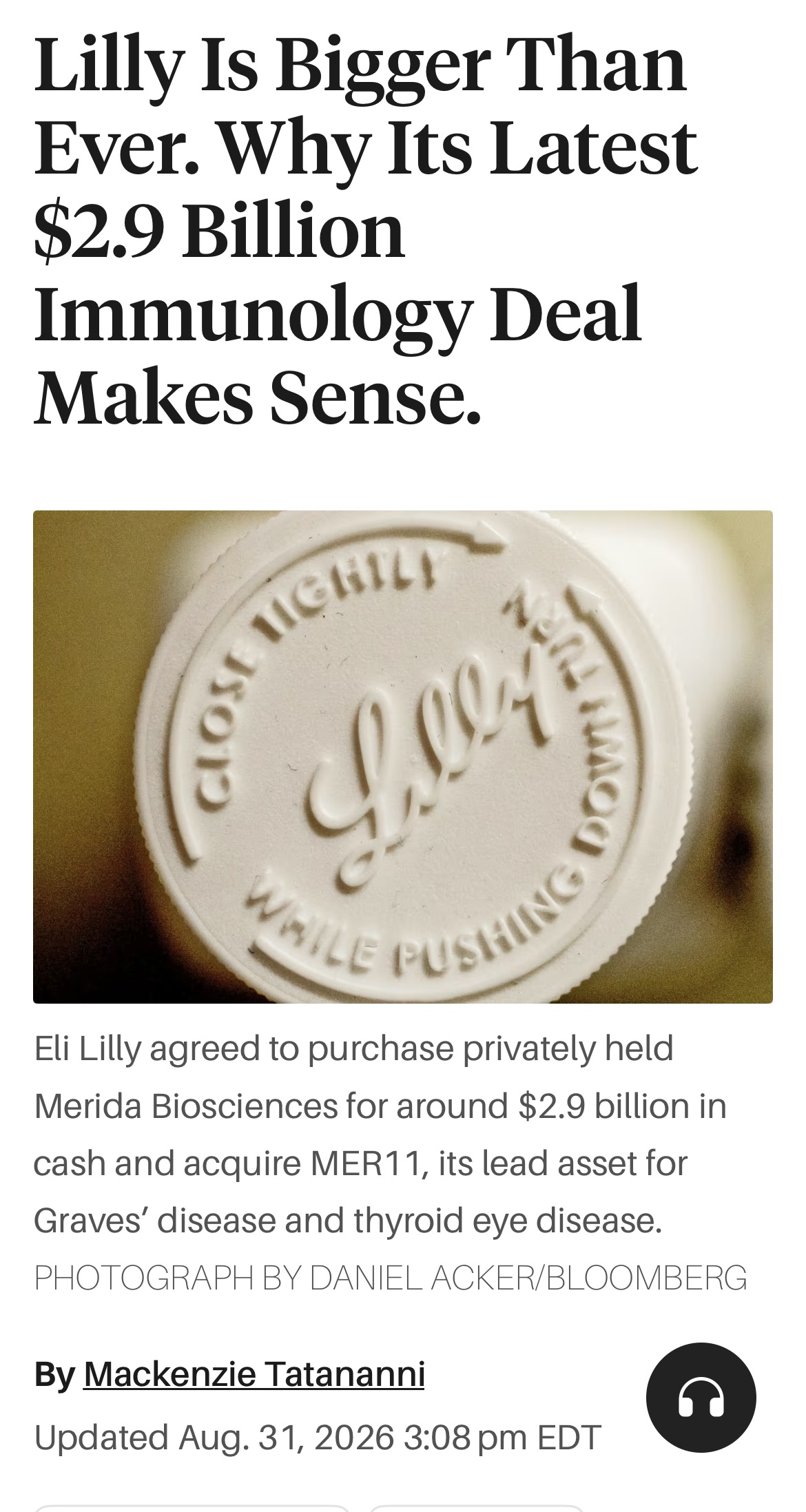

 . Lately, for instance, there has been a lot of this kind of me-too M&A activity around in vivo CAR-T cells, with big pharma giants racing to snap up smaller players.
 . That being said, my current expectation is still that another share offering will come next to get Phase II off the ground, but hopefully we’ll get some clarity on this sometime soon.