GCT GigaCloud technology - end to end b2b e-commerce market maker

-GigaCloud B2B Marketplace; Integrates everything from product discovery, payments, and messaging portals, leveraging channel diversification for suppliers, while resellers gain access to thousands of products backed by a complete logistics package

End-to-end marketplace operation for B2B furniture, fitness, garden, and other larger packaged goods

GigaCloud’s 3P business model in plain terms:

B2B buyers (retailers) list products on e-commerce platforms such as Amazon, Walmart, Rakuten, etc. When a consumer buys a product from an online store, GigaCloud (GCT) delivers the product directly to the consumer’s home from its warehouse.

→ GCT thus offers resellers a logistics chain, warehousing, and a wide category of products

B2B sellers (manufacturers) offer their products to GigaCloud’s marketplace to increase sales and visibility. GCT is launching a BAAS model (branding as a business) aimed at manufacturers, which offers visibility in the marketplace for products meeting quality requirements. Manufacturers also pay GCT for storing their products in its warehouses.

→ GCT offers producers visibility, sales, and logistics solutions.

GCT’s business thus consists of two core components:

  1. A B2B marketplace, where, in a Network Effect manner, the aim is to attract more buyers so that more sellers come, and more sellers so that more buyers come.
  2. Its logistics/warehouse chain, where goods traffic is optimized by computer algorithms so that packages can be transported as quickly and cost-effectively as possible from GCT warehouses to consumers.

A more detailed description of the operations can be found by listening to the CEO interview from the 7:30 minute mark. https://seekingalpha.com/article/4697823-webinar-replay-live-with-larry-wu-ceo-of-gigacloud-technology

Market/Stock:
-GCT’s potential market size is 65 billion, which is estimated to grow by +10% annually
-pioneer/market disruptor in its market
-revenue was 0.7 billion in 2023
-revenue growth annualized at 59% over 5 years
-EPS growth annualized at 208% over 5 years
-PE 8.3; P/FCF 8.3
-Latest H1: revenue grew by 100%, gross profit grew by 105%
-YTD return 24%, the stock was rising more sharply, but a May short report has calmed the stock’s development; the CEO addresses this report in the video above

I want to bring this company to the attention of others, as there is no mention of it on this platform yet. Feel free to do your due diligence and exchange perspectives. Disclaimer: I own this stock.

8 Likes

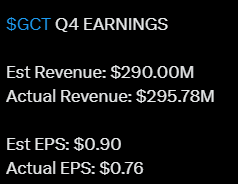
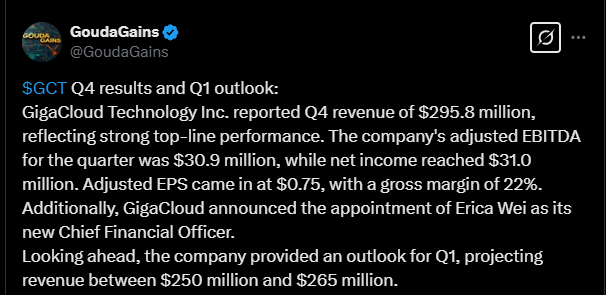
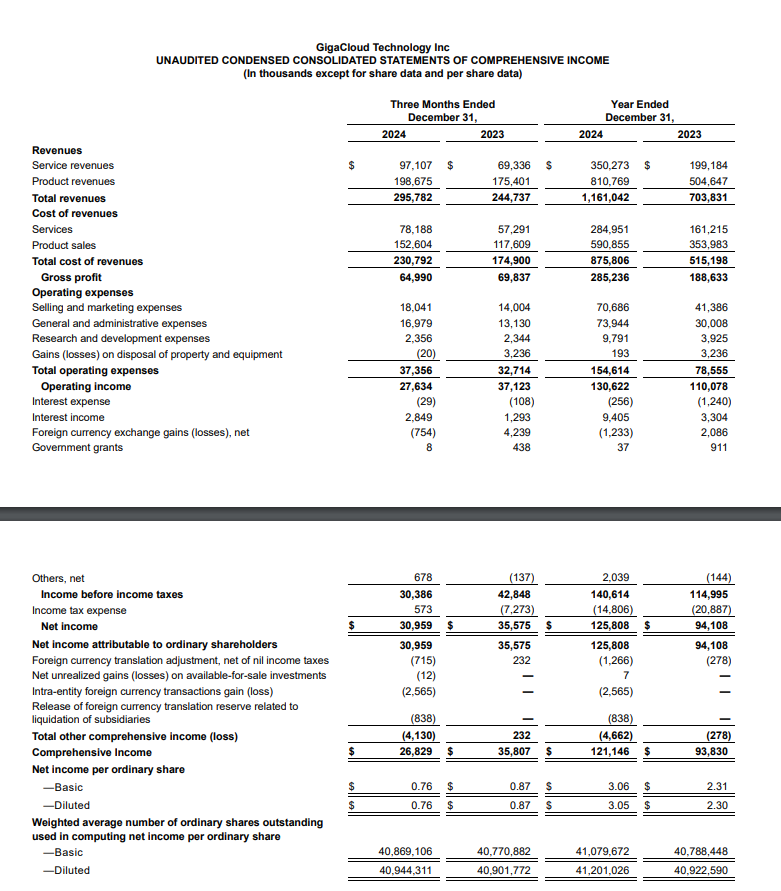
GigaCloud’s revenue rose to $295.8 million, representing a 20.9 percent increase from the previous year. ROE was 10.5%, compared to 14.5% a year earlier.

The company exceeded $1 billion in annual revenue for the first time, which likely indicates the strength of its business model. Growth was particularly significant in Europe, with GMV increasing by 155 percent year-on-year. Expansion and innovation will help the company’s long-term growth and development.

The board appointed Erica Wei as CFO, and she is reportedly expected to strengthen the company’s financial strategy. The share repurchase program has seen $29 million in purchases, which slightly support increasing shareholder value.

https://x.com/Thedogolonyafa1/status/1896671942377414931

image
https://x.com/search?q=%24GCT&src=cashtag_click&f=live
image


Official Material

image

2 Likes

Business has developed nicely. Consumer weakness is visible in the United States, but in Europe, revenue has grown by 70% from a year ago. One might imagine the operating environment to have been catastrophic this year due to customs regulations in the United States, but cash flow is developing well. TTM operating cash flow is 190 million. Still no net debt, cash on hand 366 million. Over the years, operations have tended to grow rather than decline. They have bought back over 15% of their own shares in just over a year. Free cash flow essentially matches the size of operating cash flow, as it is a capital-light operation. Operational expertise is also demonstrated by the fact that GCT bought the bankrupt Noble House in the United States, implemented efficiency and SKU management measures, and put the products up for sale on its own marketplace. As a result, the bankrupt company became profitable again. To give some indicative figures, Noble House’s revenue had previously been 400-600 million. The purchase price was 85 million → after just over a year of efficiency measures, GCT made Noble House profitable.

The business is generally moving in a good direction, and now the share price has also corrected its valuation somewhat. After the writing a year ago, the share price experienced a sharp decline, reaching around 11 dollars at its best/worst. This decline was entirely related to market psychology, expectations, and fears, as the business itself showed no weakness. When prices fell, faith in one’s own thesis was questioned. I personally believed in the business and bought into falling prices. In all honesty, I admit that I lightened my position slightly yesterday due to yesterday’s sharp rise, but this was because I had bought a full portfolio of shares when prices were low. I would gladly see a market capitalization of 2 billion, based on fundamentals, meaning there should still be some upside potential even though it has already risen 3x from the lows.

1 Like