I agree; having been in the hobby for over 10 years, GW’s paints are the worst in the industry. The design of the pots causes the paints to dry out quickly. From an investment standpoint, however, this isn’t a bad thing, as many beginners still buy overpriced paints and may remain unaware of better alternatives for a long time.
5 Likes
Games Workshop released its half-year report today, which in my opinion didn’t contain anything special following the trading update given in November: https://images.ctfassets.net/ost7hseic9hc/7lRczzQBbvA22PEmSVJN8K/2de2f722e20e1d69b9aa3ed4e1b95678/2025-26_half_year_report_v3.pdf

Strong performance continues, although there was a headwind from decreased licensing income (the comparison period was particularly strong due to the release of Space Marine 2). Revenue and earnings per share grew at a rate of ~10%.
The half-year report begins in a characteristically straightforward manner:

I skimmed through the report and didn’t think there was anything else remarkable there. There was a 6 million headwind from tariffs, but the cost impacts were more than offset by efficiency improvements, price increases, more stable raw material prices, and lower inventory write-downs. The new production facility, Factory 4, is expected to be completed in the summer of 2026. The series being developed with Amazon and Henry Cavill are progressing at their own pace.
10 Likes
Almanakka has also written about these recent results. 
Games Workshop’s results were good. Here, I will briefly go through what I find to be the most interesting observations. Revenue grew by 11% and operating profit also by 11%. For me, the biggest surprise was profitability remaining at such a good level despite headwinds. The report also provided explanations for this.
2 Likes
Games Workshop has banned its employees from using generative AI. A few senior managers are allowed to continue “experimenting with AI,” but nothing that reaches consumers/hobbyists is AI-generated. According to the company’s stance, talented human artists are what make Warhammer, Warhammer.
You really have to tip your hat to GW for this. The temptation to maximize short-term profitability by churning out AI junk is surely great, but I believe this reflects the company’s long-term focus and deep understanding of its customer base. The fanbase is largely made up of long-time hobbyists and passionate “purists” who certainly wouldn’t go for AI-slop. For many hobbyists, aesthetics and “art” are as big a reason for being into Warhammer as the game itself.
Think about the kind of backlash many gaming and entertainment companies have faced for pushing AI-slop into their games and entertainment. For example, Activision’s six-fingered mistake in Call of Duty (and much, much more), Clair Obscure losing its Game of the Year title, etc.
This policy fits well with GW’s investment story; do the core business as well and as meticulously as possible, and customers will reward it, which shows in the numbers. It’s a shame that this kind of mentality is starting to go against the grain in the gaming business today.
16 Likes
Games Workshop has piqued my interest over the past few weeks. I would like to ask those of you who have researched the company for a longer time, how can the company invest in its business? The company generates an incredible return on capital, but not all cash flow is reinvested into the business; instead, they distribute quite a generous dividend.
What investment options does the company have at the moment?
Apparently, a new factory is being built so that the fruits of the upcoming Amazon collaboration can be fully reaped. As I understand it, at some point the company has struggled to meet demand, and that’s why they are now preparing by increasing capacity?
Furthermore, I understand the company is expanding into Asia, meaning marketing and opening their own stores.
Warhammer is a unique IP, but do you see the potential for the company to successfully create new IPs? Would this cannibalize Warhammer, or could the company target new audiences with new IPs? This is where my own lack of knowledge comes into play.
Any thoughts on how AI could change storytelling? Currently, it feels like GW is investing significantly in narrative creation, but is there a risk that AI could disrupt the use of authentic content? I suppose hobbyists have been creating their own unofficial stories up until now, which GW apparently takes a dim view of. So, basically, I personally don’t believe that hobbyists loyal to Warhammer would use unofficial content any more than before?
3 Likes
My gut feeling is that AI could even have a boosting effect on GW’s IP. How? It’s easier than ever for fans to produce lore videos and other media about Warhammer, and then, when this material finds its way into people’s feeds, viewers get interested in, for example, Warhammer 40k and buy miniatures or video games.
4 Likes
The most logical investment targets are increasing production capacity and improving supply chains. As you mentioned, the company has had trouble meeting demand; a new factory (Factory 4) is under construction and is expected to be completed this summer, which should help with this problem.
You also mentioned marketing and opening their own stores. Personally, I see a couple of additional investment channels: Black Library, meaning the storybooks, and Warhammer+, which I think has received too little attention—Games Workshop’s subscription service where the company produces animations and series, for example. That subscription service, by the way, has been growing at a good pace in recent years.
Age of Sigmar is a more fantasy-oriented version of Warhammer, which of course is set in that Warhammer universe, though apparently far into the future. I haven’t looked into Age of Sigmar much, and my understanding is that it has a somewhat niche status among fans. However, I am of the opinion that Games Workshop has struck gold with Warhammer, and the setup is such that there is room to expand it almost indefinitely, so I don’t see it as sensible to even try creating new IPs. The problem with creating a new IP is that it has to somehow stand out from the crowd, and it requires a huge amount of work to create enough “lore” around it so that players care enough to be interested. Warhammer’s advantage is that it’s a fairly unique setting, but above all, because lore has been created around it for decades, it is a massive competitive advantage and moat. No new IP can simply compete with Warhammer’s storytelling and appeal without massive investments. For example, the Horus Heresy book series, which has about 50 books, followed by the Siege of Terra book series, which has about ten books. The culmination of the The End and the Death trilogy is quite something when it has been built up for that long, and on the other hand, this is just one setting in the year 30,000, which sets the stage for how the Imperium in the year 40,000 became what it is. So, I would see that Games Workshop should invest fully in Warhammer as long as the saturation point hasn’t been reached, and in my opinion, we aren’t even close to that point yet. I wouldn’t want to see the company start branching out into new IPs.
Games Workshop stated in its last half-year report that it does not use generative AI, as you can read from @jasso’s message above. I think this is a good thing, as generative AI is not a particularly creative tool, so I think it’s great that the company wants creative human artists to do everything surrounding Warhammer. Games Workshop has such good pricing power that no significant savings would be seen from using AI, but the risk is that fan trust would be lost by producing generic trash. My understanding is that this has also been welcomed with joy among the fans. Here’s a funny anecdote: in Warhammer lore, humanity originally spread to the galaxy through incredibly advanced technology and AI sometime around the year 20,000, but the AI turned against humanity, resulting in a war so brutal that humanity was almost completely destroyed. Because of this, in current Warhammer lore, most technology is a relic from that Golden Age of Technology, which no one properly understands anymore, and AI is considered one of humanity’s greatest sins; its creation is forbidden in the Imperium, and AI is referred to by the term “Abominable Intelligence.” While there’s certainly a bit of a joke behind this, fans also refer to generative AI as “Abominable Intelligence,” so I don’t believe the fanbase would be particularly excited if GW started utilizing AI in its creative process. I believe it’s precisely the creativity and authenticity that attracts fans to this universe, and since GW’s CEO speaks specifically about long-term company management, I think it’s great to see that this is reflected in their actions as well.
As for the risk of disruption caused by AI, I don’t believe in it. As I already said, AI is not particularly creative; creativity is part of being human. AI can be a good tool as part of a creative process, but it will not replace humans. It’s also worth remembering that unofficial content (which GW has traditionally been quite reluctant towards) can act as a gateway for new fans into the world of Warhammer, so if AI helps produce that content more efficiently, it should only be a good thing for Games Workshop.
13 Likes
Co-signed Housumies’s post. GW is an interesting company in that it might be difficult for an outsider to comprehend the scale of (especially) the 40K universe. For better and for worse. It’s a kind of mega-IP, much like Star Wars, for example; the biggest question is likely just how much of it can be shared for a large audience to see.
A few of my own reflections on the subject. I spent my elementary and middle school years in the hobby, followed by a 20+ year break, and now after turning forty, the old man has found his way back to painting miniatures:
-I’ll treat 30k (Horus Heresy) and WH40k together here because, although there is a 10,000-year gap in the narrative, they practically form one massive entity, as the same characters feature in both. In this way, as a long-term bull investment case, one could think that WH40k might actually be the next Star Wars or Marvel. Its grimness and satirical vision of a hopeless future clearly resonate, especially with new generations who find it easy to identify with its nihilistic attitude and general memeability.
-Historically, GW has had some rather nonsensical corporate strategies. Former CEO Tom Kirby even believed that nobody plays the games, and the company’s idea is mainly to make collectible figures. Of course, insanely expensive plastic forms the core of the company even today, so the guy wasn’t entirely wrong. Still, it seems clear that the active game development over the last decade has been a very profitable way to sell those plastic sprues (muovirankoja). At the same time, the lifecycle of the games is relatively short, which causes quite a bit of anxiety among a large part of the fans. Building an army is a years-long project, and major rule changes during edition shifts can be disruptive.
-Due to algorithms, it’s always very difficult to estimate based on personal experience how widely a phenomenon has spread, but based on a gut feeling, it seems that memes specifically have made WH40k very widely known even to audiences that have never directly consumed any licensed WH40K products, let alone the original miniature games. WH40K somehow seems to fit the zeitgeist of our era very well, even to the extent that faction iconography and quotes are borrowed in real-world conflicts. In the war in Ukraine, for example, Russian troops have had so-called purity seals, and military units named after the chaos god Khorne have appeared on both sides. “Blood for the blood god” is thus real life.
-Related to that, WH40K is quite a culture war arena, much like Star Wars. Even before Trump’s first term, “god emperor” imagery began to be associated with Trump in various online communities, and since then, it’s noticeable that in various alt-right communities, it’s been realized that culture war grifting related to the universe enables, for example, profitable YouTubing. GW has had to underline several times that Warhammer’s fascist world is not a utopia and that the Imperium should not be a model for anything, but the fanbase is certainly divided on the subject.
-GW’s challenge has long been quality control. If you look at WH40k-themed licensed games, a significant portion of them have been quite rubbish, but in recent years, the level has clearly been raised. Space Marine 2, the Mechanicus game, Boltgun, and the upcoming Total War 40k are on a completely different level than the mess of previous years. On the in-house production side, GW has also had a bit of a quantity-over-quality mentality, which is indeed visible in, for example, the fact that there are some 70-80 of those Horus Heresy books. I waded through the Heresy myself, picking the “best of,” and even this selection of about 25 books already contained some real rubbish. Correspondingly, in the field of the main business—miniature games—the same phenomenon is seen in how the published games don’t always seem very polished, let alone balanced, but instead end up being constantly updated with all sorts of unit adjustments or additional rules.
-GW management’s AI stance gives me faith that the company now understands its fanbase better. If GenAI had been introduced even experimentally on the creative side, the backlash would have been enormous. It would have been a situation where an otherwise somewhat divided fanbase would have spoken with one voice.
I don’t have GW in my portfolio yet, and I regret not picking it up back then, but I’d say there’s still a lot of room for growth in the long run IF the potential can be utilized. The clearest analogy is probably that previously mentioned Marvel: a very niche nerd hobby that suddenly becomes part of mainstream culture. I would say that for today’s general audience, Warhammer doesn’t work at that level yet, but in five or ten years, for example, it might be a completely different story.
However, it requires a clear step up in quality in, for example, WH40k cultural products. As it stands, I’d say a large part of the lore’s appeal comes from it being so deep and vast, rather than from there being an immense number of individual great stories (though those definitely exist too!).
15 Likes
Thanks @SunnyCarCentrist @Housumies and @McNulty. It’s really interesting to read about this hobby and I realize right away that in order to invest in the company, I would need to better understand the community and, of course, the lore itself. WH has always been somewhat distant to me. I’ve played plenty of D&D and various RPGs, but Warhammer has never interested me before. Part of the reason is surely that none of my friends were into it. But this has been an interesting first taste of this world, and it clearly seems like the company could continue to invest in expanding its current IP
4 Likes
Not much has happened with Games Workshop since the January semi-annual review. A trading update is presumably coming soon, and dividends have been received/are coming again in May.
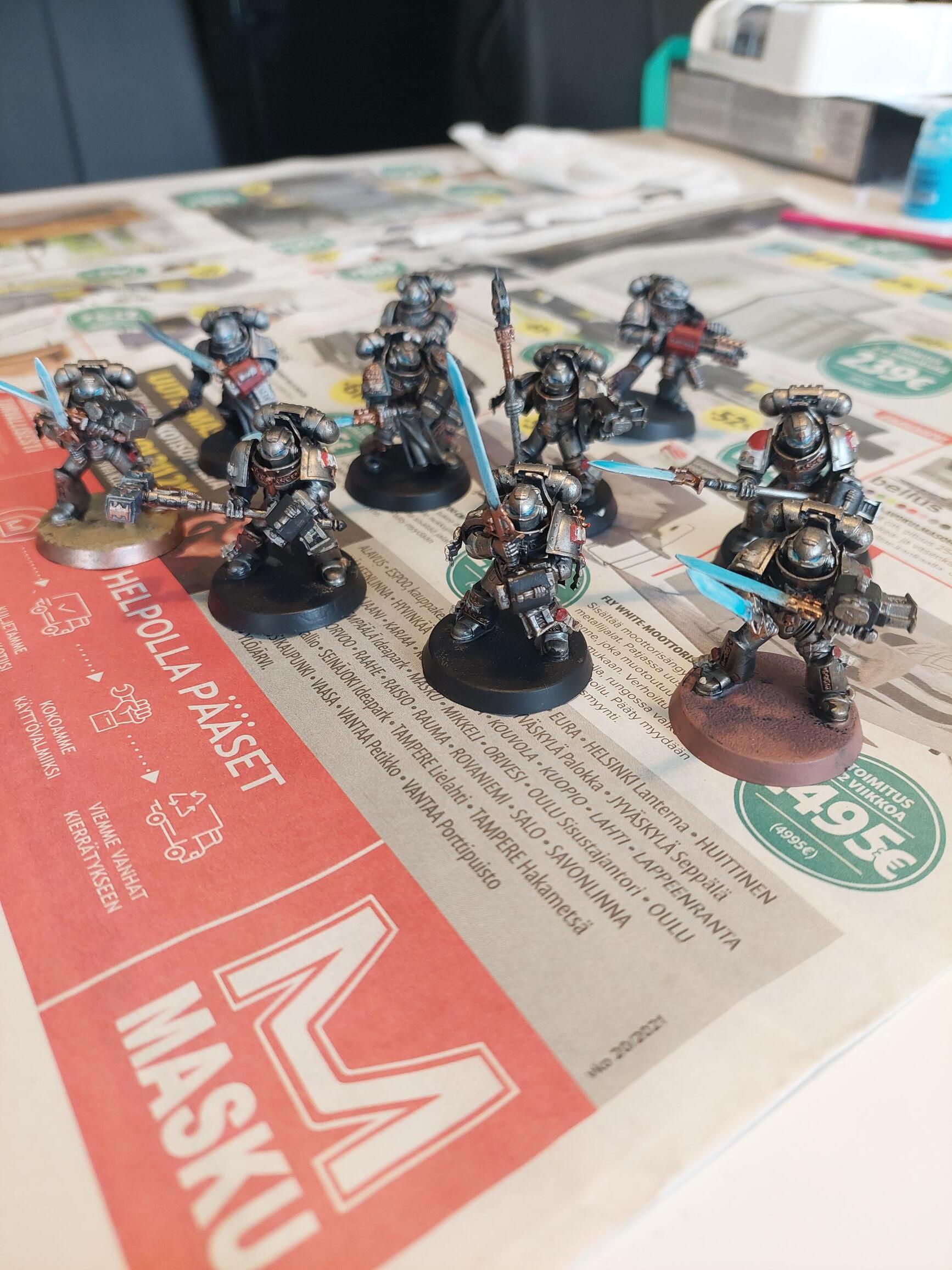
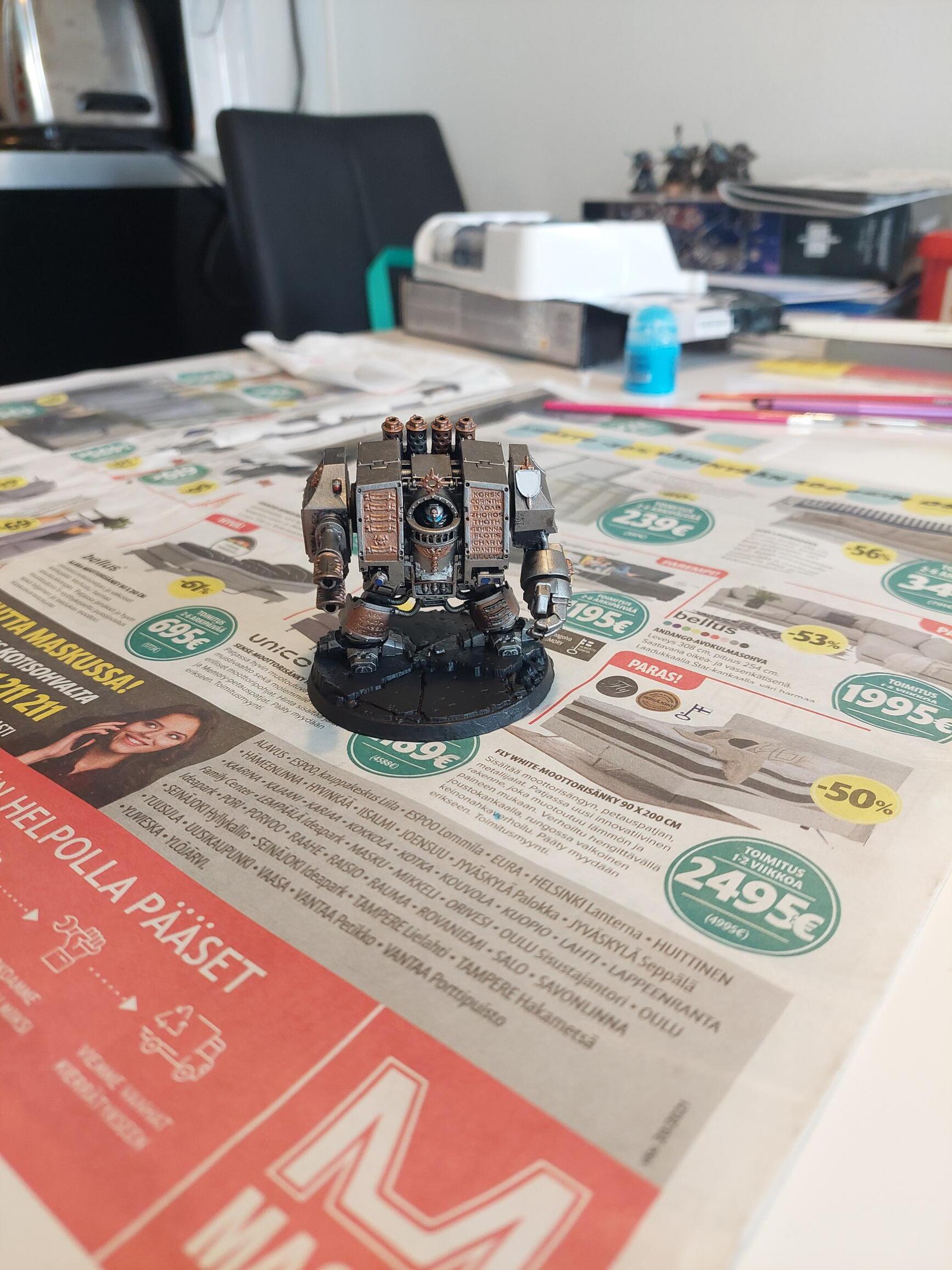
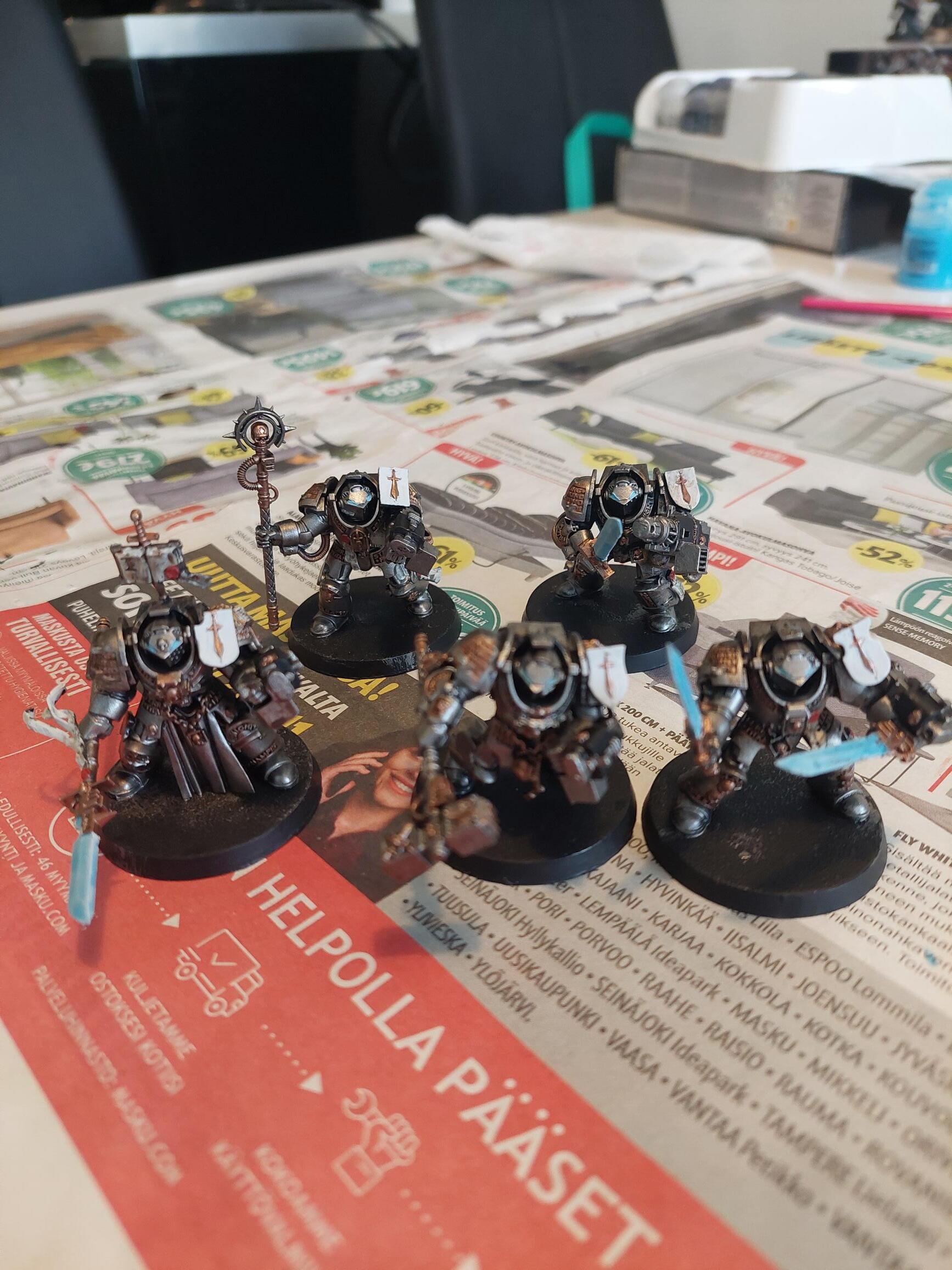
Since my “lynching” here sparked some discussion, and it seems there are passionate miniature painters/tabletop game enthusiasts on the forum, I’ll provide a final update to the “lynching.” The first miniatures (Grey Knight Combat Patrol) have now been painted, and here’s the result:
Strike Squad:
Dreadnought:
Terminator Squad:
Castellan Crowe:
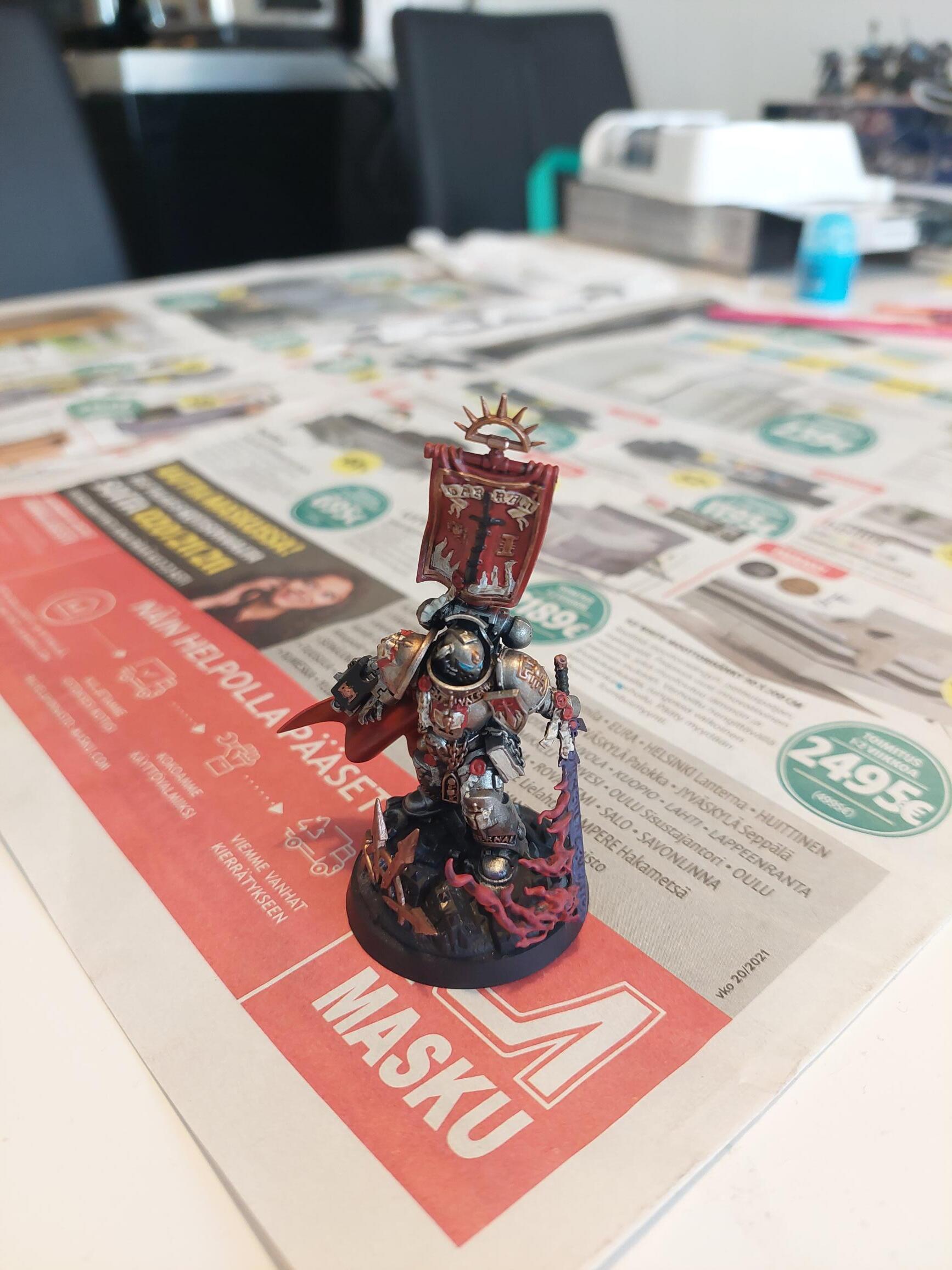
I made a principle decision not to play the tabletop game until these guys were painted “finished,” because otherwise, it would never get done. I started the project in January. Cutting, cleaning, and gluing the pieces was surprisingly challenging for me. I’m not very artistically talented, and my “artistic visualization ability” is generally very poor. When the parts were clear, there were no problems, but as soon as there was a choice with hands and weapons, I was in trouble because I couldn’t really visualize what the end result would look like. However, I approached it with the mindset that practice makes perfect and mistakes are inevitable, so I slowly but surely worked on the project in the early part of the year.
What also slowed things down was that my partner didn’t like the smell of GW paint (which is perfectly understandable), so I only did this when I was home alone and had time. All in all, it probably took about twenty hours just to glue the figures because I worked so carefully (and uncertainly).
By February, I had glued the figures and contacted a new acquaintance who had taught me to play this tabletop game in December. He promised to teach me painting but advised me to get black acrylic spray paint, for example, from Puuilo (a Finnish hardware store chain), and to do the priming with that (I got the same advice here too). I did as I was told, and because there were heavy frosts outside at the time, I set up a painting spot in the utility room one evening for this purpose and put on a respirator and spray-painted the primer onto the miniatures. Even though the door was closed and the ventilation was on full blast, the smell of the spray paint still spread throughout the apartment, which almost got me banished to outdoor eating for a few days by my partner. Well, you learn by doing, and I won’t be doing that indoors again; I didn’t particularly care for the smell of the paint myself when I went to bed.
After this, we arranged a painting lesson day at the local game store/gaming venue, which was a few weeks ago. The first comment I received was that I hadn’t remembered to turn the figures when painting, meaning I hadn’t primed the figures “from bottom to top,” but instead, the figures had been upright, and I sprayed the paint from top to bottom. So, the bases of the figures still needed to be patched up with Citadel black paint.
The painting exercise was carried out by painting a couple of figures from the Strike Squad during the evening; that is, I was shown how to paint a figure, and I followed suit. We went through different techniques (thinning paints, dry brushing, layering, making shades, using contrasts), etc. There was a lot to learn again, and I went on a trip the following week, so the painting was put on hold for a couple of weeks, and I probably forgot some of it, but overall, I received really good instruction, and I’m grateful for that. I don’t think I’ve done any painting since elementary or middle school, and I was always very untalented artistically, so I approached these by trying different techniques and colors on the Strike Squad figures and accepting that I would make mistakes and the result would be what it would be, but on the bigger figures, I tried to apply what I had learned as best I could.
After returning from the trip, I spent another couple of hours watching YouTube videos about painting techniques and how people had painted Grey Knights. I chose the color schemes I liked and, within the limits of the paints I had, started working on the Strike Squad figures with different color schemes and experimenting with things.
Here are the key observations I learned from painting:
- You learn by doing, and if you don’t like something, as long as you don’t apply too thick a layer of paint, changing the color is easy to a certain extent. You have to dare to experiment.
- Correctly thinning paints and getting the right amount on the brush is important.
- Keeping the brush tip sharp is important.
- Too small a brush tip is not good for painting details because the paint dries faster when there’s less of it, and the result is ugly when you apply dry, uneven clumps to the figure. My painting instructor already advised me not to use a small brush, but I had to try it anyway, and the result was bad, which I later had to fix.
- Brush control is really important, but you only get that with practice.
- As mentioned here, a wet palette made life much easier. I made a DIY wet palette from a plastic container lid, a dishcloth, and baking paper, and it was really easy to make and worked quite well.
- GW’s Citadel paints are, in my opinion, good quality and have been praised, but as also mentioned here, the lids of those pots are devilish. Paint inevitably gets stuck in the lid, and the pots are hard to open or close if it hardens there, and you then have to clean it out. Of course, the painting instructor advised me that if necessary, the lids can be completely removed, which makes cleaning the lid easier, but I didn’t feel it necessary to try this yet.
- The same areas have to be painted multiple times and in multiple layers if you want a good-looking end result.
- Dry brushing is a great technique in suitable places; it saves a tremendous amount of time, and the end result looks great to my eye when done correctly. A really beginner-friendly method!
- I was surprised how fun and addictive this was!
- Beginners shouldn’t overdo it with paints. Black is black, white is white, gray is gray, etc. I managed very well with the 12 paints in the paint kit; I bought one more contrast paint to get that blue “power weapon” effect, but otherwise, I only used the paints I had. The result would have been nicer if I had bought 10 more paints and chosen exactly the desired shades, but I was surprised how pleasing a result I could achieve with a limited selection of paints. For example, I only had one dark shade paint, and I thought it did its job quite well, even though I was a bit skeptical at first.
During Easter, I practically painted every day, and the positive thing was that GW paints don’t smell like anything, so my partner didn’t complain. I’m currently really happy with the result. I’ve never been artistically talented (art class was probably a 6-7 grade in elementary school), nor interested in art, so expectations weren’t high, but this was actually a lot of fun and addictive, and it really intensely focused my concentration. I couldn’t even sleep at night because I wanted to paint. I admit that with the Strike Squad, I didn’t bother to paint every detail on 10 figures, nor to fix mistakes, but with the others, I really tried my best. From Castellan Crowe’s banner, you can certainly see that my brush control is not yet enough for all the details, otherwise I’m quite satisfied. I might still make small corrections and finishes, e.g., the bases should be finished, but I’ve accepted the result enough for now that I bought a box from Puuilo for the figures, and I’ve scheduled my first game with my self-painted army for next week:
This experiment was so addictive that I’m already thinking about what to buy for my next project. I’ll probably buy the Grey Knight Codex and start expanding this army to a thousand points, and possibly beyond. The Combat Patrol Starter Pack would be interesting because it would give me a playing mat (I could play with friends during sauna evenings if they’re interested), terrain for the playing mat, a paper rulebook, and Space Marines and Tyranids to paint (these interest me thematically, so they probably wouldn’t go to waste). I might also buy another Combat Patrol army at some point for variety. There are many options, and the passion for continuing the hobby has certainly ignited within me.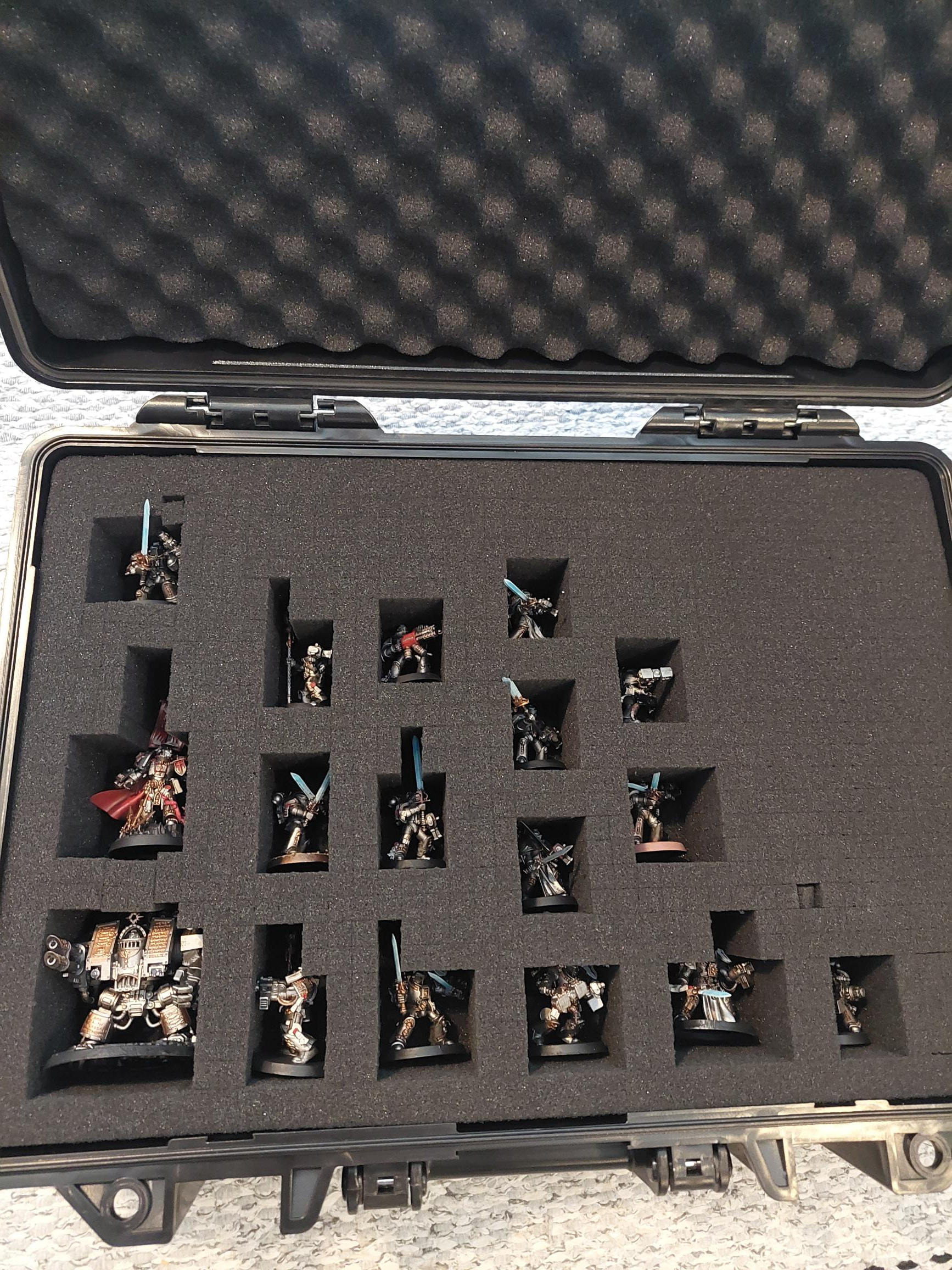
This leads us back to Games Workshop as an investment target. Through personal experience, I believe that as the Warhammer universe’s recognition grows, Games Workshop still has a long path of profitable growth ahead. GW’s share is one of the largest in my portfolio, and as long as the company’s business continues as it does now, I won’t be grabbing more shares for my portfolio. One shouldn’t fall in love with a stock, but I feel that I now have a much better view of GW’s business attractiveness than before this exercise.
32 Likes
“Warhammer works for perhaps any genre there is,” Space Marine 2 director Oliver Hollis-Leick says in a recent interview with EDGE Magazine. “You can tell a deep single-player narrative experience if you want to. You could make an RPG. As with us, you can make an action-packed, high-octane third-person shooter. You can make a very un-depth, tactical experience.”
Hollis-Leick sees Warhammer’s ability to jump from genre-to-genre is just one of the reasons why its so prominent in the games space. “It’s perfect for so many genres that it’s been used in all of them,” he says. “And I think that’s why it’s so successful.”
“I feel this kinship with the other developers that are working on these licenses,” he says,” because we’re all in this together. I like the way Games Workshop manages who’s making what. You’re never, like, going against somebody else. It allows for that kind of cooperative kinship among developers. I really like that.”
Main points of the short article regarding the investment case. And they are right. The franchise works brilliantly in any genre.
I’m waiting for a Stardew Valley-style game where you grow the lower deck crew of your own capital ship for a Warp jump. 
10 Likes
It looks like Games Workshop released a trading update today:
Games Workshop, the maker of Warhammer, is pleased to announce that for the 52 weeks ending 31 May 2026, we estimate the Group’s core revenue to be not less than £625 million (2024/25: £565.0 million) and licensing revenue of not less than £30 million (2024/25: £52.5 million). The Group’s profit before taxation (“PBT”) is estimated to be not less than £265 million (2024/25: £262.8 million).
We intend to publish our 2026 Annual Report for the 52 weeks ended 31 May 2026 on the 28 July 2026.
Based on these figures, core revenue for the financial year is growing by approximately 10%. The profit appears to be landing quite close to the comparison period. It’s worth remembering that Space Marine 2 was released on September 9, 2024, so the licensing income from the game (which flows almost directly to the bottom line) made the comparison period exceptionally strong in terms of profit.
7 Likes