Games Workshop: Is there still room for the Warhammer universe to expand?

Games Workshop issued a trading update / positive profit warning:

“Games Workshop Group PLC announces that trading in January and February has been ahead of expectations, with strong trading across both the core business and licensing. As a result, the Group’s profit before tax for the 12 months to 1 June 2025 is estimated to be ahead of expectations.”

Figure sales seem to be doing very well :thinking:

4 Likes

As a ‘little guy’ enthusiast, I’d already feel like blindly jumping in, but the thought keeps nagging at the back of my mind: “Don’t get attached to your investments,” which would be challenging with this one. Well, luckily, the price of that single stock is so high that it doesn’t fit into my current stock-picking budget.

Just confirming that you know how British stock pricing works; that the price of a single share, 14,695.00 GBX, is in British pence, not pounds. Therefore, the price of a single share is 146.95 British pounds, or about 176 euros. This caused me a bit of a headache too before I invested in British stocks.

8 Likes

I wasn’t aware, and I haven’t actually invested in British stocks. Thanks for this correction!

3 Likes

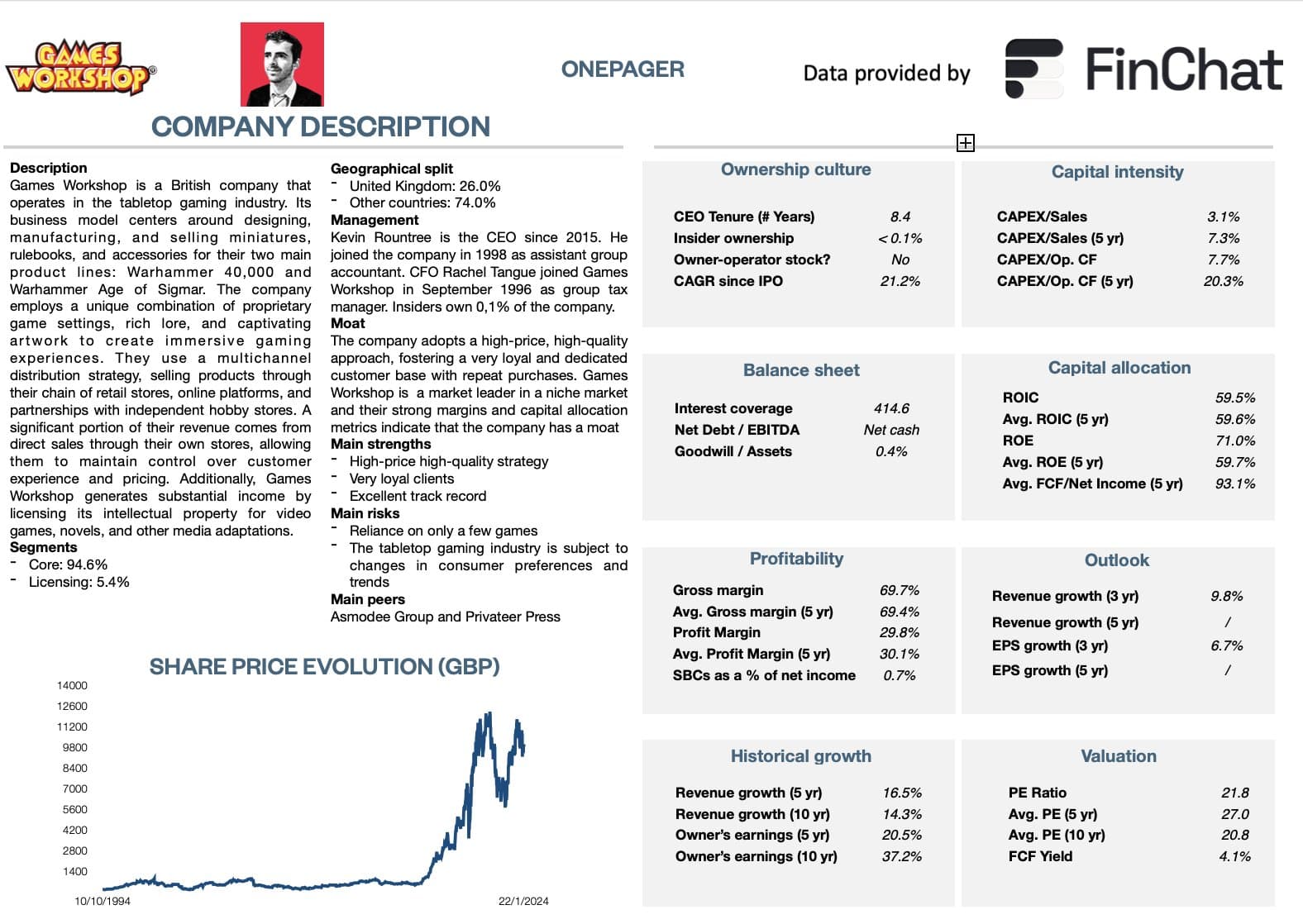
The analysis below reveals how Games Workshop continues its impressive performance.

The analysis explains how the company’s strong brand and loyal customer base ensure stable demand. Recent launches have reportedly been successful, which supports future growth prospects. The company’s ability to manage costs and maintain high margins is impressive according to that analysis.

The stock is priced high, but the company’s strong market position and continuous innovation justify the premium, according to this analysis.

https://x.com/QCompounding/status/1901257877387436158

image

6 Likes

Games Workshop published its annual report / financial statement for the past “year”, fiscal year 2024/2025, this morning:

https://assets.ctfassets.net/ost7hseic9hc/3kXsoA4jSOmOj6BLZ7bV7F/c34a5f56769e8be055c19b8e1ccc5526/Accounts_2024-25_FINAL.pdf

I read through the annual report, and here are my own takeaways / thoughts:

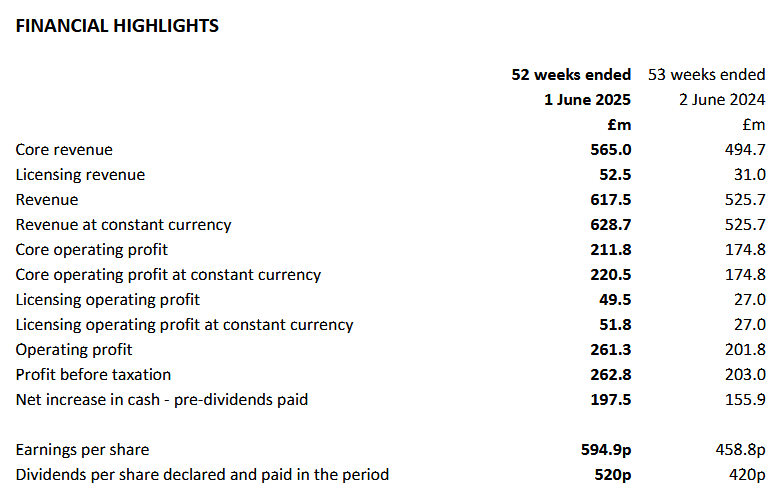
Revenue grew by ~17% (currency-adjusted growth would have been ~20%) and earnings per share grew by ~30%. Licensing revenue grew by ~70%, mainly driven by Space Marine 2.

kuva

The Chairman of the Board changed, but there were no changes in communication or strategy. The company continues to focus on the same things as before and on long-term business management.

Looking ahead to next year, management states that there will be headwinds from two directions. Firstly, licensing revenues are unlikely to reach last year’s level, as Space Marine 2 sold much more than expected. The second issue is the headwind caused by tariffs, which is estimated to have an impact of approximately £12M on EBIT.

I had already thought that achieving growth this year would be difficult. Space Marine 2 will probably no longer provide a boost, and on the other hand, the highly popular Warhammer-themed Secret Level episode (on Amazon Prime) gained great popularity, which also provided tailwinds for this year. For the upcoming year, I am not aware of, nor does the report indicate, any significant growth drivers of this kind.

Looking a bit further ahead, future growth drivers will include:

  • Factory 4, whose construction has begun, and the goal is for the “factory” to be ready by summer 2026.
  • In the video game division, Remasters of the cult-favorite Space Marine 1, as well as the Dawn of War game. A sequel to Rogue Trader, “Dark Heresy”, is coming, as well as Boltgun 2, but these are unlikely to achieve the same popularity as Space Marine 2.
  • Space Marine 3 is also in production (same game studio and publisher as Space Marine 2).
  • The agreement with Amazon, i.e., the “Astartes 2 series” and the Henry Cavill-led Warhammer series.

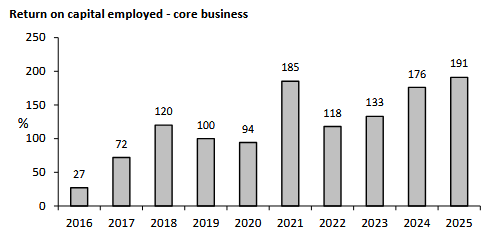
I would like to highlight again the company’s core business’s return on capital employed (ROCE), which was an incredible 191% last year :exploding_head:

kuva

I didn’t read the entire annual report but mainly skimmed what I considered the most important points, and while there’s a lot of information in those 104 pages, these are what stuck out to me the most. As far as I understand, the company does not provide guidance for the upcoming year, and I did not find it in the annual report. However, comments suggest that the core business will also be attempted to grow next year, even though licensing revenues are likely to fall short of the past year.

20 Likes

Regarding those tariffs, it’s worth noting that, on the other hand, the report also mentioned that efficiency measures were planned to eliminate the impact of those tariffs. Another positive aspect for the company’s operations is that there is still more potential in China; growth targets set for China were missed due to resourcing problems.

Regarding the valuation of the stock itself. The company is dear to me, and the business also seems to be doing excellently. However, the current stock price seems to be quite on the high side. I created a DCF model for the company, and my (crappy) lottery machine concluded that the “true” value of the stock would be significantly lower. On the one hand, my model was the first of its kind, and challenges in its creation were particularly posed by estimating the growth rate; on the other hand, the model should take into account a rather strong revenue CAGR, but at the same time, it cannot continue with the same figures indefinitely. I’m still improving my model, and we’ll see if things change.

6 Likes

The terminal value can also be handled in a different way than with Gordon’s formula; for example, you can determine a realistic P/E ratio or EV/EBITDA, etc., for the mature phase, in which case the model is not quite as sensitive to small parameter changes :slight_smile:

2 Likes

I’ll have to try this. Now I got “more favorable” results when I extended the review period by five years before calculating the residual value. The model is still quite illogical in its basic idea, as I’ve calculated that FCF sums grow by a larger percentage based on CAGR up to the final year, but the residual value based on the Gordon Growth Formula is calculated with a significantly smaller percentage. It would be more logical to have the growth rate decrease gradually, but then again, adding too many assumptions to an already imprecise model is unlikely to make it any better. On the other hand, I created a sensitivity analysis table alongside it, from which I can see how the movement of the “final growth rate” from the assumption in one direction or another would affect the stock’s value.

I have to praise Games Workshop’s annual letters as the best in the world. I have never read such a concise, to-the-point, and fully focused chairman’s review. :smiley:

The numbers support the words.

I believe that the style, structure, and clarity of writing communicate a person’s ability to think. This kind of text is downright incisive compared to the fashionable word-filled gibberish of average boards and management.

CHAIR’S STATEMENT

The last year has been a whirlwind at Games Workshop. We delighted our fans, launching terrific new products across our main brands. We opened new stores and now operate in 24 countries, enlisting hobbyists from all over the world. We saw record sales in our core business and a bumper year of licensing income, delivering the best financial results in our company’s history. And all this against a backdrop of major geopolitical uncertainty. We have had to adapt, innovate, and stay true to ourselves.

We’ve been in the news a lot this year. I note our promotion to the FTSE 100, but want to stress that it changes nothing. We are Games Workshop, and our mission is to make the best fantasy miniatures in the world, to engage and inspire our customers, and to sell our products globally for a profit. We intend to do this forever. Our ‘forever’ ethos is fundamental - we take decisions for the long term, not to make next week’s numbers look good. Our culture is unique - we are a vertically integrated business, and design, manufacture, distribute and sell our fantasy miniatures. We are an international business and proud of our roots in Nottingham, where it started: from our design studio to our factories, warehouses and stores all around the world, we love what we do. As the new chair, and a hobbyist myself, I will guard our culture and be its most vocal advocate.

Key to what makes us special is engaging with our very own community of hobbyists, now worldwide and buzzing. We don’t need a lot of marketing data to tell us when we get something right or wrong. We don’t need huge spreadsheets of customer data or complicated data algorithms. We know. And we know because we stay close to our fans and customers, whether they collect our miniatures simply because they look stunning on a shelf, whether they devour our amazing Black Library of books chronicling fantastic worlds millennia away, or whether they just enjoy a good old battle on an adrenaline-fuelled Saturday with their closest friends. But we are not complacent. Our biggest fans are also our harshest critics and tell us when we don’t get things just right. We will continue to care, to listen with humility, and to inspire our customers.

In the last year, we welcomed three new members to the board of directors and said goodbye to two. I would like especially to pay tribute to Rachel Tongue for her decades of deep commitment and command of our finances, and to my retired predecessor John Brewis for his stewardship, passion for the company, and dry English humour. I am delighted that Liz Harrison, Eric Maugein and Neil Tomlinson have joined the board, enriching our conversations. Also, after six years of committed service, Kate Marsh has informed me that she will stand for re-election at the 2025 AGM but not at the 2026 AGM, so that she can concentrate on her trustee and chair roles. This timetable allows for an orderly handover. A massive thank you to the Games Workshop team for delivering yet another exceptional year, and I look to our future as the new chair with pride and excitement. Mark Lam Non-executive chair 28 July 2025

This excellent policy statement also seems to be in every annual letter. :smiley:

We believe shareholder value is created, primarily, by not destroying it. We have no intention to acquire other companies, nor to dispose of any of those we own.

14 Likes

Good point. When your product is practically a “product of imagination” (physically plastic, but that is secondary in the business), then it’s a bad sign if you have to seek growth inorganically. It means that the organization’s internal innovation and imagination starts to sour.

6 Likes

Yep, you can see it that way! :slight_smile:

Your comment also sparked another thought. Games Workshop’s actions (extra cash paid out as dividends) and words (emphasizing discipline) tell me that the management doesn’t have fantasies of building an Empire. Money is treated as if it were (and it is :D) the owners’ money.

Not all companies are capable of this. In a way, all the cash that the business generates after mandatory investments is also “play money” for management to buy companies, build new headquarters, raise salaries, expand business into new sectors and regions, etc.

11 Likes

The best in the world is indeed a strong claim, but Games Workshop’s former CEO (1988→2017) Tom Kirby certainly had a way with words. Even though his successors as chairmen have tried to emulate his style, and while I appreciate the focus on the business itself, Kirby’s old letters contain wisdom in a condensed form that is highly applicable to more than just the events of the previous fiscal year. I, for one, hope that as many business leaders as possible have the ability to distinguish which of the endless business woes are transient and which matters need to be focused on to be successful in the long run.

My favourite graph in our internal reporting shows the sales in each country going as far back as we have records. 1988, I believe. The really great part about it is that it has over 20 years of data. You can see proper trends over 20 years, and if your intention is to build a business that lasts, which mine always has been, then ‘long term’ means decades.

Why is this so interesting? First, it shows that even as we are very intent on the future growth of the business so we are constantly looking at our record to learn what not to do, and what to do again. Second, it gives perspective to our view that short-term issues are short-term.
Third, it underlines what I said earlier: when we say we are a long-term business we mean it. We cannot guarantee to be around in 50 years time, but we certainly intend to be.
Short-termism is one of the evils of modern society. More shareholder value is destroyed by managers making dumb short-term decisions to enable them to produce glowing quarterly reports than ever is gained in the laughably inappropriately named ‘transparency‘ they are
supposed to bring.

Leaders of publicly listed companies are often quite charming people, and it is accepted practice to speak pleasantly about the company’s goals in connection with annual reviews. Once accustomed to it, it feels familiar and safe, but upon encountering very straightforward communication, focused on the essential and only that, one misses it from others. In the CEO’s review for the fiscal year ending 2013, Kirby summarized the matter as follows:

Key performance indicators (KPIs)

Within the business our number one and overwhelmingly important KPI is sales. ‘Sales’ is all the money we take in and we quantify it by counting it.
Our secondary KPIs are: what we spend on overheads and capital investment. Neither is mysterious and they are published in this document.
With capital investment we normally assume we will spend next year roughly what we spent last year. Take this number with a pinch of salt and remember that, as von Moltke said, ‘No plan survives contact with the enemy’.
With overheads we try to have them not grow at all. Easy to say. Hard to do.

We do not set sales targets. We do want real sales growth (defined as an increase after our price rises, if any), the more the better, but we do not predict it. We follow the plan: more stores run by the right people and great products in them should yield sales growth. Our staff are rewarded if they achieve real growth.

So how do we plan our future? We run a tight ship, and do our damnedest to get more sales. Everything else is just whistling Dixie.

During his career, Kirby also used the annual report’s column space to engage in societal discussions on topics related to the company’s business. Investor communications (e.g., 2008 and 2010), investors themselves (2010, 2017), threats of technological development (2013, 2014), and stock exchange regulation (2009, 2016) all received their share. There are also a few direct references to a much more famous investor letter writer along the Missouri River in Nebraska.

Annual reports from 2006 onwards can be found on the company’s website: Games Workshop Group PLC | Investor Relations
Older ones need to be dug out from the archives of the UK Companies Register: GAMES WORKSHOP GROUP PLC filing history - Find and update company information - GOV.UK

In my opinion, they are a fascinating account of how a small and unremarkable company grew into perhaps one of the most profitable companies in the world. And it wasn’t necessarily by chance. Once they succeeded by chance (with the immense popularity of The Lord of the Rings movies - that’s how I also got to know the company over 20 years ago), and it almost destroyed the company. When the “strategic transformation” leading to the current business model was completed in 2015 and Tom Kirby stepped away from daily leadership for the last (and third) time, he could hardly have imagined the company distributing more dividends ten years later than its revenue ten years prior.

On the other hand, after acquiring the company in 1988, he adopted ‘per ardua ad astra’ as its motto (through adversity to the stars, also the motto of the Royal Air Force), so who knows.

7 Likes

Games Workshop issued a “trading update”, which I guess amounts to a positive profit warning:

“Games Workshop announces a trading update for the six months ended 30th November 2025. The Board’s estimate of the results for the six months to 30 November 2025, at actual rates, is core revenue of not less than £310 million (2024/25: £269.4 million) and licensing revenue of not less than £16 million (2024/25: £30.1 million). The Group’s profit before tax (“PBT”) is estimated to be not less than £135 million (2024/25: £126.8 million).

Further details will be announced in the half yearly report which will be released on 13 January 2026.”

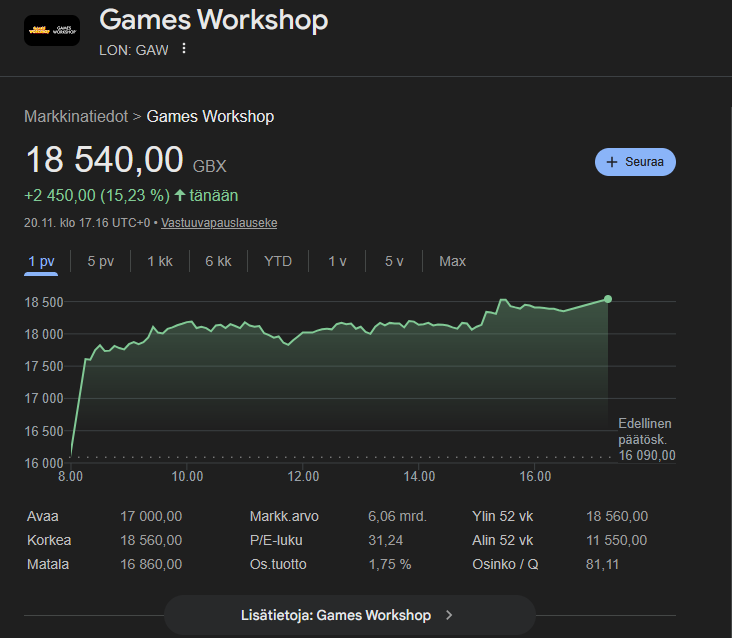
It seems the figures are still selling well. Over the past year, I have gradually been buying Games Workshop, making it the largest holding in my portfolio, so the share price reaction warms my heart:

This company is truly a joy to own; the business chugs steadily upwards.

14 Likes

The game trailer that excited me the most from this year’s Game Awards came when…

Total War + Warhammer 40,000 = \[ https://www.youtube.com/watch?v=QbA4ZQI7AN8 \]

6 Likes

Games Workshop has become the 2nd largest stock investment in my portfolio, and partly inspired by this, I decided to do a little Lynchian exploration. I noticed that there’s a game store about 2 kilometers away that focuses on tabletop-style games. The store also has gaming areas for various board games, and yesterday was a Warhammer game day, to which beginners are also welcome, so I thought I’d go there to see how the Warhammer tabletop game is played.

Upon arriving, I was surprised that there were over 20 people there, considering it’s a “niche” game store in a medium-sized city. I went to the counter to ask the salesperson if there was any Warhammer playing today, as I would be interested in watching but had never played before. The salesperson said he wasn’t sure because a Pokemon card game tournament was about to start, but promised to check / look on the store’s Discord, where players apparently announce if they are coming. I said I wasn’t in a hurry, so I waited and looked at the Warhammer figures / packages for sale and the gaming areas.

~15 minutes later, once the Pokemon games had started, the salesperson came to say that it seemed no players would be coming for Warhammer today, but his friend had offered to come and teach the game if I was interested. Since I had reserved several hours for my Lynchian exploration, I said that this suited me well and I could wait, but if I were to play myself, would it be possible to get a loan army, as I don’t have my own. The salesperson’s reply was “hell yes,” and he took me to a gaming spot where his Knight “army” was ready, meaning 2 Knight units. He asked if I wanted to play with these; he also had an orc army, but I said the Knights suited me well. At the same time, we went over my own tabletop gaming knowledge (which was none at all), as well as some basics, and I waited for the salesperson’s friend while the salesperson went to manage the Pokemon tournament.

After about a fifteen-minute wait, the salesperson’s friend arrived, and after introductions, he began preparing the gaming area and his own army. After a brief 10-minute introductory discussion, he suggested we could play one game, and he would teach me as we went. This suited me perfectly. The game mode seemed to be Combat Patrol, which I guess is supposed to be on the “easier” side.

The game itself had a hell of a lot going on. Inch-based distance measurements, all the different dice rolls, objectives and their controls, command phase, movement phase, attack phase, strength vs toughness, what have you. Even though I’ve played a lot of games on computers and consoles (strategy games too), and I think I’m good at concentrating, especially if the topic interests me, my head was spinning at times. Still, I think I somehow managed to “keep up” and learned how it’s supposed to be played.

The game was played over 5 rounds and took a little over 2 hours. Time really flew by while playing and chatting. The outcome was that even though I slaughtered the opponent’s entire Imperial Agents army in the last round without either of my Knights losing even half their HP, I didn’t focus much on the objectives at the beginning of the game, so I lost the game by points, 40p vs 46p. In that sense, it was quite an expected outcome, even though my game partner was clearly lenient with me.

After the game, we chatted a bit more with my game partner; he asked what kind of army interested me (the answer was tentatively Grey Knights, Imperial Fists, or Ultramarines). He then took me to the figure shelf to look at packages, where I found those ready-made Combat Patrol packages for the factions I wanted. I also asked if, once I decided which army to buy, the package included any painting supplies and if painting courses were organized there. The answer was that painting gear unfortunately has to be acquired separately, and like many hobbies, the initial financial threshold can be high, but you can still get started with surprisingly little. Painting courses are not formally given, but he gave me his phone number and promised he could advise / teach painting if I ended up buying an army. We then exchanged phone numbers, and I went home feeling good.

Overall, the experience was actually really fun. I had never really played any tabletop games / D&D-type games before, so I was genuinely surprised by how friendly / helpful people were; I guess it’s part of the social aspect of this hobby. Time flew by while playing. I’ve now joined the store’s Discord server, and the plan is to go play again if and when I have time, and I’ve been eyeing which starter army I might buy for myself as a Christmas present. Previously, I didn’t quite understand how these figures sold for such outrageous prices (those Combat Patrol packages seemed to be around 80-90€ per army, and these are supposed to be “affordable”), but I’m starting to understand this aspect too. If one gets really into it, it’s a fun idea to have a self-painted army in a display case that you could take to play whenever you want. You can even invent your own lore for its background if you wish. Of course, on top of that, there are painting supplies, dice, carrying cases, and other gear. One army isn’t enough after the beginning, so for more active playing, you need to buy several armies for variety. Or if friends ever come over who might be interested in playing, you need several armies to offer options to a friend. And of course, you also need to buy game boards for home for this possibility.

In conclusion, this experience was positive in every way, and it also really opened my eyes to the tabletop gaming side and what attracts people to it. After the experience, I am even more positive about my Games Workshop holdings. Warhammer is constantly growing in popularity, and it seems this hobby is easily accessible if one is interested. If you can try the hobby with loan armies, you don’t need a thick wallet to dare to try it. On the other hand, I no longer wonder so much why people buy these figures at such high prices, and why Games Workshop makes ~70% gross margin and why returns on capital are so good.

As a side note, it seems that with the Games Workshop dividends I’ve received, I could buy a couple of armies… So, buying a starter army would be very justifiable for me :sweat_smile:

37 Likes

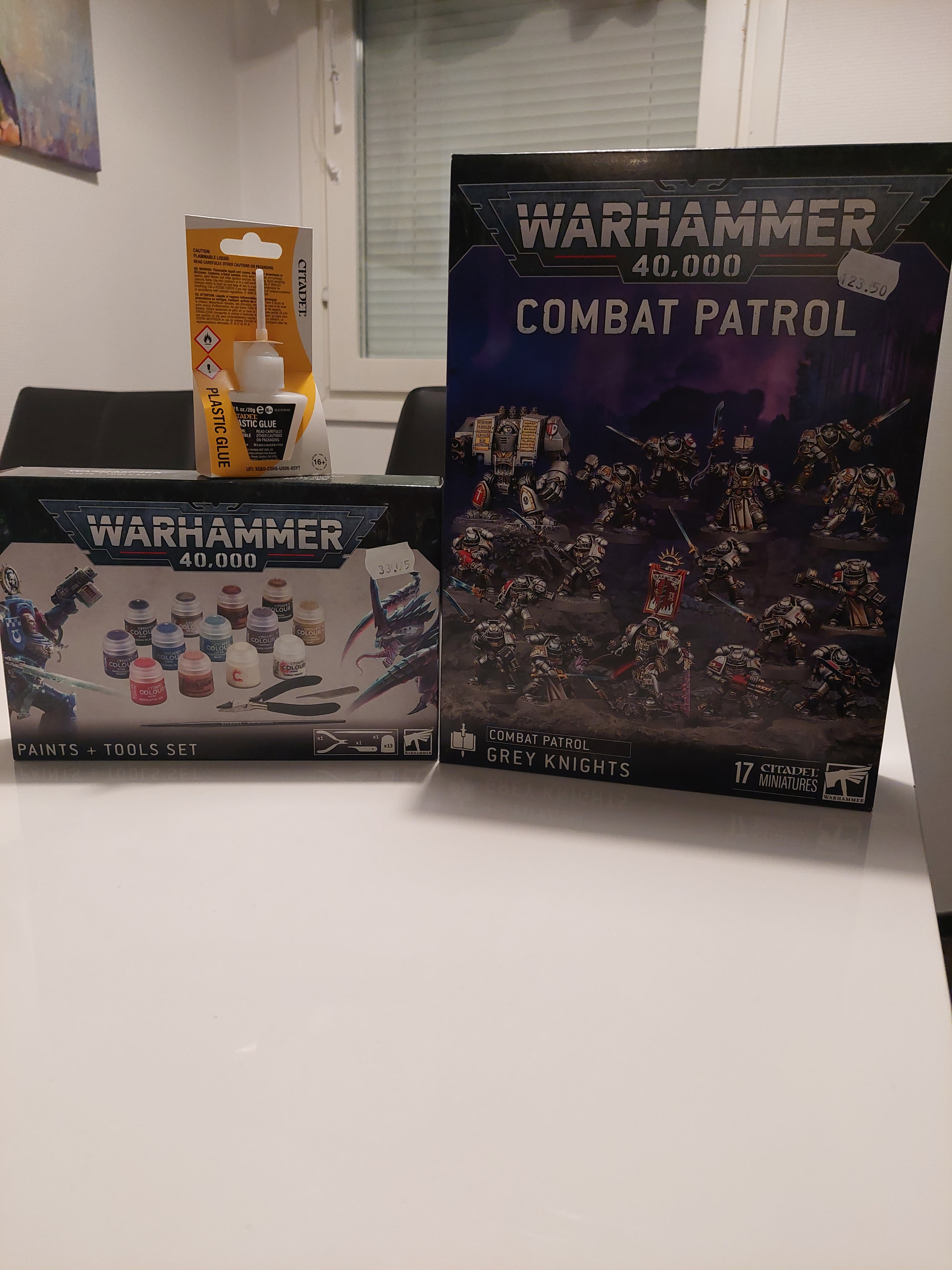
The outcome of last week’s “Lynch session” was that I picked up the “starter kit” below from a nearby game store today.

17661615209287428444252513482416

I even managed to get a nice 15% Christmas discount, so the price for this fun was “only” 139e. In itself, I think it’s bullish for Games Workshop if even fast-approaching middle-aged adults like this can be lured into this nonsense. The next challenge will likely be how someone with such clumsy hands gets these figures glued and painted without it turning into a clown army :sweat_smile:

24 Likes

A fantastic grand finale to your “lynching”! Did you remember to also buy a spray for the primer? Priming is practically a mandatory step for the job.

Another thing I would recommend doing is putting together a wet palette. It’s easily done with baking paper, a plastic container lid, and a dishcloth.

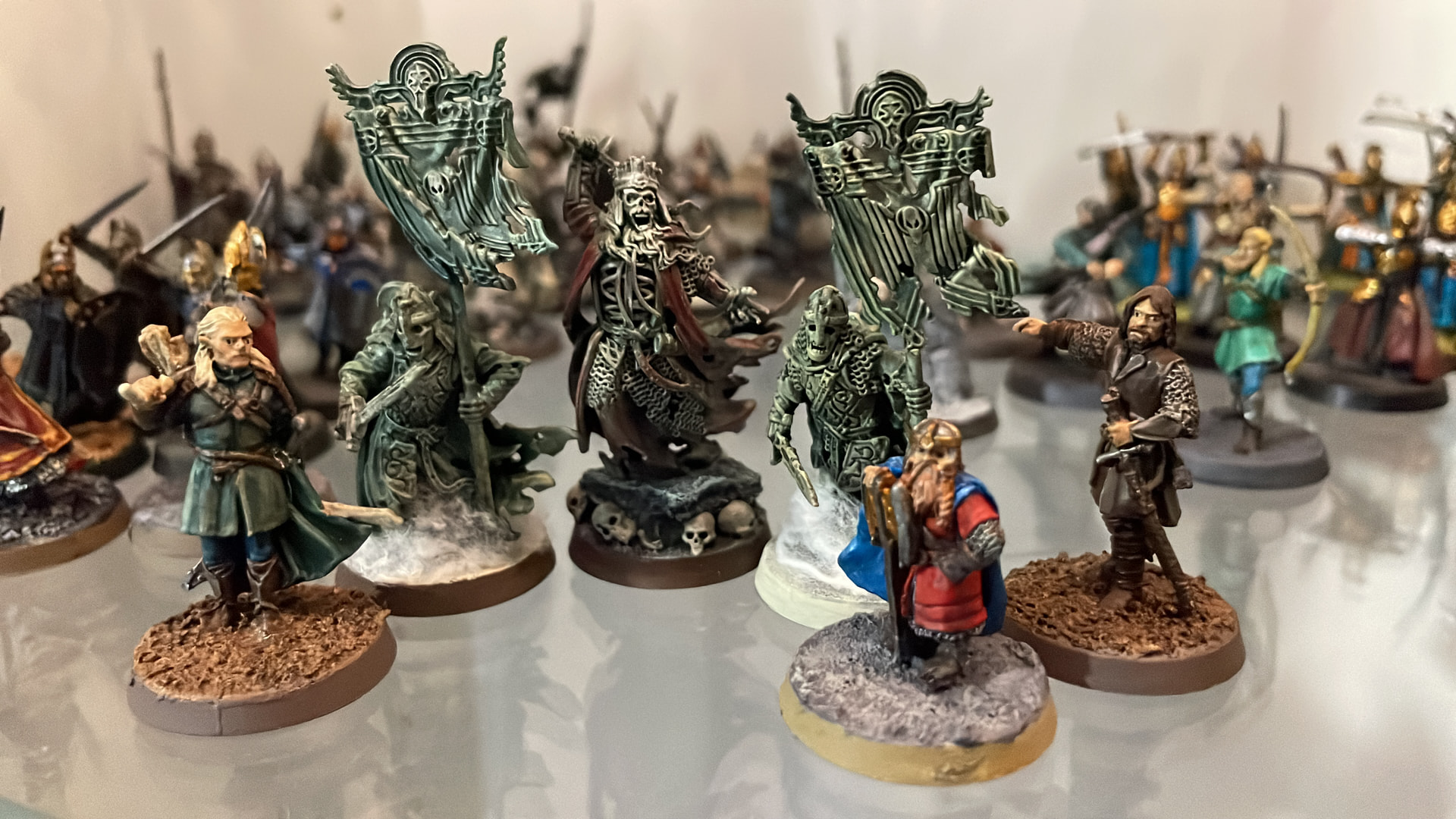
The great thing about this hobby is that you can find clear tutorial videos covering everything from beginners to experts. To finish off, here’s a picture of my own LOTR figures:

kuva

15 Likes

Alright… Almanakka, familiar from the ‘Rookie Interviews’ (Alokas haastattelee) thread, has written a good post about Games Workshop. :slight_smile: (link to their interview)

In the future, I will be writing about companies with a slightly lower threshold. This means that I may not necessarily know the companies completely, or I might also stop following them more easily. However, I want to keep some kind of diary or log of interesting companies that I own or follow.

British Games Workshop is definitely interesting, and I believe I know it quite well. The company has been one of the best-performing stocks on the UK stock market over the long term, and it has grown strongly while maintaining profitability at a very high level. I have owned shares in the company for several years and have added on dips. It is currently the seventh largest position in my portfolio with a weight of about 5%.

7 Likes

I really liked this post, but in my opinion, Games Workshop’s paints (and other similar tools) are the weak link in the equation—contrary to what is written in the article. As has been noted in the thread: miniatures are largely purchased from other game stores (Puolenkuun pelit, Fantasiapelit, etc.) rather than GW’s own stores. These stores also offer paints and other accessories (glues, brushes, etc.) from other manufacturers that are perfectly suited for use with GW’s miniatures.

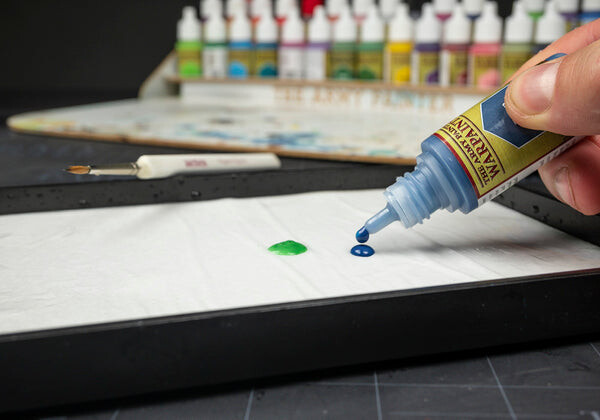
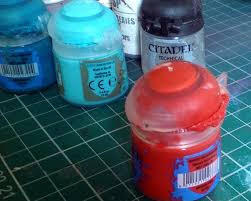
In my view, instead of GW having the miniature paint market in a chokehold, choosing the best paint brand is a matter of the same kind of masculine tribalism as choosing the right tool brand between Ryobi, Makita, Parkside, and Dewalt. I personally find Citadel (Games Workshop) paint pots to be a bit clunky compared to the equivalents from competitors like Army Painter and Vallejo. Since painting often happens with a wet palette, dispensing these manufacturers’ paints onto the palette is easier because they feature dropper bottles, unlike Citadel pots, which are also often challenging to close when paint dries between the pot’s “hinges.”

kuva

kuva

11 Likes