CD8 and Treg changes should not be interpreted too linearly as individual markers. Bex is not a direct T-cell activator, but an upstream myeloid checkpoint therapy that affects the entire tumor immune microenvironment through macrophages. It can reduce immunosuppression, help the immune system recognize cancer cells better, and improve the function of T and NK cells.
It is therefore more about reprogramming the entire immune network than boosting a single cell type.
That point about the differences between cancer types is important. Different tumors emphasize different suppression mechanisms.
1 Like
https://www.nature.com/articles/s41586-026-10452-4
Non-invasive profiling of the tumour microenvironment with spatial ecotypes
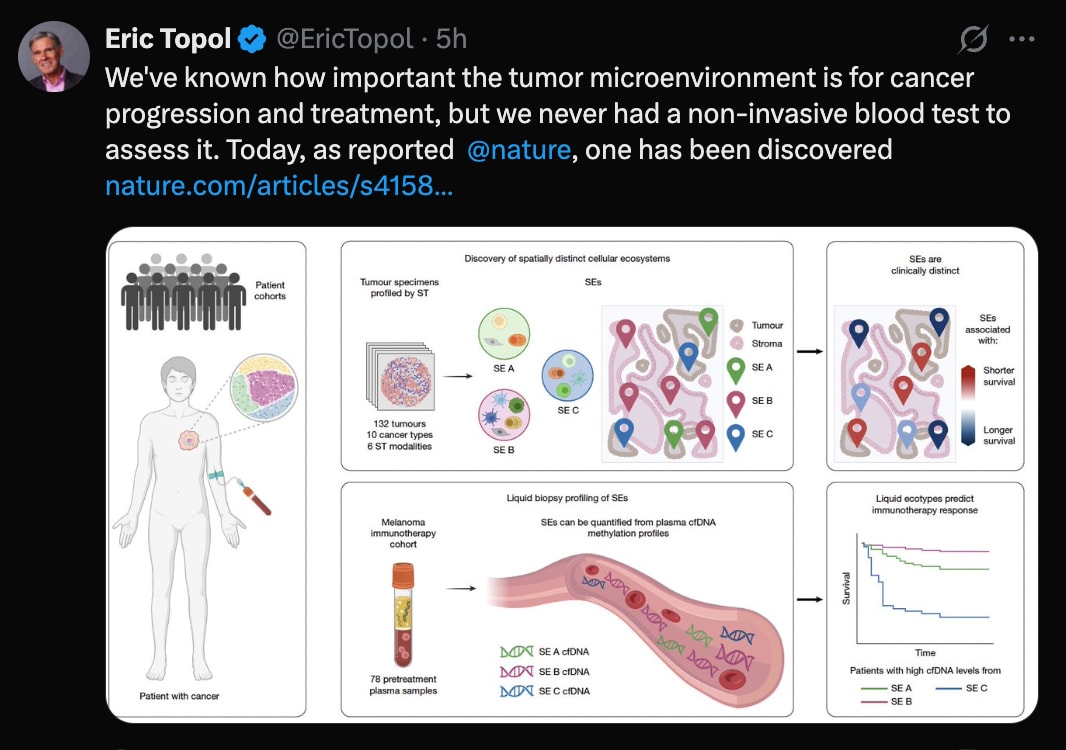
A new study published in Nature is very interesting. It describes the tumor microenvironment (TME) as “spatial ecotypes.” They identified myeloid/SPP1/fibrotic suppressive niches as well as interferon/CXCL9-active regions associated with immunotherapy response.
This strongly supports the idea that cancer immunoresistance is not just a lack of T cells, but a structural state of the entire TME. This aligns very closely with the TAM (tumor-associated macrophage) reprogramming logic of Bex.
The biggest surprise in the paper was that these ecotypes can even be detected from cfDNA via a blood test.
Cancer medicine used to ask: “Which mutation?”
Now the question is: “What kind of ecosystem?”
2 Likes