Faron Pharmaceuticals - Innovative medical solutions (Part 2)

Vesa Karvonen (Pacta sunt servanda Oy – it means: “Agreements must be kept”) subscribed for 72,000 shares.

Yrjö Wichmann bought 10,000 shares from the market.

Juho Jalkanen subscribed for 23,656 shares for himself and 4,860 shares for a person in his close circle.

Karvonen previously held 104,000 shares, and Pacta does not appear on the list of the 100 largest shareholders. So in practice, he exercised all of his subscription rights. A positive signal in my opinion.

Wichmann already has 138,132 shares, but bought new ones from the market instead. What is he planning to do with his subscription rights? A confusing signal.

Juho apparently has some game of his own going on.. That calculation about selling the remaining rights sounds quite logical even at first glance.

7 Likes

I felt I had to speak up about this matter as well. It’s also good to look back. If I calculated correctly, Juho has bought shares over the last 9 months for 97,000 euros and Chairman of the Board Tuomo for 250,000 euros. In my opinion, these are significant sums.

30.6.2025 Faron Pharmaceuticals Ltd: Director/PCA Dealing - Faron Juho Jalkanen +50,000 EUR

2.7.2025 Faron Pharmaceuticals Ltd: Director Dealing - Faron Tuomo Pätsi +52,352 EUR

19.9.2025 Faron Pharmaceuticals Ltd: Exercise of Options, Director Dealing and Issue of Equity - Faron Juho’s and Yrjö’s option exercises: 30,000 pcs @ 1.09 = + 32,700 EUR & 32,700 EU R

10.3.2026 Prospectus. Tuomo Pätsi +200,000 E UR

19.3.2026 Juho Jalkanen +14,300 EUR

29 Likes

There is no value inflection point in sight for 2026 and likely nothing in 2027 other than the final results of BEXMAB Phase I. The fact that the first patient is recruited for the trials doesn’t really increase the company’s value. We need RESULTS. Maybe it will be reflected in the subscription enthusiasm. I’ll jump in bigger in the next offering. Of course, Faron as a risk stock can still beat the indices if the rest of the market rises and interest rates come down.

10 Likes

Actual results will be heard in 2027. Analysts calculate the Likelihood of Approval, or LoA, when estimating future cash flow using DCF and, through that, the risk-adjusted value rNPV. If we are in Phase 1, roughly 90% of the returns are discounted, along with WACC deductions.

”The costs are substantial, with only a 35 % chance that an investigational drug will progress to a Phase I clinical trial. At that stage, only 9 to 14 % of these drugs will ultimately obtain market approval.” https://www.sciencedirect.com/science/article/abs/pii/S0304419X25002094#:~:text=For%20oncology%20drugs%20specifically%2C%20success,-target%20effects%20[6].

In 2026, we will hear news that I would consider good if and when trials for several solid tumors begin with the “first patient in” announcement. The fact that it’s planned doesn’t quite mean de-risking has occurred yet (Carnegie estimated an LoA of 10% even before Phase 1 starts), but the start of patient treatment means the game has begun in earnest.

Phase 1 means studying safety, and that has already been mostly studied in MATINS and BEXMAB, and we know how Bex behaves in the body and that it is safe. Of course, it is now being tested as a combo with new drugs, so a short Phase 1b will be conducted. The Maximum Tolerated Dose (MTD) will be tested; in sarcoma, for example, Bex at 1, 3, and 6 mg/kg with doxorubicin. From these, the Phase 2 dose (RP2D) will be selected. Phase 2 will begin as planned after that, if everything has gone well. Apparently (according to the English webcast), these protocols will be explained in more detail at the summer or autumn capital markets day.

If the starts of Phase 1/2 for solid tumors in 2026 already move the needle in the calculated risk-adjusted returns, it is not insignificant. If the market has already priced in the starts of the solid tumor trials as they approach, the share price won’t budge. The shocks from the previous share issue were corrected in a few months, though now there is a larger dilution.

In current valuations, for example, Carnegie already had an LoA of 10% for solids, where the market would, according to them, be smaller than MDS; Redeye only calculates MDS, nothing for solids yet. Blood cancer alone should no longer be the sole determinant of value. Faron estimates that the potential target market for solids is significantly larger than for MDS. From there, you can evaluate for yourself what to do.

16 Likes

I ended up opening that webcast. Bono is saying that bexmab-2 is “ultimate proof” and “final evidence” that bex works here. Well, well. Someone calculate how large the difference in efficacy needs to be with a 30vs30vs30 setup to get a statistically significant result. One that could be described with those words. I’m telling you, the efficacy has to be really strong. The most likely result with these numbers is “indicative”. Bono’s credibility certainly didn’t increase with this.

9 Likes

I guess there was/is some truth to those deal talks since the gentlemen “gobbled up the treats” a bit too early late last year. Now, with the exception of Pätsi, they don’t seem to have much of an appetite anymore. A couple of lessons:
1 ) Don’t count your chickens before they hatch
2) Greed has a…

3 Likes

Dissertation:

19 Likes

From LinkedIn:

23 Likes

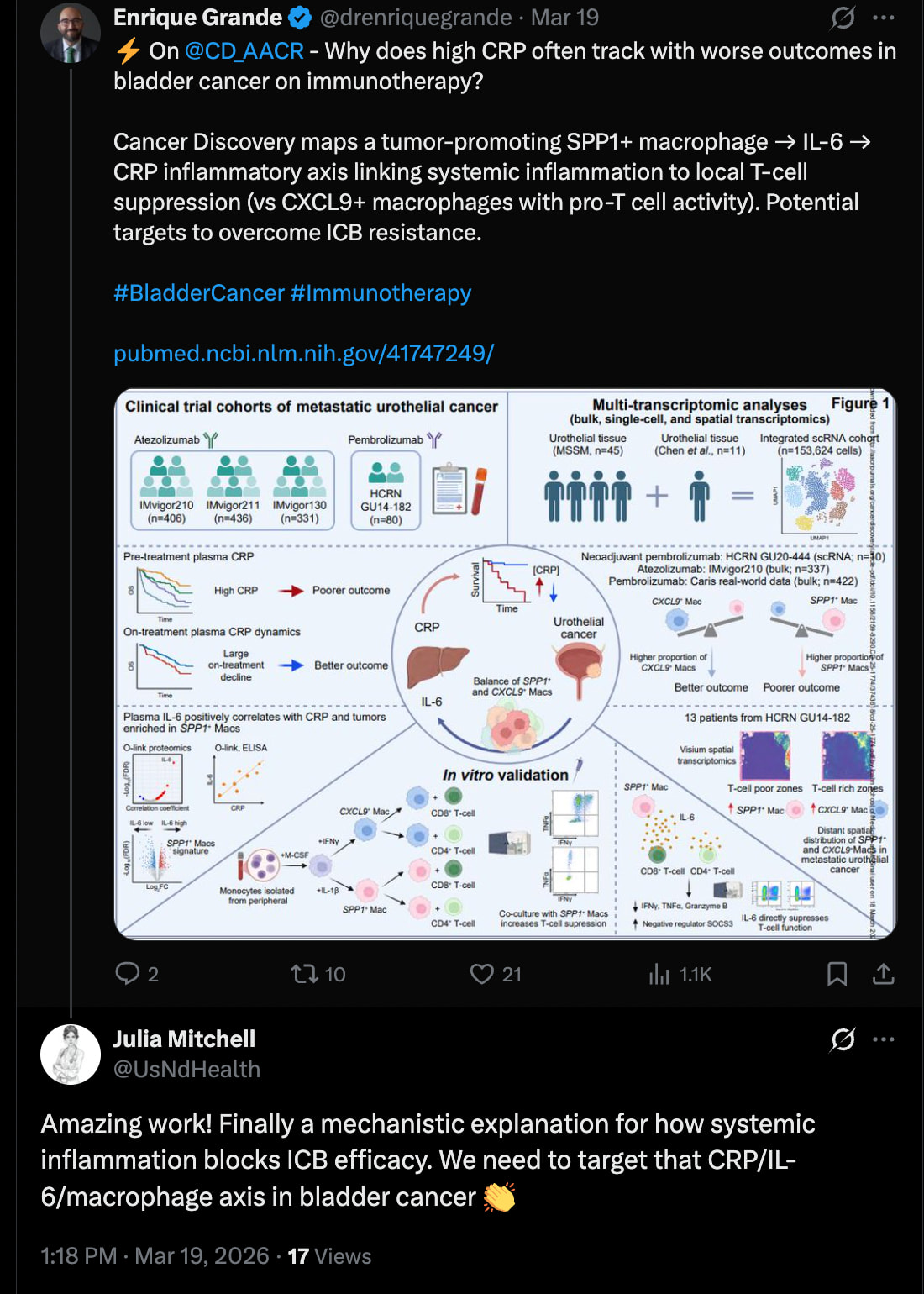
Article related to the previously featured Cancer Discovery piece:

The reason for immunotherapy failure is often found in macrophages (SPP1+) that maintain inflammation (IL-6, CRP) and simultaneously suppress T-cells, causing the treatment to fail.

Clever-1 is not mentioned there because it describes a phenomenon rather than a single target, but in practice, this is exactly the mechanism for which Bex is the clinical solution.

A simple blood test for CRP and IL-6 status, providing a biomarker for Bex.

14 Likes

Here is my latest article. I wish everyone enjoyable reading and a happy spring!

26 Likes

Following up on that:

Those SPP1 macrophages are also linked to immunosuppression. So it’s related to Clever-1 positive macrophages at some level. However, there doesn’t seem to be any information on whether the existing mechanism of action, i.e., Bex, would affect that SSP1 pool through some pathway. It’s probably competitive silence, or SPP1 is such a new thing that research data isn’t available yet. They did promise to investigate, “This framework may help identify patients who are more likely to have resistance to immunotherapy and support testing new combination treatment strategies.” Maybe Maija could help?

Rannikko, in his dissertation posted in the thread a couple of days ago, also talks about the same thing as the authors of the Mount Sinai CRP, IL-6, SPP1 article; in the latter:

“In contrast, the team identified another type of macrophage marked by CXCL9 (Chemokine ligand 9) that helps activate T cells and is linked to stronger immune responses.”

Rannikko: "Bexmarilimab treatment induced TAMs to secrete CXCL10 ex vivo and upregulated another CXCR3 ligand, CXCL9, in patient tumors.”

And “Several of these bexmarilimab-induced changes also predict better ICI therapy response, such as elevated CXCL9 levels, T-cell infiltration and IFN signaling (Ayers et al., 2017; Herbst et al., 2014). ”

House, I. G., Savas, P., Lai, J., Chen, A. X. Y., Oliver, A. J., Teo, Z. L., et al. (2020). Macrophage-Derived CXCL9 and CXCL10 Are Required for Antitumor Immune Responses Following Immune Checkpoint Blockade. Clin Cancer Res, 26(2), 487-504.

CRP and IL-6 in the blood are also indicators of general inflammation in the body. Rannikko suggests instead of them as biomarkers, "patients with low Immunoscore, PD-L1 and IFN score would be non-eligible for ICI therapy and eligible for bexmarilimab therapy.”

Immunoscore is a T-cell measurement of a cancer sample that shows whether immunity is active. ICI therapy here means, for example, pembro, those that have not been effective in melanoma and lung cancer in the BLAZE trial. PD-L1 score indicates how likely those pembros and zimbets etc. would work. IFN-score is a measurement of the activity of interferon-stimulating genes, also an inflammation indicator.

It will be interesting to see what is selected for BLAZE and whether those will be tested in it, and what will be selected for continuation. It seems that biomarkers would best identify those who respond to Bex.


21 Likes

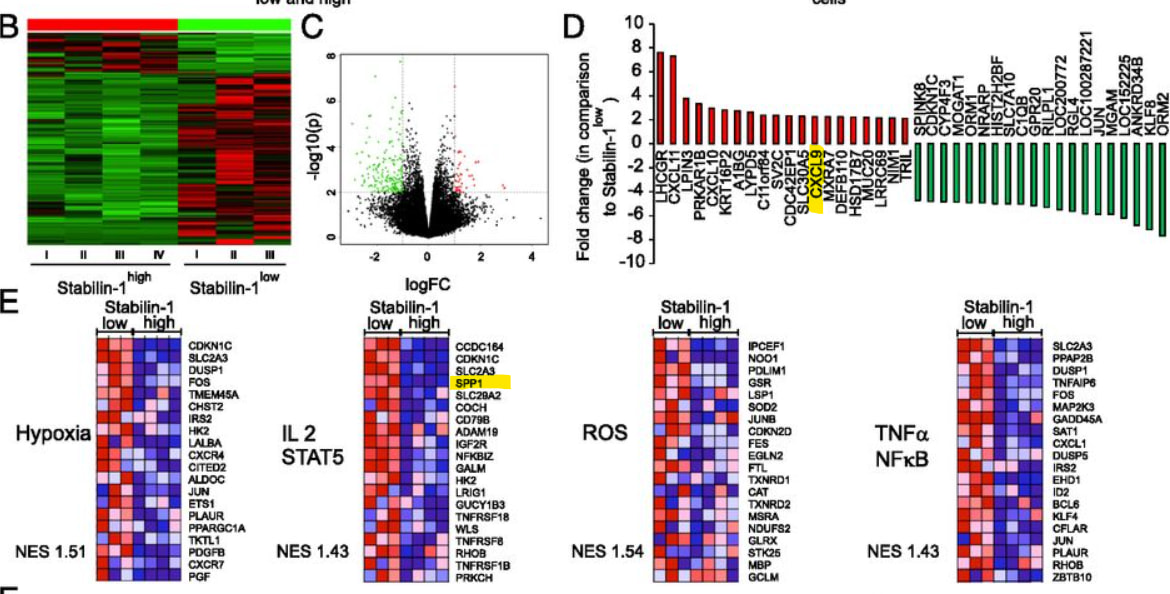
SPP1 has appeared in these macrophage discussions from time to time. Both SPP1 and CXCL9 are also found in this earlier article, where Sirpa is an author: Monocyte Stabilin-1 Suppresses the Activation of Th1 Lymphocytes - PubMed. In figure E) Clever-1 (Stabilin-1) high cells are SPP1 low, and in figure D) Clever-1 high cells are CXCL9 high.

In the message linked by Poiju, CXCL9+ cells are said to have pro T-cell activity, which makes it possible that Clever-1 inhibits this T-cell activation (direct interaction of Clever-1 with the T-cell receptor?*), if it is expressed in these cells. The expression of Clever-1 and CXCL9 in these cells should be analyzed separately, i.e., whether all CXCL9+ cells are Clever-1+ or vice versa. In some earlier article, it was perhaps remembered that Clever-1+ cells were possibly some intermediate macrophages that had not yet fully differentiated into either immunosuppressive or proinflammatory directions. From this perspective, it is important to learn from future solid cancer experiments to identify the patient population most likely to benefit from Bex. It will not work in all cases but requires identifying the right patient group.

  • This did not seem to be a direct interaction but an indirect one, now that I recall a bit more. Had to check the fact. This regulation of the T-cell receptor occurs via IGF2R. In addition, Clever-1 interacts with HLA-E, which is likely related to the regulation of NK cells.
21 Likes

https://www.medrxiv.org/content/10.64898/2026.03.16.26348550v1

In CAR-T treatment, STAB1/Clever-1-positive macrophages also seem to be associated with a poor response. In the linked paper, cfRNA served as a biomarker for the immune environment in the study.

Conversely, we also discovered STAB1 cfRNA transcripts were elevated in non-responders. STAB1 encodes stabilin-1, a scavenger receptor expressed on immunosuppressive tumor-associated macrophages associated with T cell exclusion and poor prognosis. Together, these findings indicate that cfRNA captures both structural features of organized antitumor immunity and signatures of myeloid mediated immune suppression.

12 Likes

Another good find.

This discusses a test to identify CAR-T and other therapies’ treatment resistance factors using cell-free plasma RNA analysis from a blood sample. For example, RNA encoding the STAB1 gene. For Faron, the main point is how Clever-1 is highlighted here by non-Faron parties. Why not also the development of said test, if a blood test suffices!

“These findings motivate prospective evaluation of cfRNA-guided risk stratification before CAR T-cell infusion, extension to additional cell therapy products and disease settings, and integration with TME-modulating treatment strategies. If validated, plasma cfRNA profiling may enable scalable, minimally invasive assessment of microenvironmental state to support patient stratification and therapeutic development in LBCL and potentially other malignancies.”

The opportunity for Faron comes from “TME-modulating treatment” and the fact that it was previously known that this type of lymphoma has a lot of Clever-1, and Maija was supposed to study these preclinically, and this article suggests that Clever-1 is a biomarker for poor prognosis. And here, a way to get a prognosis from a blood test was presented. As already stated earlier in the thread, even if CAR-T makes T-cells ready to attack, an immunosuppressive barrier can prevent even their function. One of the article’s references is Viitala’s and Maija’s work. And another is Rantakari’s.

CAR-T treatment is fragmented among numerous players, including big pharma and smaller ones. The treatments are prohibitively expensive, making them available to only a few, but they are becoming more commonplace. If a CAR-T player can overcome its treatment resistance, even partially, and gain an advantage over others, e.g., with Bex, it would be a significant market.

It belongs to the series of good news, but still requires clinical evidence, as always.

15 Likes

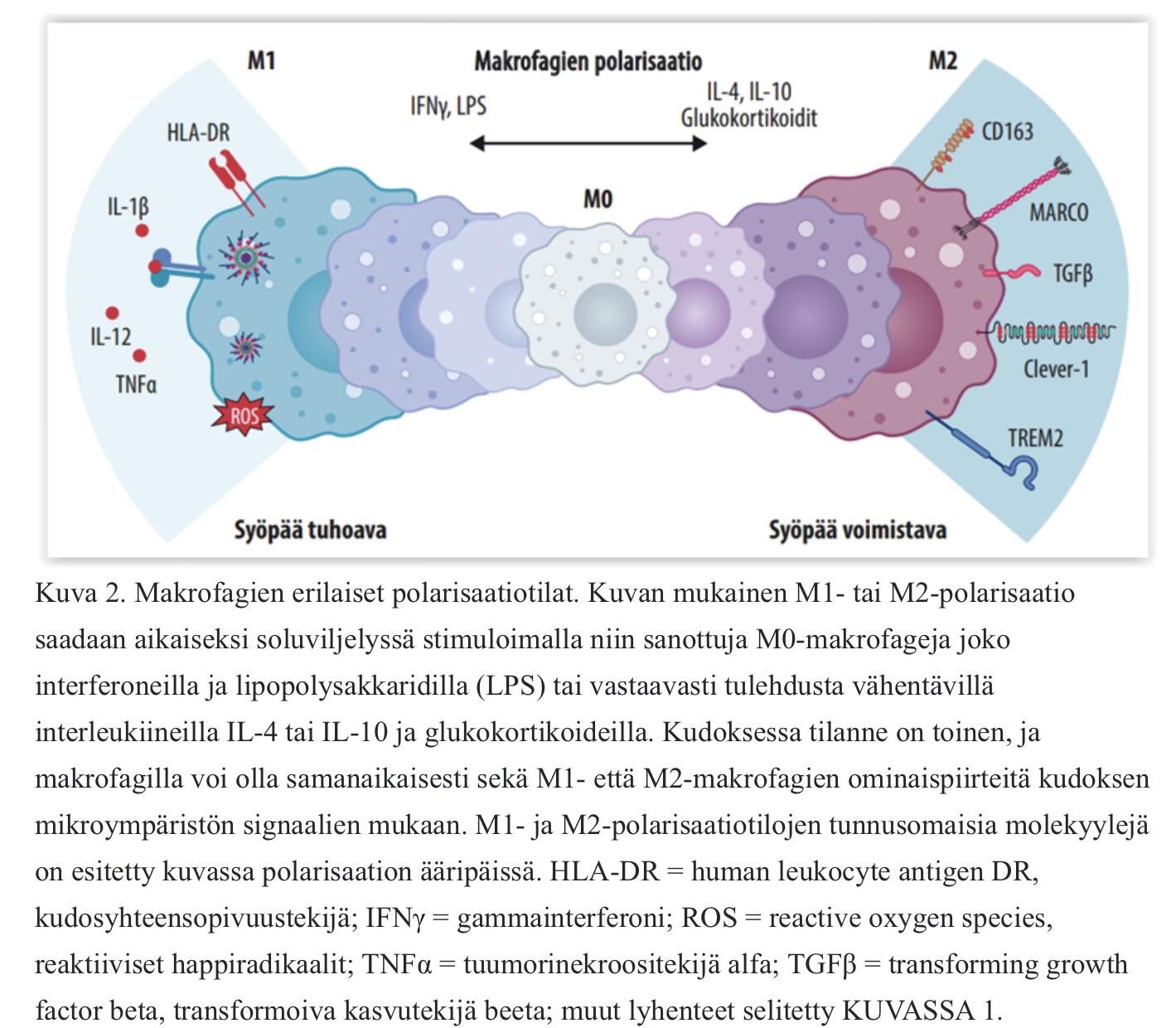
Okay! Searching for Hollmen + SPP1 was quiet. Sirpa and Marko Salmi’s work from 10 years ago therefore gave some indication that high Clever-1 and high SPP1 do not necessarily correlate. The SPP1 gene codes for the osteopontin protein. STAB1 codes for Clever-1, which is a secreted protein s-Clever, but also a cell surface receptor. SPP1 has been linked to immunosuppression, but it does not fit into the M1<—>M2 continuum.

One article discussing SPP1-macrophages is a Chinese Clever-1 article on gastric cancer, in which they concluded: “CLEVER-1 +TAMs may become a novel biomarker for predicting patients with GC who could benefit from anti-PD-1 therapy and highlights them as a promising target for overcoming immunotherapy resistance in GC.”

https://www.researchgate.net/publication/391979195_Blockade_of_CLEVER-1_restrains_immune_evasion_and_enhances_anti-PD-1_immunotherapy_in_gastric_cancer

It states that SPP1 activity is higher in Clever-1 positive macrophages: "reinforcing the limitations of the conventional M1/
M2 macrophage model. Notably, STAB1+TAMs exhibited
increased expression of both CXCL9 and SPP1 (figure 5D).
Recent studies have proposed that the CXCL9/SPP1 ratio,
referred to as the “polarity” of TAMs, offers a more refined
and clinically relevant metric than conventional M1/M2
markers.30 To evaluate this, we assessed CXCL9 and osteo-
pontin (OPN/SPP1) levels via FCM. OPN expression was
significantly higher in CLEVER-­1+TAMs (p<0.01; online
supplemental figure 4A), while CXCL9 levels were similar
between the two groups (online supplemental figure 4B).
A paired comparison of the CXCL9/OPN ratio between
CLEVER-­1 and CLEVER-­1− TAMs revealed a statisti-
cally significant difference (p<0.05; online supplemental
figure 4B), further supporting the notion that CLEVER-1+
TAMs exhibit a polarity indicative of an immunosup-
pressive phenotype.”

Rannikko’s dissertation mentioned that Bex would further raise the levels of CXCL9/10, which are essential for T-cell activation.

These Chinese observations contradict the side note in Sirpa’s paper’s heatmap? Here, logically, high Clever-1 simultaneously with high SSP1 means immunosuppression. The question of whether Bex could in any way affect SPP1-related immunosuppression is not addressed.

Below is Maija’s outline from Duodecim a couple of years ago, which also states that this is not about either M1 or M2, but something in between, and what influences which direction. The situation in the TME changes constantly, just like Faron here in the macroenvironment.

12 Likes

https://www.sciencedirect.com/science/article/abs/pii/S1368764626000300

Stabilin-1+ lipid-associated macrophages promote lung adenocarcinoma liver metastasis and osimertinib resistance through impairing macrophage phagocytosis via SIRPα-CD47 axis

There are many STAB1 studies underway. Here’s a new interesting one that could be quite relevant to the BLAZE case.

It concerns lung adenocarcinoma, but what’s interesting is that the phenomenon is specifically observed in liver metastases. STAB1+ macrophages accumulate there and prevent tumor clearance via the CD47–SIRPα axis.

It’s beginning to look like this isn’t just a lung cancer thing, but is related to what happens in the liver. The same STAB1 signal is seen in different cancers when they metastasize to the liver.

17 Likes

A little interpretation help for laypersons: the fact that stab1/clever-1 appears here or there does not mean that it is solely responsible for harmful immunosuppressive effects, nor does it mean that these effects can be removed with clever-1 targeting drugs.

This is an upstream/downstream or chicken/egg problem. Clever-1 appears “downstream” from where the problem lies.

If there’s a hole in a dam and a house 10km downstream is flooded, piling sandbags around the house won’t solve the actual problem.

7 Likes

These Clever-1 studies have been called for on the forum, and now they are popping up like mushrooms after rain. The Chinese are world leaders now, so their research should not be underestimated. Hopefully, all of these will benefit Faron in one way or another in the future.

12 Likes

I recommend reading the article. It demonstrated that macrophages overexpressing Clever-1 (= stab1) no longer normally phagocytosed dying cancer cells, and therefore could not present their antigens to the immune system. In other words, they became those anti-inflammatory macrophages, which is a bad thing in a cancer tumor. The study also showed the mechanism by which this happens: α (SIRPα)-CD47 signaling actively prevents macrophages from eating cells. So, not just a lack of function, but active immunosuppression.

Then the researchers injected cancer cells into mice, which then formed a cancer tumor. After this, they directly injected Clever-1 overexpressing macrophages into the tumor and observed that the tumors grew much faster afterwards. The study then showed that this effect disappears when the α (SIRPα)-CD47 pathway is blocked, thus confirming the mechanism in vivo through that route as well.

But what is interesting here is the second part of the study, where mice were given cancer cells resistant to osimertinib (a biological cancer drug used to treat non-small cell lung cancer), which then started to form a tumor. Well, osimertinib did not help much with these tumors (which is not surprising). But when the researchers injected Clever-1-silenced macrophages (macrophages without Clever-1) into these tumors, the growth of the tumors slowed down significantly even without osimertinib, and even more so with it.

In other words, the study showed that a tumor that responded poorly to osimertinib and grew rapidly responded very well to a combination of Clever-1-silenced macrophages and osimertinib.

Why is this interesting when considering bex? Well, because bex specifically binds to those Clever-1 receptors and inhibits their function (cf. macrophages without Clever-1). And it is already known that bex can guide the immunological “type” of macrophages towards a pro-inflammatory direction in tumors (even when bex is administered systemically), so the effect should be biologically significant (because it does not compare to Clever-1-silenced macrophages). In any case, against this background, it can be assumed that pharmacological inhibition with bex can very well mimic the local Clever-1 silencing of macrophages and achieve a similar efficacy.

In addition, this highlights the role of macrophages in the tumor and shows that the Clever-1 status of macrophages locally in the tumor is sufficient for a therapeutic effect (and other systemic effects may not be necessary), because the study indeed injected those Clever-1 overexpressing or Clever-1 silenced macrophages directly into the cancer tumors.

This provides mechanistic evidence that Clever-1-positive macrophages are not just a biomarker, but an active mechanism promoting tumor growth and drug resistance (via the SIRPα–CD47 pathway). Then, locally Clever-1-inhibited macrophages restore normal phagocytosis and improve the efficacy of osimertinib, which supports the use of Clever-1 inhibition-based therapies, such as bex, in combination therapies. In other words, Clever-1 is NOT downstream where the problem is, but Clever-1 is precisely critical for the genesis of the problem upstream.

38 Likes

Well, I’m quite skeptical about drawing conclusions from knockout models directly to what surface protein targeting might be able to do.