Faron Pharmaceuticals - Innovative medical solutions (Part 2)

I have to say, I don’t know enough about rights issues to evaluate whether it would have worked like that. Maybe? Or does the market, which determines the share price, look more at how many new shares are being authorized? And prices the subscription right accordingly.

Of course, one could say that fewer new shares should have been authorized so that the price would have stayed higher. But would the underwriters have agreed to this? Ultimately, the underwriters themselves benefit from as much dilution as possible if they provide a guarantee, because their own position does not dilute. They might require some kind of condition for the entire rights issue in exchange for their guarantee.

3 Likes

Could you explain in more detail what mistake was made in the previous study plan? How would you have defined the study design differently yourself? In my opinion, the Bexmab 1/2 study design was very good considering the limited resources, as it included a wide range of patients. Now there is a better understanding of how Bex seems to work in different patient groups.

And based on that, they are proceeding with first-line HR MDS, as it showed the best responses for further studies. Would it even have been possible to limit the study to only first-line HR MDS at an earlier stage? After all, it’s a completely new drug, and there were no clinical trials in blood cancers prior to the previous phase. Doesn’t the regulator to some extent force the study to also include r/r patients? Would a randomized study of such a small population have served the purpose, or would there have been too much variance risk? If the sample size of the study had to be increased, with what money?

Fortunately, r/r does indeed seem to be following as an investigator-initiated study. And it is quite a vote of confidence from a researcher if they refuse on ethical grounds not to prescribe Bex to a patient being treated.

3 Likes

These first-line patients had actually been studied before and the CR responses were 4/5. Kontro was already enthusiastic back in Markku’s time that the first-line is particularly interesting, and Markku cautioned not to rush there with limited resources but rather to pick the low-hanging fruit. And this “low-hanging fruit” was then echoed by the younger Jalkanen.

But I’m just bringing an average Joe’s perspective to the matter. I don’t have the competence to evaluate what would or would not have been possible.

3 Likes

But this information came as part of the BEXMAB study. The one that has now been completed. What should have been done differently in the BEXMAB study, and when should this decision have been made?

1 Like

In financing, Markku often preferred small directed offerings. That keeps the share price steady. Whether that would have gotten us to this point, I don’t know. Juho has said this face-to-face, and he himself has taken a different path. Both ways have led to stumbling. Would the right solution for organizing financing have been somewhere in the middle between the father and the son? At least now the company should have the expertise for it. Would a Phase 2 with a control group have been the right approach originally? Now patent years have been wasted because of this. Faron must be able to know for itself what the right way to proceed is. Now we’re going back to Phase 2 for a few years? There is hardly much to be proud of here.

11 Likes

At some point, the plan was to apply for accelerated marketing authorization for the r/r indication based solely on the BEXMAB study. And recruitment emphasized r/r patients. So this was before the FDA consultation, the result of which was then spun in a way that the FDA encourages/urges/recommends / whatever the wording was, to move to first-line studies. That’s where the timeline immediately shifted significantly further out. In the very first plans, bexi would probably have been in use soon with AA (Accelerated Approval) approval. The BLA application was intended to be submitted in H1/2025. You can find this by digging through the press release history.

I commented quite a while ago that the plan is unrealistic; without randomized data in this r/r MDS indication, the requirements for Accelerated Approval are not met.

BEXMAB was a basket trial into which 4 or 5 different indications and dose-finding and dose-expansion parts were bundled. So, certainly a good use of trial resources, but a minor point of concern for me is that there is biological plausibility in all these indications, yet efficacy is only seen in MDS—so what is the explanation? Multiple comparisons problem.

The second thing is, of course, how things are communicated to the lay public. A great many people were likely under the impression that “it will be ready soon.” And everything would be fantastic if equity financing had been secured at the earlier, undeniably high valuation level. But did the anchor investor(s) lose faith midway?

But something must be tried, as Faron practically has exactly 1 asset to invest in. By the way, an interesting question in itself: would the fruits of Sirpa’s, Maija’s, et al. scientific activities suggest some other targets to match drug candidates with? Or is Faron’s scientific background ultimately equivalent to Clever-1? A single-molecule biotech is vulnerable. Some here boast about having delved so thoroughly into Faron’s basic research that they can probably answer.

10 Likes

I wonder if this single molecule is the core of the problem and a double-edged sword.

On the one hand, we have this Clever-1 cancer treatment catalyst utopia, the research of which is realistically still very much in progress. On the other hand, we have a prevailing lack of alternatives, which leads to communication bordering on misleading or being silent, because they HAVE TO. Additionally, the lack of funding, scarcity, and the continuation of the entire research program depend on presenting (creating) a utopian vision to investors with all the bells and whistles in every situation and outcome, because they HAVE TO.

My question to the forum experts (e.g., Vino Pino) is: without the fluff and hype, is this actually going to become a drug with a reasonable level of probability? Or is running this circus just a waste of time and money? If there are ingredients here for a business case, would it be best for all parties if the ringmaster were a new figure with a new narrative? Credibility and reliability are the prerequisites for everything and the foundation that enables success…

Since the offering, investors and backers have likely put over €200M into this over time. According to my understanding, another €50M will be needed next year, as I find it hard to believe Faron’s fairy tale that the funding currently being raised will last until the end of 2027. What do you think—is Faron a milking machine or a cash cow?

Edit. Jerej?

2 Likes

In this discussion, I’m mainly trying to figure out whether it would have even been possible to start right from the first-line initially? Or did the new drug need some scientific foundation behind it so that the move to first-line was justified? Don’t completely new trials often have to start from the last line, and then, from the regulator’s perspective, move towards r/r and first-line patient groups once there is a bit better justification for why the drug is (potentially) beneficial?

And even if first-line HR MDS could have been chosen as the only indication right from the start, on what basis would they have known to choose it with the information available at the time? One problem for Faron/Bex in this sense is precisely Clever-1, as there aren’t really any studies conducted elsewhere from which lessons or conclusions could have been drawn. Perhaps with a more researched target, it would be easier to justify focusing the study on a specific indication because there would be some lessons learned from previous attempts. That’s why I personally find it sensible that the trial has included several indications, to better understand where it’s worth focusing in the future.

Schedules and their marketing to the public are, of course, a chapter of their own. Were they realistic at any point, even if everything had gone perfectly? At the very least, they were ambitious.

6 Likes

Just a comment on that: there was that famous “trap” in the FDA-approved study protocol. Not even Big Pharma (BP) was able to assess that trap, and that’s why the competitor failed.

1 Like

Bexmab had a built-in possibility to expand the studies into selected indications, which included first-line MDS. So, there was no problem from a technical perspective.

R/R MDS was chosen because the understanding was that approval for this indication could be sought based on Bexmab. This was the “low-hanging fruit” that actually turned out to be a dead end.

7 Likes

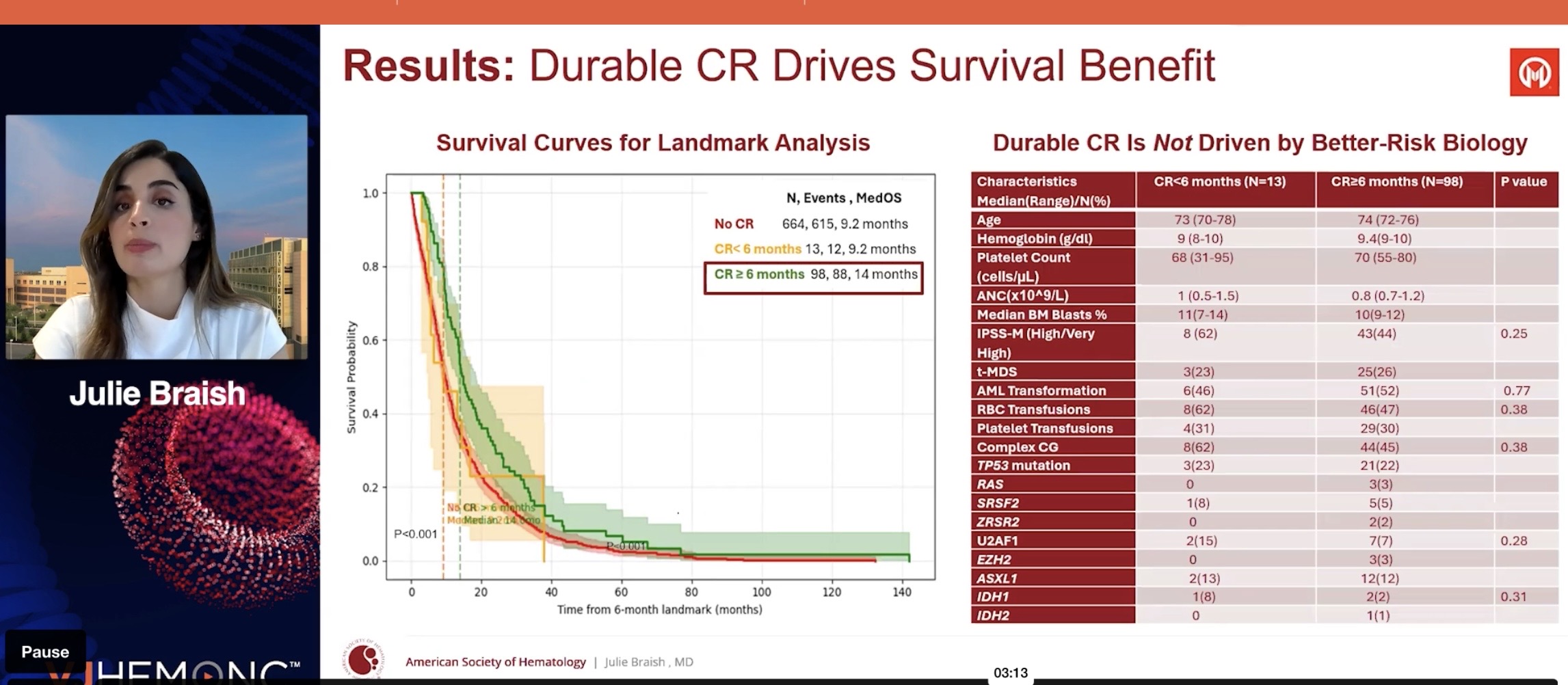
Faron plans to approach the FDA regarding the Phase 2b results, and as we just heard, CR (Complete Response) and its duration are what they are aiming for. One study on the subject; from the portal, click Julie under Zeidan’s Bex presentation—it’s part of that ASH package that caused the “Tänka På” (Food for Thought).

https://www.vjhemonc.com/event/post-ash-2025-mds-highlights/

”Durability of complete response outperforms complete response rates as a surrogate endpoint for advancing to phase III trials in high-risk myelodysplastic syndromes”
Julie Braish University of Texas MD Anderson Cancer Center, Houston, TX, United States

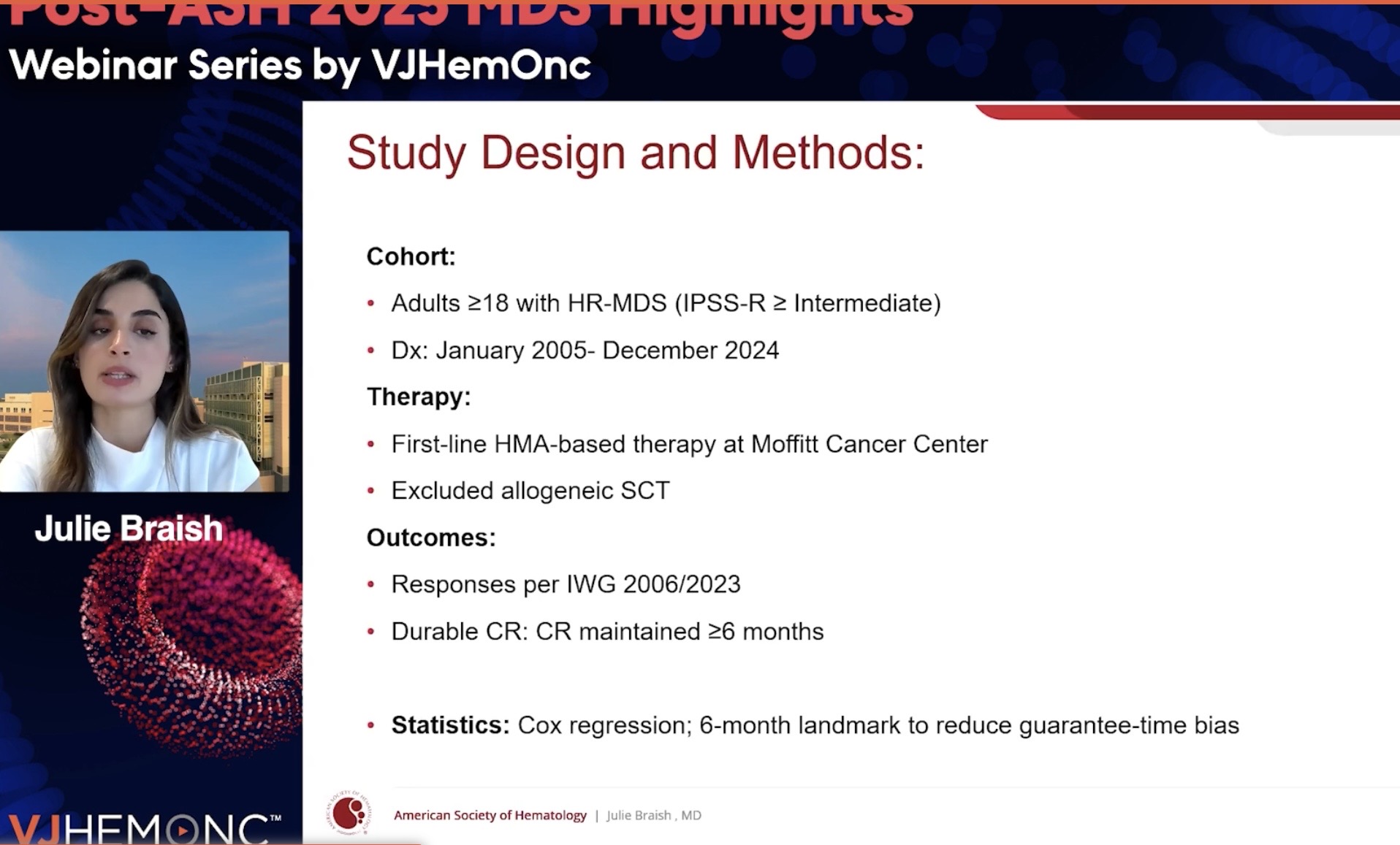
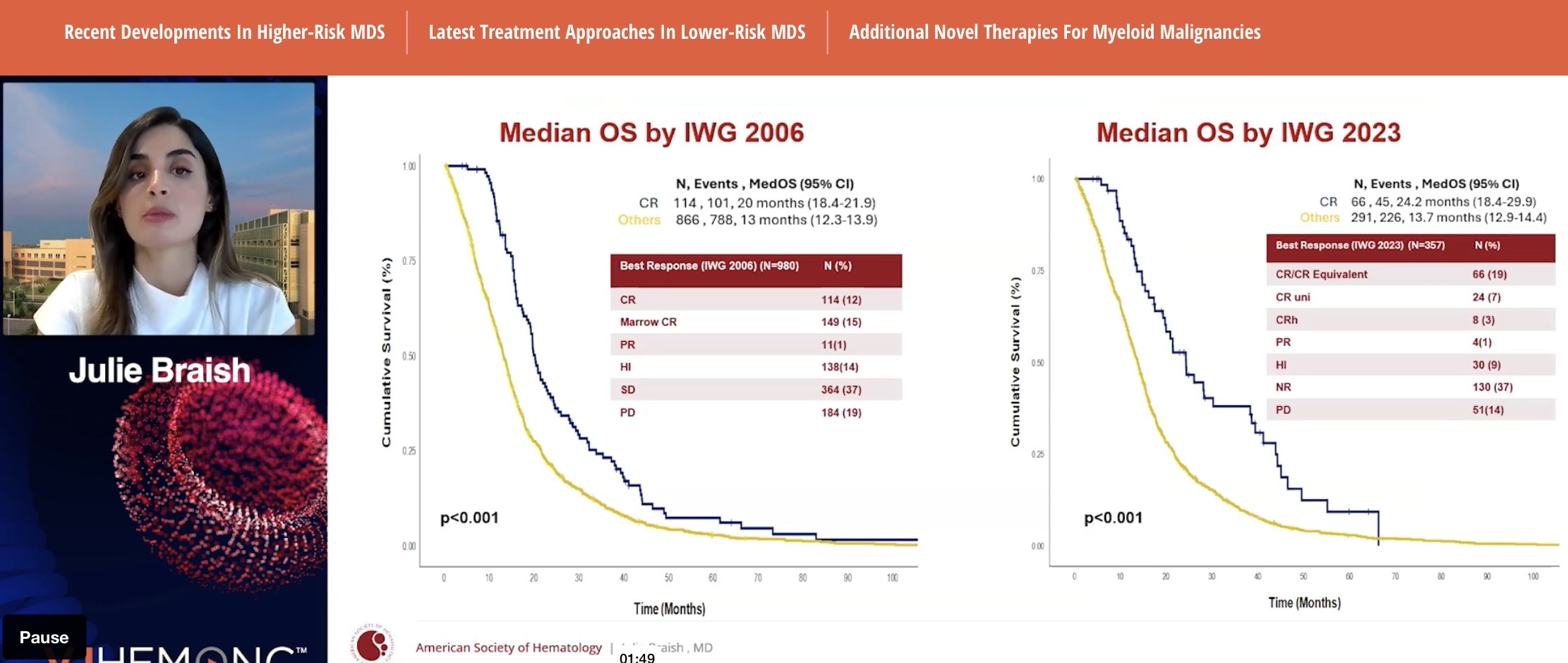
A study conducted at the Moffitt Cancer Center, retrospective (data collected after treatment), 980 HR-MDS patients (intermediate and higher risk).

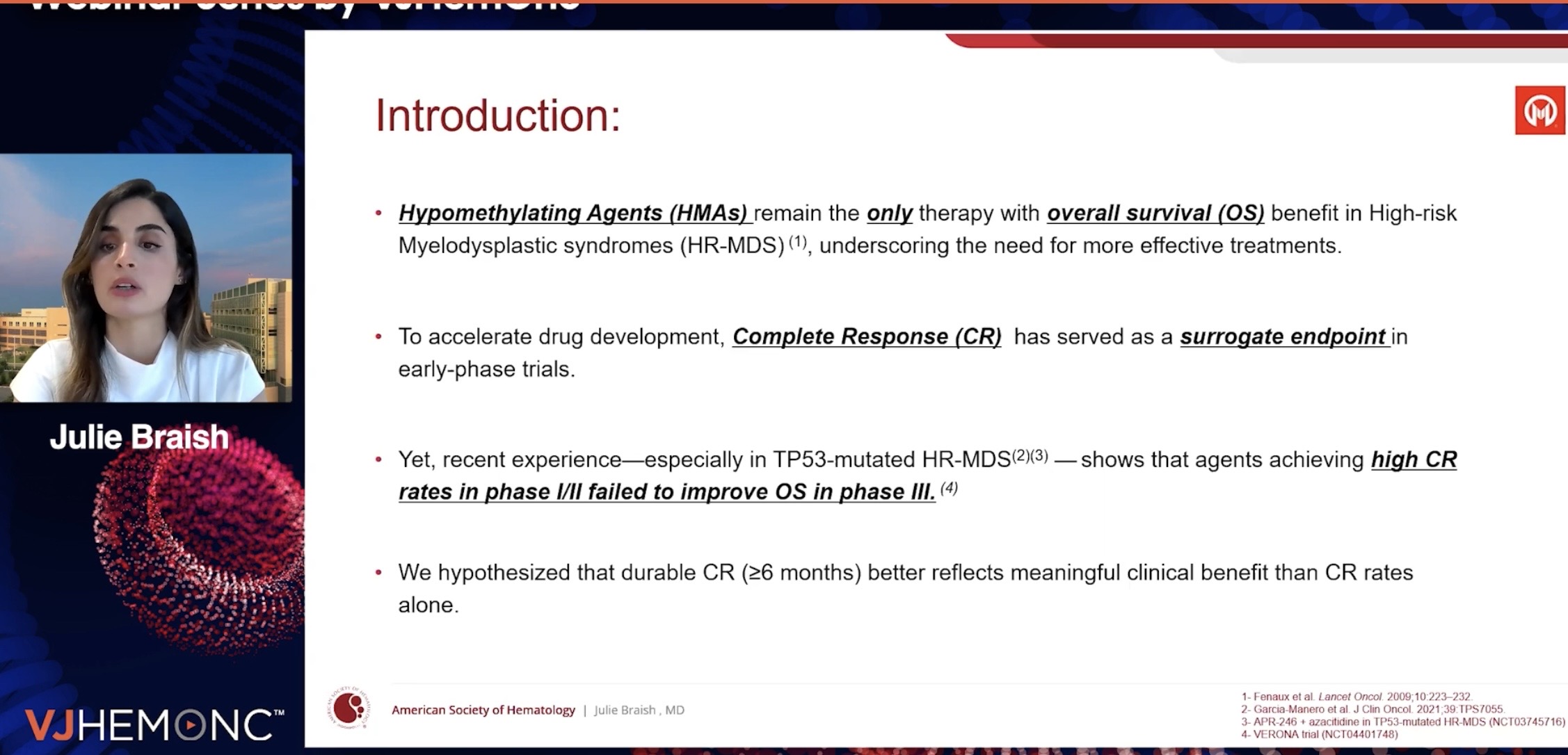
An investigation into why success in Phase 1/2 does not translate to Phase 3, which is the “hottest” topic right now, as we know… TP53 is particularly problematic. CR is seen there, but it’s short-lived.

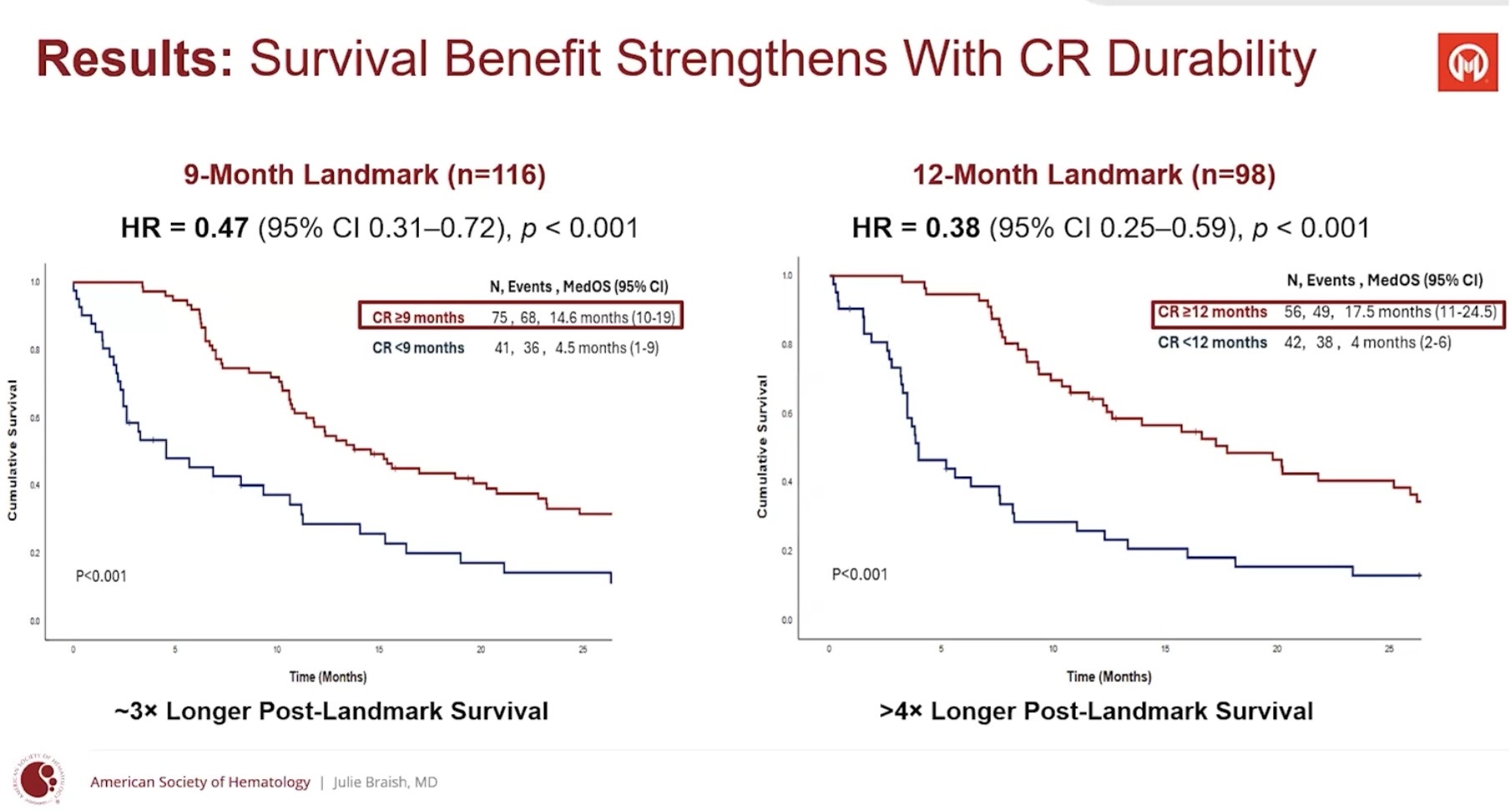
Hypothesis: CR with a duration of 6 months or more predicts survival benefit (OS) better than a one-time CR response.
Those undergoing bone marrow transplants were not included in the analysis. (Transplants must be handled in the plan so that they don’t penalize Bex if the CR duration is cut short by a desired transplant, ed. note.)

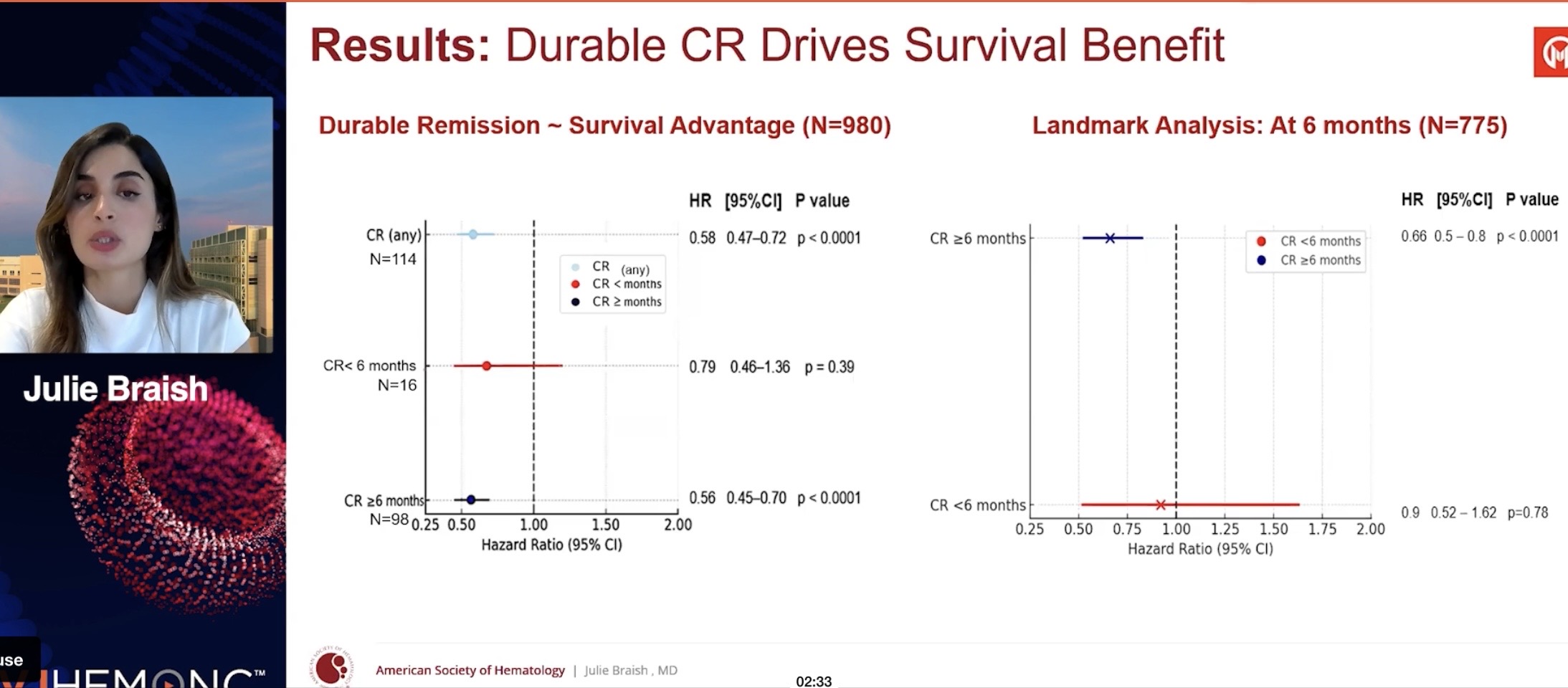
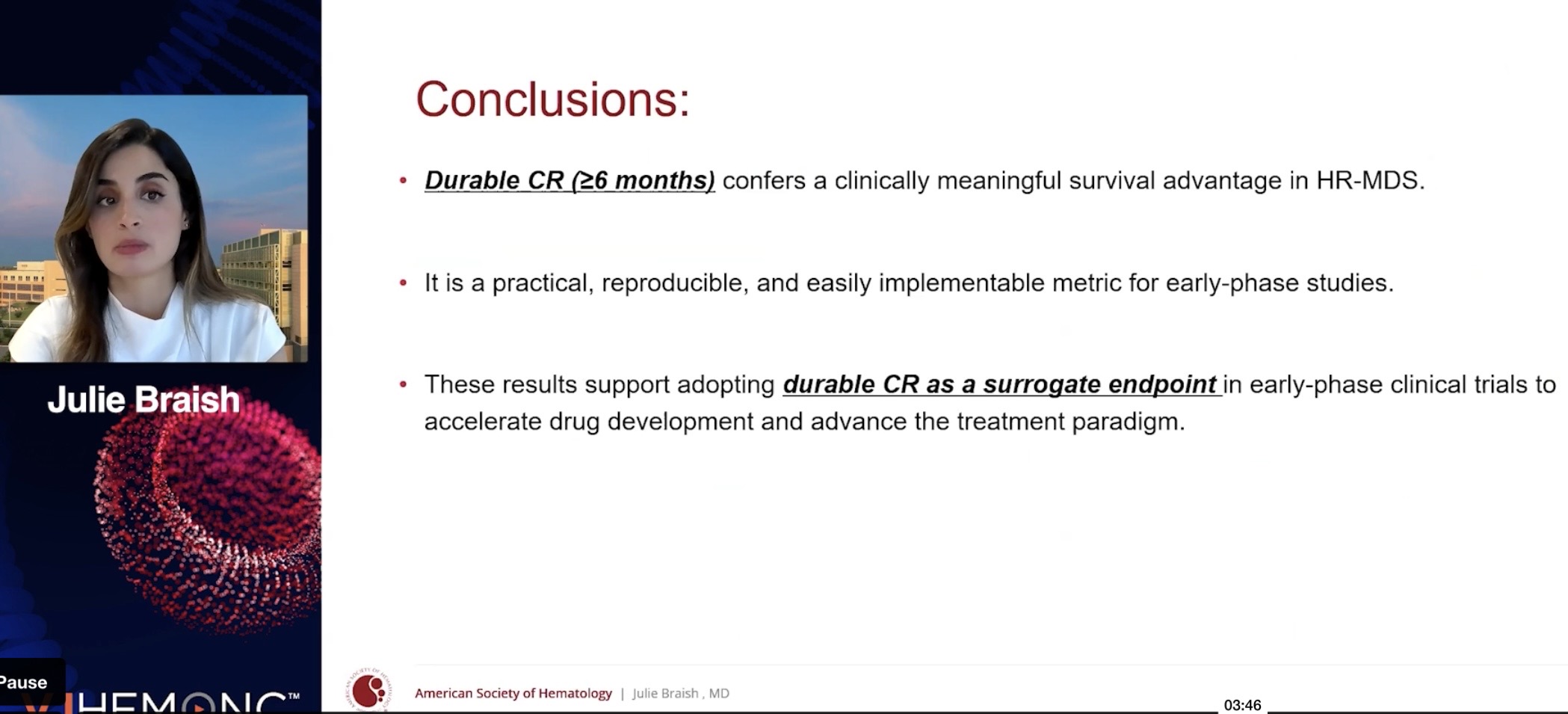
They showed that the longer the CR, the longer the survival (pretty obvious). CR itself also works. In their opinion, CR duration of 6 months or more could be considered a surrogate—an indicator predicting survival benefit (the kind that, if approved by the FDA, could lead to AA [Accelerated Approval] marketing authorization, ed. note). CR has already been such an endpoint. What will be enough for the FDA next year is not known; the guidance only uses the word ”meaningful”.

What does Faron say about those response durations?

business update | February 11, 2026 Faron Pharmaceuticals - Innovatiivisia lääketieteen ratkaisuja (Osa 2) - #3416 käyttäjältä Vino_Pino :

”Follow-up is still immature (as I understand, it was the November reading, ed. note), but the median duration of CR is already over 12 months, and follow-up continues – potentially it will still rise. In TP53-mutated patients, the CR rate was an amazing 70 percent, and the duration of CR was over 10 months, possibly still rising. Historically, this patient group usually lives 8–10 months.”

Looking at those figures, it seems we are starting to be in the safe zone. New numbers likely in a month at BSH. A median of over 12 months means that for at least half of the patients, responses have lasted over 12 months. In the Moffitt study, the 6-month limit is instead the minimum response duration that everyone should exceed.

It could be that “easy” patients are “always” selected for Phase 1/2a, and the truth and reality only emerge in randomized trials. Now it might be the other way around, if/when TP53 patients have been selected more than their natural proportion would be. If preliminary observations that cytopenias occur less with Bex than without hold true, the problems experienced in Phase 3 may partly turn to Bex’s advantage, as there are no dangerous deficiencies like with many other toxic drugs. Well, Phase 2b/3 will eventually show how it goes.

At least “how many cycles” of aza (azacitidine) were received will also be controlled as a factor. Indications of future Phase 2b success can be obtained if these CR-duration surrogates are scrutinized.

Studying R/R (relapsed/refractory) patients finally opened a completely new path forward, the continuation of City of Hope, the IIT (Investigator-Initiated Trial)—we’ll see what kind of support it needs from Phase 2b or what they think about communication with the regulator there :bouquet:


22 Likes

I’ll ask some basic-level questions again.

There is probably enough evidence for Bexmax by now that it doesn’t cause unpleasant side effects. At least not strong or significant ones. There just isn’t enough evidence yet of Bexmax’s efficacy in cancer treatment.

Then the stupid question: Shops are full of all sorts of natural remedy “gunk.” Even harmful ones. Bexmax is going through drug approval processes, but shouldn’t its sale actually be allowed on the same level as natural products? No side effects, so “take it if you like,” as long as you follow the maximum dosage instructions. Of course, the administration of Bex is directly into the bloodstream and more controlled under supervised conditions, but still.

And if the classification was initially in the “natural product” or “OTC (Burana)” category, can the classification be changed as more research results come in? Or can it affect the pricing, where the price of the initial freer sales would have to be lower (though it’s expensive enough that even then only the wealthiest could afford it).

Just a thought for getting at least some kind of positive cash flow started.

3 Likes

If a product has a medicinal effect, it is classified as a medicine. Selling it as a natural health product would constitute illegal trade in medicines, leading to immediate sales bans and criminal charges.

5 Likes

And in addition to the above,

Bex does, however, have an activating effect on the immune system and has proven adverse effects, fortunately, as evidence that it is working. So we’re not talking about natural product-level side effects. The risk is that reckless use, for example in active autoimmune disease, would cause serious harm. The reputation could be ruined. However, the risk/reward ratio of harms and benefits has seemed good compared to other molecules. Additionally, at this stage, production must be cost-optimized to be predictable, such as for the starting trials.

One way to get it into use before approval could be compassionate use Compassionate medicine schemes help patients with cancer live better and for longer — why are they not more widely used? - The Pharmaceutical Journal. In that case, the doctor has to request permission separately for each patient, so very significant revenue could not be expected.

It seems the only way to get it into use and testing right now are these trials, which will soon start for r/r MDS, AML after transplant, breast cancer, melanoma, sarcoma, lung cancer, and that HR-MDS. Faron communicated that there would be more willing users, but they cannot take them.

8 Likes

Hi, I tried to interpret yesterday’s Faron presentation and whether it’s worth participating in the offering. So is the situation such that after the offering, the next Phase IIB results won’t be available until the autumn of '27? So are we waiting 18 months for the next big news? I understood that there were some investigator-initiated trials underway at the same time, but the hard data for the Phase III transition will come in about 1.5 years?

4 Likes

CK-The above concern raised conflates data immaturity with statistical bias. Kaplan–Meier methodology appropriately handles censoring, including transplant censoring, which is necessary to isolate drug-specific durability. A “median not reached” outcome indicates that fewer than half of patients have progressed, typically a favourable early signal. The wide confidence intervals reflect limited events, not inflation. Additional patient-level visualisation would improve interpretability, but the core analysis is consistent with standard oncology reporting.

25 Likes

I had to double-check because the ASH presentation data was actually objective response data. Where exactly is this CR duration data?

Apparently, the corporate deck’s 12.1 months (8.1 months - NR), with no N number mentioned, and the business update’s “over 12 months” with no other information, are the only things known about this. The data is apparently from 11/2025.

1 Like

Interview with Joab Williamson of Faron

6 Likes

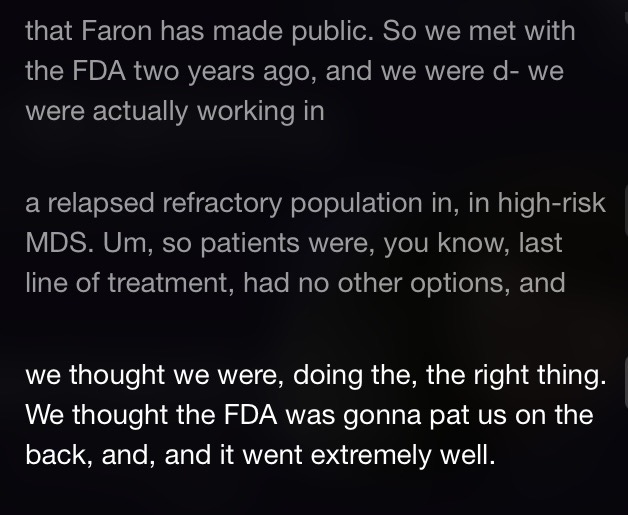
Joab sheds light on what happened during the discussions with the FDA over the course of 2 years. Fortunately, a path to accelerated marketing authorization was finally shown.


If Joab had said that the FDA officials started singing this, I wouldn’t have believed it, I have to be a bit bearish for a moment:

You’re just too good to be true
Can’t take my eyes off of you… :musical_score::musical_score:

But, as Juho also seems to have communicated, the data looks incredibly good, but it still has to be proven in a randomized trial. From the FDA, the aforementioned suggestion is very believable: “if you think there is efficacy, you’re crazy if you don’t do it in the first line; you can get approval for R/R at the same time.” Now City of Hope is also stepping on the gas in R/R, in addition to the above.

41 Likes

That is correct; results will likely not be available until late autumn 2027.

When asked about the most important milestones the company will deliver over the next 18 months, Bono replied:

  1. Getting the first patient into the BEXMAB2 study later this autumn
  2. The study enrolls patients efficiently so that an efficacy readout from 90 randomized patients is achieved in autumn 2027
  3. Efficacy results for solid tumors will arrive in H2 2027

Naturally, the most important news is the publication of the BEXMAB2 study results in late autumn 2027.

The company has previously issued a press release for events like point 1. The status of point 2 is likely more of an internal company matter, but it can be inquired about at the spring 2027 Annual General Meeting at the latest. The start of the studies in point 3 is still awaiting regulatory decisions, but it is possible that approval will be granted during the first half of 2026.
A press release may also be issued then, providing an estimate of the start date.

2 Likes