Decentralized finance - a new financial system in the future?

Previously, I hardly understood the point of cryptocurrencies at all, but encountering the idea of decentralized finance (DeFi) as an alternative monetary system where intermediaries (banks/brokers) are removed helped me better understand why they exist and what potential they hold. Of course, the whole idea is still at a very early stage, and everything is speculation for now, but with a brief introduction, there’s also an idea to solve the problems of the current system. Especially the recent GameStop saga was, in my opinion, a blatant example of a problem in the current system, where some smaller party can simply decide, for example, that one cannot buy this now, only sell. This can, of course, manipulate price development and make it move in the desired direction.

What are others’ thoughts on this idea?

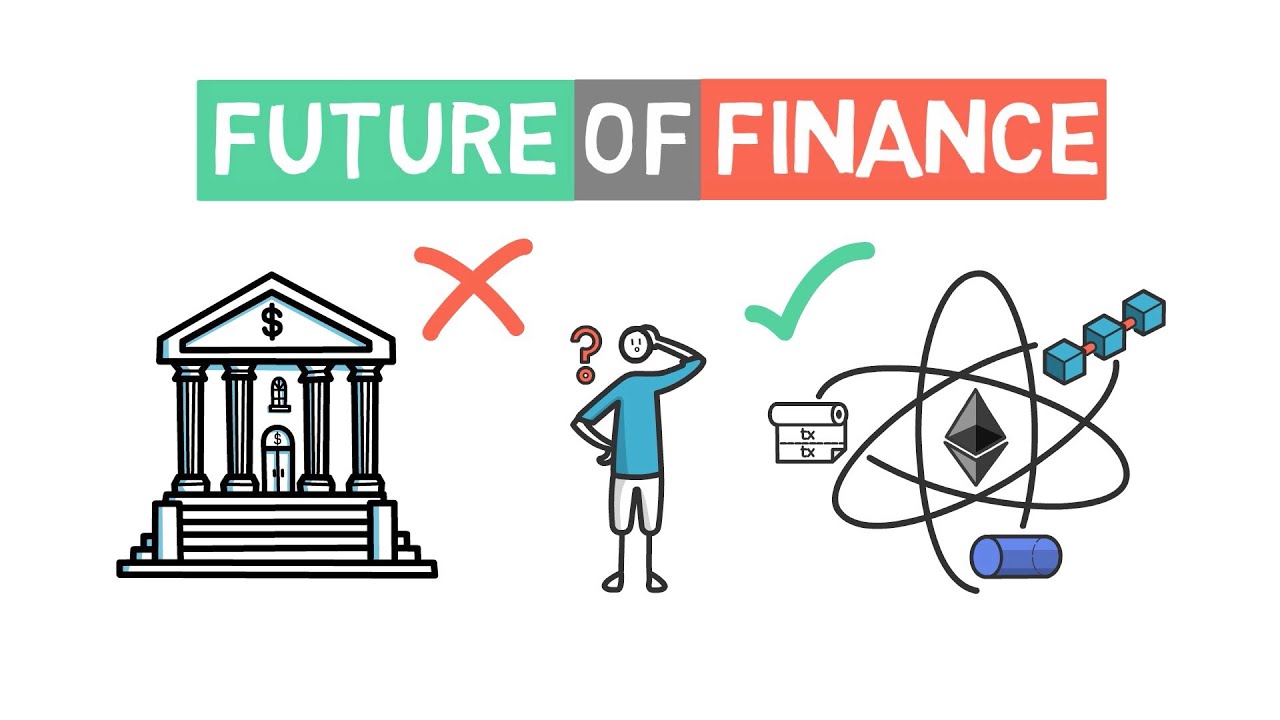
Here’s a short video clip explaining the decentralized finance system and how it works.

5 Likes

I watched the video and the following questions arose in my mind:

Lending: (I assume DeFi is based on microloans, as few people have the opportunity to maintain, for example, a diversified mortgage portfolio)
How does this practically work? The video states that the loan applicant does not need to verify their identity or income information. How is the applicant’s eligibility guaranteed? Is this an American model where building a credit history is a lifelong project?

Does every applicant have the same interest rate? Currently, lenders have an overwhelming amount of data on applicants, based on which loans can be granted on reasonable terms even to new customers.

How are defaulted loans collected if identity has not been verified?

Does each individual lender have to collect each defaulted loan separately because there is no centralized body to handle it (cf. p2p services)?

Which country’s legislation is followed in situations such as debt collection or even bankruptcy?

Does each lender have to draw up their own promissory notes for each microloan, for example?

The video states that a user can set a token as collateral for a loan. Why take out a loan if there is already enough “cash”? How many people can afford this, for example, in Finland?

Stock Trading:
Is Ethereum’s transaction speed sufficient for, for example, HFT trading volumes?

Is there even a need for a public blockchain, or could banks establish their own private blockchain?

Payment Card Traffic:
Who pays the transaction costs? Currently, Visa and MC costs are paid by the merchant, but are consumers willing to take this hidden cost upon themselves?

What if there is a lot of traffic online (e.g., Black Friday)? Are consumers willing to accept rising/unforeseeable costs?

What if the merchant covers the costs? Is a small business owner willing to risk their margin on fluctuating transaction costs?

Is Ether suitable for paying for a coffee of a few euros, for example?

Accounting:
How does the method of data storage (DB vs. blockchain) affect accounting automation? Already, several operators are automating functions.

Decentralized Nature:
The absence of a centralized authority complicates, for example, fraud detection, removes the bank’s responsibility in cases of card theft, and eliminates the fight against terrorism and the gray economy. How is a terrorist organization defined in a decentralized network, for example? The above are statutory, but how are they implemented in DeFi if there is no statutory obligation?

Who issues a payment “card” based on DeFi? Isn’t using some service provider (application) as (de-)centralized as using Nordea’s or OP’s Visa?

The video mentions that interest rates are determined by market forces. The task of central banks is, in theory (let’s not go into the success of practical implementation now), to regulate economic activity with the policy rate. i.e., raise the policy rate when the economy overheats and lower it during a recession. How would this work in DeFi, where the area is the whole world? Turkey’s policy rate is around 20% and in the Eurozone it is negative. (Even within the Eurozone, the policy rate tends to be too low or too high for almost all member states.) Let’s imagine that DeFi would be the de facto method in a world where there are only the EU and Turkey. What would be the optimal interest rate level that would not stifle the EU economy but would also prevent the Turkish economy from collapsing? This equation becomes more complicated when more economic areas are included.

About the video in general:
The video also tries to address the shortcomings of DeFi, but very superficially and focuses mainly on puffing up its superior features. Ultimately, perhaps about 99% of people are not interested in the technical implementation of services, but they want easy-to-use services that work. The video already states that the system demands a lot from its user. Is the average user smart enough, when various scams are already commonplace? Not to mention the dumbest elements?

At the beginning of the video, the development of banks in the last century is discussed, but in the 2020s, development apparently stops?

I do believe that, for example, stock trading can be significantly streamlined using blockchains, but I am quite skeptical from the perspective of C2C (P2P) implementations. B2B and to some extent B2C are, in my opinion, the most likely avenues.

Even on a theoretical level alone, there must be some centralized marketplace (e.g., a stock exchange) for efficient price formation. In my opinion, it is most likely that the current banking system will implement the features of DeFi and blockchains itself.

I would love to hear counter-arguments to these questions! Personally, I consider cryptography (digital signature) to be a very valid identification method, for example, instead of a social security number.

PS. That GME saga was quite difficult, by the way. On a principled level, I considered the restriction of trading to be wrong, but I understand the SEC’s damage control perspective. The aftermath could have been really ugly all around if small investors had pumped GME to the sky (with borrowed money), and it had, for some reason X, gone bankrupt or close to zero. What if GME had been a Wirecard-type fraud? I’m thinking of the COVID crash and how many margin calls exploded then. Now we are much more leveraged on many levels. Especially those whose risk management might not warrant it. In another thread, there was a claim that yesterday’s crypto slump would have triggered 800,000 margin calls. Those are not in society’s interest. No one needs another financial crisis.
13 Likes

Very good post! This new research paper mentions two styles of handling loan applicant risk in crypto: 1) flash loans or 2) collateral. More detailed explanations of lending markets can be found in section 2.3 Decentralized Lending Platforms. It’s an excellent article overall and likely touches upon some of your other questions. I haven’t delved much into the topic myself, as it’s not exactly my area of expertise. However, after watching the video, I also thought that banks’ version of a partially private blockchain would at least be an interim model on the way to complete DeFi. Regarding HFT (High-Frequency Trading), I found one article, which concluded, for example:

“While the transparency of DEXs is desirable, it can, however, put users assets at a security risk and allow both liquidity providers and liquidity takers to exploit unknowing traders through a combination of front and back-running”

I agree that the video was a bit too optimistic and didn’t focus much on risks or concrete ways to prevent them. The article discusses risks (paragraph 3.2) and refers to possible corrections (though somewhat superficially). While listening to it, it definitely crossed my mind that the median user and the lower block might not fully cope without regulation. The video also emphasized each individual’s complete responsibility; is that really a good thing?

Another fairly good article is “Blockchain disruption and decentralized finance: The rise of decentralized business models,” but it doesn’t seem to be publicly available, so I won’t share it here.

E: I also don’t like the speculative nature of cryptocurrencies; I think it undermines their true credibility, also for the future and “real” use cases. Perhaps someday their volatility will decrease, and Bitcoin will hopefully function as a more stable “gold” in the future.

3 Likes

Thanks for the link! The point about the guarantee still hasn’t quite opened up to me. Let’s imagine I want to take out a €10,000 loan for a kitchen renovation.

The traditional bank flowchart looks something like this:

  1. Apply for a €10,000 loan at approximately 9% interest.
  2. Withdraw the loan and build the kitchen.
  3. Pay back the flexible credit monthly.
  4. (Take a payment holiday)

Collateralized CDP (MakerDAO):

  1. Save €15,000
  2. Convert to Ether (-fees)
  3. Provide as collateral and withdraw €10,000 worth of Stablecoin (-fees?)
  4. Convert to crypto to withdraw from the exchange, build the kitchen (-fees)
  5. (If ETH drops, deposit more)
  6. Pay back the bullet loan + 0-20% interest and get ETH back
  7. Withdraw via the exchange (-fees)

Flash loan: In practice, is it used as bridge financing when moving from one loan to another? Or in arbitrage trading, if there is a price difference between cryptocurrencies on different exchanges.

Is DeFi just a solution to a “problem” that doesn’t exist without cryptocurrencies?


AAVE FAQ: “Selling your assets means closing your position on that particular asset. Hence, if you are long on the asset, you would not be entitled to the potential upside value gain. By borrowing you are able to obtain liquidity (working capital) without selling your assets.”

So, Aave’s purpose is not to offer banking services, but rather quick loans to crypto investors? However, Aave’s interest rate for DAI currency is a hefty 18.64% (+fees?), so it’s very close to payday loan interest rates, even though the loan is guaranteed at a minimum of 133%.

The Aave token, on the other hand, is used for voting. It can also be staked, so you earn interest on it. Emphasizing transparency, one would think Aave would explain how it makes its money? However, those staking interests must be paid. The staking interest rate at the time of writing was 7.1% p.a.

Interest rate differential = spread? Or from the 5% penalty for a margin call? Aave also doesn’t have its own blockchain; it runs on Ethereum. So how is this AAVE token created?

And how do these DeFi platforms behave in a bear market when margin calls hit? They increase selling pressure even further because they have to.

At what point do MakerDAO or Aave reduce costs or simplify life? There must be something great and better about these in addition to the ideology, if AAVE’s market value is half of Nordea’s? Could someone please explain to the uninformed?

4 Likes

So far, a pawn shop is a better comparison than a bank

4 Likes

There’s a lot of money in the world controlled by people who believe that deregulation, borderlessness, and equal treatment for all, regardless of background, is the best thing ever.

From experience, when there’s an obvious and simple reason right in front of your face, that’s often exactly what it is.

4 Likes

First, one must also deeply understand the significance of money and guaranteeing its value as a medium of exchange. It’s about trust and how long it lasts.

Gold has use value, but Fiat money does not. Cryptocurrencies also have no use value when the shit hits the fan. Only commodities relevant to survival have value… well, banknotes can be burned in a fireplace, but the value of cryptocurrencies quickly dissipates into thin air, whether managed by a central bank or someone else.

“Decentralized finance” is just another attempt to hype up the value of cryptocurrencies. Without regulation and parties guaranteeing trust, it will not succeed. The role of central banks in this is essential.

Of course, blockchain technology has value in selected applications. But everyone understands that.

5 Likes

The goal of this report is to demystify DeFi. It describes the basic attributes of DeFi services, the structure of the DeFi ecosystem, and emerging developments. A forthcoming Decentralized Finance Policy-Maker Toolkit will offer guidance on risks and policy approaches for governments navigating this new space.

2 Likes

If you need a down payment for a mortgage, for example, a DeFi (decentralized finance) loan can be useful. Traditional banks don’t really accept cryptocurrencies as collateral yet, so borrowing euros against Bitcoin (BTC) in DeFi (decentralized finance) works better. This can then be used as collateral or a down payment for a regular loan. Here are a few reasons why taking out such a loan might be better than selling the cryptocurrency itself.

  1. You don’t miss out on potential appreciation.
  2. Capital gains tax is not realized, which would eat up a significant portion of the appreciation.

Loan interest rates have also fallen very low if you use, for example, a 25% LTV (loan-to-value) ratio. In this case, however, you need collateral 4x larger than the loan amount. At Celsius, the annual interest rate for such a loan is only 1%.

Instead of comparing this to a normal bank loan, it’s worth comparing it to a situation where you would use an investment property as collateral for a loan with a 75% LTV (loan-to-value) ratio.

Adding to my previous message.

I also use crypto loans specifically for accumulating crypto. I stake Bitcoin as collateral and receive dollars in return. I then exchange these dollars back into Bitcoin and stake that as well. If the value of Bitcoin increases, I can take out a new loan against the appreciation. If the value of Bitcoin decreases and approaches the automatic liquidation threshold, I stake other tokens as collateral. The borrowed amount, however, remains constantly the same, as it’s in dollars.

With a 30% LTV (Loan-to-Value) ratio, you can nicely increase your Bitcoin holdings without the risks becoming too great for yourself. It’s also easy to take out additional loans from here when buying opportunities arise, which you can then deposit back later.

The loan service Aave has now launched its marketplace on the Polygon network as well, which is a 2nd layer scaling solution built on Ethereum. Here, transaction costs are just a fraction of the mainnet costs, making taking and repaying loans even easier.

In my opinion, Aave is an absolutely superior loan service in terms of usability compared to traditional banks. If you wanted to, say, collateralize your apartment in a normal bank for an investment loan, the bank would first have to appraise its value, you’d have to have a meeting which you’d hardly get right away, and after negotiations, the bank would come to a conclusion and you’d get a loan at a certain interest rate. Now that assets have been brought into a fully digital form for the first time as Bitcoin, mathematically determining loans is easy. Aave looks up the current price of Bitcoin from an Oracle service, and with a few clicks, you already have dollars in your wallet. The user interfaces are also on a completely different level than with banks; the top coders in the field have shown what they are capable of. I personally see Aave as a service package being entirely superior against the current system.

Edit: Using Aave to grow your portfolio naturally increases risk and you need to be careful with it. I am personally willing to follow the matter daily and learn about it continuously, so it’s easier to bear a greater risk.

DeFi is a very broad concept, but I will try to answer at least some of your questions to the best of my ability. Somehow, this thread had completely slipped under my radar, but better late than never.

Lending: At the moment, collateralized lending is perhaps a more fitting term, as loans are obtained against crypto held as collateral. Interest rates are the same for all users within the services and often nearly equal between different services. This is made possible precisely by over-collateralization, where, for example, with Bitcoin, the loan-to-value ratio is 50%, and the terms include an automatic margin call if the collateral value decreases. With crypto exchanges being open 24/7, the liquidation process is fully automated and operates regardless of the day of the week. In practice, loans are taken for less than the collateral value, otherwise, one would have to be immediately ready with additional collateral or prepare for liquidation due to the volatility of cryptocurrencies.

Creditworthiness and repayment ability are not checked when the collateral is cryptocurrency significantly exceeding the loan amount. However, KYC (Know Your Customer) is in use by most private crypto banks and exchanges that grant these loans, so debt collection letters should find their way to their recipients. In Aave and other decentralized services, credit is subject to automatic liquidation. The risk is, therefore, a massive flash crash, perhaps occurring within minutes, where the >50% safety margin between the granted loan and the collateral value is not enough to cover the loan during automatic liquidation.

Why take a loan if you have cash? Some stock investors also take loans against their portfolios, even if they have the loan amount in cash in their bank accounts. Everyone has their own personal reasons for this, so I won’t go into them here.

Stock Trading: I cannot say for sure about HFT (High-Frequency Trading), but it is very likely that the current Ethereum is not suitable due to its slowness. And isn’t HFT, at least latency-based HFT, about getting market data on buys and sells microseconds before others by placing your machine closer to the exchange’s server, thus allowing you to act as an intermediary? Something along these lines stuck with me from Michael Lewis’s book Flash Boys. I cannot comment on HFT based on statistical arbitrage, like Renaissance Technologies.

But I would see HFT as conflicting with the blockchain principle, as transactions on the blockchain are visible to everyone in real-time. The use of an open blockchain would, however, remove the obscurity of trading regarding the identities of buyers and sellers, so there would be a place for it there. From the blockchain, one could see the wallet addresses of buyers/sellers, which could then be linked to the wallet owner.

Payment Card Traffic: Transaction costs would be paid by the sender, as is currently the case when transferring cryptos. The idea would be that instead of the current 1.3% - 3.5% fees of Visa and MasterCard, the costs would be negligible (e.g., XRP $0.00078 or the electricity cost for Nano when a transaction is processed, i.e., how much you pay for sending a message via Telegram/Whatsapp). Processing would also be real-time (XRP 4 seconds and Nano 0.14 seconds for payment confirmation), which is a huge improvement over the two banking days of traditional banks. This is why I am not at all surprised why Visa has started developing payment cards with the company Crypto.com. :wink:

The link contains, among other things, Visa’s case study, where the processing of payment traffic for the clothing company Clothia dropped to minutes in international payments using USDC stablecoin via Circle. The USDC stablecoin is a cryptocurrency pegged to the dollar, which has the speed of crypto payment traffic but the stability of the dollar. The integration of the Circle service into payment transactions automatically exchanges USD ↔ USDC.

Accounting: In blockchain-based accounting, changes made retroactively to previous blocks/ledgers are not possible, so criminality in this regard would decrease.
Also, downloading data from the blockchain is easy and fast using wallet addresses. An example of this is the Koinly.io service, which generates tax decisions for all crypto transactions in minutes. Cashback, purchases, sales, mining income, transfers of funds between different services, etc., all effortlessly for the tax authorities.

Decentralized Nature: Payment card service providers are indeed centralized, but their blockchains can still be open (e.g., Crypto.com and the Cronos chain). These are somewhat debated as they are kind of both at the same time.

The thesis of those who trust cryptocurrencies is often that technology and code are reliable, but people are not when large sums of money enter the picture. This is why power is sought to be decentralized, intermediaries (banks/financial institutions) removed, and all code uploaded to the internet for others to see. The traditional idea of Bitcoin is that no Jerome Powell can print an additional 20% per year, diluting your ownership, or a state can freeze your bank account if you manage to anger someone.

(P.S. The thread could have a tag for cryptocurrencies, so it would appear with the filter function for those discussing cryptos @Verneri_Pulkkinen)

10 Likes

Great openings in the DeFi thread.

Political risk has not yet been discussed. I see it as an undeniable factor in crypto and DeFi. Whether DeFi and cryptocurrencies become a system that competes with the current financial system and fiat money will be decided by those whose interests dictate that there should be no competition for the current financial system and fiat money. I believe that blockchain technology will become widespread, but I do not believe in the triumph of unofficial private currencies. Some form of a crypto-euro or Fedthereum will probably materialize.

1 Like

Excellent exchange of thoughts in this thread.

My own thoughts on DeFi are still very immature for publication, but in response to @kapteeni_indeksi:

The widely favored entity, the World Economic Forum, extensively discussed cryptocurrencies, especially stablecoins and CBDCs (central bank digital currencies), at its most recent meeting. Coinbureau made an excellent summary of this: https://youtu.be/JZRDwS6ACHc

In short, as you stated, the political risks are enormous, and the desire to regulate everything (and everyone) is strongly evident through the white papers published by the WEF. We’ll have to see what develops from all this over time.

1 Like

@Ilmari, it’s great that you brought this thread up! I’ve also learned more since then and can now answer some of my own questions.

Here’s a bit more reflection on this interesting topic:

  1. Loans indeed require overcollateralization. Doesn’t this lead more to the oligarchization (is that even a word?) of the monetary system, because only those who have extra money can get a loan? (To some extent, the current model has the same problem, as cheap loans go to those who don’t need them. But how could an entrepreneur take out a DeFi loan to grow their business?)

  2. I agree that HFT is a completely unnecessary part of the stock market, where big money scalps small investors. A stock market at Ethereum’s speed could therefore be a good thing.

  3. I’m increasingly leaning towards the idea that private blockchains, for example using the PoA (Proof of Authority) method, could be the breakthrough. For example, how many people want their payments to OnlyFans or even more embarrassing services to end up on an open blockchain?

  4. It’s true that as blockchains develop, transaction costs decrease, but it reminds me of the phenomenon where a consumer pays €100 for the same basket of goods if delivery is free, rather than €95 plus a €5 delivery fee.

  5. The issue of terrorism financing is still open for me. Please let me know if anyone finds information.

  6. That was a good point, by the way, that few people use their entire limit precisely because of the boundaries being hit by even a small dip.

  7. Does DeFi lending raise investor risk levels too much? In the Bitcoin thread, there was news shared about a housing loan with half of the collateral in Bitcoin. See my message: Bitcoin - Suuria mahdollisuuksia - #1658 käyttäjältä DarkRoast - Kryptovaluutat - Inderes forum

  8. What happens to the DeFi market if the crypto market enters either a slow and long decline or crashes all at once? One would think lending would dry up when loans no longer benefit from the appreciation of one’s own cryptos? As lending dries up, interest rates fall and investors withdraw their cryptos from the pools?

  9. @Nka94 brought up Aave’s superiority over traditional banks, but in DeFi, you can’t use anything but cryptos as collateral. And if you could tokenize your home on the blockchain someday, someone would still have to appraise it.

  10. Continuing from the previous point: It’s completely natural that these native services have vastly superior user interfaces compared to traditional bank services. Their systems are built on software that is up to 40-50 years old, so compatibility > UI/UX.

  11. The automatic Margin Call process is smart, but on the other hand, it doesn’t take into account one’s credit history. Previously well-managed loans usually guarantee the bank’s willingness to negotiate in so-called crisis situations. Now, investors constantly have to monitor their loans to avoid over-indebtedness. A double-edged sword, then. For example, a hike without a phone could mean that the automated system sells cryptos at the bottom when some whale pushes down the price.

  12. Isn’t Crypto.com’s Visa specifically set up so that Crypto.com issues a card that works on Visa’s payment network? Or have I missed something?

  13. If Visa were to start using a blockchain, why would it need to use anyone else’s network if it could create its own blockchain, which it would maintain together with banks?

  14. The political risk brought up by @kapteeni_indeksi is interesting. It’s practically impossible to ban cryptocurrencies, but is it enough if the largest exchanges are banned?

  15. If the ECB issued an e-Euro, nothing would practically still prevent the ECB from pumping an infinite amount of money into circulation. In the currency creation phase, an infinite sum would simply be created in Lagarde’s wallet, from which, for example, replacements for existing euros could be distributed, with the amount used being imagined to be 0.00000001% or less. If stimulus is needed, Ms. Lagarde would then transfer more cash from her wallet to national central banks, and thus the ECB could regulate the amount of e-Euros in circulation.

6 Likes
  1. At least with these over-collateralized crypto loans, the situation is indeed the same as with the current financial system, where those with large assets get cheap investment loans against collateral.

The next step is likely to expand on a large scale to a P2P-type lending service, which in principle corresponds to the Finnish Fellow Finance, but this intermediary company is left out. In this case, slightly higher returns for investors and slightly lower interest rates for borrowers.

  1. The financing of terrorism and money laundering has not been excluded, but it has not been eradicated from the traditional system either. There have been instances of oligarch money being laundered at Danske branches or drug lords’ cash circulated globally through HSBC. However, I see a fundamental difference here: criminals use blockchain due to its properties, while some banks assist in money laundering in exchange for a sufficiently large wad of cash.

  2. Risk levels certainly easily increase, especially for those who have multi-bagged their bitcoins by investing in them early and now put them up as collateral to splurge a little. DeFi lending is just a new form of taking on debt leverage, so I don’t see a difference from traditional leveraging.

However, I find it somewhat concerning that anyone can now access debt leverage and much more complex financial instruments through cryptocurrencies after a couple of multiple-choice tests. This has also entered traditional stock markets with Robinhood, as the volume of options trading has exploded among retail investors.

  1. Lending did not seem to dry up during the summer’s -50% decline, but surely some margin calls exploded. A long bear market is yet to be experienced, so the situation will become clear when one arrives.

  2. The Crypto.com card currently works on Visa’s payment network with fiat currencies, but in the future, the intention is to integrate direct crypto payments. Last year, payment transactions using USDC on the Ethereum network were piloted, so in the future, it will also work with the central bank’s e-Euro.

SAN FRANCISCO, March 29, 2020
Today Visa announced a major industry first in bridging the worlds of digital and traditional fiat currencies: the use of USD Coin (USDC), a stablecoin backed by the US dollar, to settle a transaction with Visa over Ethereum—one of the most actively used open-source blockchains. [1] Visa is piloting the capability with Crypto.com, a Visa partner and one of the world’s largest crypto platforms, and plans to offer the USDC settlement capability to additional partners later this year:

Visa’s standard settlement process requires partners to settle in a traditional fiat currency, which can add cost and complexity for businesses built with digital currencies. The ability to settle in USDC can ultimately help Crypto.com and other crypto native companies evaluate fundamentally new business models without the need for traditional fiat in their treasury and settlement workflows. Visa’s treasury upgrades and integration with Anchorage also strengthen Visa’s ability to directly support new central bank digital currency (CBDC) as they emerge in the future.

https://aw.visa.com/about-visa/newsroom/press-releases/visa-network-to-settle-transactions-in-usd-coin-usdc.html

  1. The use of Visa’s and especially banks’ own blockchain may be a red flag for some, as the very goal has been to get rid of third parties. Of course, if the development is open and the source code is made public, I wouldn’t see any obstacle to this. However, there is a considerable gap in adaptation compared to current market leaders.

  2. I no longer believe in banning cryptocurrencies in Western countries, as new innovations emerge, bringing taxable income with them.

  3. Euros and dollars issued by central banks are exactly what economists have long coveted for their models, as they provide accurate information on the velocity of currency and its uses. This change will likely go unnoticed by consumers, and at most, the Euro symbol on bank accounts will change to e-Euro.

A central bank coin would in principle be an algorithmic stablecoin, which would not be backed by any physical asset in the way current USDC or UDST are. The price would be determined as the code prints more or eats away existing coins according to Lagarde’s whims.

4 Likes

Shall we spark a discussion - there might be interesting times ahead, especially when looking at the political movements happening in the US. How will DeFi, Institutional investors, AI risk modeling develop and what market opportunities will open up?