Compass Pathways - Magic mushrooms cure even an investor's depression

Topline results from Definium Therapeutics, LSD for the treatment of depression (MDD, not TRD).
Good results, the stock is up nearly 40% in pre-market, which would mean a market cap of 3.5 billion!

MADRS delta -8.1 points (week 6). Sustained to week 12 (-7.3 points). First Phase 3, quite small with 149 patients, of which just over 15% discontinued (no difference between placebo/drug group).

Thoughts? My own thought is that LSD is unlikely to be a better antidepressant than psilocybin. Could the difference in efficacy compared to comp360 be explained by differences in the patient populations studied (TRD vs. MDD)? One could look into the psilocybin MDD studies already conducted; a quick Gemini search claims an average MADRS delta of just over 12 points here (small studies, of course).
In my opinion, the result again validates the credibility of psychedelics as antidepressants.
It makes me wonder even more strongly whether one should buy Helus now, as they’ll surely get a good result in MDD in Q4…:thinking:

Edit: already up 56% in pre-market. It really makes you wonder if CMPS made a mistake choosing to study TRD instead of MDD…?

3 Likes

Functional unblinding, placebo response weak…. Are they going to have another Phase 3?

2 Likes

Of course, functional unblinding with psychedelics :slightly_smiling_face: there is another one still coming (plus 2 Phase 3 topline results in GAD during Q3) and some study is also ongoing or starting in PTSD)

2 Likes

DFTX’s market cap has remained at 4.15 billion, even though a $500 million (with an optional $75 million) share offering was announced yesterday. So, if the price holds, we would end up with a market cap of over 4.5 billion. In my opinion, this is positive for Compass as well; the market is validating psychedelic therapies!
Compass’s market cap today is 1.7 billion, and if things go perfectly, there could be plenty of upside.

Compass has the final TRD dataset (comp006 26-week data) coming at the beginning of Q3; I suspect it will be sometime in July, and I’d guess the early part.

Regarding Atai, I’m waiting to see if the March news leak about BPL-003 partnership negotiations with a $2+ billion deal value materializes in the near future - or perhaps in the fall, if they’ve managed to spark a bidding war. That would further validate the sector if we start seeing even more big money BP (Big Pharma) entries.

5 Likes

Definium Therapeutics then raised 700 million at a share price of $34, which is a 6% discount to yesterday’s closing price. The market cap of approximately 4.5 billion seems to be holding.

These DFTX MDD results seem to be generating a fair amount of investor hype. In a way, we are back to the situation of five years ago, where psychedelic drug/drugs really seem to offer—through a single treatment without the need for daily medication—a more effective and immediate symptom-relieving alternative than traditional antidepressants. Apparently, a 2±3±point MADRS delta has been typical for SSRI/SNRI drugs, and now an 8-point difference to placebo was presented. This was at the Phase 3 level, although it must be mentioned that this study had 149 patients, whereas, for example, Compass’s Phase 2b had around 250.

As I wrote earlier, I don’t believe that LSD is inherently a better antidepressant than psilocybin. As I see it, the difference between the MADRS deltas of Compass and Definium likely relates to the TRD versus MDD setup, i.e., patient selection.

Definium has clearly succeeded in exciting investors by choosing an indication where they can easily show better efficacy figures than old medication options. Furthermore, in theory, the indication covers a massive TAM (Total Addressable Market) - first-line treatment for depression! On the other hand, a staggering price will be asked for the drug, so health insurance coverage will almost certainly not be granted, at least in the early years, except in situations equivalent to TRD (it’s a different matter then, if patients and clinicians want to get LSD treatment for a patient, how easily two antidepressant trials can be “completed”…?).
An interesting “background” to the current moment is also provided by MAHA’s attack on traditional antidepressants.
Additionally, as a note, DFTX is conducting two relatively small Phase 3 trials in MDD and two in GAD, whereby they are pursuing marketing authorization for MDD+GAD—a TAM of tens of millions of US patients—with the same or smaller number of patients than Compass/TRD. On that basis, analysts’ price targets can be stretched almost indefinitely!

Compass, on the other hand, has been “toiling away” in perhaps a slightly boring fashion. They chose TRD as the indication, meaning they are studying efficacy and safety in the indication where coverage could practically be obtained right off the bat. It doesn’t show as exciting efficacy figures, nor does it show TAM estimates justifying similar price targets—but in practice, with the results seen, the probability of obtaining marketing authorization is considered likely. They have received Breakthrough Therapy Designation (CNPV/BTD), meaning authorization could come this year; efficacy and safety would be demonstrated for the population for which coverage is sought, which may ultimately be a very smart move. While efficacy figures excite investors in the short term and can certainly influence clinicians’ decisions, for drugs currently on the market, almost no doctor seems to remember the specific efficacy figures from clinical trials once the marketing authorizations are granted and the drug becomes established in use…

Will CMPS’s market cap catch up to Definium’s, for example, over a six-month timeframe…? 1.7 billion versus 4.5 billion at the moment…

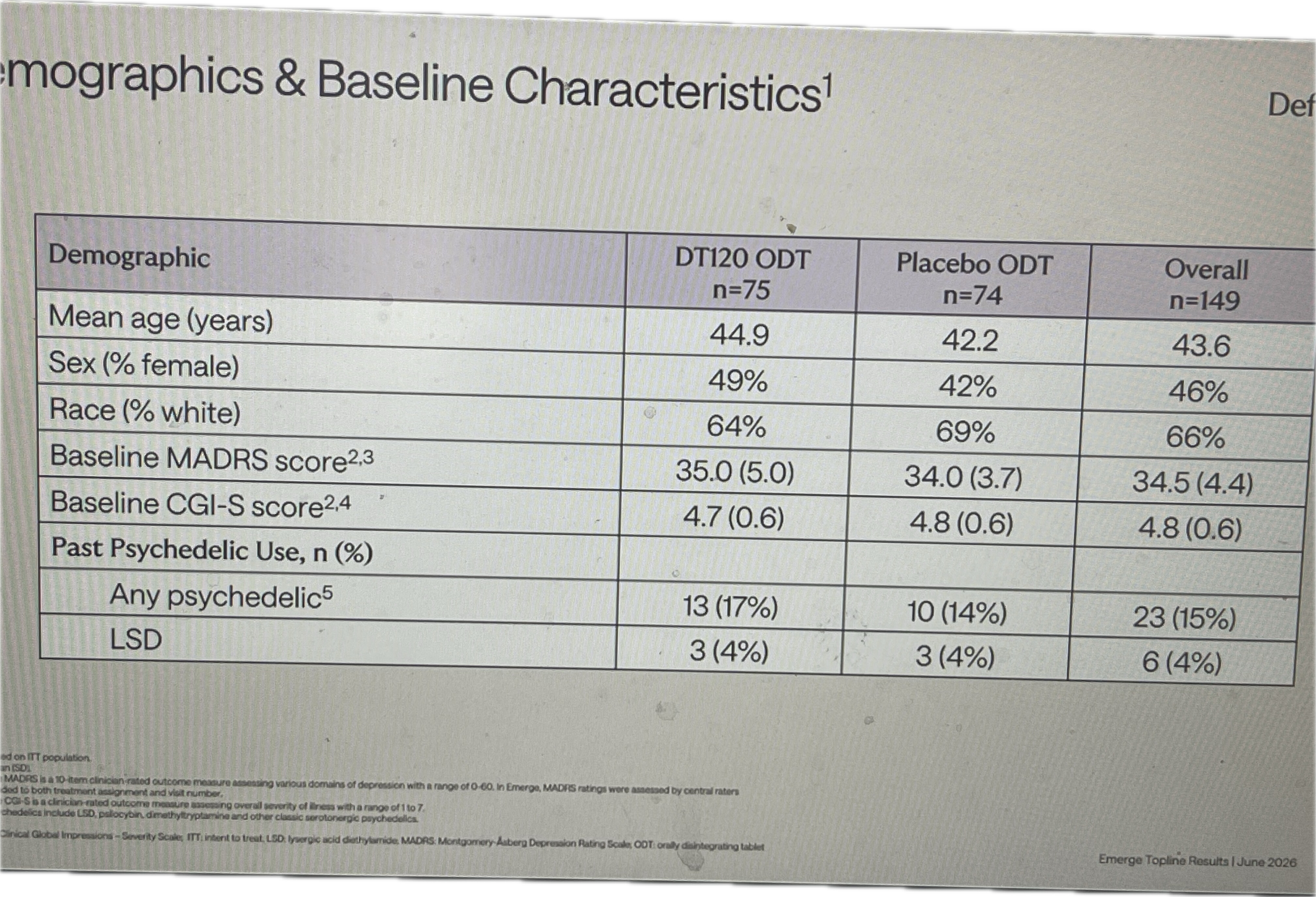
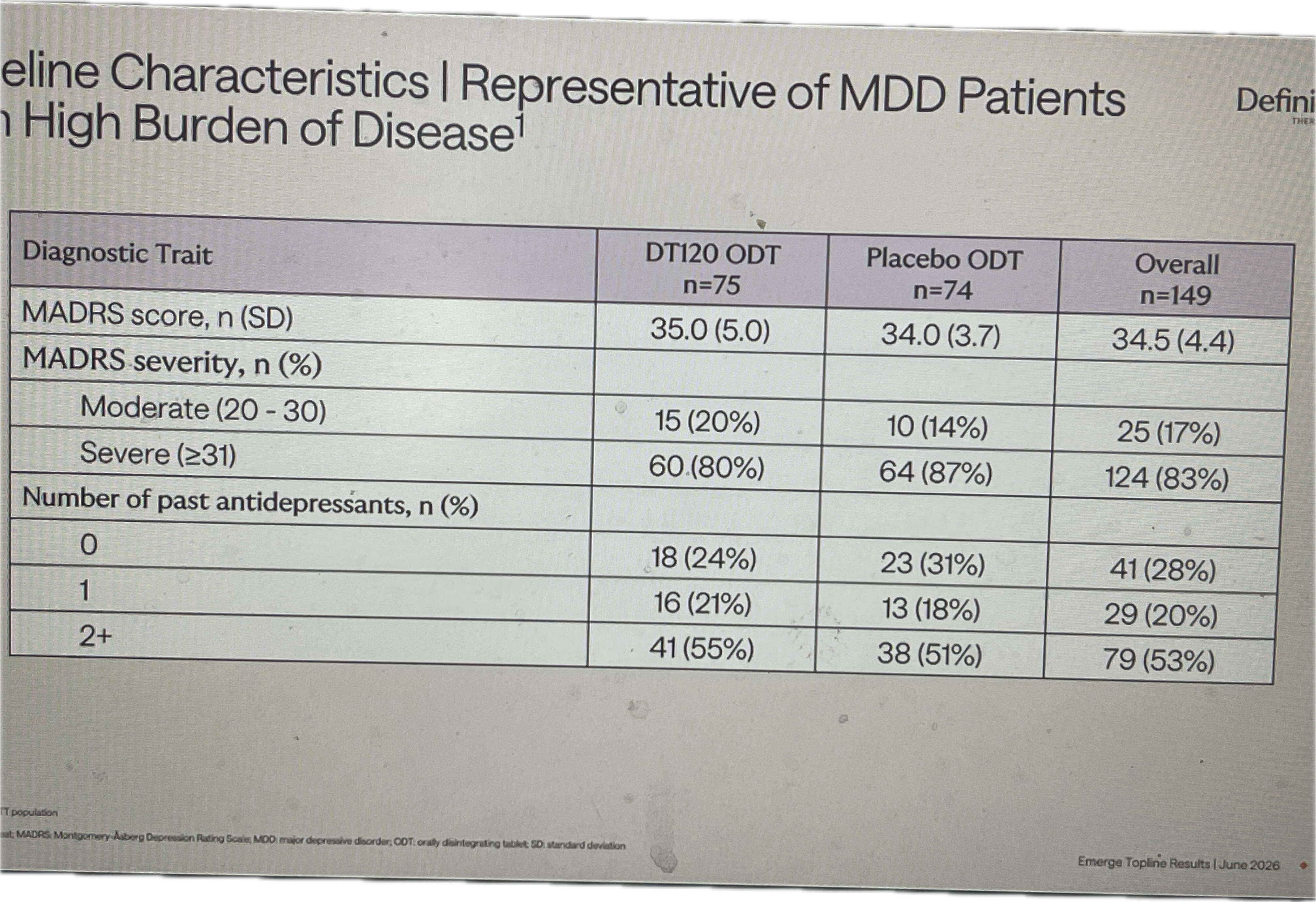
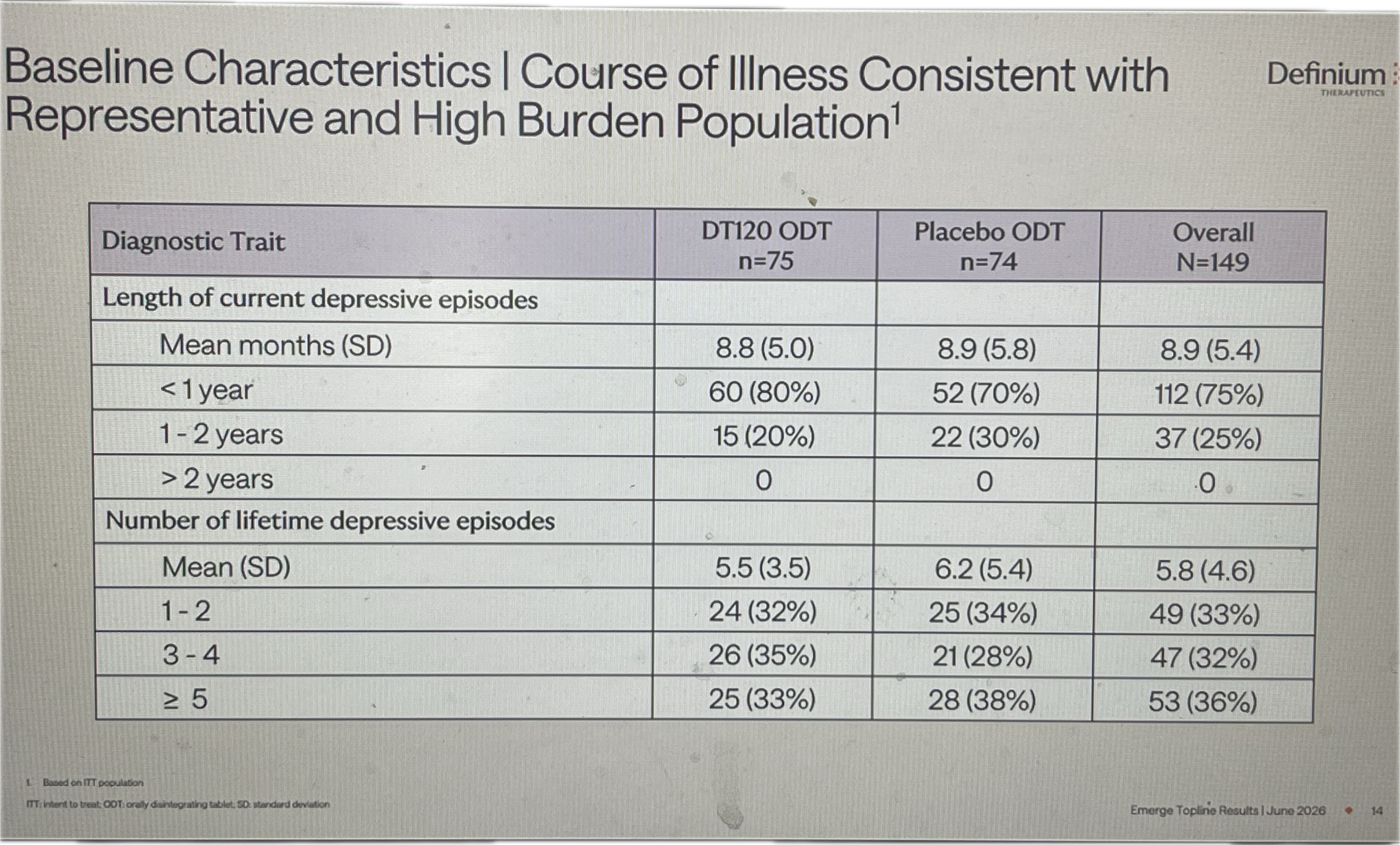
Let’s add the specs of the patient material from the Definium study for comparison:


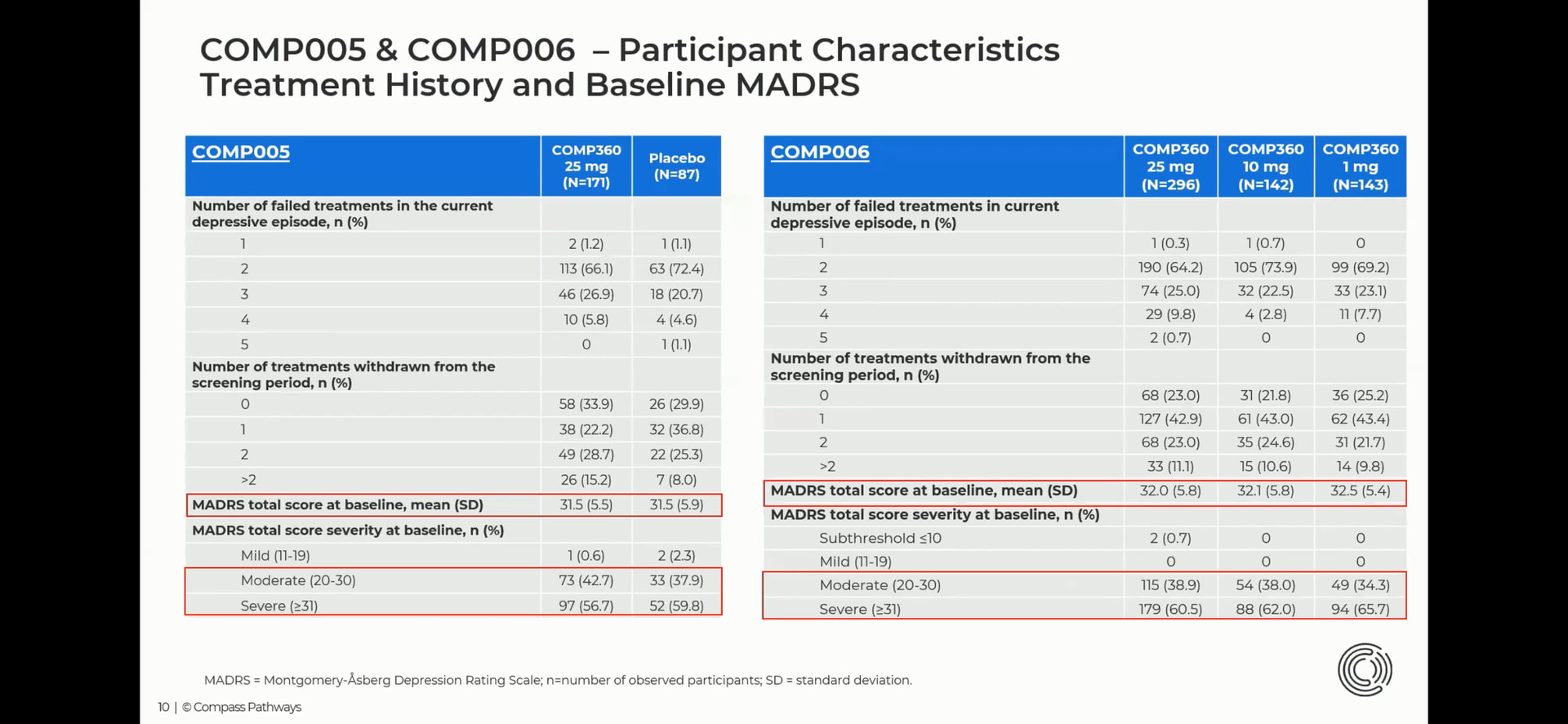
Here (from earlier in the thread) is one image of Compass’s patients. Symptom scores are not higher, but the disease progression is more chronic:

8 Likes

Continuing from yesterday’s reflections. (It would be fun if someone else got excited about pondering these and joined the conversation - but I’ll continue this process even if I’m alone :joy:).

Despite the fact that Definium is creating distance from Compass by showing a larger MADRS delta in easier-to-treat MDD patients, I’m starting to think that looking a bit further ahead, Compass’s choice of TRD (Treatment-Resistant Depression) seems wise.

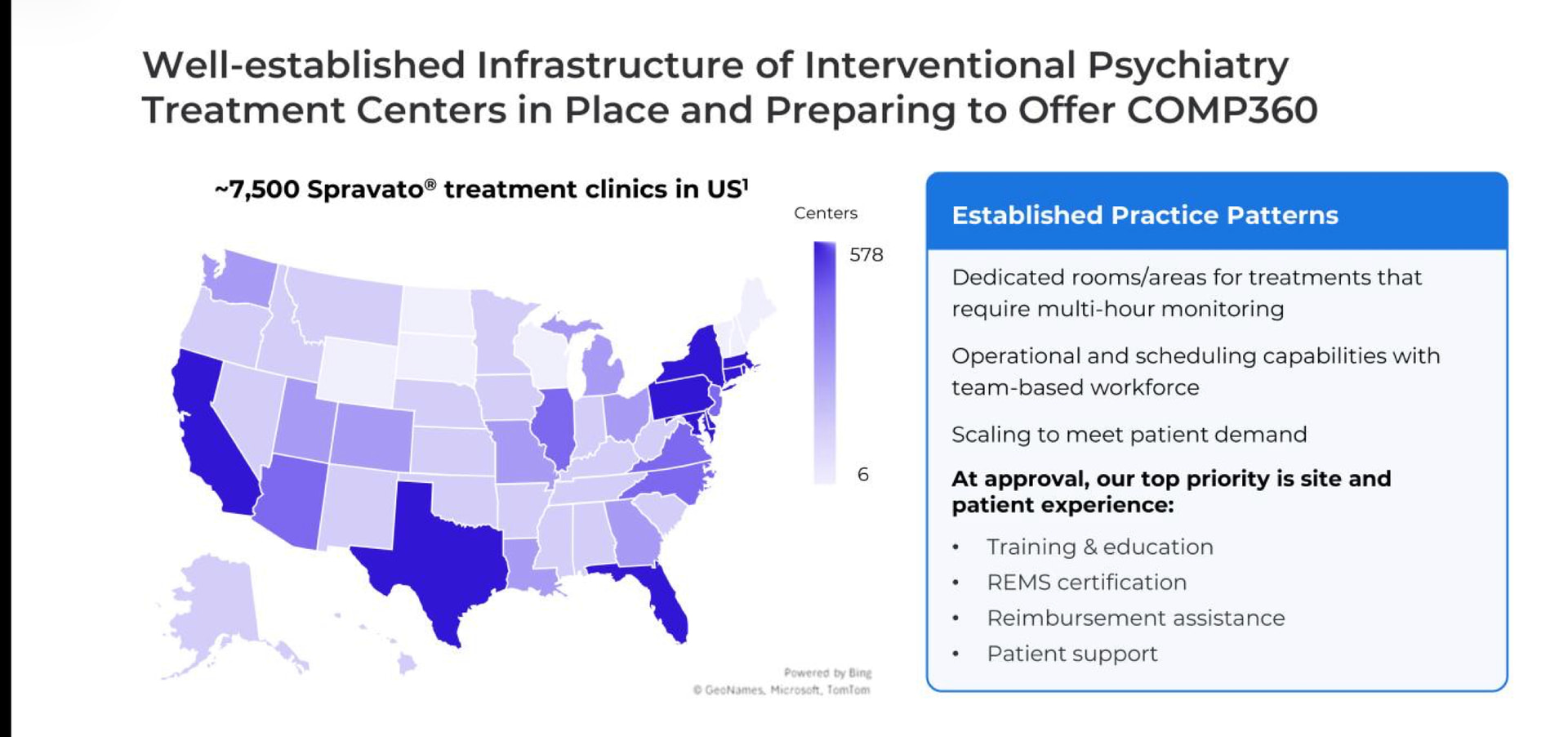
FDA marketing authorization is, of course, the first hurdle, but let’s assume approval comes, and DEA rescheduling should automatically follow—hopefully on an accelerated schedule after the EO, as the “orange one” ordered. Compass also tells us that clinics offering Spravato are willing to offer COMP360 to their patients as well, and that they have the capability/capacity for this. Compass notes that since the majority of Spravato sales (a $2 billion annual run rate and accelerating) occur at just over a thousand “high-volume” clinics, a company of Compass’s size can organize a sales force that reaches the most profitable clinics at reasonable costs. So, up to this point, the plan should work.

The next issue is that if they aim for pricing similar to Spravato, it means a staggering price tag—perhaps around or near ten thousand dollars per “shot” (depending on how often doses are believed to be needed—the essential COMP006 results are still pending). Almost no one pays this out of pocket, so a payer is needed, just like for other equally absurdly priced drugs in the USA.

At this point, I believe that as long as FDA approval is obtained, TRD will prove to be a smarter and more practical indication (versus Definium, Usona, and Helus’s MDD). Insurance companies etc. will not pay an annual cost of several tens of thousands of dollars for MDD because there are dozens of drug alternatives available. An example of this is the recently approved drug Auvelity (bupropion + dextromethorphan), which was studied in MDD and apparently got quite strong results. Reimbursements have been granted for severe MDD considering the efficacy data, but only after three antidepressants have been properly tried. For the TRD indication, there is practically only one approved drug in use, which is Spravato. TRD is defined, among other things, as two antidepressants failing to provide benefit; thus, for Spravato reimbursement, 2 antidepressant trials are required, not three.

Therefore, in my opinion, to clarify, ensure, and speed up the process of obtaining reimbursement, it is a good thing that Compass has conducted the study specifically in the population where reimbursement is being sought. Since there are few alternatives, it seems a credible claim that reimbursement would practically have to be granted if FDA approval for TRD is achieved. Referring to the reimbursement examples above, a product that has gained reimbursement for TRD would seem to “leapfrog” ahead compared to a reimbursable drug for difficult-to-treat MDD.

Once these pieces click into place, the path should be clear! (I’ll leave competitors out of this analysis for now so it doesn’t get too long :blush:)

6 Likes

Definium’s financing ended up growing to 805 million USD! The largest funding round in the sector ever, and the share price has only continued to rise.

I don’t see this as bearish for Compass in any way; on the contrary. Wall Street is validating psychedelic therapies, and Compass will (:crossed_fingers:?) be the first to reach the finish line.

7 Likes

I posted an idea involving a pickaxe and shovel approach to psychedelic therapies over in the “Searching for high-tech pharmaceutical products…” thread, in case you’re interested in broader investment reflections on the sector.

2 Likes

Se on siinä :rocket:

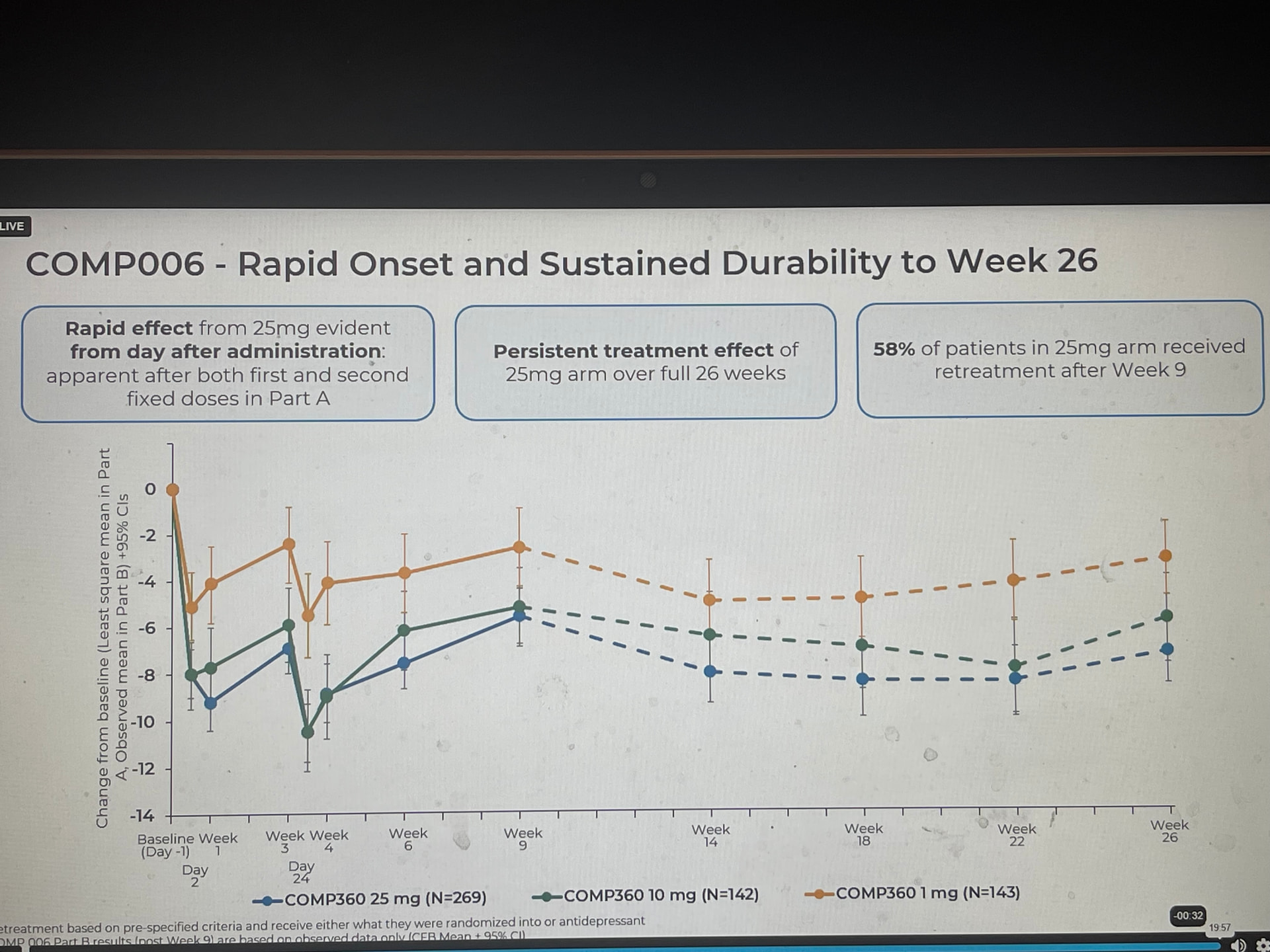
Compass Pathways Announces Six-Month Data from Second Phase 3 Trial Confirming Rapid and Durable Profile

  • New 6-month data supports COMP360’s potential to establish a new standard of care in TRD
  • Data from positive COMP006 Phase 3 trial demonstrates durable benefit through at least 6 months further validating COMP360’s differentiated profile in highly chronic TRD
  • Across two highly statistically significant positive Phase 3 trials, COMP360 is the first classic psychedelic¹ to consistently demonstrate rapid onset, significant durability and reproducibility of effect in TRD, one of psychiatry’s most difficult conditions in which to demonstrate efficacy
  • COMP360 continues to demonstrate a generally well-tolerated and safe profile with no new safety findings
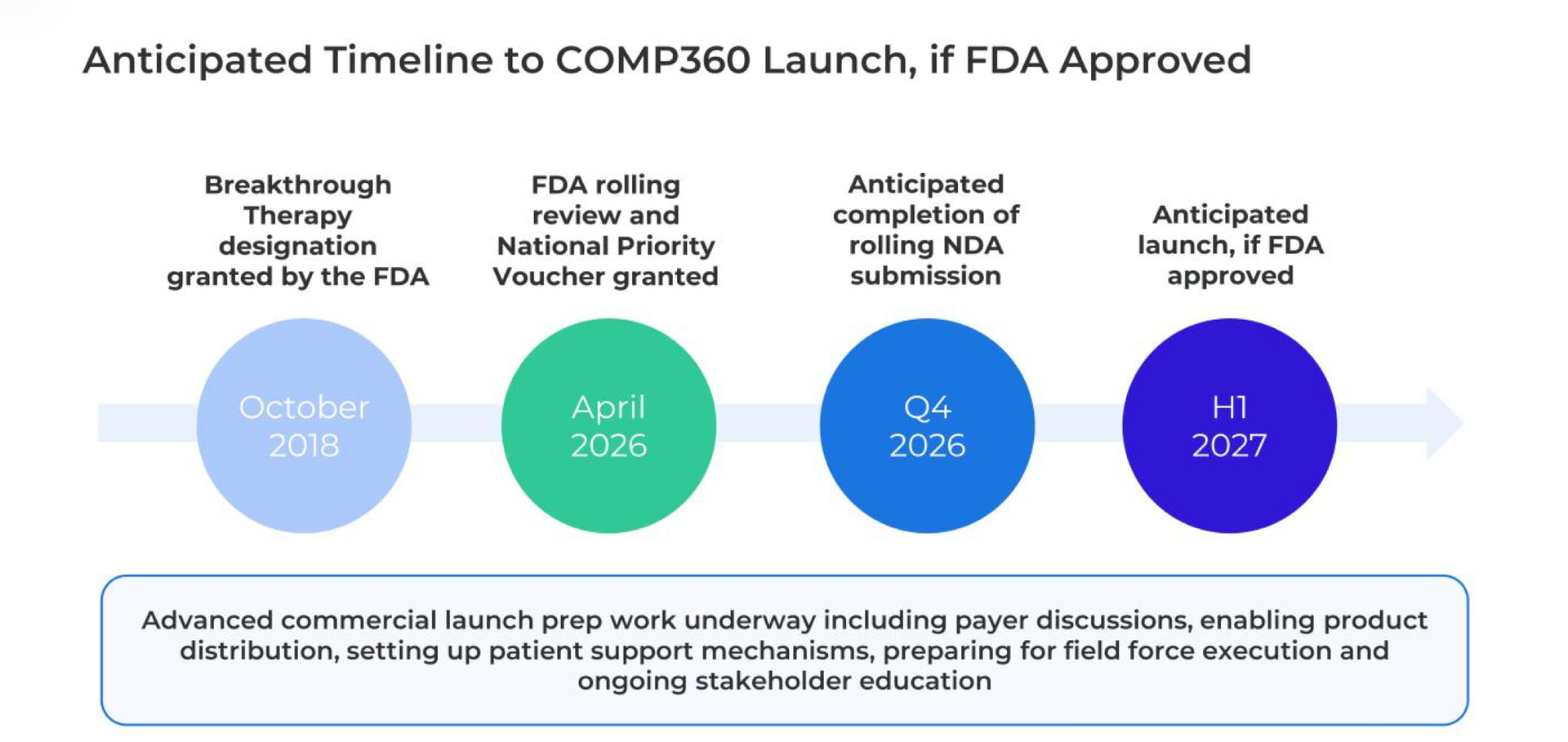
  • Rolling NDA submission and initial review underway and final submission expected to be completed in Q4
  • Commercial launch-readiness on track for end of 2026, with launch expected in first half of 2027
  • Compass continues to progress late-stage PTSD program, where millions of patients are urgently in need of new, effective options
  • Compass to host a webinar on July 7th at 8:00 am ET

https://ir.compasspathways.com/News--Events-/news/news-details/2026/Compass-Pathways-Announces-Six-Month-Data-from-Second-Phase-3-Trial-Confirming-Rapid-and-Durable-Profile/default.aspx

Tänään kolmelta webkästi:

https://ir.compasspathways.com/News--Events-/events-and-presentations/event-details/2026/Compass-Pathways-Live-Webcast-on-26-Week-Clinical-Data-2026-VOz9PU6axH/default.aspx

8-K -rapsa:
https://ir.compasspathways.com/financials/sec-filings/sec-filings-details/default.aspx?FilingId=19593234

3 Likes

And the published K-8 filing seems to contain the agenda and slides for the upcoming webcast.

1 Like

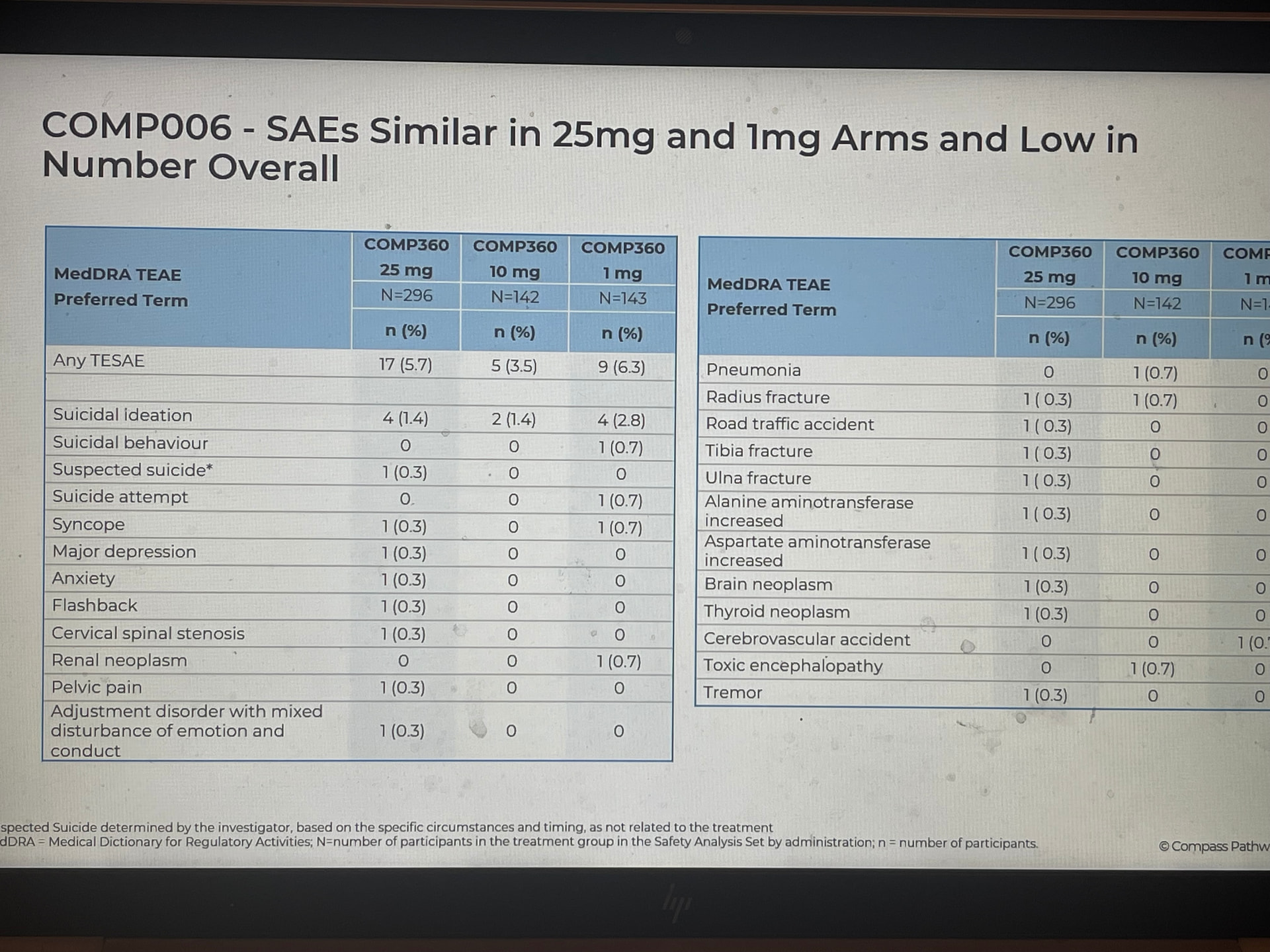
Premarket is down after 1 suicide in the 25 mg group. According to the expert panel, there is no imbalance between the groups.

4 Likes

In the webcast, they mentioned that a Spanish patient possibly committed suicide 80 days after treatment (studies are still ongoing and there is no certainty about the matter). Among the approximately 300 patients who received the dose, this does not seem like a very statistically significant event :man_shrugging:

2 Likes

Committed suicide (after more than 80 days of dosing), and the clinician assessed that it was not related to the medication.
In the 1 mg group, there was 1 suicide attempt. H

2 Likes

Here is an opportunity for investors to make significant returns with this stock.

  1. FDA approval in Q4 and the subsequent launch of a sales campaign. The target is clinics offering J&J’s blockbuster drug Spravato, aiming to undercut the competitor by offering a longer-acting drug, which is therefore more convenient and cost-effective to provide as a treatment. Spravato is heading toward $3 billion in sales by 2027 and is rising toward $5 billion in annual sales, so COMP360 has the potential to be a billion-dollar drug.


  1. The share price soars as (American) investors get excited about the world’s first approved psychedelic drug. WallStreetBets and other crazy traders pump the price to the moon.

  2. J&J buys Compass to defend its position and utilize its existing Spravato sales network, or one of J&J’s competitors with a deep wallet acquires the category’s first marketable drug for their own portfolio.

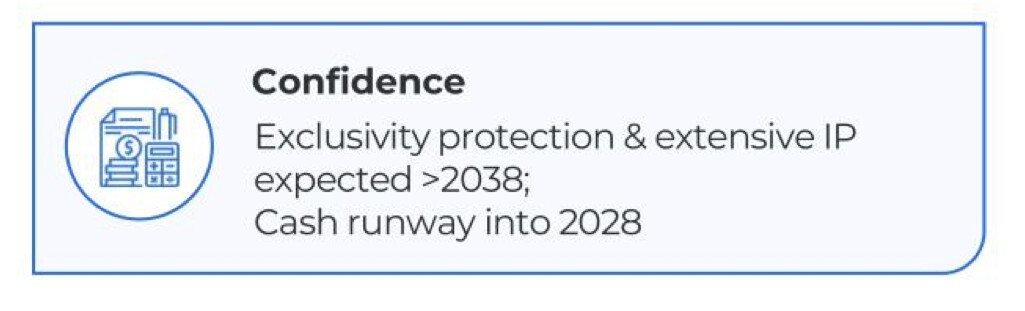
There is money in the bank, so there’s no immediate need to go begging for cash:

Can you even lose with these cards? According to the pre-market, yes you can, and we are heading for a crash :man_facepalming:

5 Likes

Compass has studied over 1,000 patients with long-term, treatment-resistant depression. 1 suicide, which occurred almost 3 months after receiving the drug – on the other hand, as a “balancing” factor, there was also 1 suicide attempt in the “placebo” (1 mg) group. I don’t believe for a second that this would prevent marketing authorization. A “black box warning” is coming, and that was self-evident from the start for any drug treating a group like this. The share price might take a dip. Could be a good buying opportunity if you have the funds? Look at recent examples like Abivax; Erasca collapsed and their share prices have already recovered.

2 Likes

Clark, can I get your opinion on this? The premarket dived the second the side effects slide was presented. Is this a big deal, and will it turn into a great buying opportunity if the price drops significantly today? Otherwise, I think the results just confirmed what was already known.

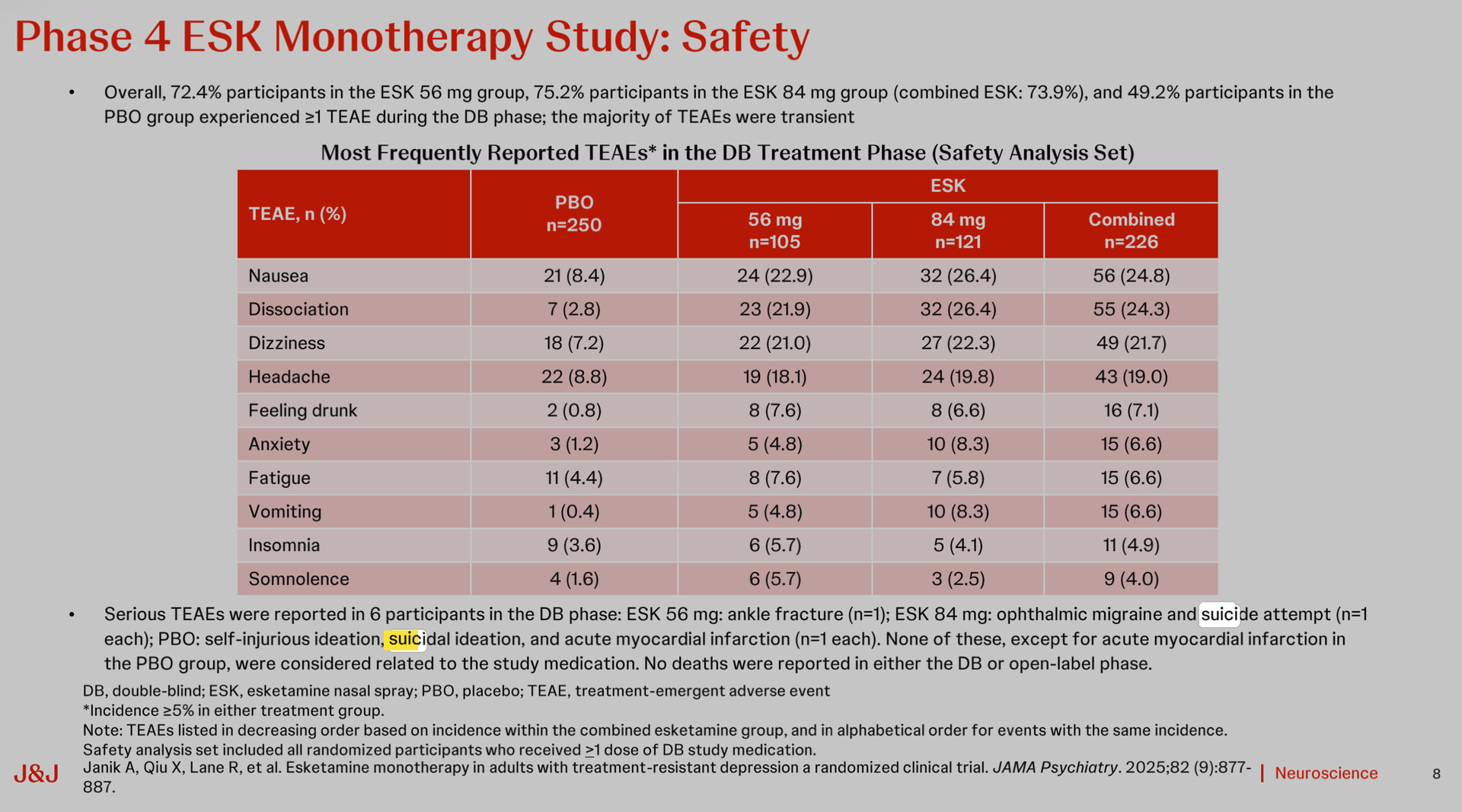
And the side effects for this one as well:

3 Likes

For comparison, here are the Spravato slides:

4 Likes

It feels like it’s already turning around nicely. Investors are herd animals. Personally, I made the decision to at least temporarily move funds from ATAI to Compass, as I didn’t see any bad news today; rather, I felt the risk level decreased slightly. I would assume the price will correct itself fairly quickly and that the next price peak will be higher than the previous one, e.g., 16–17+ euros as a ballpark estimate.

6 Likes

It looks like noise when you look at the N-number. But did I see correctly that at the 9-week mark, the MADRS delta is no longer statistically significant in the COMP006 trial (secondary endpoint)? Or was that already old information? There is a retreatment option at 9 weeks, and the difference does persist, but the delta is only 2-3 points. Is that enough?

This is now a gamble on whether the FDA will approve it or not and whether the medical community is ready or not… and of course, as you said, it could generate some serious hype if approval comes through… on the other hand, could the ADR status affect the buying capabilities of the WSB and Robinhood crowds?

5 Likes

Which part of the slides are you referring to here? To the image where the trial design is shown as a diagram, and for the 6-week primary endpoint it says “…achieved and p<0.01”, but for the 9-week key secondary endpoint it doesn’t say anything? Do you read that slide in a way that they would have marked the same text for the key secondary endpoint if significance had been achieved?

Do you think that for a large portion of U.S. retail investors, buying CMPS is not possible, or are there other restrictions related to ADR?

Isn’t that at least 3 points at 9 weeks, 1 mg vs 25 mg?

2 Likes