Carbios S.A. - French enzymes for plastic biorecycling

I got so excited about Carbios because of this article that I started digging a bit deeper.

The article explains how researchers at the University of Portsmouth discovered a new super-enzyme that breaks down plastic into recyclable polymers at room temperature. Carbios had previously developed a similar enzyme, but that one required a temperature of 70 degrees Celsius to work. The article also suggested a collaboration between Carbios and the University of Portsmouth researchers. Quoted from the article:

The new super-enzyme works at room temperature, and McGeehan said combining different approaches could speed progress towards commercial use: “If we can make better, faster enzymes by linking them together and provide them to companies like Carbios, and work in partnership, we could start doing this within the next year or two.”

Facts about Carbios:
Carbios was founded by Truffle Capital and started operations in 2011, headquartered in France. Market Cap approx. €300m, but operates at a loss (likely for several years). Collaborates with L’Oreal, Novozymes, Nestle, Pepsico, and several research institutions, among others. Of these, at least L’Oreal is also involved as a financier in Carbios with a 6.05% stake. Other financiers include Michelin Ventures (4.55% stake) and Truffle Capital with an 8.26% stake. The stock is liquid, as 73.04% is on the open market. Truffle Capital states it is “the only European Fund to support its innovations from creation to commercial success” and collaborates with 50 top European universities. In the summer, Carbios received an additional €27 million in funding, which will allow them to operate for at least the next two years. Carbios is covered by Kepler Cheuvreux, Bryan, Garnier & Co, Gilbert Dupont, and Edison Investment Research.

So, the company’s financial background is solid for at least a couple of years.

Megatrend:

  • The world is full of plastic and textiles that cannot be recycled. The collapse of ecosystems has already partially occurred due to the large amount of plastics in the oceans and nature. This, alongside climate change, is the greatest ecological threat to humans, animals, and plants. Humans have also been found to even breathe microplastics into their lungs.

Growth drivers:

  • France is striving to move its society towards a more sustainable direction (In-Depth - Lexology), which is reflected in support for hydrogen technology and biotechnology, among other areas.
  • The EU is pursuing the same agenda.
  • Responsible investing.
  • Collaboration with Novozymes provides a solid foundation.

Risks:

  • There is no evidence of commercial operations and their sustainability. New, centralized facilities will only be completed in September 2021, at which point they will be able to demonstrate the commercial viability.
  • They aim to sell the first licenses by 2023, meaning long-term involvement is required.
11 Likes

I’m linking @Winston’s message here, because it also partially applies to Carbios:

2 Likes

Carbios has successfully produced the first plastic bottle from recycled textiles, which has previously been apparently difficult:

https://carbios.fr/en/carbios-produces-first-clear-plastic-bottles-from-enzymatically-recycled-textile-waste/

The share price rose by +10% on this news.

2 Likes

This thread has completely passed me by. It’s great that you’ve started this! Definitely following :blush:

3 Likes

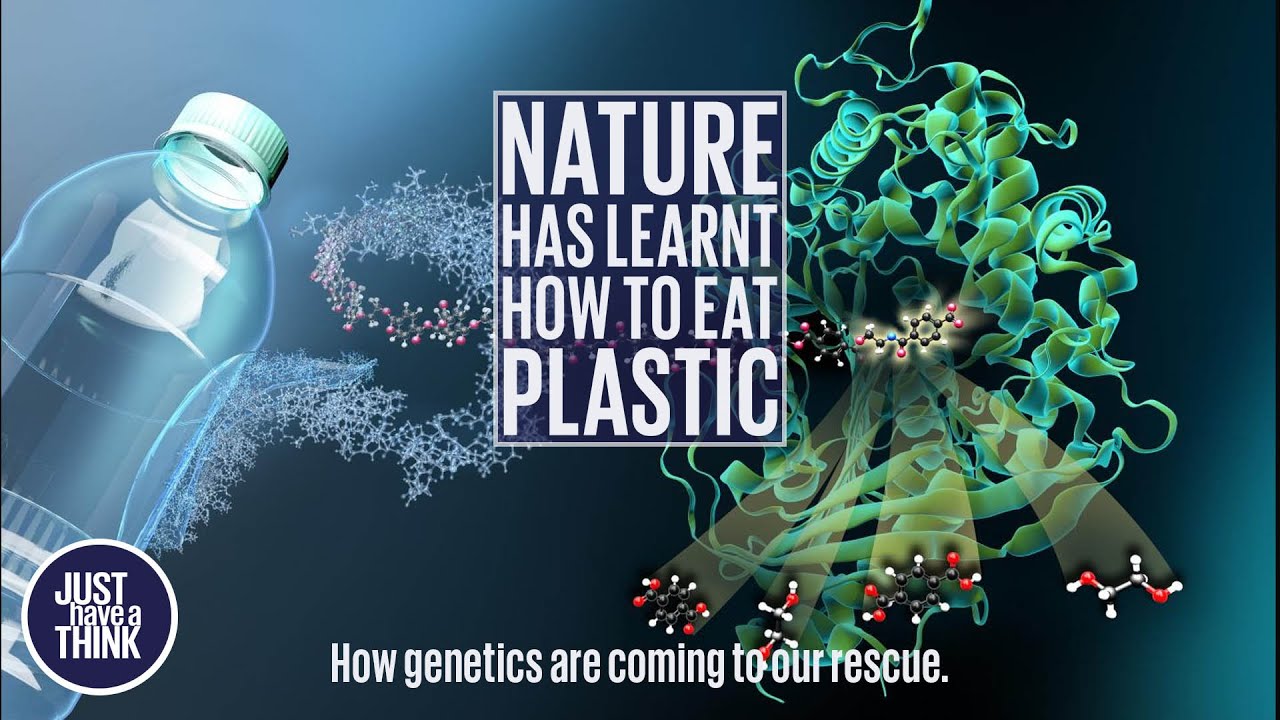
I’ll add a video here that explains the extent of this problem and how the technology basically works in an easy-to-understand way:

1 Like

Hey, I’ve already watched most of those videos too!

1 Like

Apparently, Carbios has made a liquidity agreement with a company called Natixis ODDO BHF. Does anyone have any ideas on how this will affect the stock price? Stabilizing effect?

https://carbios.fr/en/report-on-carbios-liquidity-contract-with-natixis-oddo-bhf/

1 Like

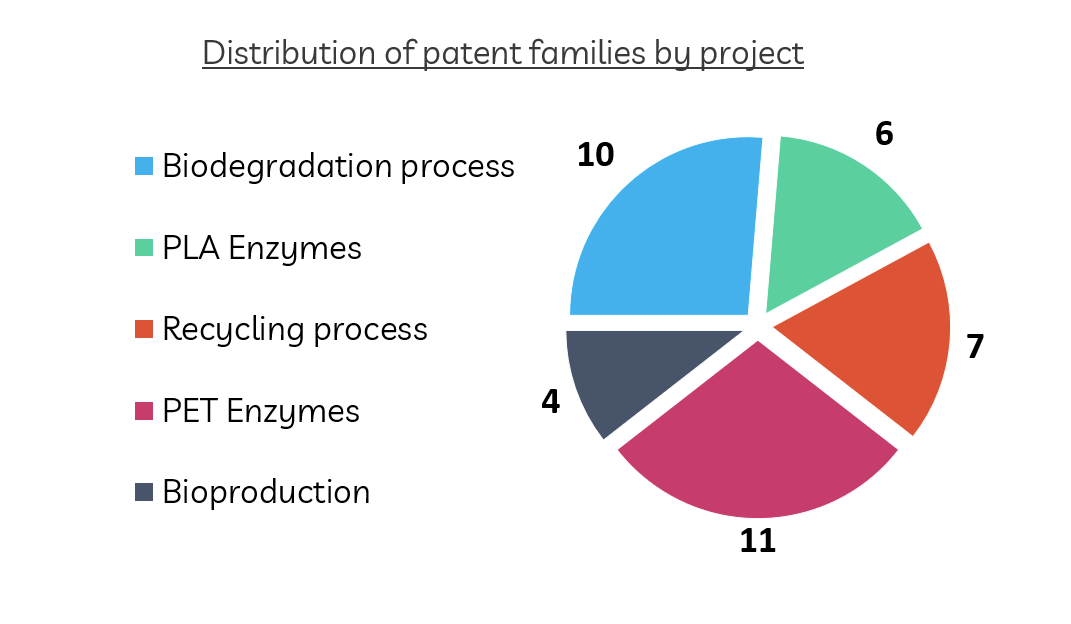
The international patent portfolio is also growing:

https://carbios.fr/en/carbios-significantly-strengthened-its-international-patent-portfolio/

Distribution of patents:

2 Likes

Strategy Update:

September 2021 Demonstration plant operational
2021-2 Preparation and design of the first commercial recycling plant
2022 Construction of the commercial recycling plant
Late 2024 Recycling plant operational
2025 Money.
?
?
?
Profit.

The commercial recycling plant should be able to recycle 40,000 tons of PET plastic per year. In 2015, global PET plastic production capacity was 27.8 million tons. There is room for scalability.

This will be held until 2040.

2 Likes

Michelin has experimented with Carbios enzymes and produced PET fiber suitable for car tires.

How about continuously recyclable car tires?

2 Likes

A new agreement (Expression of Intent) is coming with a major PET plastic producer: https://www.carbios.com/en/carbios-announces-the-signing-of-an-expression-of-intent-agreement-with-a-major-pet-producer/

1 Like

Carbios is seeking an additional 100 million euros in funding:
https://investir.carbios.com/uk/

Much more information about the company and its prospects:

The first plastic bottles made entirely from recycled plastic have been released (demonstration, not commercially, as I understand):

1 Like

Half-year report out:

The most interesting part:

In April 2021, Carbios announced its plan to build a first of a kind 100% PET recycling production unit exploiting its technology (the “Unit”). This Unit is expected to enable an annual production of 40,000 tons of recycled PET.It will also strengthen the Company’s business model which remains the licensing of its technologies and know-how and the sale of enzymes to its licensees, who will build their own PET recycling production units.

So the company does not intend to create its own factories, but licenses its IP.

It will just take time before it starts generating money:

2021 – 2022: Site selection and engineering studies for the Unit;

End 2022 6: beginning of the construction of the Unit;

End 2024 6: Start-up of the Unit; and

2025 6: First revenues generated from the Unit.

The patent family is expanding:

During the first half of 2021, Carbios pursued the procedures on its active policy of securing its technologies and know-how with the filing of a new patent application protecting its enzymatic PET recycling process.

Carbios has also consolidated its Intellectual Property portfolio with new grants of major patents in the United States, Canada, China, India and Japan contributing to protect the various technologies developed by the Company.

As of June 30, 2021, Carbios’ intellectual property portfolio included 39 families of patents (including one under an exclusive worldwide license with the CNRS and University of Poitiers), representing 204 patent titles filed across the world’s key regions and 39 patents already delivered. Of these patent families, 19 are related to Carbios’ proprietary PET recycling technology with applications filed in Europe, U.S., Canada, Mexico, China, India, Thailand, Indonesia, South Korea and Japan.

Carbios has also acquired all shares of Carbiolice. Carbiolice has developed Evanesto-branded plastic, which is rigid (e.g., yogurt cups) but turns into compost within 255 days, even in home compost. Austrian authorities have approved Evanesto plastic to be labeled as home compostable:

In September 2021[17], Carbiolice has announced that it has obtained the TÜV Austria label for rigid PLA-based packaging (up to 70%) containing Evanesto®. This new step allows everyday packaging (yogurt pots, trays, cups, and also horticultural pots…) to be labelled “Ok Compost Home” by TÜV Austria. Thus, rigid packaging containing Evanesto® will turn into compost in 255 days, even at room temperature and therefore in domestic conditions.

2 Likes

From the latest update:

The excellent results obtained from Carbios’ industrial demonstration plant, which began operations last September in France, confirmed the industrial scale-up potential of the Company’s technology. With regard to the core of Carbios’ recycling process, the depolymerization kinetics and yields obtained are identical to those achieved in the Pilot facility. “These promising results allow us to envision a large-scale deployment of Carbios’ enzymatic recycling process,” said Prof. Alain Marty, Carbios’ Chief Scientific Officer.

This bodes well as, according to the CEO, we are approaching the final stage of industrial development, after which we should start talking about some kind of profit generation.

3 Likes