Salkunrakentaja on BYD.
Solid progress, it must be said, regarding both the company’s performance and the general momentum of electric vehicles in the Chinese market.
Attached is also an MIT publication on how China has become an electric vehicle powerhouse.
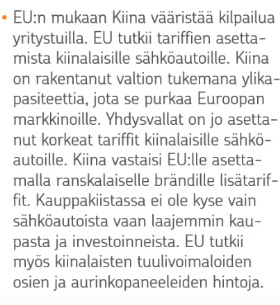
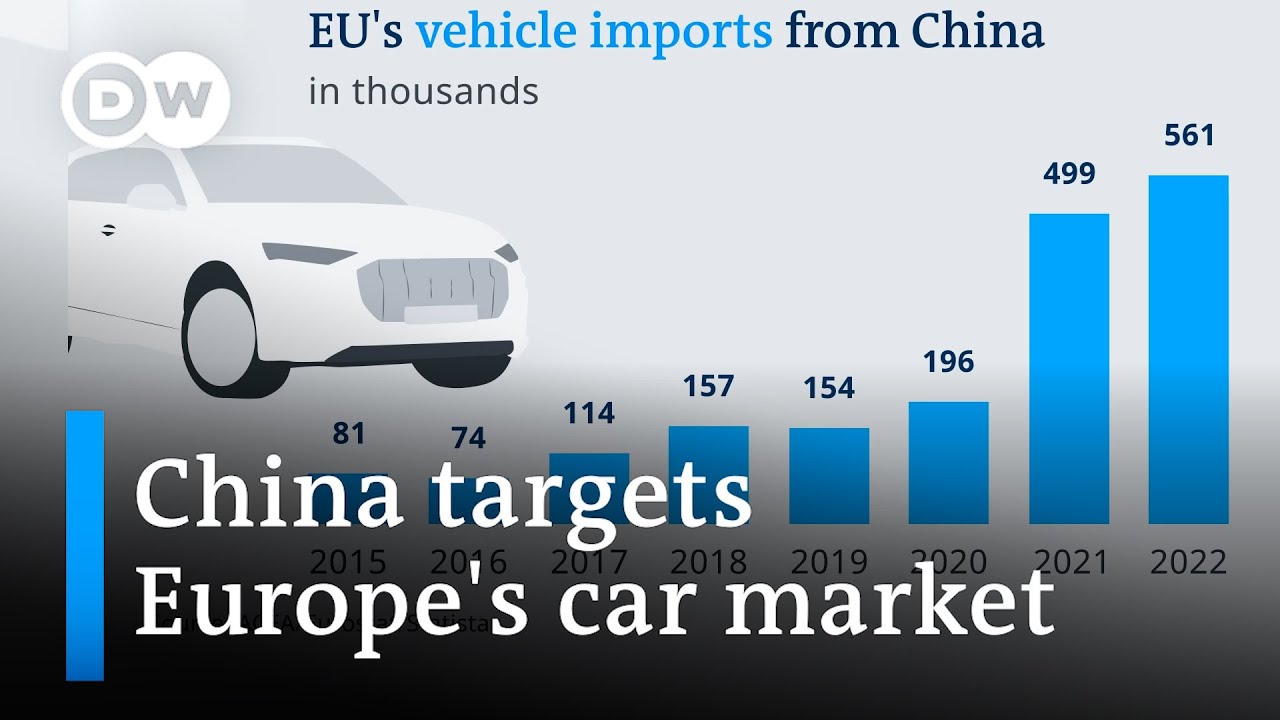
We eagerly look forward to seeing how the EU responds to the Chinese EV conquest. Time is running out, or the situation will be over. For example, BYD will start production at its Hungarian plant in 2025. Another problem is a unified declaration from the 27 member states. Hungary has already shown effective maneuvering in other common EU matters. The fate of the European automotive industry will be decided over the next three years. It is worth noting that not all member states have significant ties to the automotive industry.
Behind a paywall, but Mercedes, Stellantis, and VW are pushing back their electrification to 2030. By then, the market will leak away to other manufacturers.
That didn’t take long.
Behind a paywall, but the update will be implemented remotely so that the errors are fixed and the car becomes a true all-wheel drive.
Teemu invested in Tesla in 2019 and took a heavy loss. A bittersweet comparison between Tesla and BYD.
Topics:
00:00 Intro 01:29 Tesla 04:21 BYD 10:55 Business, quality comparison, and revenue 18:23 Valuations 22:02 Are they in the portfolio? 22:46 Which one will Heikki and Teemu choose for the competition portfolio?
BYD has established its position and is one of the absolute top players in the industry. The company is growing rapidly, so production volumes are massive, and furthermore, the company has also been able to improve its profitability.
But BYD is not only larger in absolute size, it is also growing a lot quicker. Tesla managed to grow its deliveries by 38% over the last year – strong, but not enough to hit the internal growth target of 50% per year. BYD, on the other hand, grew its deliveries by 62% over the last year, which makes for more than 1.6x Tesla’s growth rate.
BYD is a very good example of how it has been extreme stupidity for both investors and automakers to focus solely on the EV segment. There is no serious Chinese competitor for BYD in the PHEV segment, so the path is wide open there. And BYD is successfully taking advantage of this opportunity.
One of the leading car brands of the future. Since it’s Chinese, I won’t invest.
BYD has aggressively cut its prices to stimulate demand, especially in China. This reflects a broader trend in the automotive industry, where traditional manufacturers are struggling to increase electric vehicle sales; although Tesla remains the world’s largest seller of electric vehicles, its sales figures were not what was expected. Partly due to factory problems and increased competition, Tesla’s sales figures have suffered, and there may not be more pleasant times ahead regarding margins either. BYD also faces challenges and has largely played its game through price competition, although it certainly has other strengths as well.
The article below is not behind a paywall.
Elon Musk’s Tesla and Chinese rival BYD both reported sharp falls in electric car sales, adding to concerns of the slowing shift towards electric vehicles. The companies — the world’s top two sellers of EVs — have cut prices in order to stimulate demand as they face increased competition, especially in China. BYD has slashed the cost of almost every model in its line-up since the start of the year under the slogan “electricity is cheaper than oil”, amid an escalating price war in the world’s largest EV market.
After the Iltalehti article, one might even think about changing the thread title to BYD Burn Your Dealerships, but I won’t bother since someone might get heated.
Seriously speaking, it feels a bit strange if ten dealerships and a couple of car transporters burn down in just a few years.
And these don’t necessarily even stem from poor building electrics or cars catching fire; insurance fraud in China’s stalling economy could be a leading cause.
Jussi Halme has made a video about the demand for electric vehicles.
It might be of interest to those reading this thread.
Demand for electric vehicles has decreased, especially in the United States and Europe. But traditional automakers still have to produce cash-flow-generating internal combustion engine vehicles, even though almost all of them have a strong ambition to produce only electric vehicles. Many large European automakers have now announced that they are postponing their electric vehicle investments because electric cars are not selling. What is the future of electric vehicles, or is there one?