BYD Build Your Dreams, China's rising EV giant

I don’t dare to post anything in the Tesla thread anymore, so let’s try this thread instead. :wink: I’m fairly sure this is of interest to others besides myself.

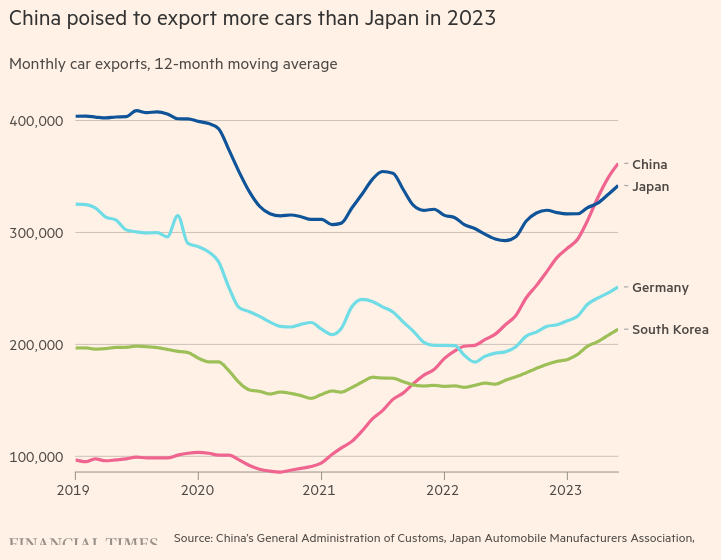
The Financial Times wrote from the Munich Motor Show about the outlook and goals of Chinese manufacturers. They are quite wild.

Europe is a good destination for China, as import restrictions are unlikely to be demanded in Europe unless the Chinese strip the market bare. For China, developed markets — with Europe at the forefront — are the main export directions. The intention is to challenge Western manufacturers rather than compete on bulk. In the EV sector, BYD is in an almost too-favorable position to solidify its status.

BYD leads China’s electric vehicle exports to developed markets. Following a recent briefing by BYD founder and chairman Wang Chuanfu, Citi analysts said the company is “confident” in its export sales target of 400,000 units next year, double this year’s forecast.

The Warren Buffett-backed Tesla rival, which is also one of the world’s largest battery manufacturers, told bank analysts that China’s EV industry is three to five years ahead of foreign traditional carmakers in technology and scale, and up to 10 years ahead in terms of cost advantages.

Still, analysts have warned that companies exporting from China must navigate worsening geopolitical tensions and low brand awareness, as well as increasing protectionism and consumer nationalism.

“How long will the rest of the world tolerate massive imports from China, and will Chinese companies be pressured to move production abroad?” asked Christopher Richter, an automotive analyst at CLSA.

In Europe, the focus of Chinese manufacturers’ exports is on the most expensive cars and especially electric vehicles. Export profiles differ by continent like night and day. →
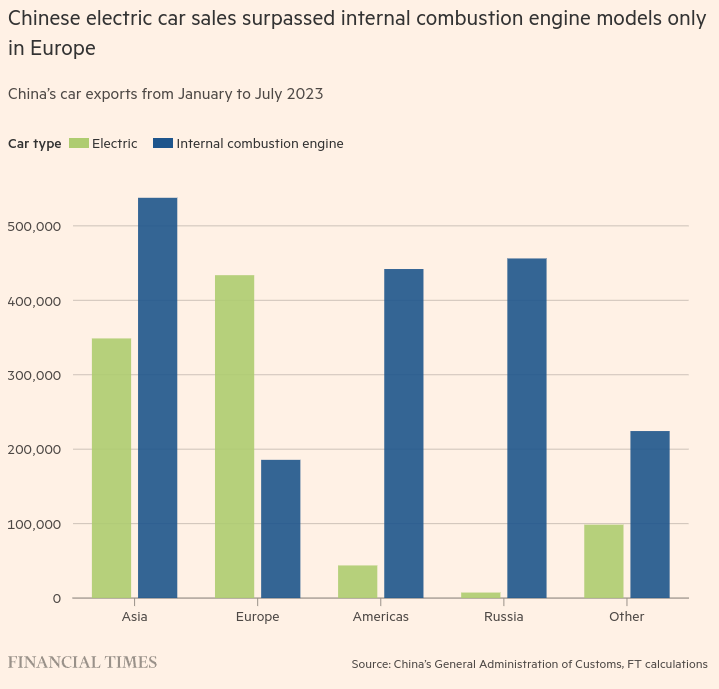
And this is what China’s position looks like, which I’ve been quite concerned about throughout this forum. :slight_smile:

Years of industrial policy supporting the automotive industry and private sector investment have increased China’s competitiveness in the field. Domestic manufacturers, including EV champion BYD, now outsell foreign carmakers and are aiming for growth in foreign markets.

Full story →
7 Likes

This development has been visible for a long time, at least to those who have followed Sandy Munro’s YouTube channel. A leading duo consisting of Tesla and BYD is emerging in the electric vehicle market.

1 Like

Touching on the subject.

1 Like

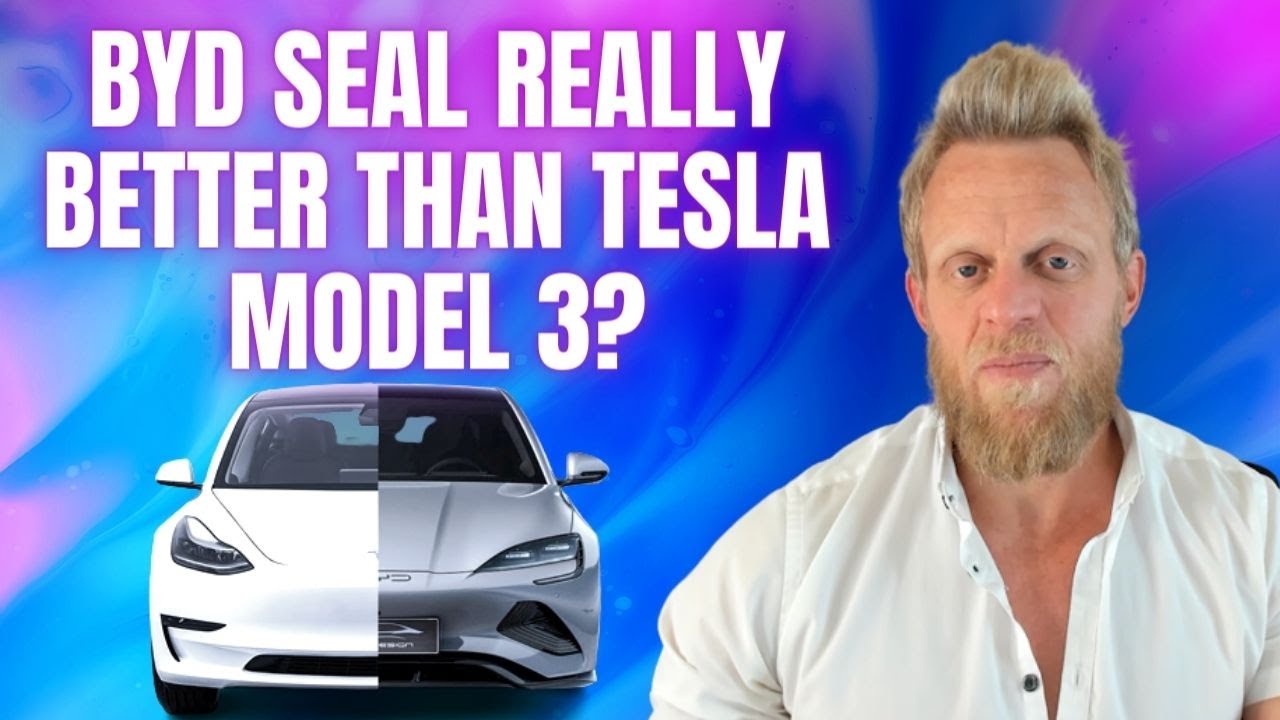
Good reflections from Electric Viking. The BYD Seal is perhaps the most Model 3-like car of all Tesla’s competitors. However, its sales are not quite meeting expectations, and reviewers’ opinions are not flattering either. The problem for the Seal, in addition to quality and safety, is the high price. Prejudices on the Old Continent toward Chinese cars also carry weight. In the big picture, I still believe that BYD will take a solid share of the European market, but first, the price level must be made reasonable.

The problem with BYD and all Chinese companies is that if the management imagines they are living in a market economy, the Communist Party will certainly put everything in order. What happened to Alibaba and Jack Ma is likely well known. BYD’s current leader, Wang Chuanfu, is indeed a member of the Central Committee of the Communist Party of China, and he seems to understand that without the party and the state, BYD would not exist on its current scale. But when the country is led by a communist dictatorship, changes can be rapid. There is a good example in a neighboring country.

2 Likes

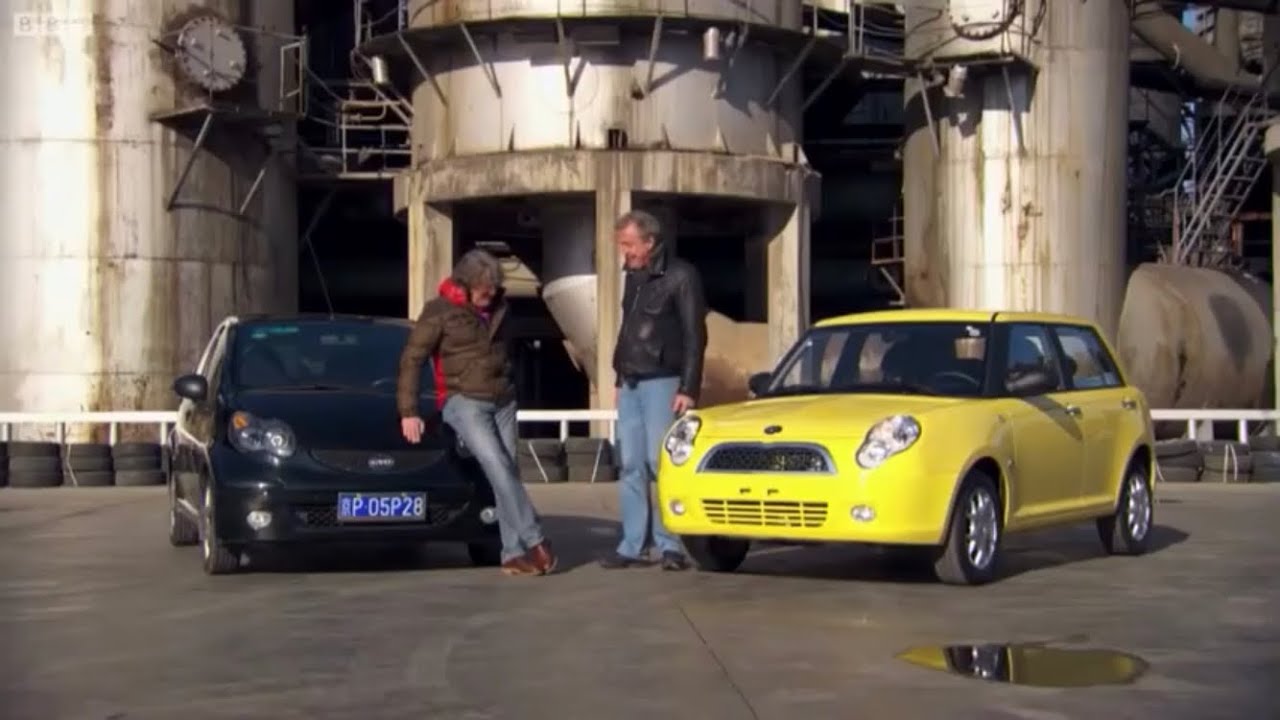
The Chinese automotive industry still reminds me of this Top Gear episode, with a couple of clips below.

In the past, at least, Western countries and China had quite different views on intellectual property rights. The second video also features BYD’s direct copy of the Toyota Aygo, so even the company that is the subject of this thread is no better in this regard. I don’t know why Chinese companies should be allowed into Western markets, as the rules of the game for these companies are completely different from those of Western operators.

4 Likes

There is a lot of the same discussion here as when Japanese cars flooded into Europe in the 1970s and 80s.

1 Like

My late father worked at Lännen Tehtaat back during the company’s golden age when excavators were selling like crazy. Dad used to tell me how there was a constant stream of people from Japan at the factory and they seemed to be photographing everything. A few years passed and the Japanese company Hitachi started pushing into the Finnish market. Other Japanese brands like Komatsu and Kobelco followed suit. Säkylä simply couldn’t compete with the prices and payment terms offered by the Japanese. It was clear from the machines made by Hitachi and the others that they had visited Säkylä. And the arrival of the Japanese machines killed off, for example, the tough competitor of Lännen crawler excavators, the Swedish Åkerman, which was then bought by Volvo’s construction equipment division.

7 Likes

Back then, there was pride in the Finnish growth story—the transition from an agrarian society to an industrial nation in less than a generation. This achievement was a source of pride and was shown quite openly to foreign visitors.
But I suppose Finnish pioneers were doing the same thing a few decades earlier?

I don’t know, if you visit earthmoving machinery trade fairs in Finland, like Maxpo this year, fearless ingenuity is certainly alive and well, and innovation can be found in small companies and in small details, such as Rotyx’s patented system. The eternal threshold question is how to commercialize it. We should learn directly from Sweden, who created the latest success story, Northvolt, through diligent networking and with nothing but PowerPoint slides.

It would be foolish to try to break into the market without learning from the current market leaders. However, there is a difference between cherry-picking the best ideas and then creating your own unique product. Making a copy of another manufacturer’s product, starting right from the design, probably isn’t okay anywhere but China.

2 Likes

Climate change electric car

BYD is rapidly increasing its market share in Sweden and is now ranked 10th in the October statistics for new electric cars, right behind Tesla.

https://eu-evs.com/bestSellers/SE/Brands/Month/2023/10

BYD will not catch up to Tesla this month or this quarter, but Polestar has already been left behind in October. Next on the list of those to be overtaken are, among others, BMW and Mercedes, while the taillights of KIA and Audi can be seen a bit further ahead. Looking at specific models, the Atto 3 was already in seventh place. The Chinese tidal wave is hitting the shores at speed, and at the same time, BYD is doing its part to accelerate the electrification of the car fleet. Whether we like it or not, BYD will carve out its own share of the electric car market, and I am certainly not sure if European car manufacturers have any means to curb BYD’s triumphal march. BYD’s weakness remains its poor software quality, but unfortunately, for example, VW faces the exact same challenges. The safety side is perhaps the only area where BYD clearly has room for improvement, but when the price is otherwise right, money is often the final consultant that closes the deal.

The ultimate crown of the electric car market will, by the looks of it, be decided between Tesla and BYD. A somewhat bleak vision, admittedly, but European manufacturers drowned in their own excellence and woke up to the competition far too late.

1 Like

I wonder what the actual level of “Europeanness” is for these so-called “European” electric cars? Do all the parts come from China and are they just assembled into a body made in Europe, or are there significant production lines etc. for components here as well?

1 Like

As I understand it, there is no technical obstacle to harnessing these Chinese electric cars as an instrument of state policy.

Don’t electric cars communicate remotely with a server all the time?

So first, Europe is flooded with affordable electric cars. Then, Taiwan is invaded. Europe protests, and China announces that if the criticism doesn’t stop, the electric cars will be permanently disabled via remote connection. Tesla, at least, has used software to remove certain features retroactively, so what’s stopping a Chinese manufacturer from doing the same?

I have nothing against electric or Chinese cars per se, but I don’t think many owners have given much thought to the kind of risks global politics could pose to their vehicle.

Admittedly, Chinese electric cars are a bad thing for the European economy, but I do believe they will break through quite effectively over the next five years.

3 Likes

Well, no.

Quite many internal combustion engine cars also have features managed via a remote connection that work for free for a while in a new car and then become subject to a monthly fee.

Front seat heats for a monthly price of 17 euros — BMW moves towards monthly-billed optional equipment - News - Maaseudun Tulevaisuus

1 Like

Here is a bar chart showing BYD’s surge.

https://twitter.com/alex_avoigt/status/1715718978880872667

Hardcore stuff.

CEO drank battery fluid in front of investment legend: 230 million secured – Now 15 years later, 55 billion revenue and the company is the world’s largest in its field

The visitor refused a sip, but got Warren Buffett to put over 200 million dollars into the company.

5 Likes

There is a debate on Twitter regarding BYD’s cash flows; unfortunately, this company isn’t followed closely enough for there to be plain-language and easily digestible data available online. In any case, financing growth is no walk in the park even for BYD, and cash flow management is notoriously important for a growth company.

https://twitter.com/alojoh/status/1718993468050014637

1 Like

The Twitter account mentioned above (which I happened to find today) seems to be quite well-informed about BYD’s cash flows. Posting the latest tweet below without further comment.

AJ on X: “:fire:This analysis shows the key difference between Tesla and BYD: since inception Tesla generated 4.5x more cash than BYD per vehicle sold! Both companies were incepted in the same year! BYD’s lifetime total free cash flow and vehicles sold amount to +$3.7bn and 8.9m vehicles.… https://t.co/Jf3b2EAaJI” / X (twitter.com)

2 Likes