On such a gloomy day, one might wonder if, for example, Hefei would buy the entire share capital at the same price of 4.26 as in the deal a couple of years ago. I believe they would buy without hesitation if the owners would just sell.
Over the weekend, an idea sparked to try out Acetium. I must say, after a couple of days on a graduation cruise, I won’t ever drink alcohol without it again. It works really well even for that somewhat questionable purpose 
2 Likes
Yeah, I never drink without Acetium, because I have bad genes for alcohol processing (almost on par with Asians). With Acetium, I don’t get a hangover, which would otherwise be a trip to the toilet without morning equalization the next day, which in turn only partly postpones the hangover.
Peter Lynch’s investment tragedy applies here: I realized that Acetium really works, so I’ll invest in Biohit 
1 Like
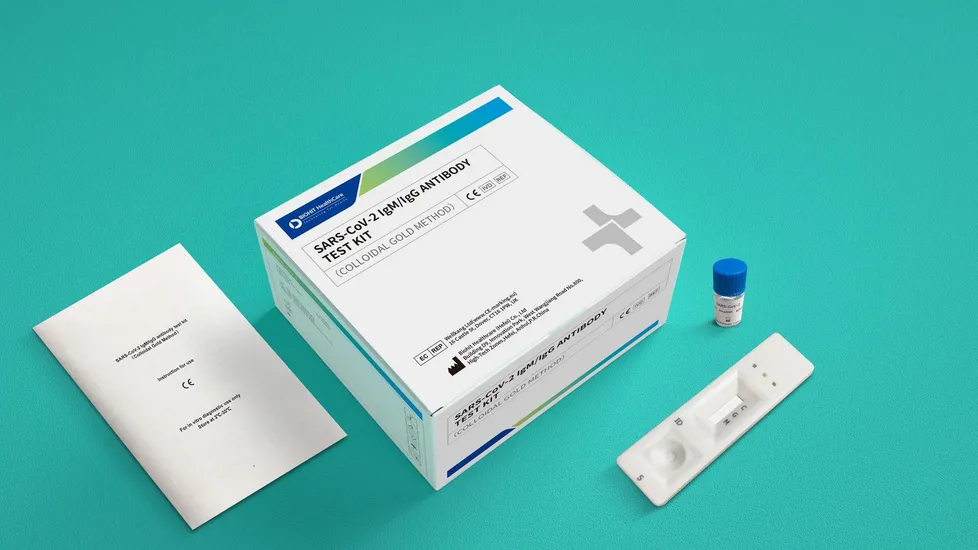
What is the connection between this test, bearing the name Biohit, and Biohit itself? Apparently, the test was manufactured by Biohit’s Chinese partner and largest owner, Hefei?
Interesting…!! Can anyone elaborate..? Would there be royalties etc..
Nothing will come of it when it’s a partner company’s product.
Could anyone give a more precise estimate of the significance of this potential US patent for Biohit and its business potential?
A small update because I’ve once again overweighted Biohit.
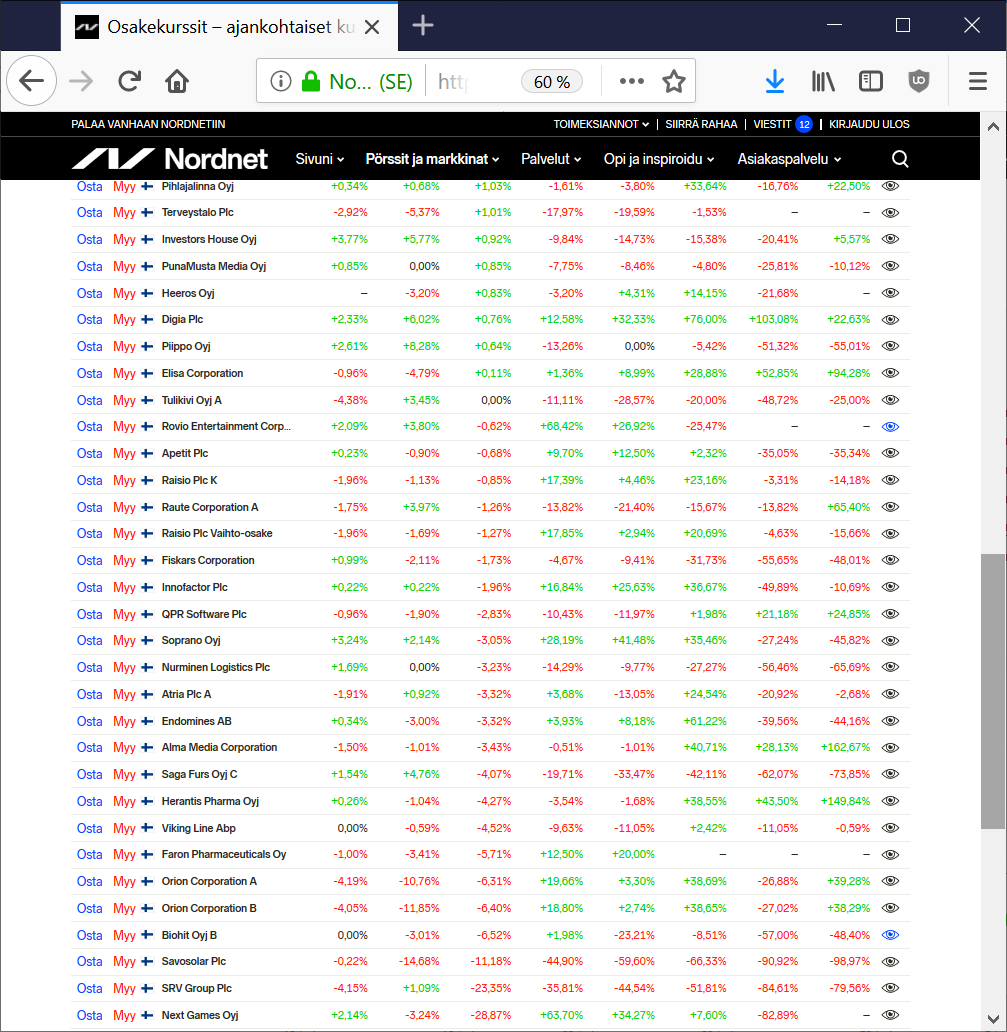
Out of all companies listed on OMX, Biohit has been the fourth worst-performing stock in the last month out of 175 companies (third column in the image below)! No talk of BRRRR craze or FOMO or even junk stocks rising now.
The company’s communication is indeed a big disappointment, as a couple of months ago, they were rambling that corona didn’t seem to have an impact, and suddenly it does affect the first half.
Tunakalastaja’s summary from Kauppalehti’s website:
"16/3 Hitti announced this:
Currently, there have been no interruptions in production. Our factory is operating, and we serve our customers to the best of our ability.
26/3 they announced this:
CHINA, RUSSIA, AND THE MIDDLE EAST
At the beginning of 2020, we have once again been able to
deliver our GastroPanel® products to China.
According to the latest estimate, our GastroPanel® distributor’s
new production facilities will be completed at the end of 2020.
GastroPanel® product deliveries to China
will grow in 2020, provided that logistical challenges related
to the coronavirus (SARS-CoV-2) subside.
So, screenings in Russia and China are still ongoing, so if this stock were also allowed to look a year or two ahead, there would be good reasons for a strong rise.
As a wildcard, then possible corporate arrangements when the largest owner’s Chinese company is listed on the stock exchange, and in that context, it would be logical to buy the entire share capital for peanuts, even with a 200-300% premium, for 120-160 million euros, after which the Chinese company could monetize the Gastropanel screenings in China and Russia and even sell off the non-core assets with a good profit (Acetium family, Genetic analysis co-ownership, and other test kits).
Well, CE approval for GP’s small device should be coming soon. Perhaps that will bring the euphoria that has already caressed other stocks, or at least a rise from pessimism.
3 Likes
Biohit’s Gastropanel is once again gaining global attention. Pretty impressive stuff for a company with a market cap of 30 million. It’s a wonder they don’t even boast about it with a press release. The stock price also seems immune to good news these days. Below is a link to the final conclusion and a summary translated from the university’s Facebook page.
https://www.amu.kz/infocenter/news.php?ELEMENT_ID=43371
Resolution of the XV Gastroenterological Forum
Astanna-Gastro 2020 with international participation 
 In recent years, a new scientific and practical direction in gastroenterology has emerged as a result of the study of the causes, mechanisms, and features of the development of precancerous gastrointestinal tumors and diseases. Its value is difficult to overestimate, as it fundamentally allows for a new method of cancer prevention, preventing the development of malignant tumors from precancerous lesions, which is now recognized as the only means of reducing the incidence and prevalence of cancer patients.
 WHO declared precancerous pathology of the digestive organs - the main problem of gastroenterology in the 21st century. The global situation is a catastrophic increase in the frequency and prevalence of malignant gastrointestinal tumors. Statistics show that the mortality rate from gastrointestinal cancer is twice as high as lung cancer mortality, 5.5 times higher than breast cancer mortality, and malignant tumors in other localizations. At this rate of growth, oncogastroenterological pathology may begin to compete for 1st place with cardiovascular diseases as a cause of death.
It should be noted that in Kazakhstan, the top positions in terms of indicators are for gastrointestinal cancer, with stomach cancer being among the first.
Based on the above, it is important to recognize the precancerous pathology of the digestive organs in Kazakhstan in general, and chronic atrophic gastritis in particular, as a precancerous stomach disease. Today, its importance is difficult to overestimate.
The mechanism by which H. Pylori infection causes non-cardiac (distal) stomach cancer has only been understood in recent years. The risk of developing stomach cancer increases simultaneously with the severity of atrophic gastritis, which most often occurs as a result of H. Pylori infection, leading to hypochlorhydria or complete absence of acid production. The risk of stomach cancer depends on the localization of chronic gastritis and the location of intestinal metaplasia in the stomach. In patients with atrophic gastritis, the cancer risk is 3-5 times higher than in the rest of the population. Individuals with severe panatrophy of the gastric mucosa (atrophic gastritis in the antrum and body, i.e., severe multifocal atrophic gastritis), regardless of the presence or absence of H. pylori infection, have a 90-fold increased cancer risk compared to a healthy group.
It has now been proven that there is a “point of no return” in the eradication of H. pylori - the appearance of intestinal metaplasia in the gastric mucosa. Eradicating H. pylori no longer reduces the risk of developing stomach cancer. This data emphasizes the need to detect precancerous and early gastrointestinal cancer at the precancerous stage, when treatment is most effective. Effective prevention of malignant tumors at the stage of precancerous lesions is now recognized as the only means of reducing the incidence and prevalence of cancer patients.
It is known that morphological examination of biopsies is a reliable method for diagnosing atrophic and precancerous changes. However, it is not without flaws. The main disadvantage of the histological method is the possibility of evaluating the morphostructures of the gastric mucosa only in the biopsy. In addition, due to the invasiveness and complexity of the study, and the need for high professional skill of the morphologist, histological analysis cannot be a screening method for precancerous changes in the gastric mucosa.
It should also be noted that the program “Diagnosis, treatment, and prevention of precancerous digestive diseases” has been implemented and is being carried out in Kazakhstan at the regional level. Thus, a program “Diagnosis, treatment, and prevention of gastroesophageal reflux disease and its complications - Barrett’s esophagus” (MUA, NNMC, Astana) has been developed and implemented. The first pilot project "Screening serological examination of precancerous gastric pathology using the conditional “Gastropanel” method (MC UDP RK, MUA) has been completed. Analysis and clinical monitoring of results to slow down the progression of digestive diseases and prevent precancerous pathology in both programs are ongoing.
Endoscopic treatment of many digestive diseases (polypectomy, cholecystectomy, etc.), which has led to a reduction in surgical interventions. At the same time, there is no downward trend in cancer patient statistics.
At the same time, gastroenterologists have real opportunities to prevent the development of malignant gastrointestinal tumors through early diagnosis and the latest treatment technologies. Today, the morphological development from precancer to cancer can be prevented or slowed down, which means that the morphological development can be reduced, and consequently, mortality. Modern approaches can and should be used whenever possible in early diagnostics for all known precancerous diseases in clinical practice.
To achieve this, it is necessary to ensure:
- Improvement of the system for organizing medical care for patients with digestive diseases, strengthening the material and technical base of medical and preventive institutions.
- Introduction of minimally invasive serological diagnosis of chronic H. pylori-associated diseases, based on the determination of pepsinogen I, pepsinogen II, gastrin-17, and antibodies - IgG Rylori, which contributes to the effective detection of H. pylori infection and early detection of precancerous changes in the gastric mucosa according to the readings of a comprehensive morphological study, namely, the threat of mucosal atrophy and its metaplasia.
- Adequate H. pylori eradication to reduce the risk of mucosal atrophy, stomach cancer, and to be cost-effective in areas with a high risk of developing gastric adenocarcinoma.
- Pharmacotherapy for precancerous gastric patients should be carried out in conjunction with the results of serological screening and endoscopic monitoring, and also taking into account modern approaches to solving the problem in general, including the use of new clinical protocols (Maastricht 5-6), and adequate rehabilitation. The need to solve the unprecedented complexity and large-scale challenges facing domestic gastroenterology and healthcare in general should be a powerful impetus for all specialists in the field: gastroenterologists, therapists, endoscopists, pathomorphologists, laboratory doctors, and doctors of other specialties. The implementation of these tasks will significantly advance the clinical practice of gastrointestinal cancer prevention and, in our opinion, contribute to a real solution to this problem, i.e., a reduction in the incidence of gastrointestinal cancer.
5 Likes
How will this be reflected in Biohit’s revenue?
This nonsense has been going on for 10 years and the project just isn’t moving forward… The share value has just plummeted… Maybe when something comes under Viva as well.
Is the Chinese factory already spewing out goods and millions in revenue guaranteed?
3 Likes
I’m guessing not significantly until the analysis and follow-up end (see below). Signs indicate that business will grow significantly in Asia in the near future. China, Russia, and Kazakhstan are potential game-changers. South Korean distributor Dow Biomedica also recently managed to register Gastropanel. A very interesting country as well. I also believe that I won’t get to enjoy these sales increases. Biohit will be sold to the Chinese once the Biohit Hefei listing is completed.
“The first pilot project ‘Screening serological study of predictable gastric pathology in the attached conditional ‘Gastropanel’ method (MC UDP RK, MUA)’ has been completed. Analysis and clinical follow-up of the results to slow down the progression of digestive organs and prevent precancerous pathology in both programs will continue.”
3 Likes
I cursively went through the company’s annual reports from the last decade, among other things. Every annual report seemed almost identical to the previous one: some breakthrough or great step forward made during the year, but nothing ever gets capitalized into revenue or profit.
In a way, it’s quite sad, because the products are apparently quite good and validated through clinical studies, but they can’t be sold. Ultimately, medical innovation doesn’t help people to its full potential. Poor sales are bad business, but in this case, also a tragedy for humanity.
A few things still bother me. If anyone knows the answers to these, I would appreciate it:
- Why are these products mainly sold to non-Western countries like Russia and China? Are they not suitable for Western countries?
- What is the potential for royalty income in China if and when things get rolling there? I couldn’t find, for example, a royalty per manufactured test or anything similar.
Well, there’s potential here if things take off in China. But having bought at €6-7, it’s a long wait when 10 years have passed… might just end up with calluses on my hands…
But if bigger news comes out, this will take off right away.
1 Like
Is the time ripe and is the Chinese factory starting to push the product onto the market? This has been awaited like a rising moon… to the point of boredom.
Maybe it’s time for this to actually take off.
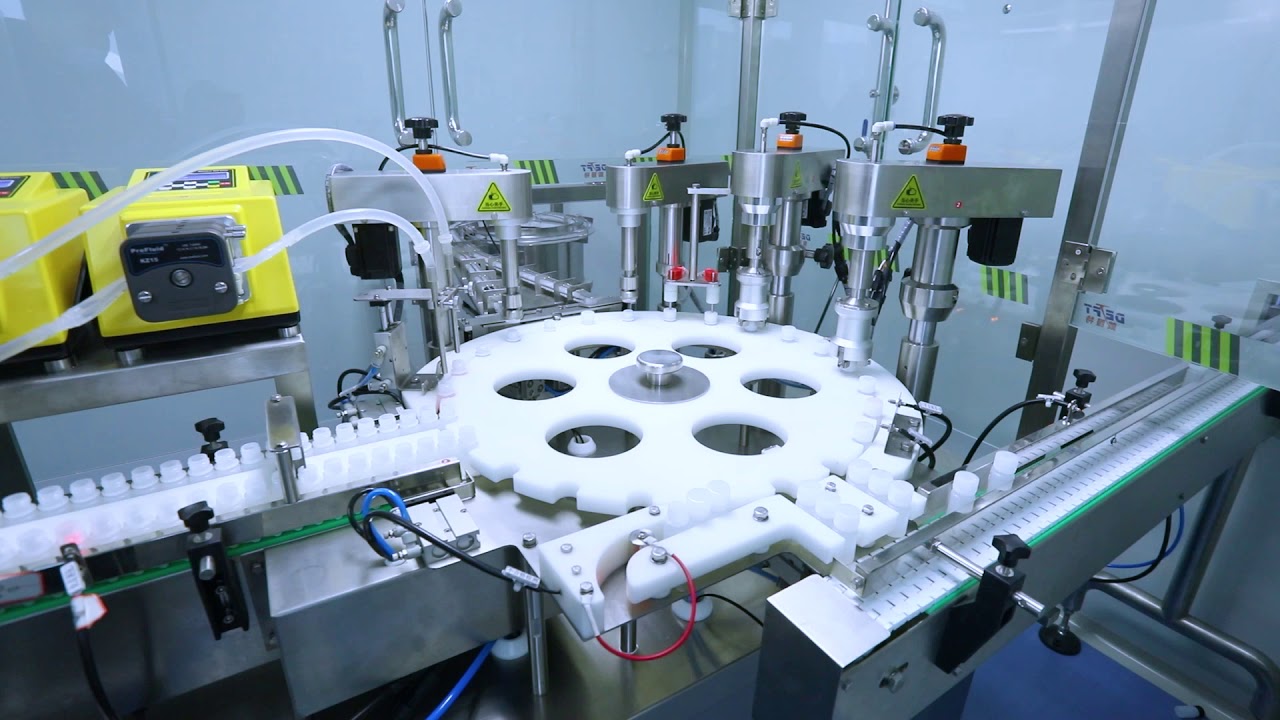
Here’s a link to the factory.
As I understand it, these markets, because the cancers that Biohit has focused on, are common in these countries.
“In Russia, CRC is the most common cancer with almost 60,000 new cases (both genders) and the second most common cause of cancer mortality (n=39,907)CRC is the most common cancer with almost 60,000 new cases (both genders) and the second most common cause of cancer mortality”
Source: https://ar.iiarjournals.org/content/35/5/2873.full
And regarding China (or rather East Asia), “More than 727,000 cases of GC (gastric cancer) were diagnosed in Asia in 2008, accounting for 11.9% of all the cancers diagnosed. It is the third most common cancer in Asia after breast and lung cancer.”
Source: Selaintasi tarkistetaan – reCAPTCHA
Edit: still an image of the prevalence of GC in men in different countries:
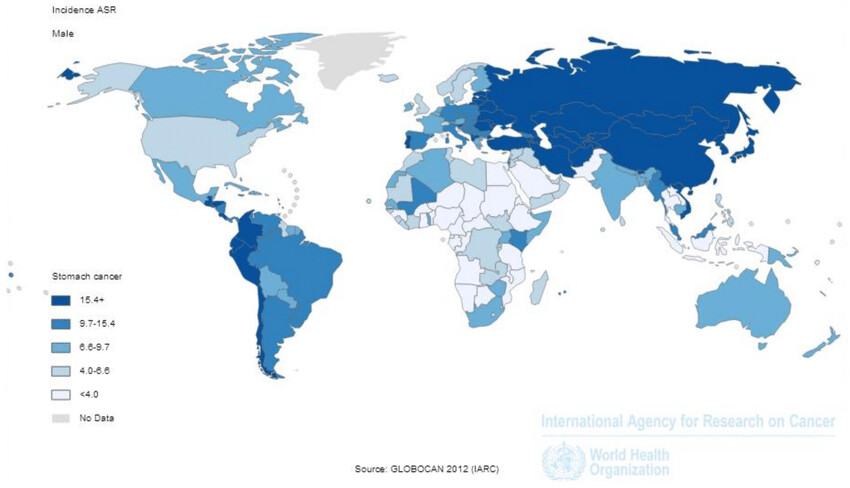
Source: https://www.researchgate.net/publication/324648790_Epidemiology_of_Helicobacter_pylori_and_CagA-Positive_Infections_and_Global_Variations_in_Gastric_Cancer
4 Likes
-
To put it simply: the Asian population commonly carries a gene variant that prevents the body from breaking down acetaldehyde, at least not as efficiently as in most Westerners. Increased exposure to acetaldehyde leads to an elevated risk of stomach cancer, and this is reflected in mortality statistics. This is why authorities in Asian countries have particularly vigorously seized the opportunity to conduct stomach cancer screenings using GastroPanel. (There is certainly a need in Western countries as well. In Finland, as many people died from stomach cancer last year as from the disease caused by the coronavirus.)
-
The size of the royalties and other details of the agreements have not been disclosed. Biohit Hefei’s newly completed factory has a production capacity of two million (partial) tests per day. If a significant portion of the production is tests made under Biohit’s license and/or from raw materials manufactured by Biohit, and if the factory achieves even some level of utilization, then I believe that would be enough to turn Biohit’s profit handsomely. The royalty per test would not even need to be very significant. There has been more detailed speculation about these royalties elsewhere.
Edit: turola had already commendably presented the prevalence of these cancers while I was formulating my answer.
3 Likes
The EU and Business Finland grant Biohit Oyj a total of 900,000 euros in product development funding
3 Likes
Good article in Helsingin Sanomat (HS), Biohit seems to be in a rather messy situation. I had this in my portfolio a few years ago, but the situation doesn’t look good now.
3 Likes
That was a good and interesting article, thanks to Helsingin Sanomat!
I somehow felt relieved, because now I think I know what Biohit’s long-term “stickiness” is due to. Hopefully this leads to something. At first, some probably expect the matter to be forgotten, but hopefully that won’t happen… maybe it will stay on the surface. It’s strange if nothing happens, of course it’s also possible that formally some small changes are made and the only thing we see is the share price falling.  If a company like this were under intensive care, perhaps there would be fewer such problems.
I’m not an expert in the field, but I’ve considered Biohit a potentially big success story, and I hope some corrective measures are taken so that Biohit can truly try to reach its full potential. 
2 Likes