I didn’t make it to the live broadcast, but I waded through the Q3 earnings call as an evening task, which is already available via Quartr. I typed up a brief summary of the call while I was at it.
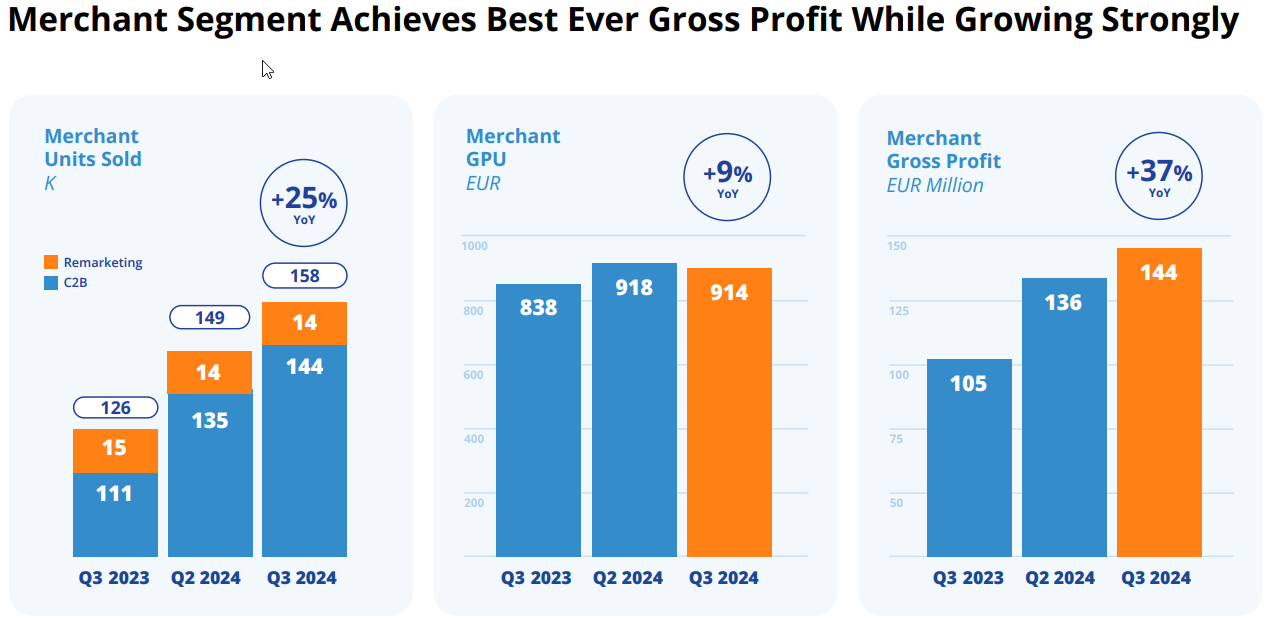
Q3 was driven by strong demand. This was mentioned at least three times. The offering of financial services not only improves profitability but is also a significant factor behind current and future demand. In addition to the four previous countries, Merchant financial services have now been launched in Belgium and the Netherlands, and in established countries (France, Germany, Austria, and Spain), it is being offered to more and more partners, so demand is growing through this channel as well.
The number of locations has been increased, and new sites will be opened at an accelerating pace during 2025. This makes it easier for customers selling their cars to close deals, which will translate into inventory growth for Retail and Merchant customers.
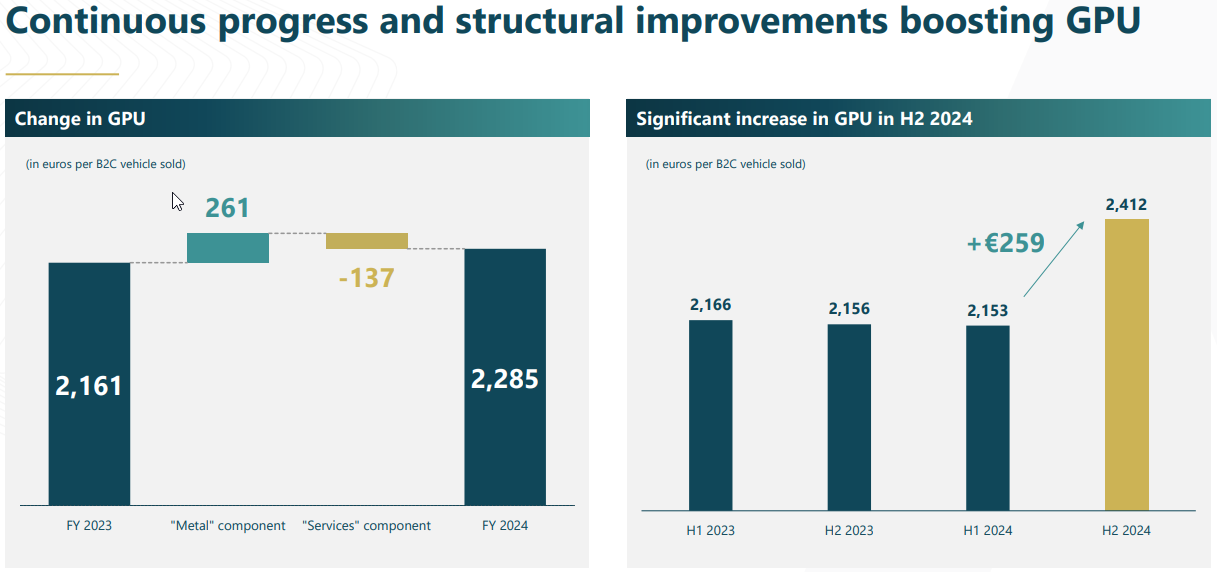
Regarding Retail, profitability per unit sold before headquarters costs was 200–300 euros in the red per car. This part was slightly unclear (around 11:40), but if I heard correctly, the loss would have been 1,900 euros higher per car during Q3 last year.
During Q3, Autohero’s native applications were also released for both Android and iOS. According to initial experiences, customer retention has improved compared to the web version. AI damage detection was also released during Q3, which was previously announced in a news release.
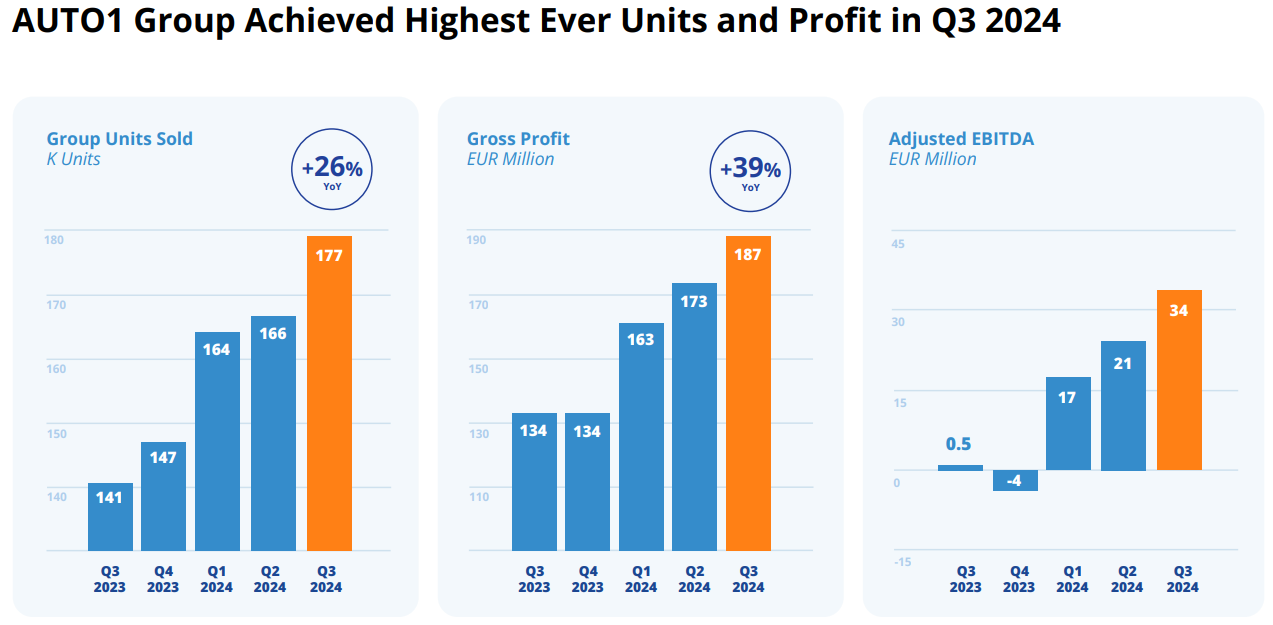
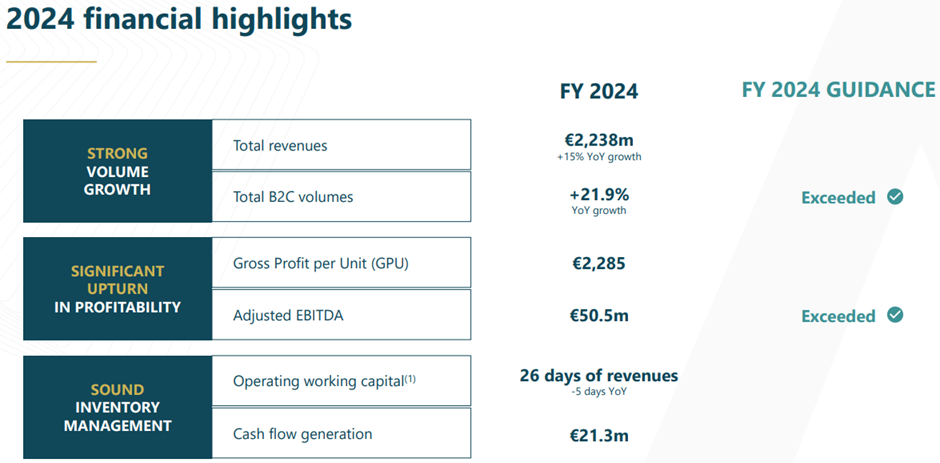
The image on page 21 clearly shows how much of an impact increased unit sales have on AEBITDA.
The CEO reminded that Q4 is seasonally the weakest quarter because there are fewer working days and car dealers are more cautious at the end of the year.
Q&A
The answers are not necessarily in chronological order, as I grouped them slightly by topic.
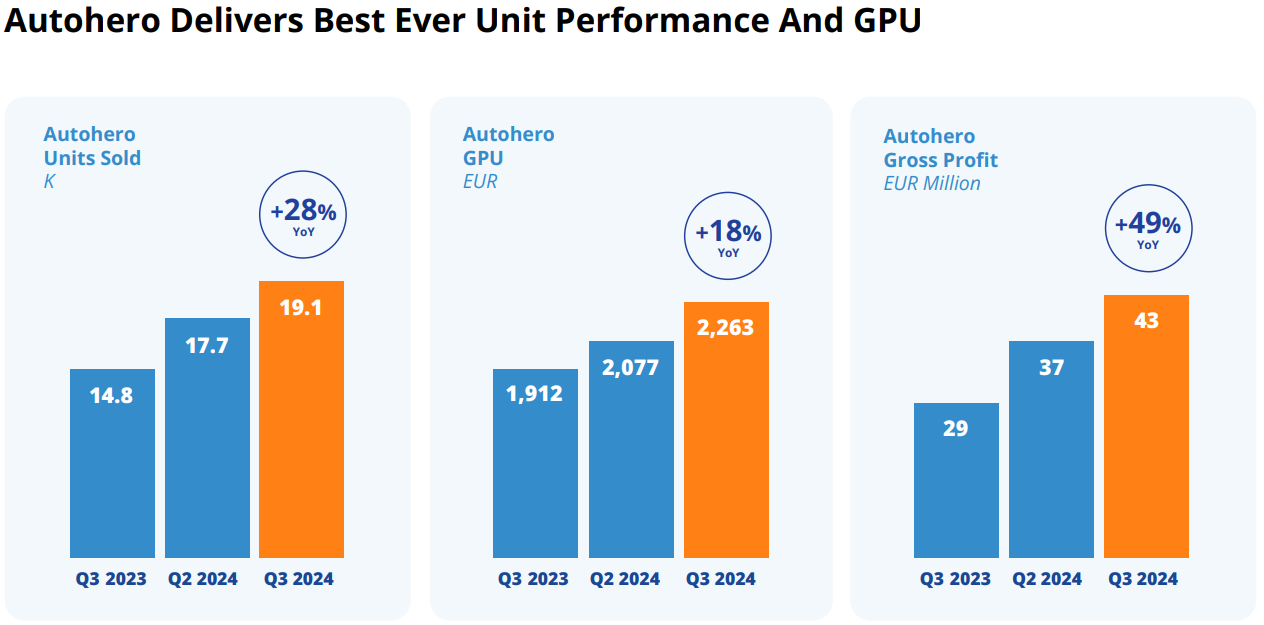
There was a question about Autohero’s profitability. The company has previously promised to step on the gas to increase Autohero’s unit sales once Autohero’s profitability reaches break-even before headquarters costs. It’s still slightly in the red, as mentioned above, but the zero level is approaching, and they have begun preparing with this in mind.
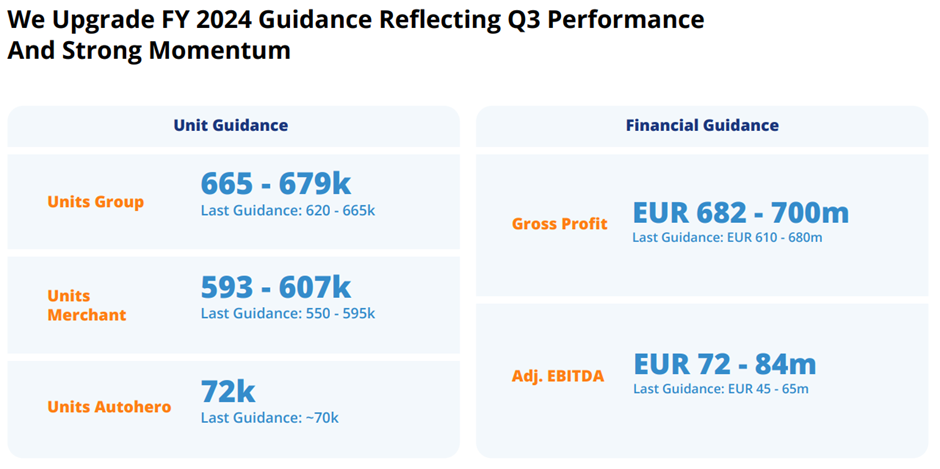
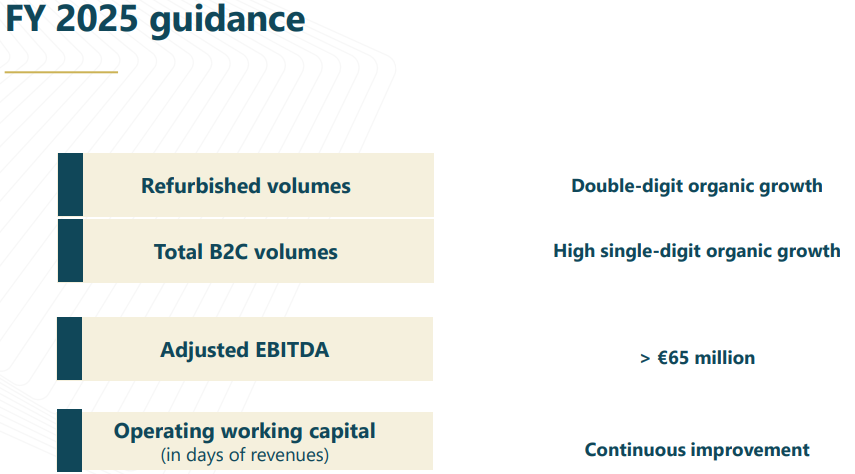
AEBITDA for the final quarter is forecast to be 0–12 million EUR. Apparently, this could still swing either way depending on how the last three weeks of December perform and how the GPUs of different segments can be defended. (My note: during Q2, Q4 was forecast to be at zero, so a relatively weak quarter is still expected.)
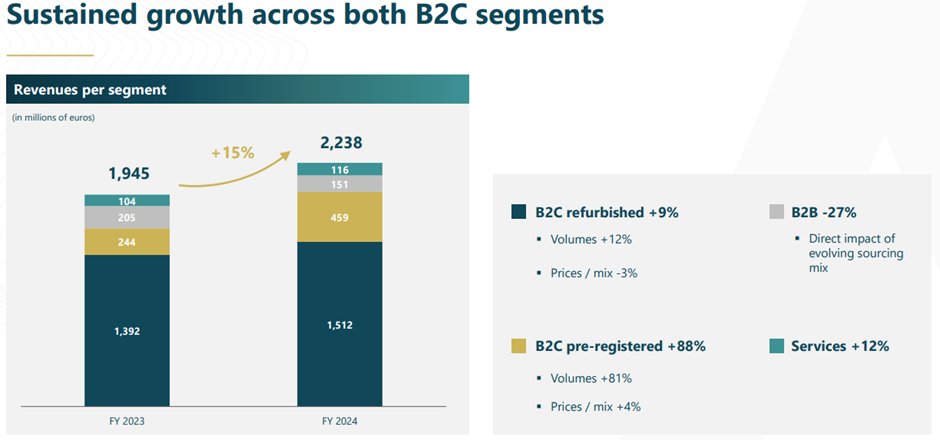
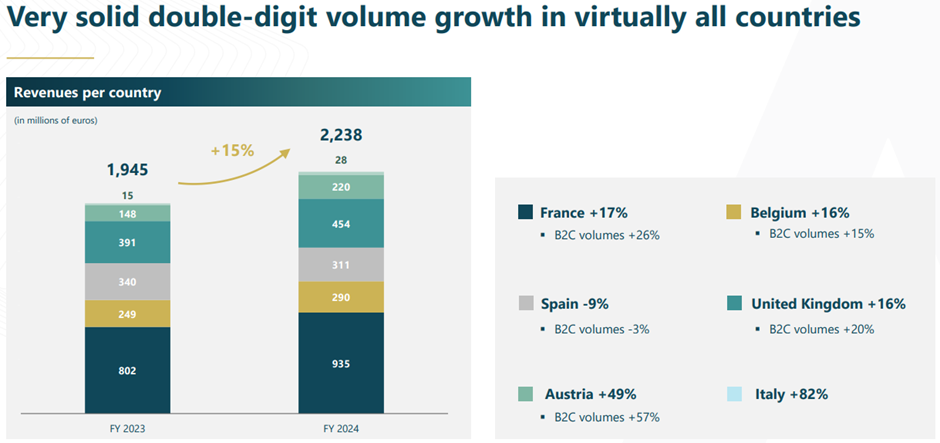
An analyst also noted the growth in Merchant’s market share. The growth is said to be the result of offering the best product on the market, and mid-to-high single-digit growth was still promised, which would allow for faster growth than the market average.
This growth rate was challenged and considered too low, as the provision of financial services has already accelerated growth and large countries like Italy and Poland have yet to be opened.
Currently, only that 5–9% (presumably QoQ) growth is promised for Merchant because no significant market growth is expected for next year. Growth must therefore be achieved at the expense of others. The macro environment in Europe is currently not the best possible. However, this hasn’t yet had a negative impact on the company’s operations. The used car market is currently growing at about 6–8% per year, but Auto1’s growth is faster than this. In practice, they believe they can grow faster than the market next year as well by taking market share from others.
The share of used cars sold in Auto1’s operating area was about 29.2 million cars in 2019 (pre-covid). Markets are only just normalizing after Covid, and the 2024 figure is settling at around 27–28 million cars. Auto1 is estimated to have a market share of about 2.5% of this.