Kuluvana vuonna aurinkopaneelit ovat nostaneet suosiotaan kun Eurooppa ajautui energiakriisiin. Yritetään tässä ketjussa pohtia aurinkopaneelien hankkimista sijoitusmielessä ja tutkia, miten kannattavia ne oikeastaan ovat. Vai ovatko ollenkaan?
En ole mikään kummoinen asiantuntija aiheesta ja omatkin paneelit ovat olleet vasta vajaan puoli vuotta. Toivottavasti ketjusta kuitenkin saadaan jotain hyötyä lukijoille. Avaan tässä ensimmäisessä viestissä omia kokemuksia ja jaan tähän mennessä tullutta dataa muiden nähtäville. Näkemyksessäni korostuu varmasti omakotitalossa asuminen, lämmitykseen kun kuluu eri tavalla sähköä kuin esim. rivitalossa.
Ensin kuitenkin muutama sana aurinkopaneeleista. Paneeleita ja järjestelmiä verrataan toisiinsa kWp-arvolla (piikkikilowatti), jolla kuvataan paneelien tehoa tietyissä standardiolosuhteissa. Sitä voi ajatella paneelien maksimitehona, vaikkei se täsmälleen pidä paikkaansa. Close enough. Mitä suurempi kWp-arvo, sen enemmän sähköä järjestelmä voi potentiaalisesti tuottaa.
Aurinkopaneelijärjestelmään kuuluu paneelien lisäksi invertteri, joka hoitaa paneeleista saatavan sähköenergian sopivaan muotoon syötettäväksi kiinteistön sähköverkkoon. Invertteri on järjestelmän kallein yksittäinen osa ja se tulee mitoittaa tarpeeksi suureksi, jotta se selviää paneelien tuottamasta tehosta. Esim. oma järjestelmäni on 4,32 kWp ja invertteri on 6 kW. Moni invertteri tarjoaa mahdollisuuden reaaliaikaiseen seurantaan, joka on kiva ominaisuus. Toki joihinkin järjestelmiin kuuluu myös akusto mahdollistamaan tuotetun sähkön varastointia, jotta ylituotannon voi ottaa omaan käyttöön esim. öisin.
Mikä sitten on “oikea” koko järjestelmälle? En osaa vastata kunnolla, joku viisaampi voi tehdä sen paremmin. Yritän kumminkin oman järjestelmän kautta selkiyttää asiaa. Pientuottajalle sähkön tuotanto on verovapaata, jopa ylituotannon myynti. Jos kuitenkin paneelit on hankittu tulonhankkimismielessä, eikä omaan kulutukseen, tulee veroja maksella (lisätietoja Verottajan sivuilta). Muistaakseni raja oli ainakin Helenillä 100 kW, joten paneeleja pitää hankkia aikamoinen läjä sen ylittämiseksi.
Harmillisesti paneelit tuottavat yleensä eniten silloin, kun oma kulutus on vähäisintä. Ei siis ehkä ole järkeä mitoittaa järjestelmää siten, ettei ylituotantoa ole ollenkaan. Kesällä suurin osa tuotannosta meneekin myyntiin, mutta keväällä ja syksyllä omaan käyttöön menee ihan eri tavalla. Näytän hieman alempana omia käppyröitä tästä.
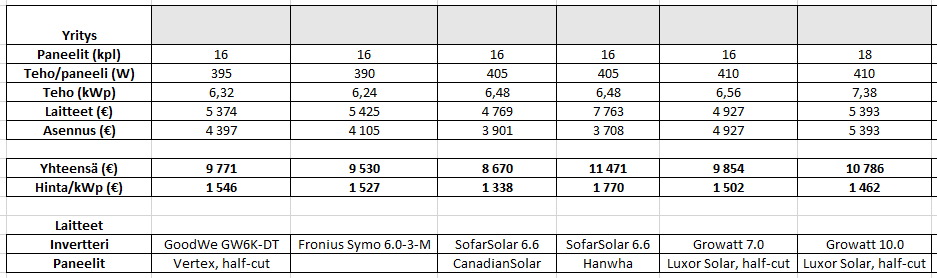
Sitten omiin kokemuksiin. Oma järjestelmä on hankittu maaliskuussa 2022 ja koko tosiaan aiemmin mainittu 4,32 kWp (12 * 360 W paneelia), hintaa sillä oli 8900€. Tässä ensimmäinen ohjeistukseni paneeleita harkitseville: tutki hintoja ainakin päällisin puolin etukäteen. Itse en sitä tehnyt ja olin vaan innoissani paneeleista, sen myötä tuli maksettua ylihintaa. Arvioin, että saman olisi saanut jopa 2000€ halvemmalla. Paneeleilla on 25 vuoden tuottotakuu (eli silloin vielä tuottavat >80% nimellistehostaan) ja invertterillä 10 vuoden.
Paneelien asennuksesta saa kotitalousvähennystä. Omassa tapauksessa asentanut yritys kirjoitti työn osuudeksi 3625€, josta 40% on 1450€. Kun omavastuu on 100€, niin 1350€ voi laskea paneelien hinnasta pois vähennyksen jälkeen (lisätietoja Verottajan sivuilta).
Ylijäämän voi myydä takaisin spot-hintaan, tai ainakin Helenin tapauksessa sen voi “varastoida” virtuaaliakkuun, jolloin siitä hyvitetään 13 c/kWh (8/2022, hinnat kun saattavat muuttua). Itse tein sopimuksen myymisestä spot-hintaan. Myydyn sähkön siirrosta ei Carunan verkossa tarvitse maksaa mitään siirrosta.
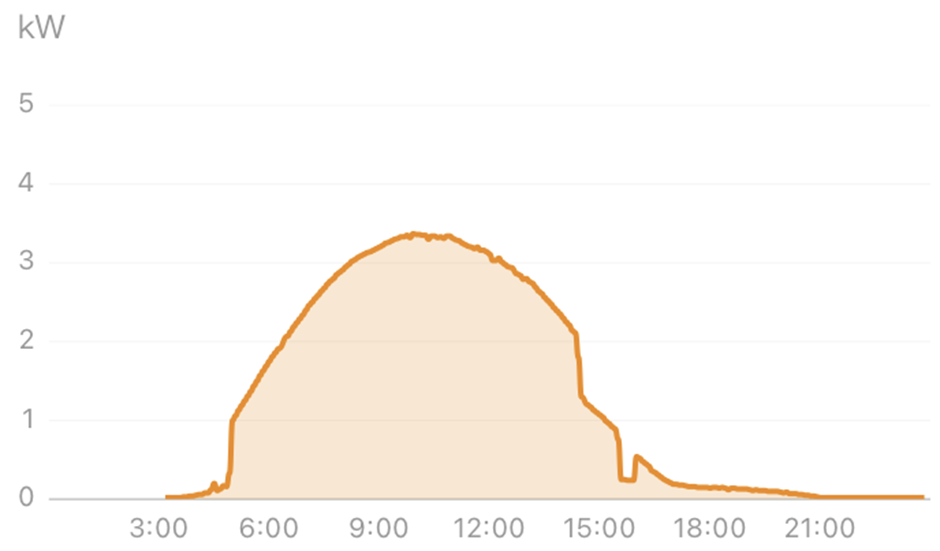
Asumme Lohjalla ja meillä omakotitalon katto on jyrkkä ja kaikki paneelit ovat yhdellä lappeella, joka osoittaa suunnilleen kaakkoon.Varjostavia puita ei ole edessä, joten aurinkoisena päivänä tuottoprofiili on suunnilleen tämän näköinen:
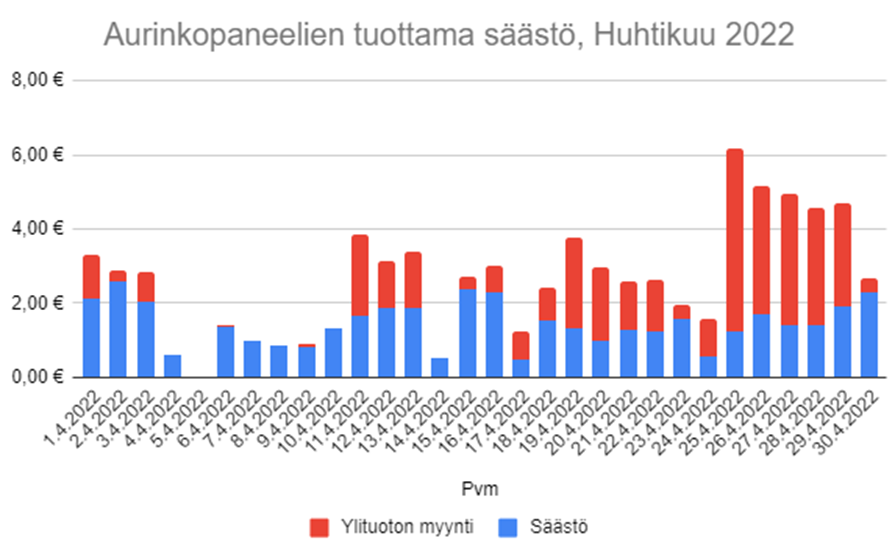
Sitten varsinaiseen dataan. Olen laskenut kerran kuussa paneelien tuotot ja piirtänyt vähän käppyröitä. Omaan käyttöön menevän osuuden laskemisessa olen käyttänyt nykyistä 6,96 c/kWh sopimusta (plus siirto ~7 c/kWh ja vero ~3 c/kWh), joka ensi vuonna saattaa taas olla jotain ihan muuta. Myyty osuus on laskettu suoraan spot-hinnoista.
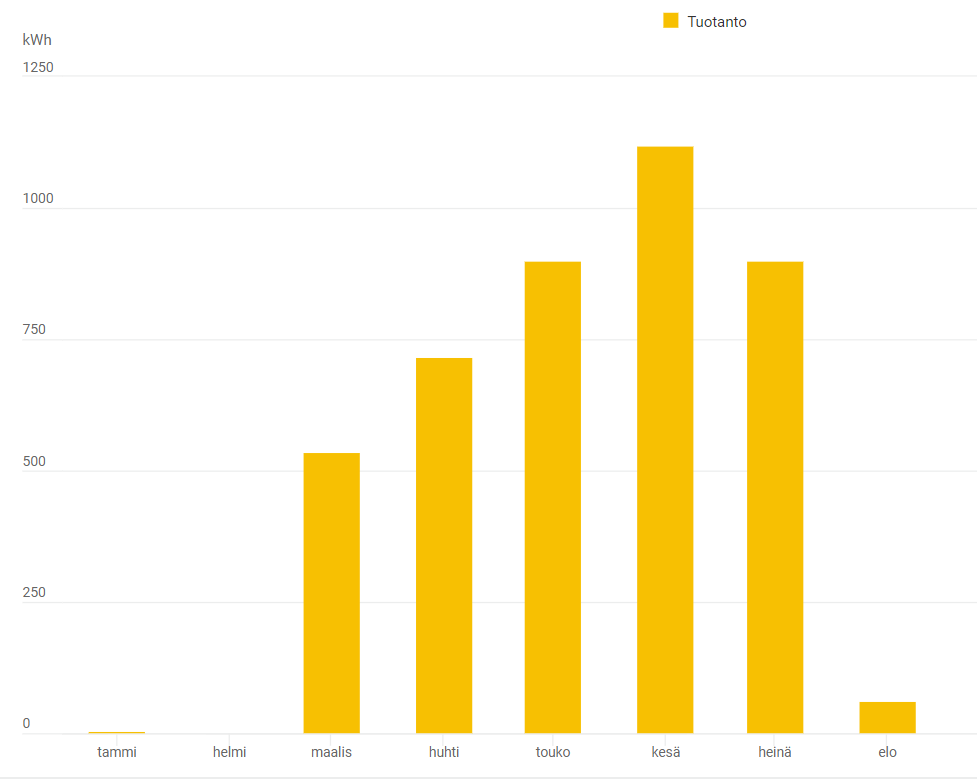
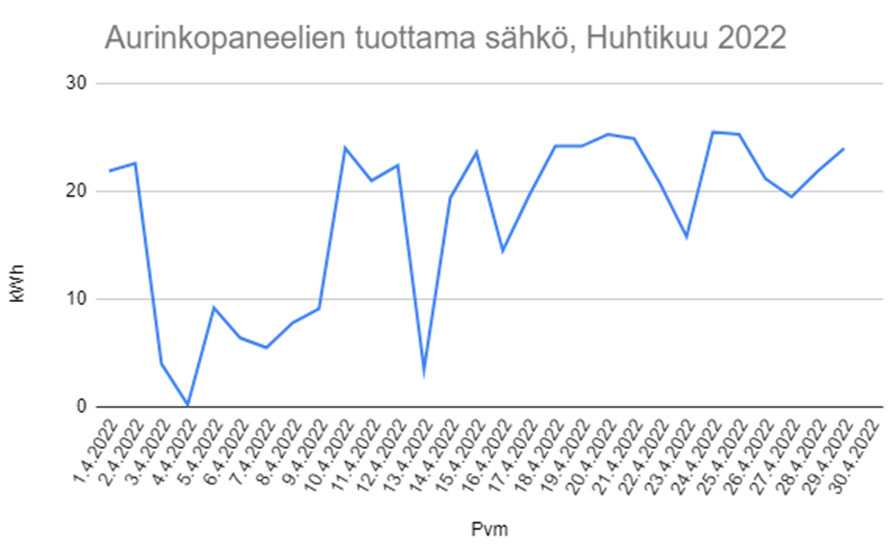
Aloitetaan huhtikuulta, joka oli ensimmäinen täysi kuukausi paneelien kanssa. Huhtikuu oli kohtuullisen aurinkoinen, vaikka alkupuolella oli viikon verran lumisadetta. Sähköä tuli yhteensä 525,8 kWh ja siitä omaan käyttöön meni 272,4 kWh. Myydyn sähkön keskihinta oli 12 c/kWh.
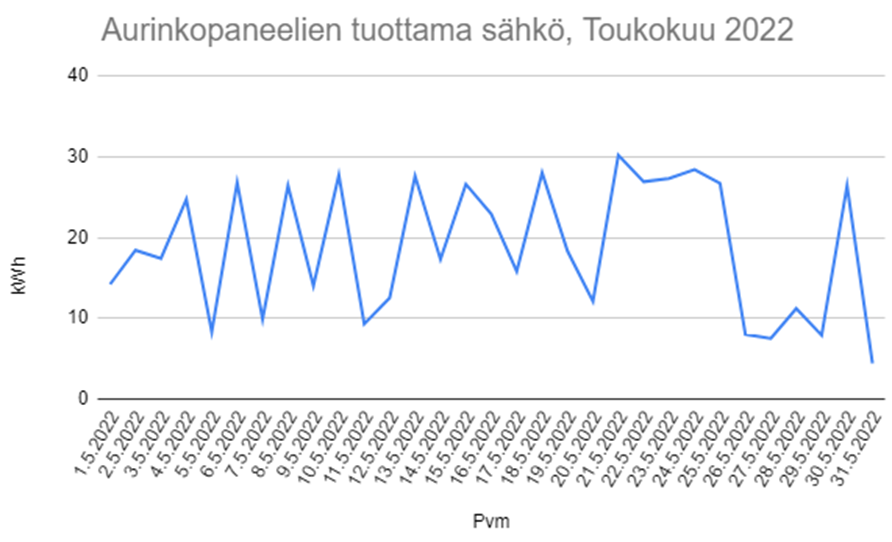
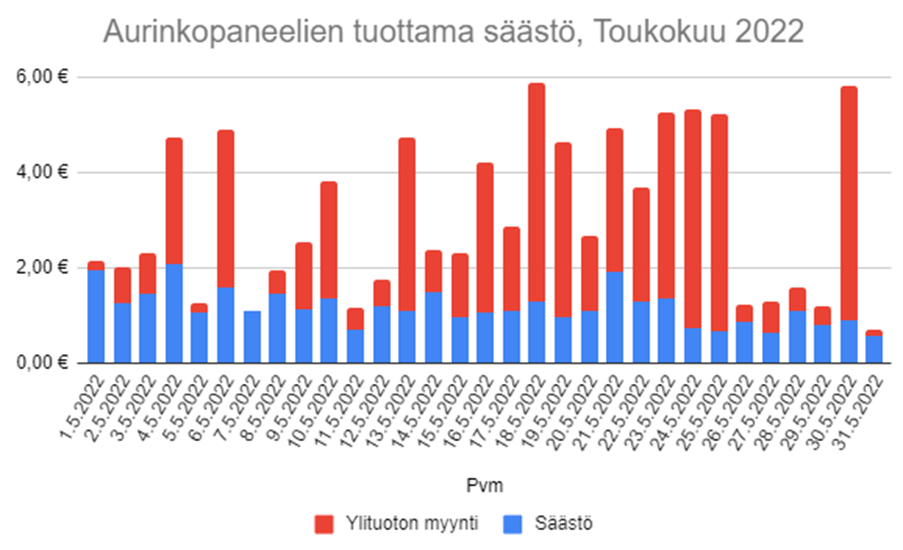
Toukokuu oli myös hyvin aurinkoinen ja tuotantoa tuli 583,1 kWh, omaan käyttöön 232,05 kWh. Toukokuussa ulkolämpötila oli vielä kohtuullisen alhainen, joka nostaa paneelien hyötysuhdetta hieman (~5-10%). Myydyn sähkön keskihinta nousi, ollen toukokuussa jo 17 c/kWh.
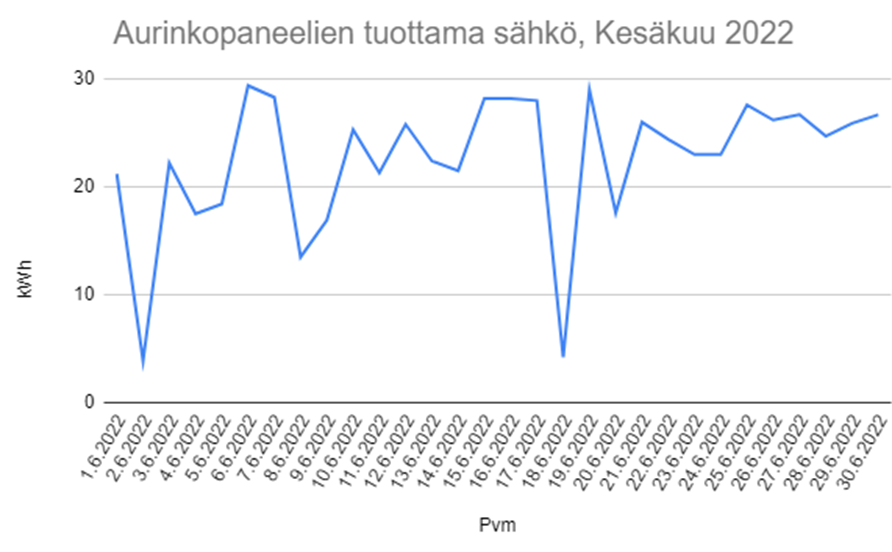
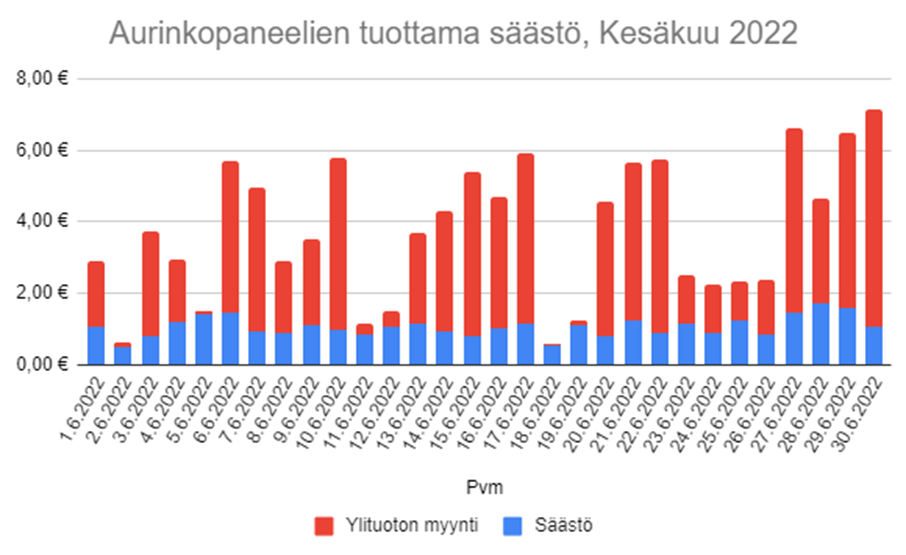
Kesäkuussa tulikin erittäin hyvin sähköä, 677 kWh (omaan kulutukseen vain 203,9 kWh). Myydyn sähkön keskihinta oli sama 17 c/kWh kuin toukokuussa.
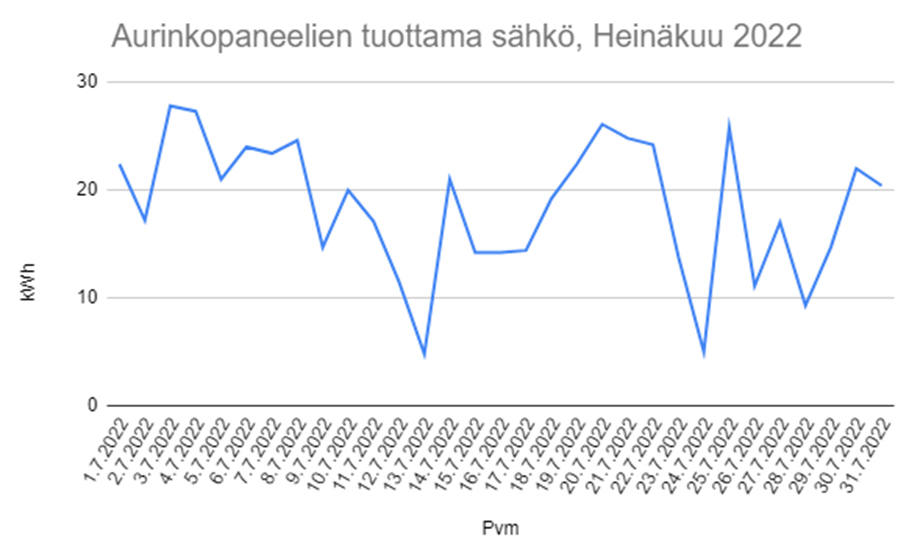
Heinäkuun sähköntuotto oli suunnilleen samalla tasolla kuin toukokuussa. Sen sijaan spot-hinnat jatkoivat nousua ja myydyn sähkön keskihinta oli jo 26 c/kWh.
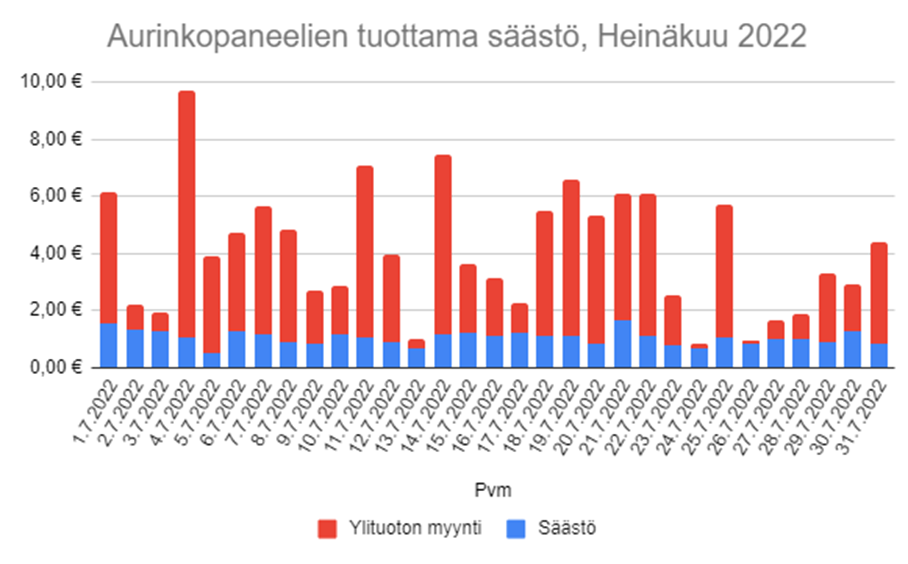
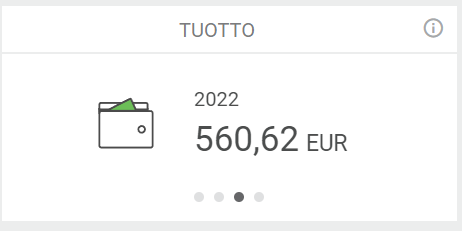
Yhteenvetona:
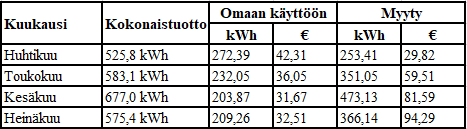
Myyjät kovasti hehkuttivat, että takaisinmaksuaika en helposti alle 10 vuotta. Ja tämä siis ennen kuin Venäjä hyökkäsi Ukrainaan ja hinnat alkoivat karata pilviin myös kesällä. Toki kohonneiden hintojen myötä ollaan selvästi lähempänä sitä väitettä, mutta aikamoista soopaa oli moni asia, mitä sanoivat.
Olisi kiva kuulla foorumilaisten ajatuksia, kokemuksia ja vinkkejä aiheesta. Moni olikin kiinnostunut paneeleista kun siitä oli Kahvihuoneella puhetta. Toivottavasti tämä aloitus ei ollut kauhean sekava 
EDIT: korjattu vikan kuvan sarakkeet oikein.
EDIT2: lisätty huomautus siirron ja veron osuudesta ostettaessa sähköä