Let’s open a dedicated thread for Fellow Finance, which is in the IPO process. The company plans to list on Nasdaq Helsinki Ltd’s First North Finland marketplace! Finally, we got permission to publish the investment research and video as well!
8 Likes
Nyt on platformia parhaimmillaan. Tää ylimerkataan varmaan 10x 
Edit: 37milj skenaarioon downsidea 20%. Vastaavasti normaaliin skenaarioon upsidea 45%. Bull-skenaarioon upsidea 230%. Jokainen vetäkööt omat johtopäätökset.
9 Likes
Kyllähän tuota taitaa olla pakko ottaa pikkasen salkkuun vaikuttaa kyllä niin hyvältä…
Onkos moni muukin ottamassa?
3 Likes
Onko olemassa joku tekinen syy/sääntö minkä takia Taalerin omat rahastot, kuten Mikro Markka, eivät ole ankkurisijoittajina?
5 Likes
Tää on hyvä kysymys!
3 Likes
Minulla olisi kysymys yhtiöesittelytilaisuuteen, mutta en tähän hätään löytänyt oikeaa paikkaa mihin sen esittäisin. Voisiko Yurtsi tai joku yrittää saada tämä kysyttäväksi:
Kasvua tavoiteltaessa alustan käytettävyys on tärkeää, eteekin kilpailun kiristyessä.
Lainanantajana/sijoittajana turhauttaa sivuston hitaus (pyörivien hammasrattaiden katselu).
Onko tähän tulossa parannusta? Vai voiko mennä vielä hitaammaksi kun käyttäjät lisääntyvät?
Esimerkkinä Mintos toimii Fellow Financen sivustoon verrattuna erittäin jouhevasti.
Kysymys on kiireessä rustattu. Saa tarvittaessa muokata 
Kiitos jos onnistuu!
3 Likes
Tänne voi heittää kysymyksiä jo ennakkoon tai liven aikana. Siellä on semmoinen kysymystoiminto alla olevan webcast-linkin takana:
Mä voin tän sun kyssärin laittaa sinne jo sun puolesta
3 Likes
Itseä lähinnä mietityttää rahoitusalan suurien toimijoiden reagointi. Esimerkiksi kansainvälisillä, tai suurilla Euroopassa toimivilla pankeilla ja rahoituslaitoksilla ei luulisi olevan suuri investointi integroida vertaislainat osaksi omaa palveluvalikoimaa. Näiden toimijoiden tarvitse enää panostaa kansainvälistymiseen tai tunnettuuteen. Pankkisektorin viime vuosina tiukentunut regulaatio, kasvaneet pääomavaatimukset ja pienentyneet marginaalit luototuksen puolella saattavat houkutella näitä toimijoita laajentumaan myös vertaislainojen puolelle. Olemassa olevat alustat on varmasti pienillä panostuksilla muokattavissa tähän käyttöön.
Toinen suurempi huolen aihe on “nuoren” markkinan regulaation puuttuminen. Poliittiset päätökset voivat tuoda tässä suuriakin riskejä.
Toimiala on kyllä mielenkiintoinen ja markkina varmasti kasvava.
6 Likes
Kysymys (yleisesti) ja palaute.
Vilkaisin kassavirtaa läpi, enkä saa firman ilmoittamia, Inderesin tai Evlin lukuja täsmäämään. Kaikilla on eri luvut. Osaako joku selventää, mistä erot johtuvat?
Ja palaute Inderesille: muuten ansiokkaassa analyysissä on kassavirta vain vuodelta 2017. Olisi mukava nähdä, mitä kassavirta on ollut aikaisemmilla vuosilla. Evli näyttää rapparissaan firman historian ja tulevaisuuden kaikki luvut yhdellä sivulla. (s.28/33)
BN:n laskiessa korkoaan tsekkasin Fellow Financen palvelua. Vaikutti mielenkiintoiselta ja näen tämänkaltaisilla palveluilla ison roolin tulevaisuudessa. Törmäsin kuitenkin myös tällaiseen blogikirjoitukseen, jossa on ollut ongelmia alustan tilitapahtumien ja raporttien kanssa…ja ilmeisesti hoidettu huonosti. Mietityttää, toimiiko siellä kaikki kuten pitää - koska juuri tuo alustan toimivuus on käsittääkseni koko busineksen perusta. Ja ennen kaikkea, miten mahdollisiin ongelmiin reagoidaan. Fellow Finance ei herätä luottamusta - Matkalla vaurauteen
Ei FF olisi paaluttanut jo 80%:ia Suomen markkinasta, jos se alusta ei olisi oikeasti toimiva. Yksittäisiä soraääniä aina riittää.
Vastaan omaan kommenttiini, koskapa löysin vastauksen tuohon tapahtuneeseen, aiheelliseen kirjaantumishuoleen FF:n sivuilta: Tiedotteet | Fellow Pankki
3 Likes
Ymmärsinkö oikein että ylimerkintätilanteessa FF:n vertaislainoihin sijoittaneet pääsevät etusijalle osakkeita jaettaessa? Vai riittääkö pelkkä palveluun kirjautuminen? Eli jos päätän osallistua antiin, niin kannattaako ensin sijoittaa vähän vertaislainoihin?
1 Like
Sijoittja-asiakkailleen pyrkivät takaamaan 500 osaketta, muille muistaakseni 75, eli allokaatioetu ylimerkintätilanteessa. En tiedä, pitääkö olla jo sijoittanut lainoihin, vai riittääkö, että on kirjautunut palveluun.
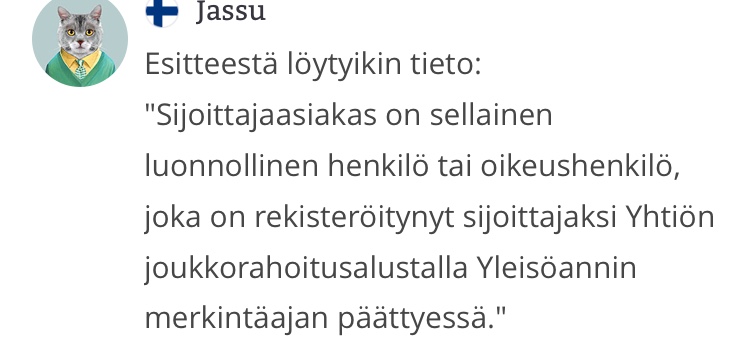
Eli rekisteröityminen ennen merkintäajan loppumista riittää.
Edit: Fiksuja ovat Fellowilla, koska rekisteröidyin em. syystä mutta samalla heräsi pinnana alla uinunut mielenkiinto ryhtyä sijoittamaan FF:ssä. Sen aion ottaa osakesäästämisen rinnalle.
4 Likes
Ei ollu mitään kiperiä kysymyksiä tossa eilisessä setissä.
Saatteko vielä Inderes selville, että miten Puolan lainat ovat onnistuneet menevään perintään noin kovalla prosentilla ja miten jatkossa meinataan saada ne kannattaviksi? Miten jatkossa saadaan uudet alueet heti kannattaviksi, ettei tarvitse sijoittajien troolata hirveään määrää turskaa näistä uusista maista, koska nythän suomilainat on ainoa toimiva vaihtoehto tuolla ja se markkina on jo lähes vallattu.
Miten maailmanvalloitus onnistuu, jos muista maista kuin Suomesta sijoittajat joutuvat yhtä kovalla kädellä ottamaan tappioita kuin esim. Puolasta?
2 Likes
Ihan ulkopuolisena, mutta asiaa vähän tuntevanakin, kommentti:
Luottotappioiden määrään vaikuttaa luonnollisesti saatavilla olevat tiedot sekä niiden tietojen soveltaminen. On todennäköistä, että puolalaisista ei ole ollut yhtä hyvin tietoja saatavilla, eikä niitä myöskään osattu soveltaa yhtä hyvin, kuin mitä tilanne on Suomessa.
Tähän on kaksi ratkaisua:
- Ostetaan kohdemarkkinasta joku pienempi peluri, jolle on jo kertynyt omaa tietoa ja markkinan kulttuuriosaamista
- Mennään ensin pienellä volyymilla harjoittelemaan ja keräämään tietoja. Skaalataan, kun homma toimii. Tässä Lainaamo voi auttaa.
2 Likes
Jep, näin olin itsekin ajatellut, mutta eihän tuo vieläkään näytä mitenkään ihmeellisen hyvin toimivan Puolassa, kun katsoo tilastoja ja tässä on jo 2 vuotta harjoiteltu.
Tilastoja myös vääristää se, että jotkut ottaa vain viikoksi tai kuukaudeksi sen lainan, vaikka laina-aika olisi 2 vuotta ja maksavat sitten takaisin. Tähän, kun lisätään, että joka neljäs jättää maksamatta, niin ei ole hirmu hyvää bisnestä sijoittajille.
Joo, hyvä tietää, jos näin on. Itsellä ei suoraa kokemusta, mutta harkitsen tähän sijoittamista, ja samalla kyllä heräsi pohdinta, että pitäisikö testata myös tuota lainasijoittamista ensin.
DCF-kassavirtalaskelmassa näkyvä vuoden 2017 kassavirta eroaa Fellow Financen omasta kassavirtalaskelmasta muutamastakin syystä. Ensimmäinen syy on, että DCF-laskelmassa lasketaan yrityksen liiketoiminnan generoima ”teoreettinen” kassavirta yhtiön pääomarakenteella oikaistuna. Esimerkiksi rahoituskulut ovat verotuksessa vähennyskelpoisia, mutta DCF-laskelmassa tämä rahoituskulujen vähennyksestä saatava ”verohyöty” oikaistaan kassavirtalaskelmassamme rivillä ”verot rahoituskuluista”.
Toinen syy johtuu osittain meidän Excel-mallin teknisistä asioista. Esimerkiksi olemme laittaneet FF:n taseesta löytyvät lyhytaikaiset ”muut velat” lyhytaikaisiin korollisiin velkoihin. Tästä erästä osa on todennäköisesti myös korotonta velkaa, joten tästä tulee pientä heittoa kassavirtalaskelmassa näkyvään käyttöpääoman muutokseen. Lisäksi käyttöpääoman muutokseen tulee heittoa siitä, että lyhytaikaisten lainasaamisten muutos näkyy meidän mallissa käyttöpääoman muutoksessa, kun taas FF:n kassavirtalaskelmassa lyhytaikaisten lainasaamisten kasvu näkyy investointien rahavirrassa. Pitkäaikaisten lainasaamisten muutos näkyy sekä meidän että FF:n kassavirtalaskelmassa investointien rahavirrassa.
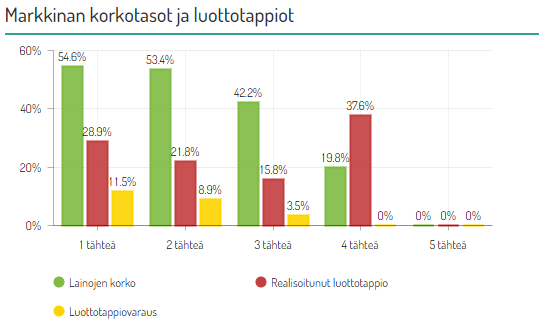
Toinen kysymys koski Puolan toimintoja. Laitoin kysymyksen myös FF:n tj:lle, katsotaan, saadaanko sieltä vielä myöhemmin tarkentava vastaus. Omat ajatukset Puolasta on, että maa on kovien luottotappioiden maa, mutta samaan aikaan lainoilta vaadittavat korot ovat korkeita kompensoiden tätä riskiä. Jos katsoo nykyistä tilannetta, niin 2-3 tähden lainoissa nykyinen korkotaso tarjoaa tilastojen valossa hyvän tuotto/riski -suhteen, mutta 4 tähden lainoihin en tämän tilaston valossa lähtisi sijoittamaan, kun historiallisesti realisoituneet luottotappiot ovat selvästi nykyisen korkotason yläpuolella. Alla kuvio Puolan tämän hetkisestä tilanteesta.
6 Likes