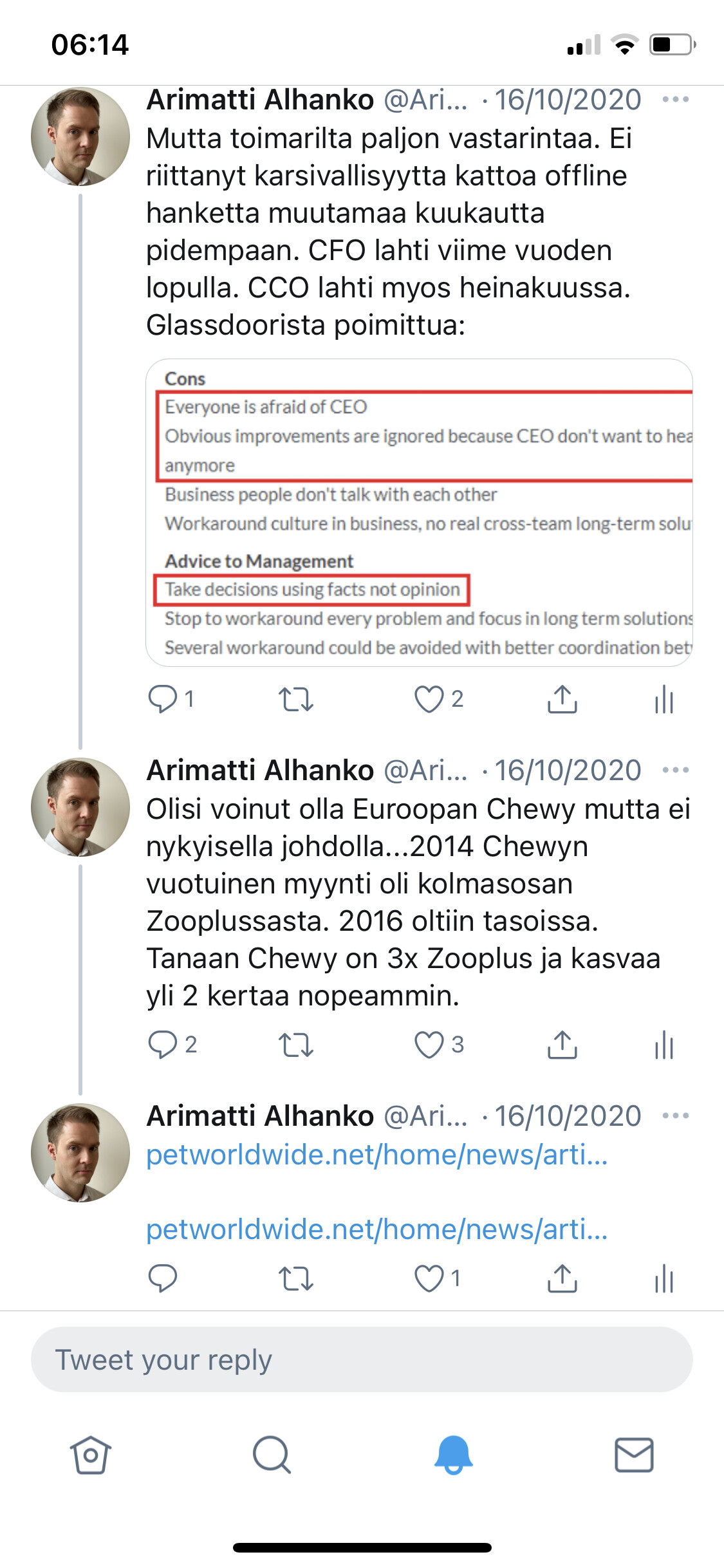
On Saturday, Heikki Keskiväli’s tweet comparing three different pet stocks caught my eye: Musti, Chewy, and Zooplus. I became very interested in Zooplus when Keskiväli highlighted the valuation differences (using P/S metric) between these companies: Chewy 6.5; Musti 2.9; Zooplus 0.7.
So, let’s open a thread here for Zooplus - Europe’s largest pet supply store.
I reviewed the company’s CMD, which provided an excellent overview of their business. I’ve compiled the most interesting slides below, and you can view the complete presentation here → https://investors.zooplus.com/en/investor-relations/reports-and-publications/financial-presentations/
Zooplus is growing rapidly, but profitability has been an issue in recent years. The management had a quite credible strategy for increasing profitability, and in the long term, EBITDA figures of 4-7% can be expected.
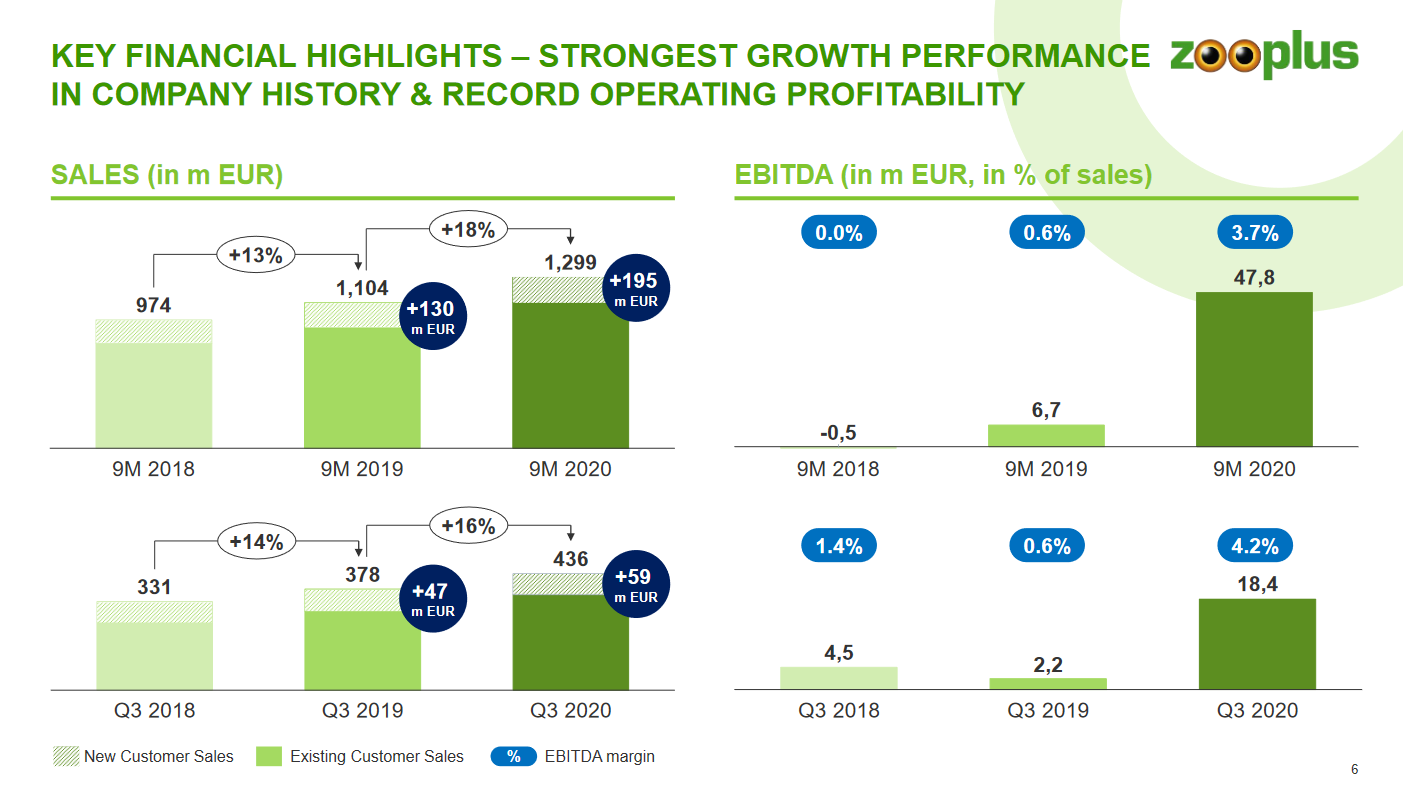
Profitability is still worse than, for example, Musti & Mirri, as the company competes on price. However, the operation cannot be described as low-margin (for retail): The gross margin is on an upward trend and was 30.5% in 9M 2020 (cf. Musti ~44%). The company was also a COVID-19 winner, and the pandemic boosted these figures.
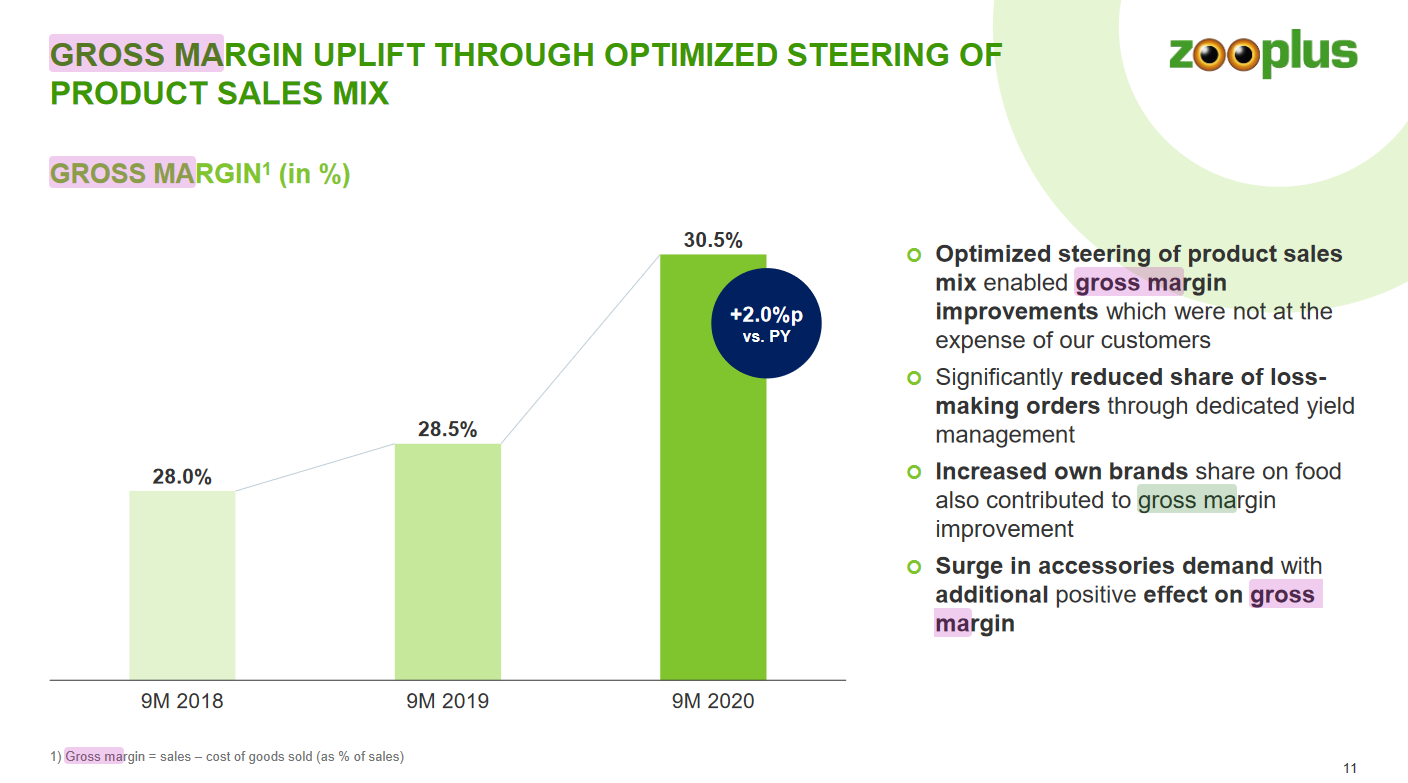
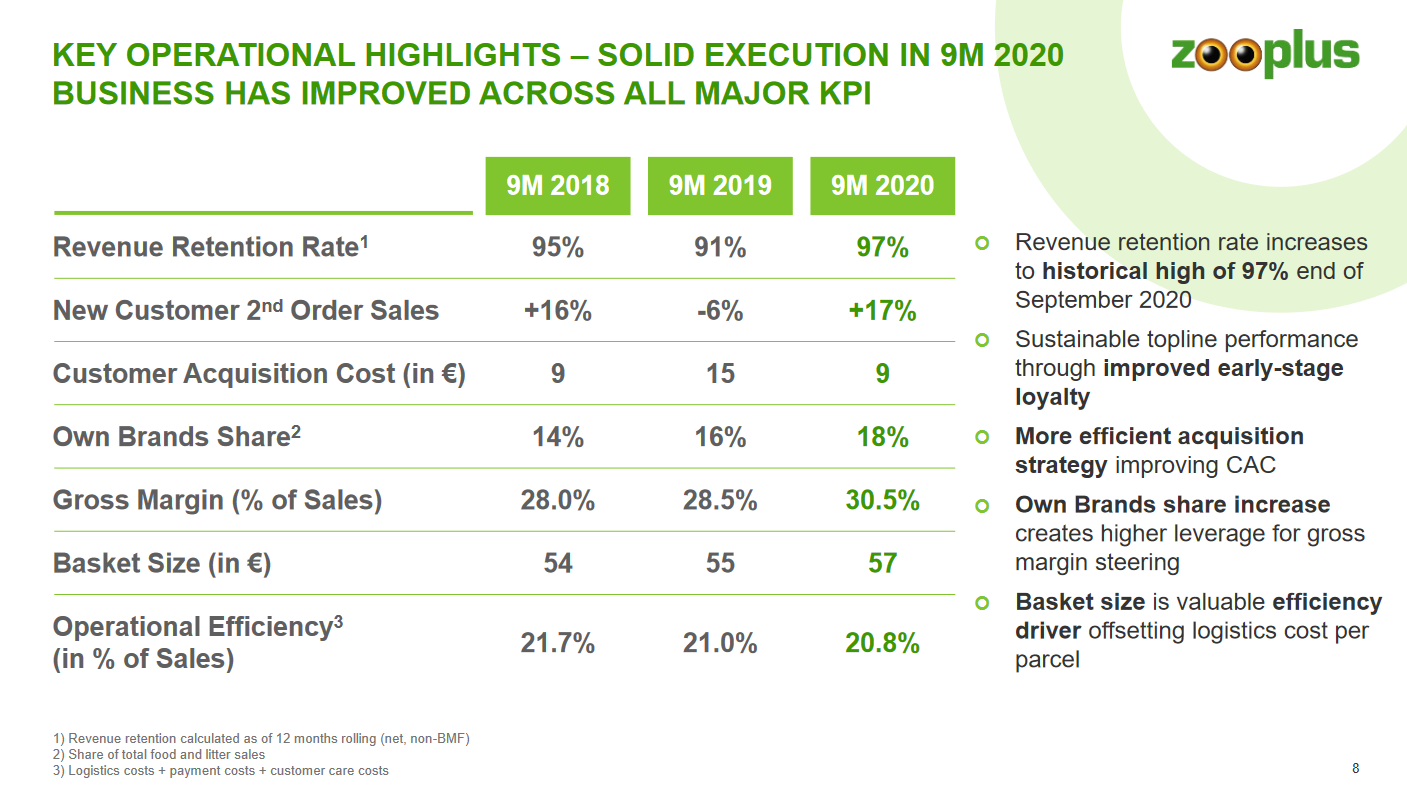
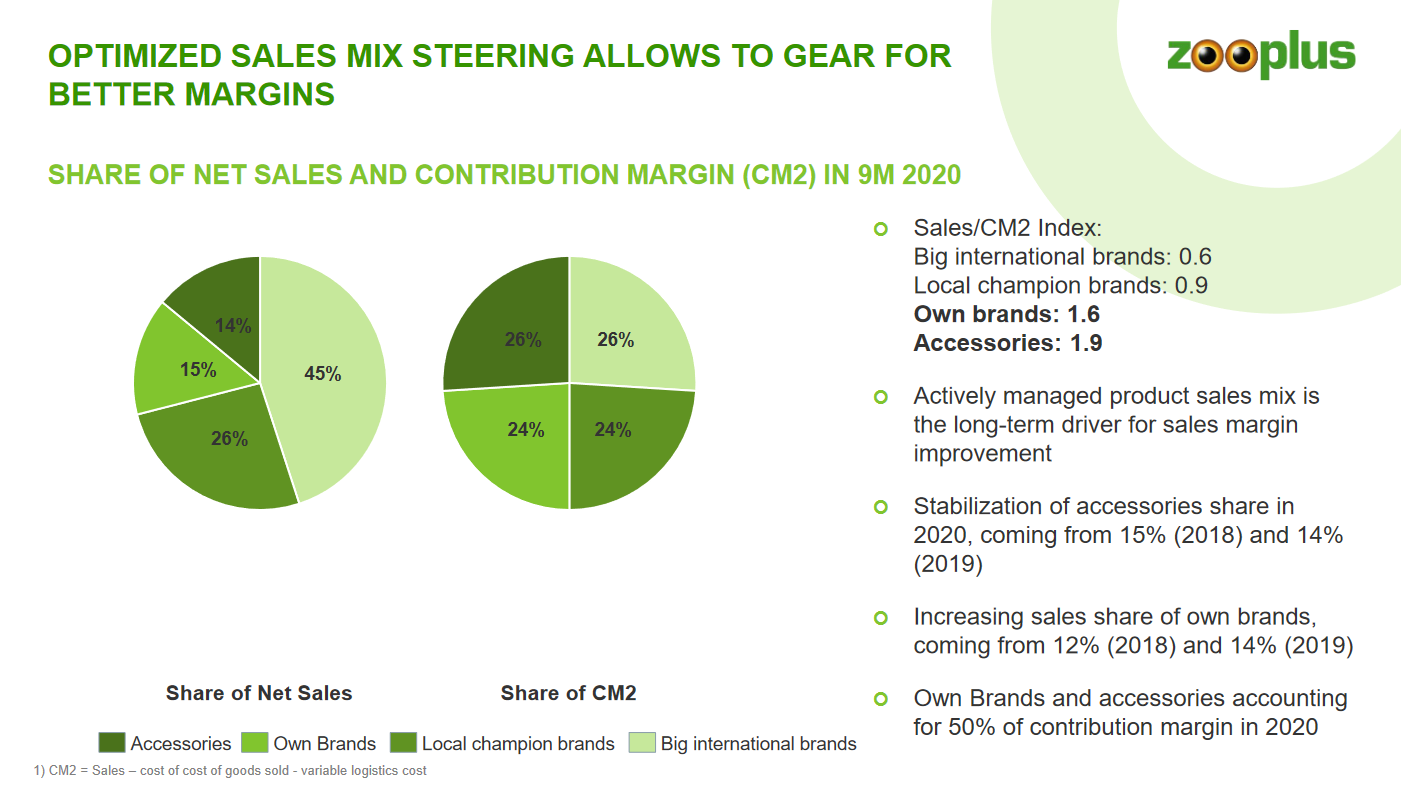
The share of private brands in Zooplus is surprisingly small, but it is trending upwards. For example, Musti’s share of private brands is significantly higher, around 52%. The management emphasized that the share of private brands will be increased, but they are not launching copycat products; instead, they are trying to fill market niches with their brands.
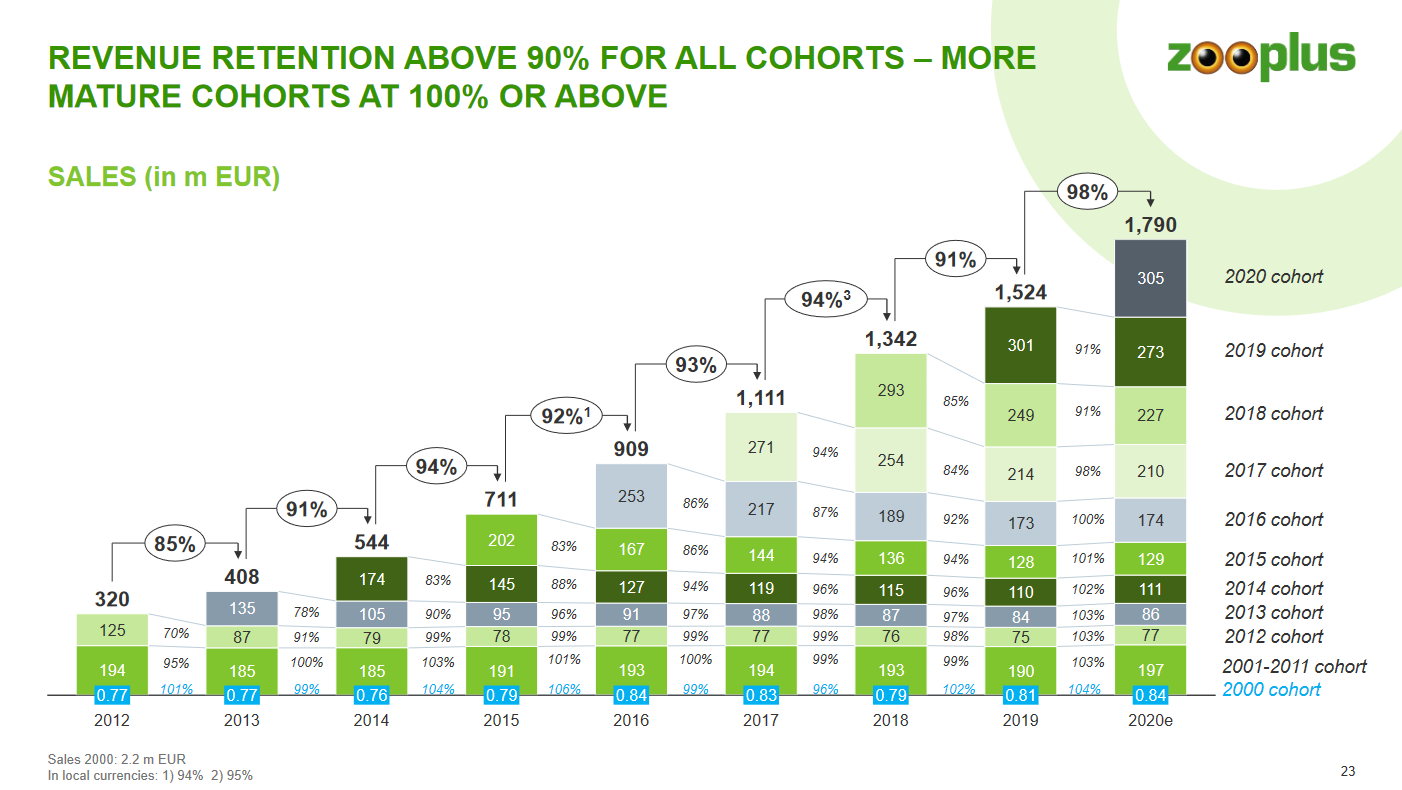
This was, in my opinion, the most interesting graph of the entire presentation. If I didn’t know better, I’d think the graph was from a SaaS company  Zooplus customers are long-lived, so new customers bring revenue streams far into the future. As an extreme example, customers acquired in 2000 still buy almost 40% of the first-year amount (20 years later).
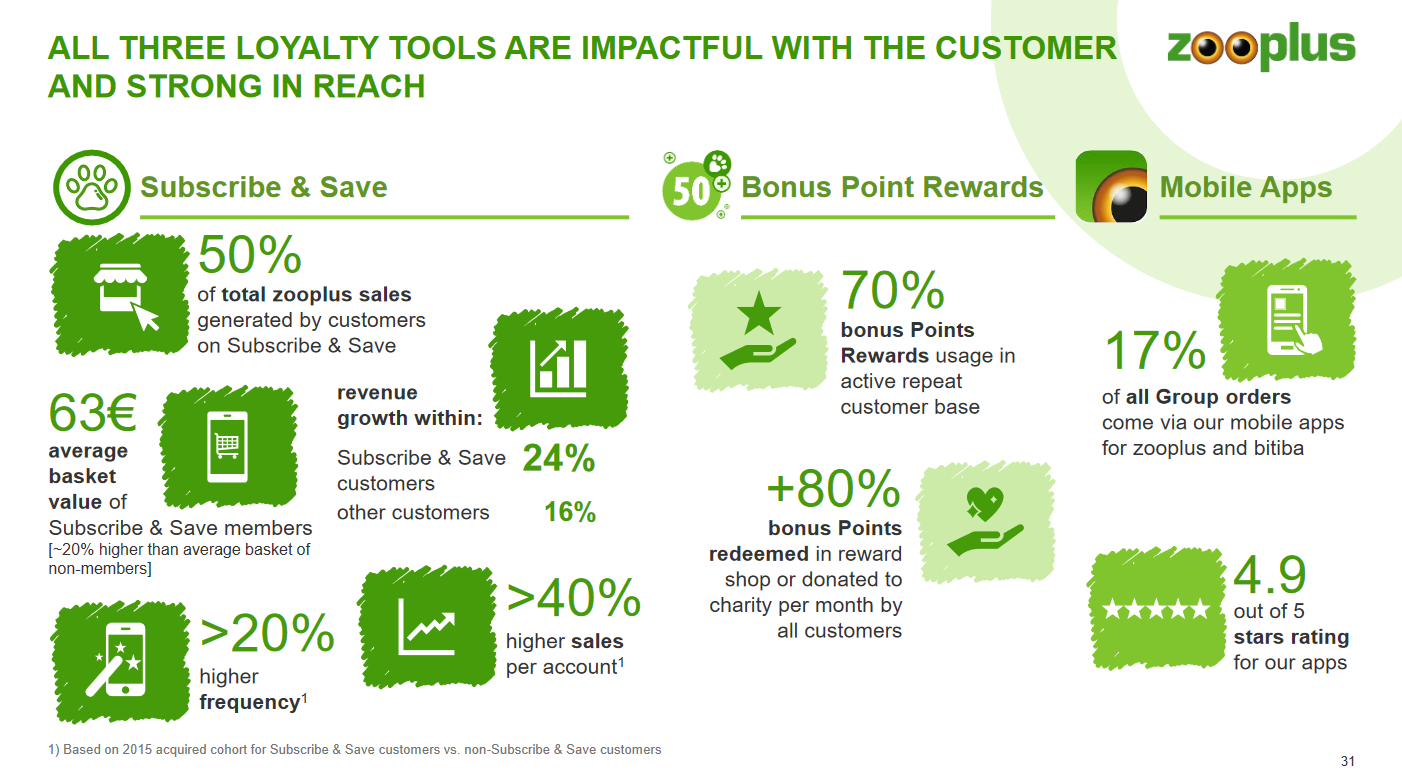
The strategy heavily emphasizes customer loyalty, which the management ranted about throughout the presentation. An interesting figure: up to 50% of sales come from the “Subscribe & Save” service. Customers get a small discount if they make their shopping cart recurring. For example, dog food is automatically delivered every two months. They are heavily trying to sell this service to customers during their first orders.
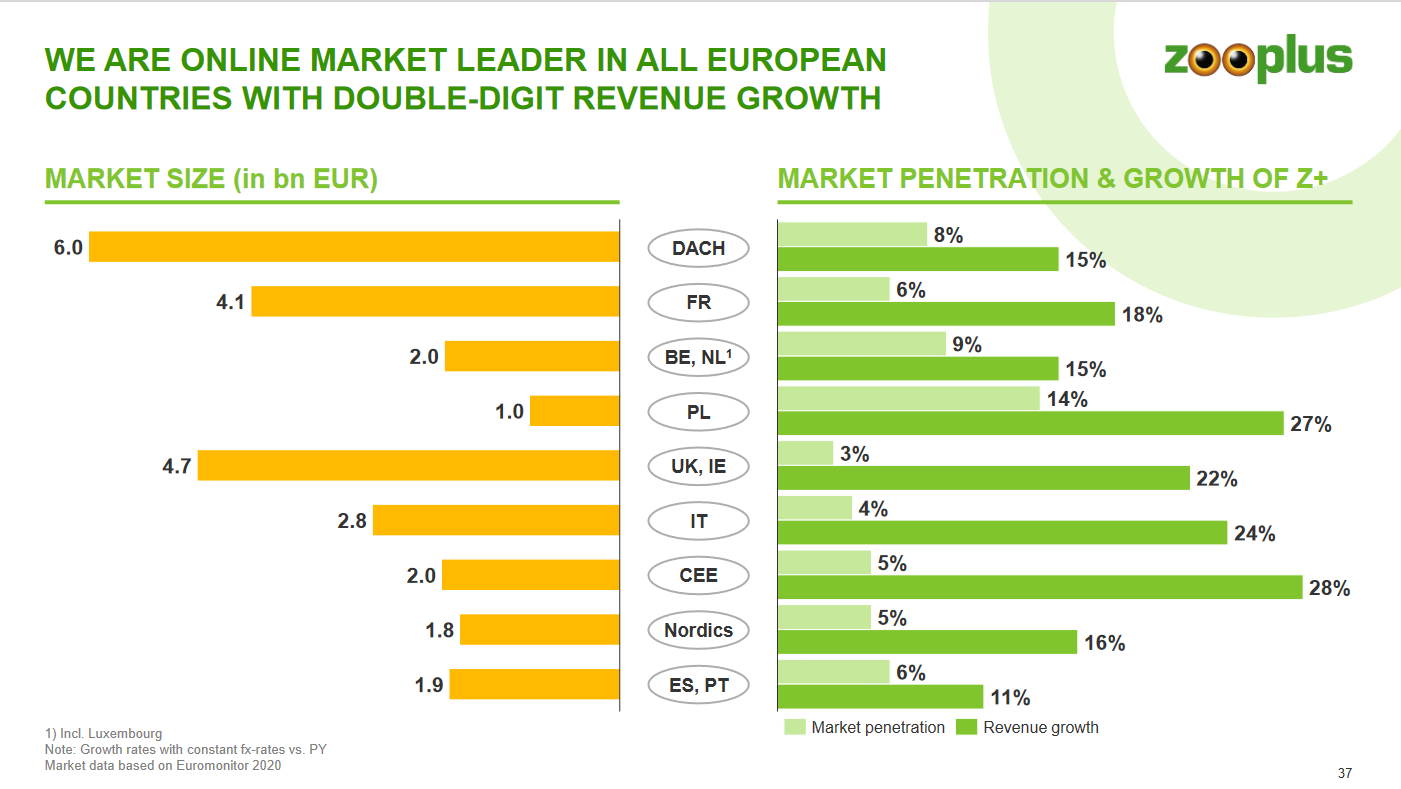
The operations truly cover all of Europe, and growth has been double-digit in every region. There is still plenty of room for growth. The company has a clear focus on staying and growing in Europe.
In the competitors field, one would rather not see Amazon, but there are certain competitive advantages against it.

Increasing sales of private brands and accessories has a really strong impact on profitability.
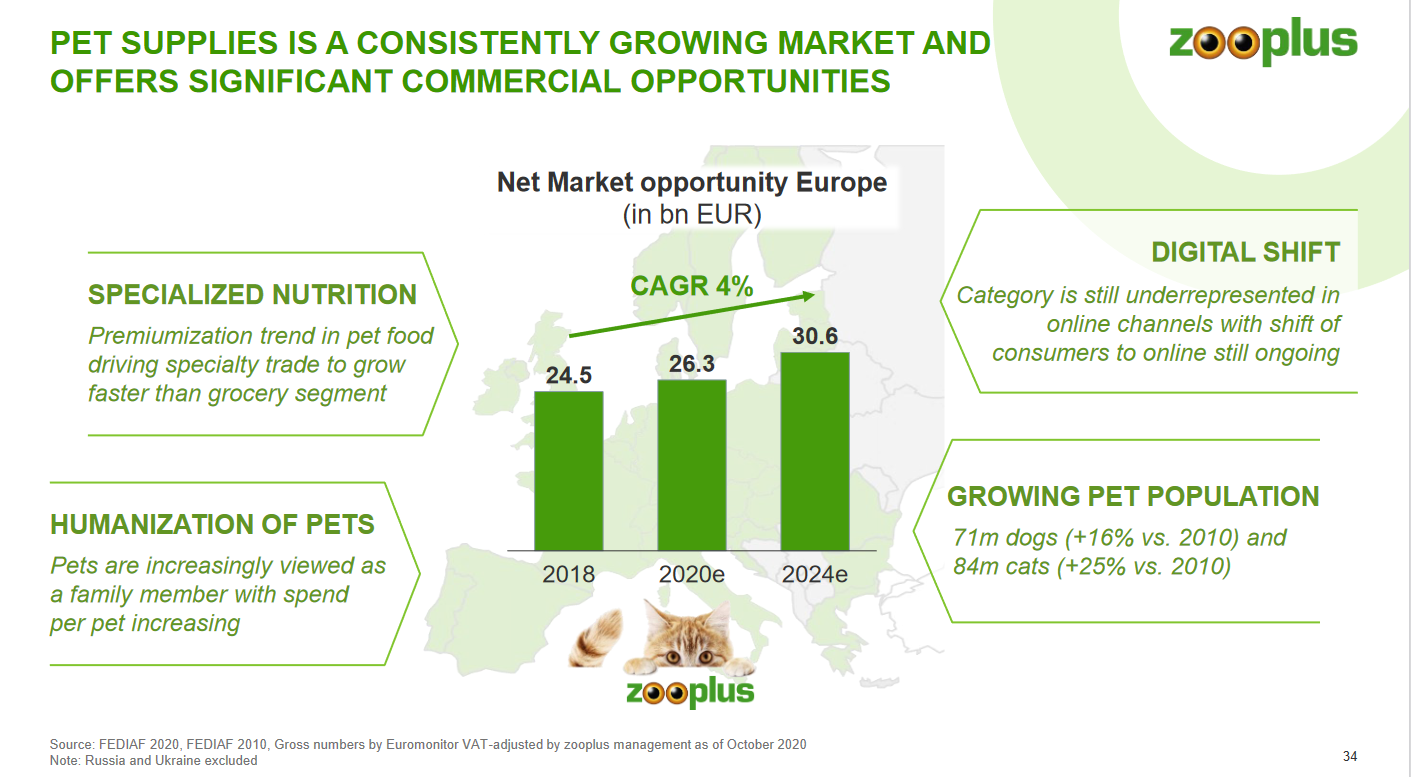
Finally, about the megatrends that are directly fueling Zooplus’s sails.
- The number of pets is increasing
- People are willing to spend more money on pets
- Consumption is shifting online
- Increased price consciousness among consumers
The Inderes (Finnish investment research firm) report on Musti also has a small section on Zooplus:
Zooplus also a fast-growing player in the market
Zooplus, an online store operating purely in the pet market, is Musti’s most significant single competitor online. The company’s market share in the Nordic countries was 3.4% (2018). Along with Musti, Zooplus is clearly the fastest-growing player in the market, and the coronavirus crisis has temporarily accelerated this development. In its H1’20 report, the company announced its Nordic (including Denmark) market share to be already approx. 6%. Zooplus is also the largest pet supply company in Europe, with a turnover of over 1.5 billion.
Zooplus’s cost structure is significantly lower than Musti’s, and we estimate that it also gets slightly better purchase prices and terms from suppliers than Musti due to its significantly larger volumes. However, Zooplus’s competitive disadvantage compared to Musti is that it is clearly more difficult for it to offer a customer-engaging experience and advice, as well as personalized services, like Musti. Zooplus mainly competes against Musti with its lower prices. Due to this, Zooplus’s profitability is clearly lower than Musti’s (H1’20: Gross margin 30.5% and operating margin 3.4%).
I bought a small 3% position myself. Those megatrends are really interesting, the margins are good, and the industry is very defensive (a pet is unlikely to be starved, no matter how bad the recession). I don’t have the capacity to measure the valuation myself. The stock looks expensive with traditional valuation multiples, but for example, P/S seems quite reasonable. The company had a bad year in 2019, when the stock halved from a year ago. Management assured that they learned from the mistakes of that year and, for example, cut a lot of unnecessary marketing. This year, the coronavirus has undoubtedly helped the company, but for me, the management’s strategy was credible enough that I don’t believe 2020 will be just an isolated case.