Nyt kun on herännyt into sijoittamiseen, täytyykin tällaisena noviisina hiukan kysellä neuvoa foorumin guruilta, ettei mene heti metsään:
Vuoden alussa tuli myytyä hyvällä voitolla pois s-pankin rahastot ja siirryttyä sijoittelemaan Nordnetin puolelle halvempien kulujen takia. Aluksi tuli osteltua vain super-rahastoja ja kk-säästöllä etf. Koska noiden superien osto/myynti on kulutonta valuuttaamuunnoksia lukuun ottamatta, niin onko mielestänne järkevää nyt myydä reippaasti -30% miinuksella ollessa pois ja ostaa sitten sillä summalla takaisin, mitä myynti tuottaa kun menee läpi, jotta saa tälle vuodelle luovutustappiota vähennettäväksi aiemmista luovutusvoitoista? Käsittääkseni tässä ei ainakaan mennä veron kierron puolelle, koska rahastojen myynneissä ja ostoissa menee useampi päivä, vai olenko tässä väärässä?
Postissa tuli esitäytetty veroilmoitus ja tuli kysymys mieleen.
Osallistuin viime vuonna Ruotsalaisen yhtiön osake-antiin. Yhden osakkeen hinta oli 4 kruunua ja yhden osakkeen mukana sai yhden warrantin TO1. Olen myynyt nyt yhtiön osakkeet pois sekä warrantit. Verottaja pyytää noiden TO1 warrantien hankintahintaa, niin laitanko tuon 4 kruunua ja pitääkö tuo muuttaa vielä euroiksi ja millä kurssilla? Vai annanko mennä vain hankintameno-olettamalla?
Verottajan sivuilla sanotaan näin:
Hankintamenoksi katsotaan luovuttajan warrantista maksama hinta ja häneltä mahdollisesti perityt kustannukset. Myynnistä aiheutuneet kulut voi vähentää voiton hankkimisesta aiheutuneina menoina.
Vaihtoehtoisesti voi vähentää hankintameno-olettaman , jos se on verovelvolliselle edullisempi.
Mitenkä muuten merkitsette osakkeiden kaupankäyntikulut esitäytettyyn veroilmoitukseen, Nordnetin raportissahan ne on sisällytetty kauppojen kokonaissummaan? Pitääkö nyt vain ottaa kynä kauniiseen käteen ja laskea ne kauppa kaupalta. Esimerkkinä siis vaikka, että olen ostanut osakkeita 1000 eurolla + kaupankäyntikulut 5,- eli 1005 e ja myynyt ne 1250 eurolla - kaupankäyntikulut 5 e eli 1245 e. En tätä aikaisempina vuosina ole tullut edes ajatelleeksi, koska kaupankäynti ollut melko vähäistä ja lisäksi veroehdotuksen korjailu äärimmäisen vastenmielistä puuhaa ainakin minulle🙂 En myöskään ole mikään verotuksen optimoinnin kannattaja eli en juurikaan harrasta veromyyntejä loppuvuodesta.
Taitaa olla et max 1000€ tietokoneen voi vähentää kerralla ja kalliimmat vähän kerrallaan. Vähennys samaan tapaan kun työhuonevähennys, eli jos on muutakin käyttöä niin 50%. Jos kokonaan pörssikäyttöön ja “on näyttöä huomattavien lisätulojen hankinnasta”, niin voi laittaa 100%. Nettikulut voi myös vähentää.
Ei kai siinä periaatteessa merkittävää vaihtoa vaadita että voit vähentää jos vaan voit perustella käyttötarkoituksen
.snfufjdkdb → palstan vaatima pakollinen muutos koska postasin saman tekstin ensin eikä anna laittaa uudelleen ilman muutoksia
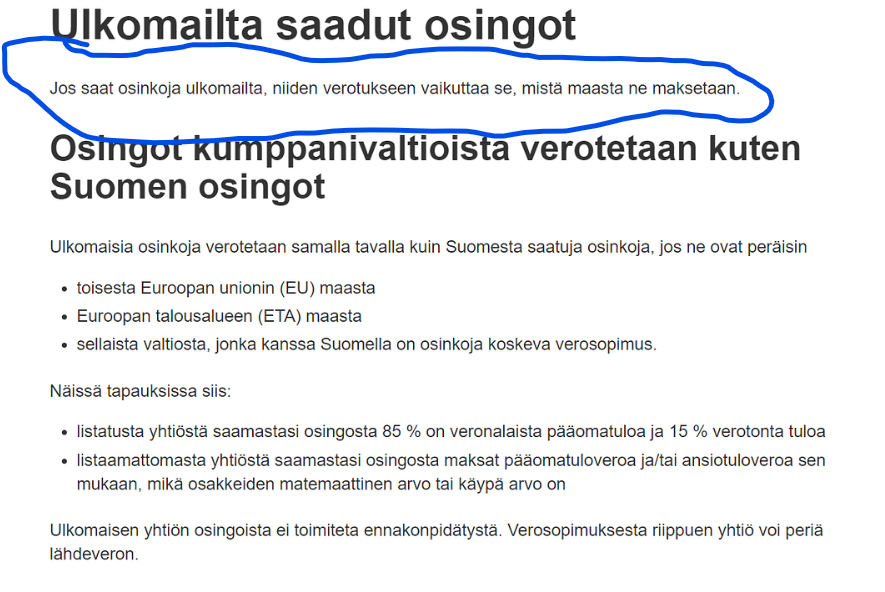
Onko jollain tietoa mihin kohtaan Omavero-palvelussa pitäisi laittaa ulkomaisista osingoista vähennetyt lähdeverot? Nordnet oli perinyt ruotsalaisista osakkeista lähdeveroa, mutta sitä tietoa ei näy Omaverossa vaikka osingon bruttomäärä on sinne automaattisesti tullut. Kotimaisissa lähdeverot on valmiina.
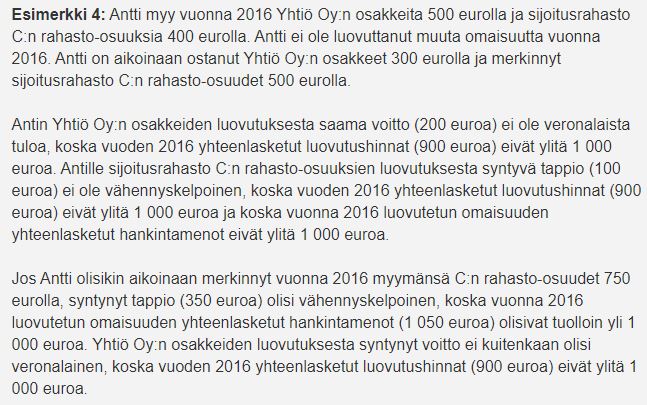
Kysymys arvopaperien luovutusvoiton verotuksesta sekä tappioiden vähennysoikeudesta, että tulkitsenko oikein pienten luovutusten ohjetta kohdassa 3.2 Arvopaperien luovutusten verotus - vero.fi.
On siis selvää, että mikäli kaiken verovuonna luovutetun omaisuuden luovutushinnat ovat yhteensä enintään 1 000 euroa, on luovutusvoitto verovapaa. Myös se on selvää, että luovutustappio on vähennyskelvoton, jos kaiken verovuonna luovutetun omaisuuden yhteenlasketut hankintamenot ovat enintään 1 000.
Mutta mites tilanteessa, kun luovutushinnat ovat enintään 1000e, mutta hankintamenot ovat yli 1000e? Tällainen tilanne voi tulla vastaan silloin, jos myy sekä hyvin paljon nousseita osakkeita, mutta myös erittäin paljon laskeneita osakkeita.
Myyntihinnat yhteensä: 950e < 1000e,
jolloin myyntivoitto osakkeista A ja B yht. +450e kokonaan verovapaa
Hankintahinnat yhteensä: 1100e > 1000e,
jolloin myyntitappio osakkeista Y ja Ö yht. -600e mahdollista vähentää verotuksessa seuraavina vuosina?
Voidaanko tuosta ohjeesta siis silloin päätellä, että kaikki sen verovuoden luovutusvoitot ovat kyseisessä tilanteessa verovapaita (koska myynnit alle 1000e), mutta toisaalta tappiolla myytyjen osakkeiden luovutustappiot saa seuraavina vuosina vähentää (koska myytyjen osakkeiden hankintahinnat olleet yhteensä yli 1000e verovuonna)? Ja saisiko tuossa tapauksessa vähentää koko -600e vai vaikuttaako nuo luovutusvoitot siihen (vaikka ovatkin verovapaita), jolloin vähentää saisi vain -150e?
Mitenkä verotus käsittelee ulkomaan pääomatulot vs kotimaiset pääomatulot?
Itsellä kyse ruotsalaisista pääomatuloista.
Voiko näitä tappioita ja voittoja vähennellä ristiin vai onko ne omia pääomatulolajejaan ja vähennellään ominaan suomi-suomi ja ulkomaat-ulkomaat?
Eli jos piensijoittaja ostaa esim. 500 euron läppärin, jota käyttää osittain sijoittamiseen, niin verottaja hyväksyisi siitä 50 % eli 250 euron vähennyksen? Miten verottaja käytännössä valvoo näitä? Kuitti vaan talteen?
Vähennykset nykyään toimii järjestään niin että kuitit ja omat muistiinpanot pitää pitää olikohan 5v tallessa ja muutoin lyhyt selite vähennysten mukaan vero.fi:hin. Joko kelpaa sellaisenaan, tai teoriassa 5v ajan verottaja voi tulla kysymään perään että oliskos näistä dokumentaatiota.
Juuri kuten @Jarnis sanoi, kuitti talteen. Se lienee sitten veteen piirretty viiva milloin hyväksytään minkäkin suuruinen vähennys mutta tuo 50 % on käsittääkseni yleinen, joka hyväksytään jos on jotain näyttöä sijoitustoiminnasta.
Löysin syventävistä vero-ohjeista kysymykseeni sopivan esimerkin. Eli tuon mukaan olisi ilmeisesti esittämäni tilanne mahdollista (erityisesti esimerkin viimeinen kappale).
 ajaa saman asian.