Half-sheets are also available at the store. Or those in half as well?
4 Likes
A bit related to the topic, however, it’s worth keeping in mind the saying:
‘Penny wise but pound foolish’.
Meaning, one can also over-save without a significant financial impact and at the same time suffer more elsewhere. This is a real risk, at least for me, as I’m very prone to saving.
If you mix other variables into the matter than just finance/energy, the whole thing becomes more complicated. Some things are simply worth investing in – sometimes even a little money.
It can also be that one spends an hour on a relatively small saving: if one can do some work in the same amount of time, one earns more than the money saved. However, saving on fixed costs is almost always worthwhile: for example, 10 euros/month off the phone bill is 120 euros/year. One can, therefore, spend a couple of hours on such savings, for example, once a year. Calculating expenses, on the other hand, is good risk management – it saves both in good and bad times.
On the other hand, one can also combine financial benefit and, for example, exercise: there are an incredible number of storm-felled branches in the adjacent grove, and I have to go there every day with the dog. For the sake of exercise, one can always drag 1-2 branches and chop them immediately. Daily small utility exercise during the current remote work is necessary anyway. If I didn’t get the wood for free and also exercise, acquiring them might not be worth it.
The equation is thus a bit more complex when one puts options into an Excel sheet and considers their realism and true net benefit. Acquiring additional income must also be put in the same table: the question is ultimately about the net cash flow of the economy, so income plays just as important a role.
14 Likes
You can get great tips here. I will definitely participate in the spirit of volunteerism to save energy, and there were already a few other things here that are sensible and even save money.
I gave up plastic shopping bags over ten years ago. A couple of bags have been used hundreds of times already, so the reusable bags I acquired instead are certainly both a money-saving and environmentally friendly option.
For trash bags, I buy trash bags costing about 5c/piece. The savings compared to plastic shopping bags are small, a few tens of euros per year depending on the need for bags, but from small streams… and nature is saved too.
14 Likes
There would be no financial need to save, but I’m participating in a community spirit, especially when it comes to saving electricity. Some of the saving targets are not meant to be implemented, but the list provides some pre-digested ideas on where we could most easily save in our household if our personal or the global situation changes. Some points might be a bit too radical, e.g., heating wash water on the stove, but behind that is perhaps more the idea of how to survive a long power outage. There would probably be savings in that too if money ran out completely.
- Even though a cheap electricity contract is still in effect for the winter, I will reduce electricity consumption during peak load times and shift as much as possible to nighttime hours. (It would be desirable for as many people as possible to participate, at least in a community spirit, even if there is no personal need.) Timed thermostats in electric underfloor heating make this a simple measure.
- Overheating in the bathroom has been reduced. Before, the floor was radiatingly warm; now, there’s only the necessary heat for drying the spaces.
- The hot water tank’s temperature has been slightly lowered, and heating power reduced so that it loads less but for longer (Note: due to legionella risk, the temperature must not be lowered too much).
- We prefer using the microwave during peak loads instead of the oven.
- Garage heating has been completely switched off (no water pipes, etc.), and items that could freeze have been moved elsewhere for storage. This cannot be unconditionally recommended for everyone if they don’t know if the structures can withstand being cold, but others can certainly turn down the heat at least.
- Firewood has been acquired well in advance, and we will try to heat as much as possible with an air-source heat pump (ASHP)/fireplace combination before electric heating kicks in.
- The ASHP setting will be set to even 23-24°C during frosts (it never reaches this, but it operates at maximum capacity and doesn’t idle unnecessarily).
- Use the baking oven in conjunction with the fireplace. If not for actual cooking, at least reheating food is possible.
- The wood stove has never been used during our time but is on standby at least for power outages. It can be put into use otherwise if needed.
- The idea, during very severe frosts, is to reduce the house’s ventilation to the minimum, e.g., overnight or when absent (i.e., the “Away setting”). However, never if someone has just showered in the evening, to get rid of moisture. (Ventilation must never be switched off completely!)
- Eliminate unnecessary joyrides and drive as much as possible with the household car that has the lowest consumption. Put hobby equipment into storage if not used or sell it if money is tight.
- Economical driving style! (Does not mean puttering along at a granny’s pace, blocking traffic.)
- Cancel streaming services and newspaper subscriptions.
- Close the fixed internet connection and use the internet only via phone.
- Replace lights with LEDs as they break (of course, this doesn’t save money in the cold season).
- Schedule outdoor lights instead of burning them “24/7” (partially LED lights, so marginal impact but easy to implement).
- Minimize lingering in the shower. If the power goes out, place a sturdy metal container on top of the wood-fired stove to heat some wash water. If there were no wood-fired stove, at least a pot of water could be heated on the wood stove or in the fireplace, which, when mixed, would be enough for some kind of washing.
- Selling unnecessary household items.
- Trimming unnecessary insurance or weakening terms. (It’s not worth having comprehensive insurance on a sufficiently old car, etc.)
- Postponing or canceling new acquisitions. Buy items used whenever sensible, especially electronics. Car spare parts from scrapyards or online, etc.
- Scrutinize grocery purchases and monitor unit prices. No impulse purchases outside the shopping list. Freeze extra food in time and don’t let it mold and throw it away.
- Clothes shopping from “discount stores” and forget designer brands.
- Learn to mend clothes instead of throwing them away.
- Forget all kinds of lotteries and scratch cards.
- Don’t live in a T-shirt indoors in winter. Wear a proper wool sweater and even long johns, so the drop in indoor temperature doesn’t feel so bad.
- Reduce other services/fun, e.g., car tires out of the hotel, no grocery bag orders, no Wolt orders, no restaurant evenings, less alcohol consumption at home too, no foreign trips (domestic and Airbnb instead if you absolutely must go somewhere), more home workouts instead of going to the gym.
23 Likes
This is also a saving tip if you don’t use the service: Leave the church
29 Likes
It already has a good list of cuts, something for everyone 

2 Likes
I wish one could completely opt out of funding the church. If I recall correctly, 120 million still goes to church activities every year, even outside of church tax.
5 Likes
This is going off-topic, but some of that money would go from the state anyway, for example, to manage funerals, which the church runs for non-members as well.
"As of 2016, the payment of corporate tax shares to parishes ceased, and was replaced by funding from the state budget appropriations.
This funding finances the statutory duties of parishes: burial services, population registration duties, and the maintenance of culturally and historically valuable buildings and movable property. The amount of funding, tied to the consumer price index as stipulated by law, is 114 million euros, which is paid to the Church Central Fund. Concurrently, the taxation costs paid by parishes decreased by a total of 6.2 million euros. The parishes’ share of taxation costs decreased from 4.7 percent to 3.4 percent.
Use and payment of state funding to parishes in 2021
The amount of state funding was increased by the index for 2021 and is approximately 117 million euros. The state pays the sum to the Church Central Fund (Church Council)."
2 Likes
I’m not sure if this has been mentioned already: when you get paid, always remember to put money into savings first and then live off the rest. And since I traditionally collect upvotes here, you should stop all paid analysis services, newspaper subscriptions, and other unnecessary things, and occasionally compare stockbrokers.
9 Likes
Here’s a very valuable tip for every spot electricity consumer living in an electrically heated building:
Set your water heater to only heat at night from 2 AM to 6 AM.
Depending on the situation, you can also set the bathroom floor heating to the same time, though it’s important to make sure the floor is completely dry in the morning. If it’s not, a longer heating time is needed.
The water heater can easily consume 50-80% of a home’s electricity, especially if many people live in the house. Many heaters are technically set to a night timer, but night electricity already starts at 11:00 PM, when electricity tends to still be very expensive. This can save €5 per night, and when you multiply that by practically all the days of the year, the savings are very significant.
Timers for the electrical cabinet can be obtained from electrical supply stores. Installation requires an electrician in an apartment building, at least if you don’t know what you’re doing. If you have some knowledge, the timer itself can be bought for about €40. It pays for itself within the first week.
4 Likes
In our family, inflation is not (yet) really visible, as the mortgage interest rate only updates at the beginning of the year. In addition, the price of the new electricity contract will also be updated only a little later. Of course, we have to prepare for these, but these are not any extraordinary changes, even though the percentage increases are several hundreds of percent per month. We don’t have a car, so the price of petrol is only indirectly reflected in the rising cost of some products, if at all. A car and its associated costs are the most unnecessary expense item in many households, but there is already a rather one-sided thread on that topic on this forum.
The reason inflation does not scare us is that, relative to our income, our home is a reasonable size, so the loan amount is moderate. I don’t understand newspaper articles that claim that cramped living means that each family member does not have their own calculated room. For example, a family with 3 children does not need three children’s bedrooms until the middle child needs their own bedroom. In practice, that extra room in many families is used as a home office or for other purposes, meaning the square footage is wasted.
In addition, older generations, in particular, tend to get stuck in their large homes, and when retirement days arrive and monthly incomes drop, housing suddenly takes a larger share of monthly pension income, even if the home is debt-free. One reason for this, of course, is the transfer tax, which does not encourage moving to a suitable home as life circumstances change. The benefits of this tax are likely smaller than its drawbacks. It would be advisable to abolish this tax and correspondingly raise property taxes.
There are genuinely good small tips in this thread that can save tens or even hundreds of euros a month. However, the bigger savings are made when big money is put on the table – that is, when buying a home, a car (or two). Those choices are the most important.
8 Likes
This. Even though I switched from spot electricity to a fixed-term contract of 0.06e/KWh at the end of last year, I treat electricity consumption according to what it costs on the spot market at any given time. Someone always pays for it – and there might even be a shortage.
17 Likes
I’ll bring a slightly different perspective to this thread. Perhaps the right place for this post would be the “investment goals” thread.
I started saving/investing for a “rainy day” to provide financial security during difficult times. Even though I’m currently in a financial situation where my income exceeds my expenses, the general economic situation is challenging. However, I haven’t compromised my lifestyle at all, and I won’t. I don’t see any point in saving/investing if you can’t use that buffer during tough times. So, what I’m “saving” now is that a smaller amount of money is being directed towards investments than before. I’m also prepared to draw down the buffer to maintain my current standard of living.
If I absolutely had to cut back, I suppose eating out, traveling, buying designer clothes, and drinking premium whiskies would be reduced.
14 Likes
That is important for the overall national economy. If everyone tightens their belts, whether there’s a need or not, a recession and its worsening are inevitable. The recession of the 1990s left an indelible mark on my memory, when the economy truly came to a halt. Hopefully, we won’t have to experience anything similar again. Of course, in the 1990s recession, there was a small group of beneficiaries whose own and their loved ones’ income levels remained unchanged, but there weren’t many of them.
5 Likes
This was a good perspective. There was just a poll somewhere on this forum asking how much buffer people had for a rainy day, and most seemed to answer something like a month’s salary. I, for one, definitely consider my portfolio and stock holdings as a “buffer”; otherwise, there’s no real point in sacrificing one’s life by saving money for stocks and growing a stock portfolio if you don’t consider it a buffer and aren’t willing to liquidate those holdings for consumption ever  It’s as if the stock portfolio is some forbidden fruit that you can’t touch until you’re on your deathbed.
21 Likes
It’s good to have a reasonable amount of cash or equivalents as a buffer. If your buffers are only in stocks or other similarly volatile asset classes, you might be forced to liquidate at an inopportune time.
10 Likes
Inflation hasn’t hit me hard yet, but I’ve started various savings measures and thought about other possible areas to save.
-
Commutes, etc., by bike. These have already been 90 percent like this anyway. Last winter was so miserable for cycling, though, that I resorted to using the car too often. The distance is only 10 km, so I really shouldn’t use the car.
-
Morning coffee at work. No need to buy as much coffee for home, and it saves a little electricity.
-
Floor heating in the bathroom lowered.
-
I can shower at the gym, even if it’s a bit messy, and use the sauna at the swimming hall after workouts. There would also be a shower option at work.
-
Outdoor lights mostly off for now. Soon, I’ll have to put some lights on, but it’s probably unnecessary to have them all blazing.
4 Likes
Loan amortization flexibility, at least for me. That provides an extra buffer if needed. Secondly, reducing the savings rate. Selling loss-making stocks and realizing tax benefits.
I don’t feel like I need to cut back on much; we just keep the economic wheels turning.
1 Like
Let’s add something else
Against the rising food prices:
-Oatmeal for breakfast
-Reduced portion size for warm meals (usually eat too much. Everyone experiences this at buffet tables)
-Boil eggs for several days at once
-Reduced other drinks and increased water intake (in summer, I surprisingly spend a lot of money on mineral water)
Other observations:
-Necessary outdoor lights to LEDs and “unnecessary” ones out of use
1 Like
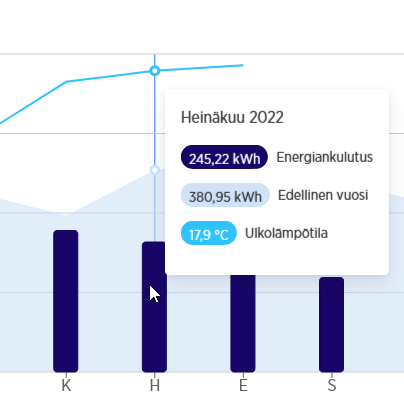
If you really want to be frugal, remember to always turn off the TV by pulling the plug from the wall or via an extension cord with a power button. I tested this in the summer, and electricity consumption significantly decreased compared to previous similar months. I can’t say precisely what the TV’s share was, but it’s practically the only major power consumer, so at current prices (see post below), it costs around €30/month (a wild guess) if you leave it in standby mode (i.e., power off from the remote control) instead of switching it off completely. And this is not some 90s CRT TV
Even with these modern TVs, the “power-saving mode” is nothing but marketing talk.
1 Like