Isoin kysymys tähän onkin vaatiiko Teslan toimintamalli autonomiseen ajamiseen muuta dataa kuin kamerat? Voiko liiallinen ns. Anturifuusioiden tuoma data heikentää tietokoneen päätöksen tekoa nopeissa tilanteissa? Itse en tiedä näihin oikeaa vastausta, mutta luotan Teslan asiantuntemukseen heidän ratkaisussa.
2 tykkäystä
Reaalimailmassa voi kyllä tulla vastaan tilanteita, missä poistamalla yksittäisen anturin järjestelmästä lyhyellä aikavälillä lopputulos paranee. Uusien antureiden määrän lisääminen ei myöskään kaikissa tilanteissa enää tuo riittävästi hyötyjä kustannuksiin nähden ja systeemin monimutkaisuuden kasvattamisella on myös tietysti hinta ja joskus sillä luodaan uusia ongelmia, mitä yksinkertaisemmissa systeemeissä ei ole. Pääsääntönä kuitenkin tekoälyhommissa enemmän dataa on parempi kuin vähemmän dataa, erityisesti jos nämä datalähteet poikkeavat fundamentaalisesti toisistansa. Vastakkaiseen argumenttiin törmää lähinnä vain Teslasijoittajien keskuudessa.
Kuvittele, että olet diplomi-insinööri ja Musk on palkannut sinut rakentamaan Teslaan 100 % kamerapohjaisen järjestelmän, joka ilmoittaa kuljettajalle ajo-olosuhteista ja antaa siihen perustuvia suosituksia. Sinulla olisi silloin työn puolesta velvollisuus kertoa Muskille, että hänen toivomansa järjestelmä voidaan kyllä rakentaa ja siitä varmasti tulisi ihan toimiva, mutta tekoälyä voitaisiin parantaa lisäämällä systeemiin kameran lisäksi muitakin antureita.
Esimerkiksi lämpötila-anturi ja ilmankosteusanturi voisivat tukea kameran tekemiä havaintoja. Tai vaikka ihan se, että haettaisiin sääennusteita laativan yhtiön verkkosivuilta paikallissää ja otettaisiin tämä tieto huomioon, kun malli tulkitsee kameran tuottamaa kuvaa ympäröivästä säätilasta. Vaikka voisit siis sinänsä rakentaa 100 % kamerapohjaisen järjestelmän tähän tarkoitukseen, niin aika yksinkertaisilla lisäasioilla saadaan iso vaikutus lopputulokseen.
Täysin kamerapohjainen järjestelmä on ehdottomasti valtavan hyvä ratkaisu monenlaiseen perusajotilanteeseen, mutta autoillessa tulee vastaan tilanteita, missä kamera on heikompi kuin jokin toinen anturi ja pahimmillaan täysin hyödytön, esimerkiksi sankka sumu. Koska autoillessa virheiden vaikutus henkilöturvallisuuteen on valtava, ei näitä voida ohittaa olankohatuksella ja todeta, että kyllä autosysteemi pysyy tiellä leijonanosan ajasta. Ellei sitten rajoiteta autoiluympäristöä esimerkiksi aidatulle lentokenttäalueelle tai lopeteta autonomista ajamista kameralle epäedullisissa olosuhteissa.
Vaikka kamera säilyisikin pääasiallisena tapana hallinnoida autonomisesti ajavaa autoa, niin näihin tilanteisiin missä kamera-anturin tuottama data on heikkolaatuista ja epäkelpoa, on uuden anturin lisääminen looginen ratkaisu. Tietty jos ideologiset syyt estävät tämän, niin sitten tiedossa on verta, hikeä ja kyyneliä, kun yritetään pakottaa toimimaton työkalu ratkaisemaan ongelmaa mihin sitä ei ole tarkoitettu.
30 tykkäystä
Kenellä nyt sitten on enemmän (hyvää) dataa ja kenellä vähemmän? Jos Teslalla on puhdasta kameradataa koko FSD-fleetistä sisältäen pari miljoonaa autoa ja Waymolla on sensor noise-dataa 1500 autosta (hinnaltaan 150k), kummalla on parempi tilanne lähteä kouluttamaan konetta? Tesla käyttää LIDARia robotaksien koulutuksen varmistamisessa, joten kameradatan päätökset voidaan haastaa ja kouluttaa uudelleen.
Jos tekoälyllä koulutuspohjana on kaikki raaka sensoridata erityyppisistä sensoreista yhteismitallisena, siitä ei varmasti hyvää seuraa. Ymmärtääkseni Waymolla on perinteiset algoritmit (Kalman Filters) alemman kerroksen sensorifuusiossa ja sitten kun “tilannetotuus” on muodostettu, tekoälyä koulutetaan vasta tämän ylemmällä tasolla ja näin liikenneobjektit saadaan luokiteltua.
Itse pidän mahdollisena, että Tesla törmää Visionissa vaaralliseen edge-caseen siinä, että robotaksin validoinnissa LIDAR (tai tutkat) näyttävät tilannetta, jota kameroilla ei millään saada näytettyä tai koulutettua. Onko sitten tälläisen tilanteen seurauksena haamujarrutus, uusi HW-versio vai koko bisnescasen romahtaminen? Jää varmaan nähtäväksi.
1 tykkäys
Miksi sankassa sumussa (tai muissa olosuhteissa jotka on ihmisillekin vaikeita/vaarallisia) pitäisi ylipäänsä pystyä ajamaan? Tai kääntäen: miksi kamerapohjainen järjestelmä ei pystyisi ajamaan vähintään samoissa olosuhteissa kuin ihminenkin?
Kamerat ja AI näyttäisi olevan Teslan valitsema tie Optimuksen kohdallakin, meni syteen tai saveen: Inside the Strategy Shift at Optimus, Tesla's Humanoid Robot Program - Business Insider
2 tykkäystä
Kysehän on kuitenkin siitä, mitä kamerat “näkee” ja kuinka ohjelmisto siitä kykeneen tekemään oikeita päätöksiä.
Mitä tulee erilaisen informaation määrään ja sen mahdolliseen haittaan, niin onhan niitä kameroitakin autossa useampi kuin yksi.
No joskus on vaan pakko ajaa kelissä kun kelissä. Tää oli kyllä ehkä tyhmin argumentti tähän saakka luetuista.
Fakta on se että pelkällä kameralla ei pärjää riittävän hyvin . Sen verran vietän aikaa liikenteessä että tulee tilanteita kun ei vaan kamerat näe . Mutta ihminen näkee. Riittää että otat nykyisen teslan ja lähdet näin aamukasteen aikaan liikkeelle. Auto on sokea kun kamerat on huurussa .
24 tykkäystä
Jos näin käy, niin tämä on oikeastaan itseaiheutettu ongelma. Teslallahan olisi mahdollisuus kerätä myös muista antureista dataa varastoon ja koulutusta varten, jos niitä antureita oltaisiin ylipäätänsä asennettu autoihin. Musk on monta kertaa lyönyt kaiken peliin johonkin tiettyyn teknologiaan ja sitä kautta voittanut isosti, mutta kun Tesla on ollut pitkään markkinajohtajia autonomisessa ajamisessa, niin en oikein ymmärrä, että miksi selkeästä etulyöntiasemasta pitäisi ottaa noin merkittäviä teknologisia riskejä. Upporikasta ja rutiköyhää kannattaa yleensä pelata, jos ei ole paljoakaan hävittävää. Tietty jos tässä onnistutaan, niin onhan se palkintokin mielettömän kova, että jää tosiaan nähtäväksi 
Näinhän voidaan tietysti tehdä, että todetaan Teslan olevan autonomisesti ajokelvoton tietyissä olosuhteissa. Jos tämä jää siitä kiinni, että ollaan säästetty jostain anturista, niin ei kuitenkaan vaikuta pidemmän päälle fiksulta toiminnalta. Sumu on siitä hyvä esimerkki, että se on yksiselitteisesti kameroille mahdoton ongelma ratkaistavaksi. Esimerkkejä on tietysti muitakin sumun ja täydellisen ajokelin välillä, mutta tuo riittänee demonstroimaan niitä ongelmia mihin täyskamerajärjestelmät törmäävät.
Mielestäni ihmisen ajokyvyn suora replikointi yhden suhde yhteen ei ole mielekäs lähestymiskulma autonomiseen ajamiseen. Autonomisen auton osalta on mahdollista suunnitella auto, jolla on ihmisaisteihin nähden ylivertaisia kyvykkyyksiä. Esimerkkinä nyt vaikkapa tutka-aallot, mihin ihmiskeho ei kykene. Näillä yli-inhimillisillä kyvyillä voidaankin sitten kompensoida sitä, että me emme pysty asentamaan jokaiseen autoon aivojen veroista ympäristöä mallintavaa itseoppivaa supertietokonetta. Toistaiseksi joudutaan pärjäämään huomattavasti tuhnummalla tekoälysuorittimella, jonka pitäisi kuitenkin olla valituissa tilanteissa ihmisen veroinen tai mieluiten ihmistä parempi ajokyvyltänsä.
15 tykkäystä
Väite onkin että suorituskyky on huomattavasti ihmistä parempi koska kamerat näkee joka suuntaan 24/7 paremmin kuin ihminen ja tekoäly ei väsy eikä hermostu eikä päihdy.
Tähänhän kaikki Tesla-keskustelu nykyään typistyy. Juupaseipäs-jankkausta niin kauan kunnes jollain tapaa osoittautuu että ratkaisu ei vaan toimi tai sitten se toimii ja fyffeä tulee rekkalasteittain.
Rekoista puheen ollen jännä nähdä mitä antureita Semi sisältää. Rekkojen jarrutusmatkat etenkin jäisellä tiellä on sen verran pitkiä että näinköhän vision only riittää.
FSD:llä on ajettu miljardeja ja miljardeja kilometrejä. Jos aamukaste olisi ongelma niin kuvittelisi että YouTube olisi täynnä My Tesla can’t handle morning dew-videoita.
3 tykkäystä
Näinhän on tehty ja aikaisemmin on myös käytetty fuusiota sekä Kalman algoritmeja. Uusissa Model S/X on tutka mukana ja FSD:n käytöstä on voinut verrata tutkatietoihin. Jos interventiota on tullut, tutkatiedoista voi verrata, olisiko tutkalla homma sujunut ilman interventiota. Musk on sanonut, ettei tutkasta ole ollut hyötyä ja siksi ovat ottaneet sen pois päältä. Jos kuitenkin joku näyttää toisin esimerkiksi tietyssä sääolosuhteissa, Teslan on helppoa kääntää tutkat päälle uusissa S/X FSD-autoissa ja varmistaa tilanne käytännössä.
Teslan tapa kehittää teknologiaa on laittaa tiimejä kilpailemaan eri lähestymistavoilla. Siksi on todennäköistä, että LIDAR- ja tutkatiimiä on ollut vuosien varrella mukana kilpailussa saada parempia tuloksia kuin kameratiimi on saanut.
Waymo on jo vastannut aikaisempaan väitteeseen, että tekoäly toimisi paremmin isommalla sensorimäärällä ja vain Teslasijoittajat vänkäisivät vastaan. Waymossa on vähennetty sensorien määrää koko ajan. Waymo ei myöskään käytä tekoälyä matalan tason sensorifuusiossa.
2 tykkäystä
Tätä mä olen myös miettinyt. Meillä käytetään töissä tekoälyä paljon, sen tavoitteena on ”löytää neula heinänsuovasta” mahdollisimman tarkasti. Olen huomannut, että suurimmalla osalla ihmisistä lähtökohtana olisi lisätä enemmän ja enemmän dataa etsimään sitä neulaa.
Tosiasiassa välillä ollaan saatu paljon parempia tuloksia kahdella mallilla joista toinen yrittää tunnistaa että ”onko se neula” ja toinen yrittää todistaa että se ei ole sitä.
1 tykkäys
Se ei ole mahdotonta, koska Tesla ei pysty siihen
Osa ongelmasta näyttää olevan se, että Musk ajattelee jonkin asian olevan toimimaton, koska Tesla ei saa sitä toimimaan, eikä hän halua myöntää, että muut ratkaisevat anturifuusio-ongelman.
Tesla ei yksinkertaisesti pystynyt ratkaisemaan anturifuusiota, joten se keskittyi autonomian saavuttamiseen pelkästään kameranäkemyksen avulla. Ne, jotka jatkoivat asian parissa työskentelyä, ovat kuitenkin edistyneet merkittävästi ja korjaavat nyt työn hedelmiä.
Waymo ja Baidu, joilla molemmilla on tason 4 autonomiset ajojärjestelmät kaupallisessa käytössä ilman valvontaa, toisin kuin Teslalla, ovat investoineet voimakkaasti anturifuusioon.
Amir Husain, tekoälyyrittäjä, joka toimii IBM Watsonin ja UT Austinin tietojenkäsittelytieteen laitoksen neuvottelukunnissa, viittaa edistysaskeliin Kalman-suodattimien ja Bayesilaisten tekniikoiden käytössä anturien kohinakovarianssin ratkaisemiseksi.
Hän kommentoi Muskin lausuntoa tutka- ja lidar-antureiden käytöstä:
Kyse ei ole kahden anturin välisestä binäärisestä erimielisyydestä. Se tuottaa paremman arvion kuin yksikään yksittäinen anturi voi tuottaa yksinään. Niillä kaikilla on virhemarginaali. Fuusio auttaa vähentämään tätä.
Jos Muskin väite pitäisi paikkansa, miksi ihmisaivot käyttäisivät silmiä, korvia ja tuntoa arvioidakseen kohteen sijaintia? Miksi lentokoneet yhdistäisivät tutkan, IRST:n ja muut passiiviset anturit arvioidakseen kohteen sijaintia? Tämä on perustavanlaatuinen väärinkäsitys informaatioteoriasta. Jokaisessa kanavassa on kohinaa. Mutta redundanssi vähentää epävarmuutta.
Muskin pääargumentti keskittyä kameroihin ja neuroverkkoihin on ollut se, että tiet on suunniteltu ihmisten ajettaviksi ja ihmiset ajavat käyttäen silmiään ja aivojaan, jotka ovat kameroiden (silmät) ja neuroverkkojen (aivot) laitteisto- ja ohjelmistovastaavuus.
Nyt useimmat muut autonomista ajotekniikkaa kehittävät yritykset keskittyvät myös tähän, mutta ylittääkseen ihmiset ja saavuttaakseen suuremman turvallisuustason tarkkuuden ja redundanssin avulla, ne lisäävät järjestelmiinsä myös tutka- ja lidar-antureita.
https://electrek.co/2025/08/28/elon-musk-lying-tesla-self-driving-dms-prove-it/
30 tykkäystä
Fred Lambert esittää asiat tyypillisesti Tesla-vihamieliseen tyyliin, joten asiasta jää puolet pois. Jutussa oli Lambertin DM-viestinvaihto Muskin kanssa, jossa Musk toteaa, että ehkä High Res-tutka visionin kanssa voisi olla parempi vaihtoehto. Nyt sitten tuota High-Res tutkaa on myöhemmin kokeiltu Model S/X-autoissa eikä sitä saatu toimimaan kameroita paremmin, vaikka viimeisimmät Kalman-kehitysaskeleet on julkaistu tieteellisissä artikkeleissa.
Muskin kommentit ovat hänen markkinointiaan robotaksin turvallisuudesta ja Teslalla käytetään LIDARia ja tutkia tutkimustarkoituksissa, vaikka Lambertin mielestä Musk on Teslalla “kieltänyt muut kuin kamerat”. Kun robotaksin laajeneminen on tietynlainen kisa Waymon ja Teslan välillä, nyt nähdään, onnistuuko sensorifuusioon, kalliiseen sensoriautoon sekä HD-mäppäykseen perustuva ratkaisu laajenemaan nopeammin kuin Teslan robotaksi.
“Reaping the rewards” on ehkä voimakkaasti sanottu, jos rahaa palaa miljardeittain Waymoon ja LIDAR/tutka/kamerat uusilla Kalman filttereillä eivät näe pyöräkaistaa laittomana pysäköintinä tai varoita asiakasta tulevista pyöräilijöistä - tai pidä ovia lukittuina, kunnes on turvallista lähteä ulos.
5 tykkäystä
Itseänikin ärsyttää Lambertin erittäin valikoiva tapa uutisoida asioita Teslaa vastaan, mutta kyllähän toi “reaping the rewards” oli ihan suorasanaisesti hyvin perusteltu seuraavassa kappaleessa:
“Waymo and Baidu, both of which have level 4 autonomous driving systems currently commercially operating without supervision, unlike Tesla, have heavily invested in sensor fusion.”
1 tykkäys
Ja jatkona vielä tuohon pyöräilijän caseen: pyöräilijä on vammautunut, ja haluaa rahaa Waymolta/Alphabetilta. Artikkeli perustuu puhtaasti pyöräilijän kertomukseen. Ilmeisesti siinä korttelissa on lyhyen pyöräkaistan jälkeen heti “yellow zone”, johon taksit saavat pysähtyä lyhytaikaisesti. Lisäksi Waymon turvajärjestelmä ei lukitse ovia vaan varoittaa matkustajaa äänimerkillä lähestyvästä pyöräilijästä. Missään ei ole edes väitetty, että järjestelmä ei olisi toiminut oikein.
1 tykkäys
Fred Lambertin näkemykset asiasta ei ollut kirjoituksen pointti vaan se boldattu osuus.
Niin siis Teslalla ei ollut osaamista saada HW4 tutkia toimimaan paremmin.
Onko sinulla tästä casesta muuta tietoa kuin pyöräilijän näkemys? Ja pitääkö tosiaan Lyftit, Uberit ja Robotaxit ovet lukossa siten että auto/kuski päättää itse milloin asiakas pääsee ulos?
2 tykkäystä
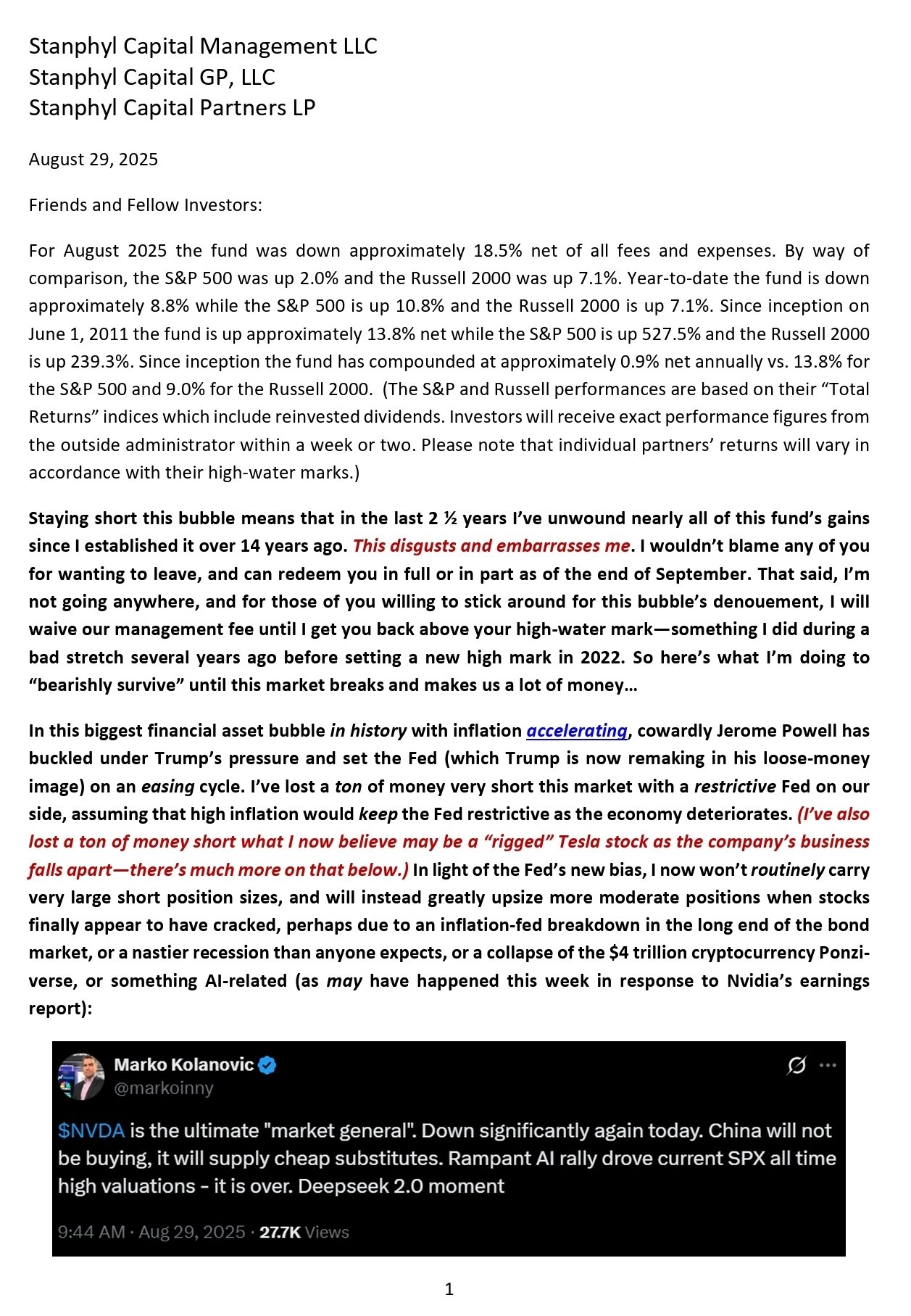
Mark Spiegelin Stanphyl Capitalin sijoittajakirje. Kusetusmarkkinat ja epäonnistuneet Tesla-shortit:
2 tykkäystä
Mieshän on ammattilainen sijoittajien rahojen tuhoamisessa. Tuollaisella track recordilla (0.9% vuosituotto 2011-2025) ei voi kuin ihmetellä että kuka sijoittaa rahaa tuollaiseen rahastoon. Oletettavasti löytyy historiasta muutama kova hetki kun on oltu shorttina ison kuopan kohdalla, mutta pitkässä juoksussa…
Karhut… voivat olla oikeassa vuosikausia menettäen silti rahaa kaksin käsin. En minäkään täysin ymmärrä Teslan menoa, mutta sentään ymmärrän että tuota ei voi mitenkään shortata päivätreidaus poislukien.
7 tykkäystä
Washington postissa oli mielenkiintoinen Tesla onnettomuus ja oikeus juttu.
Luettavissa arkistosta:
https://archive.ph/s1psp
Tesla sanoi, ettei sillä ollut keskeisiä tietoja kuolemaan johtaneessa onnettomuudessa. Sitten hakkeri löysi ne.
Erittäin huonoa mainosta brändille tällaiset jutut ja keissit joka tapauksessa.
Jo nyt Teslan tappion vaikutukset kaikuvat Miamin oikeussalin ulkopuolelle. Tässä kuussa Teksasissa jätetty osakkeenomistajien kanne väittää Teslan huijanneen sijoittajia mainostamalla autonomista ajoteknologiaa. Osakkeenomistajien kanne viittaa erityisesti Floridan tapauksen lopputulokseen ennen kuin syyttää Teslaa ”vääristä teoista ja laiminlyönneistä”. Asiantuntijat sanoivat, että tuomio on antanut uutta pontta myös meneillään oleville tapauksille eri puolilla maata, mukaan lukien yksi, jonka odotetaan menevän oikeuteen Pohjois-Kaliforniassa syksyllä 15-vuotiaan kuoleman vuoksi.
7 tykkäystä
Teslan uusi masterplan v4 julkistettiin pari päivää sitten: https://x.com/Tesla/status/1962591324022153607
Ehkäpä ketjun otsikko kaipaisi pientä päivitystä, kun Teslan oma tavoitekkaan ei tunnu enään olevan “Tulevaisuuden johtava autonvalmistaja” vaan enemmänkin “Tulevaisuuden johtava AI esineiden valmistaja” tms 
5 tykkäystä
Otsikkoa olisi kyllä hyvä päivittää vaikka tuota nykyistä ei olla vielä saavutettu kuin sähköauto muodossa (vai onko se yksi johtavista?) Uusi otsikko voisi olla esimerkiksi: “Teslan AI-Vallankumous: Autot, Robotit ja Tulevaisuus”
6 tykkäystä