Olen isoon kuvaan tyytyväinen. Tottakai hyvin monet asiat olisivat saaneet mennä paremminkin. Kokemukseni mukaan yrityselämässä tuppaa hyvin monesti näin olemaan. Moni asia hyvin muttei koskaan kaikki samaan aikaan
Kuitenkin kun kasvu ja nimenomaan kansainvälinen kasvu on ollut tavoitteena, niin ei se lähellekään vihellellen mene ja yllätyksiä on riittänyt. Kannattavuus on kärsinyt ja sekin on tietoinen valinta. Iso selittävä tekijä on myös Suomen heikko taloussuhdanne. Se on koetellut suomalaisia yrityksiä kaltoin ja se näkyy tilitoimistoissa. Normaalissa taloussuhdanteessa myös Talenomin luvut olisivat varsin toisennäköiset. Suhdanne huomioiden operatiivinen suorittaminen Suomessa on ollut erinomaista.Kasvu on jatkunut, kannattavuus on parantunut ja olemme saaneet paljon uusia asiakkaita.
Olisihan se ollut mahdollista pysytellä Suomessa ja kokeilla kasvaa kyllästetystä markkinasta 5% kasvua vuosittain. Ja parantaa kannattavuutta saman verran. Nämä luvut olisivat taanneet laatuyhtiön leiman Helsingin pörssissä, mutta se ei ole ollut yhtiön tavoitteena vaan katse on kauempana. Ylärivin kasvattamiseen uusilla markkinoilla vaatii yrityskauppoja. Myöhemmin orgaaninen kasvu on myös siellä mahdollista. Näin olemme Suomessa jo pääosin kasvaneetkin viimeisen 15 vuoden ajan.
Mikäli tuolla velkaantumisasteella tase on kuralla, niin sitten se on ollut yhtiössä aina. Olemme aina maksimoineet pankkivelan käytön kasvussa. Rajana olen pitänyt sitä (yli 30 vuotta, jonka ajan olen talossa ollut), että tällaisella defensiivisellä toimialalla velkaa saa olla noin 3x käyttökatteen verran. Olemme kasvaneet tänä aikana noin 1 miljoonasta eurosta 130 miljoonaan euroon. Onko tämä reilu velkavivun käyttö kasvuun ollut viisasta, en tiedä, mutta meidän valinta se on ollut joka tapauksessa. Rahoittajille tämä ei ole ongelma.
Ruotsissa emme ole onnistuneet niin nopeasti kuin olisimme halunneet, mutta suuntahan on siellä kääntynyt jo yli vuosi sitten. Espanja on mennyt suunnitelmien mukaan. Ruotsin opit ovat takataskussa ja Espanjan laajentumisstrategia on toisenlainen. Henkilöstöpalveluiden ulkomaan vienti on hidasta puuhaa ja muutosvauhti ei voi olla kovin nopea.
Q3/25 kerroimme kassavirran parantuneen 45% edellisestä vuodesta. Investointimme ovat vähentyneet ja nythän ne Talenomin puolelta suorastaa romahtavat kun it-investoinnit menevät tästä päivästä eteenpäin Easorille.
Easorin jakaantuminen toi Talenomin omistajille mahdollisuuden olla mukana kahdessa kasvutarinassa. Ja korostan, että kasvutarinassa. Yhtiö on toiminut samalla tavalla koko historiansa ajan (kohta 55 vuotta) ja luullakseni noin samalla tavalla edelleen jatketaan.
Toivottavasti Suomen suhdannetilanne paranee pian ja saadaan kasvu käyntiin. Sitä kaikki yritykset, ihmiset ja koko yhteiskuntamme kaipaa!
Hyvä uusi raportti @Juha_Kinnunen ja onnistuit leikkaamaan osinkoa jopa enemmän kuin ajattelin. Talenomin historiaan peilaten en usko noin rajuun leikkaukseen, vaikka siihen ei välttämättä olisi varaa. Saa nähdä miten markkina reagoi ensi viikolla, kun kuulee osinkoehdotuksen, koska kyydissä lienee vielä paljon vanhan osingon perään haikailijoita.
Vaikka ohjeistus on jo tiedossa, niin vuoden kuluessa olemme viisaampia Talenomin tuloskunnosta.
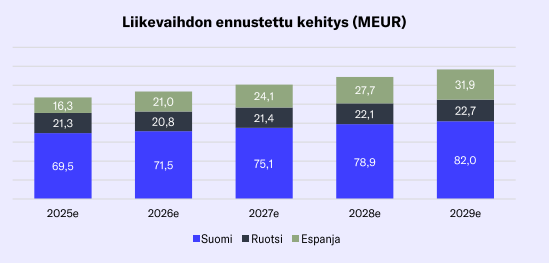
Sivun 4 liikevaihdon ennustettu kehitys -taulukosta jäi Y-akselin luvut pois.
liikevaihdot on tuossa graafissa sisällä eri maille. Toki siihen olisi voinut laittaa akselin vielä lisäksi, niin olisi nähnyt koko konsernin tason helpommin.
Tuo osinko on toistaiseksi arvoitus, mutta selvää kai tuo lienee, että se laskee voimakkaasti aiemmasta tasosta. Easor toi kuitenkin ison osan tuloksesta aiemmin. Katsotaan mitä sieltä tulee.
Rantalainen tankkaa myös Administeriä, on ollut osakkeen isoin ostaja muistaakseni jo useamman vuoden ajan. Luultavasti perusbisnes tuottaa niin hyvin, että kertyvä käteinen on pakko työntää jonnekin. Hän tuntee tilitoimistobisneksen, joten ostelee sitten kaikkea siihen liittyvää Helsingin pörssistä. Talenomin osake sukeltanut, hintalappu näyttää nyt varmaan houkuttelevalta. Voi olla ihan pelkkä finanssisijoitus ilman muita päämääriä tai sitten ei. Esim. Helsingin finanssipalvelusektorin isot henkilöomistajat saavat firmoistaan valtavat osingot ja ostelevat niillä rahoilla Aktiaa, Ålandsbankenia ja Nordeaa ilman mitään strategisia pohdintoja. Näkevät pankit hyvinä rahantekokoneita ja ottavat niistä vuotuiset osingot elämänsä loppuun asti. Ei ole mitään suunnitelmia yhdistymisistä niissä taustalla.
Tässä on Juhan etkokommentit, kun yhtiö kertoo tuloksestaan keskiviikkona.
Talenom julkaisee vuoden 2025 tilinpäätöstiedotteensa keskiviikkona 11.3.2026 noin kello 9, ja yhtiön tulosjulkistusta voi seurata tästä kello 9.30 alkaen. Kyseessä on ensimmäinen raportti Easor-ohjelmistoliiketoiminnan eriyttämisen jälkeen, ja käsityksemme mukaan Easor raportoidaan Q4:llä lopetetuissa toiminnoissa. Odotamme raportin keskittyvän uuden Talenomin eli tilitoimistoliiketoiminnan suoriutumiseen ja näkymiin, kun yhtiö hakee uutta alkua. Talenom on antanut jo ohjeistuksen vuodelle 2026, mutta odotamme mielenkiinnolla ensimmäistä osinkoehdotusta jakautumisen jälkeen.
Lisäksi konserni on luokitellut Italian tilitoimistoliiketoiminnan lopetetuksi toiminnoksi, koska yhtiö on tehnyt päätöksen kyseisen liiketoiminnan lopettamisesta, ja toiminnan katsotaan päättyvän kokonaisuudessaan.
Italia kuopattu lopullisesti, en muista nähneeni tästä tietoa aiemmin, mutta odotettu tieto hiljaiselon jälkeen.
Oli tästä Talenomin puolella tieto, mutta Q4:llä se oli vielä minimaalisesti omassa ennusteessa mukana. Olisi pitänyt laittaa lopetettuihin siellä, mutta ei oleellista vaikutusta.
Hienoa että sai nuo vertailutiedot, niin saa vähän vertailukelpoista pohjaa myös ennusteille. Näpyttelin jo eilen exceliin oikeat luvut, niin tänään voi keskittyä tilinpäätökseen. Uutiskommenttia en noista nyt tee, kun tilinpäätös on kuitenkin se pääasia tänään - ja muutenkin enemmän mallinnuksen kannalta oleellisia tietoja.
4Q liikevaihto kasvoi mikä oli ainakin itselleni hyvä uutinen epämääräisen tulosvaroituksen jälkeen. Osinko varmaan järkyttää joitakin. Itse odotinkin selvää peruutusta siinä.
Rahavirralla mitattunahan tämä jäljelle jäänyt tilitoimistoliiketoiminta suorittanee ihan hyvin. Investointeja on sen 4miljoonaa vähemmän kuin poistoja. Juha oli arvioinut tason olevan lähempänä 3miljoonaa€. Tupakkiaskilaskelma jos tehdään niin käyttökate 20milj€, joista vähennetään investointeja 6milj€ (poisluettuna yrityskaupat), korkokuluja 3,7milj€, vuokrakuluja joku reilu 3milj€ sekä veroja jonkin verran. Näistä jää sitten joku 6,5-7,5milj€ yrityskauppoihin, osinkoihin, velkojen lyhennykseen tai muuhun. Markkina-arvo nyt 67milj€.
Webcastissa johto uskoo saavansa Ruotsin käyttökatetasolla plussalle tänä vuonna ja Espanjankin parantavan kannattavuuttaan. Henkilökohtaisesti pidän myös positiivisena että johto on nyt vaihtunut ja jos kasvussa pysytään (tavoite yli 10% vuodessa), niin mielestäni kassavirtaperusteisesti tämä on nyt ihan mielenkiintoinen arvostus.
Hallituksen ehdotus osingoksi enintään 0,05 (0,20) euroa osakkeelta, josta 0,03 euroa osakkeelta maksettaisiin yhtiökokouksen jälkeen ja enintään 0,02 euroa osakkeelta myöhempänä ajankohtana hallituksen harkinnan mukaan
Juha haastatteli Talenomin toimitusjohtajaa Juho Ahosolaa sekä talousjohtaja Matti Säkkistä Q4:n tiimoilta
Aiheet:
00:00 Aloitus
00:09 Juho Ahosola
00:58 Matti Säkkinen
01:19 Fokusalueet lähivuosille
02:34 One Talenom
05:40 Suomi
06:47 Suomen kannattavuus
08:54 Ruotsin kasvunäkymä
11:02 Ruotsin kannattavuus
11:53 Ruotsin divestointi
12:40 Espanjassa heikko lopetus vuodelle
13:30 Espanjan kulurakenne
14:45 Espanjan kannattavuuspotentiaali
15:45 Yritysostot Espanjassa
16:46 Espanjan markkinakehitys
17:45 Ohjeistus
18:37 Poistot
19:18 Tase
20:03 Rahavirta
20:52 Tekoälyn merkitys Talenomille
23:16 Talenom kolmen vuoden päästä
24:19 Riskit
Odottavan aika on pitkä Talenominkin kanssa, että saataisiin rahaa rullaamaan sisään ja velkaa pienemmäksi. Pelkästään H1/2026 on jännittävä tämän puolesta.
Juha teki tarkemmat laskelmat ja päätyi raportissaan seuraavaan:
Toisaalta arvioimme Talenomin rahavirran investointien ja korkokulujen jälkeen olevan noin 5-6 MEUR vuonna 2026, mihin nähden 65 MEUR:n markkina-arvo on maltillinen.
Vanhassa Talenomissahan rahavirta oli pitkään heikko markkina-arvoon nähden ja nyt tässä uudessa formissa näyttää tämä rahanteko huomattavasti mukavammalta.
Itseäni tässä yhtiössä hiertää se että käsitykseni mukaan se käyttää lähes tulkoon pelkästään Easorin ohjelmistoa. Joten Easorilla on tavallaan koko ajan kuristusote Talenomista ja se voi hintoja nostamalla lypsää yhtiötä haluamassa mukaan.
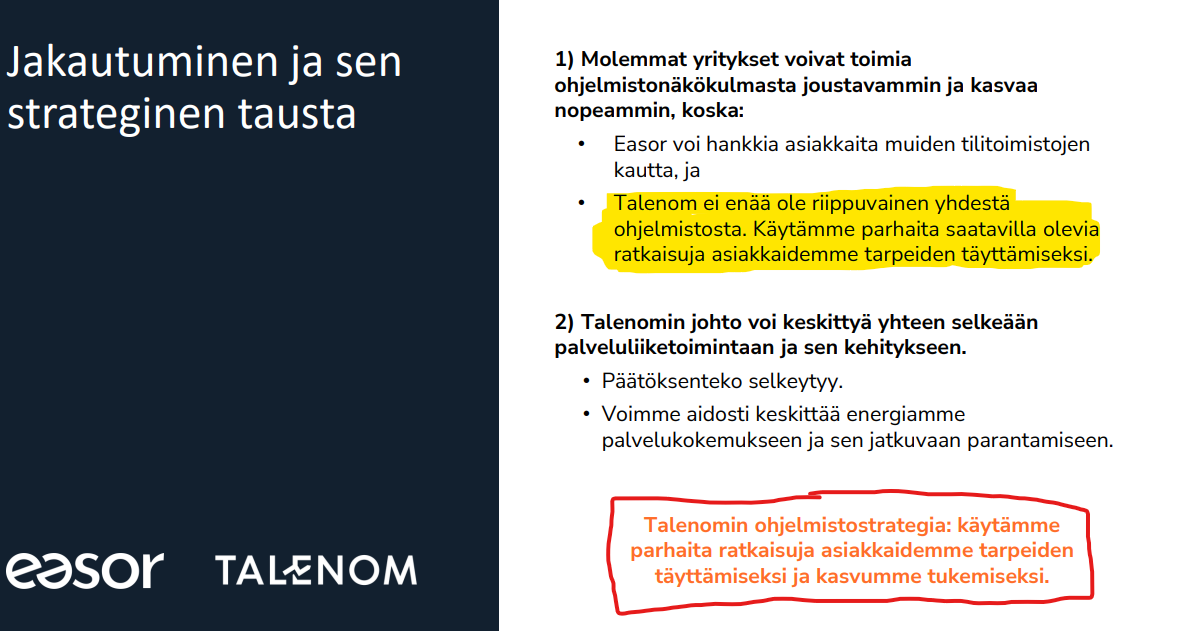
Talenomhan nyt listaa yhdeksi kasvuajurikseen mahdollisuuden käyttää laajemmin myös muita ohjelmia. Teoriassahan Talenom voisi alkaa vaihtamaan Easorit pois vaikka huomenna. Sen sijaan jos Talenom lopettaisi Easorin käytön, niin Easorilla katoaisi suurin osa liikevaihtoa.
Tämä nyt vain teoreettisella tasolla. Asioiden jatkuminen nykytolalla lienee molempien firmojen etu ja molemmilla firmoilla samat pääomistajat.
Mua mietityttää vähän tuo sama asia sitä kautta, että kun Easor nostelee hintoja loppukäyttäjä asiakkaillensa, niin se luo painetta asiakaspoistumalle heiltä itseltänsä. Jolloin käytännössä asiakas todennäköisesti poistuukin myös Talenomilta. Eli tämä poistuma ei ole niin sanotusti Talenomin omissa näpeissä, vaan Easorin armoilla ovat joiltain osin.