Stillfront Group - cheap mobile gaming?

Onko tuo nyt sellainen alisuoriutuminen tai aikaansaamattomuus tapaus? Mielenkiintoista seurata tuleeko Stillfrontin ja Embracerin leireissä lisää tällaisia riitoja.

Stillfront claims that Kixeye “did not develop accordance with the targets agreed upon in the acquisition agreement”

1 Like

RedEye on positiivinen Q3 tuloksista. Markkina näkee reaktion mukaan samoin +16% tällä hetkellä.

Uusi osto, hakee lisää rahaa sijoittajilta lähitulevaisuudessa. Q4 ennakkotulokset redeyen odotusten mukaiset.
Kurssi lähti alas 5%. Tällä hetkellä n.48.5 SEK ja RedEyen bear case 57 SEK

2 Likes

Having closely followed the company since spring 2024 and having elevated the stock to the second pillar of my high-risk portfolio over the last month, I thought I’d share my fresh thoughts with others, as the previous post was from January 2022 – those who invested in the stock back then are now suffering a horrifying -85% loss.

Quick background on the stock price decline:

The mobile gaming bubble during the Covid era, both in terms of results and valuation multiples, hit the company particularly hard. Not only did it invest heavily in game development (with very poor future ROI), but it also built its investment story around M&A (a kind of mobile gaming Embracer). As the cherry on top, several M&A deals included unprecedented earn-out payments (e.g., 1x EBIT earn-outs for the next 3-4 years), leaving current investors with independent studios with weak margins and growth, cash-consuming earn-outs, and a debt burden of approximately 60% of the current enterprise value. Of course, valuation multiples across the entire mobile gaming market have decreased (e.g., MTG’s EV/EBIT 2026E approx. 8x), most likely due to fierce competition/weak competitive advantages (=poor ROIs for the average game) and the continued downturn in the market (excluding a few clear market winners). The latest “capitulations” in the stock were seen after the Q1 and Q2 reports, which were overshadowed by extremely sharp revenue growth figures of over -10% – investors have been waiting for positive growth figures since Q4/22. However, large declines and weak sentiment can also hide potential!

Theses for significant appreciation potential and a “risk buffer”:

  1. Subsidiary Jawaker almost solely covers the current enterprise value

    In 2021, Stillfront acquired Jawaker, an Abu Dhabi-based gaming company targeting the global Arabic-speaking population. Its mobile application, containing 50 card and board games, has managed to grow 30% p.a. from Q4/21-Q4/24 with very low UAC (network effects). At the time of the acquisition, 2021E revenue was stated to be SEK 270-310m and the EBIT margin around 70%. The acquisition cost USD 205m (vs. Stillfront’s current market cap of approx. USD 350m) or 8.9x EV/EBIT (midpoint of forecast). In addition, Stillfront pays sellers 1x EBIT in earn-outs based on 2022-2026 results in July of the following year. What makes the situation interesting is that Jawaker is the only acquisition for which Stillfront will still pay additional purchase price after this summer, which in turn allows for the current EBIT to be bracketed from the reported earn-out liabilities. The forecast and discounted earn-outs due in 2026 are SEK 578m. Assuming a 10% discount rate, Jawaker’s 2025E EBIT is SEK 636m. Since we are clearly talking about a gaming studio that stands out from the rest of the gaming market, is based in the Middle East (money is plentiful :slight_smile:), growing at 30%, and generating a 70% EBIT margin, I believe a valuation multiple of 10x without additional purchase price does not seem particularly strange – this would make the price SEK 6.4bn (or USD 678m). This compares to the current SEK 7.9bn enterprise value, of which SEK 4.6bn is net debt. Using a 70% EBIT margin, Jawaker’s revenue can be estimated at approximately SEK 900m, which compares to the approximately SEK 5.9bn 2025 revenue forecast for the entire group – although at the EBIT level, the forecast is only about SEK 1.2bn, which indicates the poor profitability of the rest of the group and the need for restructuring (which is discussed in point 2.).

  2. New management is conducting a strategic review, actions and statements are convincing

    When former COO Alexis Bonte took over as Group CEO in early 2025 after the founder/CEO was dismissed, the company immediately began a comprehensive organizational restructuring. The first item on the agenda was segment reporting by three continents (which revealed a growing and profitable Asia/Middle East, Europe as a focus of investment, and weak growth and profitability in the United States). The first actions of the SEK 250m cost-saving program (whose run-rate savings were achieved in two quarters) were the closure of two unprofitable US studios and the transfer of games to lower-cost studios (temporarily negatively impacting Q2 revenue in particular). In May 2025, the stock price temporarily gained momentum as the company initiated a strategic review, including potential divestments, with Carnegie investment bank – which every finance professional knows as one of the most aggressive in the Nordics – and Aream, a sector specialist who facilitated Jawaker’s earlier deal. Taking into account point 1 of my text (Jawaker’s value), in addition to the strategic review, two interesting observations must be mentioned: 1) Jawaker’s management and founders consolidated their ownership under one holding company in late summer, now owning over 10% of Stillfront; 2) The board has not authorized share buybacks, which have been running for over a year since the Q2 report, to cover earn-out payments, even though management stated in the Q2 call that they see the stock as undervalued and the company will continue to generate high cash flow (LTM FCF SEK 1.1bn) – does the board have information on the table that could significantly affect the stock price?

  3. Very strong cash flow / low valuation and reasonably low cost of debt

    As mentioned, approximately 60% of the enterprise value is net debt. However, the company generates approximately SEK 1.1bn in free cash flow after interest expenses, and its net debt/EBITDA is only 2.2x – for a highly diversified portfolio requiring little investment, this seems reasonable. The debt market thinks similarly, pricing the latest unsecured bonds at S+365bps at the end of 2024, and the bonds are currently trading above par (around 100.6%) – so no stress can be observed. The current cash flow (SEK 1.1bn) translates to a 33% FCFE yield for a SEK 3.3bn market cap, which, of course, predicts the company’s crisis or collapse. Many parties, of course, include the two upcoming earn-out payments in the cash flow, which halves the figure. In my opinion, however, including one-time payments (which will end in less than 2 years) when valuing for eternity is simply a flawed idea. On the other hand, a collapse of cash flow within 2 years in a situation where gross margins have been improved (transition from 3rd party payment solutions to DTC channel) and the company’s fixed costs are being driven down at an accelerating pace is unlikely. Investors are, of course, particularly concerned about the very weak revenue growth figures seen in H1, but taking into account the phase-out of the “legacy” portfolio, game development investments halved since 2022, the US restructuring in H1, the major launch of the significant Albion game in Q1 (strong comparison period), and the previous new game launch in Q3/Q4 2023, a stronger development can be projected for the future after the restructuring ends and new game releases / expansions come out of the pipeline (e.g., Supremacy Warhammer 40k in November 2025). All in all, not much needs to be paid for the current results (2025E adj. EV/EBIT 6.5x and adj. P/E 4x).

Finally, a disclaimer that investing in a serial underperformer, which happens to be indebted and has declining revenue for the last 3 years, is more than at your own risk, and I would gladly hear constructive challenges to the likely errors in my thinking. This can also be leveraged in Nordnet with a frightening 70% collateral rate, although I wouldn’t equate this risk to that of an apartment share in downtown Helsinki :slight_smile:

9 Likes

Positive news from Stillfront regarding profitability, against the backdrop of actions weighing on revenue as the portfolio continues to focus on the most important franchises. In any case, the strategy is progressing, and hopefully positive news will continue to be received. Results on Thursday, October 23rd.

1 Like

In the absence of discussion, let’s continue with an informative approach. Stillfront published its Q3 results on Thursday, with revenue and adj. EBITDAC (Adj. EBITDA - capex) already known in advance. Thus, no major surprises were seen, but a few observations (positives / negatives):

\+ Both Europe and Asia / Middle East growing, negative growth purely driven by the United States (weak organic development + restructuring)

\+ Three new games are being released imminently (the previous one being Sunshine Island 2023), which finally creates belief in better organic revenue development in 2026 (though analysts remain cautious about 2026 growth). The impact on Q4 is moderate (excluding increased marketing costs) due to the late release timing.

\+ DTC channel revenue share grew 33% → 44% y/y, which is a high level compared to the industry. This had a +3ppt impact on gross margin (which, of course, scales significantly to the bottom line), even though players are attracted to DTC channels with significant discounts during the transformation phase.

\- Cash flow was disappointing, but mainly due to NWC fluctuations and abnormally high taxes (LTM cash flow still >900mSEK)

\- No divestment news, but regarding the strategic review, the continuous exploration of divestments was explicitly mentioned – on the other hand, winding down unproductive operations increases the significance of valuable assets, bringing out value without divestments

\- Q4 revenue growth will be closer to H1’s weak levels due to the partial shutdown in the United States and lower UAC usage at the end of Q3, with the focus being on Q4 new game releases –- however, the market seems to be gradually looking past this quarter.

In addition, the board initiated fairly large share buyback programs for earn-out payments (SEK 210m, or 6.4% of market value). On the other hand, this would imply that there is no acute insider project regarding divestments on the board’s table (if I understand insider trading legislation correctly). Before the results, Cantor, among others, surprisingly raised its target price from SEK 6 to SEK 14, and after the Q3 results, Pareto, which had been bearish recently, raised its target price from SEK 6 to SEK 9. The share price also rose +19% in a week, but the YTD graph looks more like Linnanmäki’s wooden roller coaster than a stock price – YTD still -24%.

Next in sight are the three game releases in November/December (the first significant one being Supremacy: Warhammer 40k) and the anticipation of potential divestment news. A new CFO starts at the beginning of the year (although I personally liked the interim CFO’s firm communication), and hopefully, a comprehensive CMD will be held after the strategic review concludes early next year.

4 Likes

Q4 is nearing its halfway point, and the most active period for mobile gaming has begun. Here are a few observations from recent weeks.

  1. Own share repurchases: Between 24.10 and 11.11, Stillfront has repurchased 7,405,000 of its own shares (approximately 47mSEK / 210mSEK of the program). The entire program represents about 6% of the market capitalization. (Stockholm Repurchase of Own Shares | Nasdaq)

  2. Insider purchases: Board member Markus Jacobs (a gaming industry veteran from EA and King, among others) bought 140,000 shares at the turn of the month for 891kSEK (approx. 82kEUR, a significant sum for a board position). His ownership is now 355k shares, with previous smaller purchases in August.

  3. New game soft launches:

    • Big Farm Homestead has been available in limited release in the US Google Play Store since summer. The game aims to build on the successes familiar from Sunshine Island, and initial comments are cautiously positive despite limited content (poor reviews mainly due to restricted levels). According to the Q3 report, the game’s global launch is at the end of the quarter, so the biggest impact on figures will only be in 2026.

    • Supremacy: Warhammer 40k, for which Stillfront likely has the highest expectations, has gradually added countries to its Beta version. More content will be added before the actual release, and on Discord, for example, the game’s development team is in close discussion with dedicated players about bugs, game mechanics, etc. No actual data is available yet, but based on information received today (Discord), the global launch will happen “before the holidays,” contrary to the earlier 17.11 indication. This means development will continue slightly longer than expected due to player feedback, which has included positive comments in addition to development suggestions – negative for Q4 revenue, but in the long run, this is certainly preferable.

    • Nanobit’s new Unfolded: Webtoon Stories, which has also been pre-released in the US, among other places, appears to be a weak game at least at this stage, based on reviews. Of course, I personally haven’t set any expectations for this hypercasual narrative game, and Nanobit’s previous games are not very relevant to the group’s revenue generation (Nanobit’s entire 3-month revenue for three games is $300k on iOS vs. e.g., Jawaker $1m – which also has a larger D2C share – and Bitlife $600k).

  4. Old games: Due to Stillfront’s “patchwork” nature, it is very difficult to estimate the growth of “Key franchise” games (many games, many countries, many platforms, D2C / 3rd party stores, etc.), but I have not noticed any significant weakening in any game when moving from Q3 to Q4 (note: I mainly follow Sensor Tower’s free data in relation to other games, and it only shows a small part of Stillfront’s earnings in terms of revenue, thus mainly indicating an increase/decrease in activity relative to the rest of the market. For Albion, Steam is also relevant, but most players play directly through Stillfront’s interface). However, a few clear positive observations can be found:

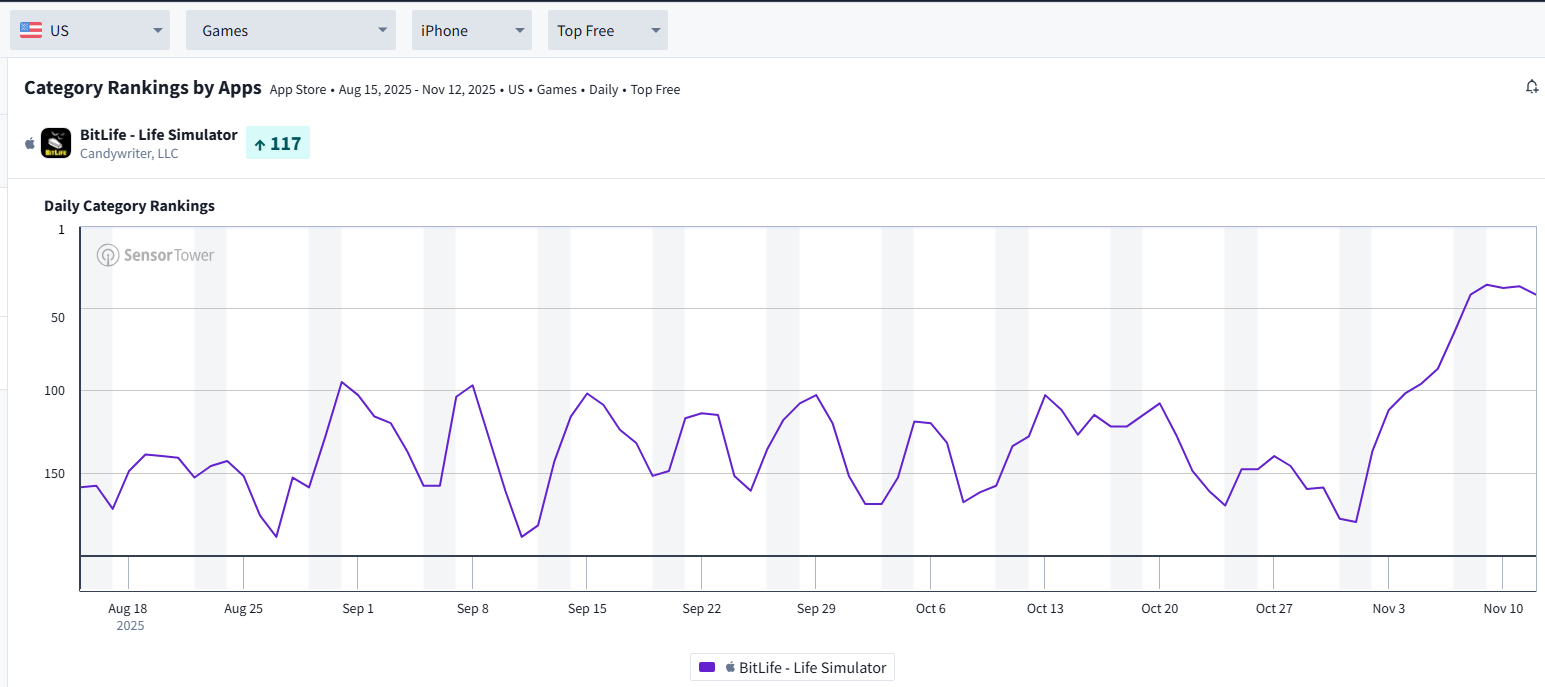
    • Bitlife, whose development was somewhat subdued in Q3 due to, among other things, investment in D2C payment channels, has now shown very positive results due to Halloween updates (Vampire theme bit? :slight_smile: ). The game has risen to among the top 40 most downloaded games on iOS in the US from around 100-150th place in a 3-month review.
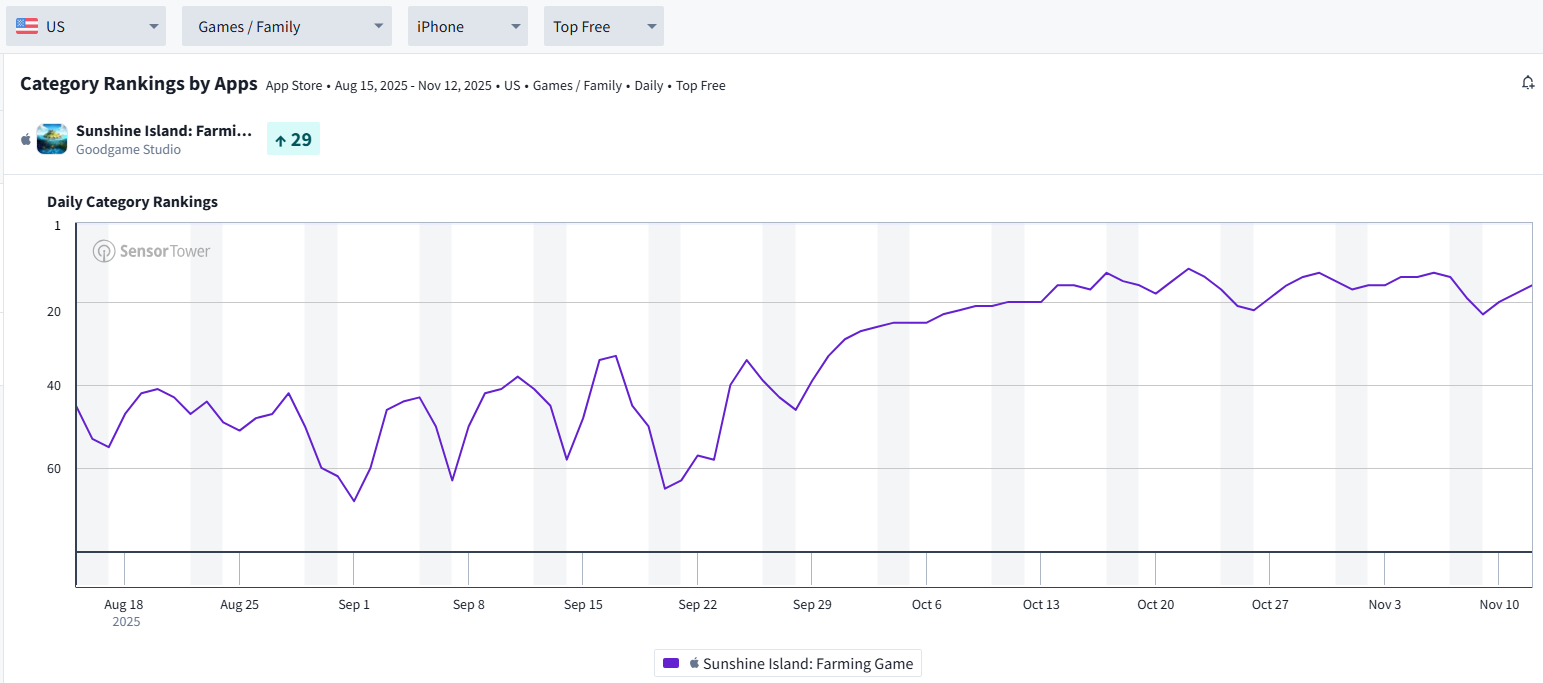
    • Sunshine Island, released in 2023, which based on comments continued strong performance already in Q3/25, still seems to have accelerated activity for Q4 (below is a 3-month graph of game downloads on iOS in the US in the “Family” category). It is also noteworthy that the game is already among Stillfront’s top 3 highest-revenue-generating individual games, if only Sensor Tower’s Google Play / iOS are considered – the top 3 are Jawaker, Supremacy: ww3, and Sunshine Island.

  5. Google Play fees: Not a Q4 matter yet, apparently (awaiting court approval), but on 4.11, an agreement between Epic and Google was announced, which attracted attention in the gaming industry. It concerned the long-running monopoly dispute over Google Play Store fees and openness. The parties agreed that Google would drop its own fee share from approximately 15/30% (under/over 1 million payments) to 9/20% (depending on the payment type) and open Google Play to third-party payment solutions (such as Stillfront’s D2C) without a separate fee. This will have a positive impact on game gross margins and thus on the profitability of mobile gaming companies with leverage over time. As one example of the challenges of the current setup, Sunshine Island has roughly the same number of downloads on iOS / Android, but Android has €700k in monthly revenue vs. €300k on iOS according to Sensor Tower (presumably a larger portion of iOS revenue goes through Stillfront’s own payment service with a higher gross margin).

Overall, it feels like the momentum in the portfolio is currently better than what could be seen at the time of the Q3 earnings release. On the other hand, Q4 revenue will not get much help from new releases, but I see 2/3 of the games as quite potential contributors to organic growth in 2026.

Edit. The situation in point 5 was not finalized, as a judge in the US did not approve the settlement, seeing elements that still restrict competition. No wonder, with Google and Epic as parties :smile:

4 Likes

Stillfront shares were traded today at a cheap -7.21% discount compared to Monday’s price (1-week return -13%), while our western neighbor’s index rallied with a +2.25% gain. To structure my own thinking, here are a few recent observations following the end of Q4:

  1. Stillfront has bought back about 4.8% of the company’s shares since October 24 (76% of the announced buyback program), which has been a quite significant part of the daily volume. As we are within 30 days of the upcoming Q4 report, the program has been suspended – this has partly changed the stock’s dynamics and possibly exposed it to speculative attacks? Short interest in the stock has risen from 1-1.5% in the fall to as much as 3.9%, which is already a significant signal of a contrarian market view (the largest shorts are quantitative hedge funds). Volatile price action is therefore certainly expected before the report, and currently, there are clearly no major institutions on the buy side loading up (on the other hand, Handelsbanken and the AP1 pension fund have been selling/trimming).
  2. Supremacy: Warhammer 40,000 has been pushed to a Q1 release due to larger-than-expected bug fixes highlighted by the active audience during the beta phase (still ongoing). This is a negative for the stock, but in my opinion, small in scale – a one-quarter delay is relatively minor, and Q4 at least won’t see significant marketing costs for this game (likely weighted toward Q1-Q2). The most important thing, of course, is to get the game ready for the market.
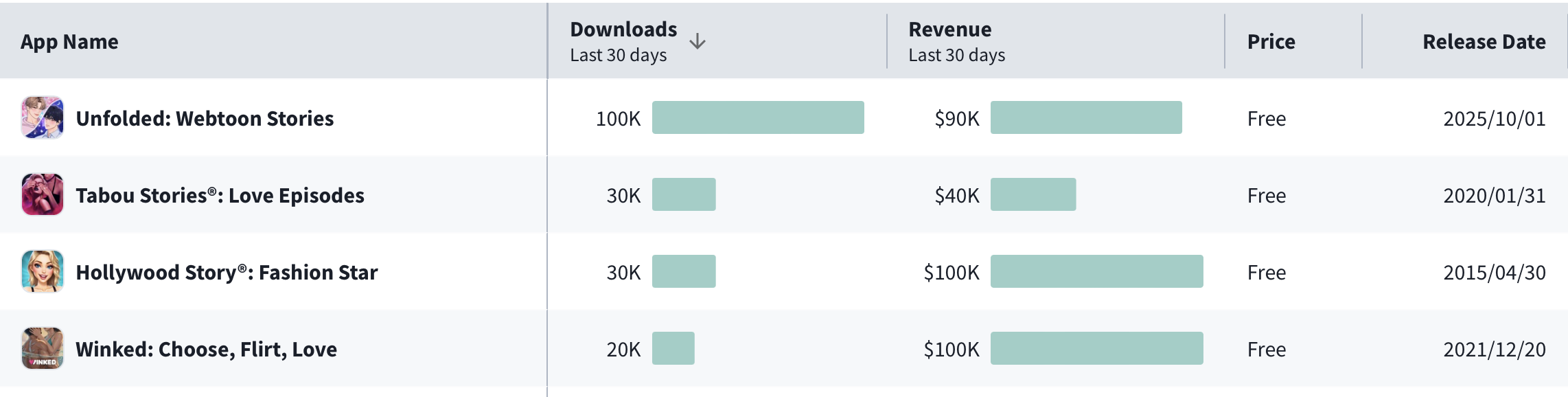
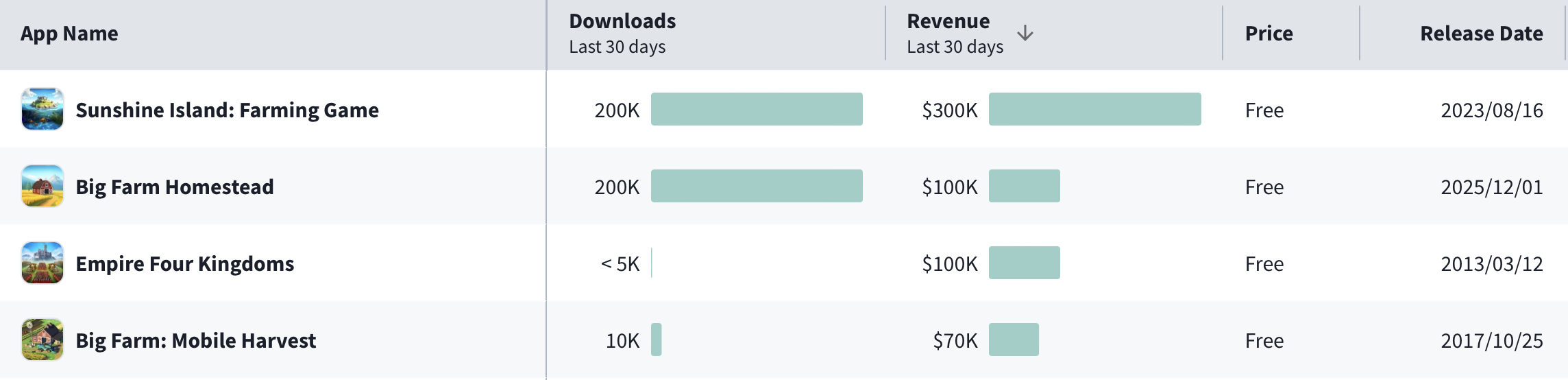
  3. Two other new games, Big Farm: Homestead and Unfolded: Webtoon Stories, are both successful releases for their respective studios compared to older games, based on Sensor Tower data. It’s hard to get a true picture with this data, but I would venture to say the games are at least meeting expectations, considering e.g., the freshness of Homestead’s international release (Dec 1, 2025):

Top 4 games from the weakly performing Nanobit:

image

Sunshine Island was a success, reaching Big Farm: Mobile Harvest’s revenue in 2-3 quarters (vs Homestead in perhaps just one?):

image

Otherwise, the Supremacy series seems a bit soft in terms of activity (excl. the days after Christmas), but on the other hand, e.g., Bitlife, Sunshine Island, Jawaker, and Ludo Club seem to have developed positively during the quarter. Also, for Home Design Makeover, (surprisingly?) clear customer acquisition has been carried out, with download numbers increasing significantly in December – hopefully, this won’t be reflected as weaker margins in the NA segment. All in all, it looks like Q4 has been spent (successfully?) preparing for 2026, and hopefully, this will be reflected in the guidance. All of the above is irresponsible speculation amidst a wealth/fragmentation of information.

There isn’t much activity in this thread, so let’s post this news here. Pareto has named Stillfront as one of its Top 15 Swedish stock picks for 2026. I couldn’t find a direct link to this from Pareto itself, but I came across this on Nordnet and it was also found elsewhere:

https://www.marketscreener.com/news/pareto-unveils-its-15-top-stock-picks-for-2026-ce7e58dedf88f427

2 Likes

Market timing didn’t go right (this time either). Revenue was pretty much in line with forecasts regarding organic growth, but the result was weak (Adj. EBITDAC -8% vs. consensus), mainly due to a larger impact from foreign exchange rates than analysts had predicted. The biggest disappointment for me (and likely for the market) was the management’s reticence and even anemia in providing guidance for the coming year or even the current quarter, which the company has historically (though often with poor success) provided. The strategic review is still ongoing, so perhaps something is still brewing under the surface, even though we’ve been waiting for bigger news for a long time. In any case, the YTD share price performance is -29% and short interest is at its short-term peak at 4.85% – AI anemia in the gaming market probably doesn’t help.

Regarding new game releases, BIG Farm: Homestead was mentioned as showing good early signs, as can be seen from Sensor Tower data. Supremacy: Warhammer, on the other hand, still hasn’t seen an official launch date, meaning late-stage development has taken longer than expected despite the Beta phase. Albion Online is coming as a console version to Xbox in late spring.

The biggest takeaway from the report is likely the new segment reporting, the informational value of which is a double-edged sword compared to the previous one. On one hand, there’s even less visibility into the bottom lines, but for strategic IPs, franchise-level growth figures and revenues were provided. Along with the increased earn-outs, the new data shows Jawaker (now the largest IP by revenue) to be the jewel of this scrap heap, growing again by over 20% annually (even closer to 30% in Q4) and generating about a 70% margin without significant capex (earn-outs + segment-level capex as the source). Market cap for the company is 2.4bn SEK and debt including earn-outs is 5bn SEK (net debt 2.0x adj. EBITDA - capex). LTM free cash flow is 922m SEK and FCFE yield approx. 38%. Uncertain future and poor-quality execution, but it isn’t expensive…