Solar Foods Oyj - global protein production innovator

The reference was already in that text and its source also Iron Toxicity(Archived) - StatPearls - NCBI Bookshelf according to this official source in the US market, the limit for “Moderate symptoms” is indeed 20-60 mg/kg of body weight. “Ingestion of less than 20 mg/kg of elemental iron is non-toxic” (Ingestion=food intake, eating). And because in the chosen segment, Solein is used as a food supplement, not as a main food source, the protein coming through Solein (sports drinks, protein bars) is not intended to constitute the main protein intake of the day. As I had calculated above, with a protein intake of 1.5g/kg of body weight and a relatively high 30% Solein share of protein intake, the amount of iron is 0.8mg/kg of body weight, which is very far from that 20-60 mg/kg of body weight level, which in official material has been considered the first harmful level for daily use.

The behavior of an individual consumer can be, and often is, harmful to health, for example, in the form of excessively consumed hamburgers. Thank you for the good comment, I have nothing more to add on this matter :slight_smile:

Hamburgers? Your reference still didn’t change to food intake; instead, it talked about iron poisoning as a single dose, meaning once, taken accidentally by a child or by an adult for suicidal purposes, not as continuous intake from food. Where does it say “first harmful level in daily use”? No one has probably claimed anywhere that one could die immediately from Solein, or have they?

1 Like

Most likely, the iron issues are as Vino_Pino states,
somehow the iron problem in Solein should be solved, it’s certainly not easy. Could it be some solid catalyst, like in an exhaust pipe, that doesn’t transfer with Solein? I don’t know, it’s probably been researched like many other methods.
Apparently, not many want to consume excess continuous iron for many reasons; daily diarrhea alone doesn’t help with that.

Contrary to my promise, I will try to outline a second perspective on how I have understood this matter while clarifying it with the company. I do understand that the referenced study found on a United States government website concerns single-use, and the mentioned unpleasant symptoms occur when a single dose exceeds 20(-60) mg per kilogram of body weight. According to the study, a single dose below 20 mg/kg should be asymptomatic.

Let’s rephrase these same numbers once more, in reverse, i.e., how often, with regular use, this 20 mg/kg dosage limit would be reached by a fairly typical athlete who consumes a Solein-based recovery drink or bar after training. Let’s assume that one serving contains 25 g of protein, which is also a fairly common amount in these types of products:

  1. 50 kg / person, 2 workouts per week: the 20 mg/kg, which was found not to cause symptoms in a single dose, is reached every 82 days
  2. 50 kg, 5 workouts per week: every 33 days
  3. 70 kg, 3 workouts per week: every 77 days
  4. 70 kg, 5 workouts per week: every 46 days
  5. 90 kg, 2 workouts per week: every 148 days

Whether this is a lot or a little is certainly for each individual to assess, but of course, it is a completely different matter to take iron as a single dose of 20 mg/kg once a month than to take the same amount evenly throughout the month (50 kg person, 5 workouts per week).

However, the whole discussion started with the fact that, based on current information, the use of Solein in selected segments is possible in the United States.

1 Like

In your messages, you are mixing two things: a single dose and its harmfulness, and continuous use. Whether it’s about the use of a medicinal substance, where a single dose is too little, or the intake of a harmful substance, like other metals such as lead. If you get it into your body once, no worries, but if it continues, you will get sick. Iron is essential in small amounts, but toxic in excess.

Below is the safe upper limit for continuous use. You can calculate and tell us in this thread how many grams, one or two, of Solein daily would be the maximum. How much protein would that provide? If you are targeting the US market, you could calculate how many patients and lawyers it would take there to bring the entire company down with their compensation claims if someone develops liver cirrhosis or heart disease due to an absorption disorder. The answer is probably one.

Those going to Mars and elite athletes are probably tested for ferritin and liver values, and perhaps genetically, if an absorption disorder is suspected, but that niche won’t generate revenue. Warning labels should be on the product, sales directed from pharmacies, but that would likely deter consumers, ruining the whole idea. It might be that the microbe should be changed to another one if a product is to be made from this otherwise excellent idea, unfortunately.

Can iron be harmful?

Yes, iron can be harmful if you get too much. In healthy people, taking high doses of iron supplements (especially on an empty stomach) can cause an upset stomach, constipation, nausea, abdominal pain, vomiting, and diarrhea. Large amounts of iron might also cause more serious effects, including inflammation of the stomach lining and ulcers. High doses of iron can also decrease zinc absorption. Extremely high doses of iron (in the hundreds or thousands of mg) can cause organ failure, coma, convulsions, and death. Child-proof packaging and warning labels on iron supplements have greatly reduced the number of accidental iron poisonings in children.

Some people have an inherited condition called hemochromatosis that causes toxiclevels of iron to build up in their bodies. Without medical treatment, people with hereditary hemochromatosis can develop serious problems such as liver cirrhosis, liver cancer, and heart disease. People with this disorder should avoid using iron supplements and vitamin C supplements.

The daily upper limits for iron include intakes from all sources—food, beverages, and supplements—and are listed below. A doctor might prescribe more than the upper limit of iron to people who need higher doses for a while to treat iron deficiency.

Ages Upper Limit
Birth to 12 months 40 mg
Children 1–13 years 40 mg
Teens 14–18 years 45 mg
Adults 19+ years 45 mg
4 Likes

I understand these differences, and this was based on estimates of safe amounts, and furthermore, the entire thread’s premise was that in the United States, the authorities will not restrict the amount of iron.

Solein’s high iron content must be clearly highlighted on the packaging and in the Nutrition Facts information. There are also percentages of the total daily intake. Within these recommended upper limits, a 10 kg baby could safely consume 4 mg/kg per day per kilogram of body weight, and a 100 kg athlete 0.45 mg/kg per day per kilogram of body weight.

One 20g protein Solein serving contains 34 mg of iron, meaning such a serving could likely fit into the diet of a person following a vegetarian diet, for example, 3 times a week after training, even within these recommended upper limits.

I understand the concern in this matter and do not want to treat it too superficially either, but the issue is anything but straightforward, and we will surely get more information on this as the company hopefully progresses in the US market. If the company knew that the product could not be brought to market, it would certainly be announced appropriately. I thank you again for the constructive discussion and good arguments!

quite a bold premise, as science seems to disagree, and it could be a lawyer’s delight

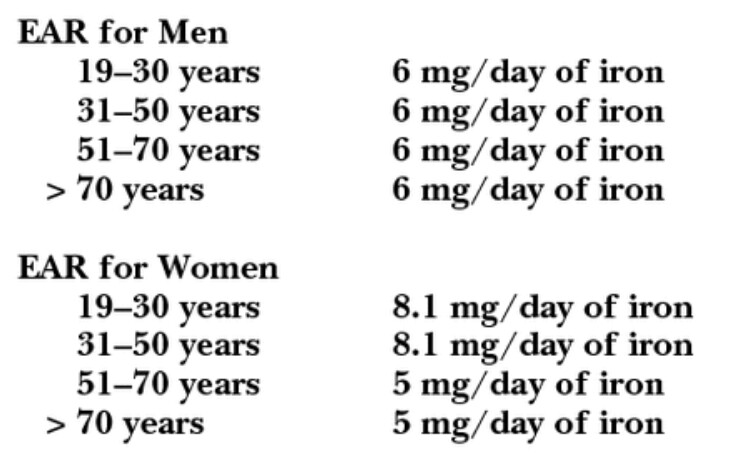
In the accompanying book https://nap.nationalacademies.org/catalog/10026/dietary-reference-intakes-for-vitamin-a-vitamin-k-arsenic-boron-chromium-copper-iodine-iron-manganese-molybdenum-nickel-silicon-vanadium-and-zinc, significantly smaller amounts of iron are discussed. A daily iron intake of 6 mg for an adult male weighing approximately 75 kg maintains iron balance in the body. Note: not per kilogram of body weight. (Book page 340)

The average iron intake required to maintain iron balance in adults (EAR = Estimated Average Requirement, found on page 344 of the book) is:
kuva

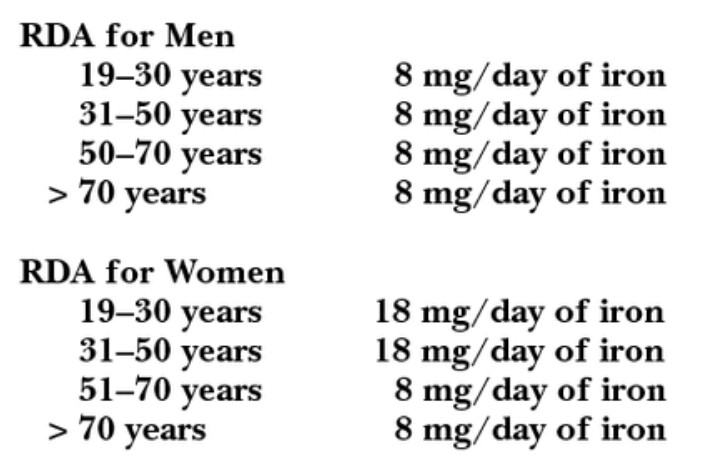
And the recommended daily iron intake for adults (RDA = Recommended Dietary Allowances, page 344) are as follows:
kuva

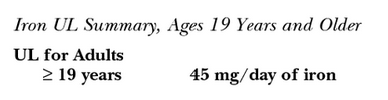
The book also includes (on page 375) the UL = “Tolerable upper intake level,” which is a daily iron intake based on research that is unlikely to cause adverse effects in most individuals. That level is 45 mg per day.
kuva

I would by no means advise anyone to consume 20-60 mg per kilogram of body weight per day. For a 75 kg man, that would mean 1500-4500 mg of iron per day. Potentially a lethal dose! (edit: I’m not saying you advised this, but it’s very hard to believe that the information would be correct.)

1 Like

“The management has been consistent and cautious with me on this; the company has an absolutely enormous amount of biological, regulatory, etc… expertise.”

Without taking any stance, the situation is confusing, because science is quite unambiguous, and of course the shift from feeding the world to protein bars came out of nowhere.

By the way, what is the source of this recurring information in the thread? That would mean that 100 g of Solein contains 5000 mg of iron in a highly absorbable form. Or from what is the 5% content calculated? Iron is not made from air or electricity; it would have to be supplied as a nutrient solution, quite an iron dose.

Where is that information? Completely different from that 5%. They have probably had to provide information to the US as well, now that they have entered the market, although I haven’t found the conditions under which they can market it, and all “trace elements” must be published for consumers too. As you state, iron matters are complex. I would add that they don’t necessarily have to be, if there is a willingness to be open in communication.

2 Likes

Solar Foods Oy

Springvest
https://app.springvest.fi › rounds
](Springvest)

18 Oct 2023 — Based on the forms of iron occurrence, Solein’s heme iron content is computationally estimated to be approximately 5%.

iron is supplied as a nutrient solution

This was addressed in the report. So, 128 mg of iron per 100 g. And as the sole source of iron, max approx. 30 g of Solein per day, of course, iron actually comes from other sources, so clearly less than 30 g. If it were 5000 mg, it would be a catastrophe/scandal, and on the other hand, it would probably be biologically impossible to produce?

https://keskustelut.inderes.fi/t/solar-foods-oyj-globaalin-proteiinituotannon-uudistaja/53165/69?u=vino_pino

The questions regarding the offering have been answered quite unprofessionally, and they can blame themselves for the confusion:

”The main forms of iron are heme iron and non-heme iron, of which heme iron is absorbed better than non-heme iron. Iron in plant-based food is non-heme iron. Meat and fish, on the other hand, are sources of heme iron. Based on the forms of iron, Solein’s heme iron content is computationally estimated to be about 5%. Thus, the iron contained in Solein is available and absorbed better than products from the plant kingdom, but less effectively compared to meat and fish. Based on a study where the biological bioaccessibility and bioavailability of Solein’s iron were investigated in an in vitro model, it was found that bioavailability (how iron passes through the cell and is absorbed into the body) was low (less than 5%). Biological bioaccessibility (how iron detaches from Solein powder during digestion), on the other hand, was approx. 50%, meaning 50% of the iron detached from the Solein matrix with the help of digestion. Biological bioaccessibility is a prerequisite for iron to be absorbed into the body and transported to where it is needed.

Biological bioaccessibility = bioaccessability = how nutrients are detached from the food matrix
Biological bioavailability = bioavailability = how it passes through the cell, is absorbed into the body.”

They probably meant that the proportion of heme iron is 5% of all iron, and not the content.

5 Likes

“Solein contains 65-70% protein, 5-8% fat, 10-15% dietary fiber, and 3-5% minerals.”

What are these 3-5% minerals? And in what quantities?

Humans need little iron, so iron is often referred to as a trace element.

According to the patent application:

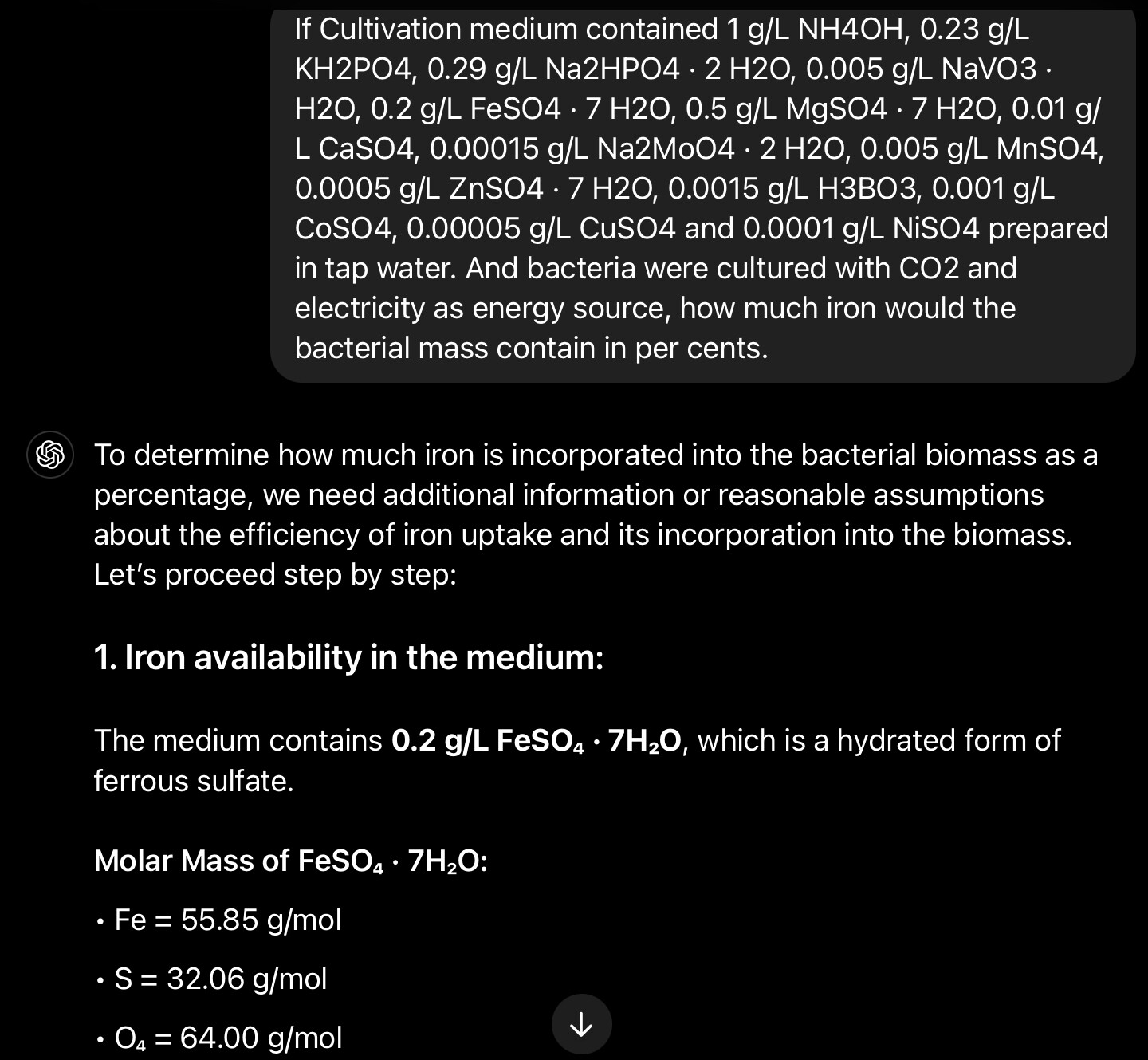
Cultivation medium contained 1 g/L NH4OH, 0.23 g/L KH2PO4, 0.29 g/L Na2HPO4 · 2 H2O, 0.005 g/L NaVO3 · H2O, 0.2 g/L FeSO4 · 7 H2O, 0.5 g/L MgSO4 · 7 H2O, 0.01 g/L CaSO4, 0.00015 g/L Na2MoO4 · 2 H2O, 0.005 g/L MnSO4, 0.0005 g/L ZnSO4 · 7 H2O, 0.0015 g/L H3BO3, 0.001 g/L CoSO4, 0.00005 g/L CuSO4 and 0.0001 g/L NiSO4 prepared in tap water

Of the minerals, trace elements are “microminerals” and others are macro. In that nutrient solution, for example, calcium is low compared to human needs, as bacteria do not have a skeleton. Thus, for bacteria, calcium could indeed be a trace element😲

There appears to be a lot of iron in the solution. Before considering the iron content, note the NH4OH, which is most abundant, i.e., ammonium hydroxide. It is made from ammonia. It contains a lot of energy, which raises the question of where and how it was produced. A comprehensive report did not address this. The same substance is found in fertilizers, which have been accused of enormous energy consumption in their production. It is made in Russia, for example, from natural gas, transported by train to Finland, meaning fossil-based production, and the same method is used in Finland. Has this been included in the environmental impact calculations? Yes, green hydrogen might exist someday. Secondly, there is potassium dihydrogen phosphate, and thirdly, disodium hydrogen phosphate, whose raw material production requires energy. Have these been included in this “carbon-neutral”?

This is how energy-containing substances are “smuggled” into the process. Thus, can we only consider hydrogen production requiring fermentation and forget the others?

Regarding the original task:

Bacteria require nitrogen and phosphorus for their construction, and these are obtained from those substances. Carbon comes from carbon dioxide.

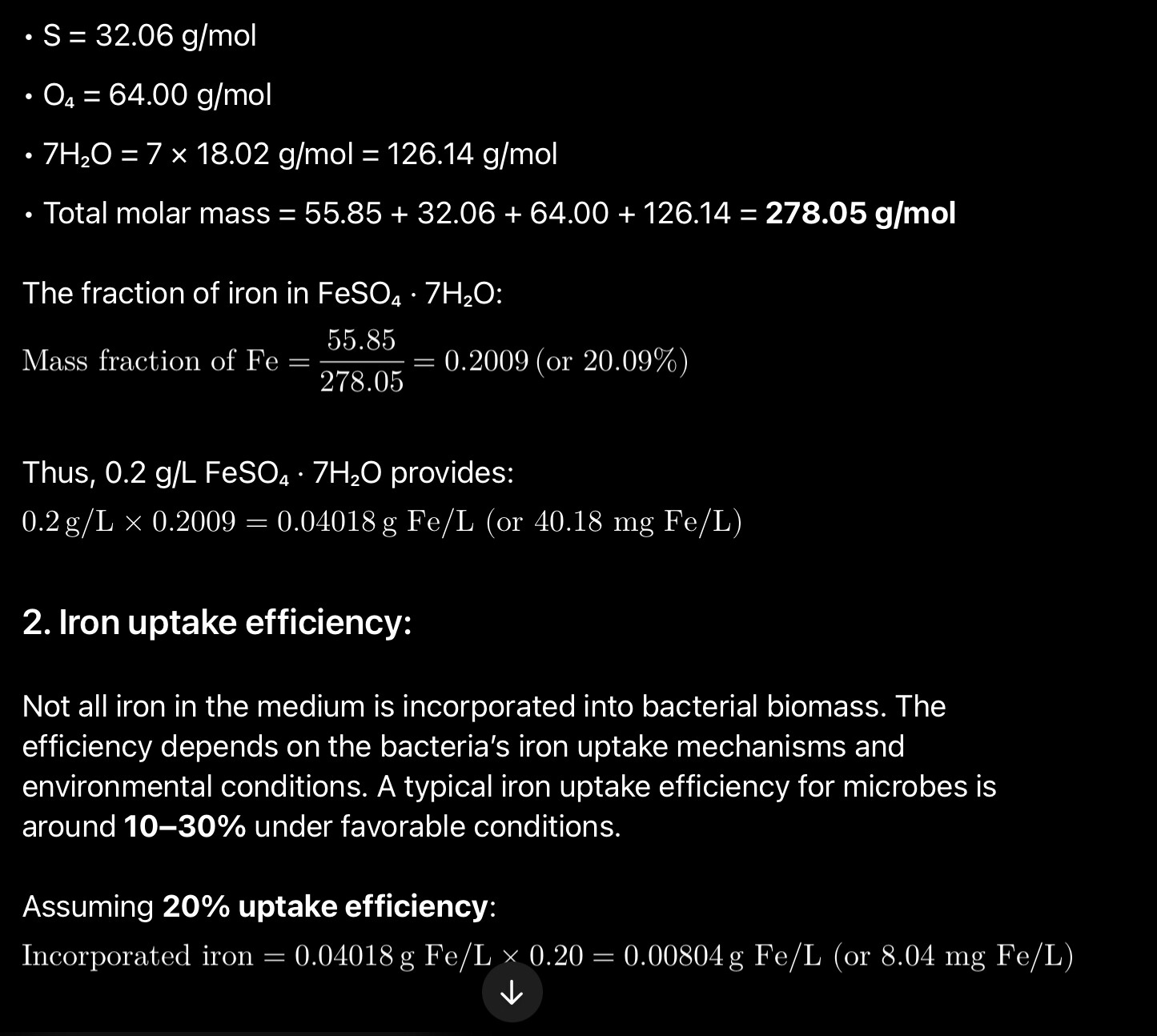
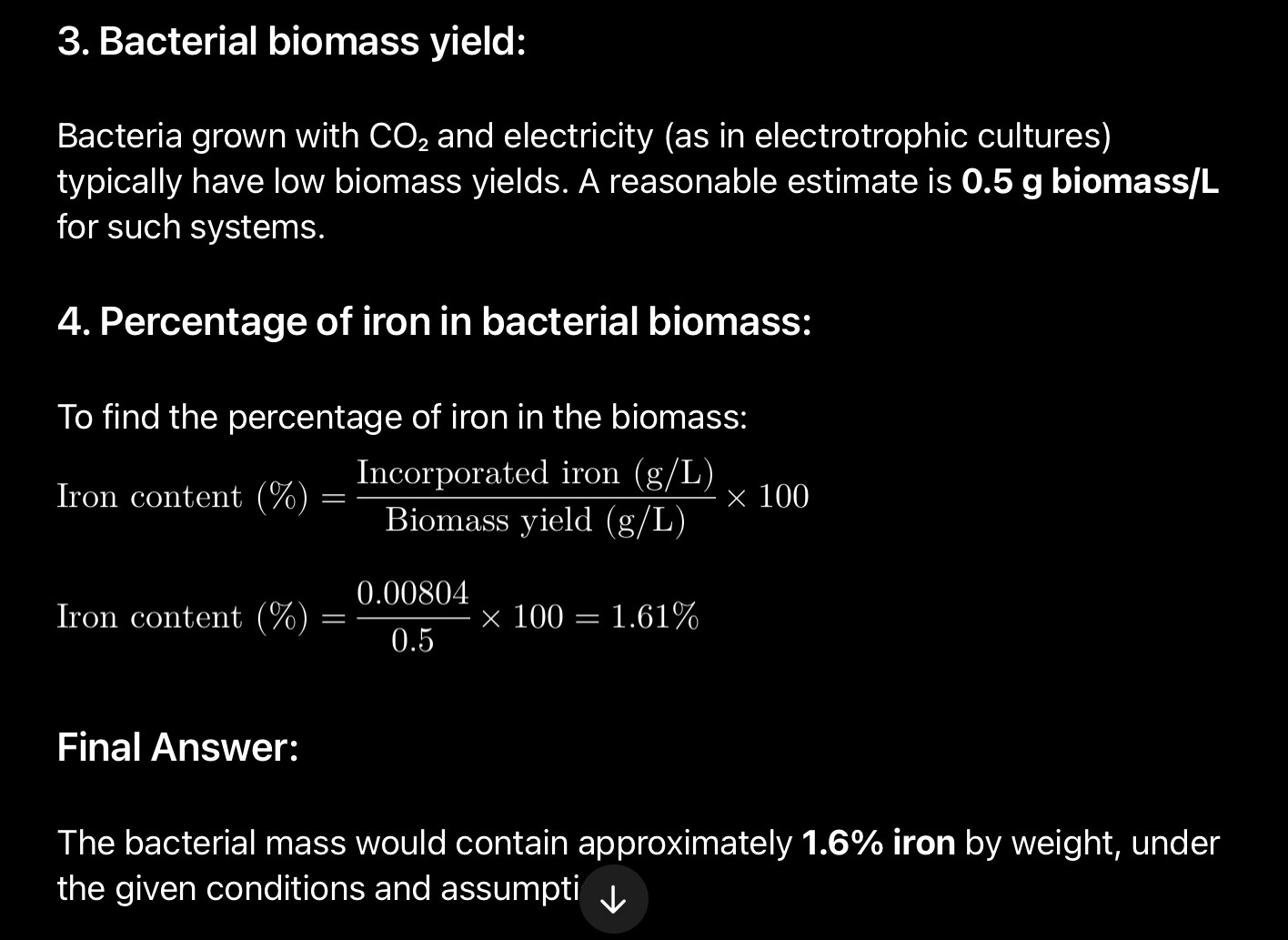
If the nutrient solution’s composition were exactly what the bacterial mass would be (here we are looking at dry weight, i.e., freeze-dried wet mass, as Solein is a dry powder, weight drops by 80% during drying), chatGPT4o is asked for help with the calculation. It assumes that bacteria can absorb 20% of the iron and that the yield in the bioreactor is estimated at 0.5 g/l:

IMG_2551
IMG_2552
IMG_2553

Thus, the percentage obtained was 1.6, which might be possible if all minerals were reported as 5%. The iron content cannot be five percent if all together are five percent. In the clumsy Q&A response from Anni, where the “concentration” of heme iron is 5%, it is stated that less than 5% of Solein’s iron is bioavailable, and 50% of Solein’s iron is released. Let’s calculate: 1.6% in 100g of Solein is 1.6g. Less than 5% of that is bioavailable. Five percent of 1.6 grams, or 1600 mg, is 80 mg. Only 50% of the iron is released from Solein, yielding 40 mg.

If a refined calculation is made, where the previously calculated 20% bacterial iron uptake capacity is raised to GPT’s estimated range of 30%, and the biomass yield in grams is halved, we reach 120 mg, which is very close to Solar Foods’ reported 128 mg (absorbable iron) per 100 g of Solein. Q.E.D.

7 Likes

"FDA currently requires that iron-containing dietary supplements sold in solid form (e.g., tablets or capsules but not powders) carry the following label statement: “WARNING:…"

So, the FDA does not currently require the same from powders as it does from, for example, tablets or capsules; it might be due to some old regulation or similar, which is why this is the case.

However, it may be difficult for the manufacturer or similar to escape responsibility with this, because information is available, and in the longer term, it might not be possible to responsibly exploit that loophole,

and as has been said, it could be a lawyers’ delight.

The highlighted part there again concerns single use, but the problem lies in continuous use:

From the same guideline:

”Hemochromatosis, a disease caused by a mutation in the hemochromatosis (HFE) gene, is associated with an excessive buildup of iron in the body [3,39,99]. About 1 in 10 Whites carry the most common HFE mutation (C282Y), but only 4.4 Whites per 1,000 are homozygous for the mutation and have hemochromatosis [100]. The condition is much less common in other ethnic groups. Without treatment by periodic chelation or phlebotomy, people with hereditary hemochromatosis typically develop signs of iron toxicity by their 30s [3]. These effects can include liver cirrhosis, hepatocellular carcinoma, heart disease, and impaired pancreatic function. The American Association for the Study of Liver Diseases recommends that treatment of hemochromatosis include the avoidance of iron and vitamin C supplements [39].”

In the United States, an estimated one million people suffer from hemochromatosis medlineplus.gov/genetics/condition/hereditary-hemochromatosis/#frequency, meaning iron absorption is not restricted in their intestines, ”Type 1 hemochromatosis is one of the most common genetic disorders in the United States, affecting about 1 million people.” 335 million people live there. If only one in a thousand people in the USA started using Solein (what is Solar Foods’ goal, would it be that little?) that would still be 1000 people among those suffering from the condition. If most of them have already been caught in liver tests or after heart disease has already developed, e.g., 70%, there would still be 300 people left. Let’s further assume that only every second user uses it regularly, i.e., 150 people. Let’s further assume that only every second of them is caught in tests during Solar Foods’ existence and investigations begin into where the iron came from, that’s 75 people. Only every second of them files a lawsuit against Solar Foods with compensation claims, that’s 37 people. Only 18 of them, or half, succeed, and the court finds that the Solein package did not advise testing blood values for latent hemochromatosis before repeated use.

What happens to the company? Lessons can be learned, for example, from the Round Up lawsuits and astronomical compensations, even though the causal link is considerably less clear than with iron.

20-30% of heme iron is absorbed, and 1-10% of non-heme iron, which constitutes 95% of Solein pmc.ncbi.nlm.nih.gov/articles/PMC4179187/ . The company states a figure of less than 5%. However, with heme, it could also be 8%, meaning the company’s estimate is doubled, especially since it’s just a test tube calculation. The protein content is 75%, so a 20g protein bar (27g Solein) could very well contain 2x the company’s estimated 128 mg of absorbable iron = 256 mg/100g. Thus, absorbable iron from the bar, 27x2.56=69 mg, which exceeds the maximum doses for everyone, and especially for those susceptible. That’s almost all so-called excess iron. These absorption matters should rather be exaggerated upwards than perhaps what Solar Foods has done, downwards, because the precautionary principle must be followed in these cases.

The intention is not to disparage a good cause, the bacterium can be changed, but there is a health risk, and a legal risk. Such preparations do not have requirements for extensive testing regarding absorption or side effects, as medicines would. For example, a significant amount of unabsorbed iron also results. Thus, surprises may arise/will arise.

There is also a reputational risk regarding the environmental impacts of the nutrient solution mentioned above, as it is marketed with carbon neutrality. Space protein? Or to be given to everyone, because business? Competitors will certainly seize upon these iron and, for example, ammonia issues, if market share is gained and if they are tried to be silenced. Just be transparent with the reliability of calculations and tests, if there’s nothing to hide. The seven calculations on this forum without official correction indicate that it’s as if someone cannot afford to go public.

3 Likes

Interesting calculations. But I’m missing now what source you are using for the claim that 69 mg of iron would exceed everyone’s maximum doses?

I myself have sometimes taken 100 mg iron tablets daily for weeks after surgery, as advised by a doctor. As a layperson, I have the understanding that for many people, especially women and vegetarians, iron levels would be on average too low rather than high.

1 Like

It’s right there above. Iron deficiency is different from no deficiency. And the main argument concerned calculating the proportion of those for whom all additional iron is dangerous, i.e., one in a thousand people, which is too much even in the US. For the entire population, i.e., mainly healthy individuals, the safe upper limit according to the same source is 45 mg/day. For those with iron deficiency, it would indeed be healthy to use solein for a couple of months after blood loss, but it was not made as a medicine. Iron tablets were also compared above, but they are for those suffering from iron deficiency, in which case iron is not a problem. My example only had a 20g protein bar. From there upwards, the problem only worsens, meaning usage warnings for investigating malabsorption, i.e., it should not be used at all then, and even for healthy individuals, there’s a gram-based restriction. Or guided sales from pharmacies. Stomach problems might naturally prevent some from using larger amounts.

4 Likes

Here is a recent company report written by Thomas on Solar Foods.

Solar Foods’ Capital Markets Day concretized the commercialization process of Solein, the upcoming 02 factory investment, and financial targets. The content of the Capital Markets Day focused on Solar Foods’ role as a Solein manufacturer, which is a capital-intensive route to scale the business. In our opinion, the omission of capital-light business models at the Capital Markets Day was disappointing, as alongside financing solutions, they are the key share price driver in the current development phase. Due to the larger-than-expected factory investment and the share price decline, the price tag for future equity financing has increased, weighing down the value of cash flows far in the future. We lower our target price to EUR 5.0 (previously EUR 10.0) and reiterate our Reduce recommendation.

Quoted from the report:

The company expects the industrial-scale factory to be profitable at the EBITDA level from the year of commissioning of the first part of the factory investment and to turn the metric profitable for the entire group by 2030. This assumption indicates that the company expects fixed indirect costs to be approximately EUR 35-45 million. The new factory is expected to reach full capacity utilization in 2033. At its Capital Markets Day, Solar Foods shared its expectations regarding the development of Solein’s sales price and manufacturing cost over the next nearly ten years. As a result, we have slightly raised our forecasts for Solein’s projected sales prices, but at the same time, we have revised down the factory’s capacity utilization in line with the company’s indicated expectations.

For comparison, the Fineli service reveals with the keyword ‘iron’ that blood contains 41.9 mg/100 g of iron. Solein thus contains about three times that amount, which doesn’t sound entirely impossible yet. The iron in blood is also much better absorbed than the iron in Solein. Somehow, I would think that Solein will probably never be used as anyone’s sole and primary protein source; instead, the idea is to produce a more emission-free alternative and replace some dietary proteins with Solein. For that purpose, it would be excellent, as a large proportion of women and children globally suffer from iron deficiency. Assessing an individual’s iron needs or excess from a blood sample is entirely possible and easy, allowing those who need to avoid iron to simply refrain from eating iron-rich foods, just as they do now. Further information on iron deficiency can be found, for example, on the WHO’s website using the keyword ‘iron deficiency’.

2 Likes