Redeye’s top picks list for this year. Unsurprisingly, SEYE is included in those six.
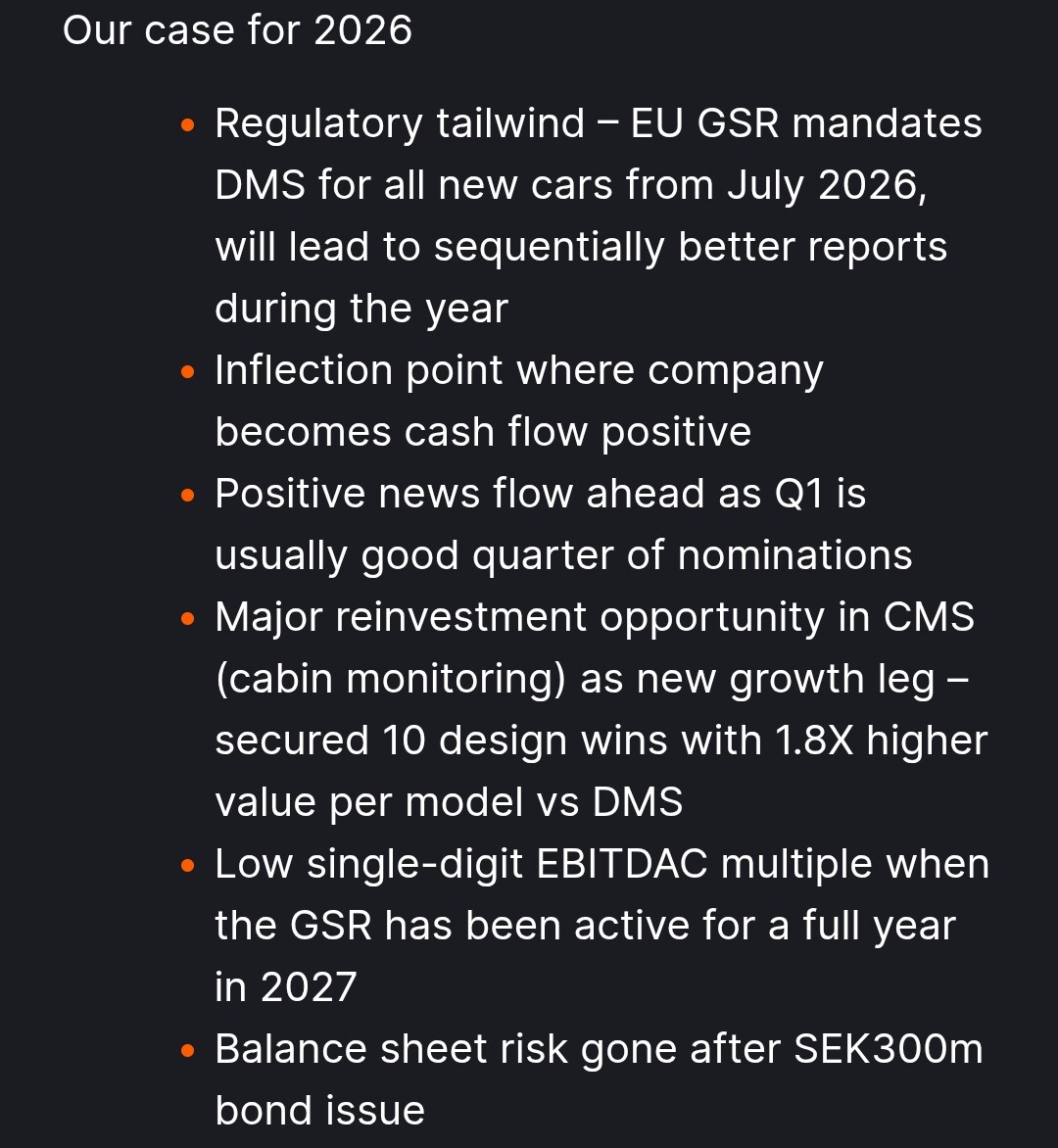
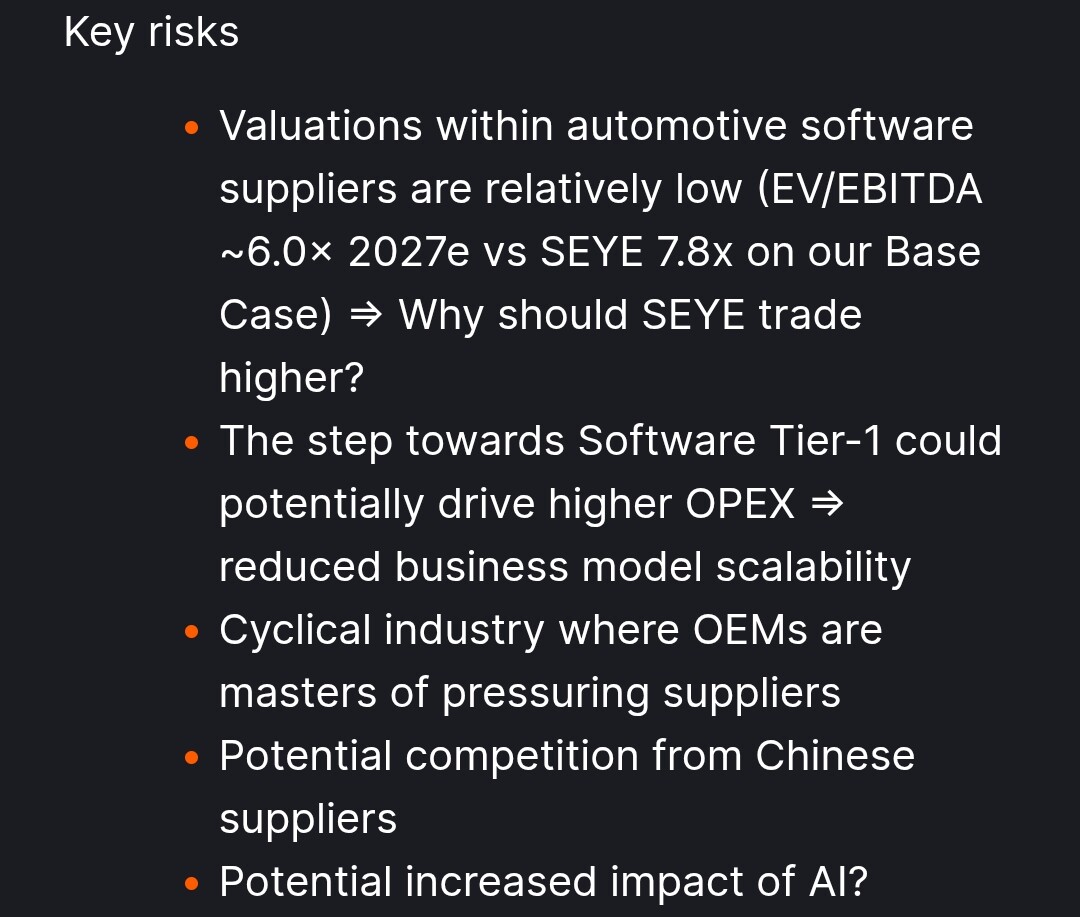
Redeye’s top picks list for this year. Unsurprisingly, SEYE is included in those six.
As a bit of a random comment… Europe’s market share is around 15% or less, so the rest of the world is what matters.
Fortunately, this is especially true in the long run. This year, however, Europe’s share of all DMS systems sold is nearly half. To clarify my previous message, in the long term I am also more optimistic about the European market regarding Smart’s market share.
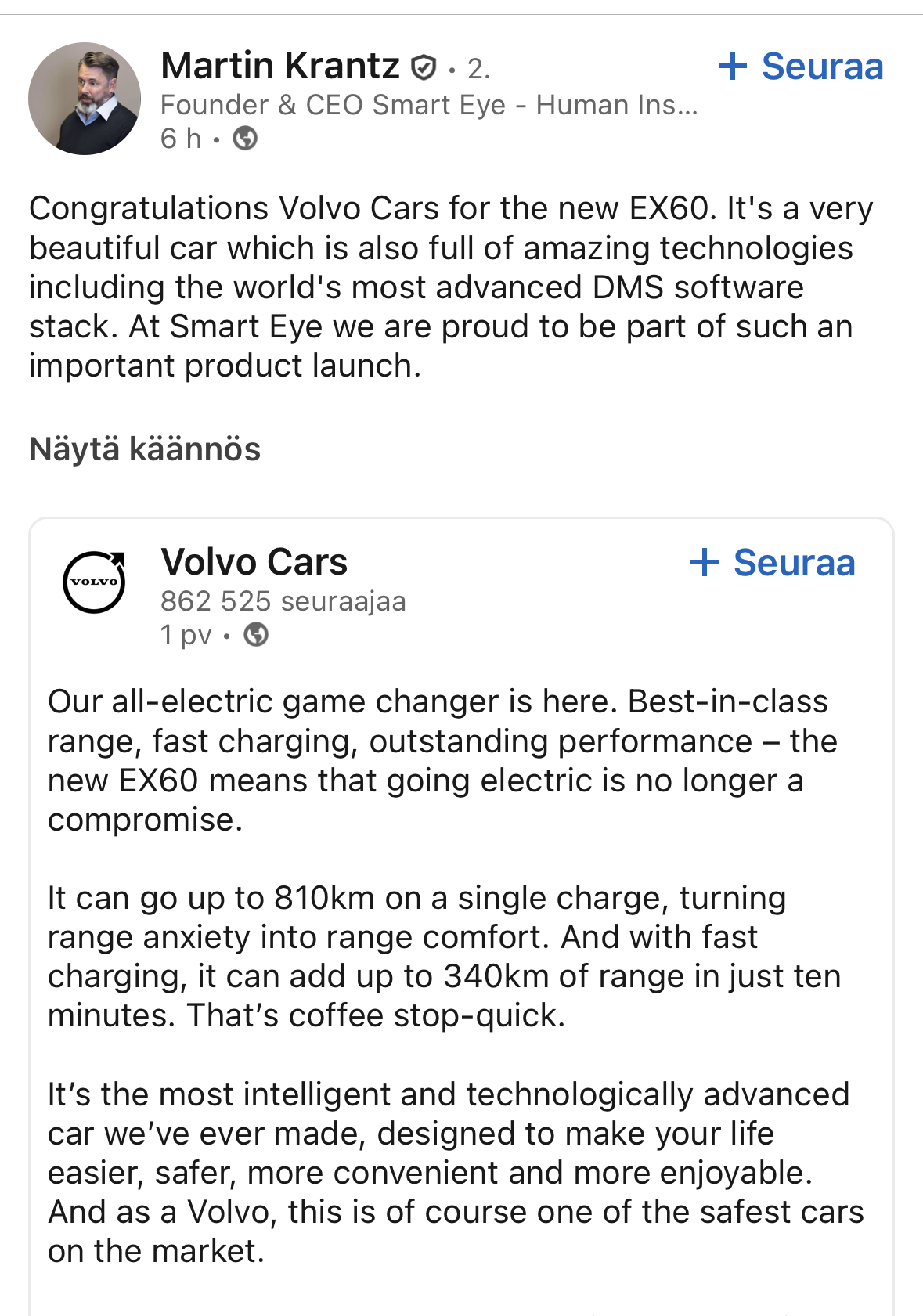
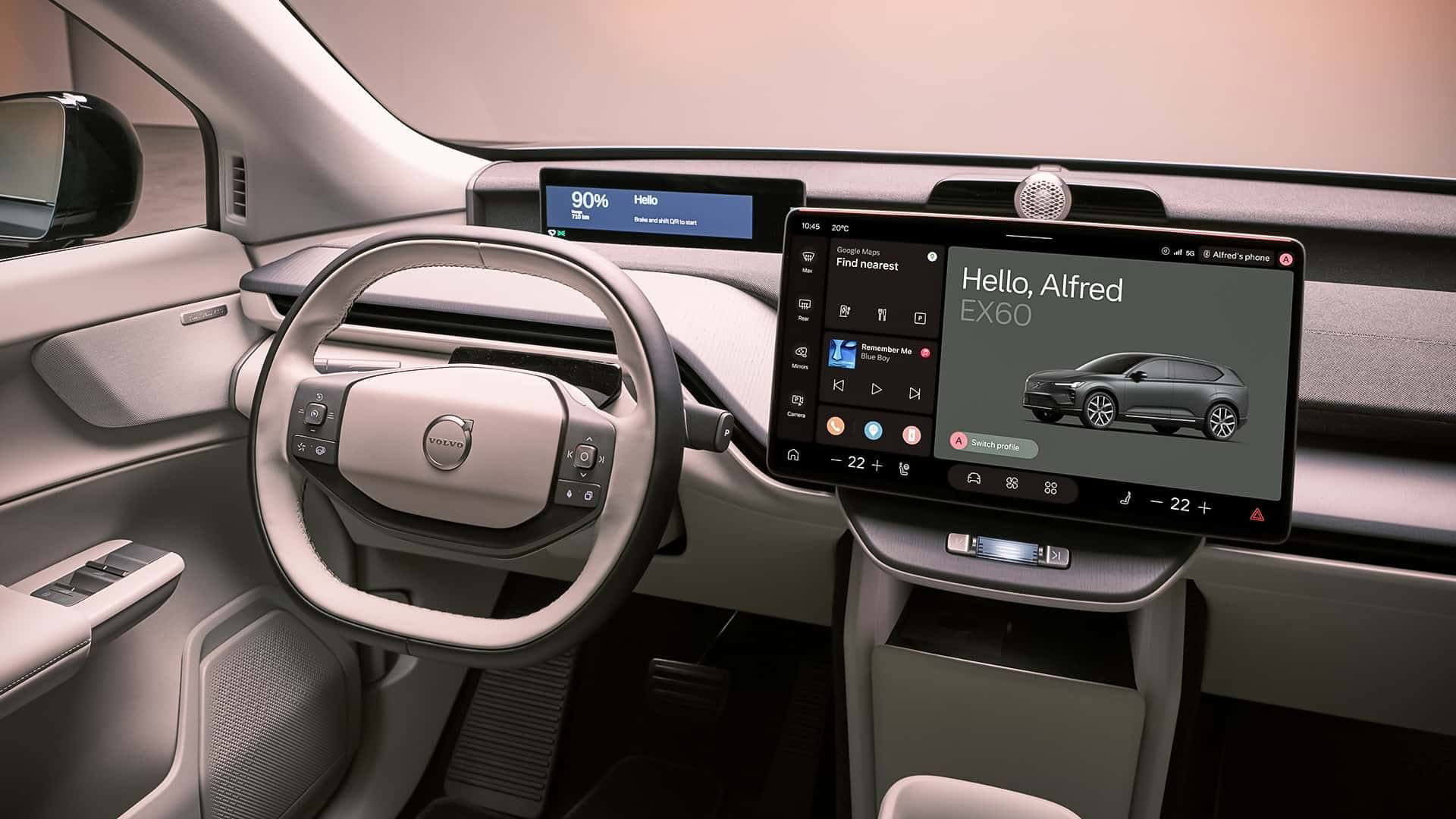
Martin was celebrating on social media when the world’s most advanced DMS was announced yesterday in the new Volvo. The EX60 has two monitoring cameras. One behind the steering wheel and the other on top of the screen.
Yet another new OEM found in some dusty corners.
Highlights:
We view this as a meaningful milestone, not only for Smart Eye, but for the automotive safety ecosystem more broadly. This is the first time an OEM has taken the step from theory to deployment when it comes to camera-based alcohol impairment detection. In our view, this is unlikely to remain an isolated case. While adoption will not happen overnight, we expect spillover effects as other OEMs observe both how technically undemanding the feature is in terms of processing power, and the regulatory benefits of implementing similar functionality, such as EURO NCAP scoring.
In discussions with management, we have learned that Smart Eye’s intoxication detection feature requires little to no additional processing power. The algorithm is built on the same core signals already generated by the DMS, meaning that OEMs can enable the feature without adding new sensors or materially increasing power consumption. This significantly lowers the technical and economic threshold for adoption and makes intoxication detection one of the more attractive incremental safety upgrades available to OEMs
Importantly, regulation is moving in the same direction. Under the 2026 protocol, Euro NCAP awards two points for a DMS capable of detecting impairment from alcohol or drugs, with the weighting of these points set to increase in coming years. This creates a clear incentive structure for OEMs to adopt impairment detection over time, particularly as safety ratings become an increasingly important differentiator.