SciBase AB - Dermatology Diagnostic Devices from Sweden to the World

Our company coverage of Swedish SciBase started today, led by @Anton_Damsten! I’m also involved in the project, so both of us can be tagged in questions :slight_smile:

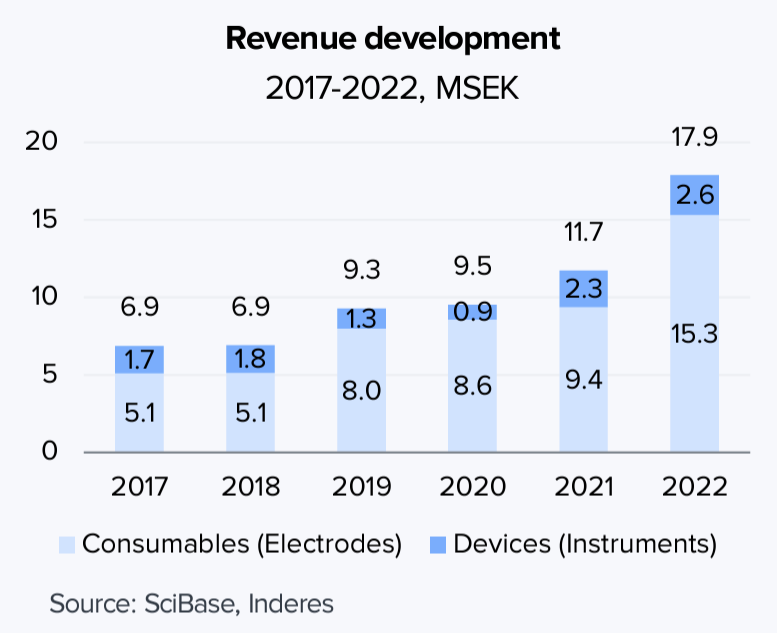
From a Finnish perspective, the company has been informally referred to by us as the “Revenio of dermatology,” as its business model largely resembles Revenio’s: First, diagnostic devices are sold to customers, followed by recurring deliveries of consumables required for the device’s use. Gross margins are around 70%, meaning there’s also scalability if the scale can be made large.

image

:exclamation: Before the reader’s “buying pants” reach their armpits and the “new Revenio” finds its way into their portfolio, it’s worth mentioning that this is a company in an early commercial development phase, which is still burning cash rapidly and requires share issues to support this. Revenue is a few MEUR per year. The investment case thus relies heavily on the revenue growth coefficient and the extent of dilution required to get through the cash-flow negative phase.

SciBase

SciBase is a MedTech company focused on dermatology diagnostics. SciBase was founded back in 1998, and commercialization began in 2014, so the technology has come a long way through research and regulatory approvals to reach the market.

The company’s key innovation is to conduct electricity through the skin (EIS - Electrical Impedance Spectroscopy) and measure the response. Responses differ, for example, in moles containing melanoma versus ordinary ones. The same device works for various skin measurements, and current indications for use include Melanoma, other skin cancers (NMSC - Non-Melanoma Skin Cancer), and skin barrier assessment (e.g., diagnostics related to atopic skin).

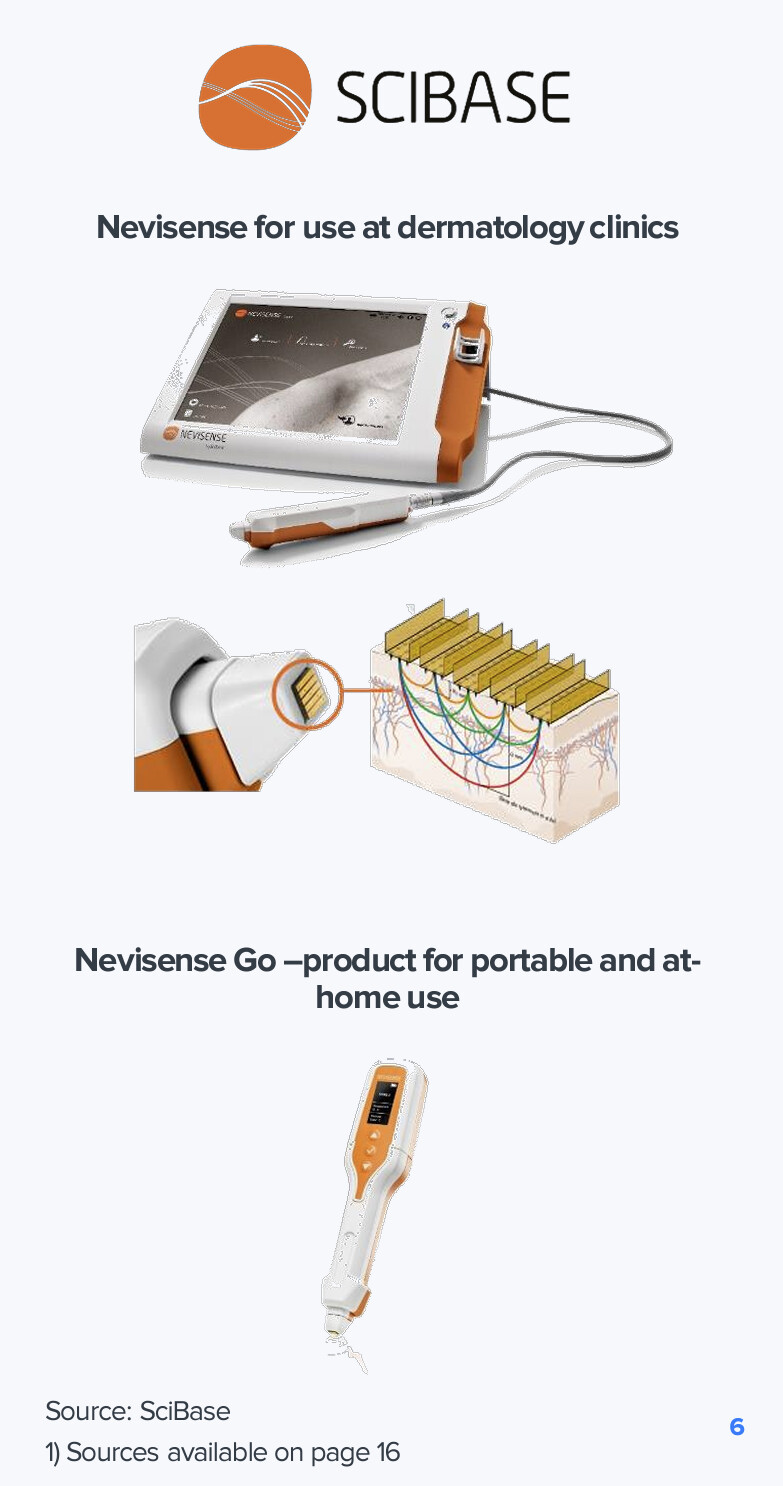
The main device, Nevisense, is for dermatologists’ offices, but the company has also developed Nevisense Go, a product suitable for home use. The latter is commercially further away. In both devices, the patient-specific consumables (electrodes) that go into the device tips are the same, although the electrode for skin cancers is slightly different from that used for skin barrier assessment.

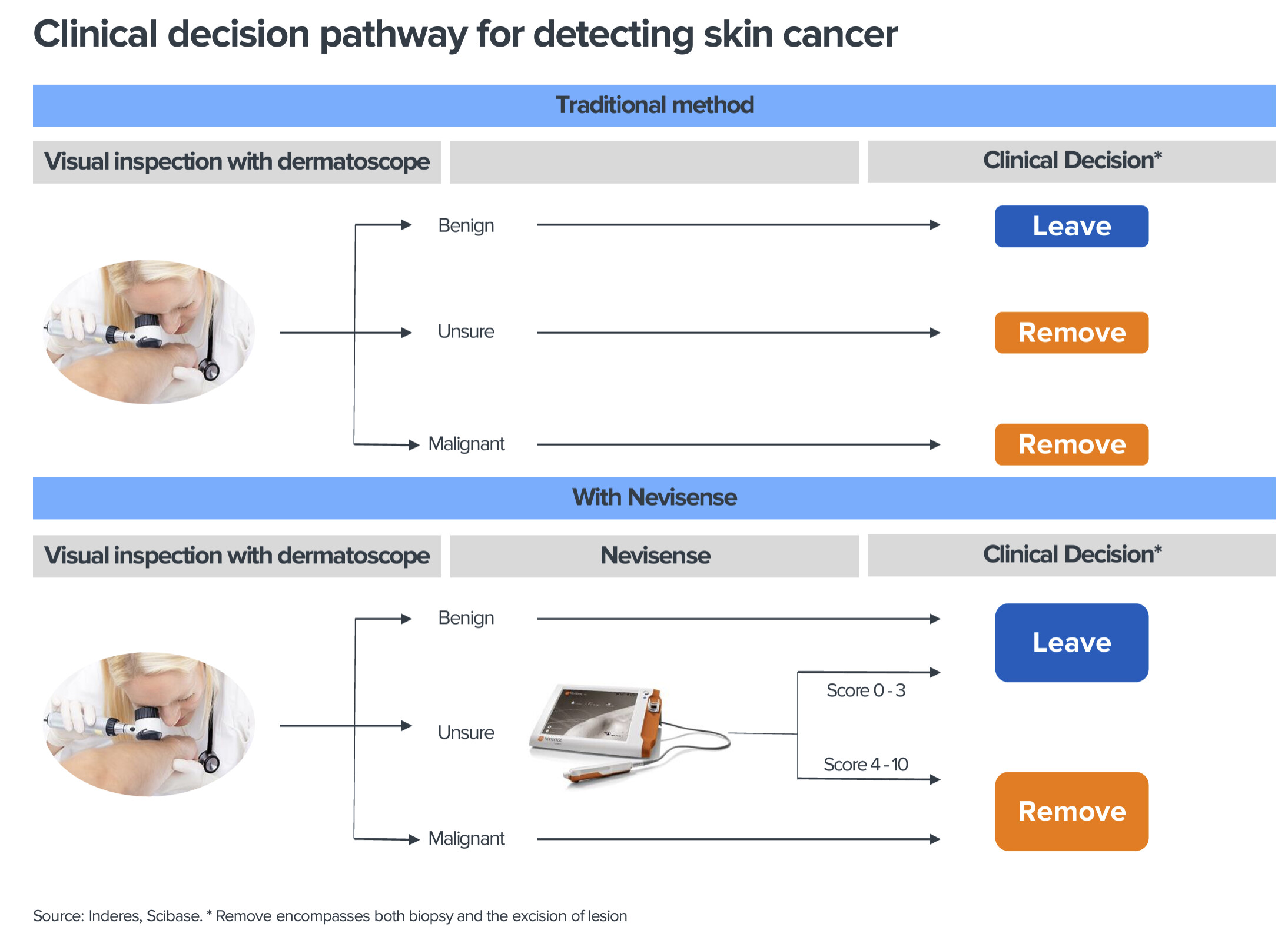
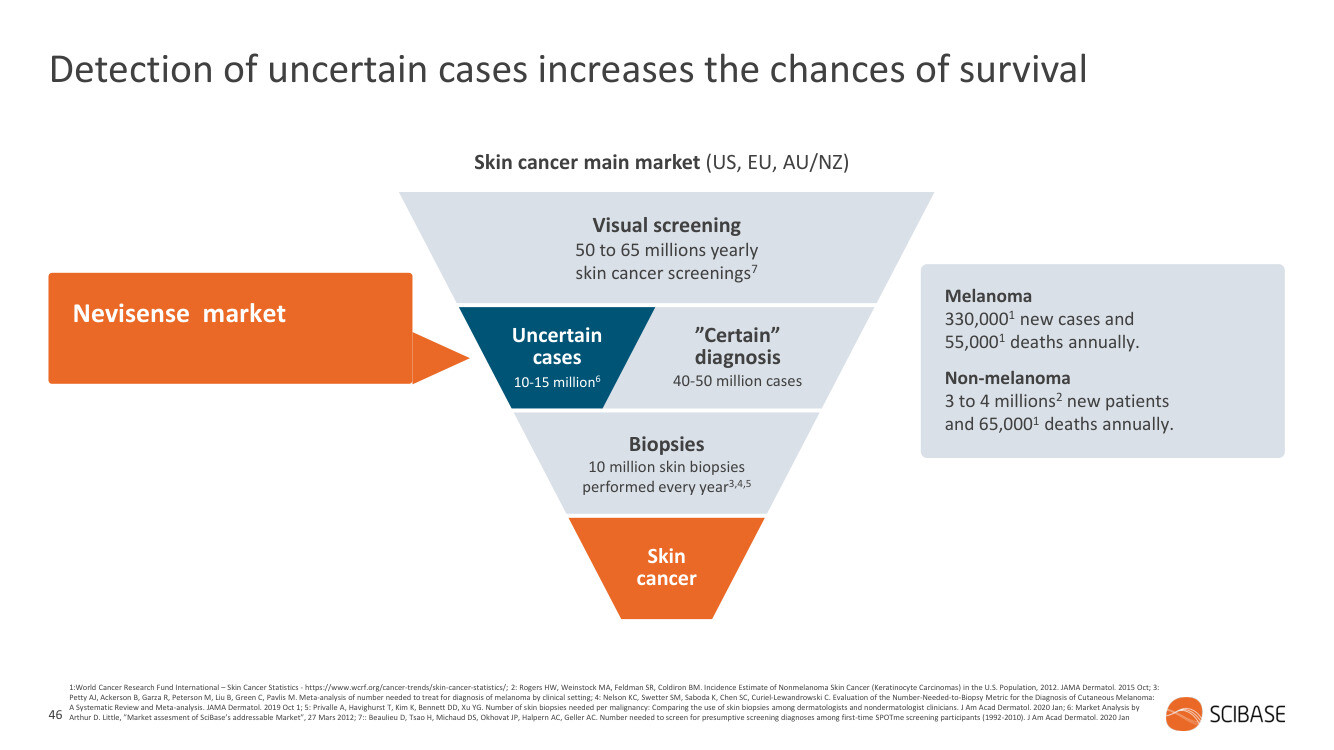
Using melanoma as an example, the device’s purpose is to help doctors, especially in evaluating the most difficult moles. Many moles are removed unnecessarily, and on the other hand, melanoma is an aggressive cancer with high mortality, unless detected at an early stage.

The clinical standard has so far relied on dermatoscopes (“illuminated magnifying glass”), Nevisense provides additional support to the process:

Commercially, SciBase started in Germany, where it has 400 clinics as customers. The company has also been operating in the United States for a while, backed by FDA approval. Germany served as proof of the technology’s commercial use, but the US is naturally a larger market. Currently, cancer diagnostics is the key area; later, the company also aims to grow in skin barrier diagnostics (Skin barrier).

As shown in the image below, SciBase already has larger dermatology-focused players as customers.
In the United States, a key impediment to growth is getting into insurance companies’ reimbursement practices. Customers must submit reimbursement claims for diagnoses made with Nevisense, and after sufficient volume, discussions can be opened with insurance companies about including these diagnoses in insurance reimbursement policies. Each insurance company must be approached individually, and the process takes time.

As mentioned, there is already interest in itself. Among Nevisense’s advocates is Darrell Rigel, who developed the ABCDE method used for melanoma diagnosis. Rigel also uses Nevisense himself. It’s worth watching the company’s recent CMD where he discusses the benefits of Nevisense (link at the end of the post). Of course, sympathetic speakers are chosen for CMDs, but the gentleman certainly has some credentials in the field.

In terms of markets, the greatest potential is in the United States. By application area, skin cancers are estimated to be slightly smaller than Skin barrier, but the company has nevertheless started its commercialization from this side. In Skin barrier, the company’s partner is Kenvue, a spin-off from Johnson&Johnson, but this business is still in an earlier stage.

Regarding competition, we have not identified a clear competitive challenger for the company. Darrell Rigel’s speech was also along these lines. SciBase’s technology is protected by a bundle of patents and a long technological and research development path, which provides the company with moats. It would, of course, be strange if no challenger emerged, but for now, the situation looks serene, and SciBase competes especially against the clinical standard (visual assessment with a dermatoscope).


The company’s strategy is, simply put, to aggressively pursue insurance coverage in the US and, after reaching a sufficient level, shift sales into a higher gear. Devices are sold to customers, and later, updates are followed up with to introduce new use cases (Melanoma > Other skin cancers > Skin barrier) and increase the use of consumables.

The story has many attractive elements, and we believe there are good reasons to trust in the success of its growth. However, the timeline is uncertain and partly outside the company’s control (insurance coverage and customers’ speed in adopting new technology), and changes in the growth coefficient significantly affect how much additional funding the company needs to raise and with what dilution this occurs.

This is a concise overview of the company; I recommend interested parties to review the comprehensive report and the company’s CMD. Let’s continue the discussions here :slight_smile: tag me and @Anton_Damsten in your messages, and we’ll answer to the best of our ability!

Report (in English): Pioneering the future of skin diagnostics - Inderes
CMD: Scibase, Capital Markets Day, 2024 - Inderes

44 Likes

A really interesting company! I don’t have time to read the extensive report right now, so I’ll ask one thing straight away: is there a risk in this case that AI will make this obsolete?

A quick Google search reveals several mentions that photos taken of moles can already be identified as skin cancer quite effectively using AI: https://www.medscape.com/viewarticle/997581?form=fpf (and I really can’t assess how accurate such articles are).

So is there a risk that AI-based detection is good enough (and almost certainly cheaper than this), and the adoption of the device would stall in favor of the other technology?

3 Likes

This was also a key consideration for us and one of our concerns; image recognition wouldn’t have consumables and, in that sense, could be an attractive competitor. But after digging into the matter for a while, we weren’t scared off, at least not yet :+1:

So far, we haven’t come across any extensively studied purely image-recognition-based method that looks like a strong challenger. But it is definitely a possibility. One that reached the market was called Melafind, but clinicians didn’t like it, and production of the device was later discontinued. The story is 10 years old, though, so in the tech scene, that particular product is already prehistoric, and I’m sure better ones are being made today :smiley: the study you linked does seem interesting (and there’s been a big leap there in the last 2-3 years too) and it’s definitely worth keeping an eye on.

Every new product naturally has a long road to gather research evidence, pass through regulatory approvals, and gain a market position. SciBase is in a good position as they are already on the market. And if a competing solution entering the market later is only a notch better, there might be a high threshold for a customer to switch to it, if Nevisense is already found in clinics with insurance reimbursement and is already used for multiple dermatology diagnostic use cases :thinking:

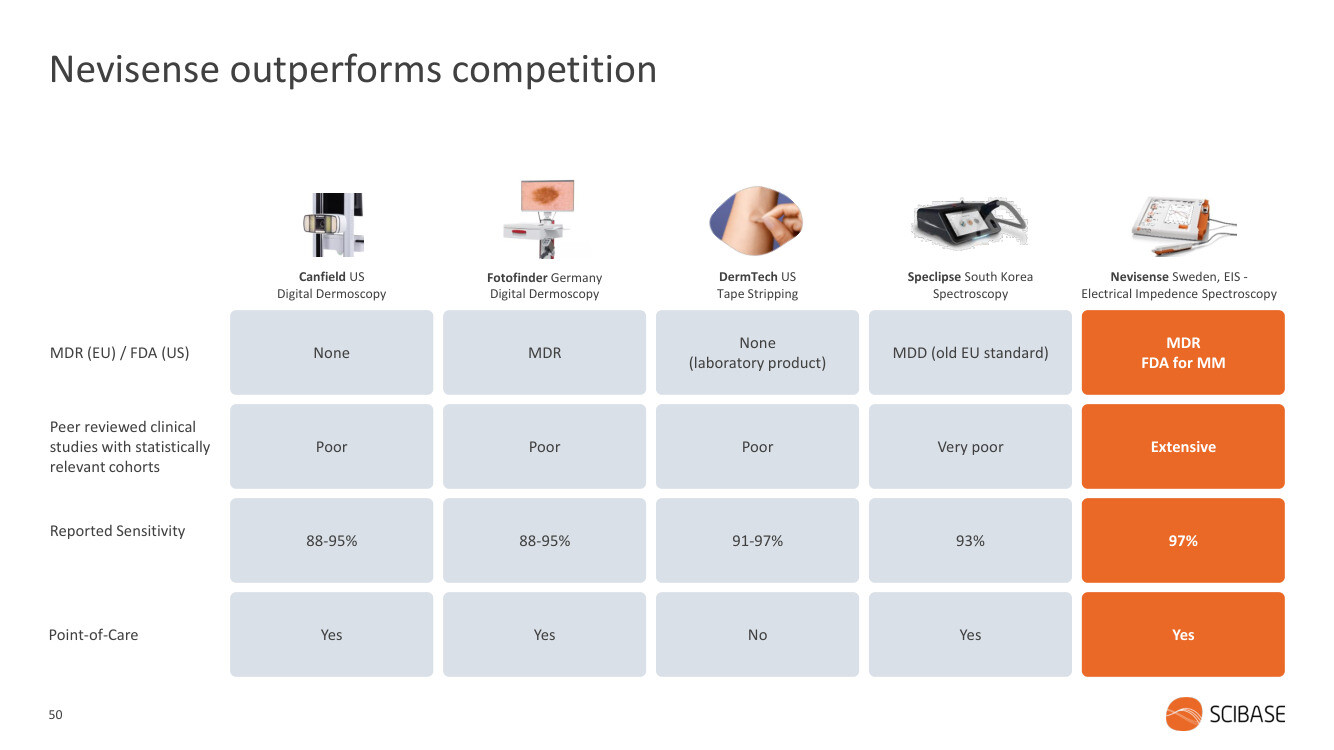
The key challenge with image-based methods, in our understanding, is specifically that they mainly look only at the surface of the skin. In some solutions, I understand that light can reach a bit below the surface (e.g., with Speclips) and measure the spectrum of the reflected light, but that is a slightly different solution and not actually image recognition. SciBase’s Nevisense, on the other hand, measures the skin structure from a bit deeper by conducting electricity through the skin via several different paths. Nevisense also works for multiple purposes, meaning the platform provides benefits for various dermatological diagnostic cases.

Here is SciBase’s competitor comparison (naturally built from the company’s perspective) :point_down:

image

Nevisense’s specialty is that it specifically solves cases that are difficult from a doctor’s perspective. For example, if a person with many moles has, say, 50 moles and 3 of them are unclear, Nevisense is used for those three. Many competitors have studies where the method has been used for all 50 moles, which results in impressive accuracy figures even though clear cases are included. I couldn’t tell for sure from a quick glance if this was the situation in the article you linked or something else. In any case, SciBase has been purist here and focused only on difficult cases:

image

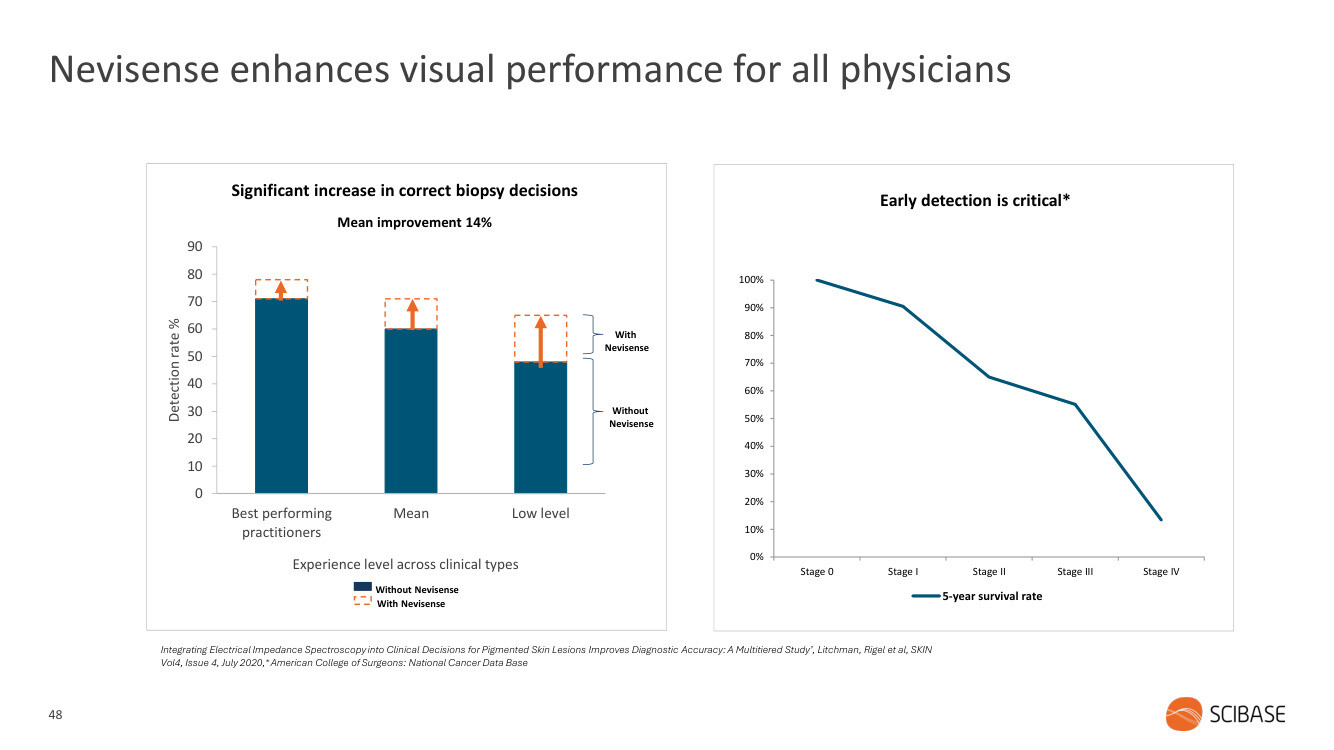
Nevisense helps all clinicians with accuracy, including those with less experience:

image

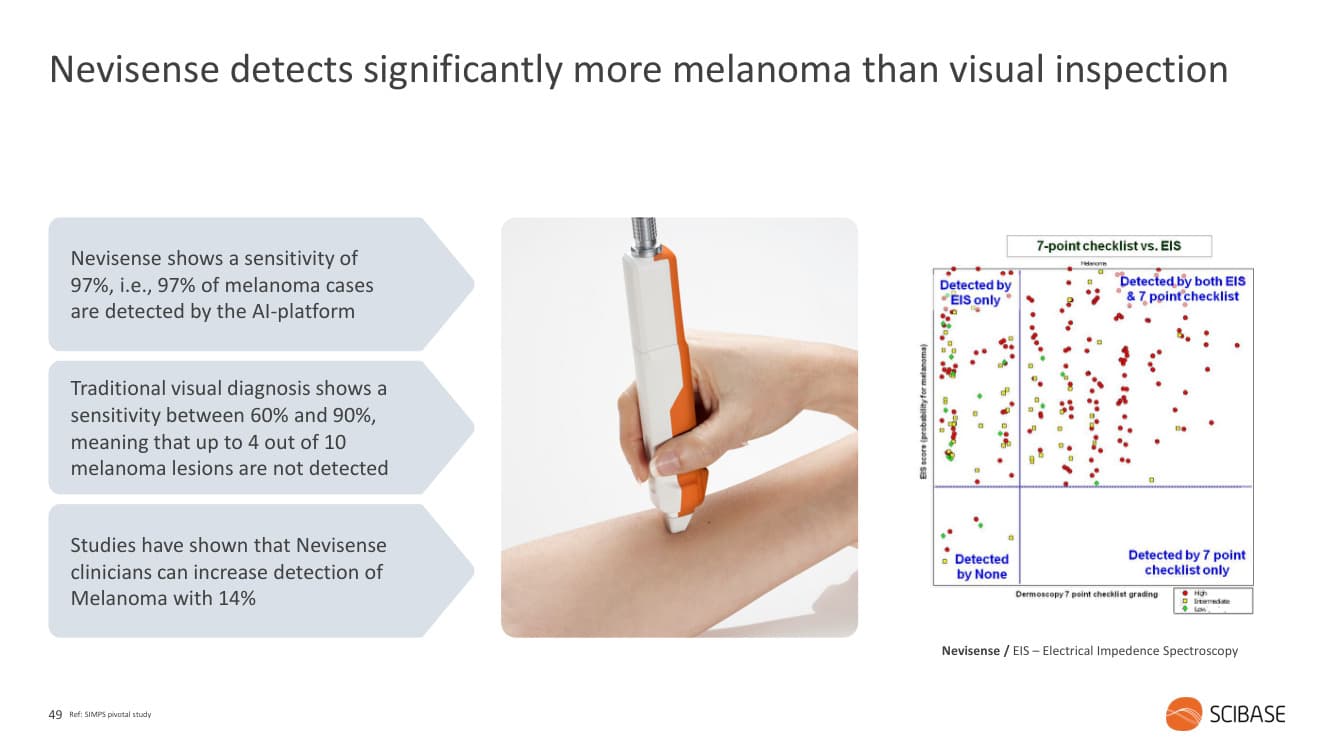
Here Nevisense is used alongside visual inspection. In the study, Nevisense did not miss any melanoma that the clinician noticed (bottom right box), but it found a significant number of those that the clinician would have missed (top left corner). Those melanomas found early are very valuable, considering how quickly the tail drops in melanoma 5-year survival graphs if the melanoma has time to spread.

image

15 Likes

Back when I was following Revenio, this came onto my radar through the Cutica product. But Revenio’s strategy has since focused on the eye care side.

8 Likes

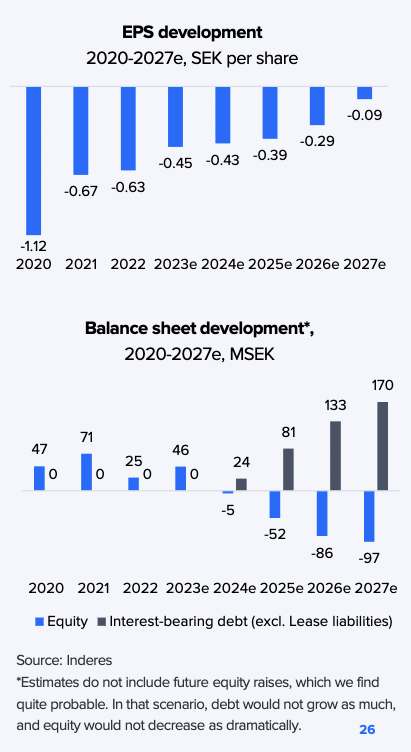
Quite a rough company for an investor with a Finnish mindset. OCF is negative by 2.5x sales and is growing in the same proportion as revenue.

Net sales, SEK 7 248 k
Cashflow from operating activities, SEK -17 827 k
Cash equivalents, SEK 52 353 k

The product itself has a decent margin, but they will have to grow at an insane pace for quite a few years before the annually increasing fixed costs are covered and the financing cycle can be broken. They pulled the classic Swedish company trick here: buying analysis about 3–6 months before a share issue to pump the share price up a bit and thus make the analysis pay for itself. When reading the analysis, it’s worth noting that Anton doesn’t account for future share issues in his assumptions at all, even though they are 100% certain to happen.

In Finland, there aren’t many companies like this on the stock exchange, and financing is handled by venture capitalists or crowdfunding services. It would be nice to have more of these early-stage growth rockets on our home exchange as well :+1:

3 Likes

This is absolutely true, and the investment case in its current state relies on that high-margin revenue growth :+1: why we believe the prerequisites for this are in place:

  • The product has clear value for the accuracy of dermatology diagnostics and has received a good reception from clinicians.
  • The current business is small-scale, mainly from Germany. In the US, a market significantly larger than Germany is being opened, and there are already large clinic chains as customers with room to grow rapidly, and insurance coverage has also been built up (though it still requires big leaps forward).

There are indeed plenty of risks, including at the very least that things progress more sluggishly than forecasted and funding has to be raised through several rounds and from a weaker position if results are delayed. Dilution is significant even in the current outlook (with current forecasts, 150 MSEK in additional funding is needed as a working figure with a 75 MSEK market cap).

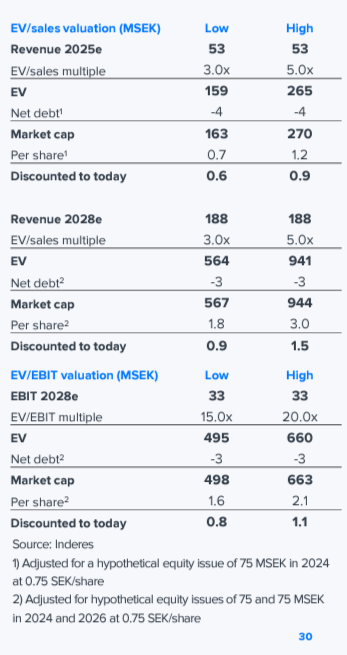
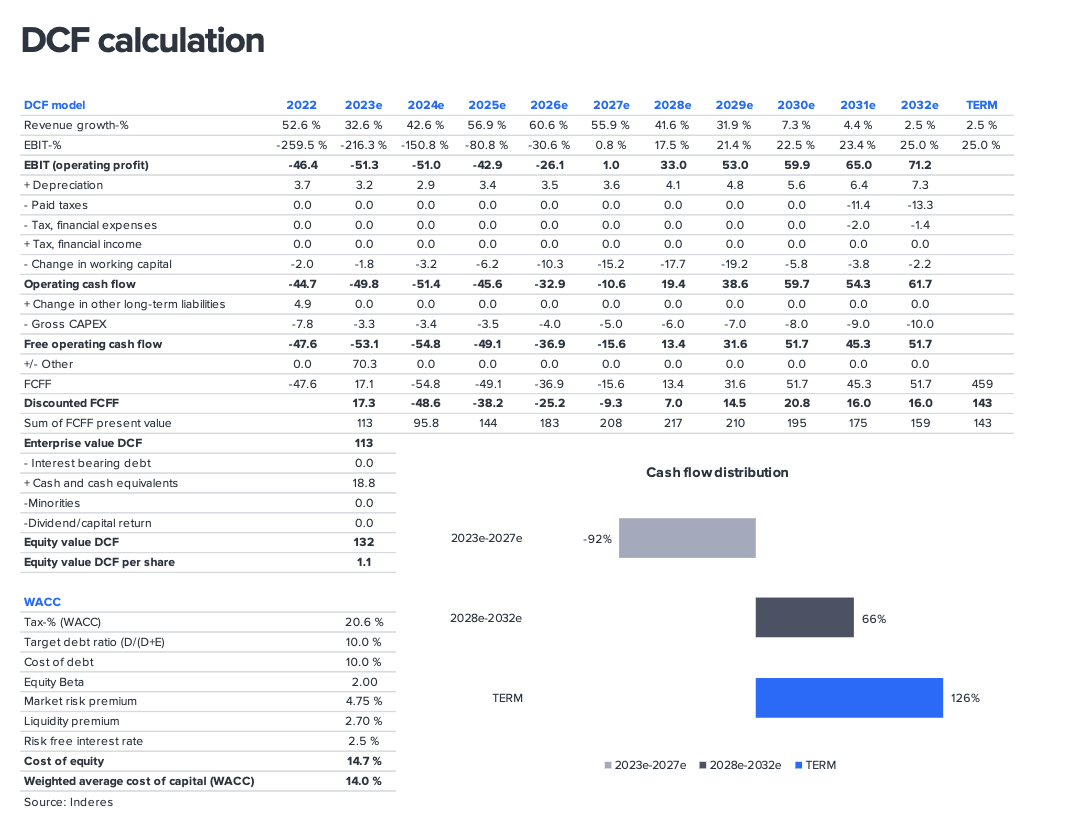
Those expectations for share issues are already mentioned on the front page and they are indeed taken into account as part of the view. Two share issues (2024 and 2026) have been baked into the valuations based on 2025 and 2028 multiples, using the assumptions at the time of the report’s publication. Regarding the DCF, the decision was indeed made not to include these in the forecasts, but a gap is maintained in the target price relative to the DCF value, so they haven’t been forgotten :slight_smile:

image

We don’t offer that kind of service in Sweden either. Our analysis is indeed sold for better information dissemination towards investors, but it’s made clear to the companies that we form our views independently and with an investor’s mentality. This is one key reason why we stand out in Sweden. Let’s gladly continue the discussion on the analysis when reflections and disagreements surface :slight_smile:

8 Likes

This is indeed a major challenge in this sector for small companies, as you first have to pay high regulatory costs and then huge sales and marketing costs start running while the need for working capital explodes. Revenue growth should almost be 70%+ per year, or else the product should simply be licensed to a larger player that already has the sales infrastructure in place. COGS is so small, however, that by getting rid of sales and marketing costs and reducing administrative expenses, SciBase would become profitable almost immediately. With that forecasted 40–50% growth, a massive amount of shareholder capital will be destroyed before the company starts minting money. The “go big or go home” strategy certainly offers the informed investor a chance for big returns if they guess the growth percentage correctly.

In my opinion, this is a very confusing decision, because valuing with multiples is just a DCF model in disguise, and now you have conflicting valuations in the report. Of course, the problem is that your standard DCF model is not at all suitable for growth companies, and the analyst is forced to try to smooth out the intervening years between high-growth years and the non-existent growth of the terminal phase (TERM phase).

kuva

kuva

The right solution would probably have been to keep the review period long enough to cover the entire 2030s, even at the risk of the model not fitting on one page. Now, growth is killed off quite artificially in the model in 2030, even though this company could very well grow at double-digit rates throughout the 30s.

For a micro-cap company, it doesn’t actually matter that much what your view on the stock is, because the battle there is mostly for visibility among investors. I’m not trying to imply that anything improper is happening here. I’m just noting, as an experienced small-cap investor, that abroad it’s quite normal to buy advertisements from various investment media (of which Inderes is one) before a share issue to drive the price up and create liquidity for the stock. In Finland, this phenomenon is still so rare that I think it’s worth mentioning.

4 Likes

Thanks! I take your points, let’s let these simmer :+1: @Anton_Damsten

A longer forecast period will be needed here, especially if the skin barrier side starts to gain traction and we begin to include more of it in the forecasts. In this use case, the growth path starts further out and reaches broader markets, which means a 10-year horizon is likely too short by then.

2 Likes

Weak share price performance halved the previous target price of 0.8 SEK and the ‘Add’ rating:

New Target Price 0.45 SEK

New Recommendation Reduce

There is a grain of truth in that this time :sweat_smile: admittedly, it’s a bit of a counterintuitive situation when low absolute valuation becomes a central problem.

Aside from the financing situation, we believe SciBase’s business still looks to be heading in a good direction, although signs of success in US growth will have to wait until 2025-26. The Q4 report did not change the situation.

The financing risks we previously highlighted are becoming the main problem for our view and expected return. Over the next 3-6 months, the company will (presumably) raise financing via a share issue worth about 1-3x its current market capitalization. The dilution this brings to existing owners fluctuates very drastically with the current low absolute valuation, whereas there was more room for maneuver in the last report.

In our assessment, there are few positive business drivers in the short term, but presumably clearly more on a 1.5-3 year horizon. At the current valuation, there would be an excellent expected return if the financing could be raised at a higher valuation (and US growth succeeds in the coming years), but we really couldn’t identify a driver that would realize that higher valuation, and at the same time, there are still risks that the situation will deteriorate (in which case the value of existing shares would be diluted to a very low level).

If the share price were to jump +50-100% for some reason and financing was raised at that level, the situation would improve clearly and we would be wrong in our view, but at this point, we have nothing concrete to lean on for such a scenario.

3 Likes

Hi, can someone explain this subscription matter very simply? I bought a very small position in Scibase shares a while back, and now I have a negligible amount of “Scibase Holding AB UR” unit rights in my Equity Savings Account (OST); the position is practically worthless. I also have “Scibase Holding AB” shares; their value is relatively the same as at the time of purchase, though they are significantly in the red. Do I need to do something now that I received a message saying it’s the last day to trade the UR?

2 Likes

My understanding is that I could still sell them today, and if I don’t sell, they will expire worthless? Of course, it’s not worth selling when the value is lower than the transaction cost :joy:?

Sure! In practice, a rights holder has three options:

  1. Sell the subscription rights (Unit Rights) on the market by today at the latest
  2. Exercise the subscription rights: Here, the rights holder subscribes to one share and 4 warrants at a subscription price of 0.42 SEK. The warrants give the right to subscribe to SciBase shares at a 1:1 ratio and a price of 0.42 SEK/share in April 2029 (The deadline for notifying the exercise of subscription rights is May 7th, at least according to previous information)
  3. Leave the subscription rights in the portfolio unused (=i.e., do nothing)

Yes, but there is also the option to exercise the rights :smiley: Essentially, option 3 is the worst; the rights still have some value (at least something is still being paid for them on the market), and in this situation, they would expire worthless.

Probably some people will forget to do anything and end up with option 3 anyway, but for those staying on top of things, the choice will likely be between options 1 and 2. Here, the rights holder needs to evaluate how to value the warrants; shares can be bought from the market for less than that 0.42 SEK subscription price, but those four warrants received in addition to the subscription also have some value. A warrant is an instrument for taking a view on SciBase’s success (and ultimately, the value is determined by where the share price is in April 2029).

Some comments regarding the warrants can be found in the latest analysis, but we cover the share and not the warrants, so we haven’t commented on the matter very specifically :smiley:
https://www.inderes.fi/research/share-starts-trading-without-unit-rights-and-warrants

image

3 Likes

Can anyone advise what the ticker for that turbo warrant is? The one of the sort that captures the lion’s share of future value creation?

There seems to be quite a large number of different instruments on Nordnet.

SciBase has found its way onto TV in the US:

https://www.nbclosangeles.com/california-live/mole-or-skin-cancer-a-new-device-is-making-detection-easier-than-ever-saving-lives/3424807/

2 Likes

Antti’s preview comments as Scibase releases its Q2 report on Wednesday. :slight_smile:

We expect revenue to have continued to grow well at a still low absolute level, with profits continuing to fall further into the red. Once again, we’re looking forward to any additional visibility on commercialization progress and timelines, especially in the US, as we see this as a key driver for achieving cash flow neutrality and reducing the risks of the investment case. With the successful capital raise in the spring, the company’s near-term funding needs are covered, but an update on the burn rate and funding runway is still interesting as further capital is likely to be raised in about 6 months.

1 Like

A US expert panel has evaluated new melanoma diagnostic technologies and concluded that Nevisense’s AI-based solution significantly improves early detection.

Uncertainties related to SciBase’s stock concern the timeline for the expansion of insurance coverage and the adoption of the technology, but Inderes’ view on the company remains unchanged.

3 Likes

SciBase has entered into a collaboration with Seraly Dermatology in Pittsburgh. :slight_smile: And below are Antti’s comments on it. :slight_smile:

The customer is integrating several Nevisense systems into their skin cancer detection process. Seraly Dermatology appears to be a small player, but every new customer strengthens the Nevisense product’s strong market position.

Here is Luiro’s latest company report on SciBase. :slight_smile:

SciBase grew strongly in the US during Q3, but the day’s biggest news was the large “capital raise,” which is expected to support the turn to positive cash flow.

SciBase kept building its commercial momentum in the US where it achieved strong revenue growth in Q3 from low levels. Yet, the major news of the day was the large capital raise, which according to our current assumptions would carry the company to cash flow positivity. After adjusting for the capital raise, the risk/reward is starting to improve but is not yet looking attractive enough as we also expect the rights issue to put downward pressure on the share. We adjust our target price to SEK 0.45 per share (was 0.40) and reiterate our Reduce recommendation.

2 Likes

SciBase’s Q3 video is now also out :blush:

Content:
00:00 Intro
00:12 Summary of Q3
01:47 US market
05:08 Financial situation and warrants
10:20 Positive drivers and risks

2 Likes