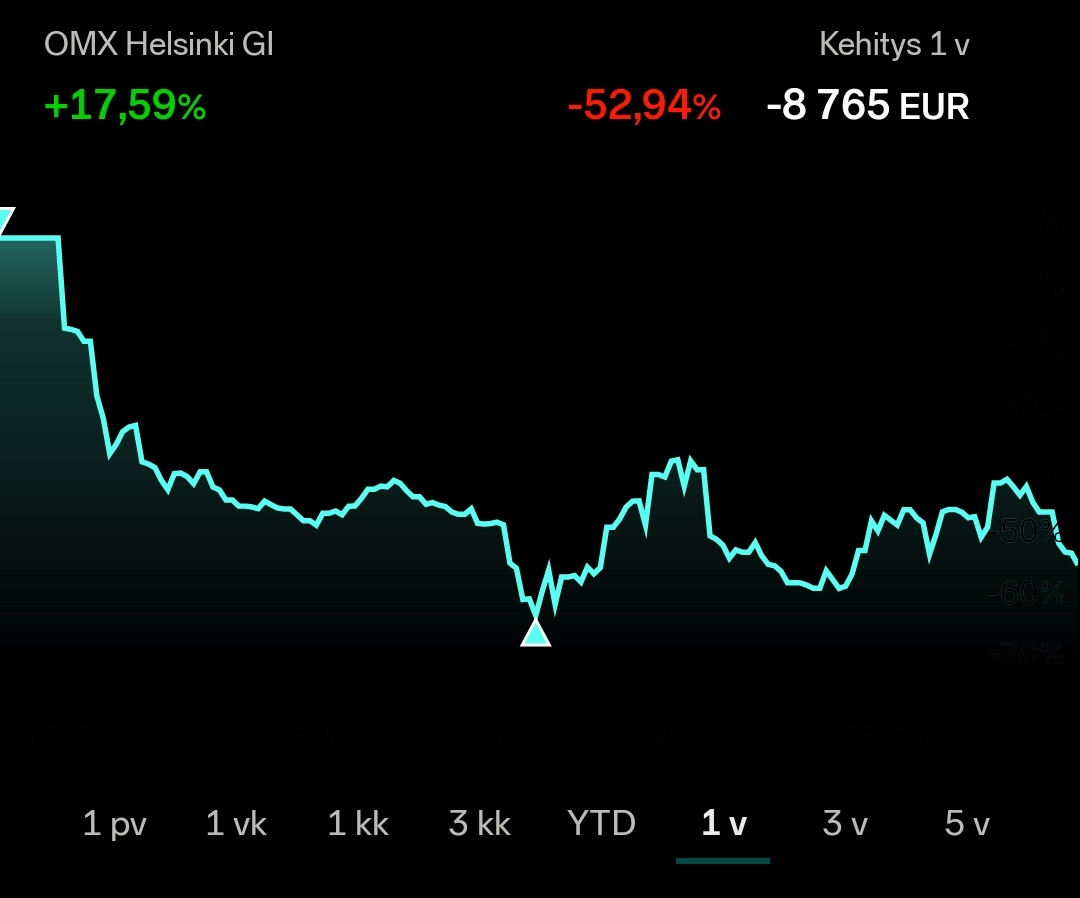
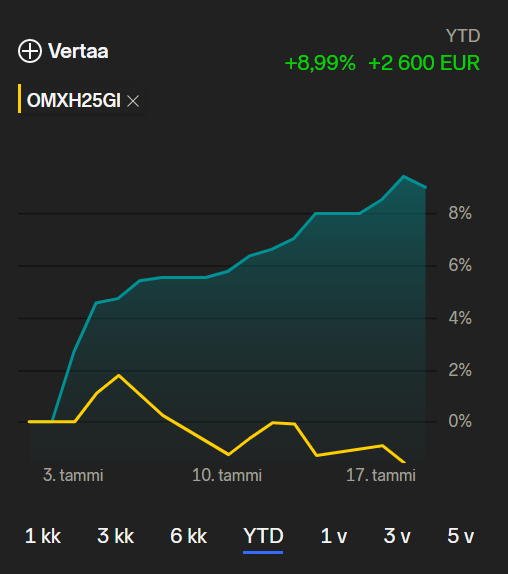
Portfolio Returns %

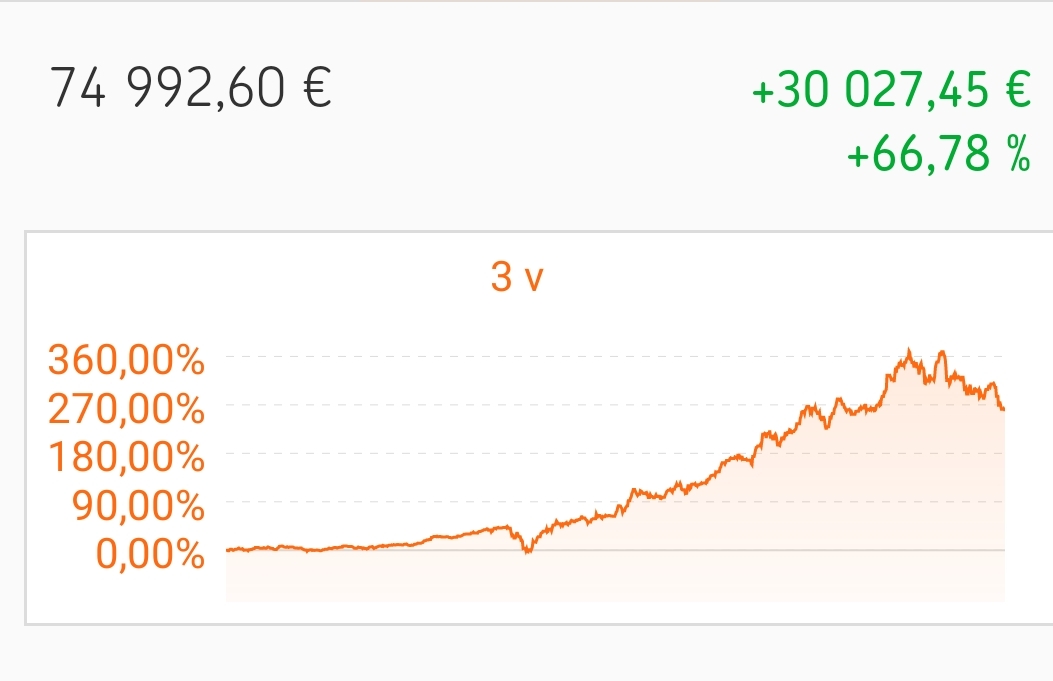
My portfolio’s return over the past 1.5 years has been about 950% (no decimal point missing). I haven’t made any significant adjustments to my portfolio, but the time for that will come this year, as the moderate investor in me constantly demands portfolio diversification (I’m currently operating with a symbiosis of Dragon / All Weather Portfolio ideas).

A brief background. I’ve been an investor for about 20 years, primarily as an index saver, and in retrospect, with too little exposure to US markets. During the financial crisis, I adjusted too much and paid some tuition fees. As a stock picker, I’ve been an underperformer, mainly because I’m a “safety first” type, meaning I’ve bought strong value companies. But index saving has always felt natural, and a large part of my investments has always been in index funds/ETFs. Annualized return was roughly 5% until late spring 2020, so it could have gone much better.

As an economist, in the aftermath of the financial crisis, I became increasingly disturbed year by year by a certain disparity between the real world and the financial world. In Western countries, demographic structures are no longer favorable for economic growth. At the same time, the share of states in GDP has grown, and in most of the Western world, state indebtedness in the 2010s significantly exceeded economic growth figures. What constitutes the stock market value of Western companies? Has so much value been extracted from emerging markets over the last decade? How much of the value comes from the indebtedness of societies? How much of the value is simply explained by the weakening of the denominator (€/$)? And many other questions I tried to find answers to in the last decade. Answers were found, but they were very contradictory and poorly coherent with each other.

The COVID-19 crisis and central banks’ response to it opened my eyes. People much smarter than me struggle with these issues themselves (and with others), so I don’t claim to know for sure how things are. But I dared to take a much stronger view when central banks showed what was most important to them. In short: we are likely in the final phase of a larger cyclicality, i.e., a debt bubble (roughly according to Ray Dalio’s or Strauss/Howe’s cycle theories). Humanity is so indebted that expansionary monetary policy is the only option, because if the debt burden had to be reduced, the current economic systems would lose their foundation. The consequence would be a massive, multi-year (perhaps even a decade-long) depression, which would destroy social stability, pension systems, and a significant portion of the current standard of living. Humanity would eventually recover from it, but those in power and the central banks currently implementing broad policies want to avoid that outcome for perfectly valid reasons. The only tools for avoiding it, however, seem to be increasing the amount of debt and the supply of cheap money. When the music stops and what means are available to resolve the situation, one can only guess. For example, I consider it quite likely that a partial reset will occur, where central banks start buying government’s 50/75/100-year bonds at zero interest, thereby allowing freer use of interest rates to steer the economy and ultimately to a controlled reduction of debt levels. The financial world would certainly like such a solution, but of course, the inflationary effects are frightening. Currently, attempts are being made to shrink the real value of debts through asset price inflation, but its effects have started to come through too strongly into the shopping basket (in a broad sense) and the purchasing power of ordinary people.

In late spring 2020, I concluded that I wanted to exit euros. Outside my investment portfolio, I have a few investment properties and good income-generating ability, so my cash flow in euros allows for a comfortable living in pretty much any scenario. The first part of the exit was a defensive 25% allocation to gold, precious metals, and mining companies. The second part of the exit was a more offensive 75% allocation to Bitcoin and other cryptocurrencies. The return on the first part is close to zero, the return on the second part is about 1130%, of which various interest or staking yields are ~80%. I have kept most of the interest in cryptocurrencies, so the actual average interest rate is about 7% – and I only started chasing interest about a year ago. Even a year ago, my investment case in crypto was to sell 70-90% of the position into hype within a year. There have been several mini-hypes, but currently my view is that the price level has progressed sustainably to current levels. Of course, volatility has been quite high, but the amount of underlying adoption, technological development, and growth in cash flows keeps the real value in the same ballpark as the price level – although one can take various perspectives on the range of real value, especially when talking about 5+ year outlooks. But no more on that topic, so as not to stray too far from the thread’s subject.
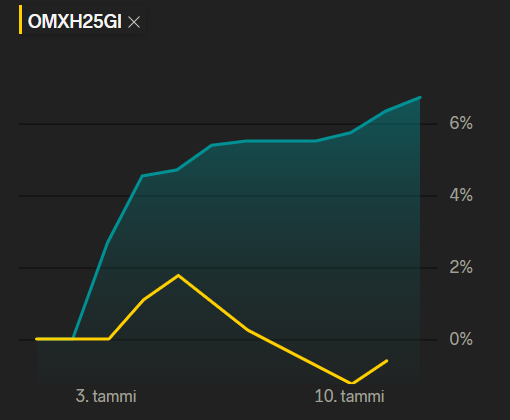
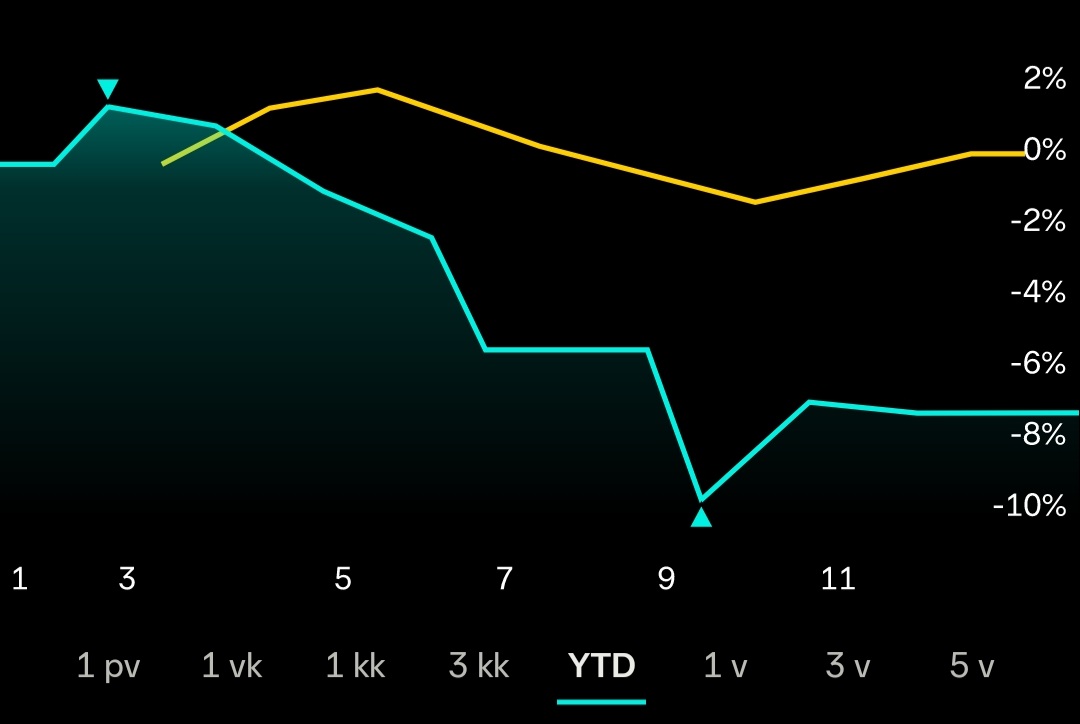
71 Likes

Strong rotation and personal January rally with a diversified portfolio…

14 Likes

Have you shorted my portfolio?

34 Likes

Oh my goodness. Lucky bottom picks at the end of 2021, which have risen significantly daily over the last month. The rest of the gains are due to value rotation and rising crude oil in long-held positions. Once the remaining dividends hit the account at the end of the month, things will surely be good.

2 Likes


January destruction. Not the best start to the year indeed. Let’s see when we get back into the black. At least in the south, it’s above zero outside today..

57 Likes

Value Investor’s January:
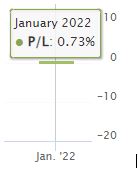
Plus: 0.73%
Tokmanni
OmaSP
Sampo
Purmo

9 Likes

Let’s briefly wrap up the year. I have to be happy, even though I’ve made a few mistakes.

Biggest events:

Herantis Pharma sold in January, Myllymäki style :smiling_face_with_sunglasses:
Nokia also joined the WSB hype.
Valoe had good returns in the beginning of the year and a couple of smaller trades too. :smiling_face_with_sunglasses:
Kamux exited when problems started to emerge, and Enersense also went to the side a couple of times.

Otherwise, I’ve tried to sit on my hands with varying success. :grinning_face:

The four largest holdings in the portfolio currently are Incap, Sampo, Tecnotree, and Harvia.

7 Likes

May I stir the pot a little here, as many talk about portfolio returns? I think of my portfolio, as one major shareholder of a listed company said, that the return is visible in tax records. That is, there is no return until shares are sold or dividends are received. It doesn’t matter if the stock prices have risen by 500% if you don’t sell.

2 Likes

Of course, there is no income without sales, but the value of the assets has increased. However, a stock in a publicly listed company is one of the most liquid asset classes. It is therefore easily convertible to cash, if one so desires.

Even one’s own home is taken into account in the wealth calculation, even if there is no intention to sell it.

18 Likes

You are right, with an equity savings account (OST) things are a bit different, as the tax is only paid when the funds are withdrawn. All in all, the thread name could just as well be Portfolio Value Development.

Exactly… value development is not profit!

You sell all shares and “book the profit.” You buy the same shares back. Does the profit disappear?

For simplicity, let’s ignore taxes and trading costs.

3 Likes

When your portfolio is, for example, at all-time highs (ATH), how do you interpret the situation?

A: Today I am “rich”
B: Today I have a chance to “get rich”
C: Doesn’t matter, it’s not the right time to think about it yet.

I was also rich in 2000 and then I wasn’t…and the same again during the last financial crisis. I won’t make the same mistake a third time. Now I’m shorting and getting richer…at least somewhat, and waiting for a clearance sale with a large cash position.

3 Likes

Money and stocks are instrumental values. If the portfolio also produces intrinsic values (such as freedom, peace, self-fulfillment, or the opportunity for pleasure), it can probably be considered a success in personal value creation. Although, strangely, these seem to follow percentages at least causally. :grin:

Disclaimer: To keep it from becoming too philosophical, my YTD is -2.18%, but over the year, a safely crawling +16.36%.

1 Like

Perhaps this rally in returns over the past few years only became real for me now that I’ve cashed out the profits and gradually invested the money elsewhere, such as in business. Of course, money now allows me to see the world more freely and make my own choices.

21 Likes

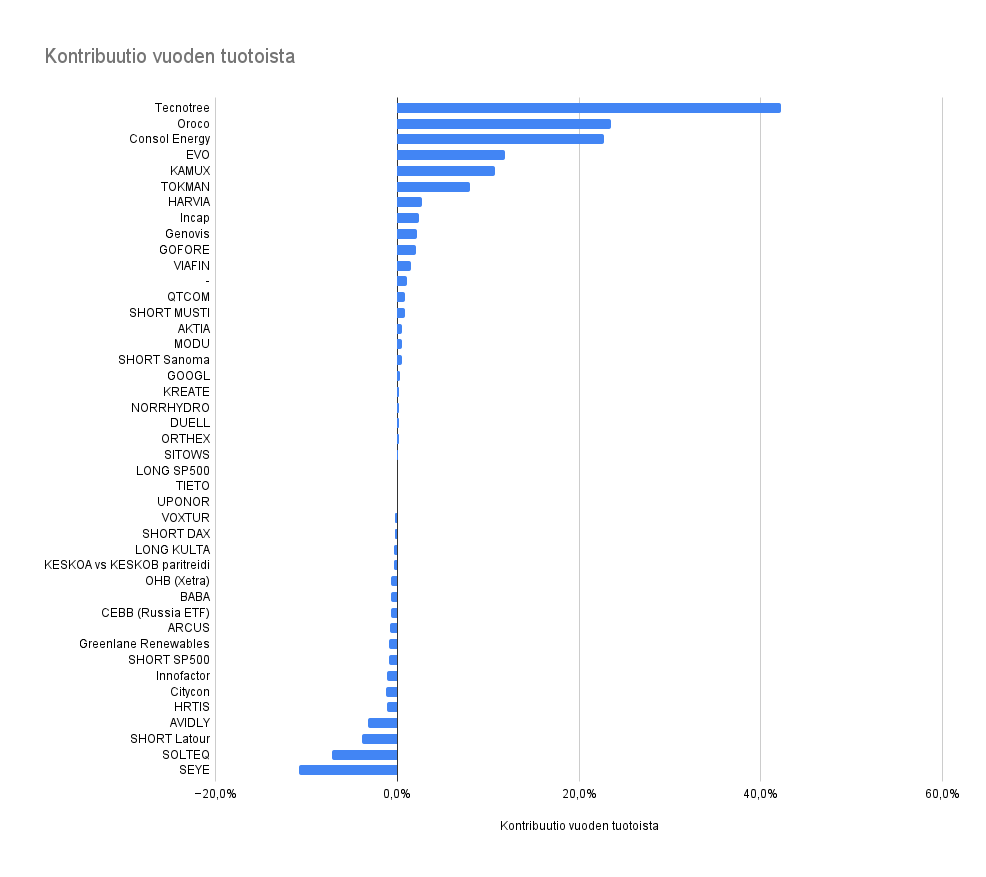
2021 is done, so it’s nice to review how the returns were built up, and to recap the mistakes and successes:


*Does not account for the compound interest effect, meaning the end of the year is weighted a bit too heavily. A small negative bar is also missing for limit interest and other fees.

Successes

  • Returns were quite well distributed among many stocks
  • I managed to generate returns quite well
  • Losses remained small
  • The year’s goal of reducing trading volumes was successful.

Learning Opportunities

  • Allocations were too high on a few occasions: for example, by buying Oroco (junior copper mine), one gets leveraged copper, so at some point in the spring, the portfolio had an utterly massive exposure to copper.
  • In Smart Eye, losses could have been smaller if I hadn’t just followed the forum
  • I fell too much in love with stocks that generated a lot in 2020. For example, a lot of time went into Kamux, and the stock has had a predominantly large allocation throughout the year. The opportunity cost was therefore quite high.

Neutrals

  • A lot of time was spent on leveraged products, shorts, etc., but their impact on the portfolio was small and primarily negative.
    • As a mitigating factor, when the index shoots up +25%, shorts cannot be very successful as per expected value.

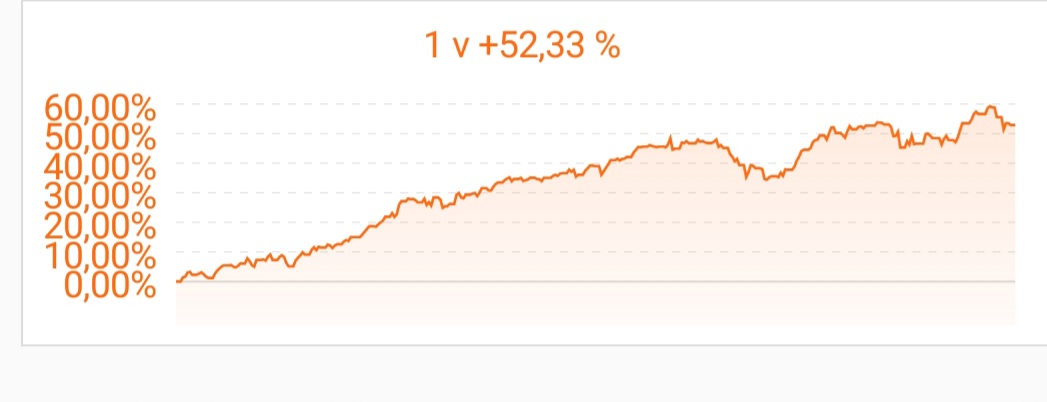
The total return of the portfolio was 49.50%, meaning an outperformance of 25-30 percentage points against the Helsinki general index. In itself, quite a good number, but the portfolio’s risk level is also higher than the index, meaning there might not have been any risk-adjusted outperformance at all. Well, at least I haven’t gotten poorer because of this hobby.

Goals for 2022

  • Keep trading volume the same or reduce it
  • The long-term return potential in the stock market looks modest, so the goal is to keep the risk level and stock weighting at a reasonable level.
  • The time spent monitoring the markets has a high opportunity cost, and even though this is an enjoyable pastime, I need to keep my life priorities clear.
  • Of course, try to generate outperformance again.

E: Correction: Herantis had two rows in the graph
E2: I realized that dividends are completely missing from this graph, but the impact is not that significant. The portfolio’s dividend yield was only just over 1%. Tokmann, Kamux, Viafin, Citycon were the largest dividend payers.

17 Likes

Here it comes… But luckily I trust my own shares. So I’m ready to buy, whether they go up or down. We’ll see how it went in 20 years :grinning_face:

28 Likes

In a few days, we’ll be celebrating OST’s anniversary :partying_face: Let’s see if we’ve made new lows by then! :slight_smile: Only success and good stock picks (Hyzon) :rofl:

63 Likes

First down day of the year for a diversified long portfolio -0.28%.

35 Likes