Tammikuun pörssin keskihinta oli 14,72/Kwh ja siihen marginaali päälle.
2 tykkäystä

Sähkön futuurien osalta näyttää siltä että kun päästään maaliskuun tuuliselle jaksolle niin siitä eteenpäin vuodeksi n. 6% taso määräaikaisille on realismia, kesällä tarjouksissa lienee 5:llä alkavia diilejä. 2028 jatketaan vielä tästä inasen alemmalle tasolle. Suosituksena siis keväällä vuoden diili ja jos oikein pihityttää niin pörssihinnalla kesäkuulle ja hieman ennen juhannusta 6kk määräaikainen sopimus alkamaan syyskuun puolivälistä.
19 tykkäystä
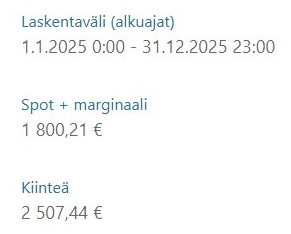
2025 oli kiinteällä selvästi tappiollinen vuosi. Kiinteä hinta oli vähän kireä 8,59c/kWh.
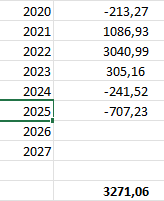
Säästö kiinteällä hinnalla kuuden vuoden aikana: 3 271,06€
2026 on alkanut kiinteälle edullisesti (nyt kiinteä 7,49c/kWh) ja säästö tähän mennessä arviolta n. 600€. Jos yhtään jatkuu samalla lailla niin kiinteä on jo helmikuun loppuun mennessä osoittanut olevansa selvästi halvempi koko tänä vuonna.
Vielä ei minua kukaan ole saanut käännytettyä pörssisähkön kannattajaksi. Viime vuosi oli pörssillä erityisen edullinen ja talvi leuto, mutta kuten vuosien seurannasta huomaa, pörssisähkön teoreettinen halpuus vaihtelee vuodesta toiseen melkoisen paljon. Tällaiselle sähkölämmittäjälle ja sähköautoilijalle ei oikeastaan ole mitään muuta väliä kuin että paljon sähkö maksaa joulukuun ja maaliskuun välissä. Muu on kohinaa.
16 tykkäystä
Itekin nappasin hyvät säästöt olemalla kiinteissä 21 ja 22 kun oli useit kuukausia kun pörssisähkö oli 30snt/kwh. Sitten 24 ja 25 sain pörsisstä hyvät säästöt. Nyt näyttää että ekaa kertaa on vedetty karille.
Suurin ongelma on että yö hinnat ovat nousseet. Aiemmin yöllä sai sähköä maxi noin 10snt/kwh ja nyt se on ollut jossai 12-18 välillä. Nousua siis 50% ja kun oma kulutus valtaosa yöllä niin toi kirpaisee.
Ilmeisesti kaukolämmön sähkökattilat nostaa tota pohjahintaa. Kaukolämmön sähkökattilat 12-18 hinnalla on kyllä täysin pimeää. Jossain palaa maakaasua, se tekee sähköä joka siirretään ja jolla lämmitetään vettä jota siirretään kerrostaloihin. Hyötysuhde tässä kaukolämmössä surkea kun se vesi kiertää kilometrien mittaisessa putkistossa. Saataisiinko kaukolämmössä sähköstä lämmöksi 60-70% kun omakotitalon ilpillä prosentti on jotain 150-300%. Ei tämä taida olla sitä vihreääsiirtymää jota tilattiin mutta tätä saatiin.
Edit: Ainoa positiivinen juttu on että saan polttamilleni puille huippu hyvän hinnan. Meni useampi talvi etten polttanut varmaan pesääkään. Nyt lieska lyö aamuin ja illoin.
7 tykkäystä
Nyt kun oli seksipakkaset, meni pörssisähkö tasoihin kuvitteellisen 8,43 c / kWh + 5,99 € / kk sopparin kanssa:
1.3.2025 - 28.2.2026 ajan kulutus 20 048 kWh:
- Pörssisähköllä laskujen loppusummien summa: 1761,20 €
- 8,43 c + 5,99 € / kk kiinteällä loppusumma olisi laskennallisesti ollut: 1761,94 €
Eli aivan siinä ja siinä hilkulla voisiko kiinteällä saada säästöä 12 kk sopparilla. Mutta sitten toki 6 kk sopparilla kiinteä olisi mennyt mennen, tullen ja palatessa ohi pörssin:
1.10.2025 - 28.2.2026 kulutus 11 407 kWh:
- Pörssillä laskujen summien summa: 1275,50 €
- 8,43 c + 5,99 € / kk kiinteällä summa olisi laskennallisesti ollut: 991,58 € eli eroa on jo 283,92 €
Tästä toki vielä puuttuu 6 kk sopparin viimeinen kuukausi. Viime vuonna maaliskuu oli 116,81 € pörssillä ja laskennallisesti 8,43 + 5,99 € olisi ollut 160,56 € eli lopulta olisi silti jäänyt 240,17 € voitolle 6 kk kiinteällä.
Toki nyt tästä jää vielä puuttumaan “keskivertotalvi”, kun viime talvi oli tosi leuto ja tämä talvi taas ennätyskireä (ja pitkään). Mutta jos rohkenee ottaa keskiarvon näistä kahdesta, menee se täl’viisiin:
- Tammikuiden '25 ja '26 laskuista keskiarvo: 316,75 €, kulutus-k/a 2617 kWh / kk
- Helmikuiden keskiarvo: 279,19 €, kulutus-k/a 2135 kWh / kk
Niin niiden summa 595,94 € vertautuisi n. 12,30 c / kWh + 5,99 € / kk kiinteään soppariin(!).
Eli rohkenisi sanoa, että jos saa 6 kk sopparin alle tuon 12,30 c + 5,99, kannattaa talveksi ottaa kiinteä. Se tulisi näin äkkimatikalla halvemmaksi kuin “keskivertotalvi” ja pikantti talvi pörssillä. Toki tästä puuttuu maalis- ja huhtikuut, joten ehkä jos pyöristää 10 c + 5,99, ollaan jo lähellä totuutta.
11 tykkäystä
Heitelläänpä tähän omaa dataa tammi-helmikuusta 2026
Kiinteä hinta 7,59c/kWh ja kulutus hieman yli 5160kWh molempina kuukausina. Melkoiset ennätykset tehtiin, mutta täytyy huomioida että auton sähköön menee talvisin yli 1000kWh/kk
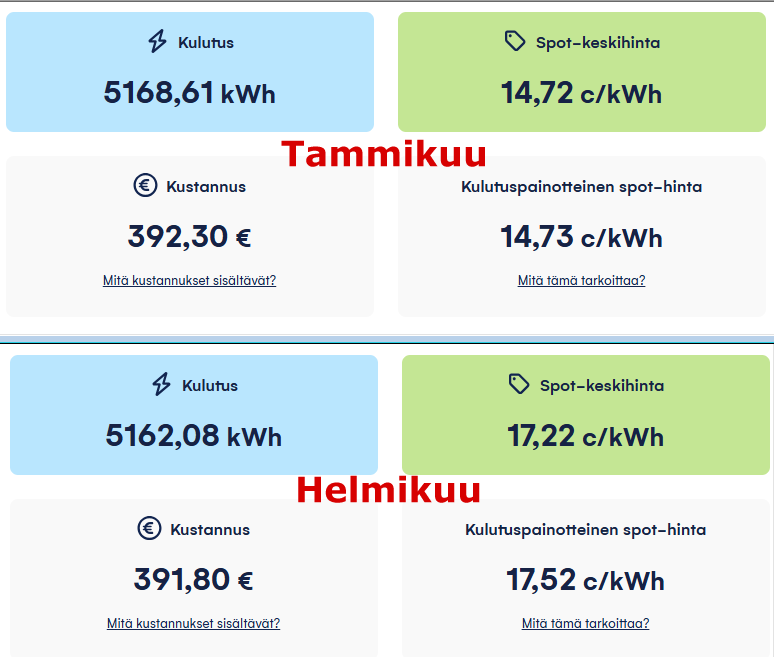
Säästö kiinteällä n. 870€! (tammikuu 370€ ja helmikuu 500€) Jotta ero kirittäisiin kiinni loppuvuoden aikana, pitäisi loppuvuoden sähkön olla keskihinnaltaan alle 4c/kW, kun muun vuoden kulutus tulee olemaan vielä arviolta n. 25000kWh.
Ottaen huomioon maailman epävakaan tilanteen niin uskon, että tämä vuosi tulee olemaan kiinteällä hinnalla selvästi edullisempi. Kuuden aikaisemman vuoden seurannalla ainoa selvästi pörssille edullisempi vuosi oli viime vuosi eli 2025.
Kirjanpitoa:
8 tykkäystä
Vaihdoin helmikuun alussa pois pörssistä tuskassa. Kiinteät sopparit ehti karata ylöspäin hinnassa, niin napsautin kiinni pitkän 24kk:n kulutusvaikutuksellisen sopparin 6,49 c/kwh.
Talo eikä perheen elintavat hirveästi jousta tuohon kulutus ohjaukseen, fiilis oli että minneköhän lie asettuu todellinen hinta. alkuun jaksoin värkätä kylppärin lattialämmityksiä alas piikkihinnoissa ja ylös yöllä. Viimeiseen 10 päivään en jaksanut tehdä sitäkään. Sähkösaunan ja kodinkoneiden käyttöä katottiin jonkin verran, mihin elämän rytmi taipui.
tänään napsahti sitten sähkölasku. Kulutusvaikutus -2,83c/kwh, joka tiputti sähkön hinnan 3,66 c/kwh.
Todella iloinen yllätys tammikuun megalaskun jälkeen.
Helmikuun 1-6 päivä meni pörssisähkössä, hintalappu ~160€.
7-28 päivä kulutusjoustossa. Hinta karvan alle 100€.
13 tykkäystä
Tuolla on kyllä helppo säästää kun pörssisähkön hinta on korkea. Meillä saisi hinnan painettua ehkä jopa nollaan kun yösähköä on yli puolet kaikesta kulutuksesta.
Sitten kun taas pörssisähkön kuukausihinta pyörii 2-3c paikkeilla niin ei saa millään viilattua edes senttiä pois hinnasta ja maksaa tuota tuplahintaista perushintaa.
Kävi kyllä tänä talvena mielessä että olisipa hyvä, mutta entäpä jos ens talvi ei olekkaan samanlainen.
2 tykkäystä
Eipä noita tulevia talvia voi tietää. Samaa kyllä pohdiskelin itsekin. Mutta lopulta tuumasin että olen tuon 6,5 senttiä valmis maksamaan milloin vain verrattuna noihin lämmityskauden hulluihin hintoihin. Kesälle aivan sama kun kulutus tippuu talveen verrattuna minimalistiseksi.
Pitäisi jaksaa selvittää saisiko noiden lattialämmitysten termostaatit muutettua kuinka helposti/millä rahalla älykkäiksi pörssisähkön suhteen.
2 tykkäystä
Shelly-releet sähkökaappiin ja lattialämpöjen wifi-ohjaus toimii nojatuolista tai toiselta mantereelta. Itse termostaatit samat kuin ennen. Samoin LVV:n ohjaus.
Mutta myös hintapohjaisen ohjauksen saa kyllä pystyyn, olen kuullut.
Tosin itsellä enimmäkseen ilmalämpöpumppujen kautta lämmitys, saahan siitä panosenergian monenkertaisena takaisin verrattuna lattialämpöihin
1 tykkäys
Kiitos. Pitää tutustua noihin.
Leivarilla ja kahdella pumpulla mullakin kämppä lämpiää pääsääntöisesti. Noita lattialämmityksiä on kuiten kosteissa tiloissa, eteisessä sekä vessassa. Ajatus tuossa pörssisähköön pohjautuvassa lattialämmön ohjauksessa olisi, että saisi kikkailtua tuota kulutusperusteista kerrointa automaattisesti ja vaivattomasti.
Miksi kiinteä jatkossa
- Väsyin ehkä loppullisesti tuon 5viikon aikana. Viikko tai kaksi on vielä ihan OK, mutta nyt musta tuntuu että riittää.
- Automaation kallius suhteessa säästöt. Hintaero kiinteisiin on niin pieni että kaikki automatisoinnit pitäisi olla halpoja ja helppoja ja automaagisesti seurata pörssiä. Automaatiolla en ehkä olisi väsynyt, mutta ei se automaatio vielä takkaa osaa operoida.
- Päivä/yö arbitraasin (hinnanero) pieneneminen. Omat säästöt perustui pitkälti tähän. Nyt sähkökattilat ja akut pienentää etua joten miksi ei sitten kiinteä.
- Tehomaksu sopparilla saa jatkossa halvemman siirron per siirretty kwh. Lahti energialla tämä jo on ja ero per siirretty kwh taitaa olla 1snt/kwh. Toki tästä seuraa että esim auton lataustehoa pitää laskea, mutta jos on kiinteä niin tämä ei ole ongelma kun kaikkea kulutusta ei tartte puskea muutamalla halvalle tunnille.
- Varttihintojen pompinta. Tähän tosiaan tarvitsisi automaation, koska tuntuu että oli vaikeaa löytää “tasaisia” latauspintoja/hintoja vaikka autolle.
Ainoa kysymys on että otanko talvikiinteän 6kk vai koko vuoden. Luulen että vain 6kk koska sähköauto tarttee virtaa kesälläkin.
6 tykkäystä
Nyt ensimmäisellä laskulla vaikuttaja osuus oli laskenut kwh hinnan 6,45 centtiin eli aika kohtuu hintasta sähköä. Autotallissa on sähkö lattialämmitys joka ajastimella päällä vain yöaikaan ja sisällä ilmalämpöpumppu joka päivät pienemmällä ja yöt suuremmalla teholla niin suurin osa kulutuksesta yöajalla. Eikä vaadi isoja sijoituksia automaatioon.
Jos on tarvetta lukita 6kk kiinteää sopparia ensi talven yli, niin tämän Helenin kiinteähintaisen Määräaikainen Perussähkö 6 kk 7,79 c/kWh, 2,99 €/kk (norm. 5,99 €/kk) saa alkamaan puolen vuoden päähän eli syyskuun 9. päivä. Kiinnitä edullinen enegiahinta | Helen Sillä pääsee ensi talven osalta maaliskuun alkupuolelle asti.
Itse mielellään odottelisin vielä edullisempia vaihtoehtoja ainakin huhtikuun ajan, mutta pistin tämän nyt tilaukseen ja katsotaan 14 pv, jos tulee jotain parempaa tarjolle.
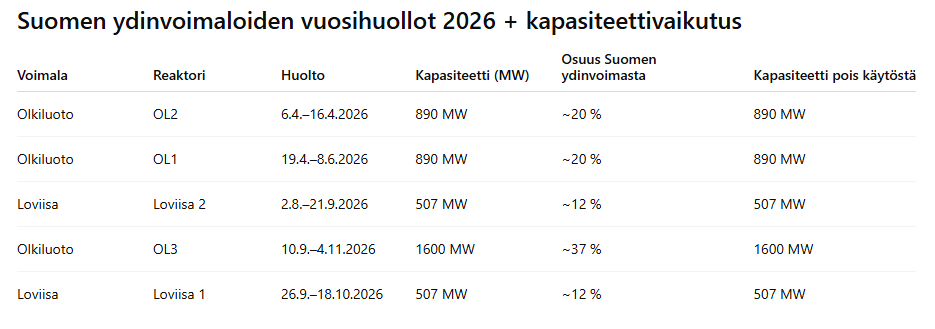
Lisäpainetta syyskuun alkupuolen aloittamiseen lokakuun sijasta pistää OL3-vuosihuolto, jonka kanssa päällekkäin on Loviisan pannujen huollot. Näiden aikana syys-lokakuussa on puolet ydinvoimakapasiteetista pois käytöstä.
14 tykkäystä
Viime kesäkuussa sai Turku Energialta alle 5 snt:n 6 kk sopparin, joten haluan uskoa, että nuo puolen vuoden sopparit tulevat vielä alaspäin
1 tykkäys
En itse saanut näitä alkamaan kuin 3kk päähän.
Merkkejämerkkejä.
Toisaalla on kommentoitu että nykyiset Helenin asiakkaat ovat saaneet aspaan soittamalla tuon 7.79 snt sopparin alkamaan 9.9.
1 tykkäys
On se putoaminen toki mahdollista, mutta tämän hetken energiamarkkinaympäristö on kyllä ihan erilailla volatiili kuin viime keväänä. Tietenkin voi olla, että tässä tulee hötkyiltyä ennen parhaita hintoja.  Se Turku Energian halpa soppari oli viime vuonna toukokuun alkupäiviin asti saatavilla. Kesäkuussa-25 tuli jo isompi pomppu määräaikaisiin.
1 tykkäys
Onnistuu jos valitsee “olen vaihtamassa sähkönmyyjää”. Jos on entuudestaan Helen, ottaa kesäksi pörssisähkön jostain muualta niin täyttää ehdot.
4 tykkäystä
Olen itse toisen yhtiön asiakas. Minulla loppuu määräaikainen sopimus ensikuun loppuun. Soitin eilen Helenin aspaan ja sain toukokuun alusta pörssisähkön ja 8.9 alkaen 6kk määräaikaisen hintaan 7.79. Nyt mullakin on 2 viikkoa aikaa vielä katsella tarkemmin.
4 tykkäystä