Someone has to be the first…
CAMBI ASA – The ultimate sewage plant
They say the amount of shit in the world is constant. Despite population growth starting to decline, people are likely to concentrate their waste in even smaller areas due to urbanization. This means the amount of waste to be treated will increase. At least if we want to live in relatively decent conditions. Currently, half of the world’s waste is left untreated. This problem, combined with a budding collective desire for an energy production transformation, creates a business opportunity.
Product and Market Share
Cambi ASA from Norway has seized this opportunity. Cambi has developed a technology called Thermal Hydrolysis Process (THP) for treating wastewater.
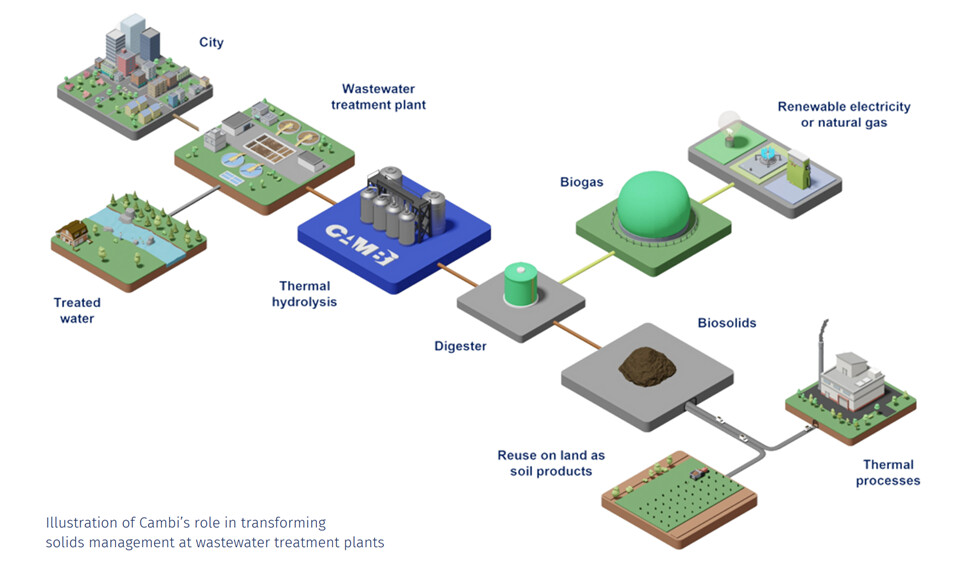
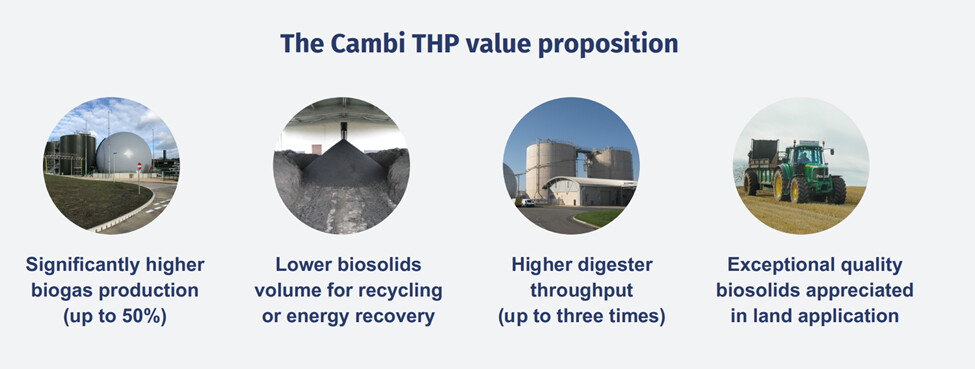
The benefit of the process is that it improves biogas production potential by up to 50%, streamlines processes, and produces higher-quality end material.
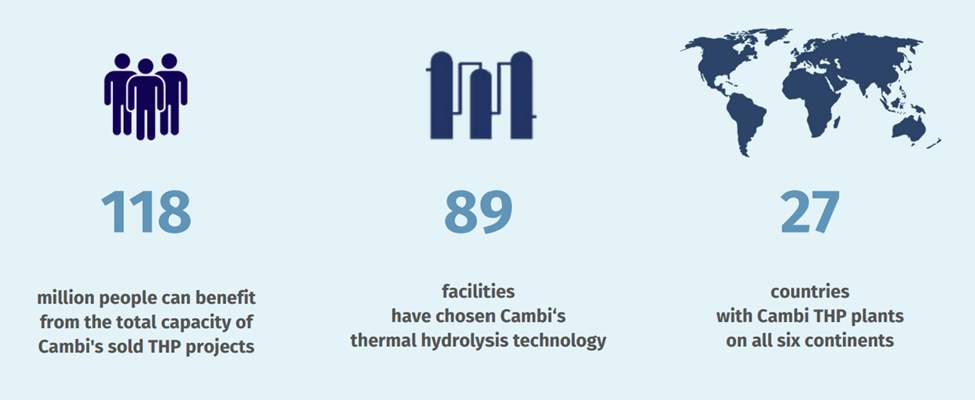
According to management, Cambi is the market leader in its technological niche, with a market share of up to 90% worldwide. There are currently 89 plants in a total of 27 different countries, processing the waste of 118 million people. After Q1, the company had 16 plants under construction at various stages. The company has been manufacturing and developing the product since 1992, so it has a substantial pile of patents for protection.
Addition: I meant to write this, but forgot, that management sees the biggest risk as the low awareness of the technology. Additionally, customers are public entities, so sales and decision-making cycles are long.
The company consists of two segments:
Technology: Includes the design, manufacturing, and installation of THPs. This accounts for 75% of revenue.
Solutions: Includes maintenance of installed equipment, spare parts, expansions, etc. (meaning quite consistent revenue), and Grønn Vekst, which packages and distributes waste-derived material in Norway for use in places like gardens.
The Technologies segment is slightly more profitable.
Financial Situation and Outlook
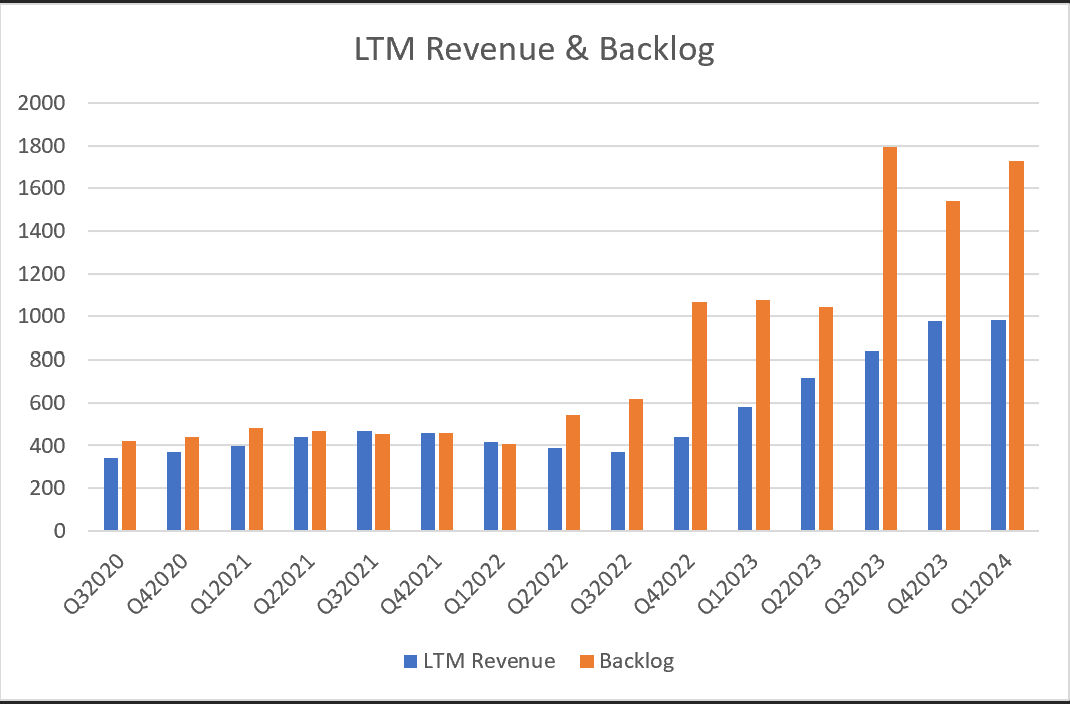
As an investment case, the core idea of Cambi’s story is that over the past couple of years, they have managed to increase their order backlog significantly. As recently as the beginning of 2022, the backlog was barely hovering around 500 million NOK.
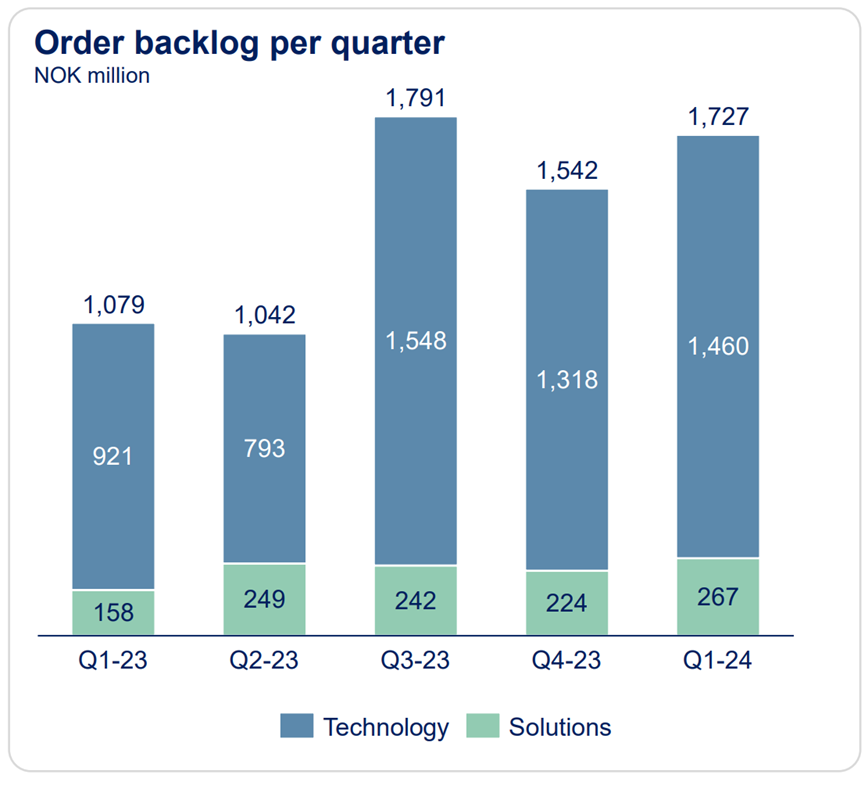
This should materialize into revenue over a three-year period. The installation time for the equipment is 2-3 years depending on the project. The gross margin also depends on the projects and fluctuates around 50% to 60%.
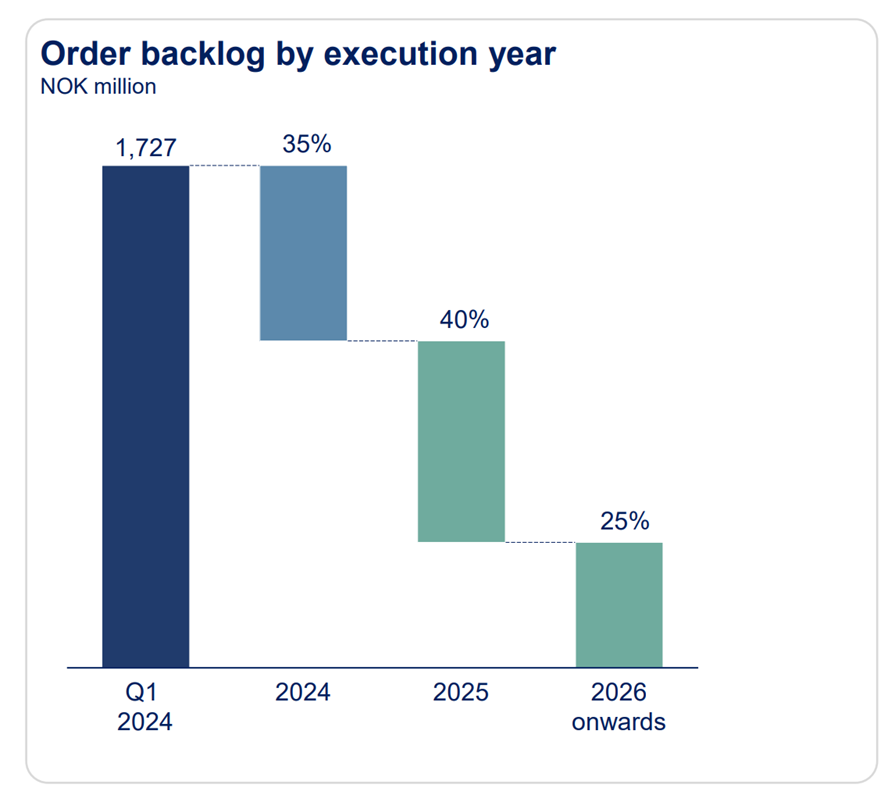
(On top of that, of course, comes new sales. Hopefully, at least now that the CEO has returned from paternity leave.  )
And it seems to be doing so gradually when looking at the trailing 12-month revenue.
Regarding profitability, revenue growth is crucial for the operations to be profitable. From the graph below, it can be noted that historically, at the EBIT level, breakeven has occurred at a quarterly revenue of just over 100 million NOK.
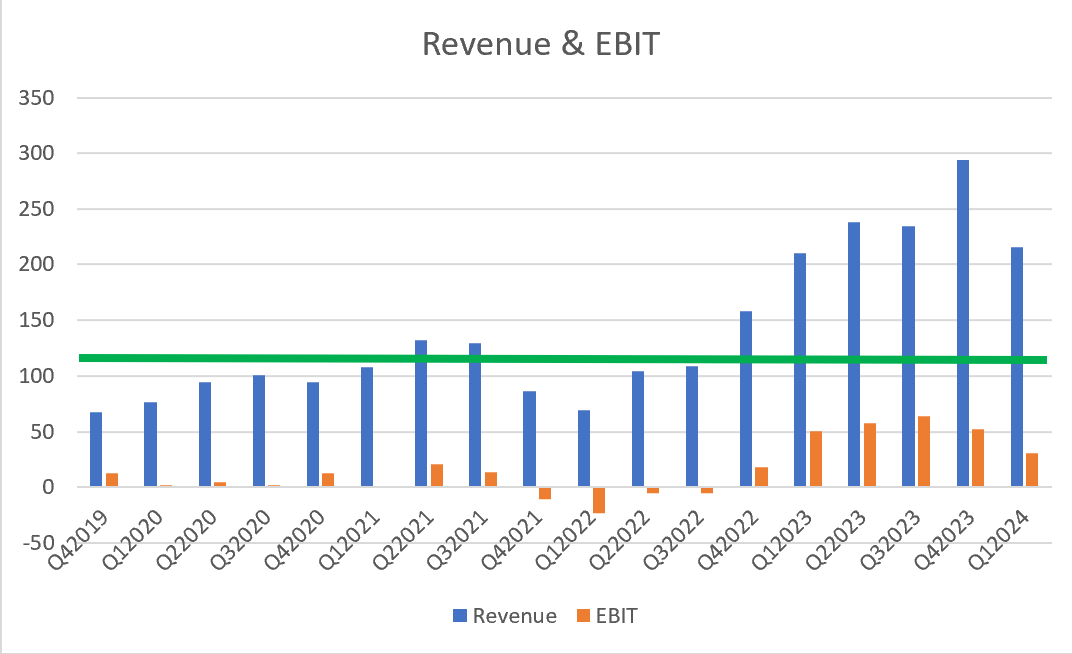
The sharpest eyes might already notice that in Q1’24, with the same revenue, there was less “left in the tank” than a year ago at the same time. This is due to increased personnel costs. The number of employees has been increased by 17% to provide the workforce needed to clear the grown order backlog. Management also explained the low revenue by stating that project milestone payments did not fall into this quarter.
Stock Price and Valuation
After the price surges at the beginning and end of last year, the stock has been stagnating. At times it looked like a cup & handle might form, but currently, the curve looks more like a “sauna ladle” model.
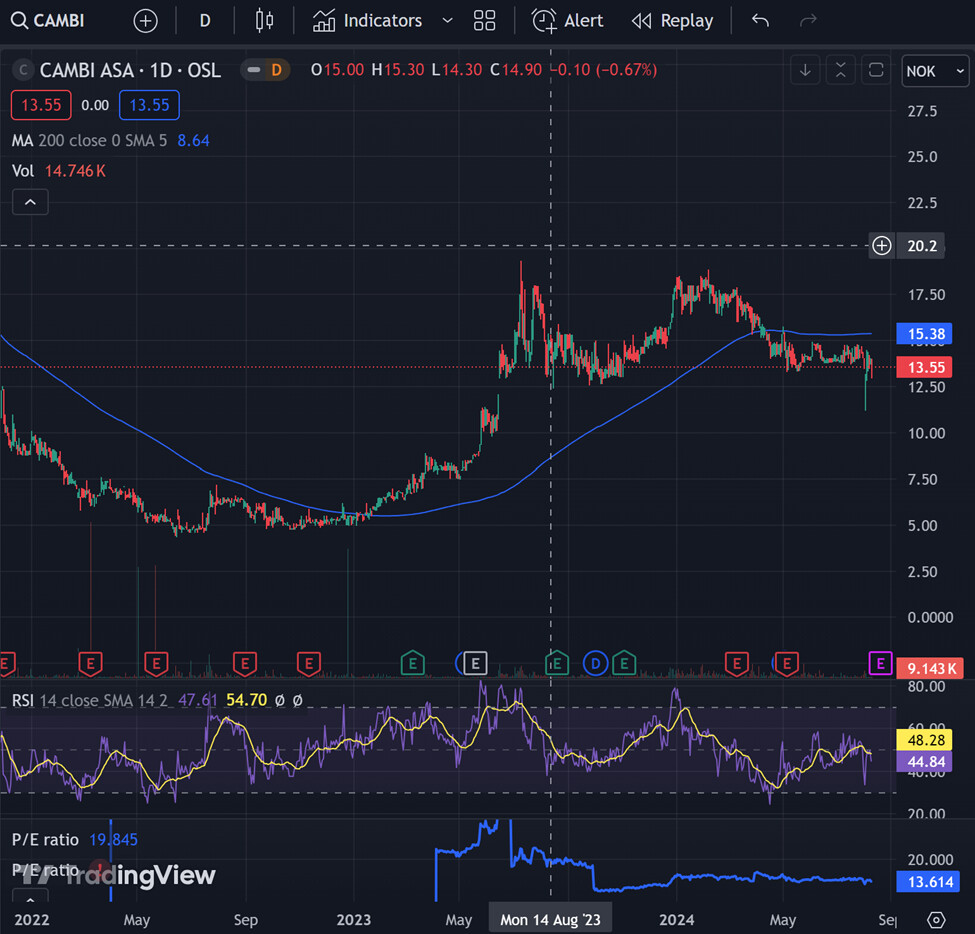
This investment case could be based on the idea that management is telling the truth and Q1’s slightly weaker result was just a matter of milestone timing. At least one analyst from DNB following the company believes in this story. He gives a target price of 20 NOK. The theme is that Cambi is heavily undervalued compared to its peers at EV/EBITDA ~8x vs peers’ 12x. At that time, Cambi had liquid assets of over 330 million NOK, but 160 million NOK of that has been paid out as dividends. There is hardly any depreciation, etc. Apparently, the peers do have them, since that multiple was chosen. If this story holds up, there would be comfortable upside. For the dividend crowd, note that Cambi aims to distribute 60-80% of its earnings as dividends. For last year, a dividend of 1 NOK was paid, so at the last closing price, the dividend yield would be over 7%.
Disclaimer: This is a long pitch, so it’s written through shit-stained glasses. It may distort the truth. This is also not a deep-dive analysis but a pitch regarding an interesting situation. Do your own research before getting your hands dirty!
Acknowledgements:
@Polakki has written about Cambi on the forum previously:
https://keskustelut.inderes.fi/t/ostin-myin-juuri-asken-osa-6/42357/4017
as well as @Bjorninen:
https://keskustelut.inderes.fi/t/energia-alan-teknologinen-kehitys-ja-sijoitusmahdollisuudet/2568/9124
but I thought I’d boldly steal the idea for this competition, as I think there’s an interesting situation going on right now. Let’s share the prize if we win.