Alisa Pankki Oyj on päättänyt lopettaa käyttötilien tarjoamisen henkilöasiakkaille. Tilit suljetaan 30.6.2026. Alisa pankki tarjoaa jatkossa vain säästötilejä ja määräaikaistalletuksia. Käyttötili oli kätevä ja siltä pystyi maksamaan laskuja ja sai vähän korkoakin kerrytettyä. Nyt jäljellä jää säästötili ja määräaikaistalletukset. Talletuskorot eivät vain ole kovin hyvin kilpailukykyisiä muihin pankkeihin verrattuna. Henkilöasiakkaiden asiakkuudet ei taida enää olla pääasiallinen prioriteetti, painotus on yritysasiakkaisiin, toki talletusraha kelpaa.
Näyttäisi (Uudenmaan) OP:n 12kk määräaikaisen säästötilin korko nousseen nyt 2,75% (+0,4% bonuksia)
1 tykkäys
Mutta nostoja ei taida saada tehtyä sinä aikana? Eli rahat lukossa siellä koko sen ajan, toisin kuin esim Bigbank, Bank Norwegian, mitä näitä o
1 tykkäys
Juu tuo edellä mainittu on määräaikaistalletus. Nuo sinun mainitsemat Bigbank ja Bank Norwegian tarjoavat varmasti myös määräaikaistalletuksia, mutta ei niistä saa nostaa rahoja kesken pois (ainakaan ilman sakkoa). Taidat sekoittaa siis tuon OP:n määräaikaistalletustarjouksen Bigbankin/Bank Norwegianin säästötileihin.
Ei, vaan viittasin siihen kun OP:llakin on ollut välillä säästötilille ihan hyviä määräaikaisia tarjouksia mutta ei kuitenkaan ole nostorajoitteita ollut.
1 tykkäys
Joo, ymmärrettävä sekaannus, kohtalaisen epäselvästi nimetty nuo oikeasti kaksi eri tuotetta; on “Säästötili” jossa on välillä noita määräaikaisia tarjouskorkojaksoja mutta ei nosto-/talletusrajoituksia, ja sitten on “Määräaikainen säästötili”, joka on määräaikaistalletus.
2 tykkäystä
Olen pohtinut mahdollisuuksia varsinaiseen säästötiliin, mikä tarkoittaisi, että oliso usein siirtoja tilille ja myös tarpeen mukaan nostoja tililtä. Mitähän järkeviä vaihtoehtoja tähän on? Pelkän koron lisäksi vaikuttaa paljon helppokäyttöisyys. Esimerkiksi Norwegianilla on selkeä ja yksinkertainen sovellus. Svea Bank oli joskus, mutta sitä ei voinut käteväksi kehua.
Nordea joustotalletus. Koron maksu valinnan mukaan 1, 3 tai 12 kk välein…
Kokemusta löytyy Bank Norwegian palvelusta arviolta 7-8 vuoden ajalta, jota voin suositella vahvasti.
Aika ajoin tulee tarkasteltua, että minkälaisia korkoja kilpailijat tarjoavat, mutta tuntuu, että tässä on vähän sama tilanne kuin polttoaineissa tai viihde-elektroniikassa tms. Heti kun kilpailija tekee siirron suuntaan tai toiseen, niin hinnat muuttuvat sitä mukaan kummallakin osapuolella lähes samaan. Tämän vuoksi arvotan käytettävyyden isoon rooliin.
Mielestäni Bank Norwegianin sovellus on yksinkertainen ja toimiva sovellus. Jotenkin itselleni tuo myös mielenrauhaa, että kyseessä on pohjoismaalainen toimija, mikäli talletussuojan toimivuutta joutuisi koeponnistamaan. Tämä nyt lähinnä oma fiilispohja VS joku “kaukaisempi toimija” maasta X.
7 tykkäystä
Vaihdoin säästötilin aikanaan Bank Norwegianilta Collectorille, koska Collector tarjosi parempaa talletuskorkoa. Tämän hetkistä tilannetta en tiedä; Collectorin korko taitaa laskea kesäkuussa. Varmaan aika minimaaliset erot noissa on. Verkkopankki Collectorilla on selkeä ja helppokäyttöinen, tilisiirtojen nopeudessakaan ei ole ollut moittimista.
4 tykkäystä
Trade republic maksaa 3% korkoa uusille asiakkaille. Ei nostorajoituksia tms.
Onko Saldon Bankin toiminnasta kokemuksia? Maksaisivat määräaikaistalletuksille kohtalaista korkoa 12kk/3,2%
Ferratumista / SweepBank hieman juttua. Ilmeisesti sieltä saa vieläkin uudet asiakkaat 3% korkoa säästötilille ilman mitään nostorajoituksia: Ferratum säästäminen | Ferratum Bank
Itselläni on ollut tuolla säästötili jo varmaan yli vuoden ja 3% korkoa nakuttanut tasaisesti. Ihmettelen, miksi tuota ei näy enää esim. korkotutkassa kuin määräaikaistalletuksena: Säästötilit vertailussa: Korot jopa yli 3 prosenttia (06/2026) . Itse saan edelleenkin Ferratumin asiakkaana lopetettua säästötilin (ja näin saan korot heti käyttöön halutessani) ja luotua myös uusia säästötilejä 3% korolla.
Äsken juuri nostelin vähän pois varoja Ferratumin säästötililtä. Hieman säätöä oli kyllä yhden isomman 25 000e erän kanssa kun se jäi muutamaksi päiväksi vain varattu tilaan eikä tullut perille toiseen pankkiin. Tästä sain sitten olla ferratumin appiksen chatin kautta yhteydessä heidän aspaan. Homma hoitui lopulta ja he peruuttivat tuon jumiin jääneen tilisiirron, joka oli kuulemma jossain lähtevissä tilisiirroissa, mutta syystä tai toisesta ei siirtynyt normaalisti eteenpäin. Tuolla kannattaa kyllä siirtää rahat aina 5000e erissä, jos vain jaksaa, koska silloin ne menevät välittömästi sepa-instant maksuna. Isommat summat ovat minulla tulleet sitten vähän myöhässä, mutta yleensä saman päivän aikana, jos siirron tekee aamulla. Mutta tämä yksi isompi tilisiirto jäi jumittamaan.
Asiakaspalvelusta sen verran, että suomenkielistä aspaa heillä ei taida olla - keskustella voi kyllä suomeksi, mutta ilmeisesti vetävät sen jonkun translaten läpi, koska hyvää suomea siellä ei chatissa ei ollut. Vaikka aspasta jäi vähän kämäinen vaikutelma, muuten Ferratum on toiminut ihan hyvin säästötilinä. Se kannattaa myös tiedostaa, että Ferratumissa on 25 000e päivittäinen siirtoraja ja 100 000e kuukausittainen siirtoraja ja noiden muuttaminen korkeammaksi ei ilmeisesti onnistu edes aspan kautta.
4 tykkäystä
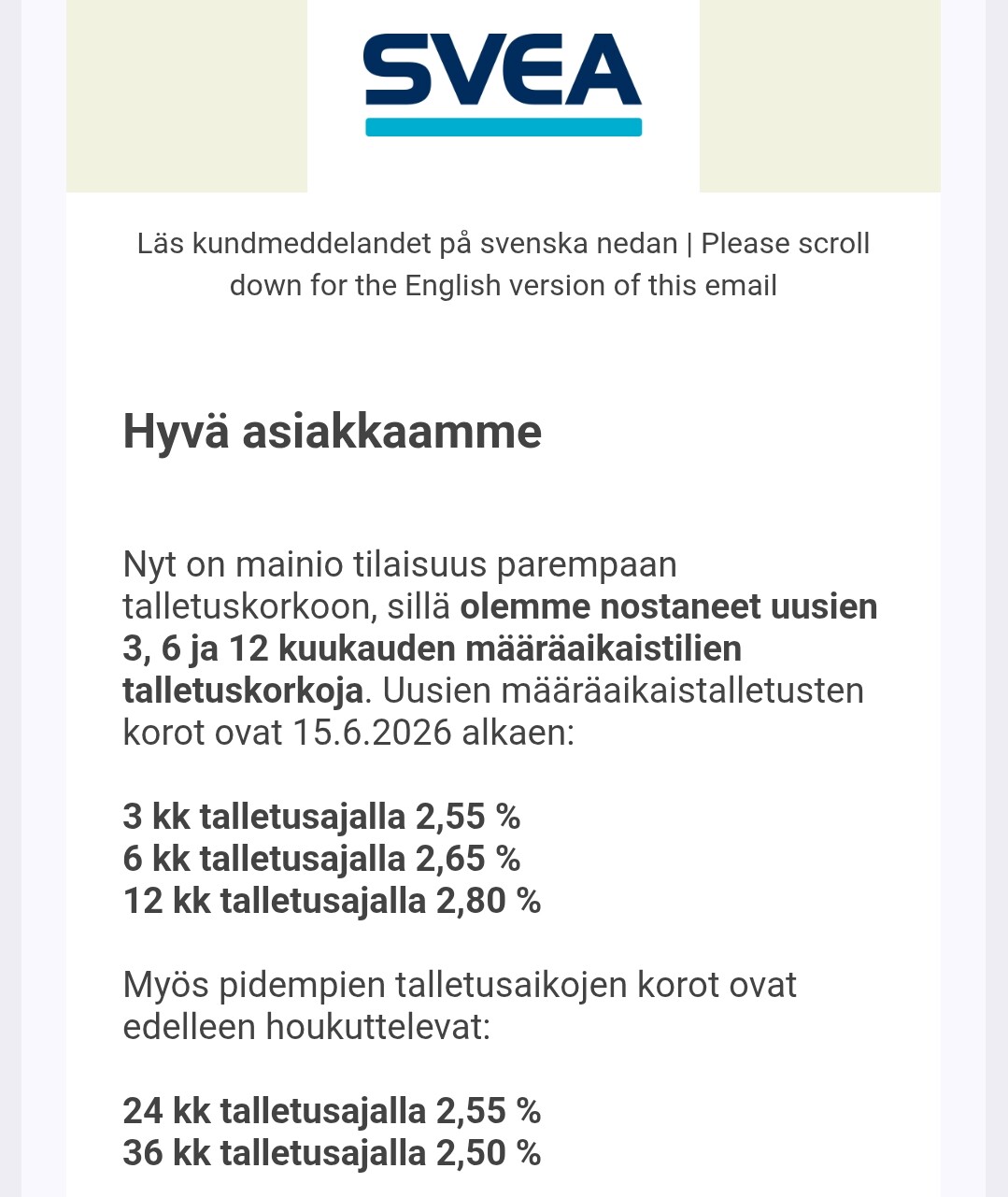
Onhan toi kyllä vähän peestä kun nostetaan (toistaiseksi) ainoastaan määräaikaisten tilien korkoa. Mietin kyllä jos laittais vaikka puolet korkotilillä makaavista rahoista ihan vaikka 3kk määräaikaisella niin ois siinäkin jokunen kolikko enemmän.
4 tykkäystä
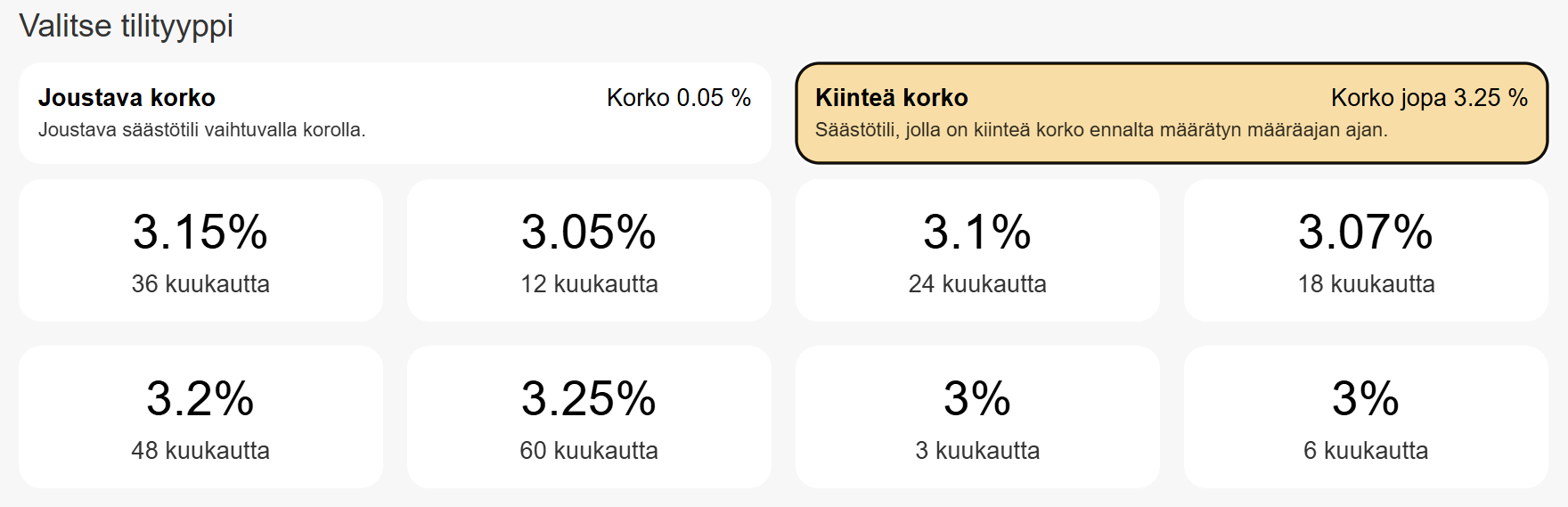
Tässä on vaihtoehtona toiselta ruotsalaiselta pankilta BROCC Ab. Itsella on n. 3 vuoden kokemus pankista.
1 tykkäys
Itse en ylipäätään lähtis kovin pitkiin määräaikais talletuksiin nyt kun korot ovat nousussa niin voin väittää että näitä uudistuksia tulee suht usein korkojen suhteen joka paikassa 
2 tykkäystä
Korkotason muutosten ennustaminen ei ole sen helpompaa kuin osakekurssienkaan, muuten homma olisi aivan liian helppoa. 12 kk:n euribor nousi suunnilleen nykytasolle maaliskuussa, eikä ole siitä juuri liikkunut.
3 tykkäystä
Samaa mieltä. Itsekin arvioisin viitekorkojen nousun tai nykytasolla säilymisen todennäköisemmäksi kuin nopealla aikavälillä nähtävän merkittävän koronlaskun. Tällä hetkellä preemiot pidemmän aikavälin talletuksista ovat aika olemattomia. Esim. Svealla 3kk + 3kk -talletuksella ei häviä hirveästi 6kk talletukseen verrattuna.
Oma lukunsa on toki se, että jos keskuspankit päätyisivät yhtäkkiä painamaan korkotasoa lattiaan nopeasti taloutta boostatakseen, olisi käynnissä jokin ennakoimaton markkinamyllerrys. Tällaisessa tilanteessa saattaisi olla tarjolla kiinnostavampia sijoituskohteita kuin 2,55% määräaikaistalletus kahdeksi vuodeksi.
1 tykkäys
Jos käteisvarat on tarkoitettu “sotakassaksi”, määräaikaistalletus on muutenkin väärä valinta.
Määräaikaistalletus voi kieltämättä estää herkullisimmat "kaikki mikä irti lähtee nyt heti osakkeeseen X!" -tyyppiset sijoitusmoovit.
Jos joskus (kuten nyt) arvioin osakemarkkinan olevan hieman liian kallis ostoksille lähtöön, päädyn ylipainottamaan käteistä kk-sijoitussummaa pienentämällä. Osa käteisestä on toki heti likvidillä tilillä ja loput eri maturiteettien MA-talletuksissa, joita erääntyy vaikkapa kerran kuukaudessa. Esim. niin, että jos käteispositio on 100ke, on 25ke nostorajoittamattomalla säästötilillä, 25ke heinäkuussa, 25ke elokuussa ja 25ke syyskuussa erääntyvillä tileillä. Ja tilanteen mukaan noita erääntyviä MA-talletuksia uusitaan / summia säädetään.
Homman järkevyyteen vaikuttaa olennaisesti säästötilien vs. ma-talletusten korkoero. PItkään tuo oli suht vähäinen, mutta nyt vähän vaikuttaisi, että korkoero lähtee kasvamaan.
4 tykkäystä