Updated report Panostaja: Vaisu lopetus pidennetylle tilikaudelle - Inderes
5 Likes
Thanks @Olli_Vilppo for the report.
A couple of small questions regarding the latest analysis.
- You write that “Based on the development of Grano’s net debt, the purchase price for Grano Diesel fell short of our expectations, and the loss incurred during the review period also increased net debt.” Did you have an initial idea (“ballpark”) for the purchase price, as according to your expectations, the sale of Diesel should have reduced Grano’s net debt as of December 31, 2025? Panostaja’s own communications and statements are unfortunately vague, as the CEO considers the sale price of Diesel to have been quite reasonable (see the segment from the December 12, 2025 interview below). However, Grano’s net debt did not decrease, and the only definitely profitable unit was apparently sold off quite cheaply.

- Is it known how much of Panostaja’s net cash currently consists of loans granted to portfolio companies? For example, Corehw’s debt had apparently continued to grow, and one could imagine it needing more capital again at some point. Against the backdrop of the Hygga events, I am trying to outline the potential risk regarding these loans.
2 Likes
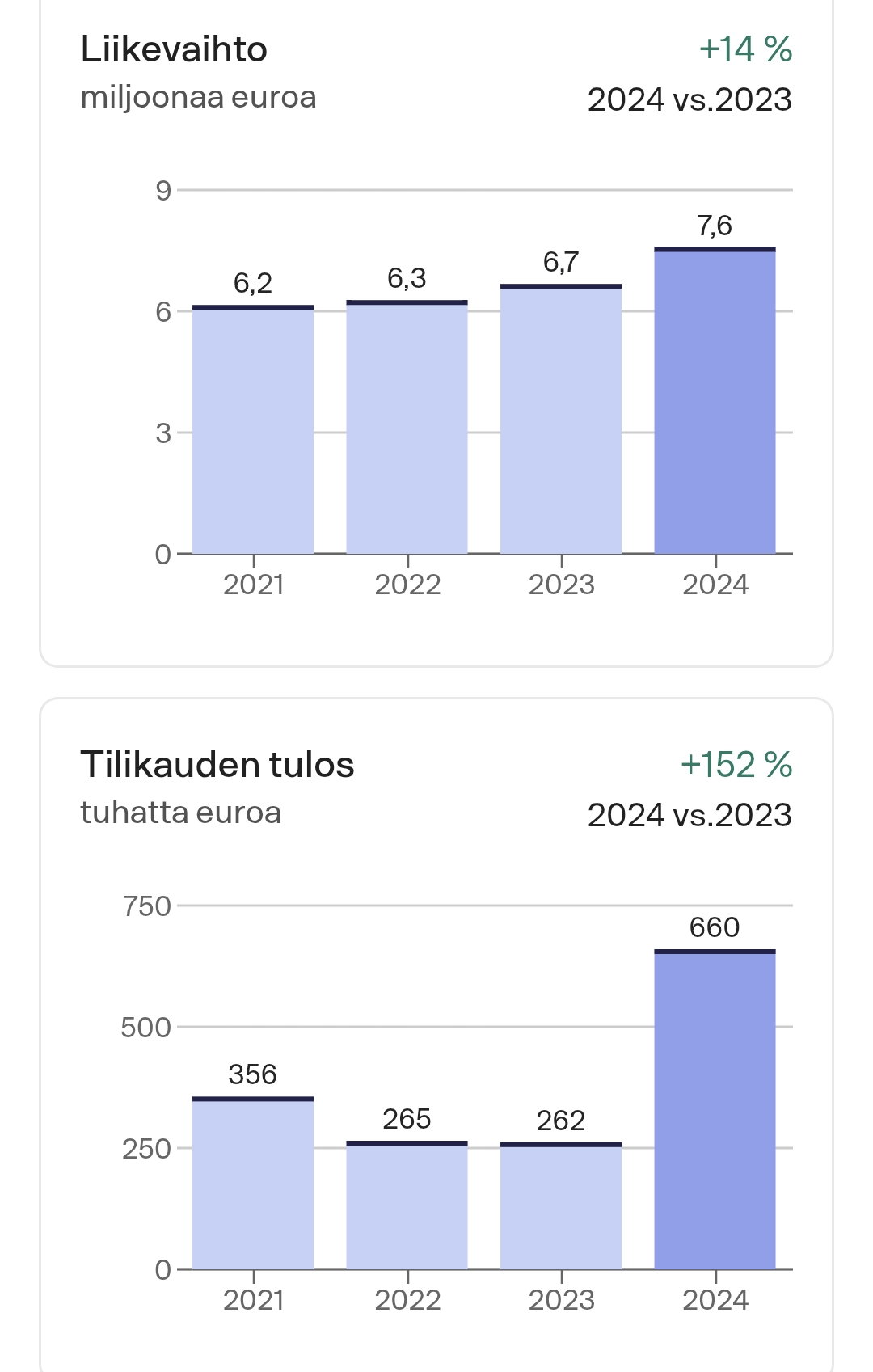
Hi! The cash flow statement now shows how much was received from the sale of subsidiaries, which was about 1.7 MEUR. In connection with the previous report, I estimated that the sale would reduce Grano’s net debt by about 3 MEUR (incl. IFRS 16 liabilities), as the information was not yet available. It was also forecasted that Grano would deliver roughly a zero result (excluding comparison period figures), but it actually delivered -1.2 MEUR. So, these components resulted in the value of the Grano ownership having to be written down, even though the EV did not change much.

Another question: Panostaja states in the report that the parent company’s cash and financial securities as well as liquid fund units were 1.4 MEUR, and the parent company’s interest-bearing liabilities were 4.7 MEUR (this refers to the total amount lent to subsidiaries). Of the latter, about 2.5 MEUR is, in my understanding, in Hygga, which will be recovered in February when the sale was closed. And the rest is roughly the R&D loan granted to Core HW.
4 Likes
Was the latest report uploaded to the Kauppalehti site? The headlines are from the new one, but I can’t download it myself even though I should have access?
Or maybe there’s just some bug on my end..
Am I looking at the right company, or how is it possible to sell with these numbers at a €1.7m valuation?
https://www.finder.fi/Painotalo/Grano+Diesel+Oy/Helsinki/yhteystiedot/255217
1 Like
It looks correct and indeed, it was sold for less than we expected. Note, however, that Grano owned only 50% of Diesel, not the whole company.
2 Likes
And Panostaja owns a good half of Grano… 
1 Like
It looks like Panostaja’s management team has been paid share-based rewards. These performances didn’t exactly seem to align with the shareholders, did they?
For example:
4 Likes
A slightly more comprehensive update from Takalo on where they operate and where potential future revenue lies.
Takalo is the CEO and a founding member of CoreHW.
3 Likes
The annual report is out, and I’d like to highlight what I find most interesting: CoreHW news.
A strategic partnership with an automotive industry player. My guess is that it relates to CoreHW’s competitive ADAS radar, which has a strong chance of success.
BLE AOA/AOD positioning is experiencing interesting times. The fiscal year in Japan is nearing its end, and budgets will soon be on the table. How large will the deals be? My guess is that we’re not talking about small fry.
Companies that are building their own system integrations on top of CoreHW are likely billion-dollar players. No small fry would do this. Once the integration is done, the supplier is no longer changed → long-term lock-in. Practically speaking, when it’s stated that a company/companies are doing their own system integration on top of CoreHW’s product/system, it tells me that a commitment has already been made and deals are on the way.
CoreHW’s antenna expertise is absolutely world-class, and I don’t consider it impossible that if large companies in Japan make deals, CoreHW could become an industry standard candidate in the BLE AOA/AOD market. Additionally, it offers high-margin device sales + IP in terms of its business model.
In practice, the product has also been technically validated in the US. CoreHW’s technology is already in use in three healthcare units or hospitals in the United States.
It doesn’t take many large multinational companies for the firm’s value to hover around a billion.
These would be good places to start in Japan: Nippon Express, SG Holdings (Sagawa Express),
Yamato Holdings, Japan Post Logistics, Hitachi Transport System (LOGISTEED), Kintetsu World Express, Mitsubishi Logistics, Kamigumi, Nikkon Holdings, Sankyu, Senko Group Holdings,
Mitsui-Soko Holdings, Sumitomo Warehouse, Konoike Transport, SBS Holdings, Maruwa Unyu Kikan, Nissin Corporation, Hamakyorex, Chilled & Frozen Logistics Holdings,
Trancom, Hitachi Ltd, Mitsubishi Corporation, Mitsubishi Heavy Industries, ITOCHU,
Marubeni, Sumitomo Corporation, Mitsui & Co, Mitsubishi Electric, Toyota Group (Toyota Tsusho), Panasonic, Sony Group.
I eagerly await the realization of my own European jackpot. Hit or miss.
3 Likes
Here are Olli’s comments on Grano’s co-operation negotiations.
Corehw’s position in Japan is strengthening, and from what I’ve researched, it seems incredible that they practically have a monopoly on the Japanese market.
BLE AoA/AoD in Japan falls under the SRE (specified radio equipment) category.
It requires mandatory certification before sale, import, or deployment.
SRE-class certification requires:
- documented antenna geometry
- deterministic switching pattern
- repeatable RF model
- calibration process
- testing of the entire radio device (not just the BLE chip)
This practically creates a perfect monopoly for Corehw in the Japanese market. If anyone finds another operator whose entire battery is certified, please let me know. SOC/chips can be found, but they are useless alone without antennas, tags, etc. Corehw RF is very likely to become a standard, specifically through Japan.
OEM manufacturers cannot even enter the market without Corehw. OEM manufacturers are unlikely to make multiple RF versions for different markets. This means they will be forced to start using Corehw products.
I have been following the stock market for 35 years now, and I cannot recall a single case on the Finnish stock exchange with such potential at this moment, with this valuation.
In addition, Corehw products already include built-in channel sounding support, which will be activated with a firmware update when the time comes. Bluetooth 6.0 is intended to support CS.
I won’t elaborate on this any further, but channel sounding will be a major blow to the existence of UWB because it significantly improves BLE AoA/AoD, after which BLE will be the only sensible product for the mass market.
Everyone can read more about Channel Sounding online or from AI.
I personally believe that Corehw will hit the jackpot soon, and the next 5 years will show whether the technology spreads in the same way as BLE, UWB, Wi-Fi, and RFID did.
The closest comparable situations that come to mind are:
Decawave (UWB)
Impinj (RFID)
Nordic Semi (BLE)
Everyone can go and look at the valuations of these companies. The average P/E ratios are around 60-120. With this portfolio of over 300 IP, ready-made BLE AoA/AoD products, and a market-ready ADAS radar, I consider Corehw’s valuation completely ridiculous.
I know I’m quite alone with my views, but I’m happy to be alone, either greatly wrong or right 
Feel free to offer dissenting opinions and challenge or even agree 
Sunny spring to the readers…
5 Likes
This is where this potential is starting to be realized. This case concerns the USA.
Business impact
The RTLS solution delivered measurable operational value and critical risk mitigation:
-
Regulatory readiness & risk reduction: The integrator explicitly cited avoiding regulatory non-compliance and expensive legal exposure as a primary driver — CoreHW’s solution gave them the traceability they needed for audit and safety workflows.
-
Operational confidence: Staff movement is visible at room (sub-meter) level, enabling faster response, better workflow verification (e.g., room visits) and improved patient-safety workflows.
-
Path to scale: Customer intends to expand beyond the pilot sites, indicating commercial confidence in the approach.
-
Strong support relationship: Hands-on and iterative software improvements were decisive in converting a trial into a multi-site RTLS system.
CoreHW’s Bluetooth AoA RTLS enables healthcare providers to achieve reliable, sub-meter staff visibility, meet regulatory demands, and scale confidently—delivering a future-ready foundation for real-time, data-driven hospital operations
1 Like
When the integrator is:
- leading healthcare integrator
- with multi‑site capability
- that performs tens of sites rollouts
- and has already completed a successful pilot with CoreHW’s AoA solution
…then the integrator isn’t just bringing the technology to one customer, but:
The integrator can bring CoreHW’s technology to ALL of its own customers.. adding CoreHW’s AoA stack to its own product catalog. This is a really big deal. Personally, I would bet on Honeywell being the integrator..
I’ll take this one step further. I have previously linked here that CoreHW has partnerships with multibillion-dollar chip vendors, telecom giants, and Nasdaq 500 automotive companies. This is the beginning of standardization for the ecosystem.
Bluetooth SIG is making 6.2 testing mandatory by changing the TCRL version and the Certification Policy.
Once the new TCRL takes effect, no new device can receive Bluetooth certification without passing 6.2 tests.
It is a legal and technical lock, not a recommendation.
Bluetooth 6.2 makes the following mandatory:
- Channel Sounding (RSSI + Phase)
- AoA/AoD tests
- RF-chain accuracy
- Antenna array calibration
- Shorter Connection Intervals
- USB LE Isochronous Bulk Serialization Mode
- New PHY tests
- New security tests
These are heavy tests, and they force:
- SoC vendors to update firmware
- OEM manufacturers to update radios
- Antenna manufacturers to update layouts
- RTLS providers to update the AoA stack
- All manufacturers to perform new certifications
SIG wants:
- a consistent RF level
- a consistent AoA/AoD level
- a consistent Channel Sounding level
This is the only way to get BLE positioning to work globally.
CoreHW products are already certified, a major technical lead…
SoC vendors (Qualcomm, Nordic, Silicon Labs, TI, NXP, MediaTek)
When the TCRL mandatory date takes effect:
All SoC vendors must update BLE firmware to the 6.2 level
Channel Sounding (RSSI + Phase) is mandatory
AoA/AoD tests are mandatory
RF chain accuracy is mandatory
Antenna calibration is mandatory
This means:
- SoC vendors can no longer sell old BLE chips for new products
- They are forced to offer a 6.2-compliant stack
- They are forced to offer AoA/AoD readiness
- They are forced to offer Channel Sounding support
This increases CoreHW’s value because:
SoC vendors need reference designs
SoC vendors need antennas
SoC vendors need RF calibration
SoC vendors need an AoA stack
CoreHW is strong in exactly these areas.
In Japan, you can’t even enter the market without certification. You aren’t allowed to sell. CoreHW practically has a monopoly.
This forces SoC manufacturers to look for a robust partner, and there aren’t many. If they want to enter the Japanese market, CoreHW is the only one. This will soon cause a rush to partner if they want to be involved. They get the SoC sales; CoreHW gets everything else. Premium tags are the gold mine here and an ecosystem where others have no business. The faster this begins to standardize, the better for CoreHW. Winner takes most.
The chip giants lack RF front-end expertise, antenna expertise, RF chain calibration, certifications, channel sounding implementation, BLE AoA/AoD algorithms, angle measurement, multipath filtering, etc.
They will buy the expertise from CoreHW because they cannot certify the chip without it… And they can’t delay the chips because otherwise someone else will take the market. Nordic Semi, Qualcomm, Texas Instruments, NXP, MediaTek, etc., are surely in line…
This could really blow up the market. CoreHW has certifications for the USA, Japan, and Europe. It would be completely irrational for CoreHW to license the technology because they have the entire ecosystem, and it generates hundreds of times more money than licenses.
If the mandatory requirement takes effect on May 18th, that’s a real sweet spot for CoreHW…
This could become a truly unprecedented success story if everything goes as planned.
5 Likes
Hi, thanks Tunturisusi for linking these to the forum. At least it gives some sense of where we are. We will likely take a more detailed stance on CoreHW’s product business only in connection with the interim report, after speaking with the company and hopefully getting a better overall picture of the start of follow-on sales for CoreHW’s pilots. By the time of the Q1 report, Japanese customers should have finally made decisions.
This article too is clearly written for technology marketing purposes, not with investor communications in mind, so it’s difficult to update forecasts based on this.
As a recap of what we expect from CoreHW this year: “CoreHW’s value is divided into the service business based on IoT expertise and its own product family, the commercial success of which is still impossible to estimate reliably. The value we currently assign (EV ~24 MEUR) is mainly based on the existing business’s ability to generate cash flows, but it also includes a fairly moderate value for the emerging product business. With our current forecasts, this would mean approximately 9-10x EV/EBITDA multiples based on the 2026 forecast, which we expect to be very strong relative to the company’s longer-term historical performance. The company’s revenue for fiscal year 2025 includes about a million in product revenue, and the key question is how much this will be in 2026. We expect approximately 3 MEUR in revenue from the product business in 2026, but future forecasts will fluctuate significantly in the coming years as we get concrete data on the product business’s earnings potential. The value of the service business is weighed down by a lack of continuity and, consequently, predictability, which significantly raises the business’s risk profile from an investor’s perspective. Temporarily high profitability is not particularly attractive if the business could be deeply loss-making the following year. Additionally, CoreHW has significant net debt following recent investments and losses. However, the multiples we currently accept are very low for a successful IoT product business, through which we see CoreHW as Panostaja’s most potential value driver in the coming years.”
5 Likes
What percentage of your portfolio do you have in this stock?
Quite big, it leaves a bit of room in the pie chart for others now. The share has grown, let’s put it that way. Not all eggs in one basket, though.
1 Like
Corehwlta jännä uusi aihio tuoteliiketoiminnan laajentamiseen. Alhaalla omevasta videolinkistä saa hyvän kuvan miten homma toimii käytännössä..

Case Study: Tunnel Inspection Support System Using CoreHW RTLS
Project Overview
Railway Infrastructure / Tunnel Maintenance
Railway Technical Research Institute (RTRI), Japan
Leading Japan-based system integrator
Tunnel inspection support system combining RTLS positioning, sound analysis, and visualization
Real-time mapping of hammer-based tunnel inspection results to exact wall locations
CoreHW Bluetooth AoA RTLS including CoreRTLS locators and Tag devices, CoreRTLS software, integration with the customer platform via MQTT and REST API.
Application
RTRI is developing a tunnel inspection support system to improve the efficiency and consistency of railway infrastructure maintenance. The system focuses on assisting inspectors during tunnel wall inspections by combining digital technologies with existing inspection methods.
The solution integrates CoreHW RTLS technology with sound analysis and visualization to support real-time inspection work inside railway tunnels.
Background and Challenge
Tunnel inspection is a critical but demanding task. Many railway tunnels in Japan have been in operation for decades, making regular inspection essential for safety.
Traditionally, inspectors:
-
Tap tunnel walls using a hammer
-
Judge structural condition based on sound
-
Record findings manually
This process is:
-
Time-consuming
-
Physically demanding (often performed at night)
-
Dependent on individual experience and skill
As a result, maintaining consistency and efficiency across inspections is challenging.
Solution

RTRI developed a system that enhances the traditional hammer-based inspection method using digital support.
The system includes:
-
A hammer equipped with a wireless transmitter (CoreRTLS tag)
-
A receiver system (CoreRTLS Locator)
-
CoreHW Positioning Engine Software
-
A wireless microphone
-
AI-based sound analysis
-
A projection system for visualization
How it works:

The diagram shows a tunnel inspection workflow. An inspector taps the wall with a hammer equipped with a CoreHW RTLS tag. CoreHW RTLS tracks the hammer position in real time. The tapping sound is captured by a wireless microphone. The software links location with sound analysis, enabling inspection results to be mapped and projected onto the wall at the exact location of the tap.
This allows inspectors to instantly see which areas are normal and which may require attention.
Performance
The system enables:
-
Real-time positioning of inspection points using CoreHW RTLS
-
Immediate linkage between location and inspection result
-
On-site visualization of inspection outcomes
The RTLS component (CoreRTLS tags, locators, and Positioning Engine) provides the spatial accuracy needed to ensure that each inspection result is correctly aligned with its physical location on the tunnel wall.
Results
By supporting inspectors with real-time feedback and location-based visualization, the system:
-
Reduces the workload of manual inspection
-
Improves the efficiency of inspection tasks
-
Supports more consistent evaluation of tunnel conditions
It helps inspectors focus on areas that require attention, rather than relying solely on manual judgment and documentation.
Future Indications
This case demonstrates how RTLS can be used as part of a broader system that combines positioning, sensing, and analysis.
In this implementation, CoreHW RTLS enables precise spatial tracking within a workflow that remains familiar to inspectors, supporting a gradual transition from manual to digitally assisted processes.
Reference
-
NHK World Japan – Japan Railway Journal
Tunnel inspection segment (~20:26 onward): https://www3.nhk.or.jp -
RTRI research on tunnel inspection and hammer sound analysis system
2 Likes
You’re doing a great job @Tunturisusi keeping this updated and gathering info here. I imagine this could have the potential to be the next Revenio.
Panostaja is currently seen as a vague and complex “himmeli” (conglomerate structure). Hardly anyone would say that management has succeeded in creating value for shareholders. Grano accounts for the bulk of the revenue, and this likely masks the potential gems (CoreHW and Oscar). However, the discounting of investment value is heavy, given that Panostaja is valued at €17m.
A few companies in my network have recently implemented Oscar, and the feedback has been quite positive.
1 Like