How did Inderes arrive at an adjusted operating profit of one million for Orava? Which line items have you shifted?
The Q1 and Q2 estimates have completely missed the mark regarding the bottom line, yet the target price remains the same?
How did Inderes arrive at an adjusted operating profit of one million for Orava? Which line items have you shifted?
The Q1 and Q2 estimates have completely missed the mark regarding the bottom line, yet the target price remains the same?
That name translation is quite funny  “Orava” (squirrel) backwards, and also starting to turn the business around for the better.
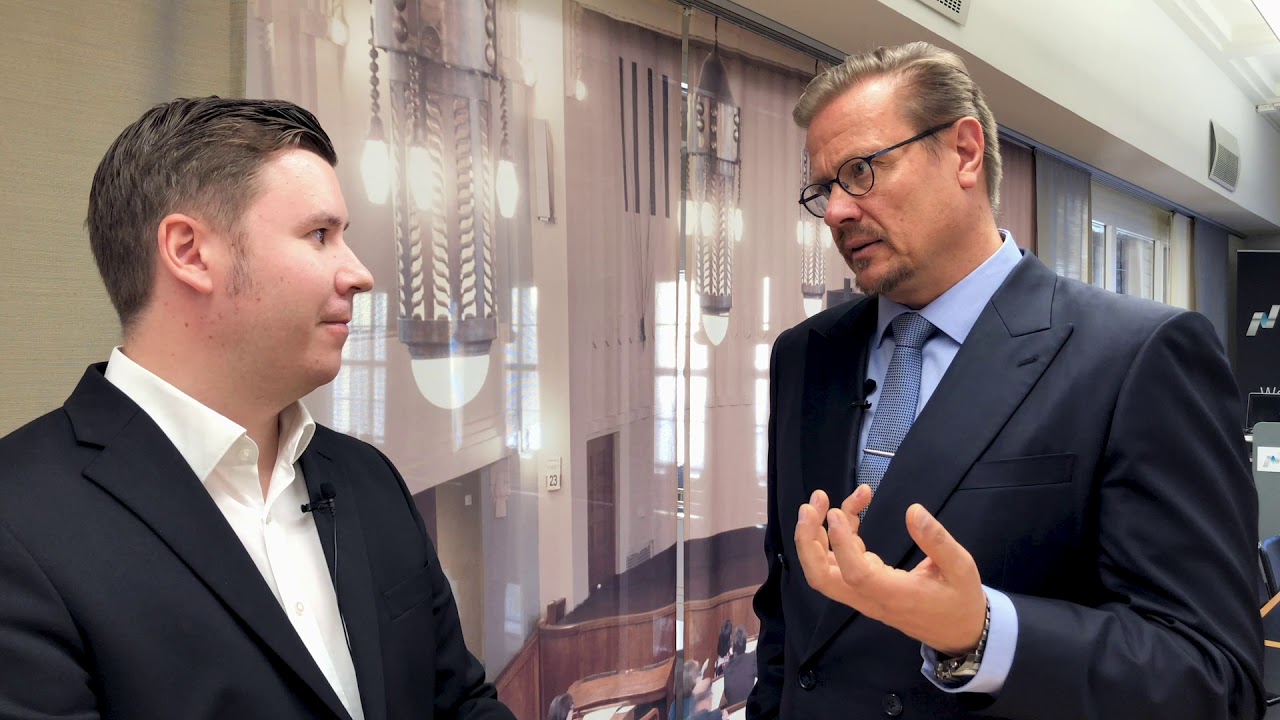
HPJ Roininen in an interview.
I’m like a hemorrhoid, always there…
Thank you, evolove173, for your questions. We have taken Orava’s Q2’18 operating profit of EUR 1.0 million from Orava’s income statement. We have not moved any lines to this operating profit; it is the realized reported Q2 operating profit. For the full year 2018 operating profit, we have adjusted it by a one-off real estate portfolio write-down of EUR 5.7 million, which we expect to occur during Q4’18, when the company transitions to using an external appraiser for the valuation of its real estate portfolio. This is why the line “Operating profit (adj.)” appears in our earnings commentary table. Orava commissioned an external appraiser’s valuation at the end of 2017, and the value provided was exactly EUR 5.7 million lower than the company’s own presented value. The adjustment of this item from the full year’s operating profit is based on our belief that it gives a better picture of the company’s earning capacity for 2018.
It is true that our reported earnings forecasts for Q1’18 and Q2’18 did not hit the mark for Orava. Orava continuously records its properties at fair value using its own valuation model, and the predictability of these (non-cash flow) value changes is weak, as they do not necessarily even develop in the same direction as housing price changes reported by Statistics Finland. However, our cash flow-based operational earnings forecasts for Orava have been accurate in recent quarters; for example, our Q2’18 operational earnings forecast hit the mark with an accuracy of ten thousand euros. It must also be remembered that although the Q2 reported earnings fell as much as 50% below our forecast, in absolute terms, we are talking about a value change difference of EUR 250 thousand in a real estate portfolio with a value of EUR 195 million, which means a change and forecast error of 0.1%.
The fair value of a share is theoretically affected by two things: expected return and the risk with which this return is achieved. In this case, if the expected return weakens, the value can still increase if the risk profile decreases. This is precisely what has happened with Orava; even though the reported earnings for early 2018 have been slightly weaker than we predicted, and we have had to lower our forecasts, we are more confident than before that Orava’s new board, elected in December, will be able to turn Orava profitable again. In our opinion, the share’s risk profile has therefore decreased. You can find the latest justifications for our target price for Orava in the update report we published today here: Liiketoiminta on nimeä myöten käänteessä - Inderes
At the moment, the visibility into the company’s future earning capacity is not entirely precise, and it could be, as you said, that the best housing market environment is already behind us. This is also a risky case, and there is uncertainty associated with the turnaround. Thus, the stock may not be suitable for risk-averse investors. Generally, I would say that if an investor does not have confidence in the management of an investment target, then it may not be worth investing in the company at all, or at least this distrust should be factored into the required rate of return as a higher-than-usual risk premium. So far, IH has, in my opinion, proposed measures to Orava that would only increase shareholder value in the company.
Our view of Orava is that cash flow-based profitability will improve with the now announced measures, because we consider the cost savings credible (i.e., the discontinuation of the sales portfolio, the termination of the management company’s contract and new management, renegotiation of financing). After this, profits should come directly from rental operations, meaning the case is not based solely on the return of bulk discounts and changes in value, as you wrote. We have previously estimated that the annual operational cash flow-based result could be EUR 3.9 million in the new Orava: Saneeraus etenee, mutta työ on vasta alkanut - Inderes (page 5). In our opinion, this level of operational profit alone can justify a fair value of about EUR 6.0 per share, without any fair value changes or bulk discounts. However, it is considered likely that in addition to savings, the company will also buy back its own shares and engage in construction business, which can further increase shareholder value.
Operational profit doesn’t include repair costs at all, of which there will be quite a lot for the 70s apartments, right? In terms of square footage, Kurre has the most of these on the balance sheet.
Apartments built after 2010 have sold quite well, but older ones not so much. The apartments that haven’t sold well are the larger ones, and the location is also somewhat questionable in many cases. I would mostly call these social welfare family apartments, meaning most of the tenants are likely state-supported.
fiscal year 2019 profit: 6.2 million
change in value: 3.1 million
bulk discounts: 1.2 million
=1.9 million actual profit
Even now, the cash flow from business operations for half a year is just under a million, so that’s what we’re working with. In your estimates in that report, you calculate that Orava could already reduce interest expenses next year, but elsewhere, when reading your estimates, you said that proof would likely be needed first, and negotiations for new terms could happen at the end of 2019. This would, of course, provide a bit more cash flow, but interest rates in the eurozone might already start rising in 2019. 
You also estimate that the new management would cause sales to skyrocket, more than doubling them, but who wants those 70s concrete square meters? I know from experience that renovating them is a nightmare compared to modern ones. The locations are also Kotka, Salo, and similar. I don’t really understand selling new apartments if they don’t generate a good profit. Or are we going back to the good old Kurre era, when profits were meant to be made by rotating the balance sheet, i.e., buying large quantities at a “bulk discount” and then selling them one by one? It didn’t work optimally. 
IH’s value increases for purchased properties have also been quite high, and even there, the cash flows from the rental operations themselves are not impressive. The value increases for purchased properties, on the other hand, sometimes make my head spin. 
{“content”:“According to our understanding, Orava’s accounting logic for repair costs works like this: some apartment renovations are expensed, while others are capitalized on the balance sheet. Housing companies’ annual repairs are expensed in the income statement, and major renovations are capitalized. This means significant renovations are not included in the operational result. In practice, housing companies take out loans for major renovations, which are then allocated to the owners of the housing companies. Therefore, financing major renovations should not, at least in principle, be a major problem for the company. Unfortunately, I don’t have the latest statistics on the distribution by square footage at the moment, but exactly one year ago, 1970s buildings accounted for 47% of the portfolio by square footage, which is about half. The majority, about 49%, were newer, measured by square footage. Based on fair value, about 70% were built after 1989.\n\nAccording to the company’s own words, older properties have also sold well, and in our estimation, older properties have also been sold. However, I don’t have precise statistics on this to present right now. I would guess that newer properties sell better. You are right that Orava’s apartments are on average quite large (average size of about 65 square meters in Q2’18) and therefore not necessarily optimal investment properties based on relative rental yield. Orava’s portfolio will require significant restructuring to be optimal as a real estate investment in terms of net rental yield percentage. We estimate that the company will likely sell larger units in the coming years to modify its portfolio and, contrary to before, also sell rented apartments. Up to now, the company has only sold empty apartments. The predicted increase in sales is based on these estimates. I would guess that sales might focus on large new apartments, as the net rental yield percentage can be low in these, and there should be at least some demand for them in the market now. Regarding sales, it’s important to realize that previously the management company might not have had a strong interest in actually selling a large number of apartments (at least if sales resulted in losses), because the management fee was based on the fund’s value.\n\nWe have previously answered the question about Orava’s financing costs, for example here: Kysymyksiä, Orava Asuntorahasto - Inderes. Generally speaking, the visibility into the new Avaro strategy is not yet very precise, and forecasts for next year and the coming years will become more accurate if and when the new management starts and the strategy process is completed. I personally don’t believe at all that the new Avaro would return to the old “Kurre era.” The company’s main owner has spoken so strongly in favor of change, and Orava has proven that its old strategy doesn’t work in the current market. I consider it likely that the new Avaro will focus on developing new construction projects and cash flow. Possibly also commercial properties.\n\nIH has indeed made strong value increases, but I disagree that the rental business is not impressive. The company’s cash flow-based net yield percentage was 5.6% at the end of last year, which is not bad at all for a real estate company focused on apartments. For example, Orava’s corresponding net rental yield percentage last year was 4.0% and Kojamo’s was 5.2%. These companies have calculated these key figures in slightly different ways, and they are not directly fully comparable, but they give an indicative picture.\n\nThanks, by the way, for the relevant questions and challenging. Orava has such a bad reputation among investors that many investors find it difficult to evaluate it neutrally.”,“target_locale”:“en”}
I have about 15k in Kojamo. I prefer the brokers’ mantra: location, location, and location. 8.5 euros was a quite tolerable price to pay for this. Less would have been nicer, of course, but it didn’t drop below the issue price. I also speculated on some 10% monthly profits with Orava a year ago, and I owned IH for a little over a year and sold it after the Orava deal. These were pretty small sums, though.
My dear friend Frykkendaali has gone through Kurre’s trades from this year in Kauppalehti. 
Apartments sold by Orava 1.1.2017 - 30.6.2018
95 units sold, debt-free sales prices 12.3 M€.
The estimated balance sheet value of the sold units on 31.3.2016 was approximately 12.2 M€.
Sold by construction year (balance sheet value 31.3.2016):
1970s 39 units (2.0 M€)
1980s 1 unit
1990s 10 units (1.1 M€)
2000s 8 units (1.2 M€)
2010s 37 units (7.8 M€)
The square meter price of sold units on the balance sheet 31.3.2016 was:
1970s 1000 €/m2
1990s 1600 €/m2
2000s 2800 €/m2
2010s 3200 €/m2
Sold by location (balance sheet value 31.3.2016):
Tampere 13 units (2.5 M€)
Jyväskylä 12 units (1.3 M€)
Oulu 9 units (1.4 M€)
Vantaa 9 units (0.8 M€)
Lohja 9 units (0.6 M€)
Salo 7 units (0.15 M€)
Other cities 0-3 units.
The management company has indeed had no other interest than to grow the balance sheet, as the size of the management fee has depended on it.
IH’s interests are probably as follows:
IH has the opportunity to milk money from Orava, because it controls it, there are hundreds of ways.
IH can quickly “fix” Kurre and sell its shares.
IH can also take a longer hold on this, but that ownership stake remained a bit small, as people weren’t really willing to sell at the price IH offered.
I wouldn’t quite consider IH an apartment investor, because in Q1 apartments accounted for 58% and the rest was from the service/commercial sector.
It’s a bit puzzling how Orava plans to buy back its own shares, build, and buy new apartments with what money…
It’s worth noting about Orava’s board of directors that previously, only two of the six Orava board members were, in my opinion, independent of the management company and IH (Larvala and Hertsberg). Now, three of Orava’s five board members are, in my opinion, completely independent (Kovalainen, Repo, and Ahvenjärvi). Ahvenjärvi is on IH’s board, but based on disclosures, he has no ownership in IH, and I consider him independent. I believe it’s likely that the new board will emphasize the shareholder value of all shareholders more strongly in its decisions than before, and I don’t really believe they would, so to speak, “drain” Orava for IH. IH’s CEO, Roininen, also has a personal reputation at stake because last year he held numerous presentation events across Finland for Orava’s owners in connection with the exchange offer, where he emphasized that he would promote the interests of all shareholders, including small investors. I really can’t believe he would now start pushing for decisions that are against the interests of Orava’s private investors. In a way, he now has the “responsibility” to get Orava in order. Of course, it’s possible that IH would sell its Orava holdings later, and Roininen has also said before that this is possible.
“It’s a bit puzzling how Orava plans to buy its own shares, build, and buy new apartments with what money…” This will certainly be a challenge for the company. This is also why we estimate that the company will sell its apartments more aggressively than before.
Could you elaborate on this a bit?
At a share price of 6.0 euros, Orava’s market value would be 57.6 million, and with an operating profit of 3.9 million, the P/E ratio would be 15.
Why would investors be willing to pay 15 times the operating profit for Orava? Orava’s track record for creating shareholder value is truly dismal, as we all know.
The value development of Orava’s housing portfolio has been negative year after year, and this has consistently overshadowed the small positive development achieved on the operational side in recent quarters.
Why would this change? The same properties are still on the balance sheet.
Why wouldn’t investors continue to discount this into the share price?
So, are there any justifications for that P/E ratio of 15?
Ovaro’s historical track record is indeed weak. However, it’s important to note that the company’s board has changed, management has completely changed (or will change after December 18th), the company structure and cost structure have changed, and the strategy is completely different from before. Of course, the same assets and liabilities are currently in the background, but this will also change in the new direction. I personally consider it possible that Ovaro will sell a significant amount, in the range of EUR 50-70 million, of its real estate portfolio consisting of poorly performing properties (Q2’18 real estate portfolio EUR 195 million). These are especially larger family apartments in new developments, where the net rental yield % is low. Once the poorly performing properties have been sold off and financing has been reorganized, Ovaro’s operational result, according to our estimate, will be significantly higher than now and the risk profile considerably lower. Overall, the return/risk profile will be completely different from before. As the turnaround progresses over time, I consider it likely that investor confidence in the company will strengthen and past management mistakes will gradually be forgotten.
To what level could the valuation of the new Ovaro rise if the change is successful? This is difficult to say precisely, as it depends, among other things, on the level to which profitability rises, what the new company’s earnings growth prospects are, and how high Ovaro’s risk profile will be. The 15x P/E calculated from the operational result that I mentioned in the report (link to the report in the previous comment) was based in many ways on the valuation level of the closest comparable company, Investors House (IH), with our forecasts. IH, of course, has other businesses besides residential investments and is not necessarily a perfect comparable for Ovaro. Generally speaking, for residential investment companies, markets are often willing to price in higher multiples than, for example, commercial real estate investment companies, because the risk profile in these is typically lower. If one looks at large residential REITs in the USA, their 12-month trailing P/FFO (P/EPRA EPS equivalent metric) has recently been around 18-20x. For the residential investment company Kojamo, the 2017 P/FFO is currently around 21x. I emphasize again that we do not consider these as comparables for Ovaro nor do we base Ovaro’s valuation on these multiples, but they perhaps give some indication of the level to which industry valuations can rise.
Anyone else considering adding/buying at the €5.5 level now that the first signs of a turnaround are emerging?
New strategic goals published:
https://www.inderes.fi/fi/tiedotteet/ovaro-kiinteistosijoitus-oyjn-strategiset-tavoitteet-2021
Ovaron CMD starts in a few minutes!  Ovaro Kiinteistösijoitus oyj:n pääomamarkkinapäivä 29.10.2018 klo 13.00 - Inderes
I like Ovaro’s engineering team; their approach to this business seems logical and smart. My confidence has strengthened, and the guidelines laid out in the CMD look really good. Hopefully, practical actions will support this, and we can unearth value from Ovaro. Not everything is in management’s hands, but it helps considerably if they understand what needs to be done.
Although that presentation was a bit homemade and not so fancy, it was still quite convincing and genuine I own Ovaro myself, as I followed the Model Portfolio. Based on the CMD (Capital Markets Day), I will continue with it.
Don’t be alarmed by amateurish slides: Even Investor House’s investor presentations look like downright embarrassing PowerPoint exercises, yet their track record has been good. Perhaps it’s even good that the focus of the presentations is on content, not cosmetic presentation factors.
Aki Pyysing wrote (yet another) article about Ovaro. I agree with Aki’s thoughts almost word for word.
Anyone else considering buying? My own purchases will start soon. Q3 next week… would it be time?
EDIT: Inderes considers EPRA NAV -20% an acceptable level if the new strategy succeeds. The 2020 EPRA NAV estimate is 10.3e, so around 8e would be the target price for 2020 with that logic.