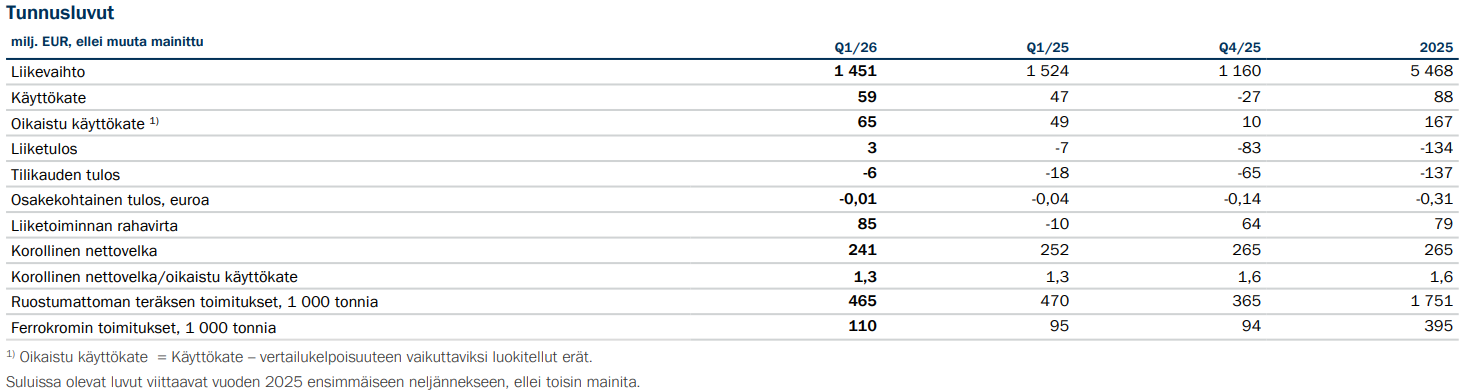
Osakkeissa analyytikot ovat tällä hetkellä varsin optimistisia tulevaisuuden suhteen, mikä heijastuu myös Outokummun kurssikehitykseen. Ennustelaitokset eivät kuitenkaan jaa samaa näkemystä – esimerkiksi Kansainvälinen valuuttarahasto on väläyttänyt jopa taantumariskiä. Geopoliittiset riskit ovat yhä olemassa, vaikka Iranin tilanteen eskalaatio onkin toistaiseksi rauhoittunut.
Outokummun osaketta tukevat kyllä useat tekijät: EU:n suojatoimet, Saksan elvytyspaketti sekä odotukset kasvavista puolustusinvestoinneista. Myös shorttipositioiden merkittävä väheneminen saattaa osaltaan tukea hinnanmuodostusta.
Herää kysymys, hinnoitellaanko kromikaivos jo nykyiseen kurssiin mukaan? Mikäli suunnitelmat kromin jalostuksesta etenevät, voisiko kaivostoiminnan yhtiöittäminen ja listaaminen omaksi pörssiyhtiökseen tuoda lisää omistaja-arvoa? Kromin tuotanto ja jalostus poikkeavat liiketoimintana selvästi ruostumattoman teräksen valmistuksesta, joten eriyttäminen voisi tehdä kaivoksen arvon näkyvämmäksi.
Shorttaajien rooli on joka tapauksessa selvästi pienentynyt Outokumpu ei enää kuulu eniten shortattujen yhtiöiden joukkoon, ja Finanssivalvonnan listalla shorttaajia on jäljellä enää yksi. Shortattujen osakkeiden osuus on pudonnut noin 0,51 prosenttiin kaikista osakkeista.