The idea behind presenting the calculations I made is to first establish a clear theoretical foundation.
The next expanding step would then be a short and concise question: “Would you rather take the 85% taxable portion of a dividend, or—depending on capital gains—the 0%–80% taxable portion of ‘homemade dividends’ created by selling shares, based on the gross amount paid out in profit distribution?”
Once these basics are clear and understood, we can start talking about how, considering taxes and other costs, most investors actually only want to receive the amount they need for expenses. In a dividend distribution, you cannot choose this amount; you must politely accept the money and pay taxes on it, even if you could just as well leave the funds tax-free in the company or for share buybacks, and especially for the resulting (at least for now) tax-free capital appreciation.
Once the points directly related to the topic have been covered, we can move the discussion to a higher level, to so-called external factors that, in a scientific sense, shouldn’t be considered because they are under the control of neither the company nor the investor, nor do they stem from or otherwise relate to the profit distribution or the choice of its method, but which still collectively affect what the investor is left with:
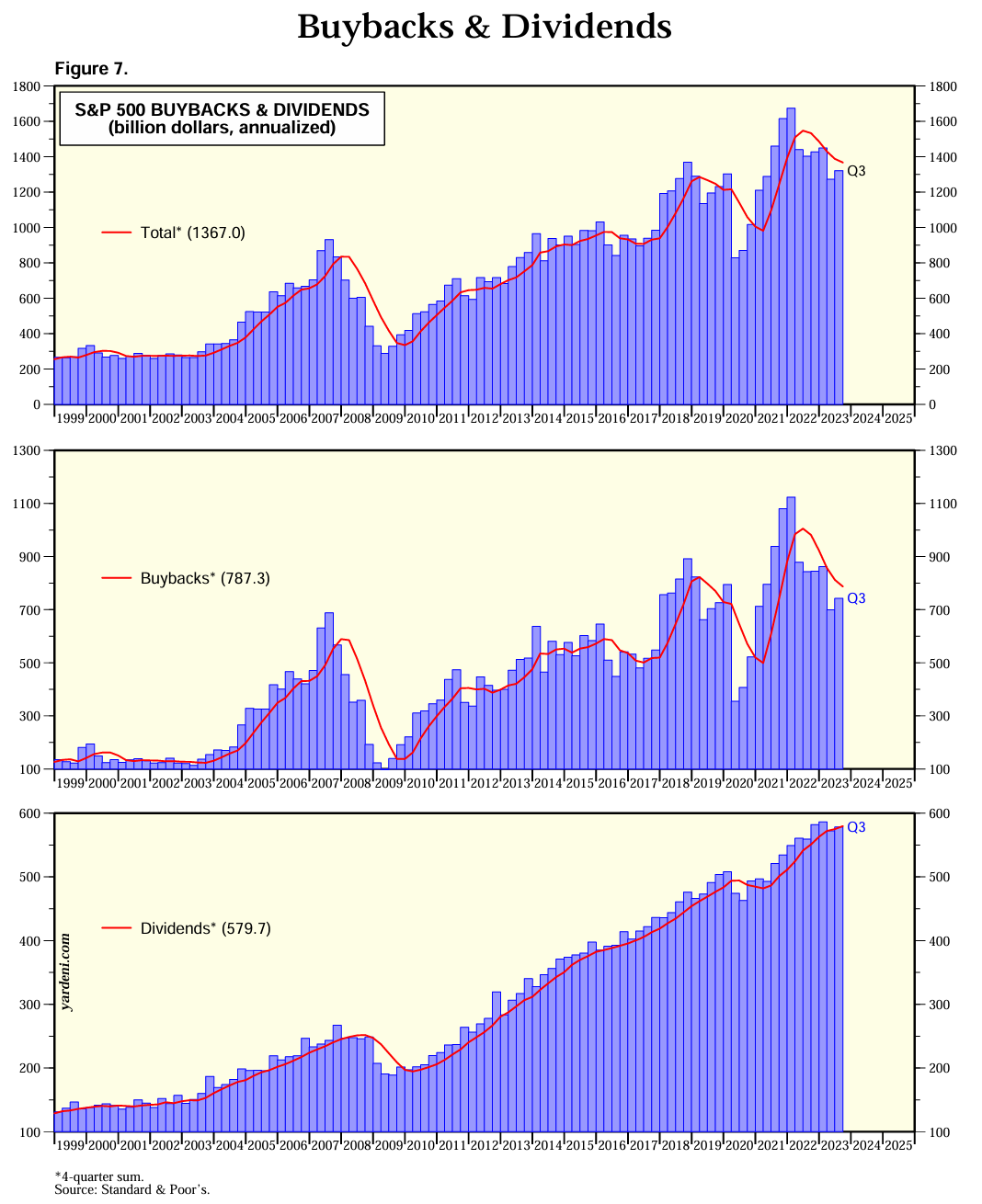
Nothing guarantees that the share price will even budge from share buybacks, cancellations, or the news about them. And nothing guarantees that someone making “homemade dividends” will time it exactly so they get a corresponding benefit from buybacks (@KalleH, I ended up assuming that 740_GLE means this—it is, of course, not the fault of the buyback logic or the company). Valuation multiples fluctuate randomly anyway. A dividend, along with its total wealth effects for both the company and the investor, is at least independent of the share price and its fluctuations, and is “nearly risk-free” once that dividend has been locked in at the Annual General Meeting (AGM).
To the previous point, it can be said that with buybacks and making homemade dividends, averaging out nevertheless removes the noise, and in the long run, we approach the theory I posted, as exemplified by Mirko_Sampo_IR’s post about Sampo.
But then comes the point that 740_GLE rightly raised: Buybacks tend to be concentrated during moments of overvaluation without a corresponding balancing buyback during periods of undervaluation. So, averaging out doesn’t necessarily help.
This bad habit of doing buybacks at high prices isn’t a “flaw in the theory”; rather, it can be explained by, among other things, investors’ dividend preference: stopping dividend payments causes more fear, anger, and rage among shareholders than stopping buybacks. Stopping the profit distribution entirely, regardless of its form, is actually quite smart when the company’s performance is poor. Undervaluation usually stems from the market’s fear of declining earnings. But despite this, people want dividends, even if the company has to take on debt to pay them…
Of course, when we remember that an investor doesn’t actually want the whole dividend in their account, but only the part they need for something else, one can argue that even if you liquidate your shares at an unfavorable valuation for only the amount you need, the loss will probably still be smaller than the disadvantage accumulated from dividends. Unless, of course, the intention is to live hand-to-mouth and every cent is precious—but then one could say the investor’s problems lie elsewhere than in the company’s profit distribution strategy. Namely, in risk management.
For an investor, clinging to dividends and buybacks is generally silly if they are able to assess whether the stock is over- or underpriced:
If an investor knows a stock is overvalued, why do they even own the stock and wait for a profit distribution they know will lose out to a future downward price correction? Well, the answer, of course, is that they don’t know for sure if the stock is overvalued. They also don’t know for sure when the overvaluation will dissipate. Nor do they know if they can buy the stock back at a suitable price even if the overvaluation ends (the damn thing has to drop enough for the benefit to cover the capital gains taxes that become payable).
Both making homemade dividends and profiting from price fluctuations are games of luck, whereas a dividend distribution is at least like the interest on a bond: You know at least in advance what the return on the original investment is, no matter how much the price fluctuates between being a profitable and unprofitable investment in the meantime. Except that you don’t, because a stock has no maturity date or a par value paid at the end, and the dividend is much more volatile than a nominal interest rate.
But regardless, a company’s stubborn adherence to a predictable dividend policy is comforting knowledge that frees up time for things other than constantly assessing reporting and news, guessing price movements to choose the right moment to liquidate, and other stressful activities. In the end, it doesn’t require more work (or rather, different work) than what one would do as a lender, because you don’t have to worry about anything other than the company’s earnings not falling below a critical point. A stock speculator must also consider earnings movements above that critical point.
I probably forgot a bunch of other arguments for and against dividends and buybacks, but these came to mind while writing in the absence of anything better to do.
Theory says unequivocally that buybacks are a winning strategy if the company has no better use for the money, but psychological and cumulative pragmatic factors then make the matter more a question of opinion. Due to my own limited mental resources, I prefer to direct my cash flow into buy-and-forget stocks that pay dividends with guaranteed certainty, and only a few speculative targets that require focus and rely solely on price appreciation (where, however, it would be nice to expect a change from zero dividends to dividend payments, as that usually leads to significant price jumps after which the shares can be sold).
 But if Sampo then decides to change its policy so that the entire sum (or a larger portion than before) is used to buy back shares, you can counter in this situation and create your own dividends with lower taxation. Buybacks always provide more flexibility because there is no forced tax consequence.