Google probably doesn’t consider itself an investment company
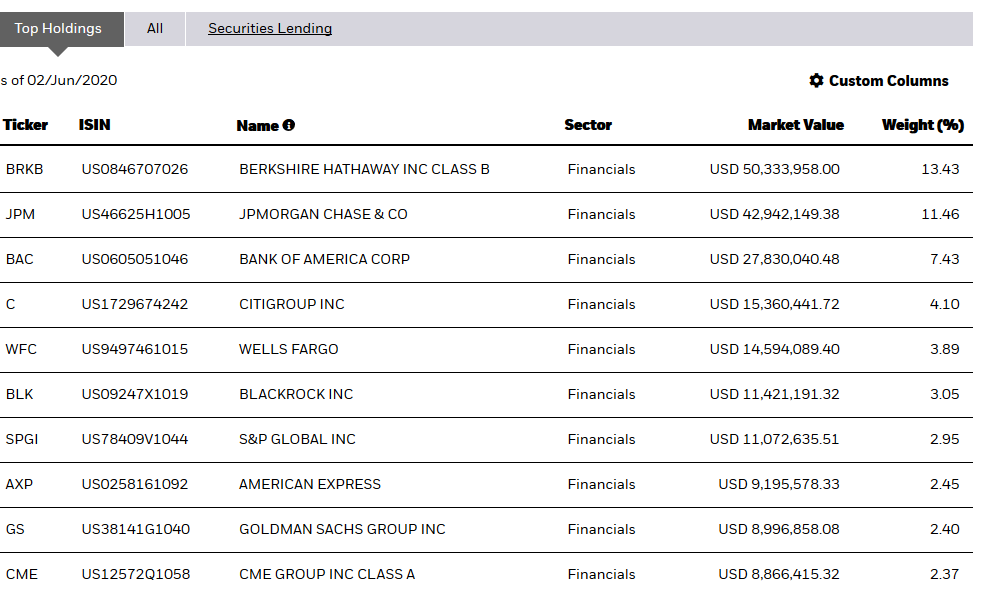
But to answer that question, for example, by looking at the companies in iShares S&P 500 Financials Sector UCITS ETF USD and checking their dividends from Investing.com, you can quickly get started.
Regarding the equity savings account, has anyone come across information about the right to deduct capital income? The non-deductibility of losses in the middle of the game is a clear matter. From where can deductions be made, when in principle there is no taxable capital income as long as the capital is stored in an equity savings account?
For example, regarding expenses for acquiring income, it is stated:
Deductible expenses for acquiring capital income can include, for example:
phone costs
IT costs, such as a computer or internet connection
costs incurred from acquiring professional literature.
The expenses must be related to acquiring income, for example, investment activities.
A home office deduction can also be made from capital income. The amount of the deduction is affected by whether it is a full-time income-generating activity or the acquisition of occasional side income.
If the expenses are related to the management and preservation of securities, book-entry shares, or similar assets, a deductible of 50 euros is applied to the expenses. The expenses are reported in full on the tax return, including the deductible.
You can, for example, put money into an Equity Savings Account and withdraw it immediately, which will realize taxation. If no taxable capital income has arisen, deductions are compensated as an underprovision credit from earned income.
My main point was the idea that you close your share savings account, for example, after ten or twenty years, and you have no other capital income. However, you may have had annual deductible expenses for acquiring income. As far as I understand, the deductibility period for income acquisition expenses is limited. If I don’t realize some profit from the share savings account, I also can’t make deductions?
I think I’ve already found the sources of information. The answer is probably here:
You should receive net deductions of up to €4000, so that taxes are not completely deducted from your earned income. Of course, if you are unemployed, you can utilize the deductions very simply over the next ten years without realizing anything.
For example, a stock savings account with a value of €13.5k and €8.5k capital invested in it (profit of €5k). You deposit €1.5k into the stock savings account, making the value of the stock savings account €15k and the invested capital €10k (profit of €5k). The next day, you withdraw this €1.5k, meaning you have made €0.5k of taxable income (€5k/€15k*€1.5k). The rest of the withdrawal, €1k, is tax-free.
Now the value of the stock savings account is €13.5k and the invested capital is €9k (profit of €4.5k). You can put the withdrawn money back into the stock savings account the next day and continue this process until you have utilized all deductions or run out of profits.
Could someone explain to Bullerolle how the closure of a share savings account or similar is affected if the account holds a company awaiting bankruptcy? This is about the hottest lottery ticket of recent days, of which 100 pieces are still left after some trading. The value is so insignificant at the moment that I wasn’t going to sell it but rather wait for some mystery bounce or bankruptcy, but now I started wondering if it could cause trouble if I decide, for example, to close the account and switch to another service provider?
I haven’t owned a bankrupt company before, but my understanding is that the process is quite long, and at least through an AO account, one has to wait a good while to utilize the tax deductions for a bankruptcy ownership.
edit: Wirecard is the said stock, which many probably guessed…
My understanding is that it’s just money in and money out. When closing a share savings account, it most likely has to be empty. If you happen to own a book-entry account in addition to a share savings account, then why don’t you buy those hundred shares there, and sell them from the share savings account so you can close it if necessary? Fit Biotech, at least, was visible as a line in the book-entry account for quite a long time after the bankruptcy.
That’s definitely true, it’s wisest to dispose of the shares from the stock savings account while trading is still possible. It’s probably not worth the trouble to buy it for a book-entry account either… it seems like a clear-cut case already.
Were there any Nordea OST customers here who don’t have any other activity with Nordea? Is it true that you first have to open a paid “customer relationship” there, something like 2-3e/month, to get banking IDs etc.?
I’ve now started building a portfolio with OP’s AO account, as the sums have only been a few hundred euros per company (max 1% fees) and monthly fees are 0e until the end of the year. At the turn of the year, the idea would be to transfer about 6000e to an equity savings account so that the portfolio has 8-10 companies and continue saving about 300e per month.
OP still announces that they will open OST during the rest of the year, so I’m waiting for their price list. In Nordnet, after the initial phase (max 3e), trading fees are quite high for individual purchases (7-9e). I wouldn’t want to tie myself to the fact that to keep fees at max 1%, I restrict my buying opportunities to one company every 3 months. In Nordea, as I understand it, there is the same 1% maximum commission also for an equity savings account, so it interests me somewhat, but I wouldn’t want to incur additional costs from those banking services when I don’t need Nordea for anything else…
Yeah, that practically already compensates for the difference. Well, I’ll wait to see what OP brings to the market and check out other options. The 36e annual cost isn’t much as capital grows, but in this early stage, all costs, usability, etc., need to be considered.
As an Akava member, I got a stock savings account from Danske with no monthly or opening fees, and I also got to take advantage of the new OST’s €2 per trade offer for several months. The current fees are €5 per trade, but Danske was the best deal for me when I was comparing these in the spring
When you invest 500€ or more in stocks (OSTI), Nordea is the best option with 1% fees, especially since you can diversify it across several companies. I have Nordea banking services there, and there are no fees, so I can’t say what the prices are if you only take OSTI. It might require a standard Nordea account as well, through which money is transferred, and of course, online banking credentials. The list shows the price as 2 + 3e/month for that.
With Nordea, it’s also worth noting that custody is free only if you make at least one commission-generating trade during the quarter. Otherwise, additional costs will be almost 6 euros. If OP’s OST (equity savings account) is not satisfactory in its terms, you should check the benefits available through the Finnish Association of Shareholders. Membership in the association is, in my understanding, a tax-deductible expense.
With package pricing, you can get it for 4 euros/month. Transferring money to an Investment Savings Account (OST) requires an account, as Nordea also has an obligation to return excess funds back and out of the OST account. So, you cannot directly transfer money from another bank to Nordea’s OST.
Does the tax exemption for capital income under 1000 euros/year also apply to an Investment Savings Account (OST)?
It’s a small thing, of course, but in principle, if there’s no other need to withdraw money, it’s possible to withdraw, for example, 999 euros from an OST at the end of the year, with the profit portion being completely tax-free.
Good question. I would guess that you always have to pay tax on funds withdrawn from an OST. But I don’t know for sure. Someone else can provide a definite answer.
Also, related to the same issue, I would like to ask, if I withdraw money from an OST, can I deduct AOT losses from the OST profits? That is, if I have, for example, 1000€ of realized losses on an AOT, can I withdraw 1000€ of profits from an OST tax-free, so to speak, if I offset them with the realized losses on the AOT?

 The most surprising one for me is SRV, which is in the top 5.
