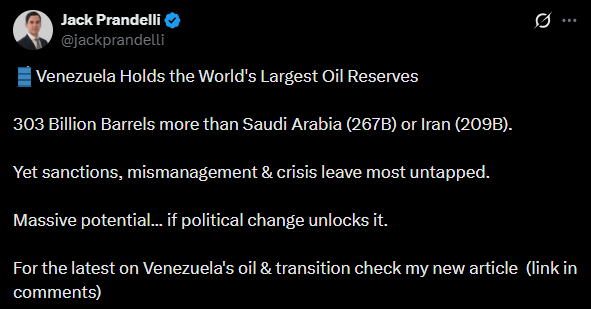
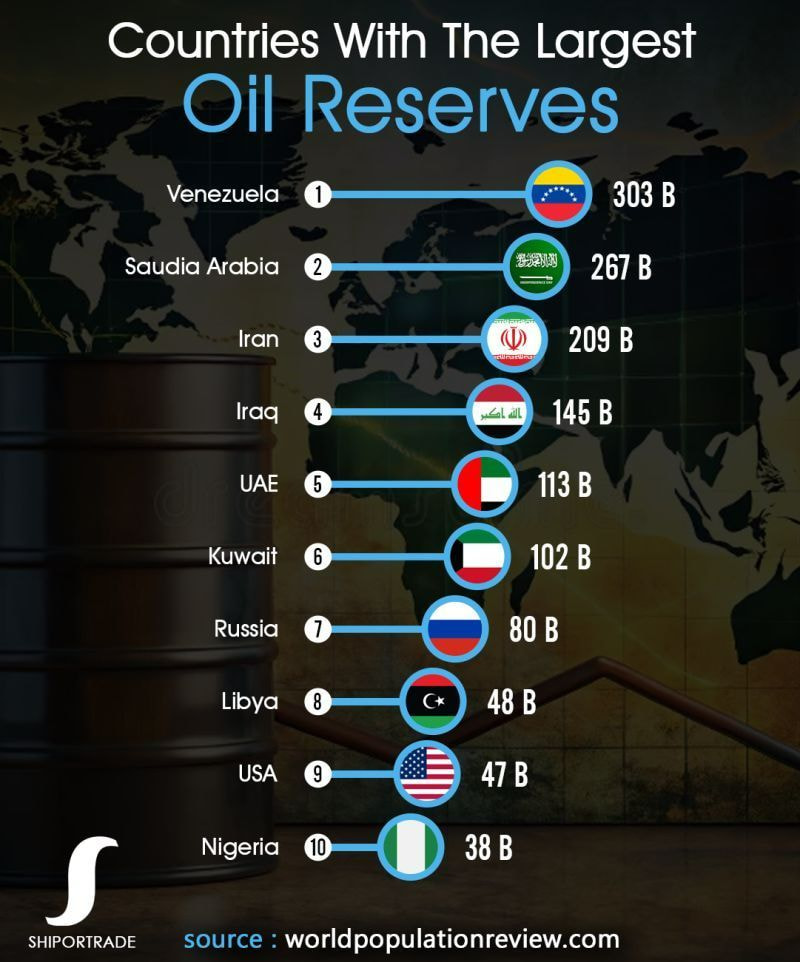
Tässä on tviitti eri maiden öljyvarannoista 
https://x.com/jackprandelli/status/1999496402116780415
Yhdysvaltain raakaöljyn on taas lasketeltu ja painuikin alimmalle tasolleen sitten alkuvuoden 2021.
Markkinoita painavat ylitarjonnan uhka, “OPEC+”-maiden tuotannon kasvu sekä myös odotukset Ukrainan sodan mahdollisesta rauhasta. Jutun mukaan laskevat hinnat voivat viitata talouskasvun hidastumiseen.
Ukraine’s attacks on oil infrastructure and U.S. sanctions on Russian oil companies would likely be lifted relatively quickly in the event of an agreement, said Jorge Leon, Rystad Energy’s head of geopolitical analysis, in a note to clients.
“This would significantly reduce the risk of near-term Russian supply disruptions and allow a sizeable volume of Russian oil currently stored on water to return to the market,” Leon said. Russian oil stored on water is currently estimated at around 170 million barrels, according to Rystad.
"Key Points
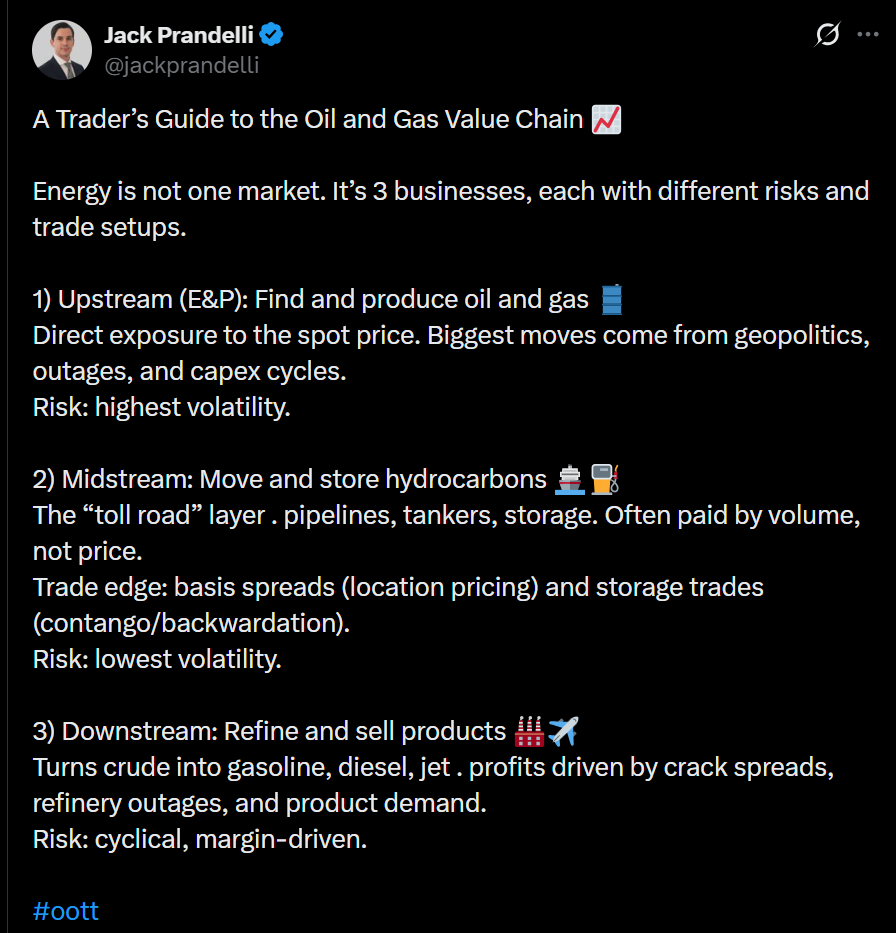
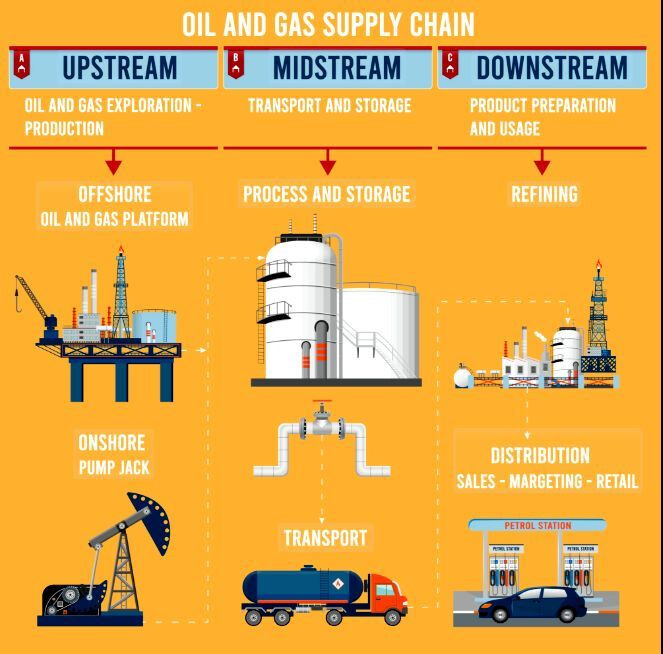
Alla oleva tviitti esittelee öljy- ja kaasumarkkinoista ja näyttää, miksi energiamarkkina jakautuu selvästi eri osiin. markkina.
Se käy hyvin tiiviisti ja yksinkertaitetusti läpi arvoketjun, liiketoimintamalleja, riskejä ja kaupankäyntimahdollisuuksia kuhunkin liittyy. Tarkoituksena on kait auttaa lukijaa hahmottamaan, mistä erilaiset hintojen liikkeet tulevat ja miten tuotot syntyvät energiasektorilla.
https://x.com/jackprandelli/status/2001677885329834300
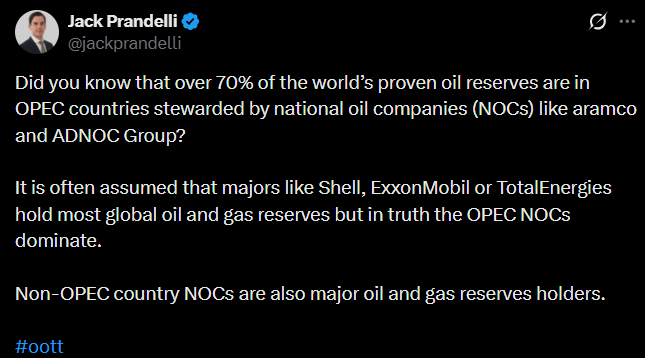
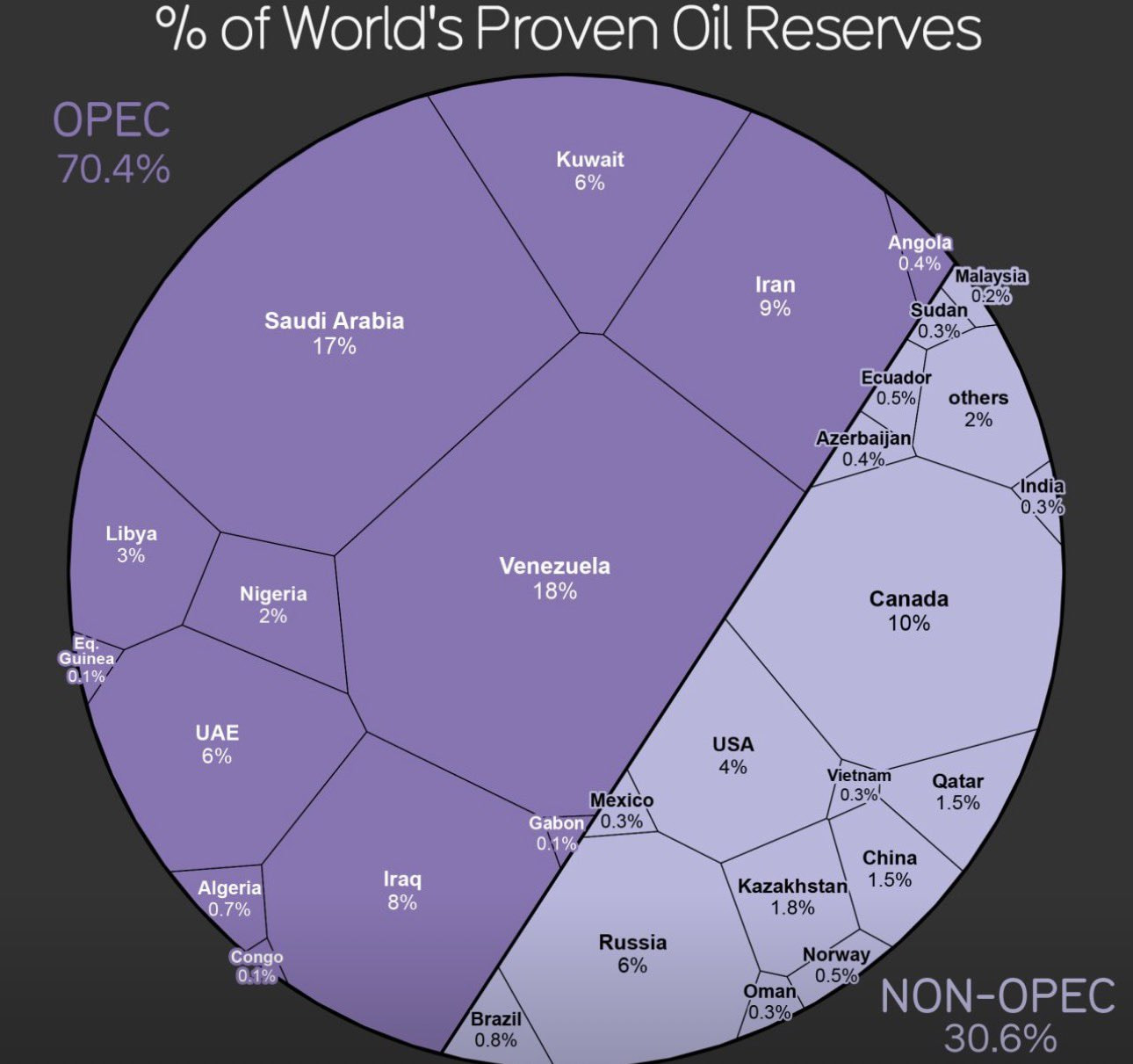
Öljyvarannoista yli 70 prosenttia on OPEC-maissa, sitten taas niitä hallinnoivat kansalliset öljy-yhtiöt, kuten esim. Aramco.
https://x.com/jackprandelli/status/2002161485875687629
Öljyn hinta on nyt noussut, kun Yhdysvallat kiristi otettaan Venezuelan öljyviennistä.
Yhdysvallat julisti saarron Venezuelaa vastaan ja otti mm. haltuunsa suuren öljylastissa olleen aluksen. Venezuela myy suurimman osan öljystään Kiinaan, joka tietysti kritisoi näitä toimia kovin sanoin.
Asiantuntijoiden mukaan ratkaisevaa on nyt mm. se, että kuinka tehokas ja pitkäkestoinen saarto lopulta on, koska markkinoilla on muutenkin yleisesti paljon öljyä tarjolla jne.
Alla olevan jutun mukaan öljyn hinta on pysynyt vakaana useamman nousupäivän jälkeen.
Hintaa tukevat Yhdysvaltojen ja Venezuelan väliset jännitteet, jotka voivat rajoittaa tarjontaa sekä USA:n odotettua vahvempi talouskasvu. Öljyvarastot ovat kasvaneet yllättäen ja lisäksi nämä joulun pyhät hiljentävät kaupankäyntiä, mutta geopoliittiset riskit pitävät markkinat varuillaan.
API figures released late Tuesday showed U.S. crude oil stockpiles rose by about 2.4 million barrels in the week ended Dec. 19, confounding expectations for a draw and marking a reversal from the sharp decline reported a week earlier.
Tässä on SalkunRakentajan Jorma Erkkilän kirjoitus öljyyn ja sen hintoihin liittyen.
BOK Financialin analyytikko Dennis Kissler toteaa, että markkinoiden perusongelma pysyy samana. ”Ylisuuret varastot ja hidas kysynnän elpyminen pitävät hinnat paineessa vielä pitkään”, Kissler arvioi.
Vaikka Lähi-idän jännitteet ja Nigerian levottomuudet ovat hetkellisesti tukeneet hintaa, niiden vaikutus on jäänyt lyhytaikaiseksi. Monet analyytikot uskovat, että hintatason vakiintuminen edellyttää selkeää kysynnän piristymistä tai uusia tuotantoleikkauksia.
Alaotsikot:
Öljyjärjestö ja Yhdysvallat lisäävät tuotantoa
Pitkän aikavälin hintapaineet eivät hellitä
Alla olevassa jutussa on asiaa öljystä ja vuodesta 2025 + jutussa ihan hieman silmäillään ensi vuoteenkin.
Öljy lasketteli, koska tarjontaa alkoi tulla markkinoille liikaa ja taloushuoliakin oli.  OPEC+ pumppasi ja sen lisäksi samalla tullipuheet painoivat tunnelmaa.
Taustalla kupli myös geopoliittiset draamat; Ukraina, Iran–Israel ja pakotteet jne.
John Driscoll, managing director of consultancy JTD Energy, expects geopolitical risks to support oil prices even though market fundamentals point to oversupply.
“Everybody’s saying it’ll get weaker into 2026 and even beyond,” he said. “But I wouldn’t ignore the geopolitics, and the Trump factor is going to be playing out because he wants to be involved in everything.”
Alla olevassa jutussa mainitaan, kun öljyn hinta laski heti uuden vuoden alussa, kun sijoittajat pohtivat ylitarjontaa samalla kun taustalla kytevät geopoliittiset riskit.
Jutussa mainitaan myös Ukrainan sodan kiristyneet iskut, tämän lisäksi Venezuelan öljysektoriin kohdistuneet uudet pakotteet, Iranin levottomuudet sekä Lähi-idän jännitteet. Markkina vaikutti silti “turtuneelta”  ja katseet kohdistuvatkin OPEC±kokoukseen.
Phillip Nova analyst Priyanka Sachdeva said the muted price movement reflected a struggle between short-term geopolitical risks and longer-term market fundamentals that point towards oversupply.
Viime tapahtumat saattavat vaikuttaa hieman öljymarkkinoiden tapahtumiin, ja toki vähän muuhunkin.
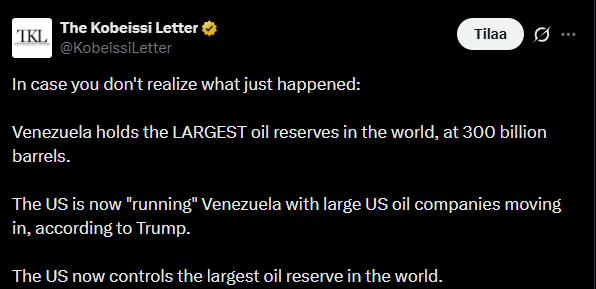
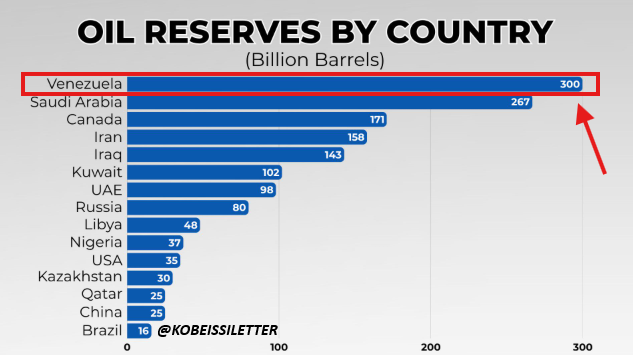
https://x.com/KobeissiLetter/status/2007500910277325260
Mielenkiintoisia öljy-aikoja tosissaan edessä.
SKY:n tietoisku aiheesta
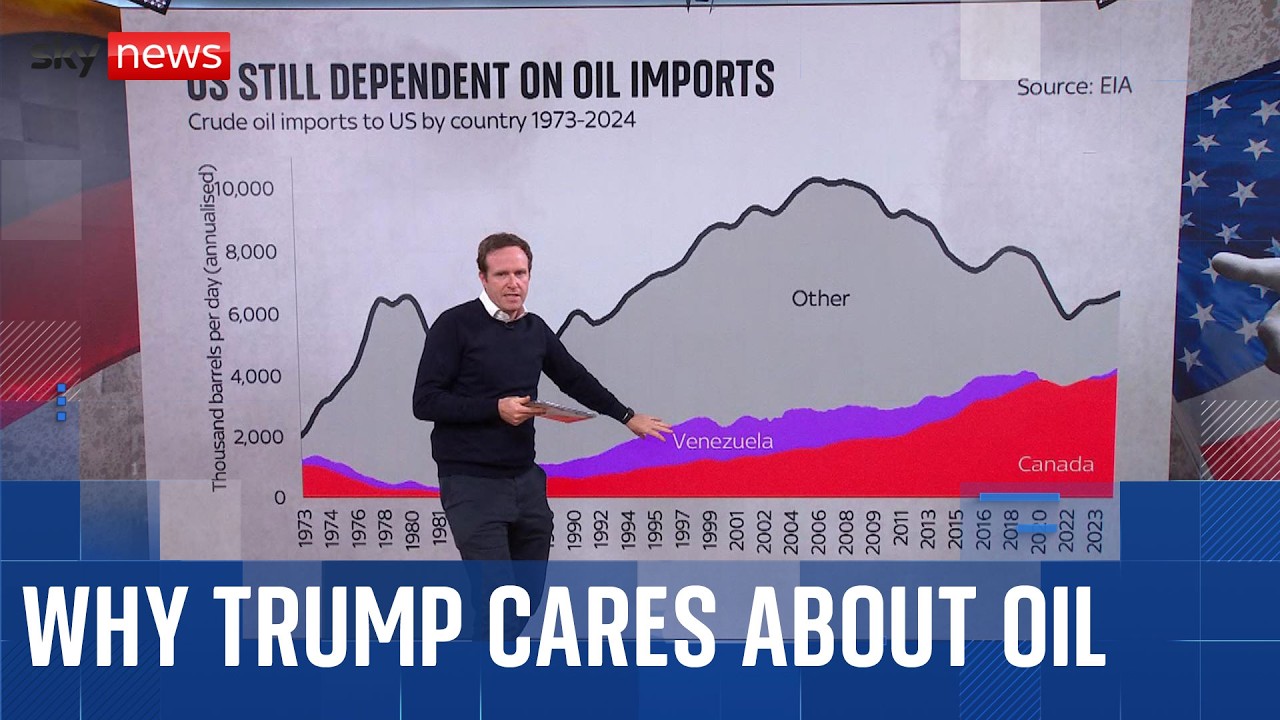
Alla on linkki juttuun, jossa pohditaan, että Maduron syrjäyttäminen voi palauttaa Venezuelan öljyn markkinoille, mikä hyödyttäisi erityisesti Yhdysvaltain jalostamoita esim. Valeroa, PBF Energyä ja Chevronia.
Infra vaatisi jutun mukaan miljardi-investointeja, mutta elvytys on uusia löydöksiä halvempaa. Pitkällä aikavälillä tämä loisi kilpailua kanadalaiselle raskaalle öljylle, kuten Suncorille + Cenovusille ja voisi kaventaa niiden hintapreemiota.
Blomman turinaa aiheesta.
Olipas hyvä tietoisku perinteiseltä medialta. Olisin vielä lisännyt, että öljyn rikkipitoisuus vaikuttaa myös merkittävästi (sweet/sour). Venezuelan maaöljy on maailman surkeinta, oikeaa paskaöljyä. Sen käsittely ja jalostaminen on kallista, vaikeaa ja vaatii paljon teknologista osaamista ja pääomaa. Parhaassakin mahdollisessa kuviteltavassa tapauksessa sanktioiden purkamisen ja hallinnon vaihdon jälkeen öljytuotannon lisääminen merkityksellisillä määrillä vaatisi vuosia ja kymmenien miljardien lisäinvestointeja. Öljyn hinta on matala ja sitä on helpommin saatavilla muista turvallisemmista kohteista (esimerkiksi Argentiina), joten investointihaluja Venezuelaan öljyjäteiltä tuskin löytyy.
On tietysti hauska meemi ajatella Yhdysvaltain pitkän aikavälin öljystrategian olevan sotilaallisten iskujen ja Maduron kaappaamisen takana, mutta maailmaa ei hallitse mikään viisaiden miesten kabaali, jolla olisi strategisia suunnitelmia ja suuria visioita. Tätä kuuli jopa aikaisemmin Putinin aloittaman hyökkäyssodan perusteluksi, että sillä tavalla estettäisiin Ukrainan merkittävien kaasuvarojen hyödyntäminen ja Venäjän korvaaminen Euroopan johtavana kaasujakelijana.
Yleensä kyse on kuitenkin vain opportunisesta vastustajan päihittämisestä ja helppojen poliittisten irtipisteiden nappaamisesta. Trump salamurhasi Soleimanin ja pommitti Irania vastaavanlaisilla täsmäiskuilla onnistuneesti ilman sen suurempaa suunnitelmaa, että mitä tapahtuisi iskujen jälkeen. Venezuelankaan osalta kyse ei liene mistään sen kummemasta kuin, että iso oranki löi ärsyttävää pientä apinaa, koska pystyi. Öljyn hintaan tai tarjontaan tällä ei ole tänä vuonna mitään merkittävää vaikutusta.

(Muokkaus: Vaihdettu esimerkin gorilla orankiin. Kiitos @tusinakassa)
Nykyisessä maailmanpoliittisessa tilanteessa on muuten olennaista hahmottaa ero gorillan (musta, rauhallinen, sosiaalinen ja suojelee laumaansa) ja orangin (oranssi, elää yksin eikä välitä lajitovereistaan, mölyää isosti ja puolustaa reviiriään väkivallalla) välillä.
Trump painostaa yhdysvaltalaisia öljy-yhtiöitä investoimaan 100 miljardia dollaria Venezuelaan Nicolás Maduron syrjäyttämisen jälkeen.
Exxon Mobilin kaltaiset suuryhtiöt jutun mukaan ovat kuitenkin varovaisia ja pitävät maata toistaiseksi sijoituskelvottomana oikeudellisten ja taloudellisten riskien vuoksi.
Trump lupaa turvatakuita ja nopeita voittoja, mutta alan johtajat painottavat, että vakaat puitteet ja merkittävä infran jälleenrakennus vaativat aikaa.
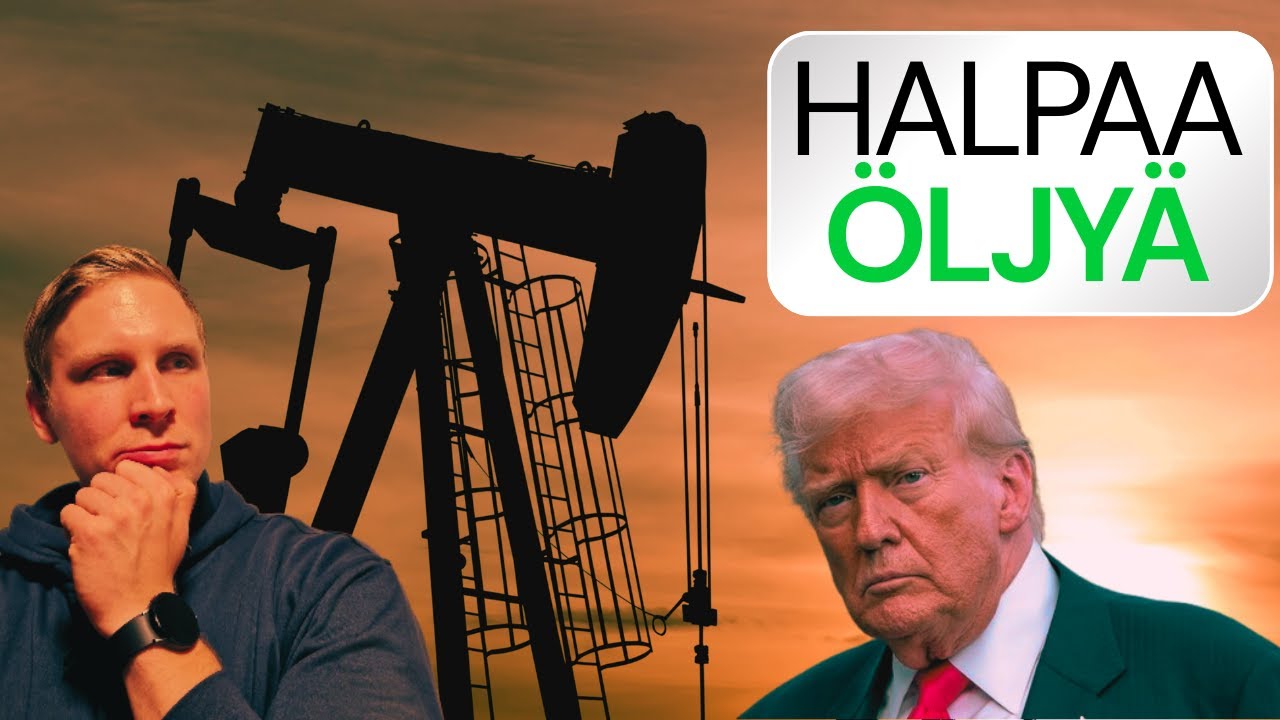
Jussi Halme on tehnyt hyvän videon öljystä meille taviksille.
Samaan aikaan kun suomalainen sijoituskenttä kohisee Donut Labin akkuteknologiasta, niin minä käännän katseeni takaisin “vanhaan ja saastaiseen” öljyyn. Miksi? Koska öljy ei ole vain raaka-aine – se on maailmanpolitiikan ase, joka määrittää inflaation, korot ja sinun ostovoimasi juuri nyt.
Tässä videossa perataan öljymarkkinan uusi, monimutkainen palapeli:
USA:n uusi rooli: Miksi Washington havittelee Venezuelan öljyvaroja ja miten se painostaa Venäjää?
OPEC+ kriisissä: Miten tuottajamaat tasapainoilevat ylitarjonnan ja hintapaineiden välillä?
Sijoittajan makrotyökalu: Miksi öljyn hinta vaikuttaa salkkuusi, vaikket omistaisi pätkääkään energia-osakkeita?
Kustannusrakenne: Saudi Aramco vs. länsimaiset jätit – kuka tekee tulosta 50 dollarin hinnalla?
Öljy ei ole katoamassa, vaan se muuttuu ailahtelevammaksi. Katso analyysi siitä, mitä öljymarkkinoilla todella tapahtuu ja miksi se on sijoittajalle tärkeämpää kuin koskaan.
Tässä on SalkunRakentajan juttu öljystä, jonka lukee muutamissa minuuteissa.
Nousupanostuksista huolimatta markkinoilla pelätään edelleen globaalia ylitarjontaa.
Kansainvälinen energiajärjestö IEA nosti tammikuun raportissaan maailmanlaajuisen öljyn kysynnän kasvuennustettaan 930 000 tynnyriin päivässä, kun aiempi arvio oli 860 000 tynnyriä.
Samaan aikaan järjestö kuitenkin nosti tarjonnan kasvuennustettaan 2,5 miljoonaan tynnyriin päivässä, mikä ylittää selvästi kysynnän kasvun. IEA varoitti, että markkinat pysyvät rakenteellisesti ylitarjonnassa.
Alaotsikot:
Hommat eskaloitui lähi-idässä.
Nyt aletaan veikkaamaan kauanko hormuzi tulee olemaan kiinni. Toivottavasti yli viikonlopun. Salkku öljyssä 74% painolla ja jerrykannut täytetty hyvissä ajoin, ettei Corollasta lopu menovesi ihan heti.