Yes, it makes you cry
61 Likes
Portfolio update. I’m currently 20 years old and started investing in 2020. It’s a bit disappointing that almost all profits from this period have been eaten away in the last 5 months.  I make almost all my purchases with the idea that I will never sell them, meaning +20 years. (Of course, life situations can change, and sales might need to be made). It would be great to get some comments on the portfolio, whether the choices are potentially good for the future. Not all comments might be accurate under the companies.
Stock portfolio content (OST):
Capman 17.6%
Capman brings a steadily growing dividend stream to my portfolio annually. The company is reliable, and I believe they will grow consistently in the future. I also like that the CEO has a significant ownership stake in the company.
Qt Group 16.3%
Although Q1 was a small disappointment, I believe in their work in the future. They have a unique product.
Dovre Group 13.7%
Performing well under the radar. It feels like Dovre’s share price is weighed down by its past or lack of analyst coverage, which is why the general public hasn’t noticed the company.
Valmet 13.1%
A quality company after the Neles merger. A dividend yield of about 5% is also acceptable here, even though I’m generally somewhat against dividend payments.
Harvia 11.9%
A quality Finnish company whose products I also like. I trust Harvia’s ability to continue making quality acquisitions and thus grow inorganically and organically.
Tecnotree 6.5%
A company whose weight I will probably still increase in the portfolio.
Faron Pharmaceuticals 5.3%
A Finnish pharmaceutical company with great potential. The company has all the ingredients to succeed big in the future.
Modulight 5.1%
The product is good, but commercialization isn’t really going well right now. It will stay in the portfolio, but I won’t be making any additions.
Nightingale 4.6%
A great product that I’m thinking of trying myself. I believe in the company’s potential, especially if the importance of preventive occupational health increases in Finland.
Lamor 3.4%
It feels like the company also goes a bit under the radar. Appears very high quality, and possible additions are coming.
Arocell and Patientsky 2.5%
My faith in these has waned a bit, but I don’t think I’ll sell them either.
Fund portfolio, which runs on monthly savings (AOT):
Handelsbanken USA Index 25.1%
DNB Fund Renewable Energy retail A 10.6%
Nordnet Index Fund Norway 12.7%
Nordnet Index Europe ESG 14.9%
Nordnet Index Fund Finland 22.6%
Cryptocurrencies (these are a very moderate amount):
Bitcoin 76%
Ethereum 24%
25 Likes
Could you guys help me out? This is my portfolio, what would you do differently?
| Name | Distribution | Original Loan-to-Value Ratio | Current Loan-to-Value Ratio |
|---|---|---|---|
| NORDIC SEMICONDUCTOR | 18,5% | 70% | 81% |
| INVESTOR A | 14,5% | 80% | 85% |
| Qt Group Oyj | 11% | 50% | 66% |
| Sievi Capital | 10,4% | 10% | 40% |
| UPONOR | 6,6% | 70% | 81% |
| ABG SUNDAL COLLIER HOLDING ASA | 5,7% | 65% | 78% |
| FORTUM OYJ | 5,5% | 85% | 90% |
| GRIEG SEAFOOD ASA | 3,9% | 80% | 85% |
| SELVAAG BOLIG AS | 3,7% | 60% | 76% |
| CARGOTEC B | 3,3% | 75% | 83% |
| SPAR NORD BANK | 2,5% | 60% | 76% |
| INNOFACTOR OYJ | 2,4% | 30% | 50% |
| CITYCON OYJ | 2,1% | 55% | 71% |
| PARETO BANK ASA | 2% | 60% | 76% |
| SKUE SPAREBANK | 1,8% | 30% | 50% |
| KAHOOT AS | 1,3% | 50% | 66% |
| ALM. BRAND | 1,3% | 70% | 81% |
| BAIDU.COM INC ADS REPR. 8 SHS | 1,2% | 50% | 66% |
| NORTH MEDIA A/S | 1,2% | 40% | 56% |
| Suominen Oyj | 1% | 50% | 66% |
10 Likes
5 messages were merged into the topic: Index Funds and ETFs as Future Investment Vehicles
Sampo 82.9%
Ssab 12.6%
Stockmann 4.5%
Cash relative to portfolio size ~40%.
This year’s theme has apparently been some kind of capital protection. A huge amount of dividends is expected 
20 Likes
This is a good thread that has given me new ideas, so I’ll share my own portfolio as well.
In short, my stock picking is based on three principles:
- Real return based on discounted cash flows over 5%, i.e., the long-term return of the stock market.
- Sleeping well at night even if I were to own for over 10 years; the world changes and catastrophes happen.
- Return consists of three components: dividend + growth + valuation, all relevant.
One could say that I try to apply a combination of two famous philosophies: “all investing is value investing” and “quality at a reasonable price”. From the latter, I have tried to estimate the company’s free cash flow to enterprise value, then estimate how much the company distributes as dividends and how much is invested. This is usually quite predictable. Then I have estimated how much the return on these investments either exceeds or falls short of the required rate of return (ROIC > WACC). Based on this, the company’s value can be either greater or smaller than the multiple calculated from current cash flow (P/FCF or, more simply, PE). This can be roughly estimated from the long-term growth rate relative to the amount of capital invested, the company’s own forecast, and future market outlook. These give us a market value for the company, which can be compared to the current market value. Thus, a stock’s valuation can be high or low based on its growth prospects, and a high or low PE/PB/PS/… should not, in itself, affect the decision.
However, I have generally applied a vague principle where the quality and stability derived from a company’s qualitative factors deserve higher multiples, because the future is uncertain, and the further into the future and the larger the assumptions on which cash flows are based, the greater the variance in the possible outcome. For the same reason, I have considered higher multiples as a risk. If multiples are significantly elevated/low relative to historical pricing without a clear reason, there is always a risk that investors will change their minds and price the company differently in the future. In theory, diversification could reduce this risk. In this sense, my thinking differs from financial orthodoxy, where only a stock’s theoretical Beta affects the required rate of return. In my opinion, future Beta is impossible to estimate, and tail risk is a different matter when leveraging different asset classes. Furthermore, the model itself may be wrong even if the parameters are measured correctly. The more an investment relies on a complex model instead of common sense, the greater the risk premium I want to receive from it, even though I work with mathematical models for a living. In addition to being willing to pay even a little extra for stocks with high predictability, there is interesting empirical evidence that they can even be obtained more cheaply: Low-volatility anomaly - Wikipedia
In principle, I would invest with equal enthusiasm in growth and value companies. However, with unprofitable growth companies, the problem arises that they should be evaluated with slightly different metrics; for example, I would like to see LTV (cash flows received over a customer’s lifetime) vs. CAC (customer acquisition cost). Then, I would estimate TAM, the company’s future market share, and, in addition to the previous calculation, fixed costs at this scale. However, few companies report these clearly and consistently, which is why my investments are quite heavily concentrated in companies that have already proven themselves and are established (value/quality) companies. For example, Kone’s stock appears highly valued, but the company is net debt-free, can grow at roughly the rate of global GDP even if it distributes all its earnings as dividends, and is now reasonably valued compared to its history (4% + 3% + 0% = 7%). I once went through almost all the First North companies on the main list of the Helsinki Stock Exchange and analyzed more deeply those that showed evidence of creating shareholder value. This allowed me to compile a list showing my estimated ‘fair value’ and ‘market value’ for the stocks. Unfortunately, all the companies in the OMXH25 (25 most traded) index were, in my opinion, correctly priced  , and many of the FN/OMXHSC (small caps) and OMXHMC (mid caps) companies were, in my opinion, either clearly overvalued or roughly correctly priced
 . At the turn of 2021, it was difficult to find anything to buy, but now the pricing of many good companies is more reasonable. That’s why I bought an ETF tracking the OMXH25 index at the time and built a stock savings account from smaller companies:
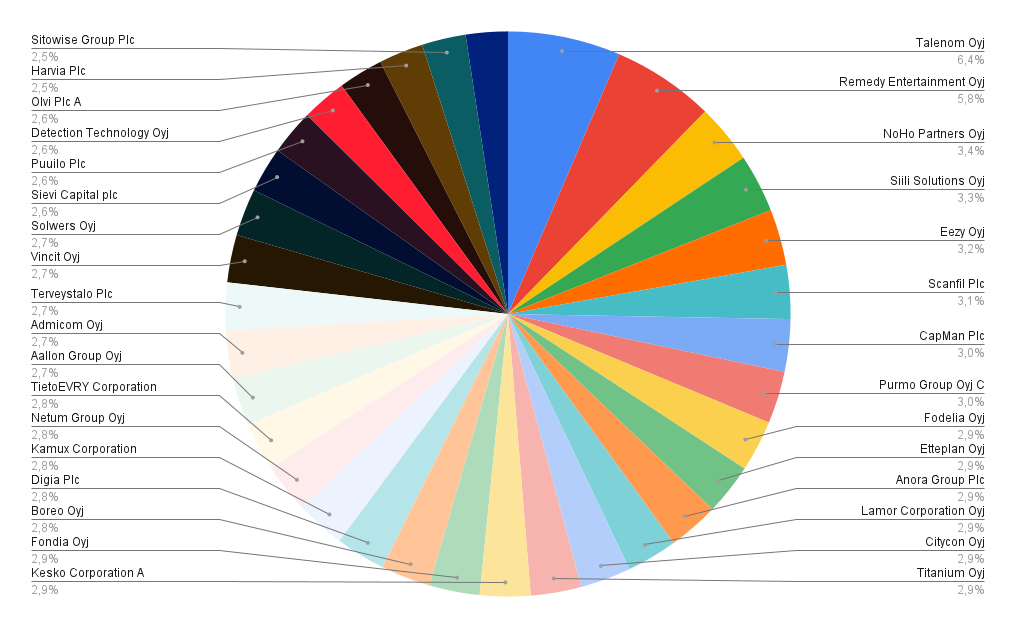
These ended up being a regrettably typical Inderes portfolio. A lot of work for nothing, then… Good work, Inderes!
I recently made many new purchases for my book-entry securities account, clearing out some speculative positions:
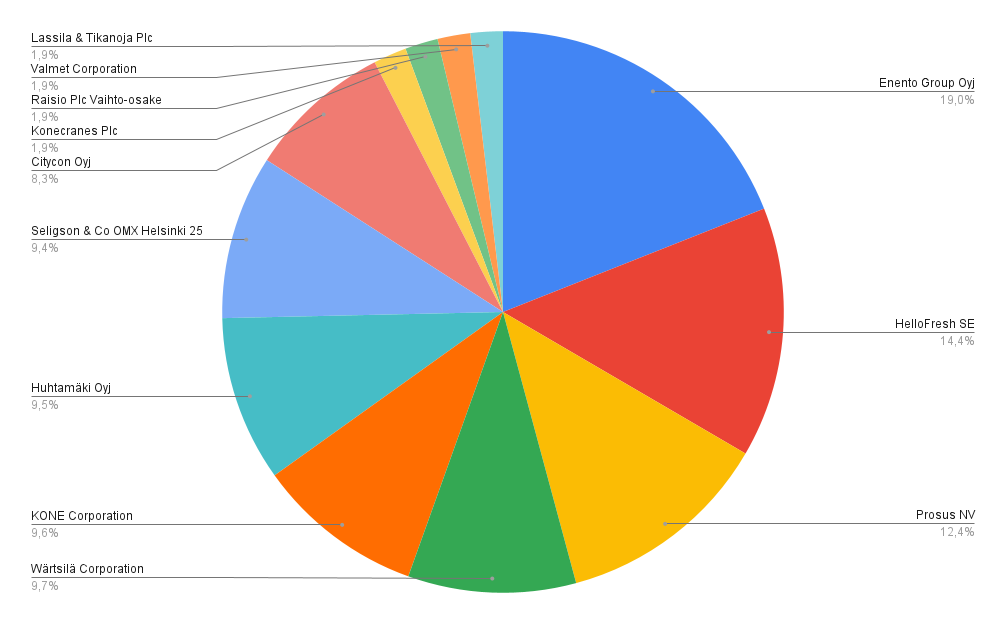
In the future, I would be interested in adding, among others, eQ, Evli, Inderes, Vaisala, Gofore, Witted Megacorp, Ponsse, Qt, Viafin, Orthex, Relais if the price is right. I’ve even owned some of these at times 
22 Likes
Most of my assets are tied up in an investment property, but I still have some stocks, even though my current portfolio is quite concentrated and risky.
80% Voxtur
10% Oroco
5% Evo
5% Powerband Solutions
18 Likes
Fortum, Wärtsilä, Tecnotree make up about 50% of the OST (Owner’s Securities Trading) portfolio. Or rather, they did.
It’s been such a wild ride that YTD is -29.50%.
It’s not too nerve-wracking yet, and salaries will continue to be fed to the markets for digestion.
9 Likes
April 30, 2022
Review of the past month: In April, OPO’s withdrawals and deposits, including trades, decreased by 11%, with 19 trades made, and leverage decreased to 3%. YTD -27%.
There was an exceptionally high number of withdrawals because I made larger-than-usual purchases, buying a car, a computer, a tablet, and a phone. Without these expenses, the monthly result would have been approximately -2%.
During the month, Tecnotree, Solteq, Stockmann, Tokmanni, and Innofactor published their results among my portfolio companies. The biggest surprises came from Tecnotree and Stockmann.
Tecnotree was the biggest disappointment. I was overweight in the earnings report, sure of a good trade  . Over-optimism backfired severely as the stock plunged -16%. Stockmann, on the other hand, delivered a positive surprise and partly compensated for the portfolio’s dive.
Expectations for the coming months: April brought no relief to the portfolio, and the global situation remains threatening. The war continues to rage in Ukraine, and the economic situation and monetary policy are uncertain. Corona is almost forgotten in Europe but still causes problems in China. Markets are fearful, and a hint of panic is in the air.
I finally paid down leverage to almost zero, and I’m considering increasing my cash position.
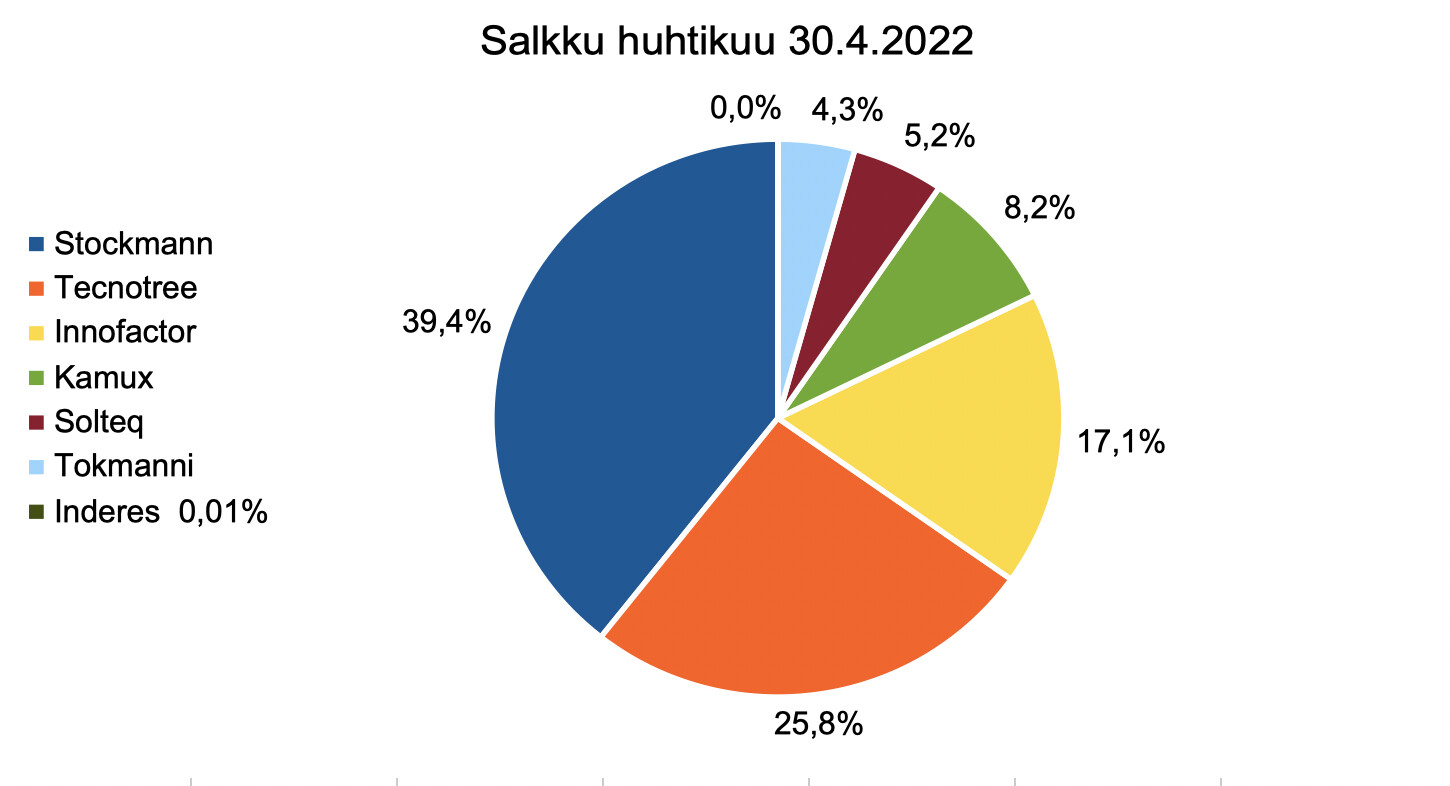
Stockmann: Very strong Q1! Lindex revenue +36% and profit €5.5 million. Stockmann revenue +9.2% and adjusted profit -€7.7 million (-12). Lindex had an impressive April with revenue +34%, and Stockmann’s was above 2019 levels! The share price is cheap, and many risks were already priced in, which the Q1 report clearly mitigated, so I absolutely must keep holding this. Next, we await the agreement and payment of disputed debts and the end of the restructuring. I’ve sold some of my overweight position, but it’s still cheap.
Tecnotree: Q1 results a bitter disappointment! Revenue was a solid +19%, but profit was “only” 15%. This was a disappointment because I had lulled myself into a false sense of security with last year’s 28% EBIT. The possibility of tweaking EBIT to promote growth was known, but such a large drop was a surprise. Looking closer, one could have seen that Q1 EBIT for 2019 and 2020 was 10.5% and 11.2%, so with several years of observation, the result could have been anticipated better. Stupidity/laziness/carelessness cost me. In light of history, however, Tecnotree grows and progresses steadily, and thus the Q1 result is not a disappointment after all. However, it is still advisable to prepare for a decrease in EBIT due to investments in revenue growth. Tecnotree is a company growing at approximately 20% annually, generating excellent results since H2 2018, with battle-tested management. No reason to panic!
Innofactor: Ugh, Sweden, damn it! Swedish revenue decreased, and operating profit was negative. This was a clear disappointment for me. Sweden seems to be the key to Innofactor’s proper growth, as Finland, Denmark, and Norway have proven their ability to grow and achieve good results. Sweden is Innofactor’s millstone. The number of employees increased for the first time in a while, the sector is growing, and Innofactor also has room for acquisitions. But now there should be no more disappointments.
Solteq: Q1 results were a relief after the disappointment of the previous quarter. Digital revenue +6% and Software 20%. Internationalization is progressing in both service and software sectors. Significant breakthrough in commerce cloud in Denmark. Last year’s postponed projects are in the delivery phase. Component shortages and wage inflation are a nuisance.
Tokmanni: Negative! Revenue +0.6% and EBIT -€0.5 million. Costs have risen, and no relief is in sight, so Tokmanni had to issue a negative profit warning. Times are tough, and margins are under pressure. Have we entered a new normal?
Nevertheless, the company is well-managed, discount retail is growing, direct imports are increasing, the supply chain and logistics are well under control, e-commerce and the Tokmanni club are growing, and a new central warehouse is under construction.
25 Likes
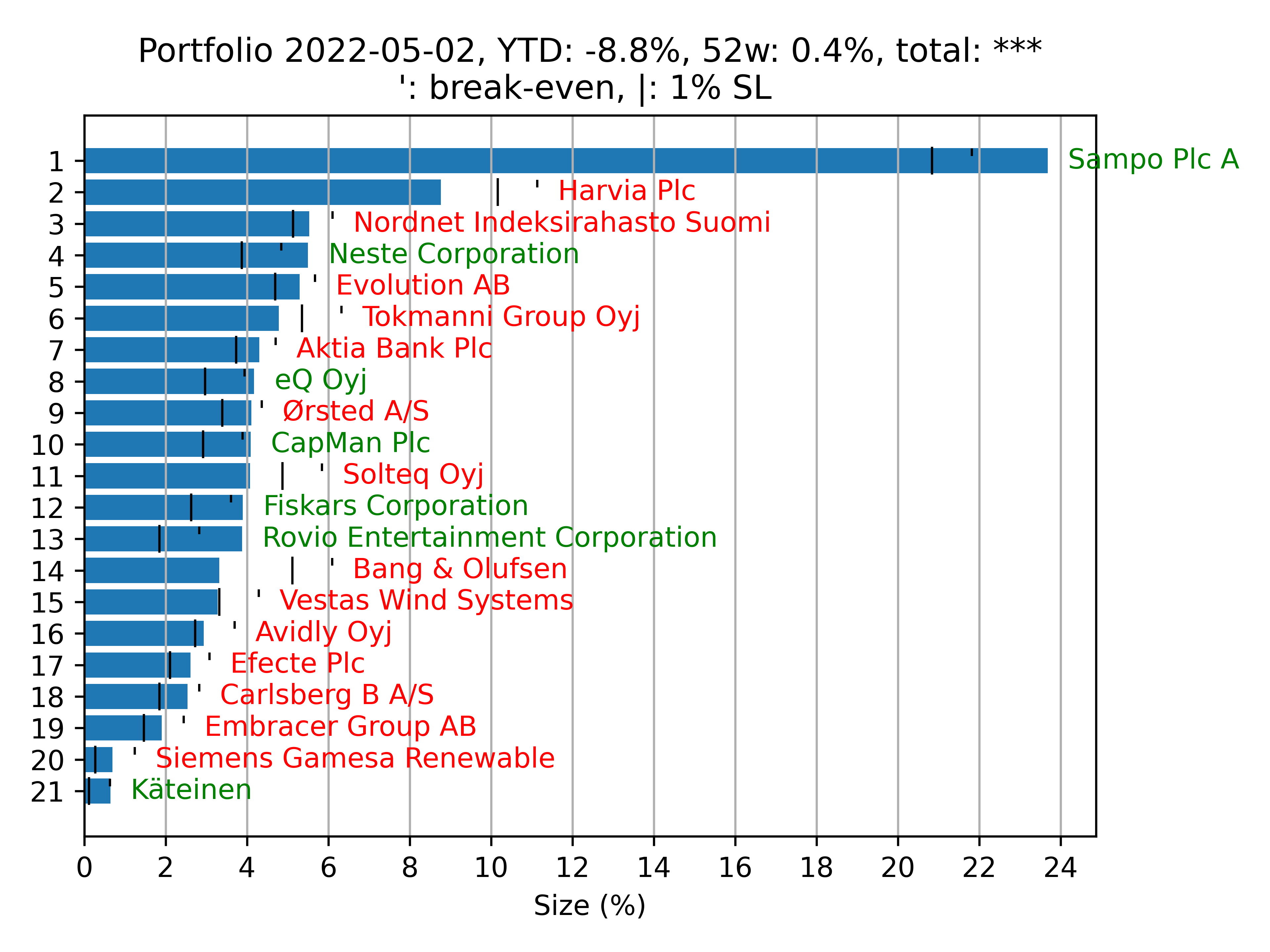
A large part of the Q1 reports are in, so here’s an update on how the portfolio is doing. In the future, I plan to update here at the end of each quarter after the reports.
My portfolio, which is a little over a year old, is pretty much at +/- 0. Sampo is currently costing me my tuition fees. Sampo’s earnings report is a concern for me for the first time, as competitors’ reports were weak mainly due to investment returns, and the Topdanmark deal is still up in the air.
There were no dramatic changes in the portfolio during the month. The following moves have been made since the last update:
-
Neste reduced by 30% @44 before the earnings report. It had risen sharply from the dip in a short time, and the costs caused by the change in the oil procurement chain were still unclear (even though the share of oil products is constantly decreasing). Inderes’ target price was also reached right then. After the report, the stock market reaction is difficult to understand, so the weight will probably be increased again in the near future.
-
Added Tokmanni @14.1x between Kesko’s positive earnings report and Tokmanni’s negative one. I was a bit hasty with this, I should have thought about it more. The profit-improving segments mentioned in Kesko’s report are largely irrelevant to Tokmanni. However, I’m not worried yet, growing market share is a really good thing, especially when competitors are constantly appearing on the market.
-
New line eQ @22 before the earnings report. I followed this for a long time from the sidelines. Originally, I thought of this to replace Aktia, as after the Taaleri deal, the synergy effects are still very weak and new sales continue to be poor, but I messed up that selling opportunity at the beginning of the year. Now the fall in eQ’s share price offered a good buying opportunity. The low dependence on general market developments, also mentioned in Inderes’ report, and the successful new sales in March meant that the stars are now aligned.
17 Likes
After more than a year of silence, I made my first new purchase, and now my portfolio looks like this:
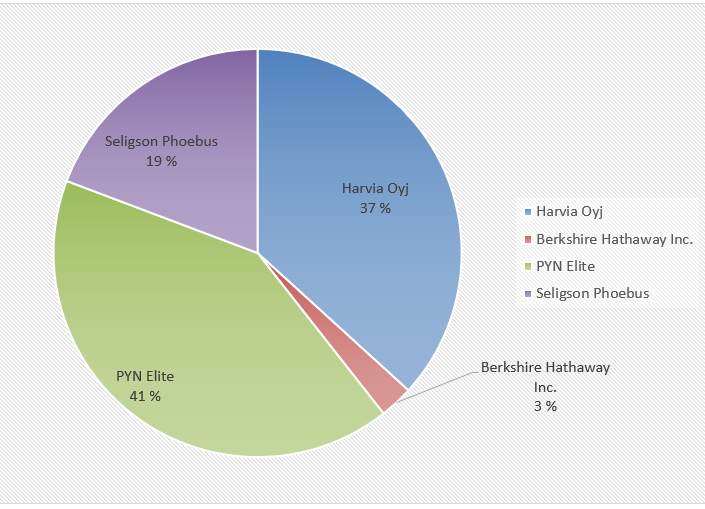
So, Berkshire Hathaway (opens new window) was added to my portfolio as a new company with a reasonable weighting. The company is a high-quality and diversified collection of various businesses and securities.
32 Likes
For the past few years, my portfolio was mainly concentrated in Finnish stocks, but on January 31, 2022, I sold all my direct stocks. I believed in a Russian invasion and the ensuing global recession (energy, food shortages, etc.). I had believed in it already at the turn of the year but hadn’t managed to lighten my holdings then. In addition, the inflation bogeyman was, of course, at the back of my mind. However, at the time of selling, my Nordnet portfolio had already fallen by about 20% from its peak, so I can’t really pat myself on the back. The only stock currently higher than its selling price is Stockmann. The 3-year curve shows +59%. Now I’m waiting for the S&P to drop to between 3500-3800 so I can buy back in. I can wait until autumn or next year, there’s no hurry, although inflation is gnawing at cash. The idea now would be to diversify more broadly and put a larger portion of the portfolio into global low-cost funds. I could have done an Evo trade in between, but I’ve had other commitments and haven’t had time to focus on that.
So the composition is now:
Cash 86%
Pyn Elite 5%
OP Funds 5%
Seligson Funds 2%
Unlisted 2%
edit: improved terminology and corrected listing
15 Likes
- 50% Cash
- 20% Tesla
- 10% Alibaba
- 5% Equinor
- 5% UPM
- 5% Block
- Other smaller positions including Sandvik, Remedy, Kahoot
The most significant change is essentially exiting the Finnish market for good. I don’t see anything positive in Finland—only risks. The exception is UPM, which I can’t give up—the new bio/pulp business is too attractive. Same for Remedy. YTD -1.97%
6 Likes

A diary-like moment of reflection on the state of my portfolio:
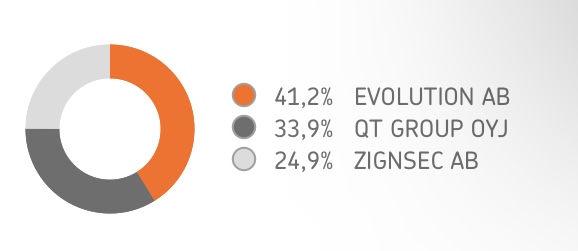
Largest holdings include Evolution Gaming, Consumer Business (Kamux, Tokman), IT Companies (Avidly, Innofactor, Tecnotree), Viafin Service, a small speculative position in Hansa Biopharma, and a DAX short.
Consumer Business has taken quite a dive, and stock prices anticipate further weakening. Either the market has overreacted a bit, or they know something I don’t. For both portfolio companies, the stock price is roughly at the same level as two years ago, despite expanded store square footage. That’s why I’ve ended up holding.
IT Company stocks have been under pressure for a long time, but the underlying fundamentals still appear to be developing quite favorably. The sector is growing nicely and is relatively defensive.
Evolution’s fundamentals are developing favorably. The stock price has held up quite well, after all, compared to many high-multiple stocks.
Viafin is more of a value/balance sheet investment. It’s difficult for a layman to comment on the fundamentals. Perhaps it’s a slightly too large weighting to be primarily a ratio-based investment (9.1% of the portfolio).
Thoughts on the Future
-
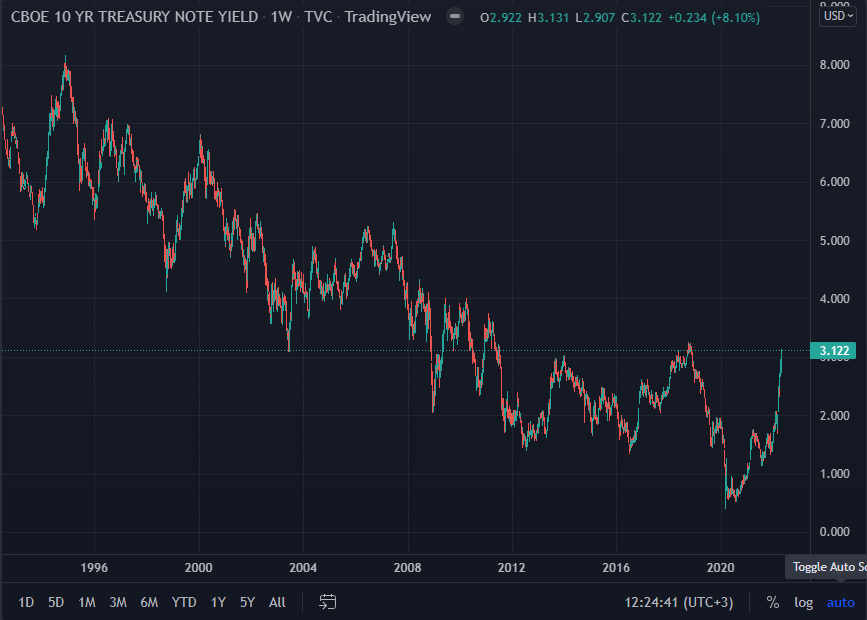
Are rising interest rates already overshooting? In the US, the ten-year yield is already at the peak of the previous tightening cycle. Bonds in the portfolio at the right time?
-
China’s policy is already stimulative. This would already be positively reflected in the economy if those COVID lockdowns weren’t implemented so aggressively. Chinese stocks, of course, have their own problems…
Source: TheMarketEar, JP Morgan -
Oroco has fallen to quite attractive levels, but the generally negative macro picture is concerning. Copper and copper miners are generally still at quite high prices.
Oroco in blue, Copper Miners ETF in orange, Copper Futures in turquoise.

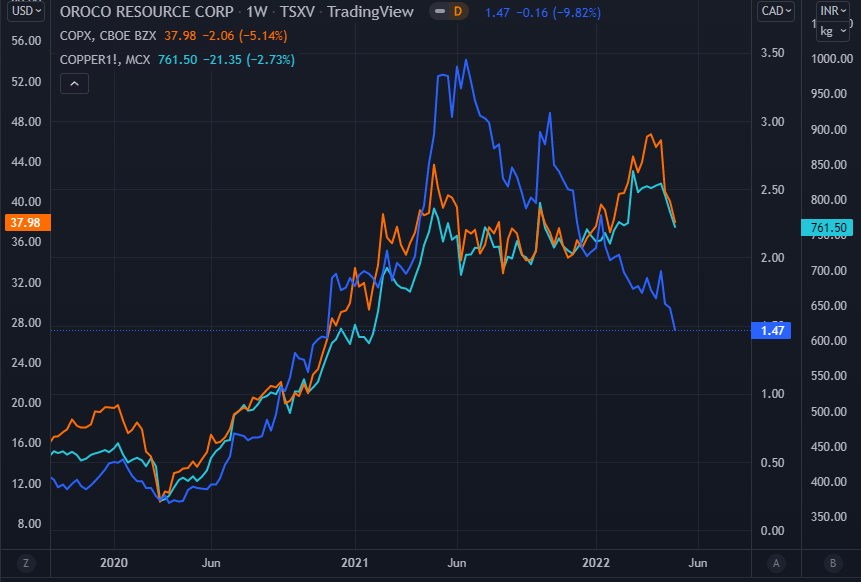
I should probably focus more on stock research, as my thoughts are mainly related to the macro picture, which is notoriously almost impossible to predict .
Worst Mistakes during the Recent Bear Market (hindsight  )
- I followed Harvia and Musti for a long time, considering them too expensive and looking for a suitable short entry. However, I missed the actual declines. In retrospect, Q4 2021 already showed significant weakness in consumer companies, but Harvia and Musti were still near their peak prices at the turn of the year. I fell into a “bull trap,” meaning I believed prices would continue to rocket upwards forever. The psychological factor that my own portfolio had simultaneously started to decline, making it less enjoyable to follow the markets, also certainly played a role .
- The same story with Latour (a Swedish industrial investment company), where the premium between holdings and the stock price was significant. Sensing this decline would have required more psychic abilities, as it’s essentially a large-cap ETF, and predicting an index is no easy task.
- In Q4, my sentiment was bearish, but so was everyone else’s. I ended up contrarian to the sentiment, and I’m still on that journey. Perhaps sentiment didn’t perfectly reflect investors’ positions?
18 Likes
Time for the portfolio report again, with Q1 reports from companies out; time seems to fly by quickly. AOT (Investment Account) and OST (Equity Savings Account):
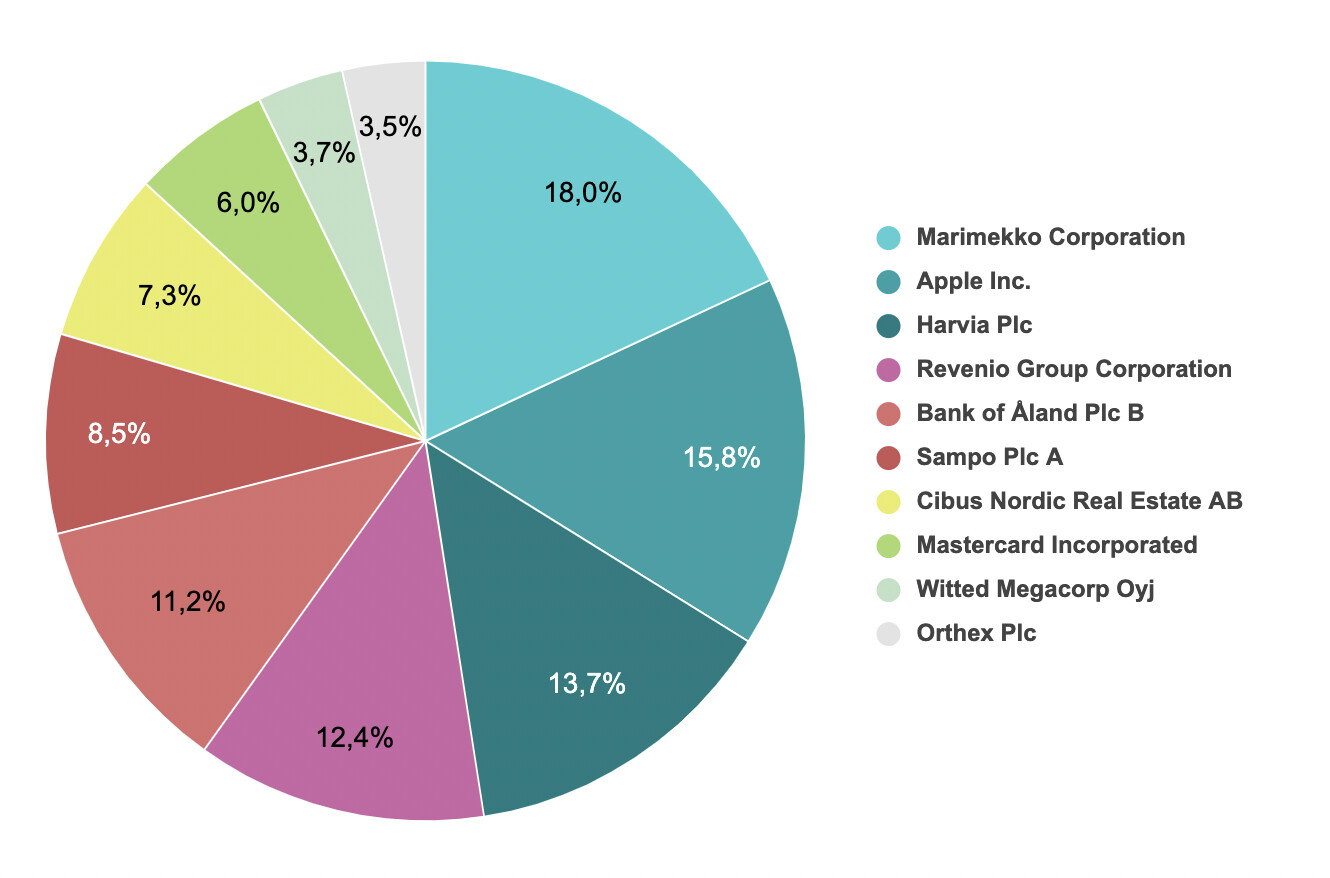
Marimekko
Added a batch to the interim report. It deservedly continues to be the largest in the portfolio, with favorable revenue development (24%) and particularly strong international sales.
Harvia
Added. Revenue grew by 28.2%. The valuation has come down nicely, and the numbers indicate continued good development. Hopefully, we will see some acquisitions in the near future.
Orthex
The remaining shares were sold from the investment account, and most were repurchased into the equity savings account. One more batch should be picked up, but the interim report was so weak that we will observe future reports and decisions based on the current position. The pressure on earnings from raw materials was expected, but the slump in revenue was surprising. There’s also a possibility of dropping the stock entirely if development stalls worse from here.
Witted
A new line in the portfolio. I participated in the IPO, but the desired number of shares was not available, so when the share price dropped at the start of trading, it was nice to buy more. Still a bit to go to reach the 5% target weight. After that, we’ll monitor its development.
In my daily life, Witted has emerged as one of the hottest names and winners in the industry right now. As clients’ digital capabilities in the sector increase, the trend of hiring extra hands rather than entire teams is growing, and Witted addresses this need excellently. In Finland, the shift of coders to freelancing or more lucrative salary models has been observable even before the pandemic, but it has only accelerated since. This is good for Witted.
In Finland, IT consulting companies have been stuck in roughly the same size category. Let’s see if Witted faces the same fate or if it can break through that glass ceiling with its current growth rate and momentum.
General
As valuations come down and companies continue to develop favorably, adding shares feels easy, and future return expectations also improve. So, a reminder to myself: buy companies, not stock prices. Have a great spring and enjoy the cherry blossoms, everyone! 
40 Likes
A short rant about my portfolio. I largely moved to cash in December-January. Since then, I’ve tried to buy the dip with 2-3 companies over the winter, but I’ve always sold them off with a stop-loss. My YTD percentages are still around -15-20%  This is on top of the tech slump that started last year. Harvia has been an exception; I didn’t sell it but watched the entire decline (the position is now almost -30% in the red).
…But since last week’s sharp dip, I’ve been buying more significantly on a daily basis. It’s hard to say if the markets will hold up yet (Morgan Stanley predicted an S&P500 target of 3400pts by year-end earlier this week), but despite this, I’ve felt like a little kid in a candy store.
So, I’ve had losses in the beginning of the year, but I’m hoping the markets will calm down a bit in the coming weeks.
I’ve been watching US bonds calm down, as well as possibly inflation expectations. This will require more data in the coming weeks.
Sentiment is very pessimistic; you can see it everywhere. Additionally, based on data presented yesterday, cash levels are already slightly elevated. I just couldn’t resist the temptation to be clearly involved in the markets anymore… I regret Stockmann; I only managed to make one purchase after the earnings report at the 2 euro level.
Dark horse: I’m hoping that Elliptic will soon start succeeding. I’m very interested in the 2023 outlook and guidance from the earnings report coming out on Wed, May 25. Also: how much the chip shortage will show in the Q1 numbers, etc. IF that case ultimately succeeds, I believe there’s a “sweet spot” at hand right now, similar to Qt Group at the 10-13 euro levels. At that time, there was already evidence of strong demand for the technology, but it wasn’t yet showing very prominently in the numbers. This is like SmartEye, but without the 3-year wait for “a win in the first car models.” The industry cycles are much faster, so technology can also quickly fall out of use. For now, however, industry trends seem to favor replacing HW sensors with virtual SW sensors.
130 Likes
Opening the portfolio again, as the earnings season is now over for all portfolio companies.
There’s been a small change in the portfolio: I sold Orthex yesterday with a nice 33% loss. The company’s share of the portfolio was less than 2%, so the impact on the overall portfolio was quite limited. As I mentioned yesterday, it’s a good company currently struggling against an unreasonable external headwind.
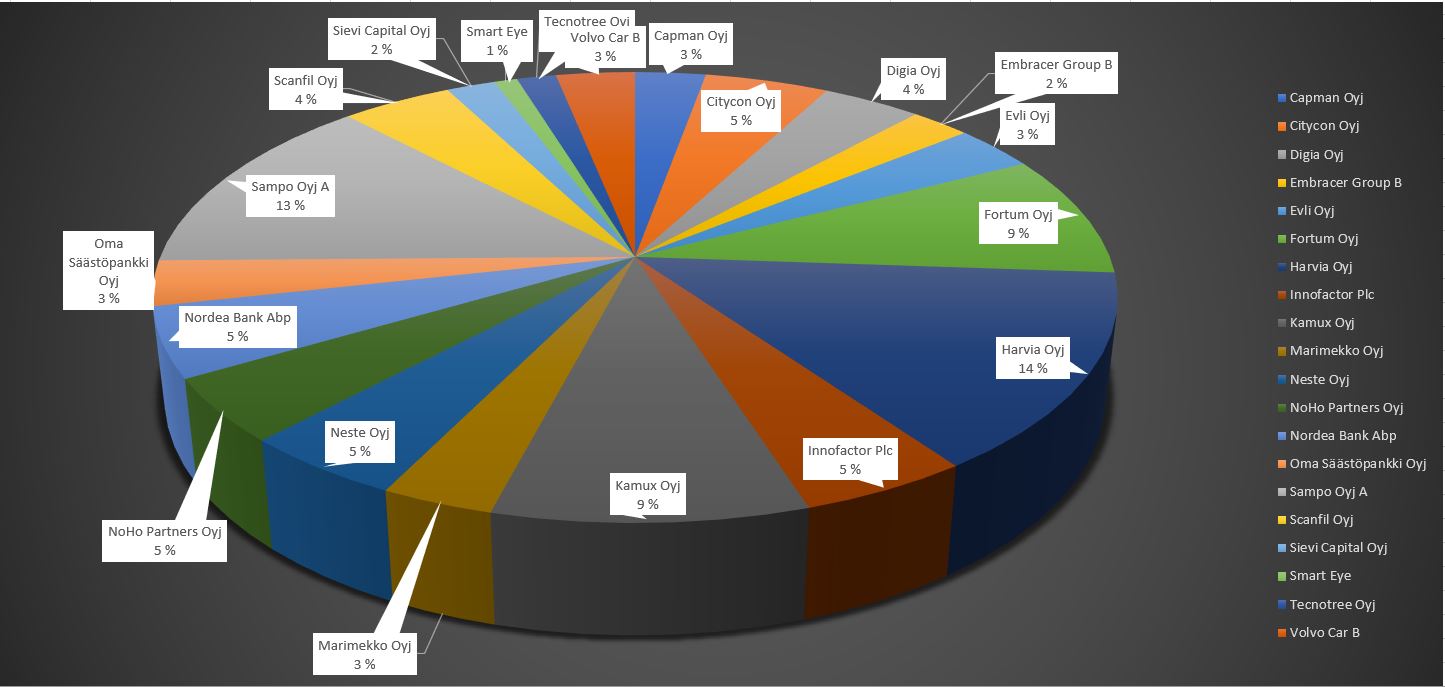
My personal hobby portfolio now looks like this, visualized:
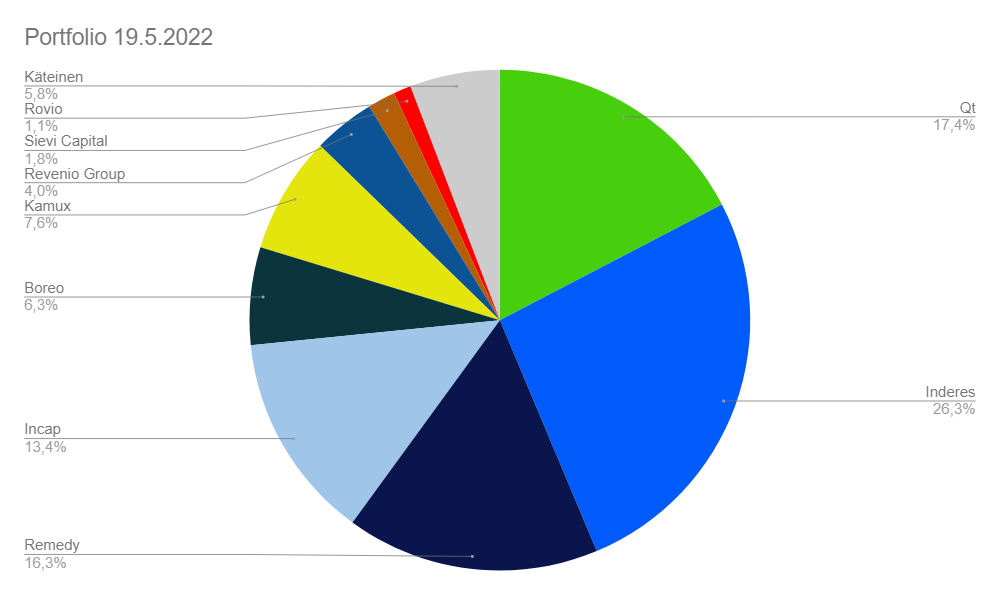
Practically, the portfolio is concentrated around six companies: Inderes (personally owned shares), Qt, Remedy, Pukkparty, Boreo, and Kamux.
All of these are relatively fast-growing companies in their respective markets.
The goals of many companies and the entire investment case rely on what they can achieve in the coming years and decades. In this sense, one quarter is just a blink of an eye and a checkpoint for how the companies are progressing.
Among the largest positions, Qt is blazing ahead with its profitable growth. The stock has now fallen about 60% from its peaks, which, together with a small reduction made last November, has effectively eroded the stock’s weight in the portfolio. It was still a third of the portfolio six months ago.
The company’s growth fluctuates strongly quarter by quarter. In hindsight, the stock was in a minor bubble, and rising interest rates have not been kind to companies valued in this way. The good news is that the company’s development itself has continued on the communicated path. Economic slowdown and component shortages may delay the ultimate “gravy train” where the company grows on the back of distribution licenses, effectively riding on its customers’ coattails. What could be better growth than growing “for free” alongside others’ sales? Well, we still have to wait for this stage, and of course, maintaining such a position requires significant investments in R&D and sales. The larger the company grows, the more it can afford to invest further in these areas.
With Remedy, the situation remotely resembles 2017 and 2018. Back then, the company had two game projects in development; now it has five large projects. Then, they were just transitioning to a multi-project model; now it has been scaled up, and the rest is execution. In a way, the company again has something to prove regarding what it can truly achieve. As I’ve always savored, by making even moderately successful games, Remedy is a reasonable investment. In the gaming industry, with a tight budget and moderate sales, the ROI of games can be >100% (it’s worth looking at Embracer’s presentations, for example), although this is spread over several years, and investments also need to be made over several years, so it doesn’t come in just one year.
What appeals most about Remedy is its asymmetry: risks should be reasonable, as there are multiple games and revenue streams. At the same time, the company has a theoretical, slim chance of a true hit game that explodes the bank.
This message will become unreasonably long if I go through the situation of each company as I see it. So, let’s save the updates for next time if my thinking about the companies changes.
On the negative side, I’ve become slightly more cautious about Kamux. Its “gravy train” was supposed to be becoming the Carmax of Europe. In practice, Kamux’s situation can be summarized in one graph from its latest annual report:
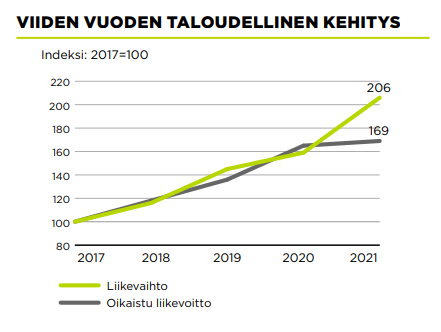
The link between revenue growth and profitability has broken. The same continued in Q1. The market situation is difficult, but to my understanding, a retailer like this should be able to grow without operating profit stagnating. This is not a software company where today’s growth investments will (perhaps) pay off years from now when profitability scales. Kamux does not scale; it needs to make a profit every day. No wonder the market has been a bit cautious, as seen from the deflated stock price.
How can there ultimately be money for growth if earnings don’t grow? This raises an unpleasant question: would it ultimately be better if Kamux stopped growing, optimized its profitability, and paid out my entire share of the profit as dividends, and I would invest the money better myself? Time will tell.
Speaking of results. Many investors own shares; I try to own businesses. In principle, it’s the same thing, but mentally, in practice, it’s not. For many companies, staring at this year’s results is pointless because the “gravy trains” are so far away, and none of these are optimizing their profitability now. Still, one can glance at where the portfolio’s total earnings will come from with 2022 forecasts (Inderes’ forecasts for all except SEB’s forecast for Inderes itself).
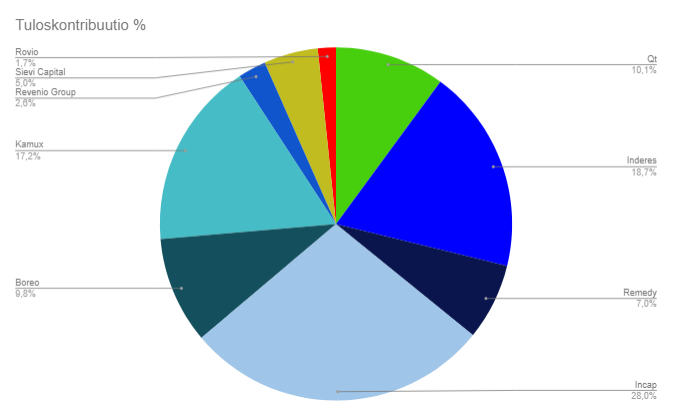
If I theoretically owned 100% of each company and they were all under one investment company, its revenue streams would be distributed in this way (if, again, all of them distributed their profits to this company). The most important profit generator in the portfolio is Incap.
Calculating from the total earnings, the portfolio’s P/E 2022e is 29x. If one viewed these as one block, I think the valuation can be considered reasonable given the growth and profitability profiles of these quirky companies. At the same time, if growth or profitability collectively disappoints, the outcome will be ugly. This risk practically applies to the entire relatively concentrated portfolio.
The portfolio’s dividend yield has, considering the companies, risen to an obnoxious over 1%. I won’t attend all company meetings, as my voting power wouldn’t be able to influence matters (and of course, my job at Inderes wouldn’t allow it either :D), but if I theoretically could influence, it would be pointless to expect any capital distribution to shareholders from these companies for a while. 
In my opinion, publicly traded companies in general could clearly focus on one thing and serving a single type of investor base. There’s nothing wrong with dividends in themselves: for a company like Nordea, whose return on equity and growth opportunities are limited, distributing dividends is very smart. The same goes for Sampo, etc. Investors can choose what kind of companies to build their portfolio from. When a growth company tries to satisfy dividend investors, growth-oriented people, and all sorts of other crowds at the same time, it makes my mind darken. Of course, there are growth companies that can truly pump out dividends without sacrificing growth investments (e.g., Revenio in past years), but these are quite rare.
Oh well, enough of that rant. Dividends also have that twisted element that they still warm the heart when they hit the account, even if one knows they would be better off in the publicly traded company’s cash. Urgh!
The portfolio’s median P/E is at least about 21x. But, a one-year P/E is mainly a static glance and a populist metric. The true value to the portfolio comes from how profitably the companies can expand their earnings in the future and how much cash flow they ultimately manage to transfer to their owners. These factors are ultimately more essential and also determine the portfolio’s development.
The portfolio’s short-term performance has been glowing red. The YTD return is a humbling -22%. @Kaisa_Vanha-Perttula and I have a competition for the team’s worst YTD return, so even this irrelevant short-term performance has been turned into humor.
From last October’s peaks, a third of the portfolio’s paper wealth has disappeared. In part, I think the stock price decline for some companies has been well-deserved, such as Qt deflating. Interest rates affect everything. Boreo has fizzled out, and on top of that, the shutdown of Russian operations.
The portfolio has some cash, and Inderes’ dividends are still waiting for buying targets on the holder’s side. In this sense, I greet every down day with joy, as long as the fundamentals otherwise remain sound.
Of course, buying into a stock price decline purely for the joy of buying is not advisable if the company’s fundamentals weaken at the same pace. My stock picks have recently gravitated more and more towards quality (high ROIC, juicy competitive advantages, a large reinvestment runway ahead, relatively predictable business, proven and committed management, etc.), which in turn means I’m quite picky when faced with the depreciating offerings on the Helsinki stock exchange.
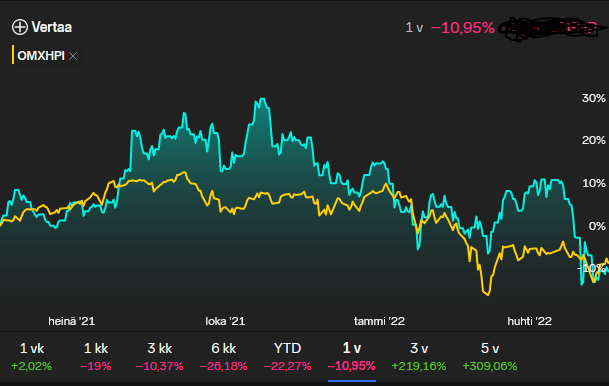
The significant drop in my portfolio over the last 6 months has, of course, occasionally raised doubts about whether I’ve made mistakes. Should I have reduced my Qt holdings more last autumn? I think I paid a bit too much for Boreo earlier this year (average price 60 EUR hahahaha ). Should I have opened the forum’s excellent primary sector thread earlier? Probably…
Still, I wouldn’t change much when I believe in the long-term story of the companies. Constant trading leads to paying taxes prematurely. In Munger’s words, one should not interrupt the compounding effect in good companies. That’s just something to remember, even in these times when their stocks are flying all over the place.
182 Likes
AOT
Funds
iShs Elec Ve USD 2.93%
iShs Glb Water 6.40%
iShs S&P 500 2.74%
ISHR MSCI Wrld A 5.36%
Cibus 5.04%
CapMan 13.95%
Digia 9.82%
Dovre 7.84%
Incap 13.12%
Outokumpu 3.58%
Revenio 11.08%
Sampo 10.44%
SSAB B 3.09%
Titanium 4.62%
OST
Anora 5.07%
Digia 4.64%
Dovre 6.22%
Evolution 8.24%
Harvia 7.52%
Nordea 5.96%
Qt 14.33%
Remedy 3.65%
Sampo 7.24%
Talenom 7.80%
Tecnotree 19.53%
I’ve been quite resilient with my portfolio, with some sales and purchases. Both risky and stable dividend stocks are included.
12 Likes
Sofi Technologies 14.5%
UPM 10.1%
F-Secure 9.2%
Alphabet 8.8%
Kreate 6.6%
Inderes 2.4%
Cash 49.6%
A bit of a pitiful portfolio, but the plan was to go through the summer with cash and add more throughout the autumn. More cash will be available at the end of the year, so the diversification will improve by then. Probably at the beginning of next year, the portfolio will have a minimum of 13-16 different stocks, but I don’t want to over-diversify.
7 Likes