Suomi (30 %)
USA (30%)
Ruotsi (20 %)
Muu Eurooppa (10 %)
Muu maailma (10%)
Pääsääntöisesti suorilla osakesijoituksilla max. 30 osaketta. Jossain vaihessa lisäksi ETF, kun suorien osakkeiden salkku on ns. valmis
Tällä hetkellä on joutunut veivaamaan ostoja ja myyntejä (mikä on hieman tuskallista holderille) joten Suomen osuus on tällä hetkellä liian kova (70%) ja lukumääräisesti salkussa nyt enää 24 osaketta. Pikkuhiljaa mennään uudelleen kohti tavoitesalkkua, mutta aina voi käyttää hieman väliaikaista luovuutta matkalla kohti maalia. Pitää yleisen kiinnostuksen yllä.
Kannattaa myös ottaa huomioon yrityksen liiketoiminta kokonaisuutena, ei pelkkä kotipaikka. Itse suosin suomalaisissa osakkeissa pääosin niitä joilla huomattava osa liikevaihdosta tulee ulkomailta. Ja esim. USA:n jättiteknot ovat maailmanlaajuisia kaikki. Kotipaikka ei vielä kerro geopoliittisista riskeistä tai varsinaisesta hajautuksesta.
Periaatteessa pitäisi siis kaivaa kaikkien yritysten taloustiedot auki, paljonko tulee liikevaihtoa mistäkin maanosasta.
Tuosta syystä en näe juurikaan tarvetta hajauttaa osakkeissa S&P500 ja Nasdaq100 ETF:ien lisäksi. Olen pyrkinyt vähentämään suoria osakeomistuksia, joskin viime aikoina en ole voinut vastustaa kiusausta ostella suomalaisia osakkeita! Sen verran halvoilta vaikuttavat.
Vastaus ketjun otsikkoon ettei mene täysin OT:
USA 68,8% (tai listattu Nasdaq:n, sisältäen ETF:t)
Kulta n.15%
Suomi 12%
Tanska 2%
Englanti 1,4%
Ruotsi 0,8%
Tämä on hyvä huomio ja otan sen toki myös itse huomioon, mutta silti hajautan myös kotipaikan mukaan. En itse enää sijoita lainkaan firmoihin, joiden päämarkkina on Suomi tai joilla on esim. tuotantoa tai muita keskeisiä toimintoja vain Suomessa. Tämän politiikan myötä esim Ponsse (kaikki tuotanto Suomessa) ja L&T (Päämarkkina Suomi) menivät myyntiin.
Katson, että Suomi-riskiä on ihan tarpeeksi, kun asun ja teen töitä täällä
Maantieteelliseen hajautukseen kuuluu myös vähentää altistusta riskimaihin.
Esim. salkku täyteen Konetta (Kiinaan yli 30 % myynnistä) Nvidiaa (täysin riippuvainen Taiwanin alihankkijoista), Applea (Kiina yhtiön jättimarkkina) ja selluyhtiöitä (Kiina johtavassa asemassa sellun hintamäärittäjänä).
Ja sitten kun-jos Kiina hyökkää Taiwaniin, on piru merrassa tuollaisella salkulla.
Yleensäkin keskittyminen vain maantiedepirstontaan salkussa ei kannata. Ehkä vieläkin tärkeämpää on toimialojen vaihtelu.
Rahastoja valtaosa tällä hetkellä, ja tarkoitus panostaa niihin jatkossa. Salkussa myös suoria veliosakkeita, muistuttamassa itseä! Näitä en laske hajautukseen, vaan epäonnistumiseen
Jenkkilä 54,3%
Norja 16,3%
Ruotsi 15%
Suomi 14,4%
Tarkoitus vielä laajentaa, ja panostus menee ns. isoja enemmän ja pieniä vähemmän.
Osake/ETF salkku on nyt suunnilleen seuraava (± 2%):
40% kotimaiset mörnijät (pari pikkufirmaa, loput isoja)
50% jenkit
10% muut (EM)
Parissa vuodessa Suomi-paino on noussut aika paljon - katsoin tätä ajatuksella viimeksi 2021-06 jolloin se oli 21%. Tämä on ollut tietoinen valinta koska näen nyt Suomen suht halpana markkinana. (Pääosa ostoista ollut tänä syksynä ja keväällä taas kevensin jenkkilän omistuksiani - osaa väärään aikaan.)
Osasyy on myös sijoitusvakuutuksen avaaminen - aion pitää siellä isompia suomalaisfirmoja koska verotusmielessä mieluiten pidän osingot kasvamassa korkoa (ja kotimaisissa ei ole lähdeveroa; isoja siksi että niitä saa ostettua järkihinnalla kun vaihtoa on), ja toisaalta en halua erityisesti näkyä omistajalistoissa tai aiheuttaa tarpeettomia pääomatuloja.
Täysin puhdas indeksisalkku. 85% maailma-etf ja loput 15% puoliksi nordnetin suomi ja ruotsitahastoihin. Säännölliset kuukausisijoitukset rullaa. Tiedostan todennäköisesti joitakin euroja menettäväni painottaessani Pohjoismaita, mutta tykkään suht aktiivisesti seurata uteliaisuuttani etenkin kotimaan sijoituskenttää. En kuitenkaan koe osaavani poimia osakkeita, joten tällä tavalla koen saavani tyydytystä tiedonjanooni ja suht vakaan tuottonäkymän.
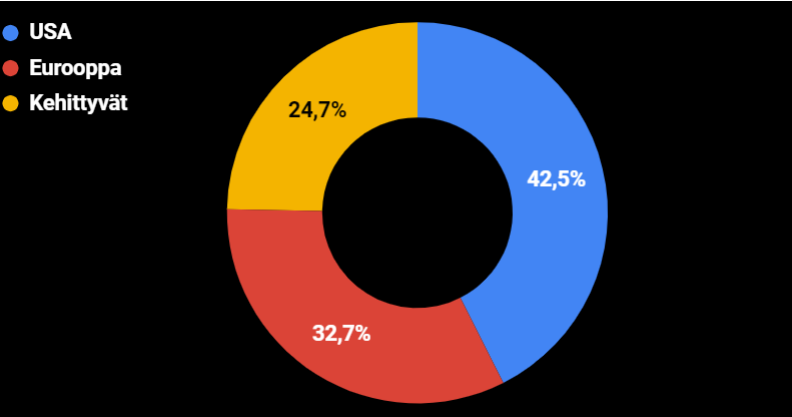
Ei ole täysin ajan tasalla, mutta tässä on koko sijoitussalkun maantieteellinen allokaatio aika lähellä. Pitää jouluvapailla koota taas kaikki salkun luvut yhteen taulukkoon.
Salkku koostuu pääosin matalan kulun indeksirahastoista sekä siivusta PYN Eliteä. Suorat osakesijoitukset ovat melkein kokonaan Pölhexissä ja näin ollen tuossa piirakan Eurooppa-sektorissa. Itsekin olen yrittänyt hankkia laadukkaita ja osinkoa maksavia yrityksiä, joilla on jo toimintaa ulkomailla tai tähtäin vahvasti sinne laajentumisessa.
Kokonaisuutena:
Suomi 73,5%
Maailma 17,5%
Aasia 9%
Maailman ja Aasian osuus tulee kasvamaan indeksirahastojen kuukausisäästön ansiosta osakkeita nopeammin, joten arvo-osuustilin Suomi-% tulee laskemaan hiljalleen.
Osakesäästötilillä vain suomalaisia osingonmaksajia nyt ja jatkossakin.
Pyöristyksiin hukkuu osa, ja käteiset eivät ole luonnollisesti laskuissa. Salkku on hyvin keskitetty, joten yksittäisiä ailahteluita esiintyy, mutta olen asian kanssa OK tuotto-odotusten näyttäessä valoisilta. Suomen paino sen sijaan on aivan liian suuri, tuota olisi tarkoitus laskea selvästi ajan mittaan. En löydä täältä oikein vieläkään sellaista ostettavaa, jota voisi huoletta holdata vuosikymmenen ajan tavoitteena tasainen ja jatkuva kasvu sekä erinomainen pääoman allokointi omistajan kannalta tuottoisasti.
Pöyhin tätä maantiedettä aikani osakerahastojen osalta, Aasian suunnalle on kertynyt melkoisesti painoa, koska välttelen tällä hetkellä etenkin tahmaavaa Eurooppaa ja kartan hieman myös korkealle arvostettua Usaa.
Vietnam on Pynin vuoksi överipainossa ja saa ollakin, lisäilen aikanaan Amerikkaa salkkuun kun arvostukset alkavat olla järkevämpiä. Eurooppa on sahannut omaa jalkaansa ja haitannut kilpailukykyä reguloinnilla yms. niin ahkerasti, että näköpiirissä ei ole Euroopan osuuden kasvattamista.
Mikäli suorat osakesijoitukset (Digia ja Renkaat) huomioidaan, Suomi nousee listalla about Japanin rinnalle.