At least Enovix is developing silicon anodes among publicly traded companies. Who else do you know? You probably know what the key problem with silicon anodes is (swelling), and no one has likely fully solved that on an electric car scale yet.
“What about silicon anode batteries?” is a rather low-level message to bring here; rather, bring your own thoughts directly, you probably have some.
Car paint technology can charge using solar power, and an electric car gets up to 12,000 km more range per year. That’s 1,000 km per month. Quite few average people drive that much per month. The car charges even when it’s not moving.
So, the sun also alleviates range anxiety.
This also significantly eases the pressure on charging infrastructure.
There have been these solar panel setups in cars for probably 10 years already, they just never really took off. Of course, something like that is nice if it works at a reasonable price. If you add some 50k€ solar panel paint on top of that 70k€ electric car, many won’t buy it. And that 12,000 km extra range was mentioned “under ideal conditions”, so probably somewhere at the equator where the sun shines all year round.
This is the real world. The so-called multi-path strategy works. Global “mobility cultures” simply support this. Different travel and transport needs require different powertrains.
Good interview! Regarding hydrogen facts and electric cars, we sometimes butt heads, but I do recognize certain similarities in our investment styles, for example
15. What do you think is the biggest misconception investors have about the hydrogen sector?
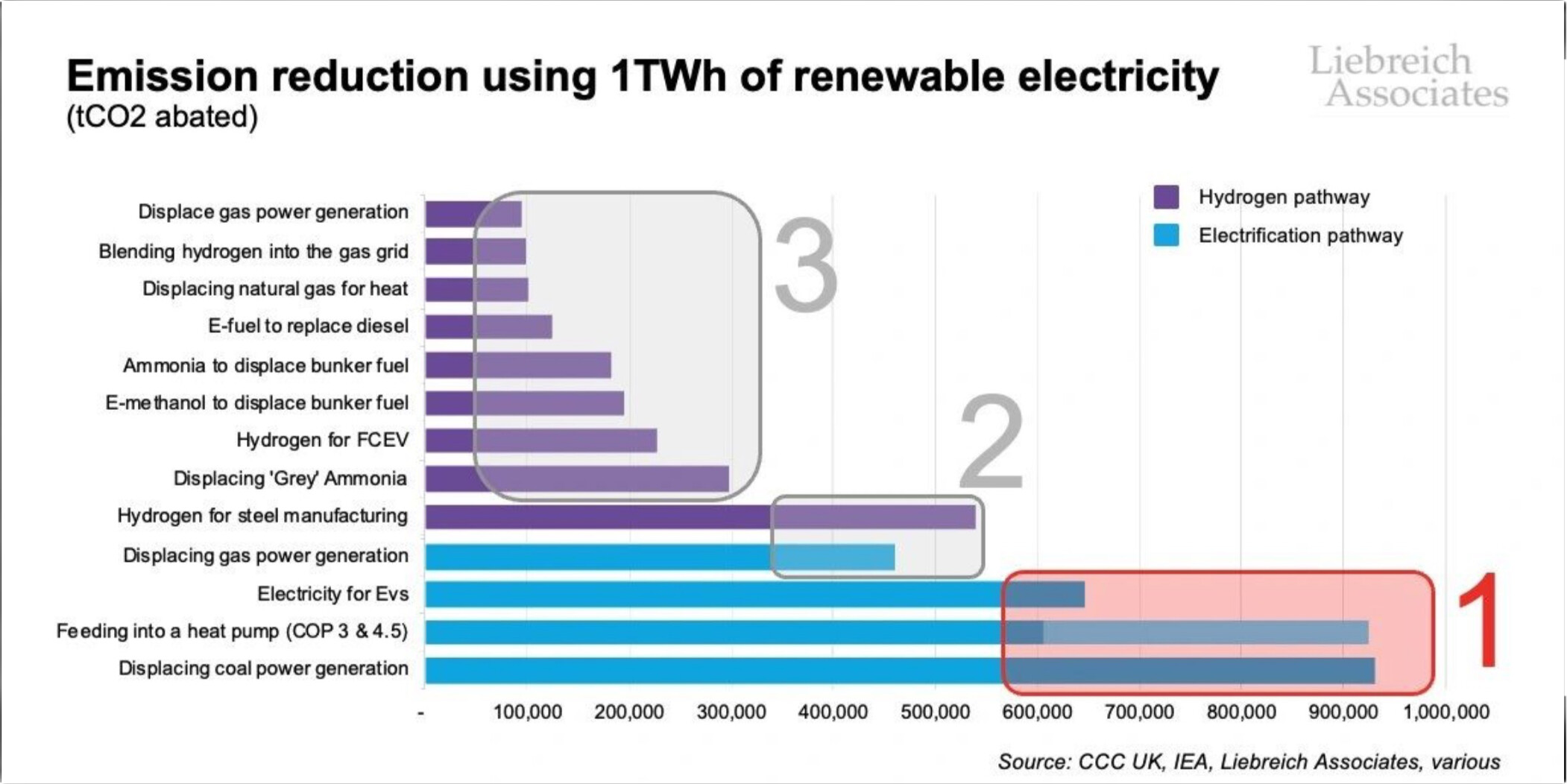
Perhaps more precisely, I would say myself that in many places it is a waste of money. But I’ll put this here now, a better explanation for this criticism than this calculation has not been encountered:
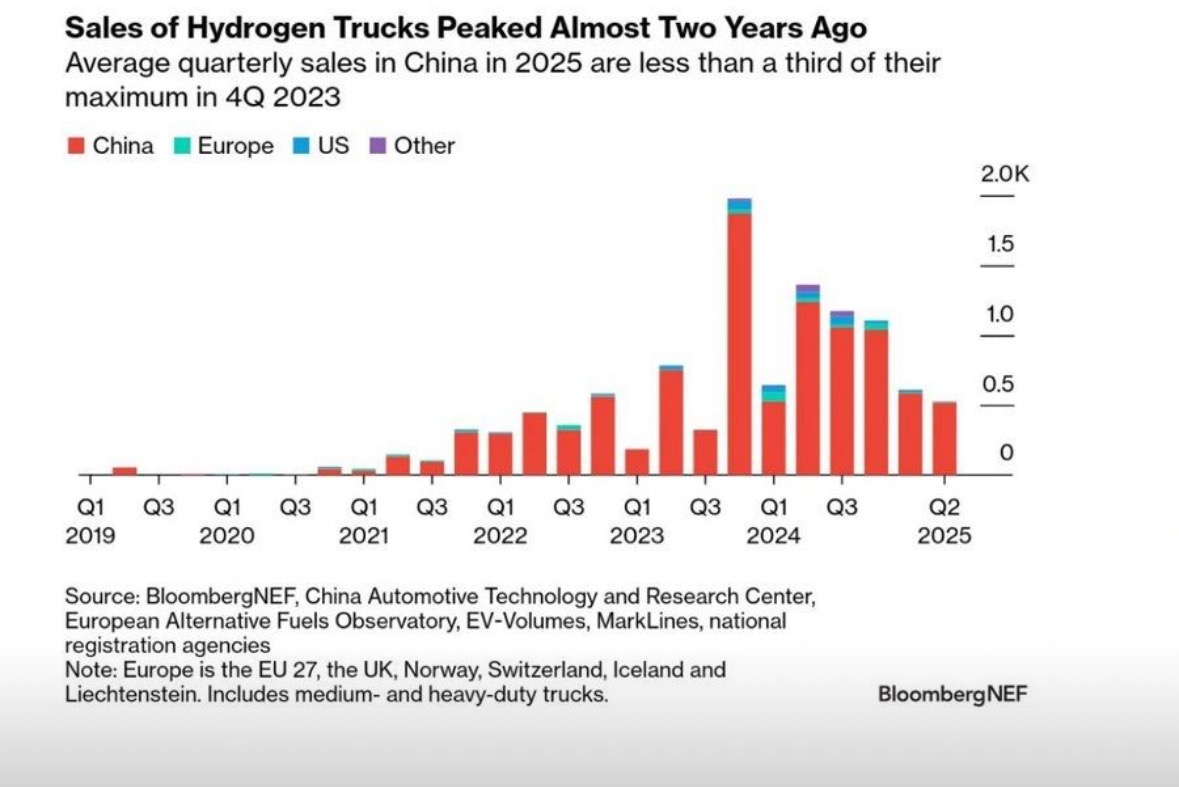
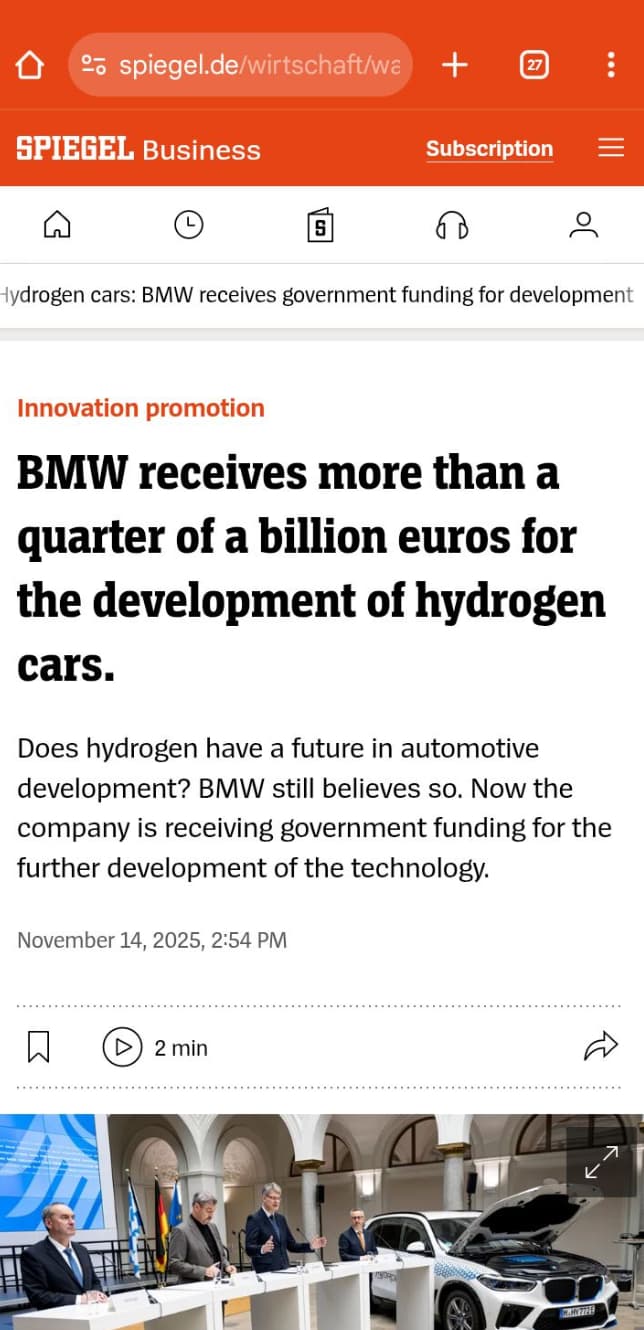
That’s interesting, why has the appeal of hydrogen weakened compared to a couple of years ago? @everlaastia has probably written the most about hydrogen on the forum and might be able to shed some light on why. Is it due to the development of battery technology, the cost of battery packs, the inadequacy of hydrogen refueling infrastructure, conscious political decisions, or something else?
When I followed the development of hydrogen cars more actively a few years ago and much less now (Hyzon broke my heart), I came to the conclusion that hydrogen would have a future specifically in long-haul transport for heavy vehicles. The maximum weight of a full trailer combination can be 44 tons, but the average weight is probably usually less. For example, Volvo states the following in 2021:
How far can an electric truck travel on a full charge?
A typical range for a medium-weight 30-ton 4x2 tractor unit is approximately 300 km.
A hydrogen truck from the same company can have a range of up to 1000km, which is the same as the average range of a diesel truck if consumption is 50L/100km and the tank size is 500L.
Of course, there are many variables, and the main problem with hydrogen compared to batteries is that hydrogen is created with electricity, and in the vehicle, hydrogen is converted back into electricity, losing energy in the conversions (I believe about 30% of energy is lost in each conversion, which is a significant amount). This means the amount of electricity originally used for hydrogen conversion would be more efficiently used directly in an electric vehicle. However, the calculation is complicated by factors such as the weight of battery packs, the number of charging cycles, the length of charging times, and - as in the case of hydrogen - the existence of necessary infrastructure along the route.
Returning to the more central point about the benefit of hydrogen specifically in heavy transport: it allows the cargo to reach its destination without intermediate stops (and charges), and the utilization rate of the fleet can thus be higher than with electric trucks, as they can stay on the road longer. Also, it allows goods to reach more remote places where there might not be charging infrastructure for electric batteries (the kind that charges fast enough).
The battery market has already advanced significantly since 2021.
Many countries have conducted tests on how to inductively charge EV buses, cars, and trucks on the road in real weather conditions. Tests have been completed in France.
Toyota estimates it will get Solid State Batteries into use by 2027 - 2028. They still promise a 1000 km range and a 40-year lifespan. They frankly state that initial costs are very high, but will become cheaper with development. Plus, with a 40-year lifespan, these can be reused in the next car, meaning, to put it bluntly, cars could become “Buy the car. Battery sold separately”
This changes the game then…AFIR DISTRIBUTION INFRASTRUCTURE REGULATION…
Hydrogen stations on main roads every 200 km by 2030;
Distribution Infrastructure Targets for Member States
Mandatory national targets for Member States regarding the deployment of distribution infrastructure must be met gradually between 2025 and 2035. These targets include, among others:
sufficient output power in relation to the number of rechargeable electric passenger cars and vans
charging stations and hydrogen refueling stations along the TEN-T road network at certain intervals for both light and heavy electric commercial vehicles
shore power supply in TEN-T maritime and inland ports and airports
liquefied methane refueling points in TEN-T maritime ports
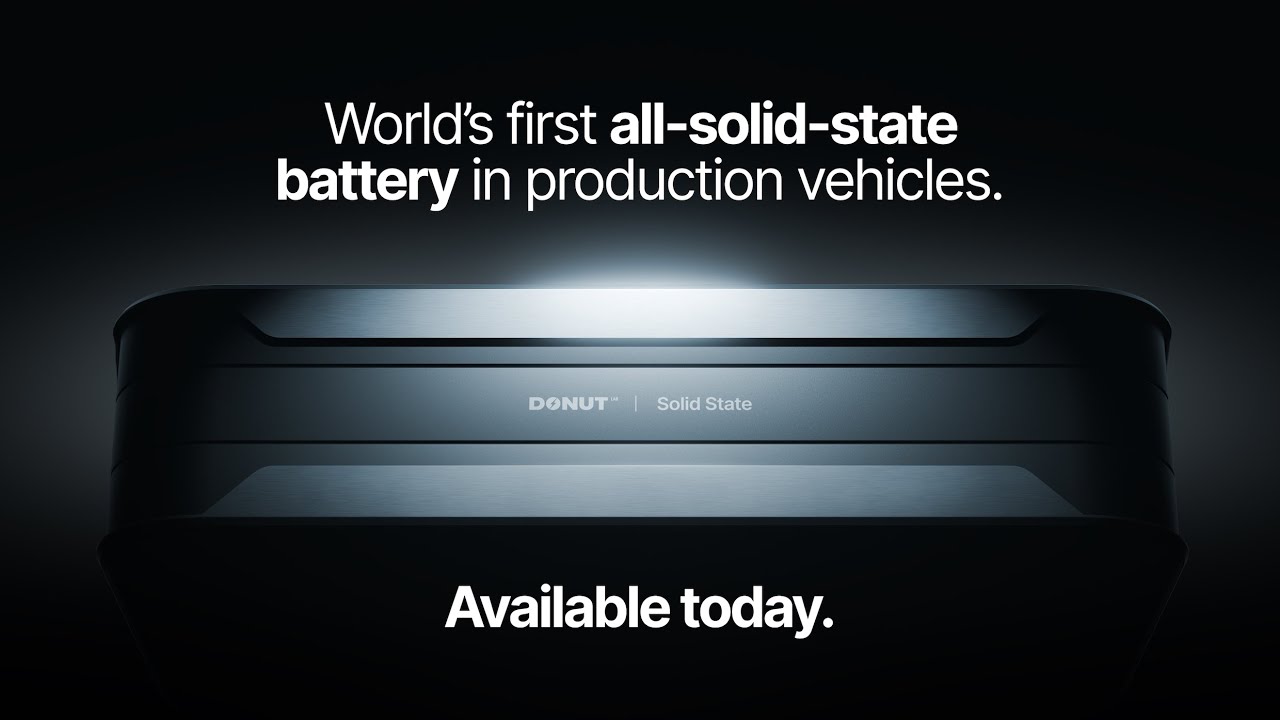
I happened to come across their latest news on YouTube yesterday. So they now have a solid-state battery developed and in production . Great if true, but very little information is available on their website, which raises suspicions.. no info on the battery’s development and manufacturing .
Big words in the video. Great if they pull it off. If successful, it’s a company of such a scale that Finland’s economic deficit would turn into a surplus.
Founded in 2024, Nordic Nano will begin a partnership with Donut Lab, a Finnish technology company specializing in the electrification of the automotive industry.
Discussion about the solid-state news in the FB electric car group here and here, a couple of informative comments were found among them.
It’s definitely a huge deal if Donut’s battery specs are accurate. It sounds a bit too good to be true, so let’s hope they haven’t just gone in with a hype-first approach.
In addition to motors and batteries, they’ve also developed some kind of simulation software/platform:



 . Great if true, but very little information is available on their website, which raises suspicions.. no info on the battery’s development and manufacturing
  .
.