Mites Japaniin perehtyneet. Näettekö minkälaista potentiaalia/riskejä japanilaisiin yhtiöihin sijoittamisessa tässä kohtaa. Tässä on jo jokunen hetki vierähtänyt kun isot pojat ovat puhuneet sieltä saatavista mahdollisista yli tuotoista. iItsellä ollut jo pari vuotta aikomus sijoittaa kyseiselle markkinoille, mutta aina se on syystä tai toisesta jäänyt tekemättä. Miten näette esimerkiksi nämä korkojen nostot tai yenin heikkouden ja japanin mahdollisen halun vahvistaa sitä.
2 tykkäystä
Tämä ei taida nyt olla paras mittari verrata talouksia. Ennätys halpa japanin jeni on painanut talouden arvoa dollarissa mitattavassa maailmantaloudessa. Paluu pitkänajan keskiarvoon eli USD=110JPY nostaisi BKT/asukas luvun takaisin lukemaan 46000, johon mikään itäeuroopan maa ei tule pääsemään ennen vuotta 2050. Sinun kirjoituksesi on aika harhaan johtava, sillä logiikallasi olisimme saavuttaneet Suomessa Ruotsin elintason, vaikka todellisuudessa kruunun arvo on vain heikentynyt.
EDIT: laskelmani perustuu tämän päiväiseen kurssiin en tiedä millä kurssilla wikipedia artikkeliin on laskettu.
4 tykkäystä
En isompia perusteluja ehdi nyt tähän kirjoittaa (ehkä joskus toiste). Sanoisin, että salkusta kannattaa olla 5-10% painoarvo. Tällä hetkellä Tokio on alennuksesta tullihälinästä johtuen (muutenkin herkkä jenin kurssi vaihteluille ja USA:n menolle, joka tuo oston paikkoja). Sanoisin, että Nikkein indeksin arvo pitäisi olla noin 41000 tällähetkellä.
Taloutta vaihduttaa heikon jenin avittama vienti sekä kaksi vuotta jatkunut palkkojen nousut, jotka ovat suuremmat sitten 1980-luvun lopun. Reaaliansioiden nousu sekä kasvavat turistimäärät hyödyttävät palvelusektoria. 2024 Q4 tulokset olivat hyvät 2,8% vuosittaisella talouskasvulla.
Japanissa puhutaan, että vihdoinkin menetetyt vuodet olisivat ohi korkojen, palkkojen ja talouden noustessa.
3 tykkäystä
Japanin keskuspankin odotetaan alentavan talouskasvuennustettaan huhtikuun lopun kokouksessa alla olevan jutun mukaan.
Yhdysvaltain presidentti Donald Trumpin tullipolitiikka lisää painetta maan vientivetoiselle taloudelle. Korkojen nostamista ei todennäköisesti jatketa lähiaikoina, vaikka tullit hidastavat kasvua niin keskuspankin arvion mukaan ne eivät vielä riitä horjuttamaan inflaatiotavoitetta.
Johtaja Kazuo Ueda on ilmaissut , että rahapolitiikkaa voidaan säätää tilanteen mukaan.
1 tykkäys
Osittain vähän toistoa, Japanin vienti kasvoi maaliskuussa vain hieman ja jäi odotuksista osittain uusien USA:n tullien vaikutuksesta. Vienti Yhdysvaltoihin nousi maltillisesti, mutta koko viennin kehitys hidastui selvästi helmikuuhun verrattuna. Japanin asema vientiveturina on heikentynyt ja tämän lisäksi Kiinan ylitarjonta voi lisätä painetta jatkossa.
"Key Points
- Japan exports growth declined to a 3.9%, down from February’s 11.4% jump.
- March data includes the impact of steel and aluminum tariffs from the U.S., but does not include the impact of auto tariffs.
- Exports to the U.S., Japan’s second-largest trading partner, saw a 3.1% rise."
4 tykkäystä
Japanin inflaatio nousi maaliskuussa 3,6 prosenttiin ylittäen keskuspankin 2 prosentin tavoitteen jo kolmantena vuotena peräkkäin, vaikka inflaatio voi tukea koronnostoja.
Yhdysvaltain tullit painavat BKT:n näkymiä ja rajoittavat Japanin keskuspankin liikkumavaraa. Nomura odottaa vain yhtä koronnostoa vuoteen 2027 mennessä.
"Key Points
- Japan’s inflation grew 3.6% year on year in March, marking three straight years that the headline inflation figure is above the Bank of Japan’s 2% target.
- The data release comes as Japan is locked in trade talks with the U.S., with U.S. President Donald Trump writing that “big progress” has been made."
4 tykkäystä
Vernerin torstain vartissa hyvää pohdintaa Japanin mahdollisuuksista ja haasteista 
P/E luvut näyttävät houkuttelevilta vaikka Nikkein kehitys onkin ollut viime vuosina suotuisaa. Arvostuskertoimien nousu voisi tarjota hyvää potentiaalia. Toki Japani on varmasti myös herkkä kauppasodan eri käänteillä. Pieni siivu Nikkeitä voisi kyllä houkutella ETF:n kautta.

9 tykkäystä
Japan harkitsee soijapavun ja riisin tuonnin lisäämistä myönnytyksenä neuvotteluissa Yhdysvaltojen kanssa tullien vuoksi. USA vaatii Japaniin enemmän lihaa, kalaa ja perunaa, lisäksi Trump on kritisoinut Japanin riisitariffia. Japani on jo lisännyt riisin tuontia kotimaan hintojen noustessa.
2 tykkäystä
Japanin pörssi pyrkii houkuttelemaan piensijoittajia laskemalla osakkeiden minimisijoitusrajoja.
Tavoitteena on aktivoida kotitalouksien säästämistä ja nuorten sijoittamista, mikä tukisi Japanin taloutta.
"Key Points
- Japan’s Tokyo Stock Exchange is asking listed companies to reduce their minimum investment thresholds to attract smaller retail investments.
- “TSE will create an environment that is conducive to investment for a diverse range of individuals, including young people,” the report said."
5 tykkäystä
Japanin pääministeri Shigeru Ishiba on ilmoittanut kiireellisistä taloustoimista, jotka tukevat yrityksiä ja kotitalouksia… Yhdysvaltain uusien tullien vaikutuksia vastaan.
Toimet sisältävät muun muassa tukia polttoainehintojen alentamiseen ja sähkölaskujen osittaiseen kattamiseen sekä alhaisten korkojen lainoja pienille että keskikokoisille yrityksille.
2 tykkäystä
Alla on juttua siitä, miten Yhdysvallat ja Japani aloittavat kauppaneuvottelut, mutta maiden näkemykset eroavat.
Yhdysvallat korosti tullien ja taloudellisen turvallisuuden merkitystä, kun taas Japani suhtautui skeptisesti etenemismahdollisuuksiin ja kuten aiemmin todettua, niin erityisesti autoteollisuuteen kohdistuvat tullit herättivät huolta Japanissa.
Kolme seitsemästä suuresta japanilaisesta kauppakonsernista ennustaa voittojensa laskevan vuoteen 2026 mennessä, syynä ovat tietysti Trumpin tullipolitiikan aiheuttama epävarmuus. Neljä muuta odottaa voittojen kasvua, mutta uskovat tullien silti vähentävän tulosta merkittävästi. Johtajat pelkäävät maailmanlaajuista taantumaa.
1 tykkäys
Japani harkitsee yhtenä mahdollisuutena myydä osan Yhdysvaltain valtionvelkakirjoistaan neuvottelutaktiikkana.
Tämä voisi vaikuttaa jutun mukaan globaaleihin markkinoihin ja Yhdysvaltain talouteen. Asiantuntijat varoittavat, että siirto olisi kaksiteräinen miekka, joka voisi vahingoittaa myös samalla Japanin taloutta.
2 tykkäystä
Alla olevassa jutussa kerrotaan, miten Japani on vahvistanut taloudellista turvallisuuttaan määrätietoisesti vuodesta 2020 alkaen.
Maa on tehnyt yhteistyötä yritysten kanssa, uudistanut hallintoa ja säätänyt lain, joka turvaa kriittiset materiaalit, infrastruktuurin ja teknologiat. Japani toimii jutun mukaan esimerkkinä muille taloudellisen turvallisuuden kehittämisessä.
The same year, Japan passed the Economic Security Promotion Act (ESPA) with the aim of promoting Japan’s economic security by ensuring its strategic autonomy and indispensability. The legislation has four pillars:
- ensuring a stable supply of specific critical materials,
- securing the stable provision of critical infrastructure,
- supporting the development of specific critical technologies, and
- implementing a secret patent system.
2 tykkäystä
Japanissa reaalipalkat laskivat maaliskuussa 2,1 prosenttia eli jo kolmatta kuukautta peräkkäin inflaation vuoksi.
Jutun mukaan kulutus yllätti kuitenkin positiivisesti ja kasvoi odotettua enemmän. Analyytikot odottavat palkkojen paranevan jatkossakin, mutta pelkäävät tullien toisaalta hidastavan kehitystä.
- Japan March real wages fall 2.1% year-on-year
- March household spending beats forecasts
- Analysts see real wages improving, but fear tariffs could spoil pay hikes
- Government sees signs of consumer recovery, but remains cautious
1 tykkäys
Aiheeseen “Japani sijoituskohteena” pitkä postaus - tässä transkripti Buffetin ja Abelin vastauksesta osakkeenomistajan kysymykseen Berkshiren Japani-sijoituksista (yhtiökokous 2025). Buffett mieluusti investoisi enemmänkin rahaa maahan mutta Berkshiren valtava koko tuottaa ongelmia.
Warren Buffett: No, aion osoittaa Japanille saman hyvän tahdon, jonka te juuri osoititte minulle. Annan Japanin kansan päättää parhaan taloudellisen toimintatapansa. Se on uskomaton tarina.
Japanin-sijoituksistamme on nyt kulunut noin kuusi vuotta. Kävin juuri läpi pientä käsikirjaa, jossa oli luultavasti kaksi tai kolme tuhatta japanilaista yritystä. Yksi ongelma minulla on, etten enää pysty lukemaan sitä käsikirjaa – teksti on liian pientä. Mutta siellä oli nämä viisi kauppayhtiötä, jotka myivät naurettavan alhaisilla hinnoilla. Joten käytin noin vuoden niiden hankkimiseen. Ja sitten tutustuimme ihmisiin paremmin, ja kaikki, mitä Greg ja minä näimme, miellytti meitä enemmän edetessämme.
Joten pääsimme melko lähelle sitä 10 % rajaa, jonka olimme kertoneet yrityksille, ettemme koskaan ylittäisi ilman heidän lupaansa. Kysyimme heiltä, voisiko tätä rajaa löysentää, ja sitä ollaan nyt löysentämässä jonkin verran. Sanoisin, että – puhun Gregin puolesta minun lisäkseni – seuraavien 50 vuoden aikana emme edes harkitse näiden positioiden myymistä.
Japanin saavutukset ovat olleet poikkeuksellisia. Veikkaisin, että Tim Cook kertoisi teille, että iPhonen myynti siellä on lähes yhtä suurta kuin missään muussa maassa Yhdysvaltojen ulkopuolella. American Express kertoisi teille, että he myyvät tuotettaan erittäin hyvin Japanissa. Coca-Cola, toinen suuri sijoituksemme, menestyy poikkeuksellisen hyvin Japanissa. Heillä on useita tapoja ja sivilisaatio, joka toimii eri tavalla kuin meillä. Japani on ylivoimaisesti suurin markkina-alue Coca-Colan virvoitusjuomapakkauksille.
Nämä viisi yritystä ovat kohdelleet meitä erittäin hyvin. He keskustelevat pääasiassa Gregin kanssa. Kävin siellä vuosi tai kaksi sitten, mutta Greg on kosmopoliittisempi kuin minä.
Greg Abel: Kun ajattelee näitä viittä yritystä, tapaamisia on ehdottomasti pari vuodessa, Warren. Se, mitä rakennamme näiden viiden yrityksen kanssa, on ensinnäkin ollut erittäin hyvä sijoitus, mutta me todella kuvittelemme pitäväämme sijoitusta 50 vuotta tai ikuisesti. Rakennamme myös suhteita tehdäksemme lisäasioita jokaisen näiden yritysten kanssa. Toivomme todella tekevämme suuria asioita heidän kanssaan maailmanlaajuisesti. He tuovat erilaisia näkökulmia ja erilaisia mahdollisuuksia, ja siksi rakennamme tätä pitkäaikaista suhdetta heidän kanssaan.
(Buffett:) Heillä on erilaisia tapoja, erilaisia lähestymistapoja liiketoimintaan – se pitää paikkansa kaikkialla maailmassa. Meillä ei ole aikomusta yrittää muuttaa sitä, mitä he ovat tehneet, koska he tekevät sen erittäin menestyksekkäästi. Pääasiallinen toimintamme on vain kannustaa ja taputtaa, ja sen pystyn vielä tekemään 94-vuotiaana.
Emme aio myydä yhtään osaketta. Sitä ei tapahdu vuosikymmeniin, jos silloinkaan. Veikkaukseni on, että he löytävät asioita – he kattavat melko lailla koko maailman – ja me löydämme mahdollisuuksia, jotka voivat olla erittäin suuria mille tahansa yksittäiselle yritykselle siellä. Heitä voidaan auttaa jollain avullamme tilanteessa, mutta se tulee olemaan laajeneva suhde.
On sääli, että Berkshirestä on tullut näin suuri, koska rakastamme tätä positioita ja haluaisin sen olevan paljon suurempi. Vaikka nämä viisi yritystä ovat erittäin suuria Japanissa, meillä on markkina-arvoltaan noin 20 miljardia dollaria sijoitettuna, mutta mieluummin minulla olisi 100 miljardia kuin 20 miljardia. Samoin tunnen useista muista sijoituksistamme. Mutta koko on vihollinen Berkshiren suorituskyvylle, enkä tiedä hyvää tapaa ratkaista tätä ongelmaa.
Charlie sanoi minulle aina, että muutaman ongelman omistaminen oli hyväksi minulle. Japanin-sijoitus on ollut juuri meidän juttumme.
Greg Abel: Olen täysin samaa mieltä, Warren. Uskon, että näemme joitakin erittäin suuria mahdollisuuksia pitkällä aikavälillä, ja se on ollut vain suuri plussa tässä suhteessa.
Warren Buffett: Sanoisin, että he haluavat esitellä meille mahdollisuuksia, ja me haluaisimme vastaanottaa niitä. Meillä on rahat. Tulemme erittäin hyvin toimeen keskenämme. Heillä on joitakin erilaisia tapoja kuin meillä. He juovat Georgia-kahvia ykköstuotteenaan Coca-Colan valikoimasta. En ole saanut heitä kääntymään Cherry Coken puolelle, eivätkä he aio kääntää minua Georgia-kahvin puolelle. Mutta se on täydellinen suhde. Toivoisin vain, että saisimme lisää samanlaisia.
En koskaan unelmoinut tästä, kun otin sen käsikirjan käteeni. On hämmästyttävää, mitä voi löytää, kun vain kääntää sivua. Näytimme viime vuonna elokuvan ”käännä jokainen sivu”, ja sanoisin, että jokaisen sivun kääntäminen on yksi tärkeä ainesosa sijoitusalaan tuotavaksi. Erittäin harvat ihmiset kääntävät jokaisen sivun, ja ne, jotka kääntävät jokaisen sivun, eivät aio kertoa sinulle, mitä he löytävät. Joten sinun on tehtävä vähän sitä itse.
3 tykkäystä
Alla olevan jutun mukaan Yhdysvaltain ja Britannian tullisopimus ei auta Japania sen omissa neuvotteluissa, koska maiden lähtökohdat ovat monella tapaa hyvin erilaiset.
Yhdysvallat myönsi Britannialle helpotuksia muun muassa autojen tuontimäärissä, mutta pitää tiukempaa linjaa monia muita maita kohtaan, kuten Japania kohtaan.
Neuvottelut Japanin kanssa ovat yhä siis kesken eikä yhteisymmärrystä edes neuvottelun aiheista ole saavutettu.
1 tykkäys
Alla olevassa uutisessa kerrotaan, miten Eteläkorean presidenttiehdokas Lee Jae-myung, joka tunnetaan perinteisesti Japani-kriittisestä linjastaan yllätti lupaamalla tiivistää talousyhteistyötä Japanin kanssa. Hän kannattaa jopa vapaakauppasopimusta, mikä olisi muutos demokraattien aiemmasta linjasta.
Lee perustelee muutosta tarpeella vastata Yhdysvaltojen protektionismiin ja Kiinan vaikutusvaltaan.
However, during a series of interviews with Western media earlier this year, Lee said Japan’s enhanced defense capabilities do not threaten Korea and claimed his party has pursued a “pragmatic” approach.
3 tykkäystä
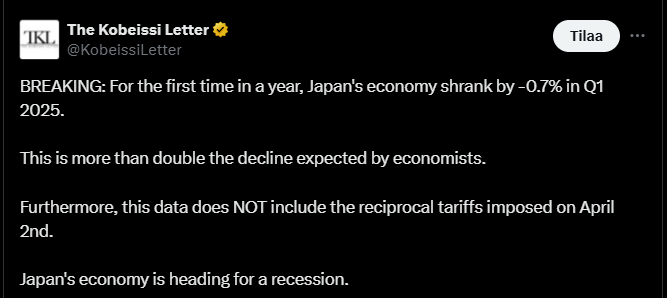
Alla olevassa tviitissä tuodaan esille, että Japanin talous supistui alkuvuonna odotettua enemmän, ensimmäistä kertaa noin vuoteen.
Luvut eivät vielä edes sisällä huhtikuussa voimaan tulleiden tullien vaikutuksia. Taantuma uhkaa.
https://x.com/KobeissiLetter/status/1923179591755293100

1 tykkäys
Japanin talous supistui tammi–maaliskuussa 0,2 prosenttia, mikä oli enemmän kuin odotettu 0,1 prosentin lasku. Vuositasolla bruttokansantuote kuitenkin kasvoi 1,7 prosenttia, mikä oli paras tulos sitten vuoden 2023 alun. Supistumisen taustalla oli erityisesti viennin 0,6 prosentin lasku, vaikka kotimainen kysyntä kasvoi 0,6 prosenttia.
Talousluvut julkistettiin samaan aikaan, kun Japani käy vielä toistaiseksi tuloksettomia kauppaneuvotteluja Yhdysvaltojen kanssa.
Asiantuntijat arvioivat, että vienti voi pysyä heikkona, mutta kotimaan kulutus tukee kasvua jatkossakin. Japanin keskuspankki varoittaa kuitenkin jatkuvista riskeistä ja odottaa maltillista elpymistä.
5 tykkäystä
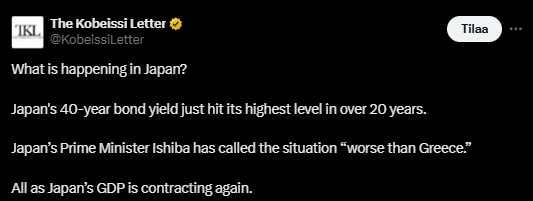
Tviitissä ilmaistaan, että Japanin taloustilanne heikkenee esimerkiksi bruttokansantuote supistuu jälleen ja 40-vuotisen valtionlainan korko on korkeimmillaan yli 20 vuoteen.
Pääministeri kuvaa tilannetta Kreikkaakin pahemmaksi.
https://x.com/KobeissiLetter/status/1924298584091930901

2 tykkäystä