How do you know if a company has the right cost culture?
When…
https://twitter.com/JuhaVaris/status/1734842284804379104
Exemplary behavior.
How do you know if a company has the right cost culture?
When…
https://twitter.com/JuhaVaris/status/1734842284804379104
Exemplary behavior.
I agree as such, but on the other hand, I’ve been thinking that a 5-6% dividend stream is characterized as “massive” a bit too much. If you rely mainly on dividends for stock returns (buy and never sell), there are companies in Hesuli (Helsinki Stock Exchange) whose expected dividend stream is as much as 50% higher than Kesko’s. The proportions might get a bit distorted in one’s head when comparing 5.6% vs. 8.8% or something similar. The difference is still really big if you are counting on dividends.
As it stands, Kesko doesn’t even make it past the entrance hall of the Dividend Party’s annual gala.

I don’t mean for my question to question @TervanKypsyttelija’s skills. He is a very brave guy for daring to voice his differing opinions out loud, even when others disagree.
In my youth, I had a friend who was often wrong about everything. He would claim that a moped had an electric motor and other such things. Then someone would always prove him wrong, and he wouldn’t say anything back; he’d just start arguing about the next topic immediately.
Ever since then, this kind of ironclad and unwavering self-confidence has fascinated me.
I’d like to know what Terva’s secret is. Does he not believe in his opinions as strongly as others think? Is he just bringing up scenarios that even he considers unlikely—though more likely than others think—or what?
I didn’t quite know how to inquire about this internal world, and unfortunately, my hastily phrased question probably just sounded like I was taking a dig at him  .
P.S. That friend of mine, by the way, became a municipal politician for the Finns Party (Persut).
This just proves it again—I don’t know your age, but your friend’s insistence actually came true, though apparently only after years if not decades—nowadays even mopeds have electric motors.
So in the end, he was right. Although these days he probably claims that a Tesla has a diesel engine.
That S-chain store manager is a salaried worker with at most a reasonable monthly pay. A K-retailer is an entrepreneur who requires a risk premium; that’s why they earn in the millions, and it inevitably shows in the prices.
Those K-stores, not to mention Citymarkets, are likely among the lowest-risk businesses. Pharmacies rank even higher than them.
A book recommendation for those interested in the recent history of the Finnish business world, mainly the 1990s and how Nalle (Björn Wahlroos) arranged corporate acquisitions with Mandatum. I have almost finished listening to the book. In my opinion, in addition to the background of the M&A deals, the book’s value also lies in the aforementioned side stories, such as the character portraits, entrepreneurial families, the general atmosphere of that decade, and what was whispered in the negotiation rooms.

Dividend yield is of course one thing you can pay attention to, but I would emphasize that Kesko’s share is about 17 euros and Nordea’s is about 10.8 euros, meaning Nordea is significantly cheaper. Mandatum, however, is only 3.8 euros, and you can get quite a few of them for the price of one Kesko share. Kesko looks quite expensive at the moment. Kesko was cheap in 2000, when you could get it very cheaply for two euros.
It is exactly this phenomenon that makes Finnish cooperatives UNICORNS—meaning that by investing in their share capital, you tenfold the value of your investment.
Usually, the tenfold increase in the value of the investment happens at the very moment of investment, when you get to own already accumulated capital. Annual patronage refunds (often 15–30%) as well as member discounts, bonuses, etc., come on top of that.
I guess Sampo paid a €2.65 dividend this year, but if it were split into four, the dividend would drop to under a euro. So it’s no surprise that someone who ‘understands’ dividends isn’t warming to the idea of a split, as the dividend decreases.
What the he** did I just read 
There are two kind of people. Those that love dividends and those who understand them.
I certainly don’t get paid for writing, and money itself doesn’t motivate me anyway, so it would be useless to even try to offer 
I am not categorically against being bearish, and I can directly accept the argument that something might still break in an unexpected way as a result of excessively rapid interest rate tightening, causing the economy to collapse. At the beginning of the year, I was quite strongly a bear and lost a lot of money, but I changed my mind in the summer when, for some reason, reality didn’t seem to follow my initial assumptions. Nowadays, I am strongly a bull regarding Europe, even though in the United States, the price levels for large corporations seem relatively too high. Small caps are very affordable there as well.
You are right that the current pace of debt accumulation in Western societies is unsustainable, and the U.S. will have to take drastic measures at some point. However, that moment isn’t necessarily today, tomorrow, or even next year. Nations can accumulate debt for decades until the camel’s back inevitably breaks, and it is difficult and unreliable to draw short-term forecasts from long-term trends.
At the moment, recession forecasts are quite mild, and we are heading towards a so-called soft landing for the economy. The inflation boogeyman is being brought under control, and central banks can once again shift monetary policy in a more stimulative direction. In fiscal policy, the room for maneuver is narrower, but we still haven’t seen the full effect of the massive amount of money put into circulation during COVID, so there is likely no need for additional stimulus based on this initial data.
Stock prices in Europe’s peripheral markets seem downright cheap now that investors’ risk appetite has decreased and money has moved to the U.S. and the DAX. If you can’t find anything to buy in this red-tag market, you’ll never find it in a bull market either, when the outlook improves and multiples rise. So, where does this extreme pessimism stem from? Now is an absolutely fantastic moment to buy small caps in Finland for cheap, as can be seen from the development of the total return index 

We probably agree on crypto 
The oldest comment regarding public debt and its sustainability that I have seen personally is in Adam Smith’s Wealth of Nations. In the work published in 1776, Adam marveled at Great Britain’s indebtedness, but also noted how throughout the 1700s, expectations that unsustainable debt would backfire had not come true.
Yes, at some point the limit will be reached, but apparently in Britain this limit has been speculated on for 300 years now. 
One person’s debt is also another person’s wealth, so if you complain about over-indebtedness, you are complaining about excessive wealth.  Perhaps there is surprisingly a lot of debt capacity to be found on this planet after all…
Now Finnish microbreweries should race to buy the Humulus lupulus hop variety, so we can soon buy health beer. The beer’s brand name could be something like “Humalainen Susi” (Drunken/Hoppy Wolf), as lupulus and lupus sound almost the same. The word ‘humalainen’ can be interpreted in two ways: tasting of the hop plant (bitter) or being under the influence of alcohol.
This is just basic hops, known for millennia, not some highly bred variety. The concentration of the virus-fighting active ingredient, xanthohumol (C21H22O5), likely varies between different varieties. It’s unlikely they’ve managed to breed the concentration down to zero.
Could the Ministry of Social Affairs and Health (STM) kindly prepare and the Finnish Parliament decide that in the future, all beers must indicate not only the alcohol percentage but also the xanthohumol percentage or per mille. For some Finns, 0.00% could be a selling point, for someone else, the highest possible figure. And could the alcohol tax be lowered for health beers containing high levels of xanthohumol?
Hop hop microbreweries! You’d think “wolf beer” would sell well until the S and K chains bring their Xtra, Kotimaista, or other budget versions to the market.
And now off to lunch to test if you can taste that xanthohumol in a pint on a terrace by the shore. 
Things actually turned out so fortunately that population growth took care of the debt problems, as the absolute amount of debt is only ever a temporary problem in a world of growing population and permanent economic growth:
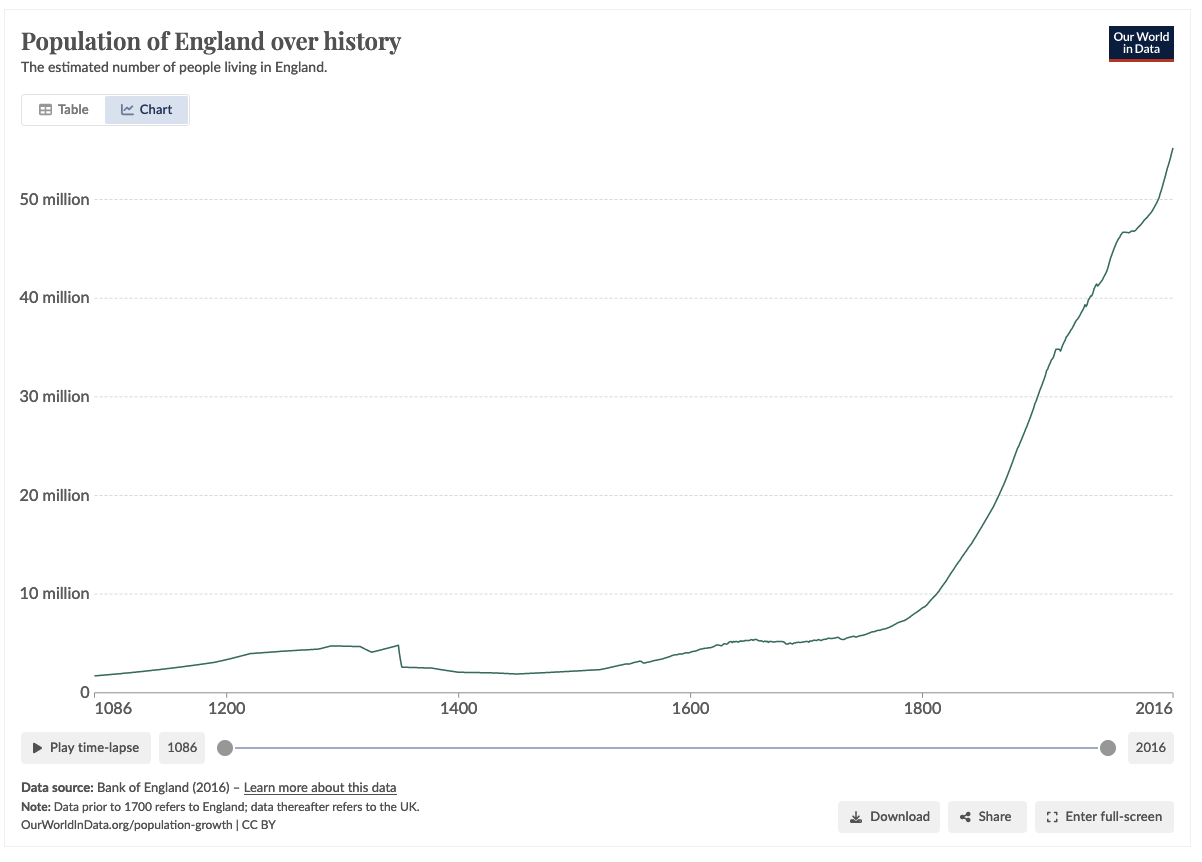
However, during our lifetimes, we may be transitioning to a model where debt grows automatically every year because the number of payers is in a permanent downward trend. If a euro of debt is taken today, there will be even fewer people in Finland paying it back in 10 years, meaning the debt per productive citizen is constantly increasing. The longer the debt remains unpaid, the larger a problem it becomes, ceteris paribus. Perhaps some MMT technique will be invented to solve this problem through monetary policy. It remains to be seen. I wouldn’t, however, dare to predict a stock market crash based on this, as people have a tendency to come up with creative solutions for any and every problem
Yep. And “debt per productive citizen” is exactly the right expression, because debt is all about carrying capacity. Public debt isn’t paid back; it’s always rolled over.
That growing debt is, of course, the flip side of weak economic growth. We still save a lot, and if one person saves, another must go into debt. One person’s expense is another’s income, and if one person consumes less than they earn and no one covers the gap with debt, the economy starts to unravel like a wool sweater.
The growth in debt may thus be partly due to lax politicians. But it could also be partly due to pressure from, for example, growing economic inequality, when a small elite saves too much. Not necessarily in Finland, but especially globally. 
Addition: This may sound counterintuitive, as I don’t believe anyone is forced to take on debt with a gun to their head. But at a system level, such pressures inevitably arise if a large enough group of actors saves too much for one reason or another. Like the damn Germans or Chinese, that Axis of Evil of the global economy!
On a practical level, for example, living in Western countries means taking on debt. Either through purchasing an owner-occupied home or, when renting, through the landlord’s borrowing. Indebtedness doesn’t happen under threat, of course, but through societal structures—for instance, people crowding into metropolises, even in Finland, in search of jobs, education, and services.
Do you or others have information on how the model prevalent in Sweden, with extremely long mortgages and rising prices, originated? I’m wondering how far we are in Finland or other Western countries from a similar development as urbanization continues to accelerate.
I’m reflecting here on the assumption that the amount of debt cannot fundamentally decrease but will instead grow, and what kind of structures will begin to form around this globally.
Debt is precisely taken with a gun to the head in our social structure. If you do not agree to take on debt and the payment obligation associated with it in the form of taxes, the monopoly on violence puts you in prison and seizes your property. Every four years, you can of course try to influence the matter in a limited way, but for the first time in history, a situation is occurring in our society where those taking on more debt have more power than those on whose shoulders the debt repayment is thrust.
In my opinion at least, this will be the greatest challenge for the entire Western democratic order: whether we can prevent the majority of citizens from democratically voting themselves unlimited benefits in the form of debt at the expense of the minority of taxpayers. Preferably also without us sliding into a dictatorship ourselves by acting against the will of the majority.
I apologize already at this stage for this turning political, but politics and economics are very difficult to separate from each other 
Hate to jump in, but if there are any basketball fans on the forum, the NBA League Pass is 50% off. The rest of the season is 50 euros, covering all games. Works on the PS5, for example.
You can try it for free for 7 days.