Ja negari heti alkuvuodesta:
3 tykkäystä
Negaria ei voi pitää yllättävänä, kun ottaa huomioon Ilkan kroonisen alisuorittamisen sektorilla.
Kiinnostavaa sen sijaan on, johtaako tämä johonkin korjausliikkeeseen isojen omistajien taholta nyt, kun Ilkan hallintorakenteen normalisointi on mahdollista. Sanoisin, että se pitää ainakin tehdä ennen kuin uuden strategian mukainen kansainvälisen kasvun kiihdyttäminen (=omistajien rahan polttaminen) alkaa.
Tässä on Ronin kommentit Ilkan negarista.
2 tykkäystä
Roni haastatteli Ilkan toimitusjohtaja Olli Pirhosta Q1-julkkarien jälkeen mm. ite tuloksesta, että myös osakesarjojen yhdistelyistä. 
Aiheet:
00:00 Aloitus
00:11 Negatiivinen tulosvaroitus
01:59 Panostukset kansainvälistymiseen
03:17 Profinder Ruotsissa
03:55 Data‑ ja teknologiapalvelut
05:15 Tekoälyn vaikutus
06:07 Asiakaspoistuma
07:05 Asiantuntijapalvelut
07:51 Kysyntänäkymä
09:38 Haetaanko kulusäästöjä
11:09 Osakesarjat yhdistettiin
Kuka olisi uskonut, että Iranin sodan ensimmäinen uhri Helsingin pörssissä on teknologiayhtiö Ilkka  Okei, onhan Lianalla joku toimisto Dubaissa, mutta konsernin liikevaihdon sakkaamisen selittäminen sodalla on taas kerran pään työntämistä pensaaseen.
Ehkä näille Ilkan isolla rahalla ostamille teknologioille (kuten sähköpostimarkkinointi) ei vaan ole kasvua odotettavissa. Kun tekoälyagentit valloittavat jokaisen toimialan ja yrityksen, ehkä osa asiakkaista huomaa, etteivät he tarvitse Ilkan teknologiapalveluja mihinkään.
6 tykkäystä
Pehmeää ja väsynyttä. En tunne Ilkan haalimia digikioskeja järin hyvin, mutta numerot kertoo oleellisen. Liiketoiminta ei kasva orgaanisesti ja mikä pahinta viivan alle ei jää positiivista, vaikka kuutisen vuotta on harjoiteltu. En tietenkään tiedä, minkälaiset evästykset Pirhonen on hallitukselta saanut, mutta lopputulos ei voi olla haluttu. Toimitusjohtaja, strategia tai mieluiten molemmat pitäisi laittaa vaihtoon asap.
Nyt kun Pohjanmaan isännät on voideltu lahjaosakkeilla ja päästy euro ja ääni-tilanteeseen, pääomistajien pitäisi pikimmiten ryhdistäytyä laittamaan kioski kuntoon. Muutenhan koko osakesarjashow on järjestetty ihan turhaan. Mitä lie tavoitteita Reblillä ja Keskisuomalaisella oli ja on Ilkan suhteen, niin nyt on aika kääriä hihat. Uudella strategialla Ilkan nettovelattomuus on parissa vuodessa muuten historiaa.
2 tykkäystä
Eikös Ilkan Alma omistuksen voisi nyt tyrkätä Otavalle, kun kerran ovat saaneet luvan palata ostolaidalle ja näyttävät edelleen olevan kiinnostuneita. Joku kiva pieni preemio potin kylkeen ja Uudenmaankadulle käsi ojossa. Kaleva median omistus paikallisille lehtisäätiöille tai Keskisuomalaiselle. Hankitut digibisnekset Almalle, Keskisuomalaiselle tai muulle halukkaalle ja pienet alaskirjaukset syliin. Sitten oikeastaan enää jäljellä johtoryhmä ja muutama konsernikirjanpitäjä, joille lyödään kivat bonukset käteen ja sammutetaan valot. Kuulostaa korppikotkasijoittajalta, mutta kyllä järjestelyissä olisi lajeempaakin hyvää. Liiketoiminnoille löydetään isommat muskelit suuremman toimijan alla ja sitä kautta henkilöstölle jatkuvuus myös tekoälyn tuomassa mullistuksessa. Keskisuomalainen olisi vahvempi omistaja paikallislehdelle Kaleva Oy:n kanssa. Paikalliset lehtiseurat ja säätiöt vaurastuvat järjestelyssä, jota voivat sitten käyttää omiin tarkoituksiinsa. Muutkin osakkeenomistajat vaurastuvat, mikä positiivista, niin Pohjanmaalla kuin laajemmin Suomessa.
1 tykkäys
Ihan kaikkia Alman osakkeita Otava ei Ilkalta voi ostaa, ettei pakollinen ostotarjous iske 50% omistusosuuden ylittäessä. Otavan talous tuskin kestäisi koko firman lunastusta pörssistä.
Mutta muuten kyllä itsekin kannatan lämpimästi Ilkan omistamien Alma Median osakkeiden myyntiä Otavalle vaikka 15 euron kappalehintaan ja siitä saatavien varojen jakamisen osakkeeomistajille. Samalla voisi jakaa jäljellä olevat ylimääräiset käteisvarat ennen kuin ostavat uusia digikioskeja.
Lopulle Ilkalle pitäisi tehdä kunnollinen tehostus- ja kannattavuuskuuri. Toki jos riittävän halukas varakas ostaja löytyy niin lihoiksi vain.
1 tykkäys
Samaa mieltäe edellä olevien kirjoittajien kanssa. Pohjalaisten pitäisi olla kai rehellisiä ja suoria, mutta ko haastattelussa paljon selittelyä ja puhetta, mutta vähän miten tilanne oikaistaan ja ennenkaikkea toimenpiteet mitä tehdään tilanteen parantamiseksi. Toivottavasti touhuun alkaa tulla ryhtiä operatiivisella puolella. Nyt olisi korkea aika myydä vähintään suurin osa tai mieluummin kaikki Alman osakkeet ja jakaa ne osinkoina omistajille. Ja toimenpiteitä normibusineksen suorittamiseen tyydyttävälle tasolle samalla, kiitos.
2 tykkäystä
Roni on tehnyt yhtiöraportin Ilkasta Q1-jälkeen
Ilkan Q1-kehitys jäi ennen tulosvaroitusta asetetuista odotuksistamme. Vuosi lähti hitaasti käyntiin ja näemme kasvua indikoivassa liikevaihto-ohjeistuksessa riskejä. Olemme tehneet ennusteleikkauksia, minkä myötä olemme myös hieman laskeneet jatkuvien liiketoimintojen arvoa osien summa –laskelmassamme. Tämän myötä leikkaamme tavoitehintamme 4,0 euroon ja toistamme vähennä-suosituksen.
1 tykkäys
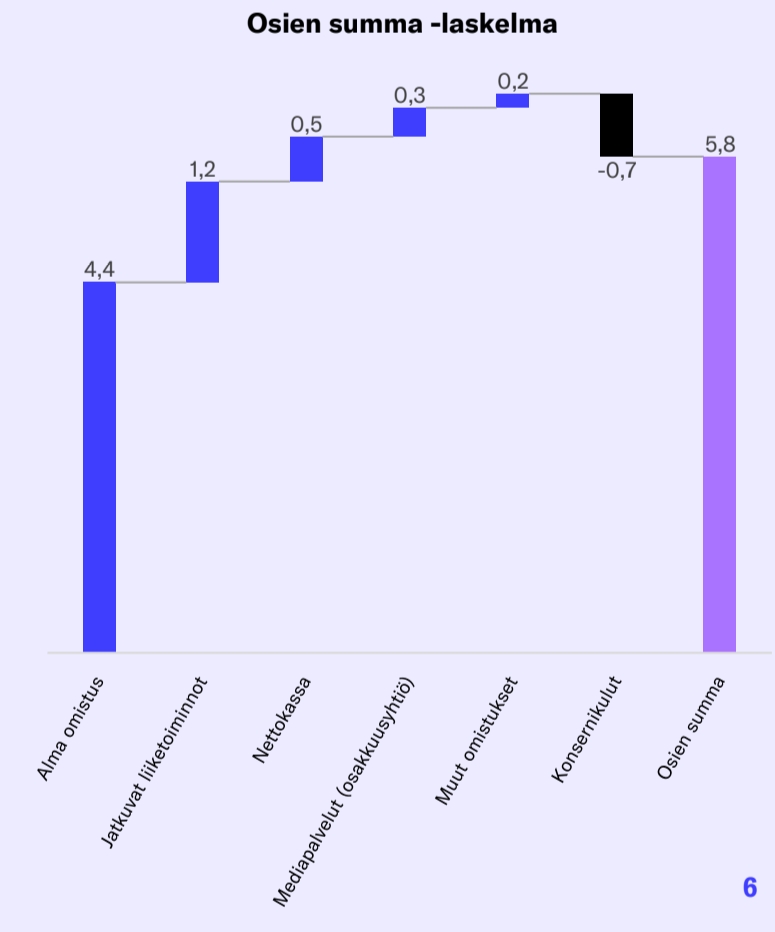
Laitetaas osien summa framille, sehän on 5,8€, ja josta
Alma Media 4,4 eur.
Inderesin target 4,0€.
Ilkka-tsydeemin arvontuottokyky vaikuttaa kyseenalaiselta, mutta osakkeen omistaja ei saa osuutensa ‘varoja’ turvaan.
Kunnes saa?
Vai kuluttaako tsydeemi ja inflaatio ne?
Siinäpä pohdittavaa osakkeenomistajalle…
3 tykkäystä
Hyvä muistutus Opa! Oma sijoituspäätökseni keväällä (ennen tietoa sarjojn yhdistämisestä) alle 4 euron kurssilla pohjasi siihen, että jos mitään ei tapahdu tämä maksaa osinkoa hyvin (kuten on tehnytkin 0,25 juuri). Tappiota ei ns ydinbusiness, joka vaikuttaa kehnolta/haavoittuvalta sekä huonosti johdetulta, saisi tehdä. Mutta ennemmin tai myöhemmin luulisi pääomistajien alkavan ohjata tätäkin yritystä kuin pörssiyritystä, jolloin nuo Alman osakkeet tavalla tai toisella annetaan omistajille osinkoina tai muulla tavoin. Alman osingothan ovat nytkin merkittävä tulonlähde. Kyllä yhtiön johdon ja hallituksen pitäisi saada ryhtiä operatiivisen toiminnan johtamiseen. Vähemmän selityksiä, enemmän korjaavia toimenpiteitä.
1 tykkäys
Osien summa lienee paras tapa lähestyä Ilkan arvoa sijoituksena. Mielenkiintoisin osa laskelmaa on varsinainen liiketoiminta, jonka arvoksi Inderes on arponut ~32 M€. Liiketoiminnan liikevaihto on vajaat 40 M€ vuositasolla. Ei ole kasvua eikä viivan alle jää voittoa, joten arvo voisi olla alempikin. Lisäksi taustalla oleva teknologia haiskahtaa hiukan eiliseltä ja AI-disruptiokin uhkaa. Mutta hyväksytään nyt kumminkin tuo Inderesin 1,2 €/osake.
Jos Ilkan Alma-omistus jaettaisiin kokonaisuudessaaan osinkona, sitä ropisi tilille nettona n. 3,20 €/osake (ilman Ilkan tuloverovaikutusta). Osakkeen hinta olisi tämän jälkeen osien summa-laskelman mukaan n. 1,50 € ja oikeasti ehkä 1,00 €. Ilkan osakkeen tämänhetkisellä 4 € hinnalla tappiota tulisi vähennettäväksi muista pääomatuloista 3,00 €. Eli operaatiossa osakekohtaiseksi eurosaldoksi jäisi -4 + 3,20 + 1,00 + 0,90 = 1,10. Näin siis arvo-osuustilillä.
Ei pöllömpi sijoitus sanoisin. Mutta, mutta… skenaario on perin epävarma. Pari-kolme vuotta uuden “impact built in”-strategian toteutusta voi poistaa yhtälöstä euron osakkeelta. Lisäksi on epäselvää, mitä tavoitteita Ilkan suuromistajilla on.
4 tykkäystä
Kaleva Media tekee, minkä Kaleva Media osaa. Osinkoja riitti Ilkalle asti 1,6 miljoonaa euroa ja pääoman palautuksia päälle 1,2 miljoonaa euroa. Tulevina vuosina kertymä lienee tätä pienempää, mutta tasaista osinkovirtaa on vuosittain tulossa.
Yhtiö teki myös voittoa ja pääoman palautukset johtuivat siis pienemmistä yhdistymisen kuluista verrattuna suunniteltuihin. Yhdistyminen on myös tuonut suuret säästöt ja voittoa on tulossa jatkossakin.
5 tykkäystä
Laatuyhtiön tunnistaa siitä että toimittaa negarin kerran kvartaaliin.
Edelleen mennään geopolitiikan taakse eikä omassa tekemisessä ole mitään vikaa.
11 tykkäystä
Ei yllätä. Se yllättää, että suuromistajat ei puhalla peliä poikki ja lopeta omistajien rahan polttamista “impact built in”-strategiaan.
Vain pöhkö toistaa samaa virhettä ja odottaa eri lopputulosta. Strategia ja tj vaihtoon asap.
9 tykkäystä
Tässä on Aten kommentit Ilkan negarista.
1 tykkäys
Suuromistajat ovat siunanneet epäonnistuneen strategian ja rahan polttamisen kohta vuosikymmenen ajan, joten en odottaisi sieltä suunnalta suurta muutosta. Kannattaa ymmärtää, että Ilkan suurimmat omistajat ovat itse olleet täysin ulapalla median digisiirtymästä ja investoineet lähinnä paperilehtibisneksiin kuolevissa maakunnissa. Ei siellä ole ollut suuria visionäärejä, jotka olisivat osanneet ennakoida teknologian kehitystä ja kuluttajakäyttäytymisen muutosta.
Ilkan ongelma ei ole pelkästään toimitusjohtaja tai strategia, vaan lisäksi hallitus, hallintoneuvosto ja omistajat. Kenelläkään ei näytä olevan rohkeutta katkaista huonoa kehitystä.
8 tykkäystä
Tuo on totta. Kuvittelin kuitenkin, että osakesarjojen yhdistämistä ajaneilla omistajilla olisi ollut joku visio, mitä tehdä saamallaan määräysvallalla, kun kiirekin oli selvästi kova. Tällä hetkellä tuntuu, että koko show järjestettiin turhaan.
1 tykkäys
Tässä on Ronilta ennakkoyhtiöraportti, kun Ilkka julkaisee tuloksensa maanantaina 10.8.
Yhtiö antoi heinäkuun lopussa jo vuoden toisen negatiivisen tulosvaroituksen, minkä myötä raportin päähuomio kiinnittyy varoituksen taustoihin ja markkinanäkymiin. Teimme tulosvaroituksen myötä leikkauksia operatiivisiin ennusteisiimme ja odotamme Q2-lukujen jääneen vaisuiksi. Osien summa -laskelmamme (5,9 €/osake) on pitkälti ennallaan, sillä Alma Median kurssinousu tuki yhtiön oman liiketoiminnan laskenutta arvoa. Toistamme 4,0 euron tavoitehintamme ja vähennä-suosituksemme.
2 tykkäystä