-It turned into a sprint through the Karelian Isthmus as soon as Russia increased its military presence on the Finnish front to 10% of its armed forces, even though Finland had 200,000 Germans as allies. And with a forced line, other EU countries would just go along, as in the current Ukrainian case, when there are no commitments to assistance, there are none. As a NATO member, the situation would be completely different.
19 Likes
It’s interesting, by the way, how “weak” the EU is in this situation; it doesn’t really show leadership and has to rely on the support of the United States. However, in principle, the EU is a truly big player compared to Russia, for example:
Population EU vs. Russia 448M / 144M
GDP EU vs. Russia 13.7B / 1.5B
There is no consolidated data on military budgets, but from old sources, one can outline that Russia’s military budget is certainly larger than that of any single EU country, but already France + Italy combined had a larger budget than Russia.
So what’s wrong that the troublemaker cannot be brought under control by the EU’s own strength?
(Edit: The EU figures should be post-Brexit; I had to manually subtract the British from the GDP figure)
21 Likes
By the way, today is a great holiday in Russia.
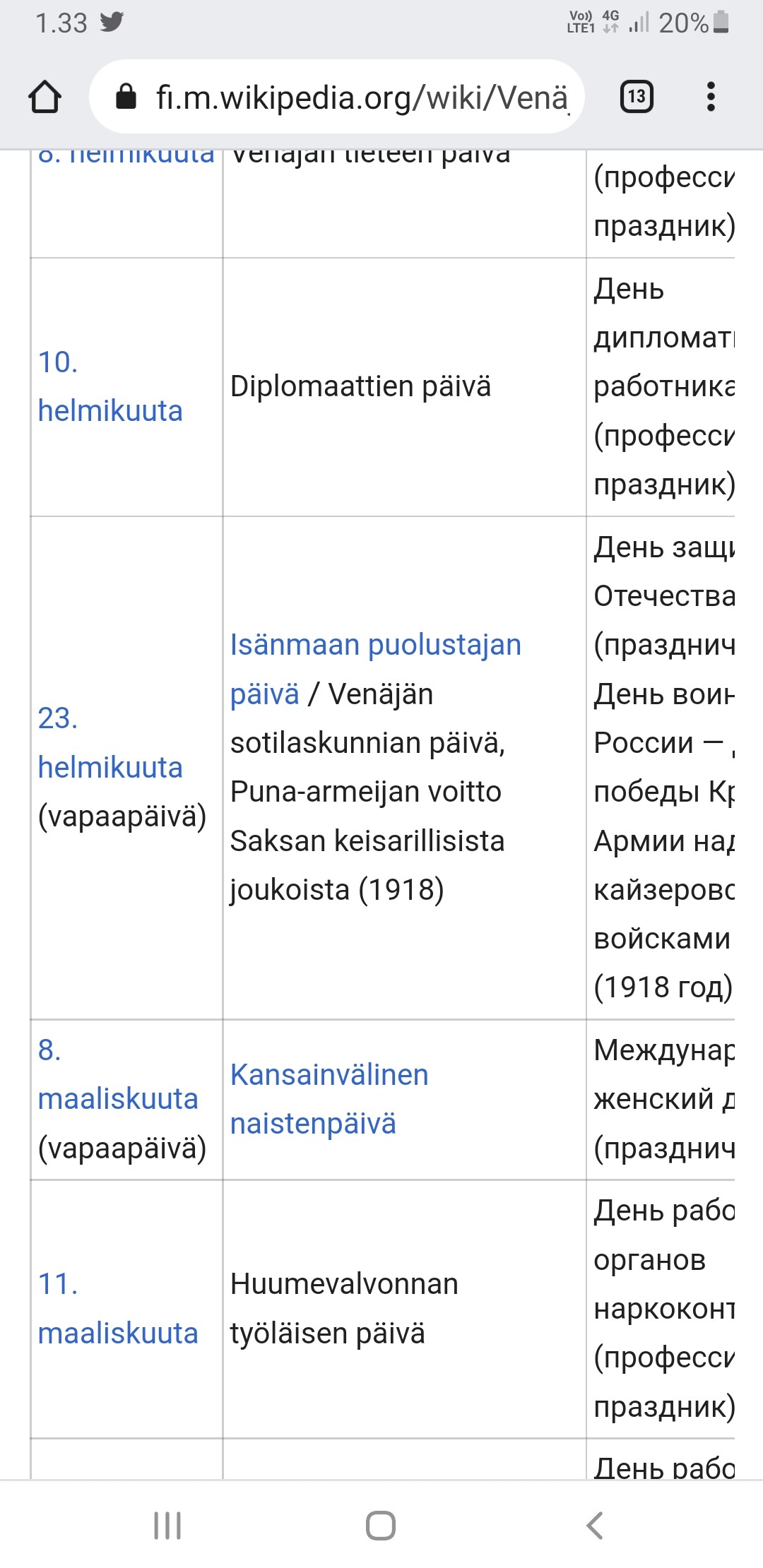
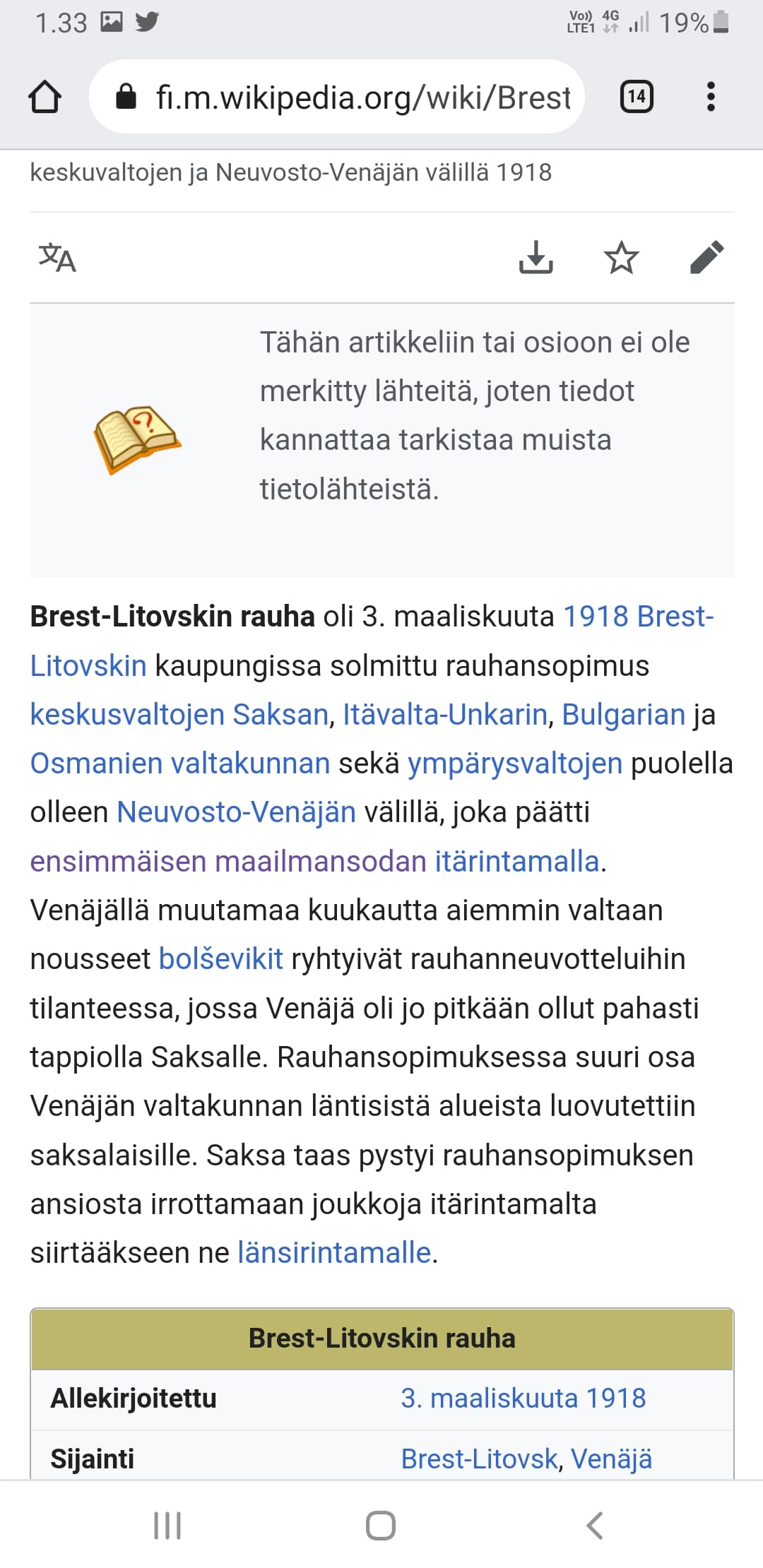
It seems that the Treaty of Brest-Litovsk, signed in 1918 after the collapse of the Red Army in 1917, has been a little forgotten in the creation of a new Great Russia.
6 Likes
The West still doesn’t know how to play Russia’s game, even though this has been happening since before Crimea.
In 2008, a NATO summit was held in Bucharest, where, among other things, the membership of Ukraine and Georgia was discussed. George W. Bush was of the opinion that these countries should be admitted to NATO, but 10 NATO member states, led by Germany, France, and Italy, opposed this. No MAP (Membership Action Plan) program was created for these countries, which would have led to NATO membership. [1]
In the same context, a meeting of the NATO-Russia Council was held, where Putin said the following to George:
“George, you have to understand that Ukraine is not even a country. Part of its territory is in Eastern Europe and the greater part was given to us.” -Mr. Putin [2]
In November 2006, South Ossetia held a referendum and decided by a 99% majority to become independent and secede from Georgia. Most South Ossetians had Russian passports, so Medvedev felt justified in sending his army to defend his compatriots and take control of part of Georgia. [1]
In 2008, four months after the NATO summit, there was shooting on both sides of the South Ossetia-Georgia border. Separatists in South Ossetia claimed that 6 of their people died, and Georgia claimed that their police responded to fire that originated in South Ossetia. [3]
On August 8, 2008, the Beijing Summer Olympics began, and at the same time, slightly larger skirmishes began between Russia and Georgia. Already on the 9th, Saakashvili began to hint at a ceasefire. [4]
On August 12, 2008, a ceasefire was concluded, with both sides withdrawing to their previous positions. [5]
In 2015, the Russian brother remembered that they had left an important oil pipeline on the Georgian side, so they shifted the South Ossetian border a few hundred meters into Georgia to get the pipeline on the South Ossetian side. [6]
In June 2008, Saakashvili, after being rejected by NATO:
Saakashvili said during a visit to Berlin, where he stressed that “what is at stake here is the whole post-Cold War security order in Europe.” Russia, Saakashvili argued, is engaging in a policy of redistribution, and Georgia is only the beginning. “Tomorrow it will be Ukraine, the Baltic states and Poland,” the Georgian president predicted, returning his focus to the Americans. [1]
[2] https://www.nytimes.com/2022/01/24/opinion/russia-ukraine-putin-biden.html
[3] Etelä-Ossetiassa kuusi kuollut tulituksessa | Yle
[4] Georgia ehdottaa välitöntä tulitaukoa Etelä-Ossetiaan - Ilta-Sanomat
[5] Vihollisuudet ohi Venäjän kanssa, Nato lupaa Georgialle yhä jäsenyyttä - Suomenkuvalehti.fi
24 Likes
The old border between Finland and Russia was easier to defend. Lots of waterways.
The current border is drawn in a way that makes it easy to walk across
5 Likes
It’s hard to see the basis for that wishful thinking. Finland received a lot of sympathy and empathy during the Winter War, but very little concrete help. Since Finland is not a member of NATO, it’s futile to expect troops, though weaponry could certainly come. Sweden’s legislation currently prevents the delivery of armed assistance to conflict zones (as does Finland’s). This noble principle could backfire on Finland if Finland becomes a target of Russia.
The EU could, of course, impose unprecedentedly harsh sanctions as support, which would result in personal sanctions against the leader of the Republic of Karelia.
edit: NATO has stated hundreds of times over the years that membership is a condition for security guarantees and military aid, and that won’t change by wishing. It might be easier for an investor to understand if we compare it to business operations. Two companies cooperate closely, and both benefit from it. The larger company tells the smaller one that it can become a shareholder in the larger one if it wishes, but the smaller one ponders that it doesn’t really feel like it, as it would, for example, have to participate in the larger company’s decision-making, and there would be other troubles. Then, when the larger company makes truly profitable deals, the smaller one wonders why it doesn’t get to participate in the distribution of dividends or other profits.
27 Likes
What kind of information does Putin have on Western leaders? Could there be previous backroom deals, personal matters, etc., that he could use for blackmail behind the scenes? That would make things quite complicated…
Or how is this possible?
“EU foreign ministers decided at their informal meeting in Paris on Tuesday what the EU’s first economic sanctions against Russia entail. The sanctions target first and foremost those individuals who were involved in Russia’s Monday decision to recognize the separatist regions of Eastern Ukraine. President Putin is not on the list.”
1 Like
Rivero:
Luke Harding: Russia’s Spy Network
Provides partial answers to your question.
"
Correspondent Luke Harding reveals Russia’s network of spies, through which Vladimir Putin wages a secret war against the West. Based on compelling evidence, the book sheds light on the situation in Ukraine, election interference, murders, and the individuals behind them. Additionally, it brings forth a diverse group of people who have been blackmailed or bribed to serve Russia’s interests. Was US President Donald J. Trump one of them?
(From the book’s “back cover”).
4 Likes
The evolving security situation in Europe would require an up-to-date briefing on NATO for Finns. Instead of accurately explaining the responsibilities and duties of NATO members to the uninitiated, even the publicly funded Yleisradio is spreading misinformation – and to children, no less. The message is straight out of a last-century “Sammontakojat” (Sammon Forgers) wall chart: NATO is evil.
I myself held the same misconception until about the mid-80s. It was easy to be content with the security situation back then, as the Soviet Union’s military aggressions against neighboring countries were not seen as they are now in the 2000s. Some may have also gone unreported in the spirit of the times. From the first grade onwards, we were taught that the YYA Treaty (Treaty of Friendship, Cooperation, and Mutual Assistance) kept Finland safe and that Finland was neutral. Only later did many realize what it really meant. The whole country was prostrate before the Soviet Union.
The lessons of the last century are still evident in the actions of former and some current politicians who lived through those same times. Paavo Lipponen’s Russia lobbying is absolutely appalling to watch. Heinäluoma could replace Lipponen at any time. Esko Aho, on the other hand, applies his doctrines at a large Russian bank. And these former prime ministers and finance ministers are not ashamed of their dealings – not even in this situation. And then there’s Halonen and Tuomioja. Oh boys and girls…
It was probably @jps who presented erroneous views on NATO in the coffee room. I think it would be good if Finnish media tried to get the public to understand at least the following about NATO:
- NATO is a military defense alliance. NATO does not attack, but it also cannot prevent an individual member state or member states from attacking. There is no obligation to support an aggressor.
- As a NATO member, Finland would only be obliged to send its soldiers to fight on foreign soil if the task was to defend another member of the defense alliance from attack.
- Article Five of the NATO Treaty requires all member states to defend a member state under attack. Article Five has been activated once since 1949. This occurred at the request of the USA in connection with the 2001 terrorist attacks.
- NATO did not participate in the Iraq War, even though its member states were involved in military operations.
- The placement of nuclear weapons on Finnish soil is always Finland’s decision, whether Finland is in NATO or not. Nuclear weapons are not coming to our soil.
- Finland’s own army or the planning of its own defense will not change significantly with NATO membership. The Finnish army is already largely compatible with NATO, and with NATO partnership, defense will be trained together. Finland is always primarily responsible for its own defense.
- Finland’s current defense expenditures exceed NATO requirements. Defense costs will not increase unless the Finnish Parliament decides otherwise.
- NATO membership is a superior way to prevent Russian aggression. Russia does not attack a NATO country. No country has ever attacked a NATO country.
- The EU is not a defense alliance and does not oblige member states to provide military assistance if one or more EU member states are attacked. This also applies to Finland.
These quickly came to mind. Feel free to continue the list.
If the Russian doves of peace from the era of Finlandization still linger in your eyes, it is important to remember this:
- Russia has been involved in 12 wars or military operations in addition to Ukraine since the collapse of the Soviet Union (1990).
NATO is by far the most important part in guaranteeing European security and stopping Russian aggressions, now and in the future.
176 Likes
Regarding Russia’s methods of warfare, it should also be remembered that it does not adhere to the so-called rules of war in any way. Russia has practically always shown that it aims to destroy both hospitals and civilians, and to devastate as much civilian infrastructure as possible. The use of chemical weapons is also not at all alien to them. As for the treatment of prisoners of war, it’s probably not worth even guessing.
19 Likes
It’s easy to agree with this. Behind the eastern border, this chain of events has been planned far in advance. Sanctions lead to one reaction after another. And the war machine just grinds on… A really nasty feeling about Ukraine.
The initiative should be taken away from Russia, but how? On the diplomatic front, Russia manipulates as much as it can, and naivety is only found on the Western side.
I’ve been binging Star Trek for a while now, and my view of Russia is comparable to a Klingon. They only believe in a fist.
3 Likes
If the deterioration of cooperative relations only meant investments made by Finnish companies in Russia, then based on the track record, it would not be a bad thing if they hadn’t been able to make those investments. Of course, Russia is still a significant trading partner for Finland.
This also seems to be just a timeout. If the EU countries had acted more decisively after the annexation of Crimea, they could now be quite independent of Russian gas/oil, and Russia would have fewer dollar reserves.
Many likely linked this to the commissioning of NS2, which may have been one reason.
I treat Sauli’s statements with reservations in that if Finland were under threat, or if the NATO application process could succeed quickly and clarifications were underway for Finland, these things should not be spoken about openly.
A different kind of trench warfare in cities, with civilians partly acting as human shields, would probably succeed in some parts for a long time, as would various guerrilla attacks. If Russia wanted to use all its other arsenal except nuclear weapons, air superiority with missiles would be so significant that Finland would get a thorough beating everywhere except where they cannot be used significantly due to civilian casualties.
1 Like
Can you tell me where Russia has avoided civilian casualties in Chechnya, Afghanistan, Syria? Give a couple of examples.
Or if Germany or France have “kindly” urged Finland not to apply for membership now, that wouldn’t be disclosed either. Promised that maybe someday? Finland’s position is really difficult. The interests of the EU’s two most important countries and Finland are poorly aligned during an ongoing crisis, because Finland’s NATO application weakens at least Scholtz’s and Macron’s economic interests.
3 Likes
I don’t know if this was here yet?
https://www.whitehouse.gov/briefing-room/speeches-remarks/2022/02/22/remarks-by-president-biden-announcing-response-to-russian-actions-in-ukraine/
“Let me be clear: These are totally defensive moves on our part. We have no intention of fighting Russia. We want to send an unmistakable message, though, that the United States, together with our Allies, will defend every inch of NATO territory and abide by the commitments we made to NATO.”
4 Likes
“The minutes of the discussion from the event reveal his and apparently the broader Russian leadership’s attitude towards how the Russian leadership views the West’s stance on Russia’s wars and violations.”
6 Likes
https://twitter.com/TiinaAhva/status/1495807416751038467
An Iltalehti article from 2014, but quite relevant…
What else needs to happen for Finland to apply for NATO membership? Are we waiting for tensions to increase behind our own border, by which time it might be too late? Politicians keep repeating that Finland isn’t under any immediate threat, but I don’t quite understand why we should wait that long. Applying for NATO membership would certainly increase tensions between Finland and Russia immediately, but in the long run, it’s the only sensible option for Finland. Unless we want to increase our direct defense spending from current levels.
21 Likes
It is completely naive to imagine that Finland would receive concrete military aid if Russia threatened it, simply because it is a Western country or part of the European Union. History provides good examples of how meager such aid turns out to be when a real crisis hits, if no binding agreements are in place.
It is in Finland’s best interest to align militarily with other Western powers, with signatures truly on paper and aid guaranteed under threat. NATO easily comes to mind first, but as I wrote earlier, this situation would be an excellent opportunity to deepen EU cooperation and take the federal state another step further. In my opinion, the EU is otherwise incomprehensibly spineless and dependent on the United States militarily at the moment. We have been living some kind of dream, focusing on saving the world, while forgetting that our neighbor is completely ruthless and pursues its own interests by force when the opportunity arises. I hope that as a result of recent events, the EU will further unite, increase its military spending, and stand more on its own feet. We also need to be prepared for the possibility that the United States might not be our support and security one day.
Unfortunately, one cannot create one’s own military inviolability and peace by setting an example by disarming oneself and declaring peace. One must grow one’s own muscles as large as possible and thereby ensure one’s own inviolability and peace so that no one dares to challenge it.
21 Likes
That’s how it goes. If a country were about to go to war with the largest non-NATO country, it would certainly not make that country a more attractive member. Perhaps Finland is not yet defined as such a high-risk country.
This is the level behind the border. The only source of income is fossil fuels, which are facing slight challenges even without Ukraine. And now they seriously imagine that trade will continue as before - despite the fact that the entire civilized world is allied against Russia, primarily economically. Seriously? And that anyone would trust Putin-fsb-oligarch-Russia at all… anywhere? Seriously?
The standard of living there is already low, people are moving abroad, population decline is a reality even without the coronavirus, which has accelerated it by 1.5 million in a couple of years. As a solution behind the border, doctors are falling out of windows.
A viewing recommendation for everyone from the first episode of Yle Areena’s documentary series Mad Year 1991. The system can collapse quickly.
9 Likes