A rather small acquisition considering that 7.6 billion SEK was raised in the directed share issue in March, and the total purchase price for these four companies combined is 71 million SEK.
15 Likes
I’m keenly awaiting the Q4 earnings release. It’s important to monitor EBITDA rather than just the (EBIT) profit, as Embracer still accounts for acquisitions directly as expenses, which weighs down the profit.
Biomutant also appears to be a potential hit based on the trailers. The merchandise pages have been opened:
https://twitter.com/10_ch_10/status/1392168915191615490?s=21
(There are also struggling game companies in the industry, but Embracer is not one of them  )
)
6 Likes
Are there funds that invest based on that index?
https://twitter.com/10_ch_10/status/1392360479276867585?s=21
This is about an uplift due to Embracer exiting the MSCI Global Small Cap index.
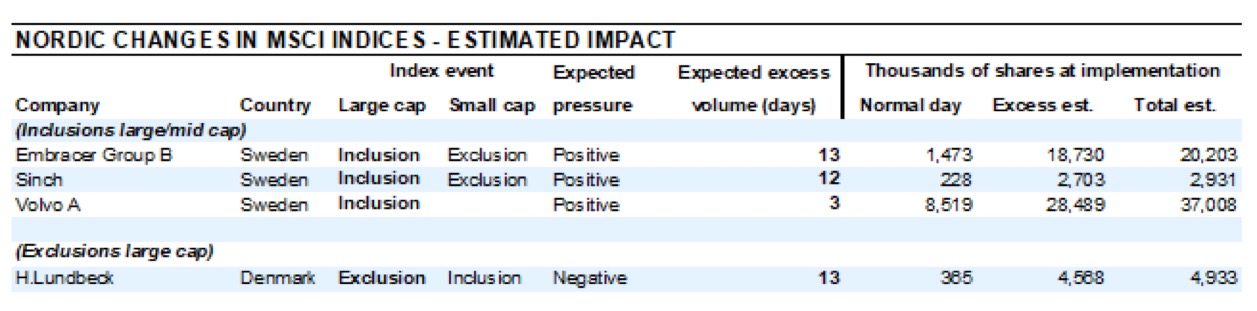
Embracer is the topic of Chit Chat Money’s latest podcast:
https://podcasts.apple.com/fi/podcast/chit-chat-money/id1437766060
2 Likes
Raw 4K 60fps Biomutant gameplay was released yesterday:
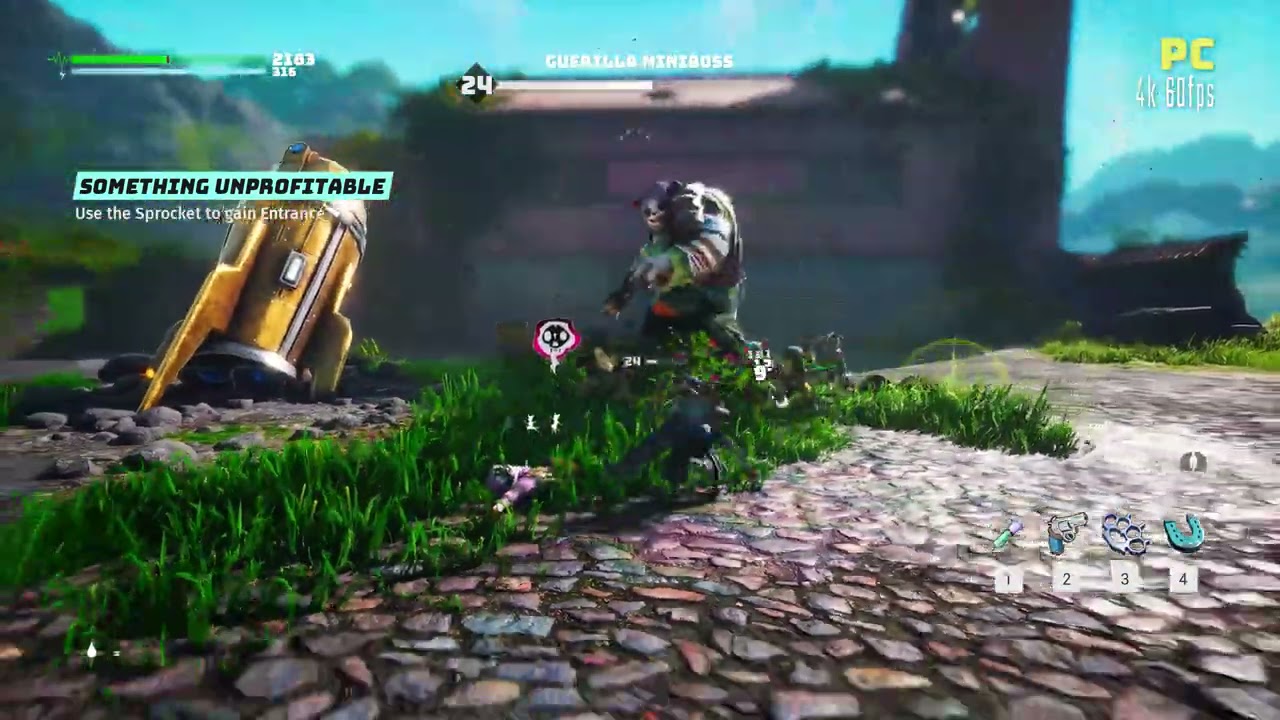
Same video from consoles
Last gen
https://www.youtube.com/watch?v=vXtyhpeayc8
Last gen +
https://www.youtube.com/watch?v=wRMrDZc4qLQ
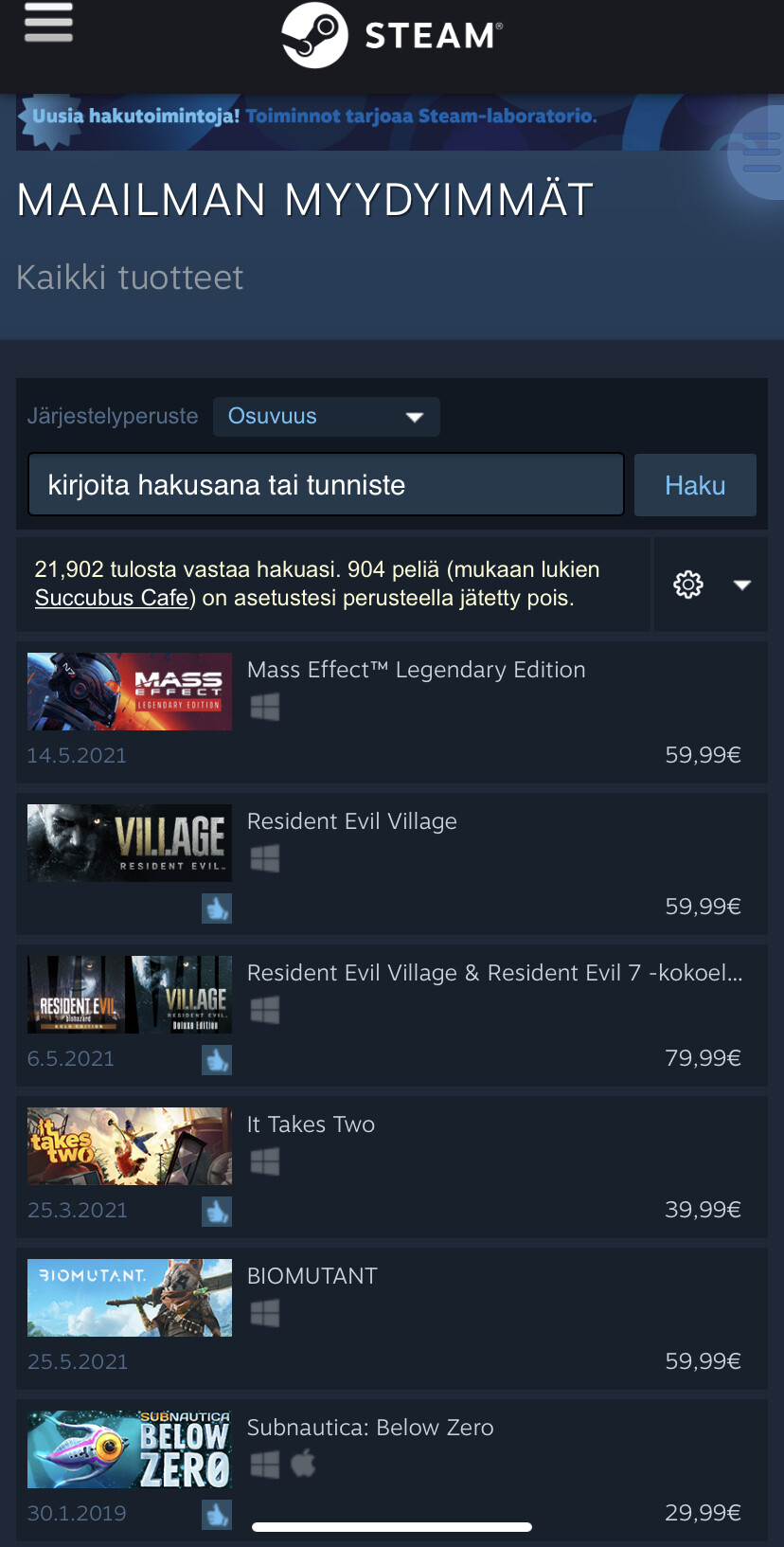
For the past week and a half, the game has been in the top 15 on Steam’s best-selling list:

11 Likes
I’ve done empirical research on commenting on YouTube videos and it’s very positive. The ratio of likes to dislikes is also unusually good for gaming videos.
7 Likes
I’ve seen the same thing. For example, a trailer with over 500,000 views has received about 6,900 likes and 370 dislikes. You can see the ratio from that. Otherwise, it really looks like the game is genuinely anticipated.
The hype is probably just beginning. Hopefully, the game will be well-received, and the gameplay will be top-notch.
7 Likes
14 Likes
Good point about Embracer’s “operational EBIT.” According to the tweet, acquired companies have not always capitalized their game development costs, which boosts “operational EBIT” when development costs are amortized for some games but not for others. Over time, this will naturally correct itself as development costs are capitalized after acquisition, but a “tail” remains.
As a result, it’s harder to choose what the true measure of profitability is:
EBITDA does not include development costs at all
EBIT (reported) includes goodwill amortization
EBIT (“operational”, an additional metric reported by the company) includes the aforementioned problem
Net profit includes goodwill amortization
https://twitter.com/financeamir/status/1394010660267245568
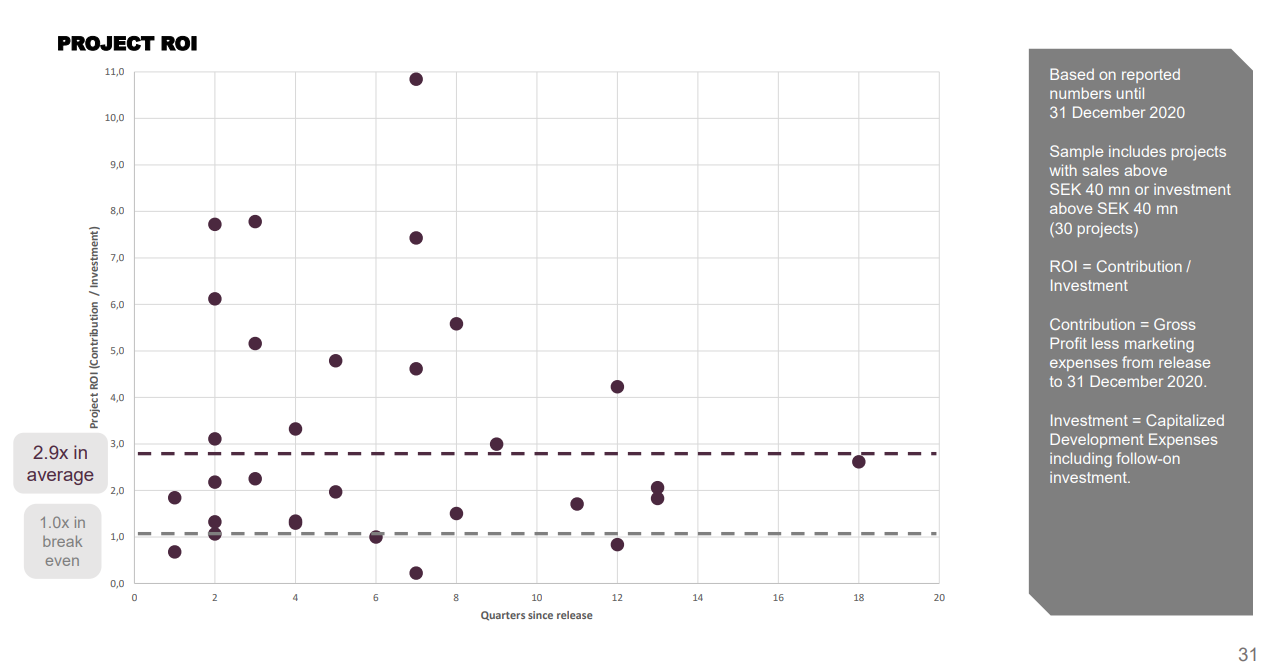
At the same time, it’s good to remember that the company has reported project ROI for a couple of quarters with a scatter plot, which gives an impression that, on average, game development investments have performed quite well. However, it’s still unclear to me whether development costs have been somehow retroactively calculated for games whose development costs were not capitalized:
6 Likes
A certain general tech decline has hit Embracer as well, but there seems to be a lot of positive things in the air, so I’m wondering what other things could negatively affect the stock price.
-
Biomutant release: The game is highly anticipated; YouTube is full of comments like “please don’t flop.” While I’m primarily rooting for its success, and so far the gameplay videos and such have looked good, isn’t there reason to be cautious with such a “big” release?
-
Upcoming transition to IFRS standard. Currently, not all figures are straightforward, perhaps there’s anxiety about what will be revealed underneath?
-
The valuation is high, yes, but that tends to be the case with successful companies.
-
Continuous M&A is part of the strategy, but can they be integrated profitably? These, however, dilute shareholder ownership when paid for with shares.
I am, however, positive and have increased my position during this dip, making it one of my largest holdings (though still only about 8%). Even if the short term doesn’t pan out, and for example, Biomutant fails, I believe in the company in the long term.
What do you think? What issues, in your opinion, raise concerns or questions?
2 Likes
I found something really interesting on Twitter now.
I understood that the user financeamir has been investigating that for some of the companies Embracer has acquired, it fully benefits from game revenues but does not book the game development costs.
This then led him to sell his holding, which had grown to a 7% position.
The rest of the story is in the comments on that tweet. I threw it into translate.
What do you think about this?
I don’t know what to think. It sounds bad if true, but is there a reason for this? It adds more risk to the IFRS transition 
https://twitter.com/financeamir/status/1394010660267245568?s=20
1 Like
Quote from earlier:
"There are many accounting principles in the gaming world, but when it comes to game development costs, there are two main paths:
- take it to the income statement as a regular expense
- capitalize it and put it on the balance sheet to be expensed upon game release
Embracer operates according to model 2), which is also considered the “most correct” for larger game companies. For example, a company develops a SEK 50 million game over 2 years. This is not reflected in the income statement and thus does not affect the operating profit or “operational EBIT” as they call it.
Once the game is released, they expense 1/3 over the first 3 months, 1/3 over months 4-12, and the final 1/3 over months 13-24. This is intended to smooth out the profit more so that the timing of revenue matches costs as much as possible, to avoid it becoming too “lumpy”.
Everything is as it should be so far. The problem arises when you have a company that follows this principle, other companies that play according to principle 1 above (take it to the income statement), and a lot of related acquisitions.
Embracer has acquired a couple of companies that have expensed all their game development, where the games they were working on had not yet been released until after the acquisition. This has resulted in no balance sheet to capitalize from the acquired company.
The purchase price still has to be allocated somewhere, and then they end up with goodwill and intellectual property rights. These two items are currently depreciated, but do not affect operational EBIT because they are classified as “acquisition-related depreciations”. Where do you think the problem is?
The acquired company (what it has acquired) has invested in ongoing game development, where all costs go to goodwill and IP rights that do not affect operational EBIT, but where all revenues go to Embracer and thus to operational EBIT.
I have made a simple example. Two identical games, same ROI, same costs. In years 1-3, Game 1 is developed. Everything is expensed to the income statement. At the beginning of year 4, Embracer buys the company and Game 1 is released. There are no depreciations to take, and the game generates revenue.
In the same year, i.e., year 4, development of Game 2 begins, but under the Embracer program, they capitalize. The operational EBIT for Game 1’s game year is 385 million, while the OP EBIT for Game 2’s game year (year 7) is 230, which is 40% lower than the first year of the previous game.
Simply put: you enjoy the revenue from the first game, but you don’t have to reflect the costs in operational EBIT.
We will take a couple of concrete examples where it is clear in black and white that this has happened. Not all companies they have acquired have done this. Important to point out…"
Answers are awaited.
Below about payouts as @evolution stated below.
https://twitter.com/LassesLuftslott/status/1394213687389564929?s=20
9 Likes
That answer from Lars seems to be for a completely different question; he’s talking about earnouts there. The original tweet was about the varying practices of acquisition targets in capitalizing game development costs prior to the acquisition.
2 Likes
To clarify this further: This refers to the accounting treatment of game development costs for acquired companies before Embracer bought them. If the acquired company has not capitalized these costs on its balance sheet but expensed them, Embracer does not have development costs to depreciate on its balance sheet. This situation is further complicated by the fact that Embracer uses K3 (Swedish accounting standard) and depreciates the acquisition cost of its acquisitions. This depreciation of acquisition costs is adjusted out of the “operational EBIT” metric that Embracer reports so that investors can get an accurate picture of profitability, but even here (to my understanding and according to that tweet), game development costs have not been retroactively calculated for depreciation.
In summary, operational EBIT is Embracer’s most reasonable profitability metric, but it too looks overly favorable to the extent that acquired companies did not record game development costs on their balance sheets before the acquisition.
5 Likes
Thanks for your input @evolution 
The question arises; are these done intentionally to make the results look better, or are these accounting differences the reason and things are being done as well as possible?
It feels bad if things are being distorted, even like “take your money and run”! The strategy and future sounded good, there should be no reason to distort for the hope of quick profits.
Are RedEye’s analysts aware of this? Or other analysts, considering how positive their view is of the stock.
4 Likes
I just have to ask, who would be making quick profits here? Embracer just recently carried out a large directed share issue, for example, which was at least 30% oversubscribed. Several due diligence processes must have been directed at it. The question raised by that Twitter user is hardly a new thing in buy-and-hold strategies. The basic premise, however, seems relatively simple to consider. I would be more suspicious of the intentions of the Swedish Twitter users, as they are quite well-followed. It’s good, of course, that the discussion gains new dimensions and risks are considered.
7 Likes
I’m guessing all the analysts, including those from Redeye and the banks, are well aware of this, and based on the tweet’s comments, it has also been highlighted in analyses. The risk here is probably that earnings won’t grow as smoothly in the future as one might expect.
The same has also been said about Talenom from time to time, especially when the sentiment is a bit more negative. Talenom, as I understand it, also capitalizes expenses quite aggressively on its balance sheet, which beautifies the reported earnings in the short term. Still, it seems to be doing well, and as an accounting firm, they probably know what they’re doing.
10 Likes
Tomorrow is the presentation
6 Likes