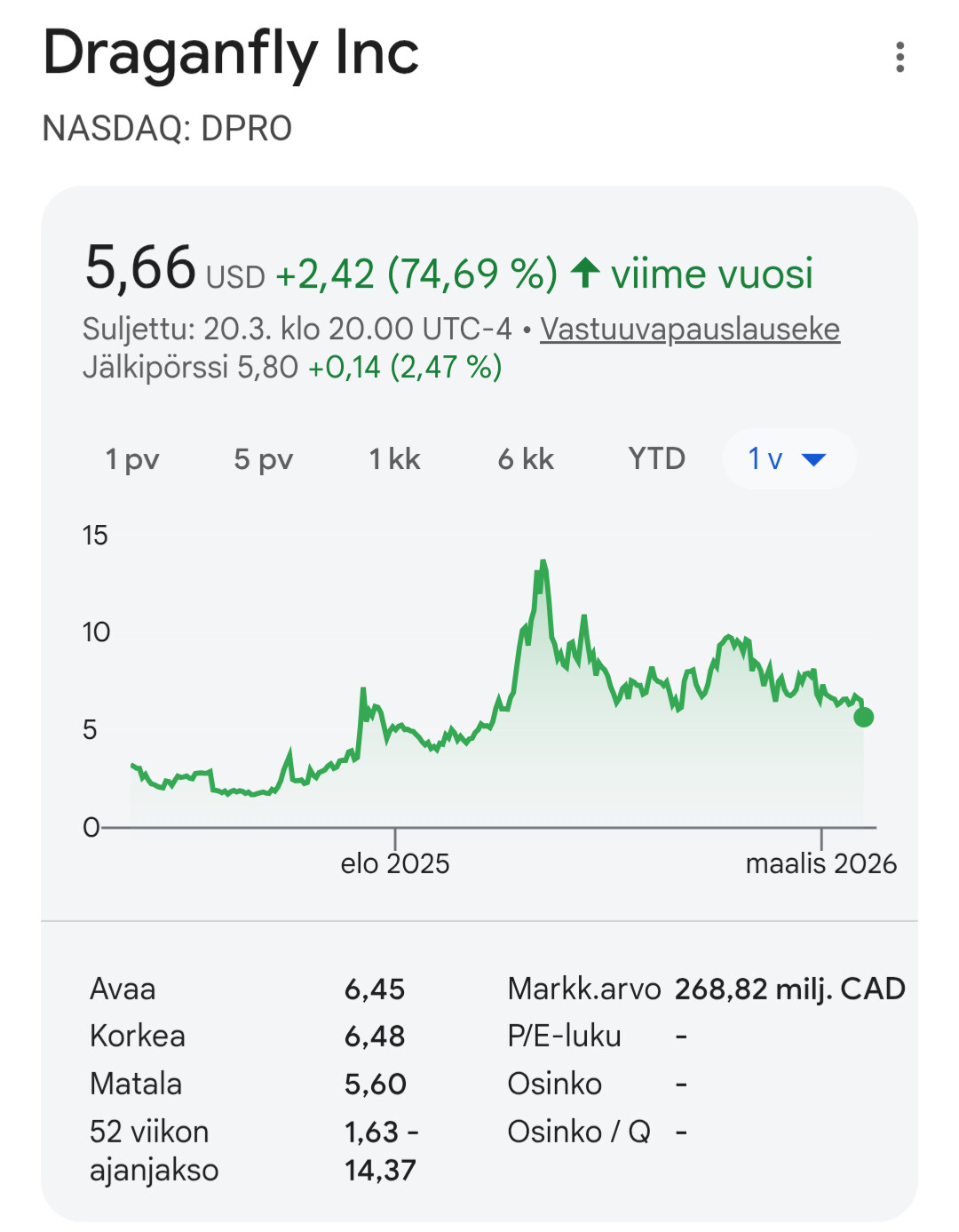
Draganfly (DPRO) is a Canadian drone manufacturer. The company offers a wide range of drones for various applications, including military use, rescue and public safety operations, and logistics.
The company was founded in 1998 and has over 25 years of experience in the field. For example, a drone developed by Draganfly was the first to save a human life in 2013.
Draganfly is one of the few manufacturers with a Blue UAS (Unmanned Aircraft System) certification, which allows its products to be used by US government agencies and armed forces. Chinese drone manufacturer DJI can no longer introduce new drones to the US market. This could benefit North American manufacturers like Draganfly.
Last year, the US Army selected Draganfly to supply Flex FPV (first-person view) drone systems. In addition to delivering drones, the company will participate in setting up production at US bases.
The company’s market capitalization is about a couple of hundred million dollars, with revenue of only about 5 million dollars last year. Growth is on the horizon. In the previous Q3 2025 earnings call, Draganfly estimated that military sales would account for up to 90% of the company’s revenue by 2026. In the same context, the company reported about $100 million in production capacity:
“And for any of those that don’t know that we currently in our own plants, we’ve got about 100,000,000 of capacity that is now just kind of coming online. It took us until about Q3 to get that fully built out. We are now starting to produce on those particular lines, in particular for the U.S. Army order that we announced about four weeks ago now.
It’s worth watching the CEO’s interview from January 2026:

Next week, the company will release its Q4 2025 results, which will provide more information on how the business has developed. Last autumn, the stock price doubled when they announced the delivery of drones to the US Army. Now the stock has fallen back to the same level. This was, of course, influenced by the company’s $50 million share offering in February.