Hmmm, this could go either way, I’m a bit nervous. No short reports or anything like that were seen, so it’s probably some internal arrangements.
1 Like
Clear Blue Technologies International Inc. has been halted at 6:15 a.m. PT on Dec. 22, 2020, at the request of the company, pending news.
Their own arrangement, yes. In the worst-case scenario, they’ll just announce that the private placement has been completed. Hopefully, a big deal is coming; something has been hinted that the reason for the PP was a large delivery.
3 Likes
It was just this “boring” news, but it’s good that it’s behind us now.
3 Likes
How long is this halt going to last?
I was looking into the types of operators involved with Off-Grid Lighting systems in Africa. Below is a project organized by the World Bank, featuring various operators. CBLU wasn’t on this list, but I did find a few familiar competing firms.
The potential is truly enormous if/when we start electrifying the daily lighting and other small electricity needs of 2 billion people in Africa and other countries south of the equator using solar power.
6 Likes
A little more speculation from yesterday. The trade halt lasted several hours, and eventually a release was put out that practically stated what had already been told, meaning the funding round was fully subscribed. My guess is that something else was supposed to be released, but then something happened that prevented it. For example, a new agreement was about to be published, and the announcement was sent to the other party for review, and something came back from them that prevented its release now. Sorting this out can easily take a few hours. Then, something had to be quickly figured out to publish, so an old news item was recycled with slightly new wording.
Well, we’ll see, I added some myself yesterday. The trade halt built up high expectations, and the shoemaker (announcement) was a big disappointment to the market; I’m happy that I was able to refuel at these prices  Time will tell if there was cause for joy

11 Likes
Could someone familiar with the company summarize CBT’s strengths in its field? For example, what is their technological strength and why would they succeed as a company? I was wondering about these points myself, because there is a wide range of technology available for such solutions, as well as companies (even large ones) that could implement them “if they wanted to,” but for one reason or another, they haven’t seen a market for it. I’m just wondering why this particular company is interesting. Reading this thread didn’t particularly excite me.
If anyone has something to throw out, I can challenge it
9 Likes
I’m mainly attracted by the relatively low valuation, growth on several continents & the growth rate mentioned in the Q3 report 
I don’t understand enough about technology to compare competitors’ products, so on that front, it’s purely a gamble. However, the CEO explained quite well in the Q3 report that their products are proven and desirable, so now they just need to sell them 
4 Likes
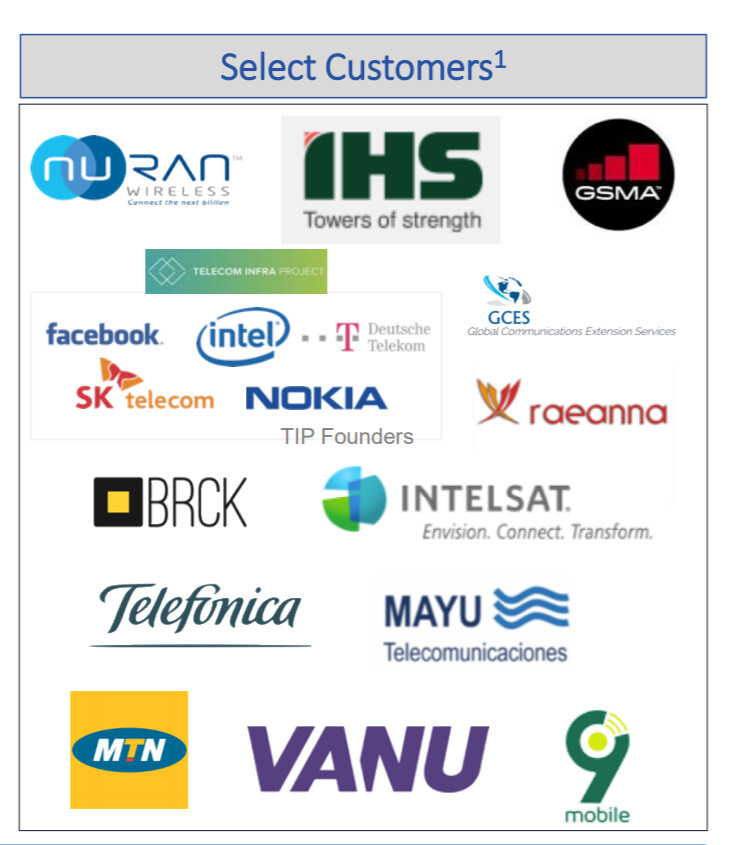
I can’t even confirm a technological lead myself. I jumped on board because of the multinational Telecom clients (Telefonica, Tesla, Intel, etc.) mentioned in the presentations, the real need for the product, and the management’s decades of experience. I have a hunch that FOMO (Fear Of Missing Out) might spread to this one surprisingly quickly, no matter what the key figures are. So, waiting for the big news…
3 Likes
I tried to find information about possible patents concerning their products on their homepage, but I didn’t happen to see anything, even though I’m quite sure I’ve heard somewhere that they’ve patented their technology  Miriam might have mentioned something during the conference call… CBT promises its customers a 3-year warranty for their devices, which is certainly a big deal when building customer relationships.
Otherwise, I can’t find any significant competitive advantage in a highly competitive market.
Edit. With Clear Blue’s Energy-as-a-Service, customers pay a fixed annual service fee. Clear Blue uses its patented Smart Off-Grid technology and expert service to manage charging cycles, state of charge, and other aspects of power management that are key to maximizing system life and uptime performance. This enables Clear Blue to provide an unparalleled level of reliability to assure power delivery
There are always huge risks involved with these small companies, which is why the potential reward is also generous. If your own gut feeling is negative, then you should stay away. For me, the first impression is almost the most important factor, and if it’s not positive, I don’t even bother to find out more about things…
5 Likes
I also don’t have enough competence to evaluate the quality and competitive advantage of the technology. But here are some thoughts on why I have personally invested in the company.
The company operates in a niche market, which usually provides protection from larger players, but on the other hand, the market size is still very large. In developing countries, telecom infrastructure is still significantly behind Western countries. In many places, it doesn’t exist at all yet. However, international operators sense an opportunity in Africa as a rising continent from which they seek significant growth. And they want to build their own moat there, where base stations and network infrastructure in general play an important role. I am absolutely sure that large telecom operators are ready to invest tens of billions in Africa now and in the future. In addition, from what I have read, many base stations currently run on diesel power. That is a difficult energy source in that environment, even just logistically. Renewable solar energy is a much better solution. One could assume that there will also be after-market projects where base stations are converted to operate with renewables.
Furthermore, one should not forget the operational competitive advantage and capability. CBT has clearly gained the trust of large operators as a partner that can handle deliveries in demanding conditions. In my opinion, this creates a good moat against new competitors. Why would an operator take a risk and give a project to a player with no track record instead of one that does?
The solutions sold to Western countries, for example, the latest deal in Pennsylvania, are both a bit of a mystery and a big ace up my sleeve. From the information disclosed about the deal, I haven’t been able to figure out why exactly that 2-mile stretch of road is where CBT’s products should be used. But there is a reason for it. And correspondingly, there is a lot of road if there is some very good advantage compared to other solutions (digging a trench and connecting to the grid). Time will tell how that develops.
Generally, CBT is both a fundamental and momentum investment for me. The fundamentals are moving in a good direction, including revenue growth, securing financing, and cash flow positivity which is very close. On the momentum side, the ESG theme in general, plus a low market cap, means it’s still under the radar. But as it grows, the stock will come onto institutions’ radar, and we will certainly start getting analyst coverage. These will undoubtedly support the share price.
I agree with @Risto_Kepuli that with these small firms, you should trust your own intuition. If it doesn’t feel right, then just move on. CBT will be a very volatile stock for quite some time. Quite illogical 20-30% daily rises and falls without news can certainly be expected. But I am indeed looking at the underlying fundamental development in a good direction, and at the same time, the stock is supported by momentum factors.
10 Likes
How much of the revenue comes from Africa, and is it a continent where sales growth will be particularly sought after? Case Nocart, which supplied similar solutions to Africa (on a larger scale), comes to mind. But then the revenue didn’t materialize except on paper…
How big a risk do you think this is?
1 Like
I see Africa as a huge opportunity. Africa will be built as a mobile-first continent where winning services and businesses will emerge around mobile internet. For example, a Western-style banking system is unlikely to develop; instead, payments will focus on various mobile player solutions.
1 Like
From what I personally learned about the company, the revenue mainly comes from products that are installed in internet masts and streetlights, which indeed run on solar panels or wind power.
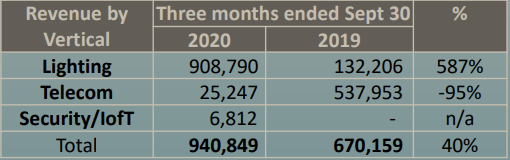
The most ideal targets for this company would be areas disconnected from the electricity grid that need lighting. How many such areas there are, I cannot say. The software developed by Clear Blue for lighting control and monitoring seemed clear and easy to use to me.
As for internet masts, a very strong competitor will be SpaceX and Elon Musk with their Starlink satellites. The goal of Starlink satellites is to provide internet access around the globe, especially to people who do not have a better or any other alternative available. The income from Starlink is intended to finance SpaceX’s Mars project. Starlink satellites are apparently not directly connected to users’ devices, but an intermediate base station with a skyward antenna is needed. These base stations are apparently SpaceX’s own products, and Elon Musk called them “Starlink Terminal” in at least one tweet.
For me, Elon Musk and SpaceX being in partly the same market is perhaps the biggest turn-off in this investment case.
1 Like
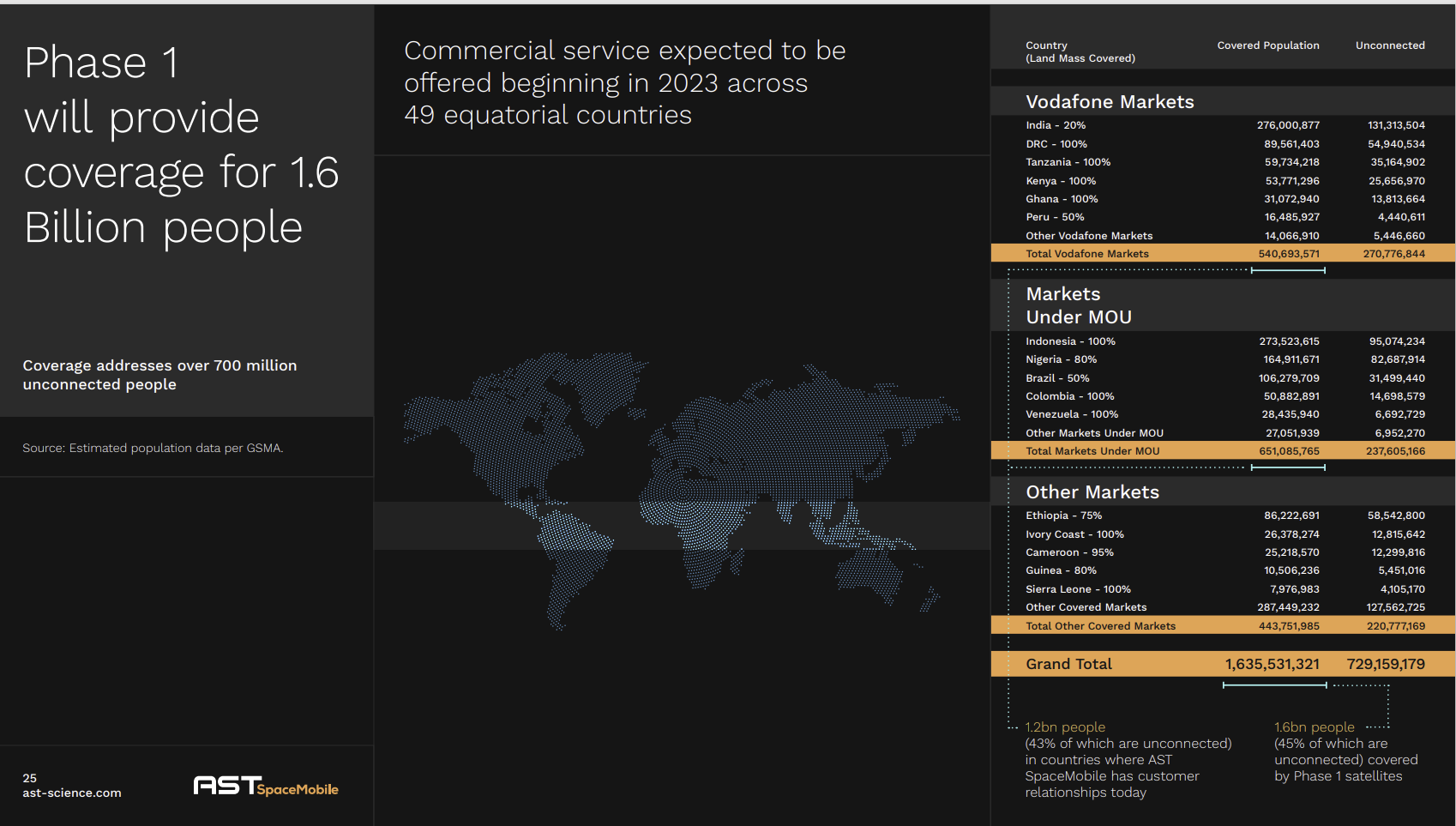
Starlink won’t work without separate terminals and costs $99 a month. A tough competitor will be https://ast-science.com, which enables 2G/3G/4G LTE/5G & NBIoT 4G connections from satellites with normal mobile phones. By the way, it’s currently a SPAC (investor presentation: https://rb.gy/hz3jss).
Edit: Here is the Phase 1 coverage, which will start with the launch of 20 satellites in 2022 (market entry 2023).
Edit2: Yes, data transfer via satellites is increasing. In this regard, https://www.airbus.com/newsroom/press-releases/en/2020/12/european-space-and-digital-players-to-study-build-of-eus-satellitebased-connectivity-system.html was published today.
7 Likes
Thanks for the comment, good to know someone is more informed  . To me, this seemed like a really interesting case until I thought about the satellite internet services that are becoming common in the next few years. There’s no need to start putting up masts that require maintenance if connections are available more easily.
1 Like
Satellite internet has been planned for a long time, but no one has succeeded yet.
If it does come, it will be for some special need, similar to satellite phones.
I’m quite skeptical about it, it’s too complex and expensive.
1 Like
Here’s a report from over a month ago about the Starlink network situation, and it seems there’s also an unboxing video of the terminal I mentioned:
This is a completely different use case than bringing mobile networks to the masses for whom those costs are an annual salary:
To participate, users must purchase the Starlink ground equipment for $499 and then pay a $99 monthly fee for active service
How many here are planning to switch their Elisa or Telia subscriptions to the satellite version…
4 Likes
Yes, satellite connections will become more common; they already have. For example, a year or two ago I was in a meeting where it was decided to switch most of the main connections for substations and important switching stations in Finland to satellite connections. Of course, 3G and 4G will then serve as backup, but the transition will continue. The rest of the world has also gone down the same path. It should be noted that developing countries are behind and might skip this technology for now, and it’s not worth spreading satellite connections to light infrastructure.
1 Like