Kiitos jaosta. Lähellä bulla case, mutta todella hyvä potentiaali jos vaan menee niin kuin tavoite, mutta laskettu 2021 myyntiennustetta rankasti, lähinnä se lienee, koska tuotantoa ei ehditä siihen mennessä skaalata?
Azeliolle 2 miljoonan kruunun avustus ruotsin energiavirastolta TES.POD®-tekniikan esittelyhankkeeseen. Energimyndigheten och Västra Götalandsregionen ger bidrag till Azelio
2 Likes
Tän päivän nousujen taustalla =)
6 Likes
Onko kellekään sattunut silmään uusia uutisia, vai juhlimmeko neljättä päivää Dubain projektia?
1 Like
Luulen, että juhlimme senaatin päätymistä demokraateille ja tietoa Californian MoU “sopimuksista”. Voisko olla?
1 Like
Azelion ja Jonas Eklind klo 12.55

2 Likes
Yhteistyö uutista ” The collaboration will assess at least 18 projects in Sweden and Europe with a total of 8 MW of installed power.”
5 Likes
Haastateltavana CEO Jonas Eklind Pareton Securities’ Power & Renewable Energy -konferenssissa 
3 Likes
2 Likes
I don’t have time to read it myself right now, but fresh numbers have just been published:
4 Likes
Azelio’s CEO comments on Q4.https://www.youtube.com/watch?v=gNH9Cu-Tgfc&feature=youtu.be
There were no surprises, redeye reiterates a positive long-term view. Mass production begins in Q3.
After the share issue, it has dropped quite sharply. Where is the bottom, so one knows when to refuel! So far, all previously promised things have always been on schedule. It has now been said that this is enough until next year, when operations will start to be profitable after the initiated mass production. After that, the track is open!
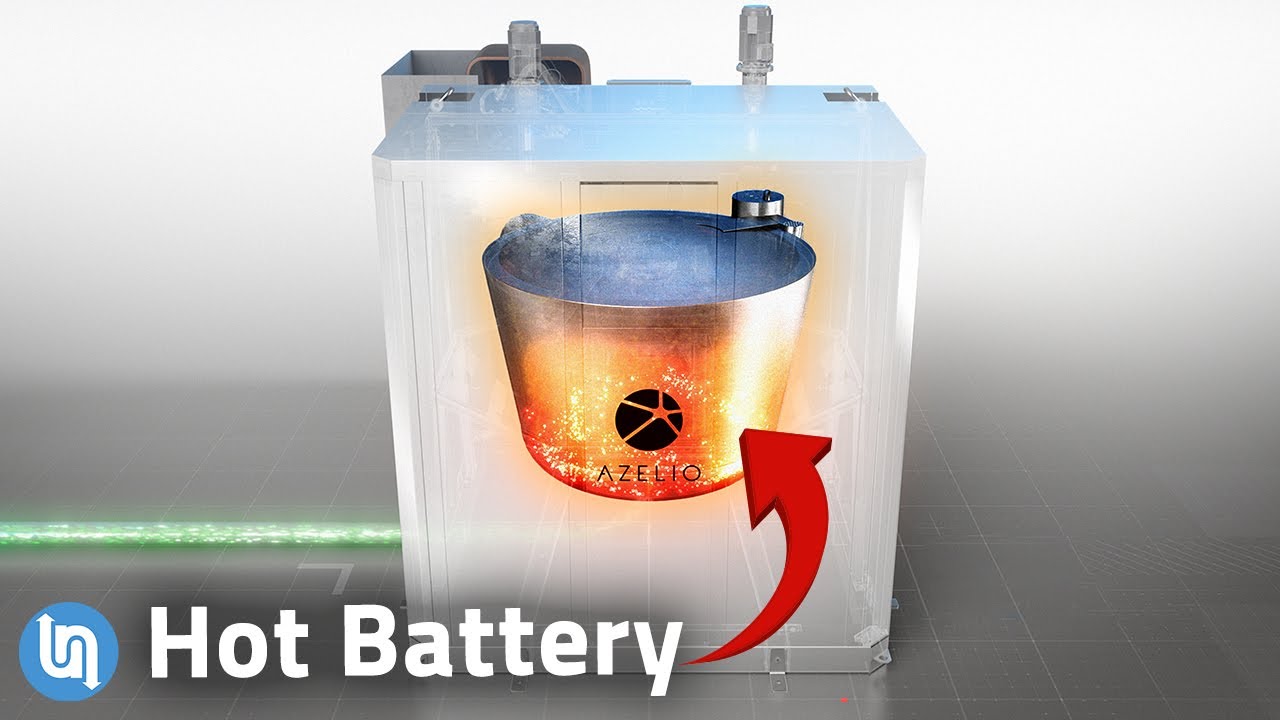
Here is also a video, where there is talk about the Azelion set at the end:
1 Like
At the beginning of the thread, there was some discussion about efficiency. I read through the thread, and some questions came to my mind:
What is the market advantage of this technology compared to the competition, such as gas reactors, hydrogen technology, or battery storage?
Key points:
- system investment costs and maintenance costs
- reliability (apparently 6000h is promised, which is about 250 days, so maintenance would be needed less than once a year?)
- 13h output, but was that with a specific combo? In that case, one could compare the output power for 13 hours with, for example, a battery storage system that has similar discharge power and time. Then, the size and investment costs of the systems could be directly compared.
- the efficiency is around 30% when storing electricity, in other words, either heat-to-electricity, or electricity-to-heat-to-electricity. If the heat is also used as heat, then efficiency can reach up to 90% (electricity-to-heat-to-heat/electricity). So, we are in the realm of traditional CHP and similar efficiency figures.
If we consider the average consumer, the overall solution will depend heavily on investment costs, space solutions, reliability, safety, and maintenance-free operation. It requires a renewable source in any case (otherwise this falls into the category of backup power), and the renewable source is likely solar panels in today’s market. In this case, the direct competitor is a battery storage system, where surplus solar power is stored or optimized. Another competitor is an electric car, which provides battery storage.
Has anyone studied the investment costs?
In short:
No, because it’s difficult to find information about them. All projects are more or less at a prototype level. Hopefully, someone has more up-to-date information on this.
1 Like
I wondered about this myself, as there’s very little material about their work. The company didn’t have proper presentations or materials showcasing their technology.
1 Like
I would imagine that a 6000h service interval means a Stirling generator, in which case it would be about 460 days if the generator is run for the full 13 hours a day. The aluminum cylinder acting as a reservoir probably doesn’t need much more maintenance.
In reality, it depends on how the engine is used, which cannot be known in advance, only estimated. But if we assume that this is acquired mainly “on the side”, then it is unlikely to be used 24/7, but specifically for example at night for 8-12 hours, in which case the maintenance need would indeed be every 2 years with 8-hour cycles.
1 Like
I personally see this technology solely as a solar energy storage unit and a power producer during dark hours. The efficiency is so poor that it makes no sense to generate electricity with it when the sun is shining.
1 Like