Car - A brake on getting rich?

I thought I’d open a separate thread for cars, as it’s usually the most significant single investment after a home. The thread can be deleted if no discussion arises.

With the amount that an average person pours into their car in the form of various fees, one could build a substantial portfolio over a lifetime by simply saving monthly into an index fund. For example, a €10k car and monthly expenses of €500 (a gas guzzler with many faults) means a €130k loss over 20 years. With a 10% expected return, this would have formed a €453k portfolio on the stock market.

What is your attitude towards cars? Is it a necessary evil or an everyday luxury that you are happy to invest a little in? Do you compare the costs of different solutions in Excel when making a purchase decision, or do you buy with emotion? What are your annual costs like?

I personally love cars, but I belong to the group that prioritizes economy. I drive a 9-year-old small car whose value no longer depreciates much. The engine has a displacement of a whole liter, and thus the consumption is about 4 liters. The tax is €123, traffic insurance €210, and I do the maintenance myself. Fuel costs about €1200 a year for my driving. Annual costs remain somewhere around €1700 with inspections etc. (+repairs that cannot be budgeted in advance)

65 Likes

Driving perfectly encapsulates people’s poor arithmetic skills. One can be quite meticulous about other expenses, but a car is a complete blind spot in this regard. People pay hundreds and hundreds of euros a month in installments, but at the same time, they are horrified when an older car occasionally needs new brake pads.

For example, according to this Lähi-Tapiola (Finnish insurance company) survey, only one fifth recognized depreciation as a cost. No wonder Kamux (Finnish used car dealership chain) is doing as well as it is, with people just taking a car that fits into some monthly payment bracket.

Life would be bleak without a car. Of course, some who live in the Kallio bubble (Kallio is a district in Helsinki, often associated with a certain urban, car-free lifestyle) can live without a car and zip to the airport by taxi to get to their city break in Copenhagen. But they don’t need to force their religion on others.

38 Likes

I replaced the pads + discs + hardware on the front end in the autumn, after 12 years of driving (the car was brand new then). It still passed inspection, but the performance was a bit weak and I also wanted to practice the installation :smiley: The parts cost about 200 €, the installation took about 2 hours done by myself as an amateur, and with these, it will last another 10 years :wink: Not a bad investment.

In Lapland (probably elsewhere in Finland too), it’s common to buy a vehicle for 100 - 300 euros from Sweden, which is driven until something wears out beyond the cost of buying a “new” car and it doesn’t pass inspection. Then another 100 - 300 euro vehicle is bought.

You can really save a huge amount of money on a car with the combination of these two, if you don’t care what brand is on the front :smiley: And since 15-year-old cars are now 2006 models (“what, the 80s were 20 years ago?” :wink: ), they already have pretty modern features even in the cheapest class.

28 Likes

For me, a car costs about 500 euros a month when you include diesel, insurance, loan payments, taxes, and maintenance. On top of that, of course, depreciation.

It’s a double-edged sword, though. It’s a hell of a lot of money every month, but when you can’t get by without it and have to drive a lot of long distances, you don’t really want to compromise on quality. You’d rather pay for good equipment, safety, and the pleasure of having a car you like.

However, I’m willing to switch to a cheaper car when other expenses start to come up, for example, in the form of a home. This life is ultimately about prioritization, and I want to spend money on some things that improve my quality of life while I’m still young.

15 Likes

I spend about a thousand euros a month on motoring, half of which is depreciation and the other half operating costs. The car is always relatively new and a quality brand. For me, time is money, and I’m willing to pay that thousand euros a month without complaint to save a fair amount of time with it. I could, of course, drive 10,000-euro cars, but I’m willing to pay for quality and so-called luxury. Why earn or save money if you don’t invest in yourself.

23 Likes

There’s a lot one can do themselves. I’ve happily left platform-related tasks to others because all the joints are stuck as hell.

If you avoid the worst cars with common flaws, you’ll do fine even with an older one. In cars manufactured in the 2000s, body structures are already significantly good in terms of crash safety, and there aren’t huge car-specific differences in drivability anymore, so I haven’t seen much need to switch to a newer one. My Volvo will soon hit 300,000 km.

No problem if someone wants to spend money on cars. But is it really worth spending more than necessary, since for most people there are probably more important uses for that money? I know quite a few who change cars like underwear because of car fever.

4 Likes

The main car is a full electric Volvo, which my better half drives 90% of the time. Last winter, I made an Excel sheet to determine which car to buy next, and that full electric car beat all others in costs 100-0. The main car is driven about 100km a day.

I just went and bought myself a new ride. The previous one was totaled when my girlfriend had a head-on collision. That car was a Suzuki Jimny with 5000km on it. It could go anywhere, and I lost several bets on whether a friend could drive from point A to point B without getting stuck. So, I lost money…

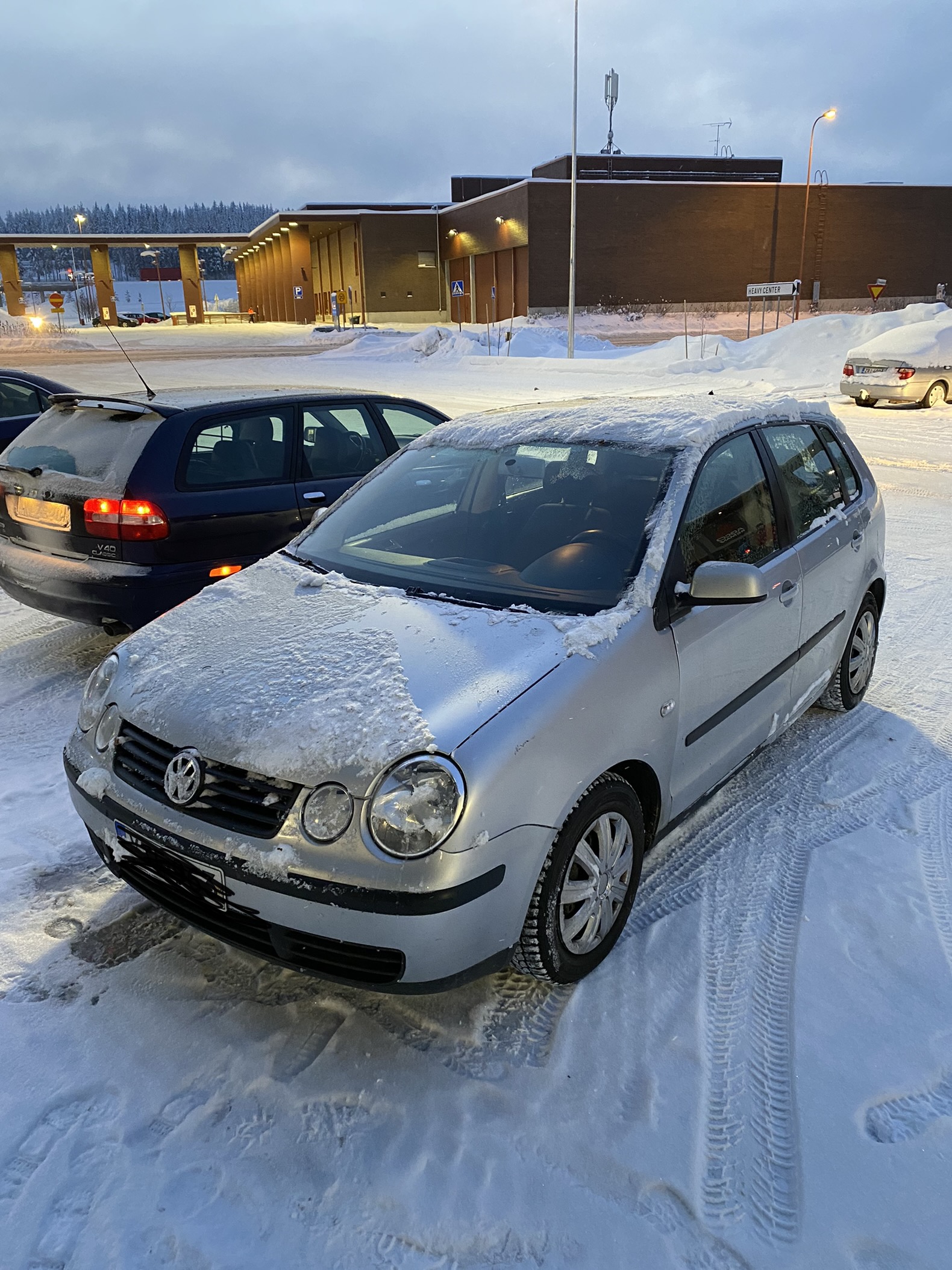
Well, after long consideration, I decided to buy a spacious normal car. I found a Citroën Berlingo. Plenty of space and consumes nothing. Darn it, the seller managed to sell it right from under my nose. So then I started calculating and thinking, why should I even pay 10-15k for a car? I ended up with an excellent car, a VW Polo. 1000€… My friend didn’t believe I’d drive something like that, so now we have a bet that I’ll drive it for at least this year without any faults (I got to fix all the existing faults). So far, it’s been an excellent car, and I’ve been driving it for about 4 days now. Another thousand went into the first service. The worst fault with the car, however, is that it smells completely of mold, and it sticks to clothes. Hopefully, they can get rid of the mold/smell on Monday.

Sorry for the long post. I personally think that the less money goes into the car, the better. The goal is that my own car’s new expenses would be about 500-1000€ a year. I drive about 20k kilometers.

:beer_mug:

45 Likes

Own car = freedom.
What is the price of freedom? That depends on the person.

43 Likes

I think a car is a must-have outside the city center if you want to enjoy life: a cottage, golf, hobbies in Espoo, seeing other people outside the city center, etc. It’s great if someone can manage without one.

Is it true that the “most cost-effective” option is to own a car yourself with good financing and drive it until it’s about 10 years old? And the brand should be one that doesn’t bring surprises with maintenance. This is what I’ve been told. Leases bring peace of mind, but are they really more cost-effective?

8 Likes

Driving is expensive, but it’s a necessity. Here in the countryside, it’s not feasible to rely on public transportation, especially with shift work, and the commute would take at least three times longer than by car.

Furthermore, I’m willing to pay a few hundred a month so I don’t have to wait for a bus in sleet or freezing temperatures. I can decide when to leave and go wherever I want.

My car is an affordable 11-year-old VW Polo with a small diesel engine. So far, it’s been very economical to drive.

9 Likes

For me, a car is a must-have because city living is out of the question, and I enjoy the “freedom” a car brings. Besides, I’ve been a “car guy” since I was young, meaning I’ve always liked tinkering with cars.

Because of this, I can handle most of the maintenance myself, which saves money. However, I invest in cars by not buying a new one, but a slightly used “quality brand” car that has already covered the expensive first kilometers.

Of course, I’m still “foolish” enough to own several cars, meaning I also have a hobby vehicle. That also takes its share of my income, but it doesn’t bother me. I drive it in the summer and autumn because I enjoy hunting and spend a lot of time in nature during the unfrozen ground season. My daily driver is too low for forest roads, so I need a proper off-road vehicle. Fortunately, the hobby vehicle is classified as a truck, so insurance and taxes are negligible, and I put the daily driver “in storage” for the summer, so the payments don’t run.

In summary: I am willing to pay for the convenience a car brings, and to me, constant penny-pinching on everything is not living.

8 Likes

As someone accustomed to a car, I couldn’t imagine living without one. Going according to my own schedule and everything from grocery trips onwards is more pleasant. In addition, all cottage, holiday, leisure, and extra unnecessary drives are enjoyable to do yourself, in your own car.

If one were to consider the situation in the initial post, that all money is put into the stock market for 20 years, living without a car during that time, how would one know if there would even be that €453k portfolio with those assumptions? At that moment, there might be a stock market crash, for example, or the portfolio might not have gone according to plan, as it rarely does over a long period. In addition, significant costs go to public transport, because without student status or other discounts, traveling by bus, for example, is expensive. Furthermore, especially in families with children, one’s own car makes everyday life easier, as well as going to hobbies. So, one should not assume that a car is a €130k expense, but in the stock market, it would be a €453k portfolio. What would one do in retirement then, buy that new Mercedes after first spending the best years of one’s life moving one’s family by public transport?

During student years, I understand a car being expensive, but at a later stage, those who borrow a van or similar, those in need of help, can pay compensation for the use of the car, as quite a few, especially women, seem to think that borrowing someone else’s car is a “good idea.”

I drive about 30,000 kilometers a year, a significant portion of which are related to my hobbies and other drives enabled by freedom. What could be more pleasant than on a Saturday morning pressing the Webasto on your phone and going to the store to look at kitchen renovation parts, than traveling back and forth according to public transport schedules, watching the clock.

Driving is expensive, but it greatly simplifies life.

28 Likes

Concise summary :+1:

My family’s driving costs halved in the autumn when I sold our second car (to Kamux). We’ve managed well with just one car so far, as my better half has been mostly at home for the past few months. A basic station wagon a few years old is quite spacious/economical/safe enough for a family of four and a dog, on a loan of course (at 0.9% interest), because I can think of much more productive uses for the approximately 20,000 euros that the car would cost if bought outright.
We live about 30 km from the capital; there is public transport available here, but commuting to work, children’s hobbies, etc., would be quite a pain to fit into bus schedules… I’m happy to pay a few hundred a month for that freedom.

3 Likes

I have a somewhat ambivalent attitude. I have three cars, 2 daily drivers (-08 and -03) whose combined value is about 10% of the price of my summer car :smiling_face_with_sunglasses:

So, for basic driving, I try to get by as cheaply as possible, but I get much more out of the summer with a fun toy. Money has to be spent on enjoyment too.

9 Likes

For me, a car is definitely not an investment. It costs what it costs and is a big comfort aspect of life.

I’m perfectly happy buying a new car every 3-4 years, even if I lose money in the process.

14 Likes

1 car, big enough for the kids and 5 years old, so there’s enough trust in it staying intact. I really don’t want to spend my time running around repair shops, let alone start tinkering with something myself.

20k was the budget, and with that, I got a suitable used car with basic equipment from Saka. I’d rather save by skipping the annual trip to the south than complicate my daily life by being without a car or having a bad car.

1 Like

I managed without a car until I was 29, as I could almost always borrow one from my parents when needed. In reality, I didn’t even need a car back then, but I wanted one for social reasons. I wasn’t keen on traveling by public transport much, so I ended up staying home too often.

I value being car-free, and it’s a terrible money pit. My dream would be for my current car to be my last, but we’ll see, as it’s hard to give up once you get used to a car. Even in a normal year, I only drive 10,000 km or even less if I’ve been an active bike commuter. With COVID-19, the kilometers have plummeted to less than half of that.

My car choices have been irrational in that I bought both new, and I only kept the first one for 6 years, even though I only drove 60,000 km. I bought both with cash because I dislike debt. In reality, despite my foolishness, my investments have performed well enough that it would have been more beneficial to have debt for both the car and the apartment. I even paid off my mortgage in three years at the expense of my investment portfolio. This is partly why I’m still poor, as I haven’t known how to utilize debt and have wasted money on new cars.

The first car, including tires and everything, cost €26,000, and my current one cost €31,000. The total cost of ownership for the first one came to somewhat less than €400/month (my recollection is €372/month, but it might have been €392…). This includes depreciation, insurance, maintenance, taxes, petrol, etc. Having paid with cash, there were no financing costs, but if the alternative return is considered to be portfolio growth, it would have been more profitable to pay several percentage points of interest on the car.

For my current car, due to the higher purchase price, I calculate €500/year more in depreciation, but if I keep it longer, it might not necessarily be much more expensive than the previous one.

The dream would be to achieve financial independence in 8 years, when my current car is 10 years old, and the pessimistic scenario is that I will only achieve it in 13 years, around my 50th birthday. At that point, commuting would cease, and I might be able to give up the car. Of course, I probably need to see how life settles if I leave work and how that affects driving distances. It also affects how much the portfolio has grown by then and what kind of living standard it enables. (The idea is to give up the car to reduce expenses, but if the portfolio is large enough, there might be no need for it.)

Somehow, I should still be able to get to a ski trail even in retirement, so perhaps a car or moving near a trail will be necessary then too.

Edit: Originally, I ended up with a new car partly because I wasn’t very seriously pursuing financial independence. I have always known that with a frugal nature, it would eventually happen. Of course, back then as a young man, there was the possibility that a woman and children would enter my life and change how money was spent. The second car involved an uncharacteristic car fever for me, and trading it in didn’t make any sense, but perhaps I now feel the car I have is more my own and reflects me better.

7 Likes

This is also my own thought, that as I get older and my wealth increases, some pleasant summer car will come into the garage and the price will inevitably be 4-7x my current daily driver :+1:

5 Likes

Currently, I own a reasonably valuable car. Last year, the total cost for cars, including depreciation, was over €25k. On the other hand, my only current expenses are my owner-occupied apartment and car, so I can save/invest on average about €1000/month.

With a cheap car and a generally frugal lifestyle, the amount I could invest could easily be double that. I have a 50/50 approach to living and investing anyway. I try to live and fulfill dreams, but also invest at the same time.

My goal is not yet to achieve financial independence. I am still young, slowly accumulating wealth, and will see what the situation is in 20-30 years.

In my goal, a car (even a reasonably valuable one) is not an obstacle to accumulating wealth. I don’t have children yet, so I will probably have to compromise a bit on other “quality of life” aspects in the future when children arrive.

6 Likes

I’m quite passionate about cars, which is why I have a bit too many of them. Last year, I did reduce the number, as I simply didn’t have time to drive them all. Currently, the family has two actively used cars: a newer all-wheel-drive diesel family car, which is reliable and safe for travel and has so far served as a tow vehicle for our trailer. We don’t strictly need a second car, but I value the freedom enough that for about 1.5 years, we had a car bought at auction for 4300€ for winter use. It proved too small, so I sold it for 5300€. In its place, we got a large, old diesel SUV with 380,000 km on the clock, for which just the taxes and insurance are 2000€ a year if the car is driven all year round. It doesn’t sound sensible, but the logic comes from the fact that we can swap the diesel family wagon for a plug-in hybrid with lower running costs.

Our summer second car is a V8 gasoline-powered convertible that fits the whole family. A lot of money is tied up in it, but after owning it for just over a year, asking prices for similar cars in Germany have risen by about 10% from what they were when we acquired that summer toy. Come spring, the recently acquired diesel SUV will go into the garage for its summer break.

All in all, acquiring and maintaining cars takes and ties up a lot of money, but it brings me so much freedom and joy that I prioritize these things over my own wealth accumulation. And, of course, there’s also that small spark of hope that the value of these hobby toys will slowly increase. With one car, I managed to buy a future classic at its price floor, restore it, drive it 40,000 km over about 10 years, and when selling it in Switzerland, I got enough money that, in practice, the 40,000 km essentially only cost me gas. I didn’t calculate precisely, though, because in my opinion, it doesn’t make sense to meticulously track money spent on hobbies.

7 Likes