And apparently, on the Swedish side, the mining industry is viewed quite favorably, if even one village, Kiruna, is moved out of the way of the ore body. Business is conducted on completely different scales, and if only someone knowledgeable could dig up the Swedish newspapers and what is written about the deposit.
It is true that, legally, Sweden is favorable towards mines. And this suits investors. I know the Kiruna mine well enough, as I have been inside the mine, seen the subsidence shifts, and the new relocated city. That ore deposit is just so massive, and it has been mined since before the wars, so the story is a bit different. Kiruna was built because of the mine, not the other way around. I have also visited several other mines in Northern Sweden, so I don’t have to rely solely on news. However, the idea that nothing is known or done right in Finland is not true. Every ore deposit has its own story, its environment (with or without protected areas), and local people around it who must be kept satisfied.
1 Like
If you could just dig up data on the results and potential of Arctic mineralization, that would be great. As such, the company’s management and owners are high-caliber professionals, not just marketers. To my understanding, the current results are only a small piece of the entire area. The discussion about minerals is now a hot topic.
1 Like
Such sediment-hosted stratified copper-silver ores are indeed interesting.
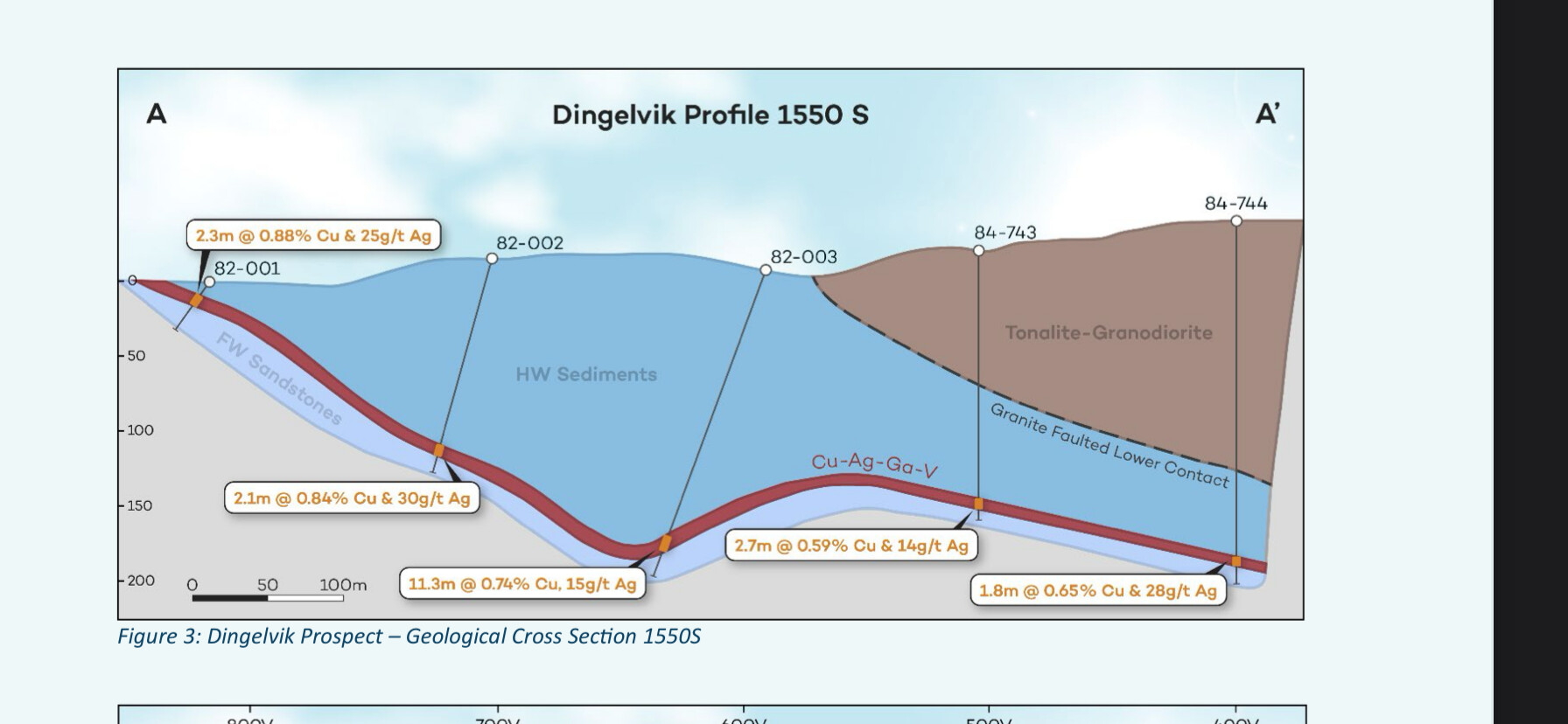
This ore dips at an angle of 10-30 degrees into the rock and undulates somewhat like a sheet within the rock. Some edges of the sheet have been exposed, and in one spot, this Dingelvik MRE has been done.
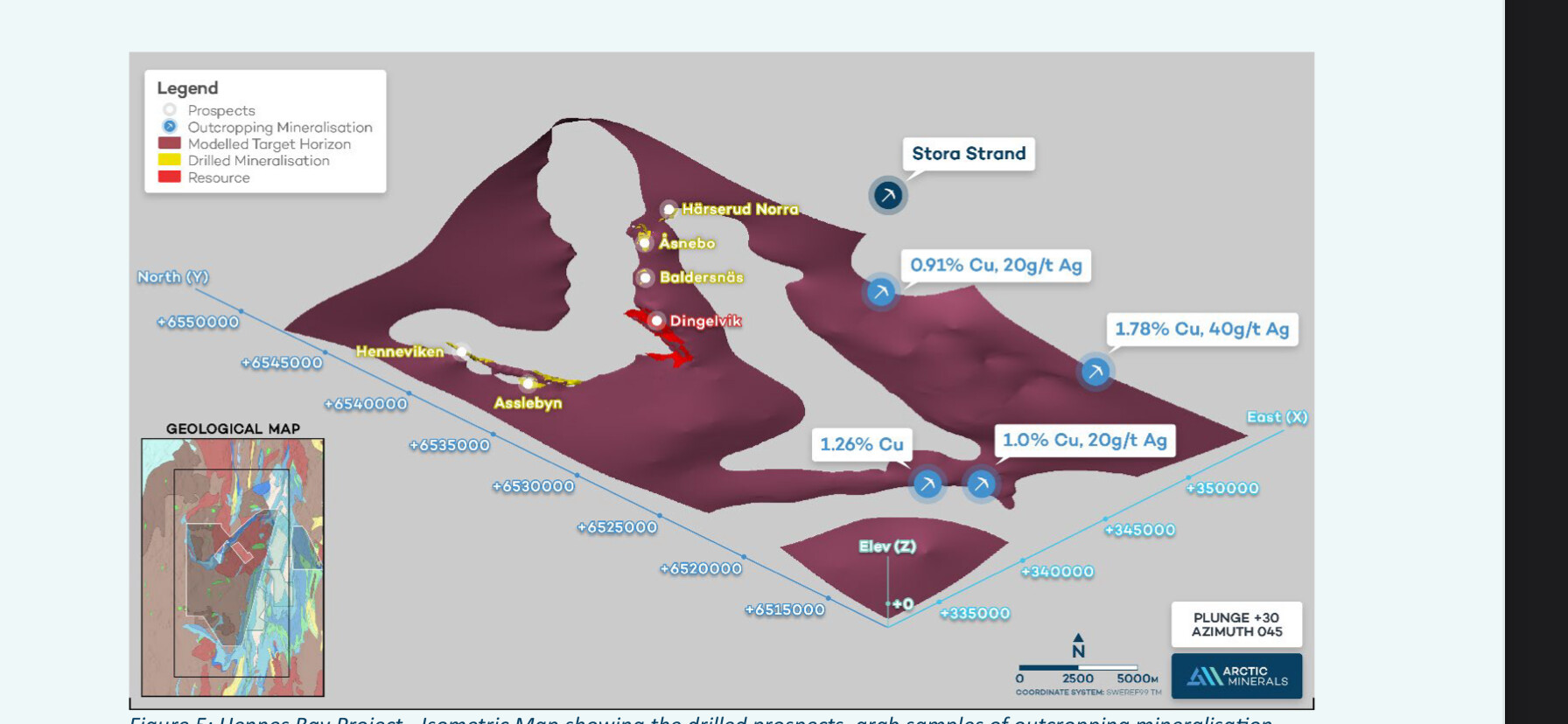
Here, the “sheet,” or the ore sediment layer, is more visible. In some places, it has been exposed elsewhere than just the edges. There is very little data. The great thing about this is that as this geology has started to become clearer and, for example, geophysics measurements are being carried out, these guys can drill almost anywhere at a steep angle and penetrate more of this sheet. This ore could be really big.
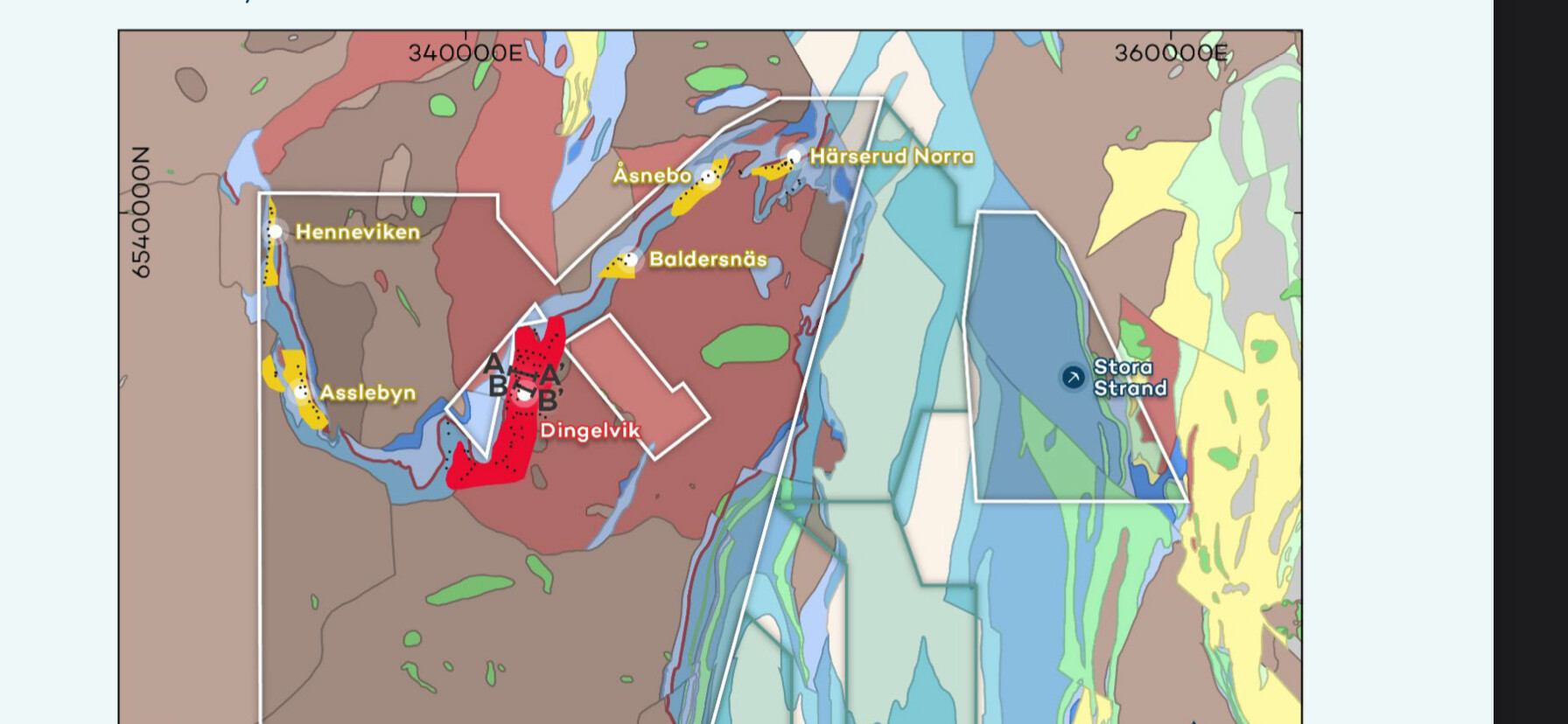
The infrastructure is in good condition, with a railway line and power lines running nearby. If it happens, it will be an underground mine, which is a good thing, as huge open-pit mines would hardly be wanted in Southern Sweden. The ore is not very rich compared to the best similar ores of all time, but the Swedes know how to utilize their very large, not-so-super-rich ores well.
2 Likes
Thanks and good summaries. In those, the reserves are interesting, and offhand, copper and silver are minerals that are consumed abundantly in industrial processes, such as batteries and electricity-related products. There are probably copper pipes in HVAC structures too  . Infrastructure is an additional bonus, which is expensive to build, so the players have good leverage. The owner municipality has experienced people and experts. Today, the company’s management will reveal new research results and deposits. Let’s hope for news from Norway.
1 Like
An excellent team performs, and that long-awaited hit finally came. Although the preliminary results are promising and there is potential to create significant added value with further drilling, traditionally this is the point where it might be a good time to lighten Arctic’s share in one’s own portfolio:
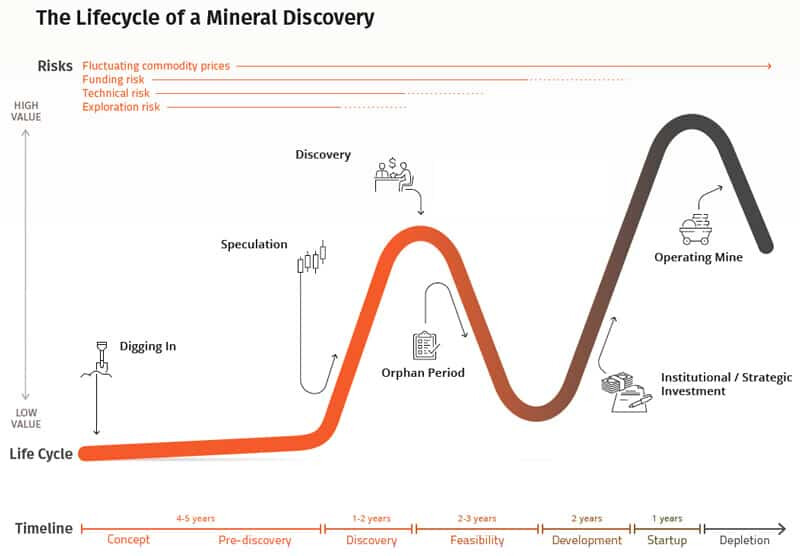
Arctic Mineral is a smart company in that, as I understand it, they are trying to sell that discovery to a larger entity as soon as possible, rather than trying to open their own mine, which in Sweden could easily take 10 years, provided funding is found.
As for the richness of the ore, yes, with those percentages, a commercial mine will likely be created if the geology allows, unless Ivanhoe or someone else finds new gigantic copper mines in Africa and depresses the price of copper.
Now that there is a lot of uncertainty in the global economy, I don’t believe there will be a rush of buyers, so Arctic will probably do a couple of funding rounds and drill for a couple more years before the next bigger jackpot comes.
They are also trying to sell Bidjovagge in Norway, but it’s not going well, especially since the local Sámi mafia opposes the mining project.
1 Like
In my opinion, Norway’s Bidjovagge is insignificantly small compared to Hennes Bay. The company had stated (and so did I) that the explored area of Dingelvik is 5% of the entire ore layer area. I’m not saying that the concentration/thickness would be sufficient throughout the entire area. But I wouldn’t be surprised if the amount of ore multiplied many times over.
That’s a good point about the share price drop after the discovery. It’s possible that the share price will fall in the short term. But is 30-40 ME a sufficient value for the company? It still sounds cheap with this potential.
I also believe that a mine will indeed be built there. And not necessarily just one mine. It’s possible that this layer will be mined from several underground mines.
3 Likes
Yes, and I agree. I also understood that only a small area has been explored so far, and if more is found, that could be anything from a hundred million upwards.
New Aktiedagarna video, the current CEO reportedly belongs to the Peak copper school of thought, and the presentation was confident overall.
2 Likes