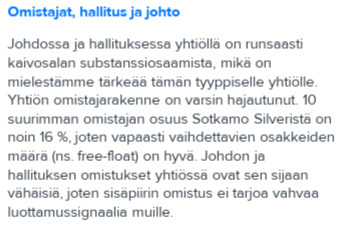
Tämän merkittävyydestä näkemykset varmasti vaihtelevat ja tietysti on olemassa myös muita sitouttamisen keinoja (esim. erilaiset tulospalkkiomallit). Mutta kyllähän johdon/hallituksen omistukset kuitenkin signaaliarvoa antavat, ja mahdollisen omistuksen myötä intressit ovat näiltä osin vahvasti yhteneväiset muiden osakkeenomistajien kanssa (ts. skin in the game) ja itse ainakin tulkitsen omistukset yhtiössä positiivisena asiana. Tämän osalta ei kuitenkaan kannata laittaa suoraan yhtäsuuruusmerkkiä lopputuloksen (hyvä/huono, jotain siltä väliltä) kanssa. Tästä aiheesta voi varmasti debatoida myös esimerkiksi siitä, millainen omistusosuus olisi optimaalinen taso muiden osakkeenomistajien kannalta, eikä tähän varmaan löydy suoraa vastausta yhtiökohtaistenkin erojen vuoksi.
Kysymykseesi SoSiin liittyen lainaan edellistä laajaa raporttia, jossa tuli kirjoitettua alla olevasti (huom. 10 suurimman osuus tällä hetkellä vajaat 15 %):
Kiitos tästäkin vastauksesta👍 toivottavasti johtokin pian siirtyy ostolaidalle ja antaa meille sijoittajille vahvaa signaalia, että kohta homma rokkaa!
”Vakuuttavampi nousuun viittaava argumentti hopean puolesta liittyy kasvavaan teolliseen kysyntään ja rajallisiin mahdollisuuksiin lisätä kaivostuotantoa.
Teollinen kysyntä nousi 689,1 miljoonaan unssiin vuonna 2024 edellisen vuoden 644 miljoonasta unssista, LSEG:n tietojen mukaan.”
Aapeli kirjoitteli hopeamarkkinoista ja mm. sen näkymistä.
Silver Instituten ja Metals Focusin hiljattain julkaiseman katsauksen perusteella globaalin hopean kokonaiskysynnän odotetaan laskevan kuluvana vuonna viime vuoden tasoilta hieman aiempaa enemmän. Tästä huolimatta markkinan odotetaan pysyvän alijäämäisenä. Hopeamarkkinoiden kehityksellä on merkittävä vaikutus seurannassamme olevista yhtiöistä Sotkamo Silverille, sillä arviomme mukaan Hopeakaivoksen tuotantovaiheessa yhtiön liikevaihdosta karkeasti 60–70 % (riippuen metallien hintasuhteista) muodostuu hopeasta. Edellinen kommenttimme hopeamarkkinasta on luettavissa täältä.
jos ei näillä hinnoilla kohta tää räjähdä niin ei sitten ikinä, oli aamusta pakko sipasta vielä siivu lisää. menkööt vaikka konkurssii niin ainaki on yritetty. oikee tuntuu pahalle miten hopean hinta rikkoo athta ja tää vaan ihmettelee.
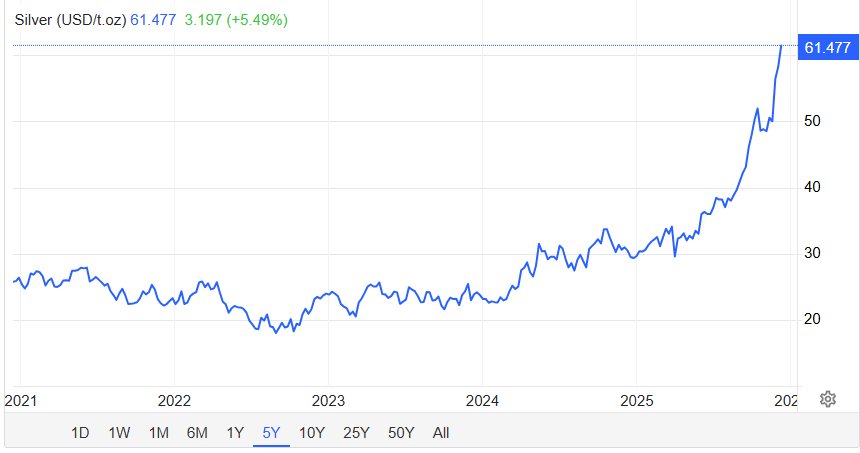
Hopea painelee pitkällä ATH lukemissa, ja samaan aikaan moni toimija (SOSI mukaan lukien) tuntuu kamppailevan volyymien noston kanssa, joka tarkoittanee että hopeamarkkinan kysyntä-tarjonta balanssi ei tule lähivuosina ainakaan hellittämään. Yhtiö vetää mattoa odotusten alta kerta toisensa jälkeen, ja ainoa syy jonka takia ei olla vielä konkurssissa on hopean hintakehitys.
Toisaalta samaan aikaan ollaan julkaisemassa kairaustuloksia uusilta alueilta, ja palaamassa edelliseen urakoitsijaan, joka ainakin kokoluokkansa perusteella toisi hieman operatiivista ammattitaitoa taloon.
MIKÄLI kairaustulokset ovat positiivisia (aikaisemmin Q2 ilmoitettu alustavien tulosten olevan positiivisia) ja uusi urakoitsija pystyy palauttamaan näillä hintatasoilla volyymeja edes lähimaille historiallisia tasoja, ja hopean hinta ei romahda 2026 aikana, ollaan mielenkiintoisessa tilanteessa.
Toisaalta, jos mikään edellisistä ehdoista ei toteutudu, jatketaan törttöilyä jota paikkaillaan epäsuostuisilla rahoitusjärjestelyillä, ei taas alle 0,10€ hinnat tule yllätyksenä.
Tässä tapauksessa voi yhtiön johto katsoa peiliin ja ihmetellä sieltä miksi ei kulje. Kohta tuotanto taas katkeaa X ajaksi kun urakoitsija vaihtuu, rahat ei riitä operatiivisten kulujen kattamiseen, uudella urakoitsijalla menee taas hetki (Q1) käynnistellä koneita, hopean hintapiikki olikin siinä ja antia pukkaa.
Ne kairaus tulokset voi olla vaikka kuinka hyviä mutta ongelma tulee siinä saako niitä ikinä louhittua pois, jos oikein ymmärsin niin aikaisemmin on ollut ongelmia juurikin kallioperän kanssa ja parhaita alueita ei ole päästy louhimaan turvallisesti.
Minä en usko, että urakoitsijan vaihdos aiheuttaa mitään katkoksia. Q3 osarissa oli jo mainita, että valmistelut aloitettu.
Samaa mieltä kanssasi, että johto on ammattitaidoton, mutta Jalaston aikana urakoitsija on kerran jo vaihdettu, joten ei ole uusi prosessi.
Johdossa varmasti ymmärretään myös, jos saantoja ei saada H1 aikana normaalille tasolle, niin alkaa palli heilumaan.
Omasta mielestä hallitus tulisi tuulettaa jo seuraavassa yhtiökokouksessa. Kenelläkään ei juuri ole omistusta, eikä sitä kautta intressiä hoitaa tärkeintä työtään, eli valvoa omistajien etuja. Tämä lienee kuitenkin mahdoton ajatus, koska omistajuus on niin hajaantunut?
Minulla pieni positio SoSiin ja ajatuksena myydä kyllä suht lähitulevaisuudessa pois. Luotto on hävinnyt aikalailla kun ei saada tavaraa liikkeelle.
Mutta itse asiaan mikä itseäni mietityttää. Kuinka kauan kestää urakoitsijan vaihdos ja minkälaisia viiveitä tulee? Tuskin samoilla vehkeillä jatketaan vaan kyllähän niitä uusia tulee ja vanhoja lähtee. Tuon kokoisessa kaivoksessa on varmaan vähän enemmän kun yksi kaivuri ja pari dumpperia. Plus kaikki muu mitä vaaditaan tähän urakoitsijan vaihtoon.
Luulen vaan että aika ahdasta tulee jos kahden eri urakoitsijan koneet työmaalla? Ja eihän tuo ole urakoitsijalle taloudellisesti järkevää tuoda koneita odottamaan että on vuosi 2026.
Olisi mielenkiintoista kuulla lisää miten urakoitsijan vaihto menee käytännössä
TJhän on jo 3x tulosvaroittanut tänä vuonna ja aina kertonut kuinka hommat on taas reilassa ja sitten ei ollutkaan ”ulkoisten syiden” vuoksi. Peiliä ei ole vielä löytynyt eikä oman yhtiön osakkeiden ostonappia.
Sama kaava toistunee urakoitsijan vaihdossa, kaikki on kuulemma suunniteltu hyvin ja katkoksia ei ihmeemmin ole tulossa.
Urakoitsijaa ei vaihdeta niin, että edellinen sammuttaa koneet 31.12. ja uusi käynnistää omansa 1.1. Siellä on ollut jo valmistelut käynnissä hyvän aikaa. Fiksuintahan tässä tilanteessa olisi vaihtaa kapulaa sujuvasti niin, että saadaan molempien urakoitsijoiden resursseja hyödynnyttyä ja hiljainen tieto vaihdettua rauhassa. Sitä kyllä ihmettelen, miksei SoSi varoittanut jo viime osarissa kun maallikkokin näki jo otsallaan, että Q4 ei pystytä louhimaan sellaisia määriä, että koko vuoden tavoitteeseen oltaisiin päästy.
Hopean hinta on vuodessa tuplannut ja vähän päälle, mutta SoSi vielä nukkuu Ruususen unta. Jokohan se kohta alkaisi kunnolla nousemaan. Paukut on sen puolesta, että juhannuksena tämä on vähintäänkin triplannut, mielummin lähempänä euroa.
Paine fyysisen hopean markkinoilla alkaa olla kova ja hinta osoittaa sen. Melkein uskaltaisin väittää että ainakin Q1 ja Q2 ensivuodesta mennään lähempänä 70$ oz kuin 50$ oz hopean osalta.
Jos tulos on silti samanlaista kuin nyt en kyllä näe mitään tulevaisuutta yhtiölle jos näillä hinnoilla ei saa aikaiseski tulosta.
Nyky hinnalla ei edes kannata lähteä tavoittelemaan parempaa malmia vaan maksimoida louhinta oletuksena että nyt louhittu malmi on pitoisuuksiltaan samaa kuin ennen.
Jos aletaan uutta tunnelia kaivaa niin nopeasti ollaan taas tilanteessa missä kallioperä onkin epävakaata ja katkoksia tulee.
Kyllä vain. Kunhan saataisiin tuotanto vain tasaiselle tasolle uusvanhan urakoitsijan johdosta, tämä olisi tärkein tavoite. 1.4 miljoonaa unssia vuodessa riittää oikein hyvin tällä hopean hinnalla.
Tässä on Petrin kommentit Sotkamon uusista tavoitteista.
Vuoden 2028 loppuun saakka asetetut tavoitteet heijastelevat pitkälti ennusteidemme mukaista tuotannon ylösajon tavoittelua ja tätä kautta myös selvää kannattavuusparannusta ja rahoitusaseman vahvistumista. Näin ollen alustavan arviomme mukaan päivitetyt tavoitteet eivät johda olennaisiin ennustemuutoksiin, mutta tarkastelemme ennustemuutoksien tarvetta lähiaikoina.
Kiinnostaisi tietää, miksi tässä ei ollenkaan oteta kantaa hopean hinnan raketointiin? Luulisi, että osakkeen tavoitehinta reagoisi siihen jotenkin. Vai uskooko analyytikko, että hopean hinta romahtaa nopeasti takaisin edellisille tasoille? Millä hopean hinnalla tämä arvio osakkeesta on tehty?